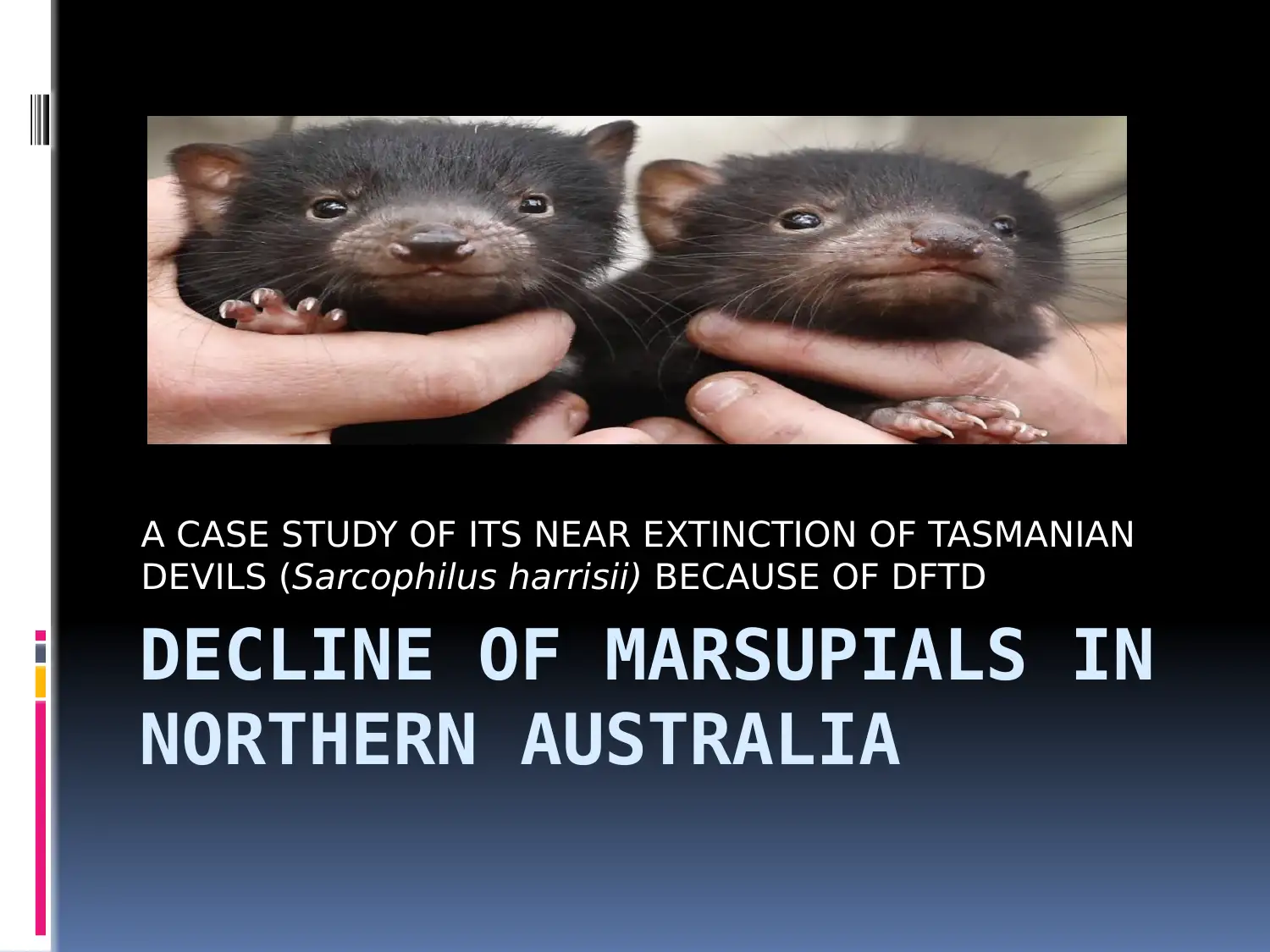
A Case Study of DFTD and its Near Extinction of Tasmanian Devils
VerifiedAdded on 2024/05/17
|15
|1411
|220
Case Study
AI Summary
This case study examines the near extinction of Tasmanian devils (Sarcophilus harrisii) due to Devil Facial Tumor Disease (DFTD). The Tasmanian devil, the largest carnivorous marsupial, is now primarily found in Tasmania and is classified as an endangered species by the IUCN. DFTD, a transmissible facial tumor first observed in 1996, has decimated the Tasmanian devil population, leading to secondary infections, bone loss, and organ failure. Studies indicate that low genetic diversity and restricted geographical distribution hinder the development of resistance to DFTD. Conservation efforts, such as the Save the Tasmanian Devil Program, include establishing captive populations and geographical redistribution to improve genetic biodiversity. Recent research suggests that crossbreeding with other marsupials and focusing on cancer genome mutations could enhance the species' ability to combat the tumor. The case study emphasizes the need for improved management practices to ensure the survival of the Tasmanian devil.



1 out of 15


Your All-in-One AI-Powered Toolkit for Academic Success.
+13062052269
info@desklib.com
Available 24*7 on WhatsApp / Email
![[object Object]](/_next/static/media/star-bottom.7253800d.svg)
Copyright © 2020–2026 A2Z Services. All Rights Reserved. Developed and managed by ZUCOL.