Accountancy Assignment: Corporate Governance Principles and Practices
VerifiedAdded on 2020/06/04
|7
|1184
|399
Homework Assignment
AI Summary
This accountancy assignment delves into the core principles and practices of corporate governance. It begins by outlining the duties of directors, emphasizing their responsibility to ensure accurate financial reporting and prevent insolvency. The assignment then explores the obligations of companies, including maintaining proper accounting records and providing transparent information to stakeholders. It covers restrictive trade practices, the role of the AASB in standardizing accounting, and key concepts like accountability and transparency in corporate governance. The assignment further examines the importance of corporate governance in the business environment, using the HIH insurance case as an example of corporate failure. It discusses the increasing pressure on corporations to adopt sustainable business practices and the crucial role of the audit committee. The framework of corporate governance in Australia is also discussed. The assignment concludes by examining best practices for company management, the agency problem, and the roles of various stakeholders, including shareholders, directors, and officers. Finally, it highlights the principles of disclosure, transparency, and equitable treatment of shareholders, along with the responsibilities of the board. The assignment references several books and journals to support its analysis.
ACCOUNTANCY
Paraphrase This Document
Need a fresh take? Get an instant paraphrase of this document with our AI Paraphraser

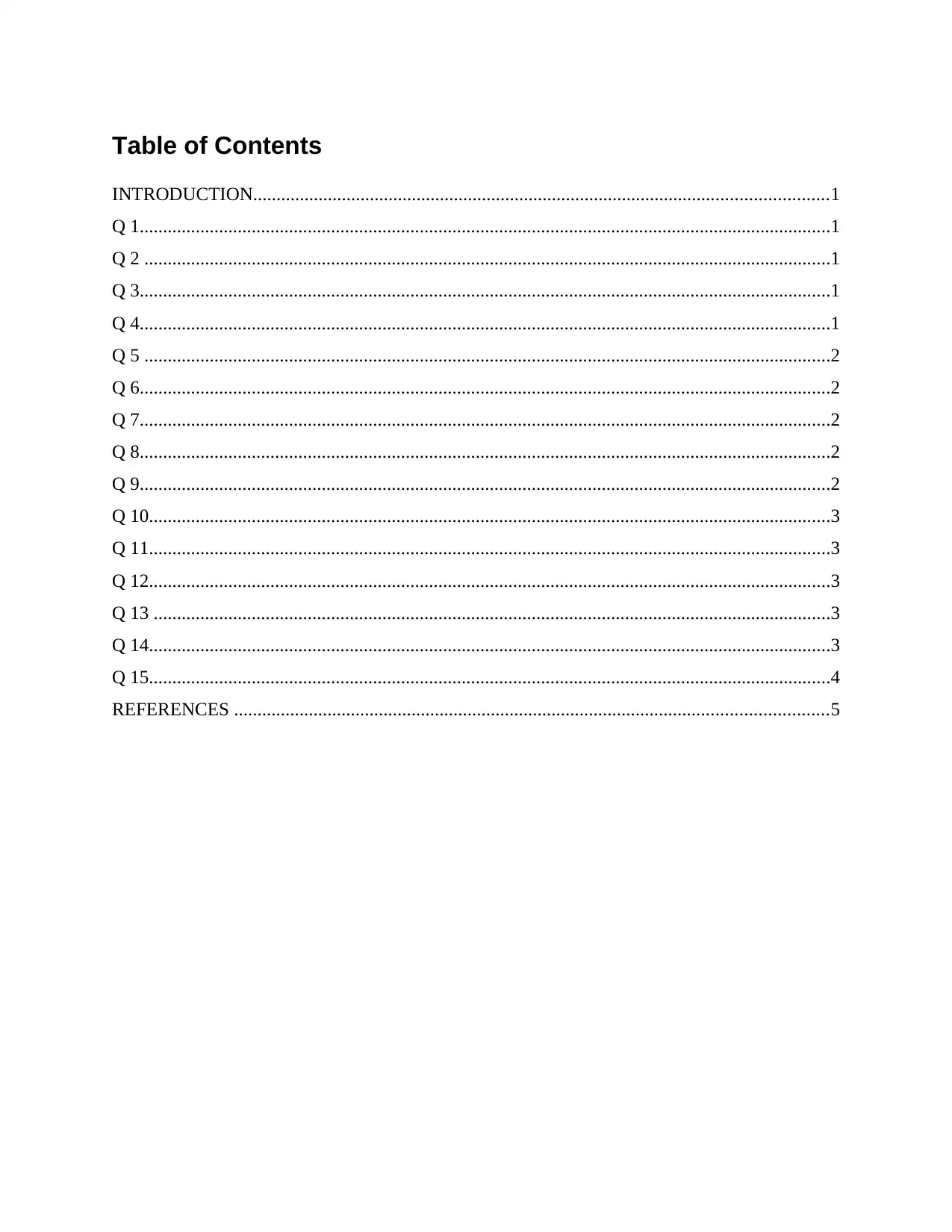
Table of Contents
INTRODUCTION...........................................................................................................................1
Q 1....................................................................................................................................................1
Q 2 ...................................................................................................................................................1
Q 3....................................................................................................................................................1
Q 4....................................................................................................................................................1
Q 5 ...................................................................................................................................................2
Q 6....................................................................................................................................................2
Q 7....................................................................................................................................................2
Q 8....................................................................................................................................................2
Q 9....................................................................................................................................................2
Q 10..................................................................................................................................................3
Q 11..................................................................................................................................................3
Q 12..................................................................................................................................................3
Q 13 .................................................................................................................................................3
Q 14..................................................................................................................................................3
Q 15..................................................................................................................................................4
REFERENCES ...............................................................................................................................5
INTRODUCTION...........................................................................................................................1
Q 1....................................................................................................................................................1
Q 2 ...................................................................................................................................................1
Q 3....................................................................................................................................................1
Q 4....................................................................................................................................................1
Q 5 ...................................................................................................................................................2
Q 6....................................................................................................................................................2
Q 7....................................................................................................................................................2
Q 8....................................................................................................................................................2
Q 9....................................................................................................................................................2
Q 10..................................................................................................................................................3
Q 11..................................................................................................................................................3
Q 12..................................................................................................................................................3
Q 13 .................................................................................................................................................3
Q 14..................................................................................................................................................3
Q 15..................................................................................................................................................4
REFERENCES ...............................................................................................................................5

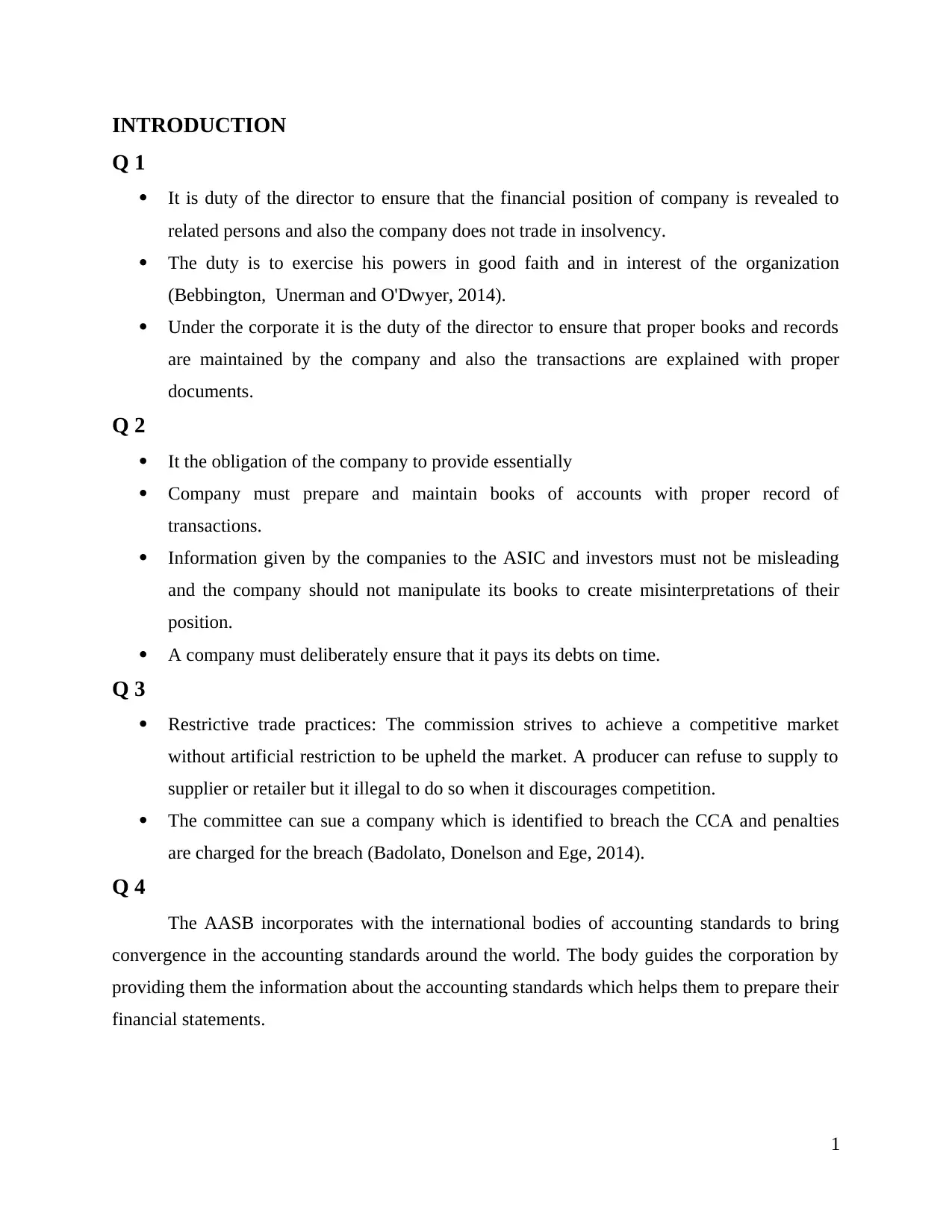
INTRODUCTION
Q 1
It is duty of the director to ensure that the financial position of company is revealed to
related persons and also the company does not trade in insolvency.
The duty is to exercise his powers in good faith and in interest of the organization
(Bebbington, Unerman and O'Dwyer, 2014).
Under the corporate it is the duty of the director to ensure that proper books and records
are maintained by the company and also the transactions are explained with proper
documents.
Q 2
It the obligation of the company to provide essentially
Company must prepare and maintain books of accounts with proper record of
transactions.
Information given by the companies to the ASIC and investors must not be misleading
and the company should not manipulate its books to create misinterpretations of their
position.
A company must deliberately ensure that it pays its debts on time.
Q 3
Restrictive trade practices: The commission strives to achieve a competitive market
without artificial restriction to be upheld the market. A producer can refuse to supply to
supplier or retailer but it illegal to do so when it discourages competition.
The committee can sue a company which is identified to breach the CCA and penalties
are charged for the breach (Badolato, Donelson and Ege, 2014).
Q 4
The AASB incorporates with the international bodies of accounting standards to bring
convergence in the accounting standards around the world. The body guides the corporation by
providing them the information about the accounting standards which helps them to prepare their
financial statements.
1
Q 1
It is duty of the director to ensure that the financial position of company is revealed to
related persons and also the company does not trade in insolvency.
The duty is to exercise his powers in good faith and in interest of the organization
(Bebbington, Unerman and O'Dwyer, 2014).
Under the corporate it is the duty of the director to ensure that proper books and records
are maintained by the company and also the transactions are explained with proper
documents.
Q 2
It the obligation of the company to provide essentially
Company must prepare and maintain books of accounts with proper record of
transactions.
Information given by the companies to the ASIC and investors must not be misleading
and the company should not manipulate its books to create misinterpretations of their
position.
A company must deliberately ensure that it pays its debts on time.
Q 3
Restrictive trade practices: The commission strives to achieve a competitive market
without artificial restriction to be upheld the market. A producer can refuse to supply to
supplier or retailer but it illegal to do so when it discourages competition.
The committee can sue a company which is identified to breach the CCA and penalties
are charged for the breach (Badolato, Donelson and Ege, 2014).
Q 4
The AASB incorporates with the international bodies of accounting standards to bring
convergence in the accounting standards around the world. The body guides the corporation by
providing them the information about the accounting standards which helps them to prepare their
financial statements.
1
⊘ This is a preview!⊘
Do you want full access?
Subscribe today to unlock all pages.

Trusted by 1+ million students worldwide

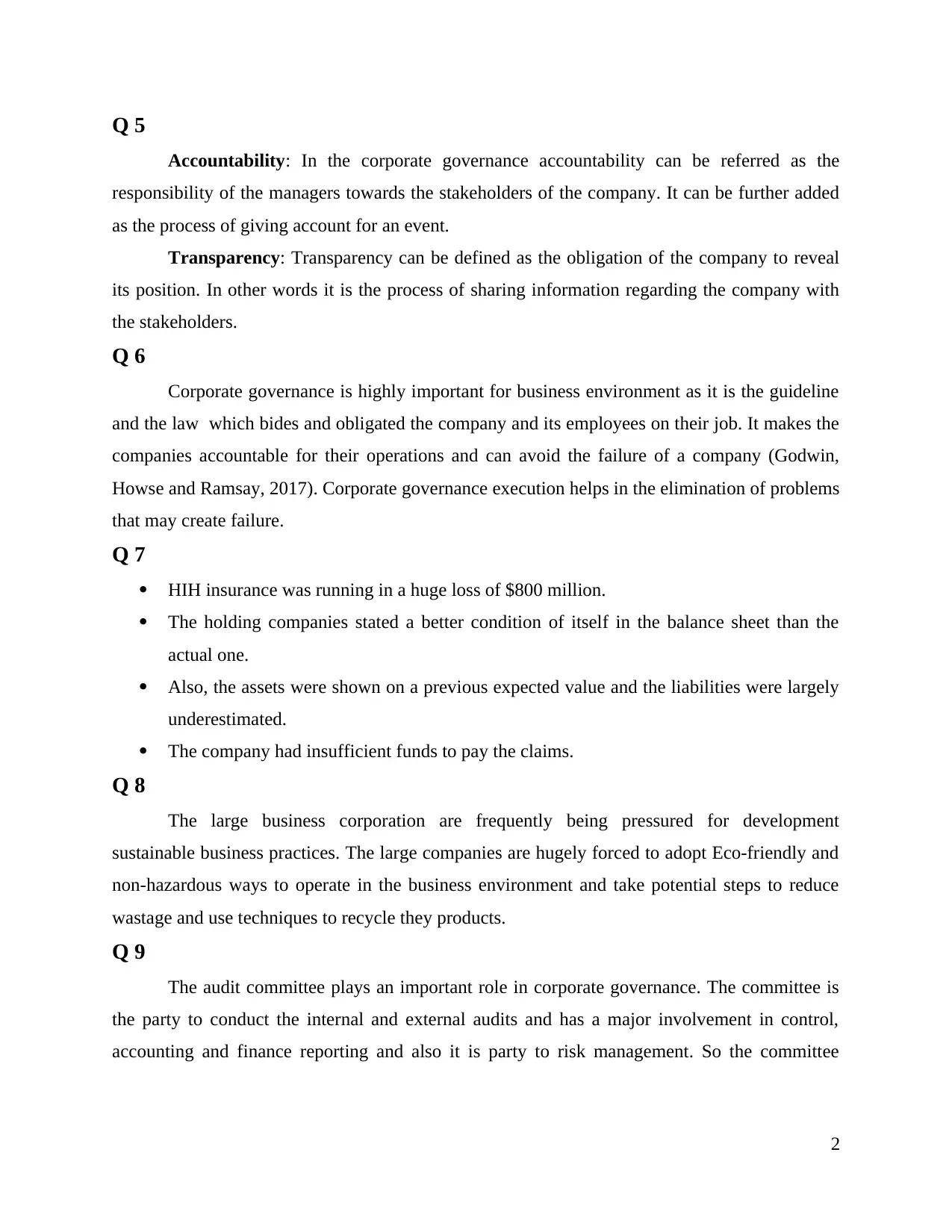
Q 5
Accountability: In the corporate governance accountability can be referred as the
responsibility of the managers towards the stakeholders of the company. It can be further added
as the process of giving account for an event.
Transparency: Transparency can be defined as the obligation of the company to reveal
its position. In other words it is the process of sharing information regarding the company with
the stakeholders.
Q 6
Corporate governance is highly important for business environment as it is the guideline
and the law which bides and obligated the company and its employees on their job. It makes the
companies accountable for their operations and can avoid the failure of a company (Godwin,
Howse and Ramsay, 2017). Corporate governance execution helps in the elimination of problems
that may create failure.
Q 7
HIH insurance was running in a huge loss of $800 million.
The holding companies stated a better condition of itself in the balance sheet than the
actual one.
Also, the assets were shown on a previous expected value and the liabilities were largely
underestimated.
The company had insufficient funds to pay the claims.
Q 8
The large business corporation are frequently being pressured for development
sustainable business practices. The large companies are hugely forced to adopt Eco-friendly and
non-hazardous ways to operate in the business environment and take potential steps to reduce
wastage and use techniques to recycle they products.
Q 9
The audit committee plays an important role in corporate governance. The committee is
the party to conduct the internal and external audits and has a major involvement in control,
accounting and finance reporting and also it is party to risk management. So the committee
2
Accountability: In the corporate governance accountability can be referred as the
responsibility of the managers towards the stakeholders of the company. It can be further added
as the process of giving account for an event.
Transparency: Transparency can be defined as the obligation of the company to reveal
its position. In other words it is the process of sharing information regarding the company with
the stakeholders.
Q 6
Corporate governance is highly important for business environment as it is the guideline
and the law which bides and obligated the company and its employees on their job. It makes the
companies accountable for their operations and can avoid the failure of a company (Godwin,
Howse and Ramsay, 2017). Corporate governance execution helps in the elimination of problems
that may create failure.
Q 7
HIH insurance was running in a huge loss of $800 million.
The holding companies stated a better condition of itself in the balance sheet than the
actual one.
Also, the assets were shown on a previous expected value and the liabilities were largely
underestimated.
The company had insufficient funds to pay the claims.
Q 8
The large business corporation are frequently being pressured for development
sustainable business practices. The large companies are hugely forced to adopt Eco-friendly and
non-hazardous ways to operate in the business environment and take potential steps to reduce
wastage and use techniques to recycle they products.
Q 9
The audit committee plays an important role in corporate governance. The committee is
the party to conduct the internal and external audits and has a major involvement in control,
accounting and finance reporting and also it is party to risk management. So the committee
2
Paraphrase This Document
Need a fresh take? Get an instant paraphrase of this document with our AI Paraphraser

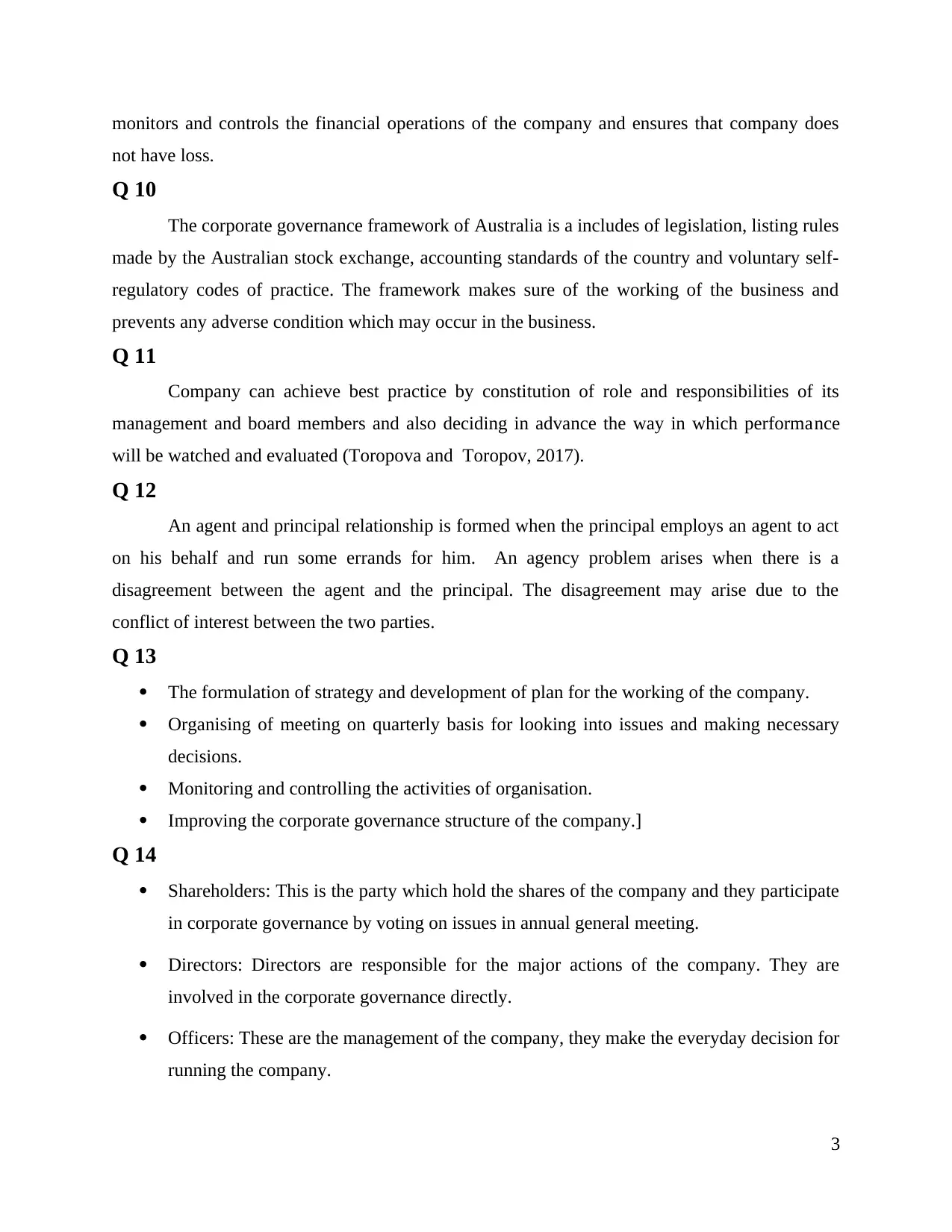
monitors and controls the financial operations of the company and ensures that company does
not have loss.
Q 10
The corporate governance framework of Australia is a includes of legislation, listing rules
made by the Australian stock exchange, accounting standards of the country and voluntary self-
regulatory codes of practice. The framework makes sure of the working of the business and
prevents any adverse condition which may occur in the business.
Q 11
Company can achieve best practice by constitution of role and responsibilities of its
management and board members and also deciding in advance the way in which performance
will be watched and evaluated (Toropova and Toropov, 2017).
Q 12
An agent and principal relationship is formed when the principal employs an agent to act
on his behalf and run some errands for him. An agency problem arises when there is a
disagreement between the agent and the principal. The disagreement may arise due to the
conflict of interest between the two parties.
Q 13
The formulation of strategy and development of plan for the working of the company.
Organising of meeting on quarterly basis for looking into issues and making necessary
decisions.
Monitoring and controlling the activities of organisation.
Improving the corporate governance structure of the company.]
Q 14
Shareholders: This is the party which hold the shares of the company and they participate
in corporate governance by voting on issues in annual general meeting.
Directors: Directors are responsible for the major actions of the company. They are
involved in the corporate governance directly.
Officers: These are the management of the company, they make the everyday decision for
running the company.
3
not have loss.
Q 10
The corporate governance framework of Australia is a includes of legislation, listing rules
made by the Australian stock exchange, accounting standards of the country and voluntary self-
regulatory codes of practice. The framework makes sure of the working of the business and
prevents any adverse condition which may occur in the business.
Q 11
Company can achieve best practice by constitution of role and responsibilities of its
management and board members and also deciding in advance the way in which performance
will be watched and evaluated (Toropova and Toropov, 2017).
Q 12
An agent and principal relationship is formed when the principal employs an agent to act
on his behalf and run some errands for him. An agency problem arises when there is a
disagreement between the agent and the principal. The disagreement may arise due to the
conflict of interest between the two parties.
Q 13
The formulation of strategy and development of plan for the working of the company.
Organising of meeting on quarterly basis for looking into issues and making necessary
decisions.
Monitoring and controlling the activities of organisation.
Improving the corporate governance structure of the company.]
Q 14
Shareholders: This is the party which hold the shares of the company and they participate
in corporate governance by voting on issues in annual general meeting.
Directors: Directors are responsible for the major actions of the company. They are
involved in the corporate governance directly.
Officers: These are the management of the company, they make the everyday decision for
running the company.
3

Q 15
Disclosure and transparency principle states that the company must disclose all the
relevant information about its financial position to its stakeholder. This principles helps
the shareholders to decide about their decision to invest in company or not.
The equitable treatment of shareholders: This principle suggests the company must treat
the shareholder equally according to his holding in the company (Bebbington, Unerman
and O'Dwyer, 2014).
Responsibilities of the board: The board has certain responsibilities towards the company,
which include making strategy and plans for the company and making decision for the
company.
Ensuring the basis of an effective corporate governance framework.
4
Disclosure and transparency principle states that the company must disclose all the
relevant information about its financial position to its stakeholder. This principles helps
the shareholders to decide about their decision to invest in company or not.
The equitable treatment of shareholders: This principle suggests the company must treat
the shareholder equally according to his holding in the company (Bebbington, Unerman
and O'Dwyer, 2014).
Responsibilities of the board: The board has certain responsibilities towards the company,
which include making strategy and plans for the company and making decision for the
company.
Ensuring the basis of an effective corporate governance framework.
4
⊘ This is a preview!⊘
Do you want full access?
Subscribe today to unlock all pages.

Trusted by 1+ million students worldwide

REFERENCES
Books and journals
Bebbington, J., Unerman, J. and O'Dwyer, B. eds., 2014. Sustainability accounting and
accountability. Routledge.
Badolato, P.G., Donelson, D.C. and Ege, M., 2014. Audit committee financial expertise and
earnings management: The role of status. Journal of Accounting and Economics, 58(2), pp.208-
230.
Godwin, A., Howse, T. and Ramsay, I., 2017. A jurisdictional comparison of the twin peaks
model of financial regulation. Journal of Banking Regulation, 18(2), pp.103-131.
Toropova, A.P. and Toropov, A.A., 2017. Hybrid Optimal Descriptors as a Tool to Predict Skin
Sensitization in accordance to OECD principles. Toxicology Letters, 275, pp.57-66.
5
Books and journals
Bebbington, J., Unerman, J. and O'Dwyer, B. eds., 2014. Sustainability accounting and
accountability. Routledge.
Badolato, P.G., Donelson, D.C. and Ege, M., 2014. Audit committee financial expertise and
earnings management: The role of status. Journal of Accounting and Economics, 58(2), pp.208-
230.
Godwin, A., Howse, T. and Ramsay, I., 2017. A jurisdictional comparison of the twin peaks
model of financial regulation. Journal of Banking Regulation, 18(2), pp.103-131.
Toropova, A.P. and Toropov, A.A., 2017. Hybrid Optimal Descriptors as a Tool to Predict Skin
Sensitization in accordance to OECD principles. Toxicology Letters, 275, pp.57-66.
5
1 out of 7
Related Documents
Your All-in-One AI-Powered Toolkit for Academic Success.
+13062052269
info@desklib.com
Available 24*7 on WhatsApp / Email
Unlock your academic potential
Copyright © 2020–2026 A2Z Services. All Rights Reserved. Developed and managed by ZUCOL.