University Management Accounting: Decision Making Role Report

Verified

Added on  2020/03/01

|9
|1569
|27
Report
AI Summary
This report delves into the critical role of management accountants in organizational decision-making processes. It examines the functions of management accountants according to the Chattered Institute of Management Accountant (CIMA), emphasizing their involvement in analyzing, interpreting, and communicating business-related information to aid sustainable resource utilization and profit optimization. The report explores the three key areas of management accounting: strategic management, performance management, and risk management. It highlights the importance of unit costs and accurate costing in setting selling prices, evaluating product portfolios, and making informed decisions. The document also discusses the significance of choosing the best method for assigning costs and relevant costs, and it concludes by emphasizing the impact of management accounting on enhancing financial performance. The report references various academic sources to support its arguments and provides illustrative figures to clarify concepts.
Document Page
Running head: MANAGEMENT ACCOUNTING
Role of the Management Accountant in Decision Making
Name of the Student
Name of the University
Author Note
tabler-icon-diamond-filled.svg

Paraphrase This Document

Need a fresh take? Get an instant paraphrase of this document with our AI Paraphraser
Document Page
1
MANAGEMENT ACCOUNTING
Part C
Role of the management accountant in Decision Making
According to the Chattered Institute of Management Accountant (CIMA), the
management accountants are the persons who are concerned with the analysis, identification,
preparation, measurement, accumulation, interpretation and communication of the business
and management related information. Such effective business communication with the higher
managerial level by the management accountants help in the sustainable use of the available
resources. The sustainable use in turn helps the company to grab more profit via optimized
revision of the expenditure chart. Garrison, Noreen and Brewer (2006) best described the
term management accountant. According to them, they are the people who is concerned with
providing information to the managers or the higher managing authority.
The management accountants are also involved in the preparation of the financial
reports for several non-management groups like the shareholders, regulatory agencies,
creditors and tax authorities.
Document Page
2
MANAGEMENT ACCOUNTING
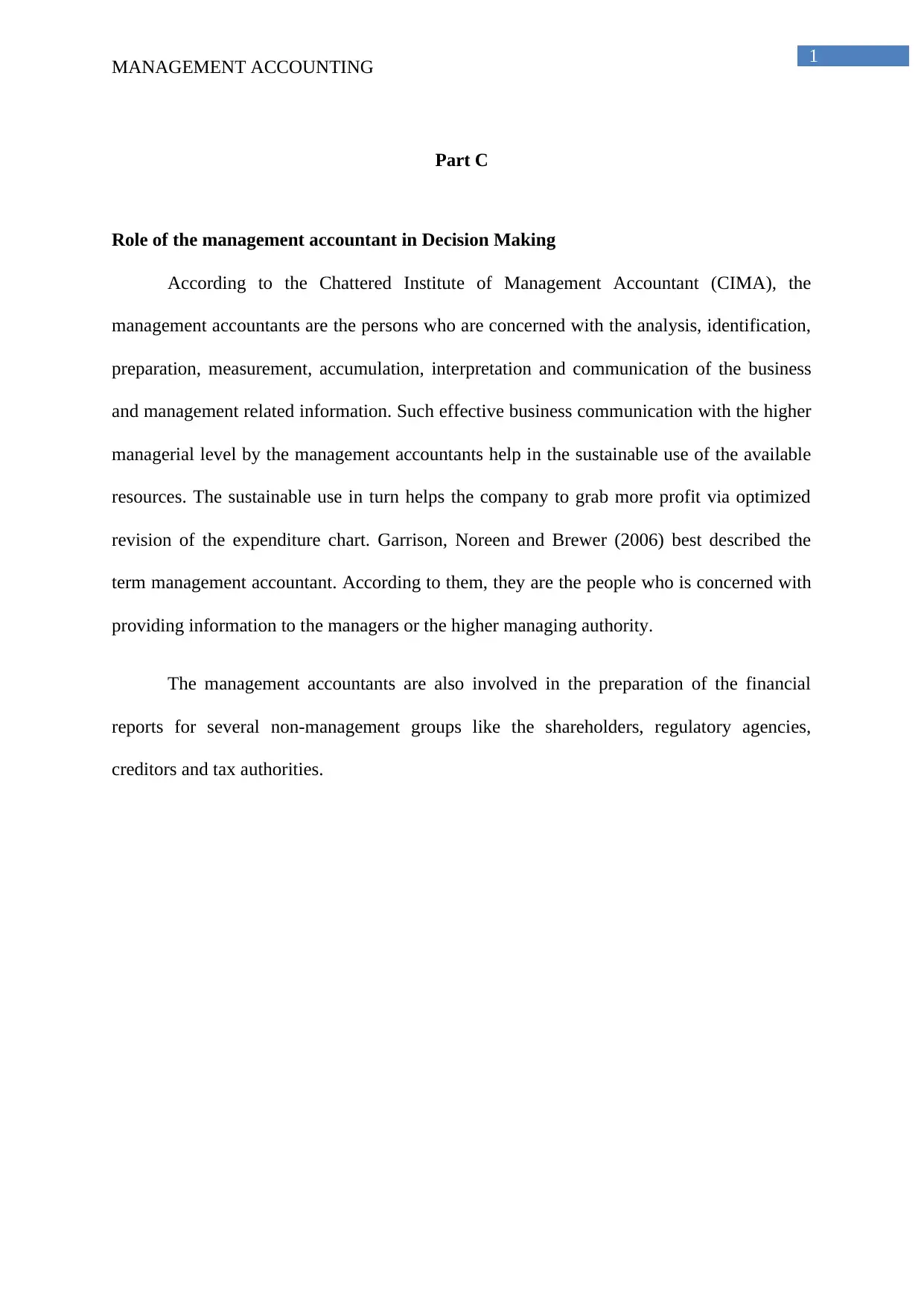
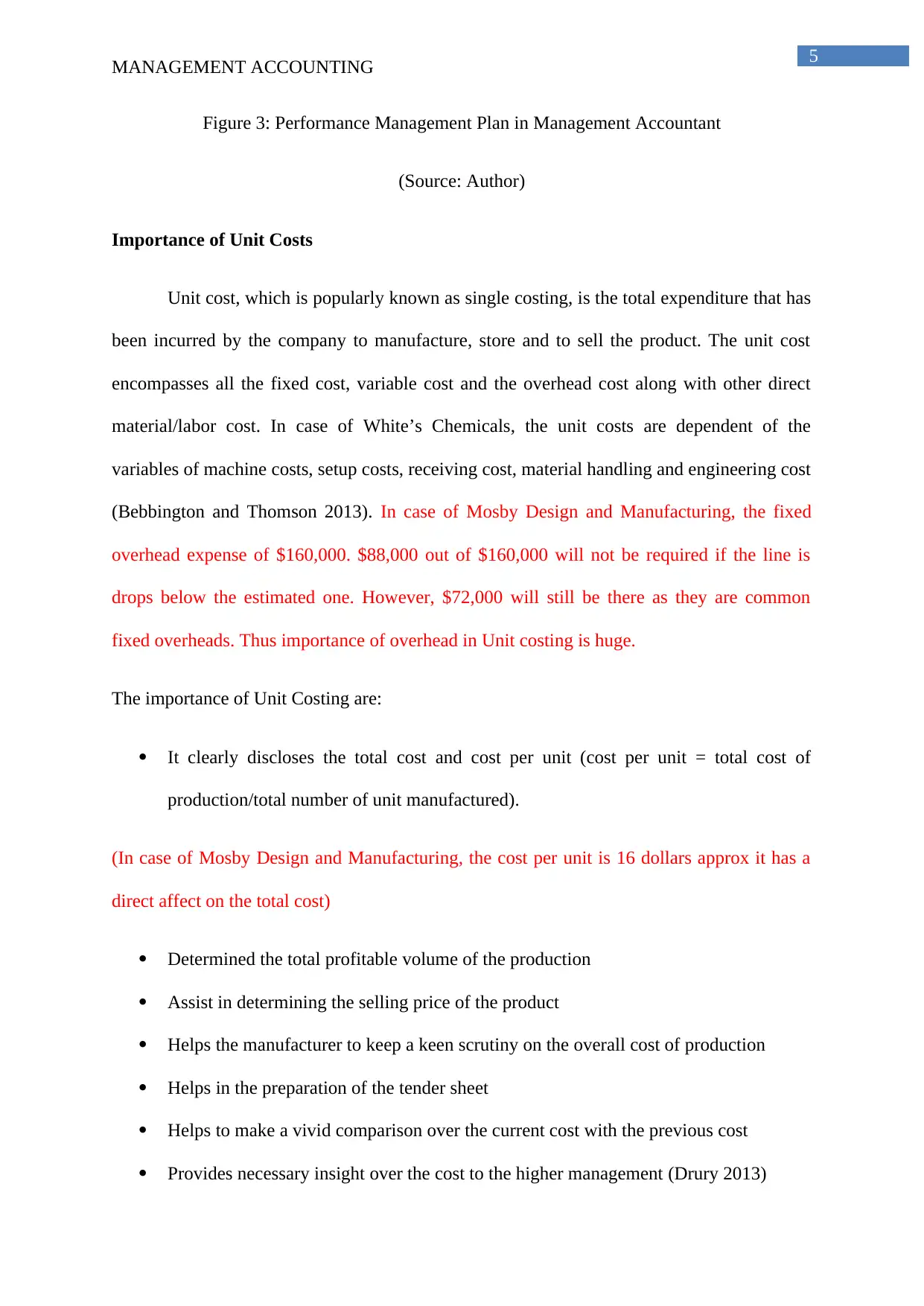
Figure: Management Accountant in an Organization
(Source: Bamber et al. 2008)
Following the industrial revolution, there occurred an increased in the amount of the
mechanized production along with size and the complexicity of the process. According to the
accounting historians, separation of the ownership in the private limited companies, led to
the increase in the number of the companies followed by popularity of the concept of cost
accounting or management accountant. Management accountant plays an important part of
the organizational economic information system with a principal role in decision-making
(Ward 2012). The three areas in which the accounting decision making of management
accountant is being practiced are:
Strategic Management
Performance Management
Risk Management
Document Page
3
MANAGEMENT ACCOUNTING
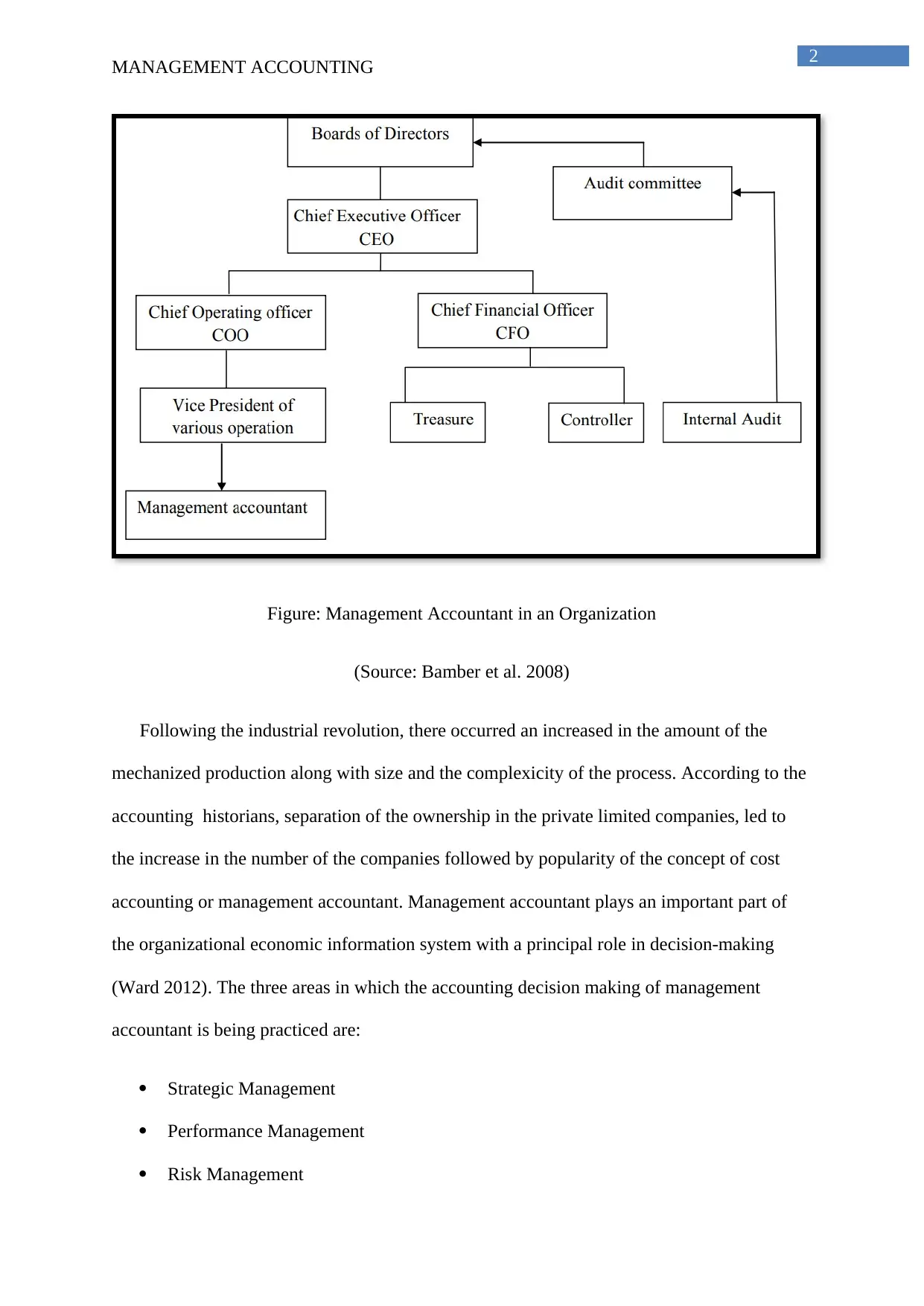
For proper implementation of all three above mentioned management plans, the
management accountant involve in setting specific goals while directing and controlling them
as per the requirement of the company. By directing and controlling, it means that tactical
manipulation of the plans and thus manipulating the decision or facilitating in the decision
making (Langfield-Smith, Thorne and Hilton 2008).
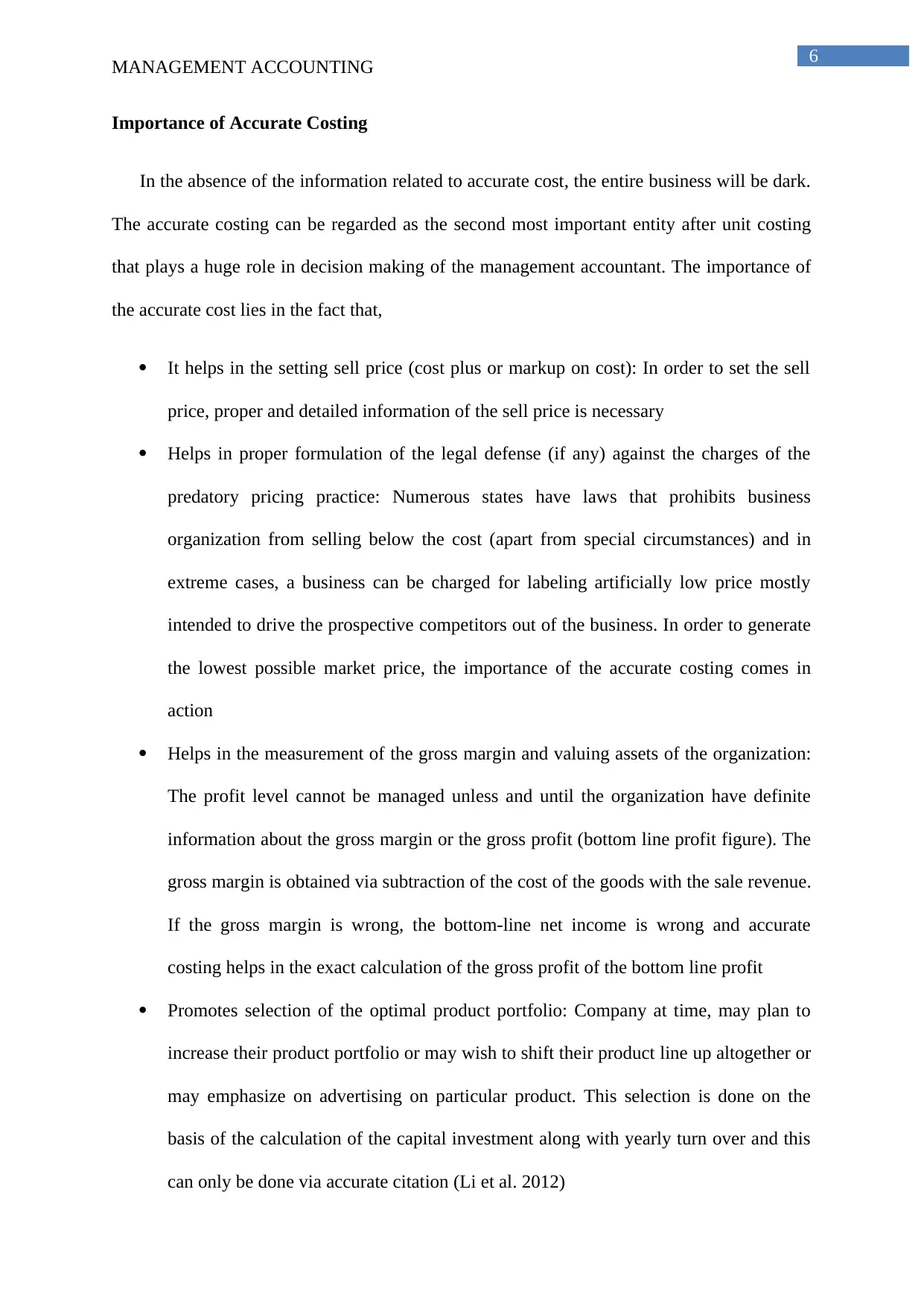
Figure: Steps in decision making
(Source: Author)
Strategic Management
tabler-icon-diamond-filled.svg

Paraphrase This Document

Need a fresh take? Get an instant paraphrase of this document with our AI Paraphraser
Document Page
4
MANAGEMENT ACCOUNTING
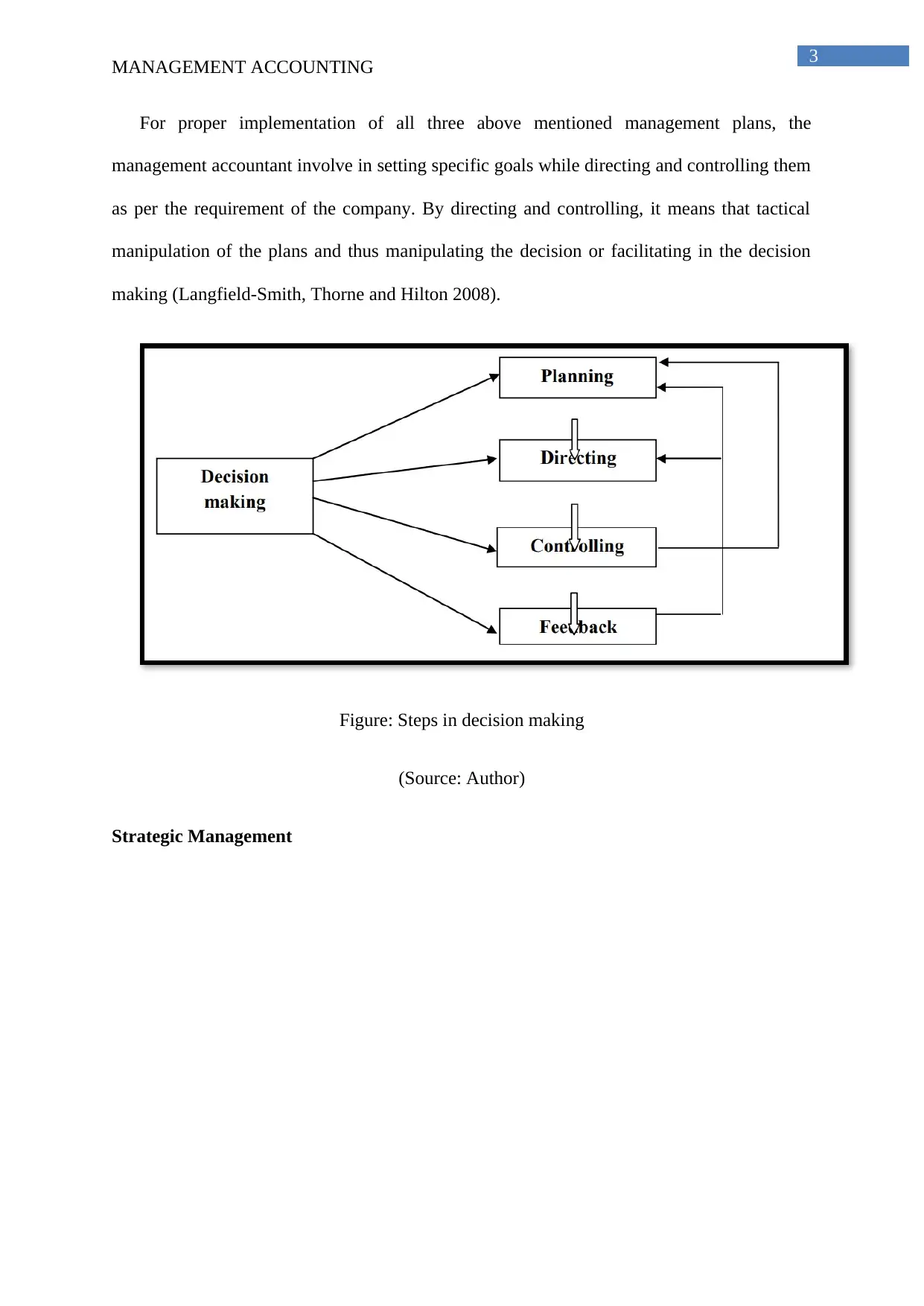
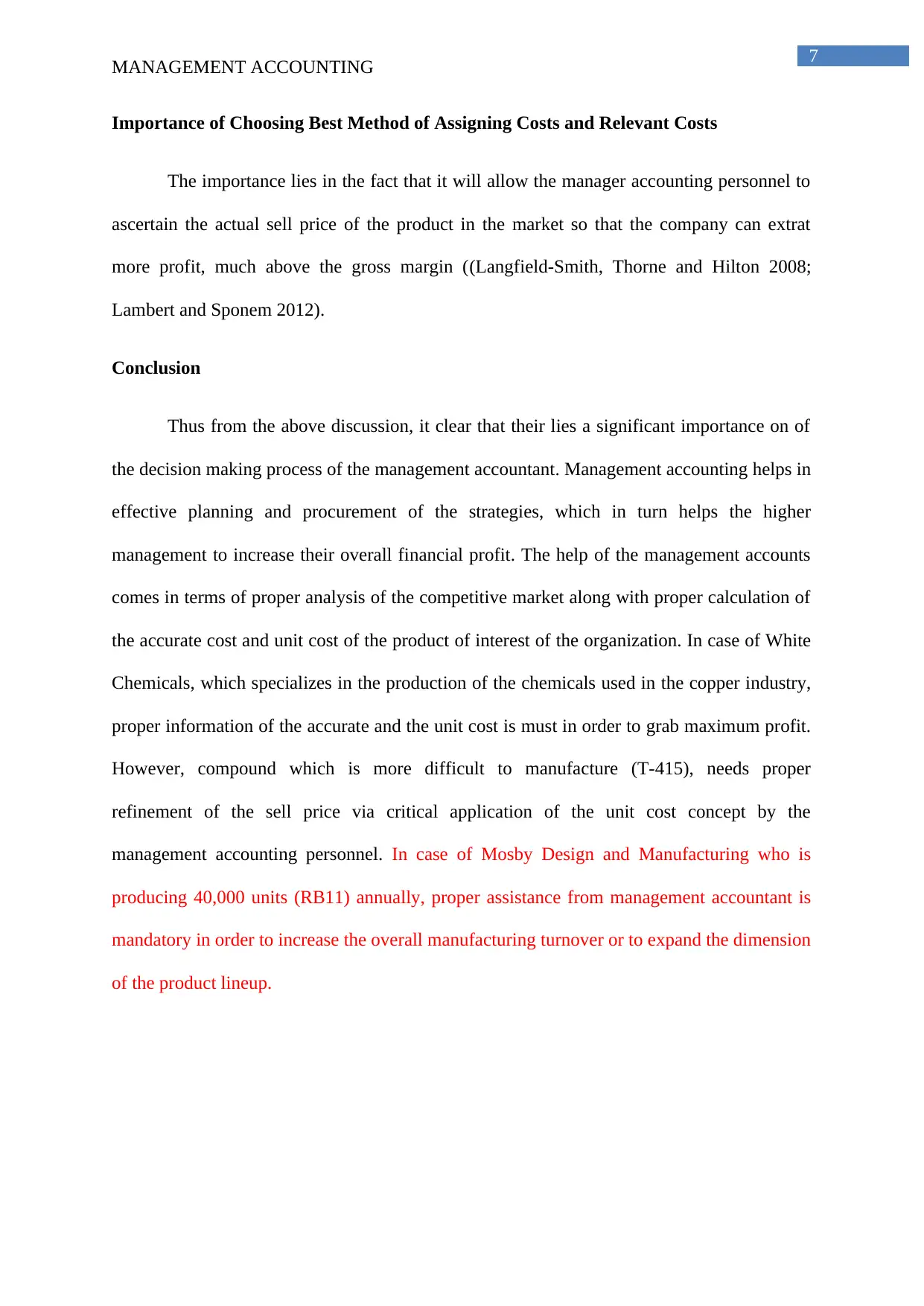
Figure 2: Strategic Management Model in Management Accountant
(Source: Isaac Mwita 2000)
Performance Management
Document Page
5
MANAGEMENT ACCOUNTING
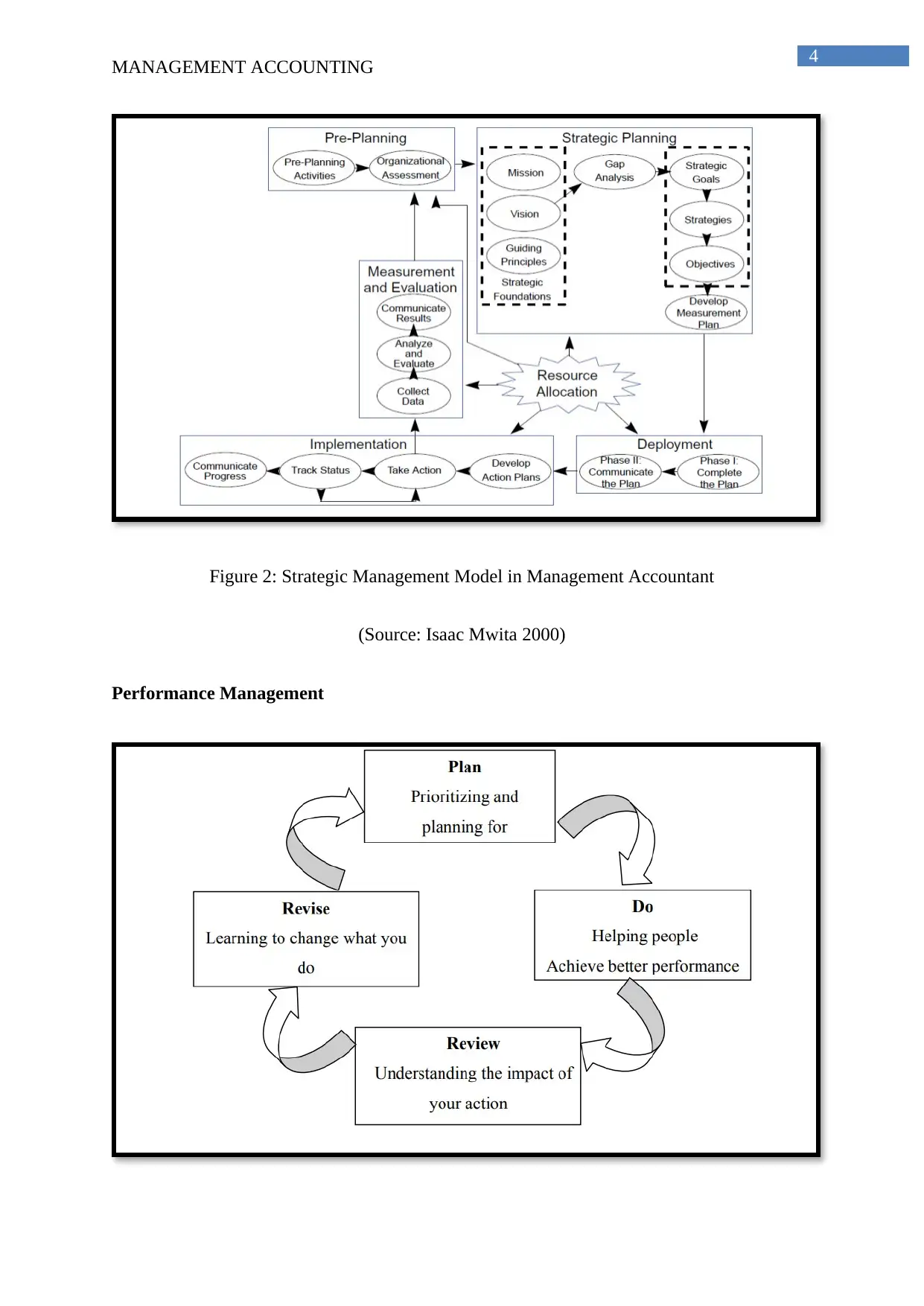
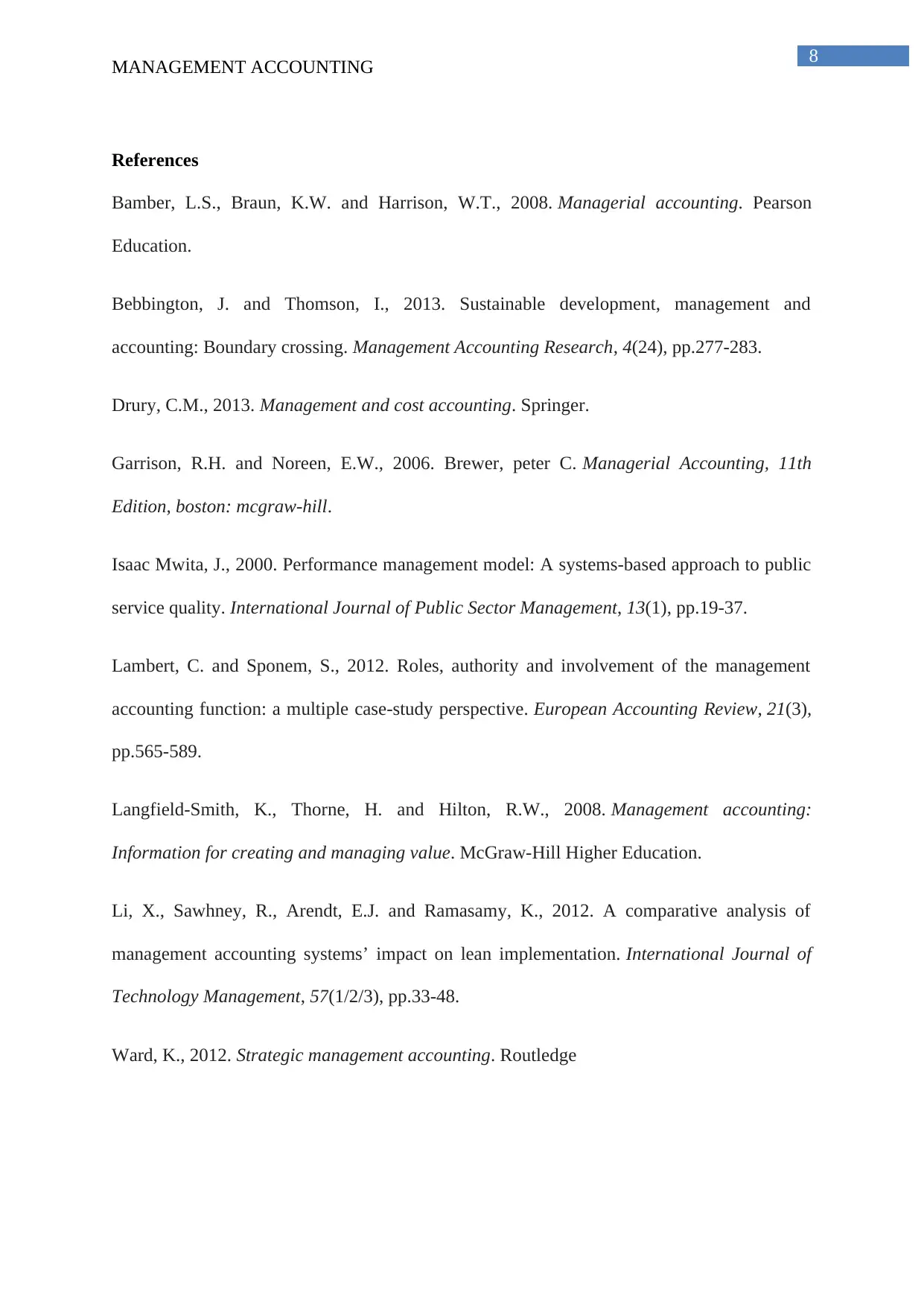
Figure 3: Performance Management Plan in Management Accountant
(Source: Author)
Importance of Unit Costs
Unit cost, which is popularly known as single costing, is the total expenditure that has
been incurred by the company to manufacture, store and to sell the product. The unit cost
encompasses all the fixed cost, variable cost and the overhead cost along with other direct
material/labor cost. In case of White’s Chemicals, the unit costs are dependent of the
variables of machine costs, setup costs, receiving cost, material handling and engineering cost
(Bebbington and Thomson 2013). In case of Mosby Design and Manufacturing, the fixed
overhead expense of $160,000. $88,000 out of $160,000 will not be required if the line is
drops below the estimated one. However, $72,000 will still be there as they are common
fixed overheads. Thus importance of overhead in Unit costing is huge.
The importance of Unit Costing are:
It clearly discloses the total cost and cost per unit (cost per unit = total cost of
production/total number of unit manufactured).
(In case of Mosby Design and Manufacturing, the cost per unit is 16 dollars approx it has a
direct affect on the total cost)
Determined the total profitable volume of the production
Assist in determining the selling price of the product
Helps the manufacturer to keep a keen scrutiny on the overall cost of production
Helps in the preparation of the tender sheet
Helps to make a vivid comparison over the current cost with the previous cost
Provides necessary insight over the cost to the higher management (Drury 2013)
Document Page
6
MANAGEMENT ACCOUNTING
Importance of Accurate Costing
In the absence of the information related to accurate cost, the entire business will be dark.
The accurate costing can be regarded as the second most important entity after unit costing
that plays a huge role in decision making of the management accountant. The importance of
the accurate cost lies in the fact that,
It helps in the setting sell price (cost plus or markup on cost): In order to set the sell
price, proper and detailed information of the sell price is necessary
Helps in proper formulation of the legal defense (if any) against the charges of the
predatory pricing practice: Numerous states have laws that prohibits business
organization from selling below the cost (apart from special circumstances) and in
extreme cases, a business can be charged for labeling artificially low price mostly
intended to drive the prospective competitors out of the business. In order to generate
the lowest possible market price, the importance of the accurate costing comes in
action
Helps in the measurement of the gross margin and valuing assets of the organization:
The profit level cannot be managed unless and until the organization have definite
information about the gross margin or the gross profit (bottom line profit figure). The
gross margin is obtained via subtraction of the cost of the goods with the sale revenue.
If the gross margin is wrong, the bottom-line net income is wrong and accurate
costing helps in the exact calculation of the gross profit of the bottom line profit
Promotes selection of the optimal product portfolio: Company at time, may plan to
increase their product portfolio or may wish to shift their product line up altogether or
may emphasize on advertising on particular product. This selection is done on the
basis of the calculation of the capital investment along with yearly turn over and this
can only be done via accurate citation (Li et al. 2012)
tabler-icon-diamond-filled.svg

Paraphrase This Document

Need a fresh take? Get an instant paraphrase of this document with our AI Paraphraser
Document Page
7
MANAGEMENT ACCOUNTING
Importance of Choosing Best Method of Assigning Costs and Relevant Costs
The importance lies in the fact that it will allow the manager accounting personnel to
ascertain the actual sell price of the product in the market so that the company can extrat
more profit, much above the gross margin ((Langfield-Smith, Thorne and Hilton 2008;
Lambert and Sponem 2012).
Conclusion
Thus from the above discussion, it clear that their lies a significant importance on of
the decision making process of the management accountant. Management accounting helps in
effective planning and procurement of the strategies, which in turn helps the higher
management to increase their overall financial profit. The help of the management accounts
comes in terms of proper analysis of the competitive market along with proper calculation of
the accurate cost and unit cost of the product of interest of the organization. In case of White
Chemicals, which specializes in the production of the chemicals used in the copper industry,
proper information of the accurate and the unit cost is must in order to grab maximum profit.
However, compound which is more difficult to manufacture (T-415), needs proper
refinement of the sell price via critical application of the unit cost concept by the
management accounting personnel. In case of Mosby Design and Manufacturing who is
producing 40,000 units (RB11) annually, proper assistance from management accountant is
mandatory in order to increase the overall manufacturing turnover or to expand the dimension
of the product lineup.
Document Page
8
MANAGEMENT ACCOUNTING
References
Bamber, L.S., Braun, K.W. and Harrison, W.T., 2008. Managerial accounting. Pearson
Education.
Bebbington, J. and Thomson, I., 2013. Sustainable development, management and
accounting: Boundary crossing. Management Accounting Research, 4(24), pp.277-283.
Drury, C.M., 2013. Management and cost accounting. Springer.
Garrison, R.H. and Noreen, E.W., 2006. Brewer, peter C. Managerial Accounting, 11th
Edition, boston: mcgraw-hill.
Isaac Mwita, J., 2000. Performance management model: A systems-based approach to public
service quality. International Journal of Public Sector Management, 13(1), pp.19-37.
Lambert, C. and Sponem, S., 2012. Roles, authority and involvement of the management
accounting function: a multiple case-study perspective. European Accounting Review, 21(3),
pp.565-589.
Langfield-Smith, K., Thorne, H. and Hilton, R.W., 2008. Management accounting:
Information for creating and managing value. McGraw-Hill Higher Education.
Li, X., Sawhney, R., Arendt, E.J. and Ramasamy, K., 2012. A comparative analysis of
management accounting systems’ impact on lean implementation. International Journal of
Technology Management, 57(1/2/3), pp.33-48.
Ward, K., 2012. Strategic management accounting. Routledge
chevron_up_icon
1 out of 9
circle_padding
hide_on_mobile
zoom_out_icon
[object Object]