Analysis of Contract and Negligence in Business Law (Report)
VerifiedAdded on 2019/12/28
|14
|5659
|180
Report
AI Summary
This report provides a comprehensive overview of contract law and negligence within a business context. It begins by outlining the essential elements of a contract, including offer, acceptance, consideration, and capacity, emphasizing their importance in forming legally binding agreements. The report then explores different types of contracts, such as valid, voidable, and void contracts, along with express and implied terms, exemption clauses, and innominate terms. It also delves into the application of contract law through a case study, analyzing a scenario involving a book purchase and the concept of offer and acceptance. Furthermore, the report examines the Sales of Goods Act, focusing on conditions and warranties. The report also discusses the nature of liability in negligence, the significance of vicarious liability, and the distinctions between tort and contractual liability. The report then explores the vicarious liabilities of business groups for the mistakes of their staff. Finally, the report concludes with a summary of the key concepts and their practical implications for business operations.
ASPECTS OF CONTRACT AND
NEGLIGENCE OF BUSINESS
1
NEGLIGENCE OF BUSINESS
1

Paraphrase This Document
Need a fresh take? Get an instant paraphrase of this document with our AI Paraphraser
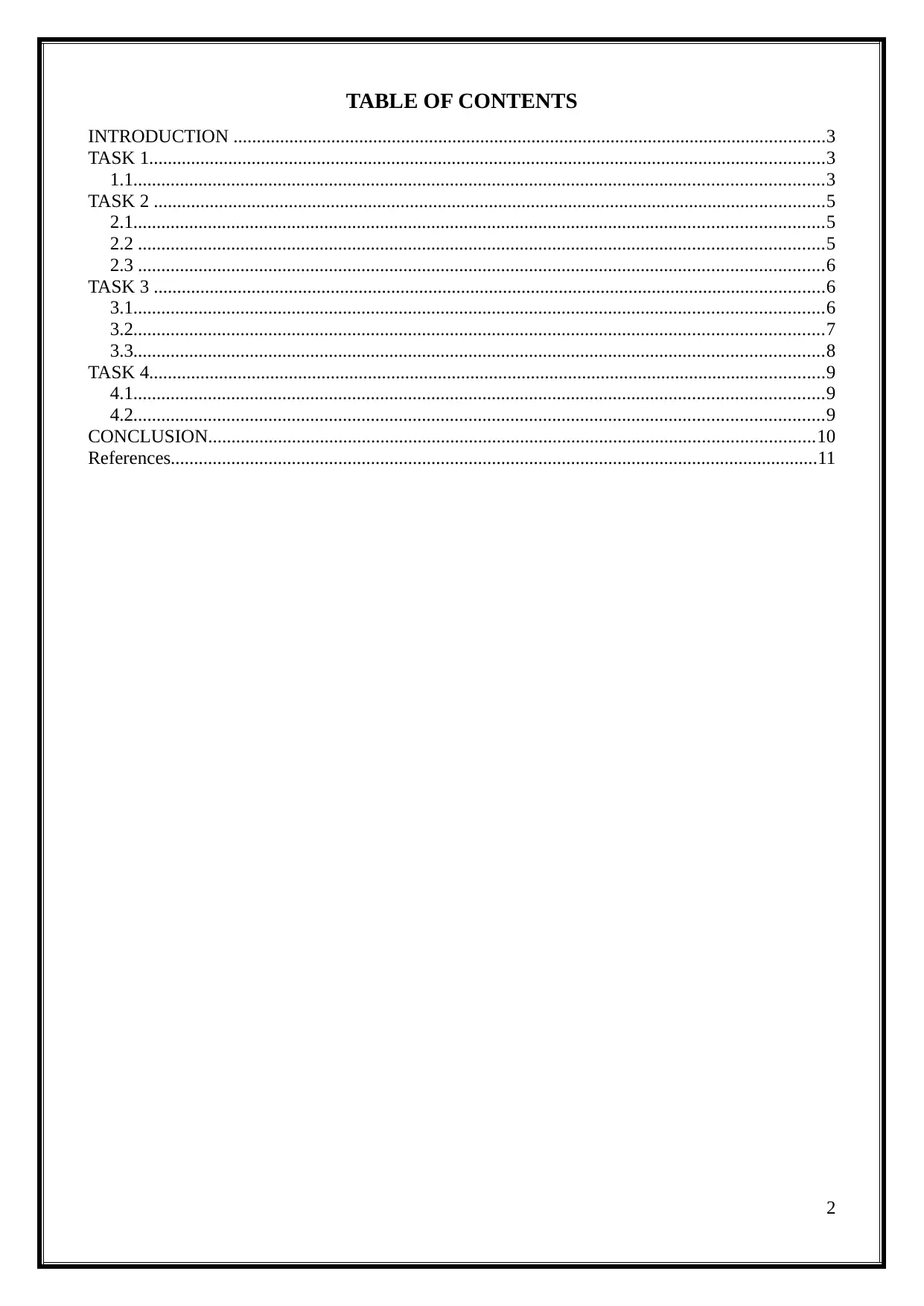
TABLE OF CONTENTS
INTRODUCTION ...............................................................................................................................3
TASK 1.................................................................................................................................................3
1.1....................................................................................................................................................3
TASK 2 ................................................................................................................................................5
2.1....................................................................................................................................................5
2.2 ...................................................................................................................................................5
2.3 ...................................................................................................................................................6
TASK 3 ................................................................................................................................................6
3.1....................................................................................................................................................6
3.2....................................................................................................................................................7
3.3....................................................................................................................................................8
TASK 4.................................................................................................................................................9
4.1....................................................................................................................................................9
4.2....................................................................................................................................................9
CONCLUSION..................................................................................................................................10
References...........................................................................................................................................11
2
INTRODUCTION ...............................................................................................................................3
TASK 1.................................................................................................................................................3
1.1....................................................................................................................................................3
TASK 2 ................................................................................................................................................5
2.1....................................................................................................................................................5
2.2 ...................................................................................................................................................5
2.3 ...................................................................................................................................................6
TASK 3 ................................................................................................................................................6
3.1....................................................................................................................................................6
3.2....................................................................................................................................................7
3.3....................................................................................................................................................8
TASK 4.................................................................................................................................................9
4.1....................................................................................................................................................9
4.2....................................................................................................................................................9
CONCLUSION..................................................................................................................................10
References...........................................................................................................................................11
2
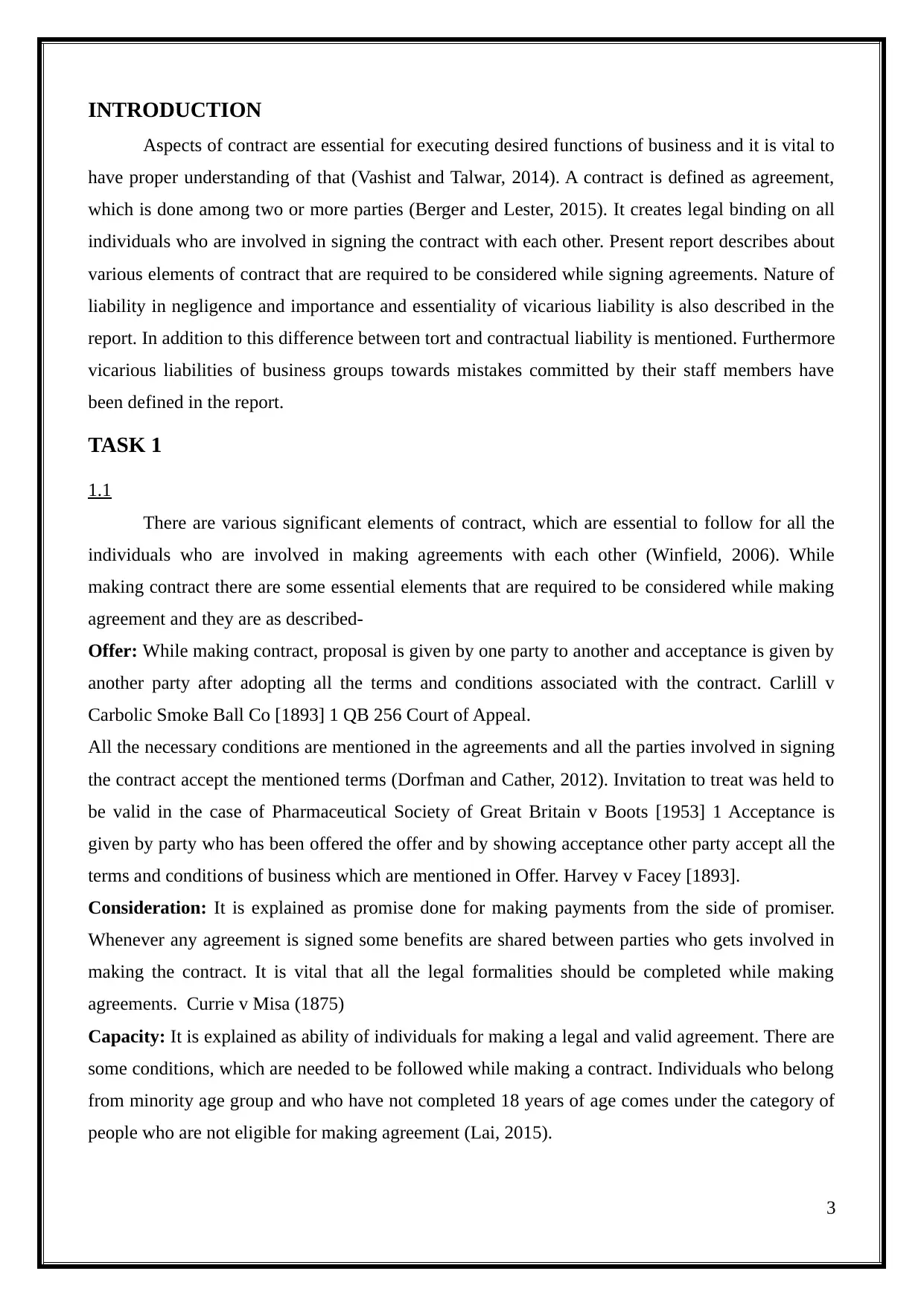
INTRODUCTION
Aspects of contract are essential for executing desired functions of business and it is vital to
have proper understanding of that (Vashist and Talwar, 2014). A contract is defined as agreement,
which is done among two or more parties (Berger and Lester, 2015). It creates legal binding on all
individuals who are involved in signing the contract with each other. Present report describes about
various elements of contract that are required to be considered while signing agreements. Nature of
liability in negligence and importance and essentiality of vicarious liability is also described in the
report. In addition to this difference between tort and contractual liability is mentioned. Furthermore
vicarious liabilities of business groups towards mistakes committed by their staff members have
been defined in the report.
TASK 1
1.1
There are various significant elements of contract, which are essential to follow for all the
individuals who are involved in making agreements with each other (Winfield, 2006). While
making contract there are some essential elements that are required to be considered while making
agreement and they are as described-
Offer: While making contract, proposal is given by one party to another and acceptance is given by
another party after adopting all the terms and conditions associated with the contract. Carlill v
Carbolic Smoke Ball Co [1893] 1 QB 256 Court of Appeal.
All the necessary conditions are mentioned in the agreements and all the parties involved in signing
the contract accept the mentioned terms (Dorfman and Cather, 2012). Invitation to treat was held to
be valid in the case of Pharmaceutical Society of Great Britain v Boots [1953] 1 Acceptance is
given by party who has been offered the offer and by showing acceptance other party accept all the
terms and conditions of business which are mentioned in Offer. Harvey v Facey [1893].
Consideration: It is explained as promise done for making payments from the side of promiser.
Whenever any agreement is signed some benefits are shared between parties who gets involved in
making the contract. It is vital that all the legal formalities should be completed while making
agreements. Currie v Misa (1875)
Capacity: It is explained as ability of individuals for making a legal and valid agreement. There are
some conditions, which are needed to be followed while making a contract. Individuals who belong
from minority age group and who have not completed 18 years of age comes under the category of
people who are not eligible for making agreement (Lai, 2015).
3
Aspects of contract are essential for executing desired functions of business and it is vital to
have proper understanding of that (Vashist and Talwar, 2014). A contract is defined as agreement,
which is done among two or more parties (Berger and Lester, 2015). It creates legal binding on all
individuals who are involved in signing the contract with each other. Present report describes about
various elements of contract that are required to be considered while signing agreements. Nature of
liability in negligence and importance and essentiality of vicarious liability is also described in the
report. In addition to this difference between tort and contractual liability is mentioned. Furthermore
vicarious liabilities of business groups towards mistakes committed by their staff members have
been defined in the report.
TASK 1
1.1
There are various significant elements of contract, which are essential to follow for all the
individuals who are involved in making agreements with each other (Winfield, 2006). While
making contract there are some essential elements that are required to be considered while making
agreement and they are as described-
Offer: While making contract, proposal is given by one party to another and acceptance is given by
another party after adopting all the terms and conditions associated with the contract. Carlill v
Carbolic Smoke Ball Co [1893] 1 QB 256 Court of Appeal.
All the necessary conditions are mentioned in the agreements and all the parties involved in signing
the contract accept the mentioned terms (Dorfman and Cather, 2012). Invitation to treat was held to
be valid in the case of Pharmaceutical Society of Great Britain v Boots [1953] 1 Acceptance is
given by party who has been offered the offer and by showing acceptance other party accept all the
terms and conditions of business which are mentioned in Offer. Harvey v Facey [1893].
Consideration: It is explained as promise done for making payments from the side of promiser.
Whenever any agreement is signed some benefits are shared between parties who gets involved in
making the contract. It is vital that all the legal formalities should be completed while making
agreements. Currie v Misa (1875)
Capacity: It is explained as ability of individuals for making a legal and valid agreement. There are
some conditions, which are needed to be followed while making a contract. Individuals who belong
from minority age group and who have not completed 18 years of age comes under the category of
people who are not eligible for making agreement (Lai, 2015).
3
⊘ This is a preview!⊘
Do you want full access?
Subscribe today to unlock all pages.

Trusted by 1+ million students worldwide
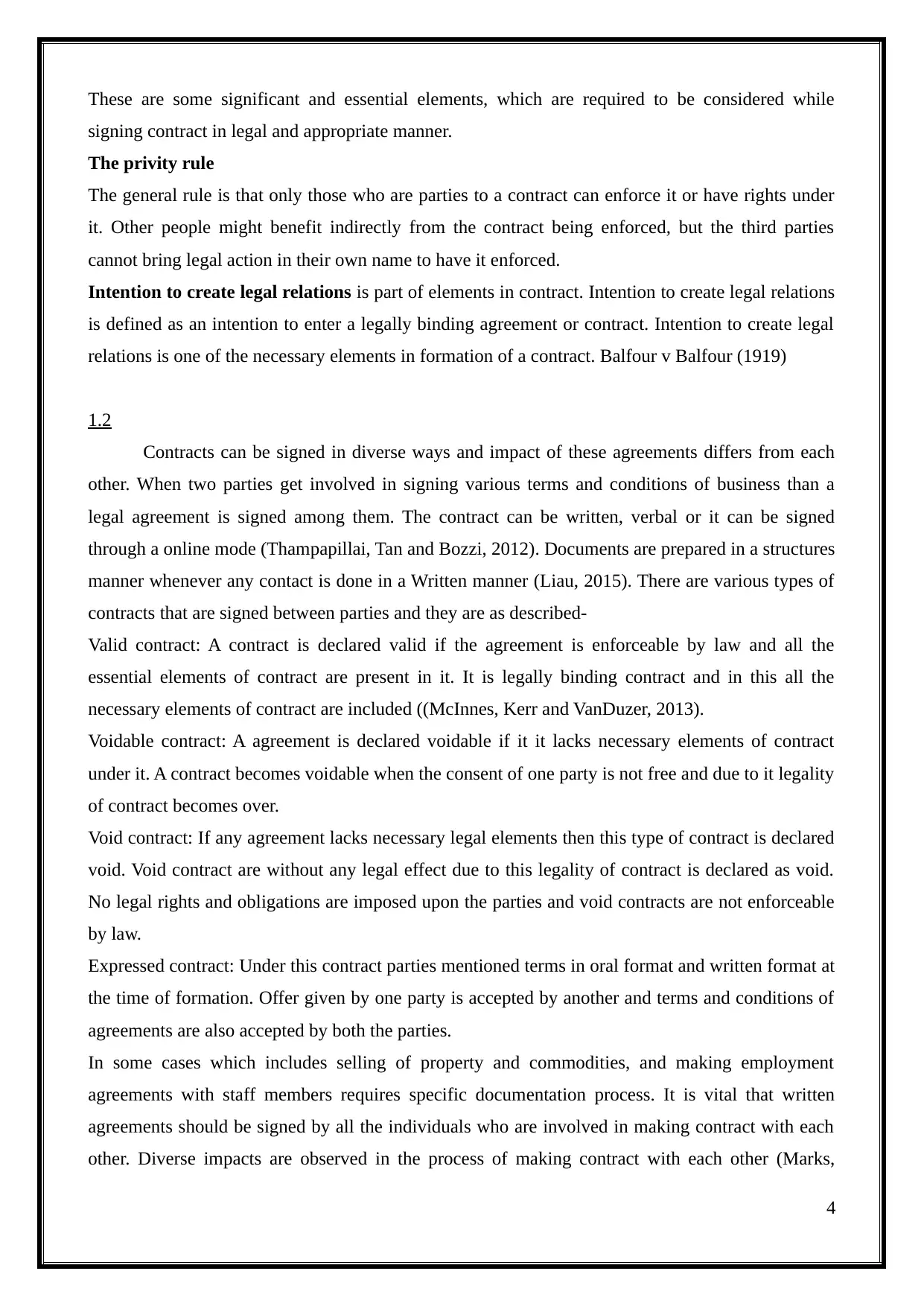
These are some significant and essential elements, which are required to be considered while
signing contract in legal and appropriate manner.
The privity rule
The general rule is that only those who are parties to a contract can enforce it or have rights under
it. Other people might benefit indirectly from the contract being enforced, but the third parties
cannot bring legal action in their own name to have it enforced.
Intention to create legal relations is part of elements in contract. Intention to create legal relations
is defined as an intention to enter a legally binding agreement or contract. Intention to create legal
relations is one of the necessary elements in formation of a contract. Balfour v Balfour (1919)
1.2
Contracts can be signed in diverse ways and impact of these agreements differs from each
other. When two parties get involved in signing various terms and conditions of business than a
legal agreement is signed among them. The contract can be written, verbal or it can be signed
through a online mode (Thampapillai, Tan and Bozzi, 2012). Documents are prepared in a structures
manner whenever any contact is done in a Written manner (Liau, 2015). There are various types of
contracts that are signed between parties and they are as described-
Valid contract: A contract is declared valid if the agreement is enforceable by law and all the
essential elements of contract are present in it. It is legally binding contract and in this all the
necessary elements of contract are included ((McInnes, Kerr and VanDuzer, 2013).
Voidable contract: A agreement is declared voidable if it it lacks necessary elements of contract
under it. A contract becomes voidable when the consent of one party is not free and due to it legality
of contract becomes over.
Void contract: If any agreement lacks necessary legal elements then this type of contract is declared
void. Void contract are without any legal effect due to this legality of contract is declared as void.
No legal rights and obligations are imposed upon the parties and void contracts are not enforceable
by law.
Expressed contract: Under this contract parties mentioned terms in oral format and written format at
the time of formation. Offer given by one party is accepted by another and terms and conditions of
agreements are also accepted by both the parties.
In some cases which includes selling of property and commodities, and making employment
agreements with staff members requires specific documentation process. It is vital that written
agreements should be signed by all the individuals who are involved in making contract with each
other. Diverse impacts are observed in the process of making contract with each other (Marks,
4
signing contract in legal and appropriate manner.
The privity rule
The general rule is that only those who are parties to a contract can enforce it or have rights under
it. Other people might benefit indirectly from the contract being enforced, but the third parties
cannot bring legal action in their own name to have it enforced.
Intention to create legal relations is part of elements in contract. Intention to create legal relations
is defined as an intention to enter a legally binding agreement or contract. Intention to create legal
relations is one of the necessary elements in formation of a contract. Balfour v Balfour (1919)
1.2
Contracts can be signed in diverse ways and impact of these agreements differs from each
other. When two parties get involved in signing various terms and conditions of business than a
legal agreement is signed among them. The contract can be written, verbal or it can be signed
through a online mode (Thampapillai, Tan and Bozzi, 2012). Documents are prepared in a structures
manner whenever any contact is done in a Written manner (Liau, 2015). There are various types of
contracts that are signed between parties and they are as described-
Valid contract: A contract is declared valid if the agreement is enforceable by law and all the
essential elements of contract are present in it. It is legally binding contract and in this all the
necessary elements of contract are included ((McInnes, Kerr and VanDuzer, 2013).
Voidable contract: A agreement is declared voidable if it it lacks necessary elements of contract
under it. A contract becomes voidable when the consent of one party is not free and due to it legality
of contract becomes over.
Void contract: If any agreement lacks necessary legal elements then this type of contract is declared
void. Void contract are without any legal effect due to this legality of contract is declared as void.
No legal rights and obligations are imposed upon the parties and void contracts are not enforceable
by law.
Expressed contract: Under this contract parties mentioned terms in oral format and written format at
the time of formation. Offer given by one party is accepted by another and terms and conditions of
agreements are also accepted by both the parties.
In some cases which includes selling of property and commodities, and making employment
agreements with staff members requires specific documentation process. It is vital that written
agreements should be signed by all the individuals who are involved in making contract with each
other. Diverse impacts are observed in the process of making contract with each other (Marks,
4
Paraphrase This Document
Need a fresh take? Get an instant paraphrase of this document with our AI Paraphraser
Marks and Jackson, 2013). Nowadays due to new innovations and advancements done in the
technology companies prefer to do online contracts. It aids in saving time and cost of enterprise for
making agreements. In cases when it becomes parties to meet face to face with each other online
contracts are signed. Sometimes there is no urgency and need for making written agreements and in
this type of cases verbal agreements are signed by parties with each other. When a agreement is
signed for selling or buying products with each other parties involved in this agreements get agree
on certain terms and conditions.
1.3
It is essential for all the parties involved in making contracts to know certain terms, which
are used in this process (O'malley, 2012). An agreement should necessarily have these conditions
and they are as explained-
Implied term: These are defined as terms that aid in setting down terms and conditions for
contract. The major objective of implied terms is to supplement an agreement for making the deal
effective. These terms assist in setting terms and conditions of contract in a transparent and fair
manner.
Expressed terms: These are defined as terms that are properly mentioned while making an
agreement and all the parties, which gets involved in signing the contract, agrees on the expressed
terms. Expressed terms are specifically mentioned in the contract and both the parties who sign
agreement accept and agree on the terms that are mentioned in the contract.
Exemption clause: Under this clause liability of parties is explained which are involved in signing
contract with each other (Sweet and Schneier, 2012). It is vital that wrongful and unlawful use of
exemption clause should be avoided while making contract with each other. Some parties makes use
of these clauses in unlawful manner and due to it conditions occur which lead towards breaching of
contract.
Innominate terms: These terms are explained as those conditions which are not appropriately
described in the contract (Turner and Turner, 2014). These terms become difficult to understood and
due to this reasons significant of contract also decreases. These terms keep vary little importance
whenever any agreement is signed.
Conditions: These are mentioned in the agreement and it becomes essential for individuals to
follow all the terms mentioned under it (Thomas and Wright, 2016). When any party breaks or
avoid the condition then another party deserves the right to take appropriate legal actin against the
another party.
5
technology companies prefer to do online contracts. It aids in saving time and cost of enterprise for
making agreements. In cases when it becomes parties to meet face to face with each other online
contracts are signed. Sometimes there is no urgency and need for making written agreements and in
this type of cases verbal agreements are signed by parties with each other. When a agreement is
signed for selling or buying products with each other parties involved in this agreements get agree
on certain terms and conditions.
1.3
It is essential for all the parties involved in making contracts to know certain terms, which
are used in this process (O'malley, 2012). An agreement should necessarily have these conditions
and they are as explained-
Implied term: These are defined as terms that aid in setting down terms and conditions for
contract. The major objective of implied terms is to supplement an agreement for making the deal
effective. These terms assist in setting terms and conditions of contract in a transparent and fair
manner.
Expressed terms: These are defined as terms that are properly mentioned while making an
agreement and all the parties, which gets involved in signing the contract, agrees on the expressed
terms. Expressed terms are specifically mentioned in the contract and both the parties who sign
agreement accept and agree on the terms that are mentioned in the contract.
Exemption clause: Under this clause liability of parties is explained which are involved in signing
contract with each other (Sweet and Schneier, 2012). It is vital that wrongful and unlawful use of
exemption clause should be avoided while making contract with each other. Some parties makes use
of these clauses in unlawful manner and due to it conditions occur which lead towards breaching of
contract.
Innominate terms: These terms are explained as those conditions which are not appropriately
described in the contract (Turner and Turner, 2014). These terms become difficult to understood and
due to this reasons significant of contract also decreases. These terms keep vary little importance
whenever any agreement is signed.
Conditions: These are mentioned in the agreement and it becomes essential for individuals to
follow all the terms mentioned under it (Thomas and Wright, 2016). When any party breaks or
avoid the condition then another party deserves the right to take appropriate legal actin against the
another party.
5
TASK 2
2.1
Contract is signed among parties for determining diverse terms and conditions of business.
In the present case scenario Ivans goes into Todor's bookshop and sees a HND law book, which was
kept for display for selling purpose. It was desire of Ivans to purchase the book from the counter
and he was ready to pay the price of book. The book was kept at price of $50. He took the book and
moved towards the counter to pay for it but owner of the shop refuses to sell the book. Todor the
owner of the shop describes the reason that copy of the book is last copy and it has been already
sold to another person naming Carl.
The owner accepts that he forgotten to remove the copy from the shelf and now the book is
not available for selling purpose. Ivan got disappointed after this. In this case an Offer was made by
Ivans to owner of the shop Todler. It was a offer given by Ivans and it is essential element of a
contract (Carter and Courtney, 2016.). The book was already sold to some other individual naming
Carl one day before so owner refused the proposal given by Ivans for purchasing the book. All the
essential elements of contract are present in this case. It becomes a case, which reflects all the
significant element of contract are present in this but as there was refusal of acceptance it can’t be
described as a valid contract.
2.2
There are various elements of a contract, which are needed to be considered properly while
making an agreement. Diverse elements under sales of contract act are as described-
A. A condition: It is essential for seller to mention all the terms and conditions, which are
related with selling commodities. Buyers are defined as people who are involved in activity
of purchasing goods (Carter and Courtney, 2016.). Delivery is described as voluntary
transfer of goods among individuals and future goods are described as commodities, which
are going to be manufactured by the seller after making of the contract. Poussard v Spiers
(1876) Poussard was engaged to appear in an operetta from the start of its London run for
three months. The plaintiff fell ill and the producers were forced to engage a substitute. A
week later Poussard recovered and offered to take her place, but the defendants refused to
take her back. The court held that the defendant's refusal was justified and that they were not
liable in damages. What chiefly influenced the court was that Poussard's illness was a
serious one of uncertain duration and the defendants could not put off the opening night
until she recovered. The obligation to perform from the first night was a condition of the
contract. Failure to carry out this term entitled the producers to repudiate Poussard's
6
2.1
Contract is signed among parties for determining diverse terms and conditions of business.
In the present case scenario Ivans goes into Todor's bookshop and sees a HND law book, which was
kept for display for selling purpose. It was desire of Ivans to purchase the book from the counter
and he was ready to pay the price of book. The book was kept at price of $50. He took the book and
moved towards the counter to pay for it but owner of the shop refuses to sell the book. Todor the
owner of the shop describes the reason that copy of the book is last copy and it has been already
sold to another person naming Carl.
The owner accepts that he forgotten to remove the copy from the shelf and now the book is
not available for selling purpose. Ivan got disappointed after this. In this case an Offer was made by
Ivans to owner of the shop Todler. It was a offer given by Ivans and it is essential element of a
contract (Carter and Courtney, 2016.). The book was already sold to some other individual naming
Carl one day before so owner refused the proposal given by Ivans for purchasing the book. All the
essential elements of contract are present in this case. It becomes a case, which reflects all the
significant element of contract are present in this but as there was refusal of acceptance it can’t be
described as a valid contract.
2.2
There are various elements of a contract, which are needed to be considered properly while
making an agreement. Diverse elements under sales of contract act are as described-
A. A condition: It is essential for seller to mention all the terms and conditions, which are
related with selling commodities. Buyers are defined as people who are involved in activity
of purchasing goods (Carter and Courtney, 2016.). Delivery is described as voluntary
transfer of goods among individuals and future goods are described as commodities, which
are going to be manufactured by the seller after making of the contract. Poussard v Spiers
(1876) Poussard was engaged to appear in an operetta from the start of its London run for
three months. The plaintiff fell ill and the producers were forced to engage a substitute. A
week later Poussard recovered and offered to take her place, but the defendants refused to
take her back. The court held that the defendant's refusal was justified and that they were not
liable in damages. What chiefly influenced the court was that Poussard's illness was a
serious one of uncertain duration and the defendants could not put off the opening night
until she recovered. The obligation to perform from the first night was a condition of the
contract. Failure to carry out this term entitled the producers to repudiate Poussard's
6
⊘ This is a preview!⊘
Do you want full access?
Subscribe today to unlock all pages.
Trusted by 1+ million students worldwide
contract.
B. Warranty: Under sales of contract act warranty is given by seller about the quality of the product
which is sold by him (Lupton, 2013). A contract of sales of goods is an agreement, which allows for
transfer of goods and products. Warranty is required to be given for goods, which are subjected for
certain terms and conditions. If any condition or term explained under the warranty is not fulfilled
properly by any party than it will led towards stipulation towards claim for damages (Oni-Ojo and
Iyiola, 2014). The seller renders warranty, which are related with quality of the commodities offered
by them. Bettini v Gye (1876) Bettini, an opera singer, was engaged by Gye to appear in a season of
concerts. He undertook to be in London at least six days before the first concert for the purpose of
rehearsals. He arrived three days late because of a temporary illness. He gave no advance notice and
Gye refused to accept his services. It was held that the plaintiff had been engaged to perform for a
15-week season and the failure to attend rehearsals could only affect a small part of this period. The
promise to appear for rehearsals was a less important term of the contract. The defendant could
claim compensation for a breach of warranty but he could not repudiate Bettini's contract.
C. An Innominate term: There are various terms, which remains innominate under the sales of
goods act. These terms are not defined in a clear manner and due to this there significance remains
unclear under the contract (Sweet and Schneier, 2012). It is vital that these terms should be
mentioned in the contract at a specific space and these terms when explained in the agreement
contain no significance. Whenever a situation comes when contract of sales is subjected to any
particular condition or warranty than Intermediate/Innominate Terms
Hong Kong Fir Shipping Co v Kawasaki Kisen Kaisha [1962] 1 All ER 474
Facts: Hong Kong Fir agreed to rent their ship to Kawasaki for 24 months and stated on the date of
delivery that the ship was fitted for use in ordinary cargo service. However, due to the fact that the
engine room staff was inefficient and the engines were very old, the ship was held up for 5 weeks,
and then needed 15 more weeks’ worth of repairs after the deal had been made. Kawasaki
repudiated the contract, and Hong Kong Fir sued for wrongful repudiation. Hong Kong Fir was
successful at trial and Kawasaki appealed.
Held: The test does not always depend on whether the thing that was breached was a warranty or a
condition, as sometimes the circumstances are more complex than this. The correct test is to look at
the events which have occurred as a result of the breach at the time when the contract was purported
to be repudiated and to decide if these events deprived the party attempting to repudiate of the
benefits that it expected to receive from the contract. He decides that in this case, as the charterers
still get to have the boat for 20 more months, the expected benefits can still be received. Not a
‘condition’ but only a ‘warranty’-can only claims damages.
7
B. Warranty: Under sales of contract act warranty is given by seller about the quality of the product
which is sold by him (Lupton, 2013). A contract of sales of goods is an agreement, which allows for
transfer of goods and products. Warranty is required to be given for goods, which are subjected for
certain terms and conditions. If any condition or term explained under the warranty is not fulfilled
properly by any party than it will led towards stipulation towards claim for damages (Oni-Ojo and
Iyiola, 2014). The seller renders warranty, which are related with quality of the commodities offered
by them. Bettini v Gye (1876) Bettini, an opera singer, was engaged by Gye to appear in a season of
concerts. He undertook to be in London at least six days before the first concert for the purpose of
rehearsals. He arrived three days late because of a temporary illness. He gave no advance notice and
Gye refused to accept his services. It was held that the plaintiff had been engaged to perform for a
15-week season and the failure to attend rehearsals could only affect a small part of this period. The
promise to appear for rehearsals was a less important term of the contract. The defendant could
claim compensation for a breach of warranty but he could not repudiate Bettini's contract.
C. An Innominate term: There are various terms, which remains innominate under the sales of
goods act. These terms are not defined in a clear manner and due to this there significance remains
unclear under the contract (Sweet and Schneier, 2012). It is vital that these terms should be
mentioned in the contract at a specific space and these terms when explained in the agreement
contain no significance. Whenever a situation comes when contract of sales is subjected to any
particular condition or warranty than Intermediate/Innominate Terms
Hong Kong Fir Shipping Co v Kawasaki Kisen Kaisha [1962] 1 All ER 474
Facts: Hong Kong Fir agreed to rent their ship to Kawasaki for 24 months and stated on the date of
delivery that the ship was fitted for use in ordinary cargo service. However, due to the fact that the
engine room staff was inefficient and the engines were very old, the ship was held up for 5 weeks,
and then needed 15 more weeks’ worth of repairs after the deal had been made. Kawasaki
repudiated the contract, and Hong Kong Fir sued for wrongful repudiation. Hong Kong Fir was
successful at trial and Kawasaki appealed.
Held: The test does not always depend on whether the thing that was breached was a warranty or a
condition, as sometimes the circumstances are more complex than this. The correct test is to look at
the events which have occurred as a result of the breach at the time when the contract was purported
to be repudiated and to decide if these events deprived the party attempting to repudiate of the
benefits that it expected to receive from the contract. He decides that in this case, as the charterers
still get to have the boat for 20 more months, the expected benefits can still be received. Not a
‘condition’ but only a ‘warranty’-can only claims damages.
7
Paraphrase This Document
Need a fresh take? Get an instant paraphrase of this document with our AI Paraphraser
2.3
As per the give case scenario John goes into a park, which is managed by members of local
council. He has observed a notice on which it was mentioned that “chairs for hire for 50p per hour.
He paid the fees and he was given a ticket by the marking attendant. He gets chair but he found
some troubles with the chairs and he decide to fire a complaint against the management. He was
refused for the claims he made and he was described the reasons mentioned behind the tickets that “
No liability is accepted for any damages or injury caused by the failure of any hired equipment”.
According to Chappelton v Barry UDC case display of goods can be defined as offer rather than an
invitation to treat. The case is about offer and acceptance and exclusion clause. The court has given
the judgement it was a valid offer and the exclusion clause was not properly incorporated in the
contract.
In this case management of the park refuses to accept the claim for damages given by John.
All the terms of valid contract are present in the case. John observes a notice in which it was
mentioned that chairs are available for hire that can be availed by paying a fee of 50p per hour. John
was interested in the offer and he pay fee for the same. When he goes on chair he found some
troubles. He goes for claiming for it but management refuses to accept his claim stating that “No
liability is accepted for any damages or injury caused by the failure of any hired equipment”. In this
case the message, which was printed on back of the ticket was a condition put by management of
the company. In this case management of the park cannot move away from the responsibility of
paying for the damages caused to their customer. It is a fact that they have mentioned the condition
that they are not responsible for any kind of damages or injury that has been caused due to failure of
any hired equipment. It is essential that John should be allowed to make claim against the failure of
hired equipment, which has caused damages and created damages and troubles for John.
3.1
There are wide range of similarities and differences in contractual liability and tort liability.
Fore freedom has been awarded under the contractual liability as compared to tort liability
(McInnes, Kerr and VanDuzer, 2013). However both the liabilities are related to diverse field of
interests and conditions and responsibilities mentioned in both also differs from each other. Mutual
consent of all the parties is involved when they gets engage in contractual liability (Vashist and
Talwar, 2014). On the other hand tort liability is imposed by law and it is vital that instructions
given by state should be followed in an appropriate manner. If any mistake is made by defendant
than he is responsible for paying for the damages (Oni-Ojo and Iyiola, 2014). If business partners
are involved in doing trade under the sole proprietorship or in partnership business (Winfield,
8
As per the give case scenario John goes into a park, which is managed by members of local
council. He has observed a notice on which it was mentioned that “chairs for hire for 50p per hour.
He paid the fees and he was given a ticket by the marking attendant. He gets chair but he found
some troubles with the chairs and he decide to fire a complaint against the management. He was
refused for the claims he made and he was described the reasons mentioned behind the tickets that “
No liability is accepted for any damages or injury caused by the failure of any hired equipment”.
According to Chappelton v Barry UDC case display of goods can be defined as offer rather than an
invitation to treat. The case is about offer and acceptance and exclusion clause. The court has given
the judgement it was a valid offer and the exclusion clause was not properly incorporated in the
contract.
In this case management of the park refuses to accept the claim for damages given by John.
All the terms of valid contract are present in the case. John observes a notice in which it was
mentioned that chairs are available for hire that can be availed by paying a fee of 50p per hour. John
was interested in the offer and he pay fee for the same. When he goes on chair he found some
troubles. He goes for claiming for it but management refuses to accept his claim stating that “No
liability is accepted for any damages or injury caused by the failure of any hired equipment”. In this
case the message, which was printed on back of the ticket was a condition put by management of
the company. In this case management of the park cannot move away from the responsibility of
paying for the damages caused to their customer. It is a fact that they have mentioned the condition
that they are not responsible for any kind of damages or injury that has been caused due to failure of
any hired equipment. It is essential that John should be allowed to make claim against the failure of
hired equipment, which has caused damages and created damages and troubles for John.
3.1
There are wide range of similarities and differences in contractual liability and tort liability.
Fore freedom has been awarded under the contractual liability as compared to tort liability
(McInnes, Kerr and VanDuzer, 2013). However both the liabilities are related to diverse field of
interests and conditions and responsibilities mentioned in both also differs from each other. Mutual
consent of all the parties is involved when they gets engage in contractual liability (Vashist and
Talwar, 2014). On the other hand tort liability is imposed by law and it is vital that instructions
given by state should be followed in an appropriate manner. If any mistake is made by defendant
than he is responsible for paying for the damages (Oni-Ojo and Iyiola, 2014). If business partners
are involved in doing trade under the sole proprietorship or in partnership business (Winfield,
8
2006). Than if any tort is committed by any business partner than people who are involved in
partnership are responsible for any kind of tort committed by their partners.
When two parties get involved in making contract with each other than they accept some
terms and conditions of business (Martin and Van Linden, 2015). Whenever any party breaches
conditions of agreements than it is declared as void of contract. Under tort liability a person get
involved in situation where breach of duty of statute is done by them (Liau, 2015). Tort liability is
imposed by government and it is vital that it should be followed properly without any
misappropriations. When any party under the contractual liability breaches the conditions
mentioned under the contract than it comes under the category of contractual liability. Tort is
defined as wrong action, which comes under the category of legal wrong (Lupton, 2013). It is a kind
of criminal offence and unlawful activity and parties who are involved in doing any wrong doing
gets punishment for the same. Under the tort liability rights are given to individuals who suffer from
any kind of unlawful action done against them by any individual. The person can take legal action
against the wrongdoer and state punishes the one who does any unlawful activity that comer under
the category of tort liability. Under contractual liability mutual consent of all the parties is involved
when they accept the conditions for business and trade. Where as in tort liabilities no consent is
taken from individuals and it is imposed by government of a nation.
3.2
Nature of liability in negligence is explained as situation under which an individual fails to
follow proper care and instructions in particular circumstances. Under tort liability if any crime is
committed by a person than than specific punishments are declared by government of state which
are mandatory to be followed for all the people (Liau, 2015). For example if any person suffers
from wrongdoing of any individual than he deserves the right to make claim against the wrongdoer.
As per tort liability whenever any harm is caused by any individual than it comes under the
category of negligence. The person who suffers injury deserve to get compensation from the person
who is accountable for causing this situation. There are wide ranges of elements which are
necessary for negligence. One significant element under this category is breach of duty and under
this element it is given that a person is responsible for making any wrongdoing. According to case
of Donoghue v Stevenson [1932] AC 562 it was declared that for proving negligence the
claimant needs to prove some specific points. It is essential that the defendant owed them a duty of
care and the defendant was in breach of that duty. It is also vital that the breach of duty caused
damaged and the damage and harm was not too remote.
Breach of contract is not limited for any person or for professional and all the individuals
9
partnership are responsible for any kind of tort committed by their partners.
When two parties get involved in making contract with each other than they accept some
terms and conditions of business (Martin and Van Linden, 2015). Whenever any party breaches
conditions of agreements than it is declared as void of contract. Under tort liability a person get
involved in situation where breach of duty of statute is done by them (Liau, 2015). Tort liability is
imposed by government and it is vital that it should be followed properly without any
misappropriations. When any party under the contractual liability breaches the conditions
mentioned under the contract than it comes under the category of contractual liability. Tort is
defined as wrong action, which comes under the category of legal wrong (Lupton, 2013). It is a kind
of criminal offence and unlawful activity and parties who are involved in doing any wrong doing
gets punishment for the same. Under the tort liability rights are given to individuals who suffer from
any kind of unlawful action done against them by any individual. The person can take legal action
against the wrongdoer and state punishes the one who does any unlawful activity that comer under
the category of tort liability. Under contractual liability mutual consent of all the parties is involved
when they accept the conditions for business and trade. Where as in tort liabilities no consent is
taken from individuals and it is imposed by government of a nation.
3.2
Nature of liability in negligence is explained as situation under which an individual fails to
follow proper care and instructions in particular circumstances. Under tort liability if any crime is
committed by a person than than specific punishments are declared by government of state which
are mandatory to be followed for all the people (Liau, 2015). For example if any person suffers
from wrongdoing of any individual than he deserves the right to make claim against the wrongdoer.
As per tort liability whenever any harm is caused by any individual than it comes under the
category of negligence. The person who suffers injury deserve to get compensation from the person
who is accountable for causing this situation. There are wide ranges of elements which are
necessary for negligence. One significant element under this category is breach of duty and under
this element it is given that a person is responsible for making any wrongdoing. According to case
of Donoghue v Stevenson [1932] AC 562 it was declared that for proving negligence the
claimant needs to prove some specific points. It is essential that the defendant owed them a duty of
care and the defendant was in breach of that duty. It is also vital that the breach of duty caused
damaged and the damage and harm was not too remote.
Breach of contract is not limited for any person or for professional and all the individuals
9
⊘ This is a preview!⊘
Do you want full access?
Subscribe today to unlock all pages.
Trusted by 1+ million students worldwide
are accountable for rendering duty of care towards others (Martin and Van Linden, 2015). Direct
causes is also one of the significant element which is needed to be considered and it also comes as
the significant element which is responsible for nature of liability in negligence (Thomas and
Wright, 2016). Under this element it has been mentioned that if any individual suffers from any
kind of direct causes than the person who is defendant is accountable for the injury and damage. It
is also vital that the acts due to which damages occurred should be occurred due to negligence done
by the defendant. In addition to this duty of care is also required and under it is essential that duty of
care should be the one under which manufacturer should be liable for the clients for the goods
which they have manufactured (Turner and Turner, 2014). It is vital that person who suffers
damages should prove all the claims made against them.
3.3
Vicarious liabilities are defined for business groups and under it responsibilities and
accountabilities of business owners have been defined (Sweet and Schneier, 2012). It is defined as
liability under which a person is declared liable for any wrongdoing or misbehaviour done by
another person (Lai, 2015). Whenever any employee of organization commits any mistake than it
becomes responsibility of the company to pay for the damages of the organization (Lupton, 2013).
Some staff members of the organization are not aware about the responsibilities and due to their
negligence towards their duty whole company faces troubles and problems. According to the case
of Catholic Child Welfare Society v Institute of the Brothers of the Christian Schools, decision of
supreme court emphasised the concept of “Enterprise risk”. It becomes responsibility of the
employer to pay for the wrongdoing and mistakes committed by their staff members.
Employers can save themselves by providing appropriate training to their staff members so
that they can perform their duties in effective manner. If any staff member fails in completing their
task as per the given directions and some troubles occurs than it leads towards creating troubles for
the whole organization. For example in the case of Lister v Hesley Hall Ltd which was occurred in
the year 2001. employer of the organization was held responsible for mistakes committed by their
staff members. Decision was given by authorities under which employer of the corporation was
found responsible for mistakes committed by their employees. It was proved in the case that some
employees were engaged in sexual harassment activities and decision was given by state under
which employer of the organization was found responsible for unlawful action committed by their
staff members. It shows that it becomes responsibility of employers of the corporation to pay for the
mistakes and unlawful actions committed by their staff members. Vicarious liability imposes
responsibility and accountability on the owners of the business. If any damages or personal injury is
10
causes is also one of the significant element which is needed to be considered and it also comes as
the significant element which is responsible for nature of liability in negligence (Thomas and
Wright, 2016). Under this element it has been mentioned that if any individual suffers from any
kind of direct causes than the person who is defendant is accountable for the injury and damage. It
is also vital that the acts due to which damages occurred should be occurred due to negligence done
by the defendant. In addition to this duty of care is also required and under it is essential that duty of
care should be the one under which manufacturer should be liable for the clients for the goods
which they have manufactured (Turner and Turner, 2014). It is vital that person who suffers
damages should prove all the claims made against them.
3.3
Vicarious liabilities are defined for business groups and under it responsibilities and
accountabilities of business owners have been defined (Sweet and Schneier, 2012). It is defined as
liability under which a person is declared liable for any wrongdoing or misbehaviour done by
another person (Lai, 2015). Whenever any employee of organization commits any mistake than it
becomes responsibility of the company to pay for the damages of the organization (Lupton, 2013).
Some staff members of the organization are not aware about the responsibilities and due to their
negligence towards their duty whole company faces troubles and problems. According to the case
of Catholic Child Welfare Society v Institute of the Brothers of the Christian Schools, decision of
supreme court emphasised the concept of “Enterprise risk”. It becomes responsibility of the
employer to pay for the wrongdoing and mistakes committed by their staff members.
Employers can save themselves by providing appropriate training to their staff members so
that they can perform their duties in effective manner. If any staff member fails in completing their
task as per the given directions and some troubles occurs than it leads towards creating troubles for
the whole organization. For example in the case of Lister v Hesley Hall Ltd which was occurred in
the year 2001. employer of the organization was held responsible for mistakes committed by their
staff members. Decision was given by authorities under which employer of the corporation was
found responsible for mistakes committed by their employees. It was proved in the case that some
employees were engaged in sexual harassment activities and decision was given by state under
which employer of the organization was found responsible for unlawful action committed by their
staff members. It shows that it becomes responsibility of employers of the corporation to pay for the
mistakes and unlawful actions committed by their staff members. Vicarious liability imposes
responsibility and accountability on the owners of the business. If any damages or personal injury is
10
Paraphrase This Document
Need a fresh take? Get an instant paraphrase of this document with our AI Paraphraser
caused to any staff member than it becomes accountability of the staff member to pay for the
damages caused due to negligence of their staff members.
4.1
As per the given case scenario David is deriving at 35 MPH in 25 MPH zone down a four
lane street where some children are playing their games . Suddenly one nine year old child naming
Kevin runs into the street while chasing a soccer ball. David was unaware of the situation and
without looking over his shoulders, swerves into the other lane with objective to avoid Kenin.
During this process he hits a telephone pole and is seriously and permanently gets injured. The
telephone pole was owned by the company, which was a local service provider company of that
particular area. The name of the enterprise was TeleCo and the pole gets turn into two pieces and
hits Kevin who was standing in the street, knocking him unconscious and resulting in permanent
injuries.
It shows lack of care by David due to which the accident happened and a little kid got
harmed in the whole incident. If David would have taken proper care than the accident have been
avoided. It shows lack of negligence shown by David and parents of the child who got suffered
have right to take legal action against the people who are responsible for causing the trouble for the
child. The case clearly shows the lack of care and it comes under the categories of contributory
negligence. David was driving at vary higher speed and due to it the accident happened. If david
could have been driving the car at appropriate speed than this accident could have avoided. Now he
is liable to pay compensation to Kevin. On the other hand the telephone pole which was situated at
the roadside was also located at misappropriate locations. It is contributory negligence and owner of
telephone pole that is local service provider company and David who was driving the car are
responsible for the accident and now they are responsible for giving claims against the accident.
4.2
According to given case scenario Colin who was working as head chef of Regent hotel was
getting fed up with the Roger who was working as a dishwasher in the restaurant. Colin was not
happy with the attitude and behaviour shown by Roger. One day Colin knocks Roger unconscious
with a frying pan. Roger was severely injured as a result but he refused to go the hospital. Under the
vicarious liability it becomes responsibility of owner of the restaurant to pay for the mistakes and
wrongdoing of their staff members. In this case Roger deserves right to take action against the Colin
who was manager of the restaurant. It becomes responsibility and accountability of the owner to
provide appropriate protection and safety equipment to their staff members. Any employee who gets
injured or suffer personal damages deserves right to make legal action against the employer (Public
11
damages caused due to negligence of their staff members.
4.1
As per the given case scenario David is deriving at 35 MPH in 25 MPH zone down a four
lane street where some children are playing their games . Suddenly one nine year old child naming
Kevin runs into the street while chasing a soccer ball. David was unaware of the situation and
without looking over his shoulders, swerves into the other lane with objective to avoid Kenin.
During this process he hits a telephone pole and is seriously and permanently gets injured. The
telephone pole was owned by the company, which was a local service provider company of that
particular area. The name of the enterprise was TeleCo and the pole gets turn into two pieces and
hits Kevin who was standing in the street, knocking him unconscious and resulting in permanent
injuries.
It shows lack of care by David due to which the accident happened and a little kid got
harmed in the whole incident. If David would have taken proper care than the accident have been
avoided. It shows lack of negligence shown by David and parents of the child who got suffered
have right to take legal action against the people who are responsible for causing the trouble for the
child. The case clearly shows the lack of care and it comes under the categories of contributory
negligence. David was driving at vary higher speed and due to it the accident happened. If david
could have been driving the car at appropriate speed than this accident could have avoided. Now he
is liable to pay compensation to Kevin. On the other hand the telephone pole which was situated at
the roadside was also located at misappropriate locations. It is contributory negligence and owner of
telephone pole that is local service provider company and David who was driving the car are
responsible for the accident and now they are responsible for giving claims against the accident.
4.2
According to given case scenario Colin who was working as head chef of Regent hotel was
getting fed up with the Roger who was working as a dishwasher in the restaurant. Colin was not
happy with the attitude and behaviour shown by Roger. One day Colin knocks Roger unconscious
with a frying pan. Roger was severely injured as a result but he refused to go the hospital. Under the
vicarious liability it becomes responsibility of owner of the restaurant to pay for the mistakes and
wrongdoing of their staff members. In this case Roger deserves right to take action against the Colin
who was manager of the restaurant. It becomes responsibility and accountability of the owner to
provide appropriate protection and safety equipment to their staff members. Any employee who gets
injured or suffer personal damages deserves right to make legal action against the employer (Public
11
acts, 2016). Rights are provided to workers that they can take legal action against their employer
whenever they faces any problem in the employment area.
Vicarious liability defines about responsibilities of the employer under which they are
accountable for any harm that is caused due to mistakes committed by their staff members. In the
present case same situations happened Colin who was owner of the restaurant was not happy with
the attitude and behaviour of Roger. One day while working in the restaurant Roger suffers some
injuries due to which he jets physical damages. He was offered help and was assisted that he can go
for hospital but Roger refused. Here there are some mistakes from the part of Roger as he should
have accepted the offer to take medical help and due to which he suffered more. But lack of
negligence shown by Roger cant prevent him for taking legal action against the employer of the
firm. As per vicarious liability it becomes responsibility of Colin to pay for the damages suffered by
Roger.
CONCLUSION
Summing up the present report it can be concluded that it is vital to include essential
elements of contract while signing the agreement. When two or more parties gets involved in
signing a contract than a offer is given by one party and other party accept the offer and shows there
positive response towards the contract. It is critical that both the parties should accept terms and
conditions mentioned in the contract. There are some major differences between tort liability and
contractual liability and tort liability is imposed by government and no consent of individuals is
taken for imposing this liability. It is responsibility of business houses to pay for the damages
caused due to mistakes and negligence of their staff members. It comes under the vicarious liability
and companies should take due care while rendering safety and workplace protections for their staff
members.
12
whenever they faces any problem in the employment area.
Vicarious liability defines about responsibilities of the employer under which they are
accountable for any harm that is caused due to mistakes committed by their staff members. In the
present case same situations happened Colin who was owner of the restaurant was not happy with
the attitude and behaviour of Roger. One day while working in the restaurant Roger suffers some
injuries due to which he jets physical damages. He was offered help and was assisted that he can go
for hospital but Roger refused. Here there are some mistakes from the part of Roger as he should
have accepted the offer to take medical help and due to which he suffered more. But lack of
negligence shown by Roger cant prevent him for taking legal action against the employer of the
firm. As per vicarious liability it becomes responsibility of Colin to pay for the damages suffered by
Roger.
CONCLUSION
Summing up the present report it can be concluded that it is vital to include essential
elements of contract while signing the agreement. When two or more parties gets involved in
signing a contract than a offer is given by one party and other party accept the offer and shows there
positive response towards the contract. It is critical that both the parties should accept terms and
conditions mentioned in the contract. There are some major differences between tort liability and
contractual liability and tort liability is imposed by government and no consent of individuals is
taken for imposing this liability. It is responsibility of business houses to pay for the damages
caused due to mistakes and negligence of their staff members. It comes under the vicarious liability
and companies should take due care while rendering safety and workplace protections for their staff
members.
12
⊘ This is a preview!⊘
Do you want full access?
Subscribe today to unlock all pages.
Trusted by 1+ million students worldwide

1 out of 14


Related Documents


Your All-in-One AI-Powered Toolkit for Academic Success.
+13062052269
info@desklib.com
Available 24*7 on WhatsApp / Email
![[object Object]](/_next/static/media/star-bottom.7253800d.svg)
Unlock your academic potential
Copyright © 2020–2026 A2Z Services. All Rights Reserved. Developed and managed by ZUCOL.