Business Issues, HR Context, Strategy: An Organizational Report
VerifiedAdded on 2023/06/05
|11
|1967
|428
Report
AI Summary
This report provides a comprehensive overview of business issues and the context of human resources within organizations. It examines various internal factors through SWOT analysis (strengths, weaknesses, opportunities, threats) and external factors using PESTEL analysis (political, economic, social, technological, environmental, and legal). The report details key stages of strategy formulation and implementation, referencing Andrew’s model, and highlights HR's role in each stage, emphasizing contributions to accountability and business ethics, including risk management, resource allocation, employee engagement, and ethical culture building. The analysis concludes that both internal and external factors significantly influence business and HR functions, underscoring HR's critical role in strategic development, execution, and maintaining ethical standards.

Running head: BUSINESS ISSUES AND CONTEXT OF HUMAN RESOURCES
Business Issues and Context of Human Resources
Name of the Student:
Name of the University:
Author Note:
Business Issues and Context of Human Resources
Name of the Student:
Name of the University:
Author Note:

Paraphrase This Document
Need a fresh take? Get an instant paraphrase of this document with our AI Paraphraser

1BUSINESS ISSUES AND CONTEXT OF HUMAN RESOURCES
Executive Summary:
The report aims at providing an overview of business issues of an organization and the context of
the human resources. Often, it is seen that there exists a variety of different factors that not only
influence the organizational business but also the HR function. To explain this, the report focuses
on the examples of the internal and the external factors with special focus on the SWOT and the
PESTEL analysis. The report also puts forward key stages of strategy formulation and
implementation with reference to the Andrew’s model. Further, the report also refers to the role
of the HR in each stage along with highlighting the HR’s contribution to accountability and
business ethics.
Executive Summary:
The report aims at providing an overview of business issues of an organization and the context of
the human resources. Often, it is seen that there exists a variety of different factors that not only
influence the organizational business but also the HR function. To explain this, the report focuses
on the examples of the internal and the external factors with special focus on the SWOT and the
PESTEL analysis. The report also puts forward key stages of strategy formulation and
implementation with reference to the Andrew’s model. Further, the report also refers to the role
of the HR in each stage along with highlighting the HR’s contribution to accountability and
business ethics.
2BUSINESS ISSUES AND CONTEXT OF HUMAN RESOURCES
Table of Contents
Introduction:....................................................................................................................................3
1.1 Different Factors Impacting an Organization’s Business and the HR Functions......................3
Internal Factors............................................................................................................................3
External Factors...........................................................................................................................4
2.1 Key Stages of Strategy Formulation and Implementation.........................................................5
2.2 Role of HR in Each Stage..........................................................................................................7
Conclusion:......................................................................................................................................8
References:......................................................................................................................................8
Table of Contents
Introduction:....................................................................................................................................3
1.1 Different Factors Impacting an Organization’s Business and the HR Functions......................3
Internal Factors............................................................................................................................3
External Factors...........................................................................................................................4
2.1 Key Stages of Strategy Formulation and Implementation.........................................................5
2.2 Role of HR in Each Stage..........................................................................................................7
Conclusion:......................................................................................................................................8
References:......................................................................................................................................8
⊘ This is a preview!⊘
Do you want full access?
Subscribe today to unlock all pages.

Trusted by 1+ million students worldwide

3BUSINESS ISSUES AND CONTEXT OF HUMAN RESOURCES
Introduction:
The report aims at providing an overview of the business issues and context of human
resources in the purview of various internal and external factors. The report puts forward a
SWOT and PESTEL analysis. The report also discusses about the steps of strategy formulation
and implementation and role of HR along with its contribution to ethics and accountability.
1.1 Different Factors Impacting an Organization’s Business and the HR Functions
Internal Factors
The internal factors affecting the business of the organization and the HR functions are
determined by the SWOT analysis that stands for strengths, weakness, opportunities and
strengths.
Strength refers to the capabilities and the resources of the company that allows it in the
engagement of activities for the generation of economic value and competitive advantage. For
example, the strength of the company either lies in its abilities of creating unique products or
higher-level customer service or presence in the numerous markets (Teece 2014). The strengths
might also include things like the organization’s culture, its training and staffing methods and the
quality of the managers. Organizational strengths are the internal factors that enable successful
implementation of HR functionality
Your organization's strengths are internal factors that enable HR strategy and
functionality
Introduction:
The report aims at providing an overview of the business issues and context of human
resources in the purview of various internal and external factors. The report puts forward a
SWOT and PESTEL analysis. The report also discusses about the steps of strategy formulation
and implementation and role of HR along with its contribution to ethics and accountability.
1.1 Different Factors Impacting an Organization’s Business and the HR Functions
Internal Factors
The internal factors affecting the business of the organization and the HR functions are
determined by the SWOT analysis that stands for strengths, weakness, opportunities and
strengths.
Strength refers to the capabilities and the resources of the company that allows it in the
engagement of activities for the generation of economic value and competitive advantage. For
example, the strength of the company either lies in its abilities of creating unique products or
higher-level customer service or presence in the numerous markets (Teece 2014). The strengths
might also include things like the organization’s culture, its training and staffing methods and the
quality of the managers. Organizational strengths are the internal factors that enable successful
implementation of HR functionality
Your organization's strengths are internal factors that enable HR strategy and
functionality
Paraphrase This Document
Need a fresh take? Get an instant paraphrase of this document with our AI Paraphraser

4BUSINESS ISSUES AND CONTEXT OF HUMAN RESOURCES
Weakness refers to the lack of capabilities or resources that prevents an organization
from the generation of an economic value or gain in competitive advantage when used for
enacting the strategy of the company. For example, a firm having bureaucratic and large
arrangement faces limitation in its ability of competing with the smaller and the dynamic
companies (Teece, Peteraf and Leih2016). Weakness also represents the internal factors that pose
challenges to the endeavors of HR. Higher turnover and lower morale of employees can disrupt
the functioning of HR.
Opportunities put forward a chance to the organization for the improvement of its
performance and competitive advantage. While some opportunities are predicted while others are
unexpected. Opportunities also arise when an organization delivers either niche of newer
services or products or when the products or the services are offered at varied times in the varied
locations (Jones and Jones 2013). The opportunities represent the external factors that influences
HR function. For instance, the increase in the demand of the products and services creates
opportunity for the workforce growth.
Threats might refer to a group, organization or an individual outside a firm that aims at
reducing the level of performance of the company. All companies face some form of threat
within the environment. In fact, the flourishing companies face greater threats since there is a
tendency of competitor companies to be a part of the success. Threats might also be due to the
new services or products from the competitor companies that aims in taking away the
competitive advantage of the company (Sadgrove 2016). Regulations from the government and
the presence of consumer groups might also act as threat. Threats also impact the HR functions
resulting in business slowdown, closure and layoffs.
Weakness refers to the lack of capabilities or resources that prevents an organization
from the generation of an economic value or gain in competitive advantage when used for
enacting the strategy of the company. For example, a firm having bureaucratic and large
arrangement faces limitation in its ability of competing with the smaller and the dynamic
companies (Teece, Peteraf and Leih2016). Weakness also represents the internal factors that pose
challenges to the endeavors of HR. Higher turnover and lower morale of employees can disrupt
the functioning of HR.
Opportunities put forward a chance to the organization for the improvement of its
performance and competitive advantage. While some opportunities are predicted while others are
unexpected. Opportunities also arise when an organization delivers either niche of newer
services or products or when the products or the services are offered at varied times in the varied
locations (Jones and Jones 2013). The opportunities represent the external factors that influences
HR function. For instance, the increase in the demand of the products and services creates
opportunity for the workforce growth.
Threats might refer to a group, organization or an individual outside a firm that aims at
reducing the level of performance of the company. All companies face some form of threat
within the environment. In fact, the flourishing companies face greater threats since there is a
tendency of competitor companies to be a part of the success. Threats might also be due to the
new services or products from the competitor companies that aims in taking away the
competitive advantage of the company (Sadgrove 2016). Regulations from the government and
the presence of consumer groups might also act as threat. Threats also impact the HR functions
resulting in business slowdown, closure and layoffs.

5BUSINESS ISSUES AND CONTEXT OF HUMAN RESOURCES
External Factors
The external factors influencing the business of the organization and the HR functions are
determined by PESTEL analysis that includes political, economic, social, technological,
environmental and legal factors.
Political Factors: These factors represent the political situation within a country. For
example, this includes the kind of government influencing the process of decision-making (Tran
and Tian 2013). Moreover, it also includes the impact of policies, taxes, laws and tariff levied by
the government on the business of the organization. These factors also impact the HR
functioning as they need to abide the regulations and rules for managing the employees.
Economic Factors: These factors include all determinants of the economy and their
condition. For example, this includes the interest rate, inflation rate, monetary and fiscal policies,
and foreign exchange affecting the exports and the imports. Business needs to analyze these
factors based on the environment for building strategies that falls in place with the changes. It
even influences the determination of talent pool and their ability to hiring anyone
Social Factors: Every country is different with unique mindset that has an impact on
business and the sale of the products and its services. For example, these factors include
connected and generated demographics, social lifestyles and the domestic structures.
Organizations study them to get a better picture of consumer and the market (Schaltegger and
Wagner 2017). The factors impacts the HR managers in assessing societal reactions and decide
on proactive steps.
Technological Factors: Technology influences a business. Technology changes takes
place every minute that requires an organization in staying connected and thereby integrating as
External Factors
The external factors influencing the business of the organization and the HR functions are
determined by PESTEL analysis that includes political, economic, social, technological,
environmental and legal factors.
Political Factors: These factors represent the political situation within a country. For
example, this includes the kind of government influencing the process of decision-making (Tran
and Tian 2013). Moreover, it also includes the impact of policies, taxes, laws and tariff levied by
the government on the business of the organization. These factors also impact the HR
functioning as they need to abide the regulations and rules for managing the employees.
Economic Factors: These factors include all determinants of the economy and their
condition. For example, this includes the interest rate, inflation rate, monetary and fiscal policies,
and foreign exchange affecting the exports and the imports. Business needs to analyze these
factors based on the environment for building strategies that falls in place with the changes. It
even influences the determination of talent pool and their ability to hiring anyone
Social Factors: Every country is different with unique mindset that has an impact on
business and the sale of the products and its services. For example, these factors include
connected and generated demographics, social lifestyles and the domestic structures.
Organizations study them to get a better picture of consumer and the market (Schaltegger and
Wagner 2017). The factors impacts the HR managers in assessing societal reactions and decide
on proactive steps.
Technological Factors: Technology influences a business. Technology changes takes
place every minute that requires an organization in staying connected and thereby integrating as
⊘ This is a preview!⊘
Do you want full access?
Subscribe today to unlock all pages.
Trusted by 1+ million students worldwide

6BUSINESS ISSUES AND CONTEXT OF HUMAN RESOURCES
and when required. These factors also help in understanding how the consumers reacts to the
technological trends and utilizes them for benefit. The factors also results in downsizing the HR
functions.
Legal Factors: These include the legislative change that affects the business
environment. For example, if a regulatory body implements regulation for industries then the
laws have an impact on all the business and industries within the economy (Doppelt 2017). The
factors also impacts HR functions as they need to be legally aware in moving forward with
organizational functions.
Environmental Factors: The location of the country has an influence on the business. In
addition to this, the climatic changes also alter the industrial trade and the manner in which the
consumer reacts towards the offerings launched in market. These factors include the climate,
geographical location and weather. They also impact functioning of HR in a manner so that it
implements strategy keeping the environment in mind.
2.1 Key Stages of Strategy Formulation and Implementation
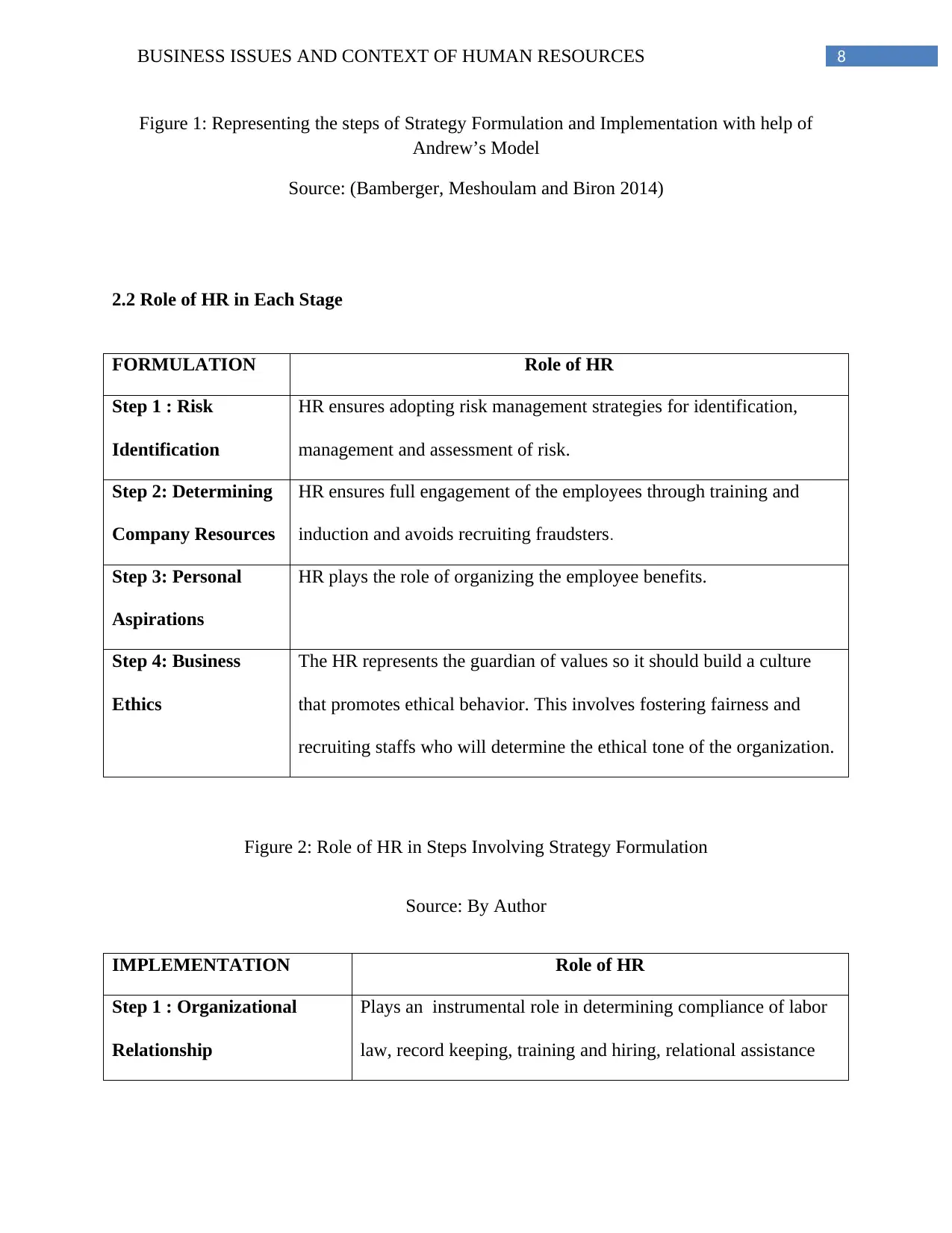
The stages of strategic formulation and implementation are explained with the help of
Andrews Model.
and when required. These factors also help in understanding how the consumers reacts to the
technological trends and utilizes them for benefit. The factors also results in downsizing the HR
functions.
Legal Factors: These include the legislative change that affects the business
environment. For example, if a regulatory body implements regulation for industries then the
laws have an impact on all the business and industries within the economy (Doppelt 2017). The
factors also impacts HR functions as they need to be legally aware in moving forward with
organizational functions.
Environmental Factors: The location of the country has an influence on the business. In
addition to this, the climatic changes also alter the industrial trade and the manner in which the
consumer reacts towards the offerings launched in market. These factors include the climate,
geographical location and weather. They also impact functioning of HR in a manner so that it
implements strategy keeping the environment in mind.
2.1 Key Stages of Strategy Formulation and Implementation
The stages of strategic formulation and implementation are explained with the help of
Andrews Model.
Paraphrase This Document
Need a fresh take? Get an instant paraphrase of this document with our AI Paraphraser

7BUSINESS ISSUES AND CONTEXT OF HUMAN RESOURCES
Corporate
Strategy
Pattern of the
policies and
purposes that
defines the
business and the
company
Formulation (Deciding
what to do)
1. Identification of
Risk and Opportunity
2. Determination of
the company’s
technical, managerial
& financial resources
3. Personal
aspirations & values
and of management
4. Acknowledgement
of ethics and non-
economic
responsibility towards
society
Implementation
(Achievement of results)
1. Organizational relationship
and structure
Labor division
Coordination of the divided
responsibility
Information system
2. Organizational behavior
and process:
Measurement and standards
Incentive and motivation
system
3. Top Leadership
Organizational
Strategic
Personal
Corporate
Strategy
Pattern of the
policies and
purposes that
defines the
business and the
company
Formulation (Deciding
what to do)
1. Identification of
Risk and Opportunity
2. Determination of
the company’s
technical, managerial
& financial resources
3. Personal
aspirations & values
and of management
4. Acknowledgement
of ethics and non-
economic
responsibility towards
society
Implementation
(Achievement of results)
1. Organizational relationship
and structure
Labor division
Coordination of the divided
responsibility
Information system
2. Organizational behavior
and process:
Measurement and standards
Incentive and motivation
system
3. Top Leadership
Organizational
Strategic
Personal
8BUSINESS ISSUES AND CONTEXT OF HUMAN RESOURCES
Figure 1: Representing the steps of Strategy Formulation and Implementation with help of
Andrew’s Model
Source: (Bamberger, Meshoulam and Biron 2014)
2.2 Role of HR in Each Stage
FORMULATION Role of HR
Step 1 : Risk
Identification
HR ensures adopting risk management strategies for identification,
management and assessment of risk.
Step 2: Determining
Company Resources
HR ensures full engagement of the employees through training and
induction and avoids recruiting fraudsters.
Step 3: Personal
Aspirations
HR plays the role of organizing the employee benefits.
Step 4: Business
Ethics
The HR represents the guardian of values so it should build a culture
that promotes ethical behavior. This involves fostering fairness and
recruiting staffs who will determine the ethical tone of the organization.
Figure 2: Role of HR in Steps Involving Strategy Formulation
Source: By Author
IMPLEMENTATION Role of HR
Step 1 : Organizational
Relationship
Plays an instrumental role in determining compliance of labor
law, record keeping, training and hiring, relational assistance
Figure 1: Representing the steps of Strategy Formulation and Implementation with help of
Andrew’s Model
Source: (Bamberger, Meshoulam and Biron 2014)
2.2 Role of HR in Each Stage
FORMULATION Role of HR
Step 1 : Risk
Identification
HR ensures adopting risk management strategies for identification,
management and assessment of risk.
Step 2: Determining
Company Resources
HR ensures full engagement of the employees through training and
induction and avoids recruiting fraudsters.
Step 3: Personal
Aspirations
HR plays the role of organizing the employee benefits.
Step 4: Business
Ethics
The HR represents the guardian of values so it should build a culture
that promotes ethical behavior. This involves fostering fairness and
recruiting staffs who will determine the ethical tone of the organization.
Figure 2: Role of HR in Steps Involving Strategy Formulation
Source: By Author
IMPLEMENTATION Role of HR
Step 1 : Organizational
Relationship
Plays an instrumental role in determining compliance of labor
law, record keeping, training and hiring, relational assistance
⊘ This is a preview!⊘
Do you want full access?
Subscribe today to unlock all pages.
Trusted by 1+ million students worldwide

9BUSINESS ISSUES AND CONTEXT OF HUMAN RESOURCES
compensation, and handling particular performance issues
Step 2: Organizational
Behavior
Acts as the central pillar for organizations in determining the
accurate compensation based on role.
Step 3: Leadership HR plays a key role in the leadership development and
therefore should invest money and time and in leadership
pipeline for the future
Figure 3: Role of HR in Steps Involving Strategy Implementation
Source: By Author
Conclusion:
On a concluding note, it can be said that the external and internal factors plays a vital role
in influencing the business and the HR functions. HR also plays a key role in strategy
formulation, implementation and ethics of a business.
compensation, and handling particular performance issues
Step 2: Organizational
Behavior
Acts as the central pillar for organizations in determining the
accurate compensation based on role.
Step 3: Leadership HR plays a key role in the leadership development and
therefore should invest money and time and in leadership
pipeline for the future
Figure 3: Role of HR in Steps Involving Strategy Implementation
Source: By Author
Conclusion:
On a concluding note, it can be said that the external and internal factors plays a vital role
in influencing the business and the HR functions. HR also plays a key role in strategy
formulation, implementation and ethics of a business.
Paraphrase This Document
Need a fresh take? Get an instant paraphrase of this document with our AI Paraphraser

10BUSINESS ISSUES AND CONTEXT OF HUMAN RESOURCES
References:
Bamberger, P.A., Meshoulam, I. and Biron, M., 2014. Human resource strategy: Formulation,
implementation, and impact. Routledge.
Doppelt, B., 2017. Leading change toward sustainability: A change-management guide for
business, government and civil society. Routledge.
Jones, G.R. and Jones, G.R., 2013. Organizational theory, design, and change. Upper Saddle
River, NJ: Pearson.
Sadgrove, K., 2016. The complete guide to business risk management. Routledge.
Schaltegger, S. and Wagner, M., 2017. Managing the business case for sustainability: The
integration of social, environmental and economic performance. Routledge.
Teece, D., Peteraf, M. and Leih, S., 2016. Dynamic capabilities and organizational agility: Risk,
uncertainty, and strategy in the innovation economy. California Management Review, 58(4),
pp.13-35.
Teece, D.J., 2014. The foundations of enterprise performance: Dynamic and ordinary capabilities
in an (economic) theory of firms. Academy of management perspectives, 28(4), pp.328-352.
Tran, Q. and Tian, Y., 2013. Organizational structure: Influencing factors and impact on a
firm. American Journal of Industrial and Business Management, 3(2), p.229.
References:
Bamberger, P.A., Meshoulam, I. and Biron, M., 2014. Human resource strategy: Formulation,
implementation, and impact. Routledge.
Doppelt, B., 2017. Leading change toward sustainability: A change-management guide for
business, government and civil society. Routledge.
Jones, G.R. and Jones, G.R., 2013. Organizational theory, design, and change. Upper Saddle
River, NJ: Pearson.
Sadgrove, K., 2016. The complete guide to business risk management. Routledge.
Schaltegger, S. and Wagner, M., 2017. Managing the business case for sustainability: The
integration of social, environmental and economic performance. Routledge.
Teece, D., Peteraf, M. and Leih, S., 2016. Dynamic capabilities and organizational agility: Risk,
uncertainty, and strategy in the innovation economy. California Management Review, 58(4),
pp.13-35.
Teece, D.J., 2014. The foundations of enterprise performance: Dynamic and ordinary capabilities
in an (economic) theory of firms. Academy of management perspectives, 28(4), pp.328-352.
Tran, Q. and Tian, Y., 2013. Organizational structure: Influencing factors and impact on a
firm. American Journal of Industrial and Business Management, 3(2), p.229.

1 out of 11


Related Documents


Your All-in-One AI-Powered Toolkit for Academic Success.
+13062052269
info@desklib.com
Available 24*7 on WhatsApp / Email
![[object Object]](/_next/static/media/star-bottom.7253800d.svg)
Unlock your academic potential
Copyright © 2020–2026 A2Z Services. All Rights Reserved. Developed and managed by ZUCOL.