Case Study Task 2: Examining Socioeconomic Factors in Health Disparity

Verified

Added on  2023/03/30

|9
|377
|413
Case Study
AI Summary
This case study delves into the differential distribution of health chances, examining inequalities related to ethnicity, gender, socioeconomic position, and access to healthcare. It explores how individual, national, and community factors contribute to these inequalities, highlighting the role of behavioral, materialist, and psychosocial models. The study concludes that healthcare professionals play a crucial role in providing services tailored to patient needs, working collaboratively to support service users in overcoming their diseases. References to relevant research articles are included to support the analysis of health determinants and disparities.

Document Page
Case study
Task 2
tabler-icon-diamond-filled.svg

Paraphrase This Document

Need a fresh take? Get an instant paraphrase of this document with our AI Paraphraser
Document Page
The differential distribution of health
chances
Inequalities in health for instance, ethnicity, gender, socio
economic position and in access to health care,
considering their causes.
The distribution of health is ascertained by the wide
variety of individual, national factor and community.
Therefore in both the distribution of health there is
growth in inequalities (Elgar and Currie, 2016).
Document Page
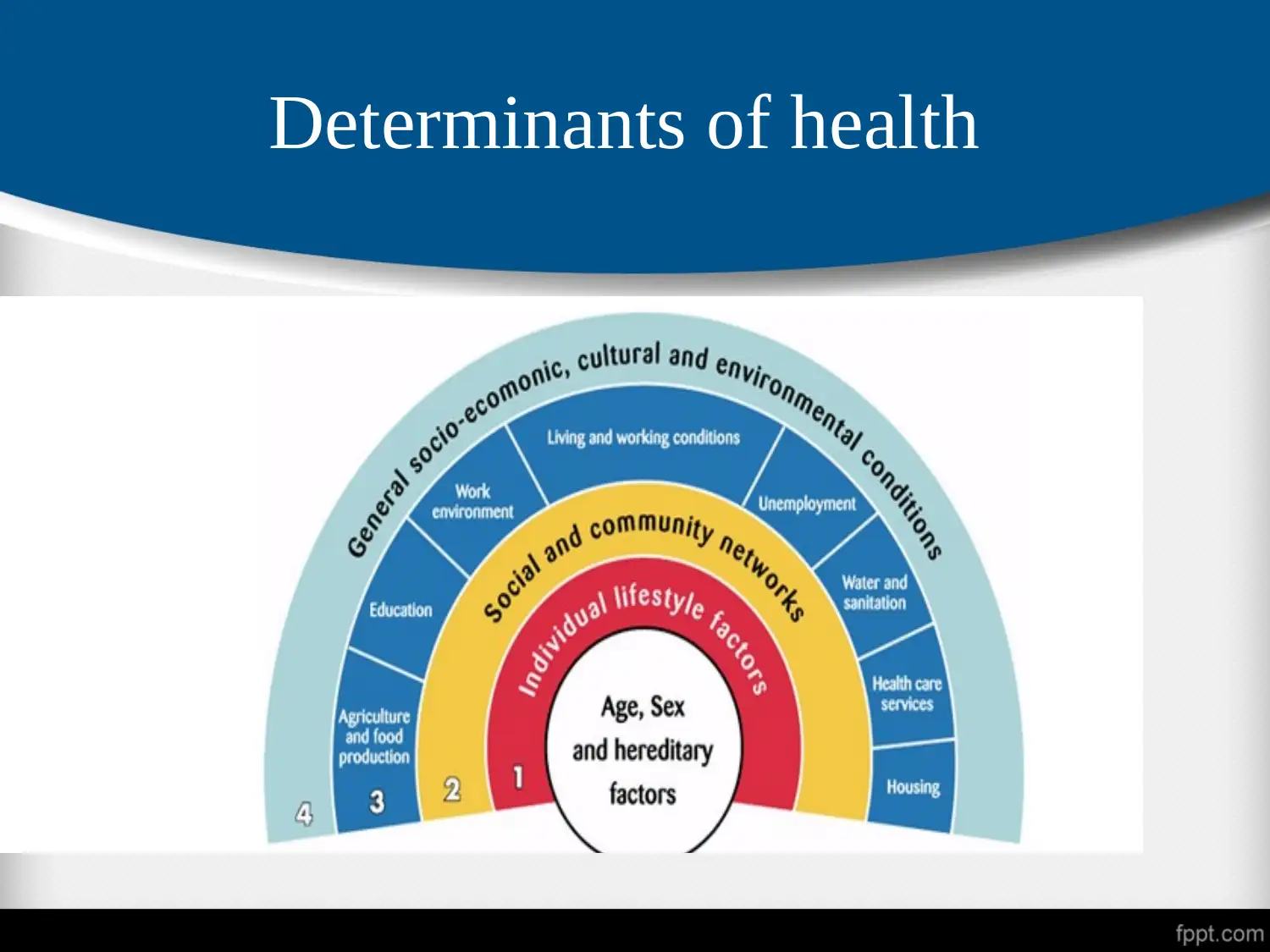
Determinants of health
Document Page
Cont...
Behavioral model:
Different in social class lead to promote health behaviour
or health damaging (Sweeting, GreeN and West, 2016).
For instance consumption of alcohol and tobacco,
antenatal consumption of drugs etc.
tabler-icon-diamond-filled.svg

Paraphrase This Document

Need a fresh take? Get an instant paraphrase of this document with our AI Paraphraser
Document Page
Cont...
Materialist model: Poverty lead to cause health problem
and expose people to health hazards.
Discriminate people are more likely to live in areas where
they may harm that is damp housing, air pollution
(Foverskov and Holm, 2016).
From different studies it has been identified that higher
rate of childhood respiratory disease is due to damp
housing.
Document Page
Psycho social model
Psycho social model: Social inequality can affect the
way people feel which lead to impact body.
Psycho social risk factor it includes autonomy at
work, social support and the balance which maintain
between work and home (Eikemo, Bambra and
Fitzgerald, 2017).
Document Page
Conclusion
From the above case study it can be concluded that,
health care professional play significant role in order to
provide services to patients .
They work effectively and provside services to service
user according to their needs and demands.
They work in a team and support services user to
overcome from their disease.
tabler-icon-diamond-filled.svg

Paraphrase This Document

Need a fresh take? Get an instant paraphrase of this document with our AI Paraphraser
Document Page
References
Eikemo, T.A., Bambra, C., Huijts, T. and Fitzgerald, R., 2017. The first pan-
European sociological health inequalities survey of the general population:
the European Social Survey rotating module on the social determinants of
health. European Sociological Review, 33(1), pp.137-153.
Elgar, F.J., McKinnon, B., Torsheim, T., Schnohr, C.W., Mazur, J., Cavallo,
F. and Currie, C., 2016. Patterns of socioeconomic inequality in adolescent
health differ according to the measure of socioeconomic position. Social
Indicators Research, 127(3), pp.1169-1180.
Foverskov, E. and Holm, A., 2016. Socioeconomic inequality in health in the
British household panel: Tests of the social causation, health selection and
the indirect selection hypothesis using dynamic fixed effects panel models.
Social Science & Medicine, 150, pp.172-183.
Document Page
chevron_up_icon
1 out of 9
circle_padding
hide_on_mobile
zoom_out_icon
[object Object]