Clinical Assessment and Treatment Plan of Case Vignette Report

Verified

Added on  2023/01/16

|15
|1006
|1
Report
AI Summary
This report provides a comprehensive clinical assessment and treatment plan for a 35-year-old married Caucasian female presenting with symptoms of depression, including depressed mood, fatigue, and diminished pleasure. The report analyzes the case using humanistic theory, discussing self-actualization and Maslow's Hierarchy of Needs. It includes a DSM-5 diagnosis of depression, outlines short-term treatment goals such as improved social behavior and physical health, and recommends both medical and therapeutic interventions, including antidepressant medications. The report emphasizes the importance of understanding treatment goals to improve patient engagement and outcomes, with detailed objectives for improving the patient's well-being and reducing symptoms. The report also discusses the effects of drugs and the need for a strict diet when using monoamine oxidase inhibitors, and explores the possibility of combining antidepressants with other medications.

Document Page
Clinical Assessment and
Treatment Plan of Case Vignette
Humanistic Theory
tabler-icon-diamond-filled.svg

Paraphrase This Document

Need a fresh take? Get an instant paraphrase of this document with our AI Paraphraser
Document Page
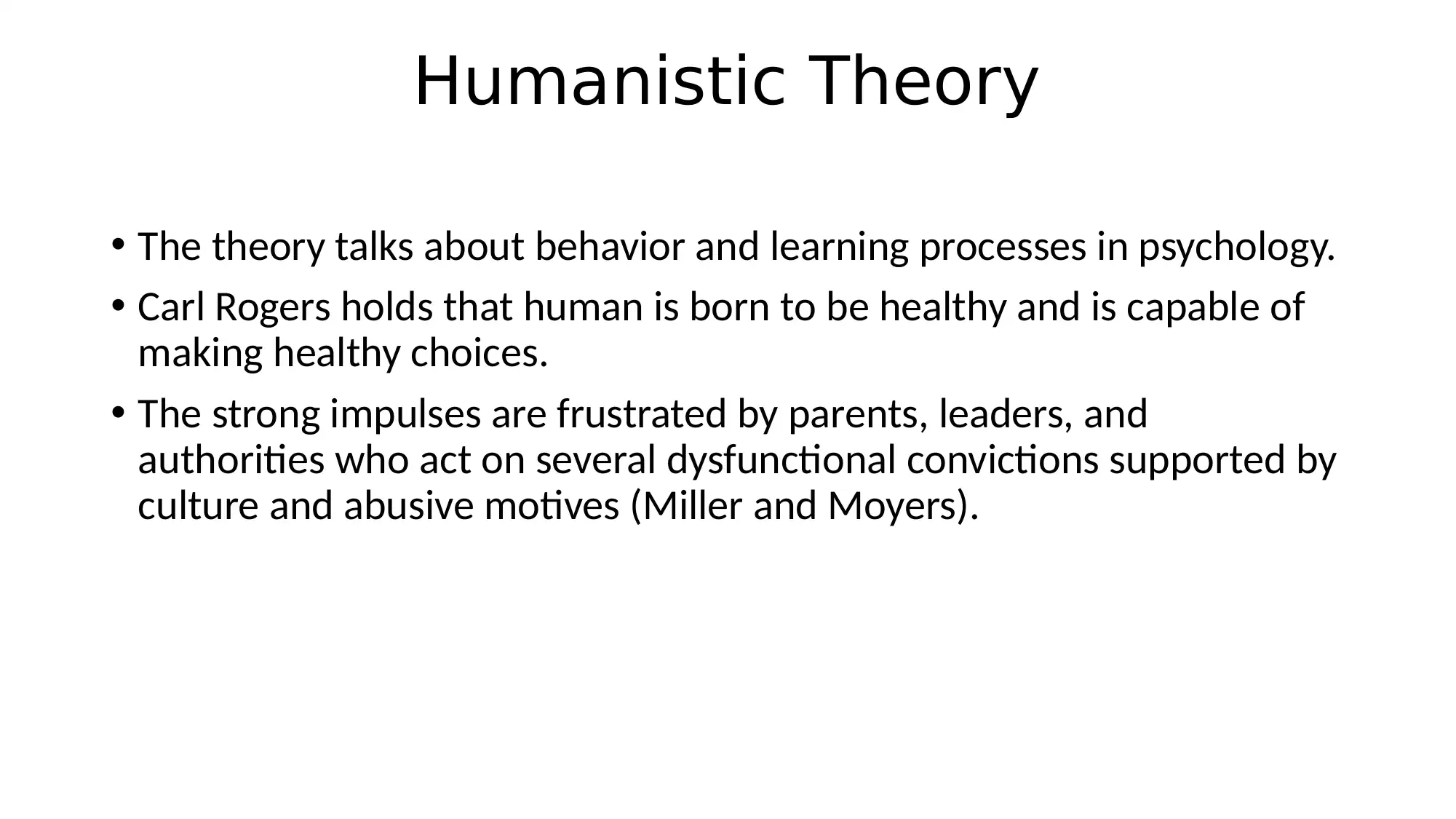
Humanistic Theory
The theory talks about behavior and learning processes in psychology.
Carl Rogers holds that human is born to be healthy and is capable of
making healthy choices.
The strong impulses are frustrated by parents, leaders, and
authorities who act on several dysfunctional convictions supported by
culture and abusive motives (Miller and Moyers).
Document Page
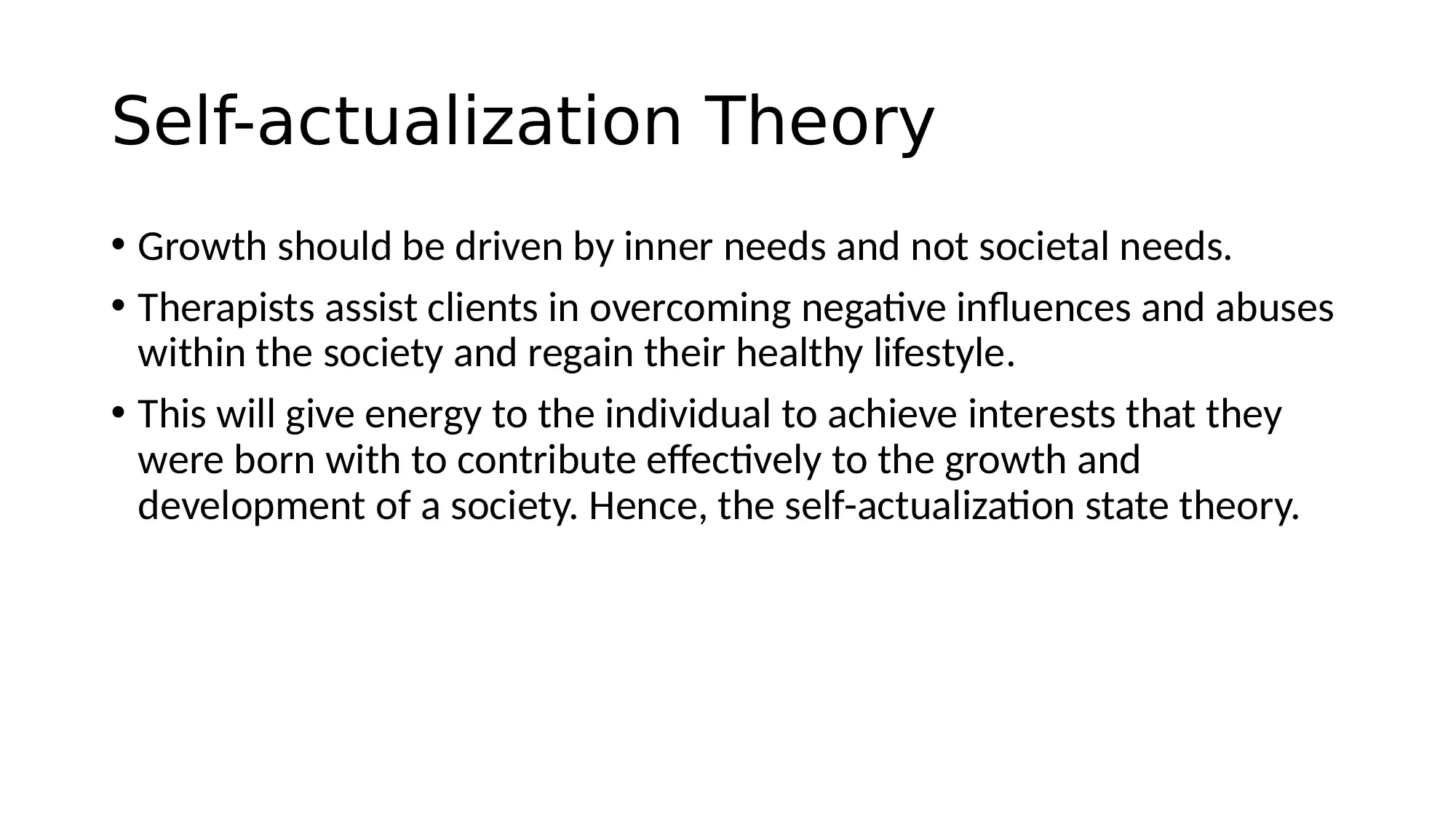
Self-actualization Theory
Growth should be driven by inner needs and not societal needs.
Therapists assist clients in overcoming negative influences and abuses
within the society and regain their healthy lifestyle.
This will give energy to the individual to achieve interests that they
were born with to contribute effectively to the growth and
development of a society. Hence, the self-actualization state theory.
Document Page
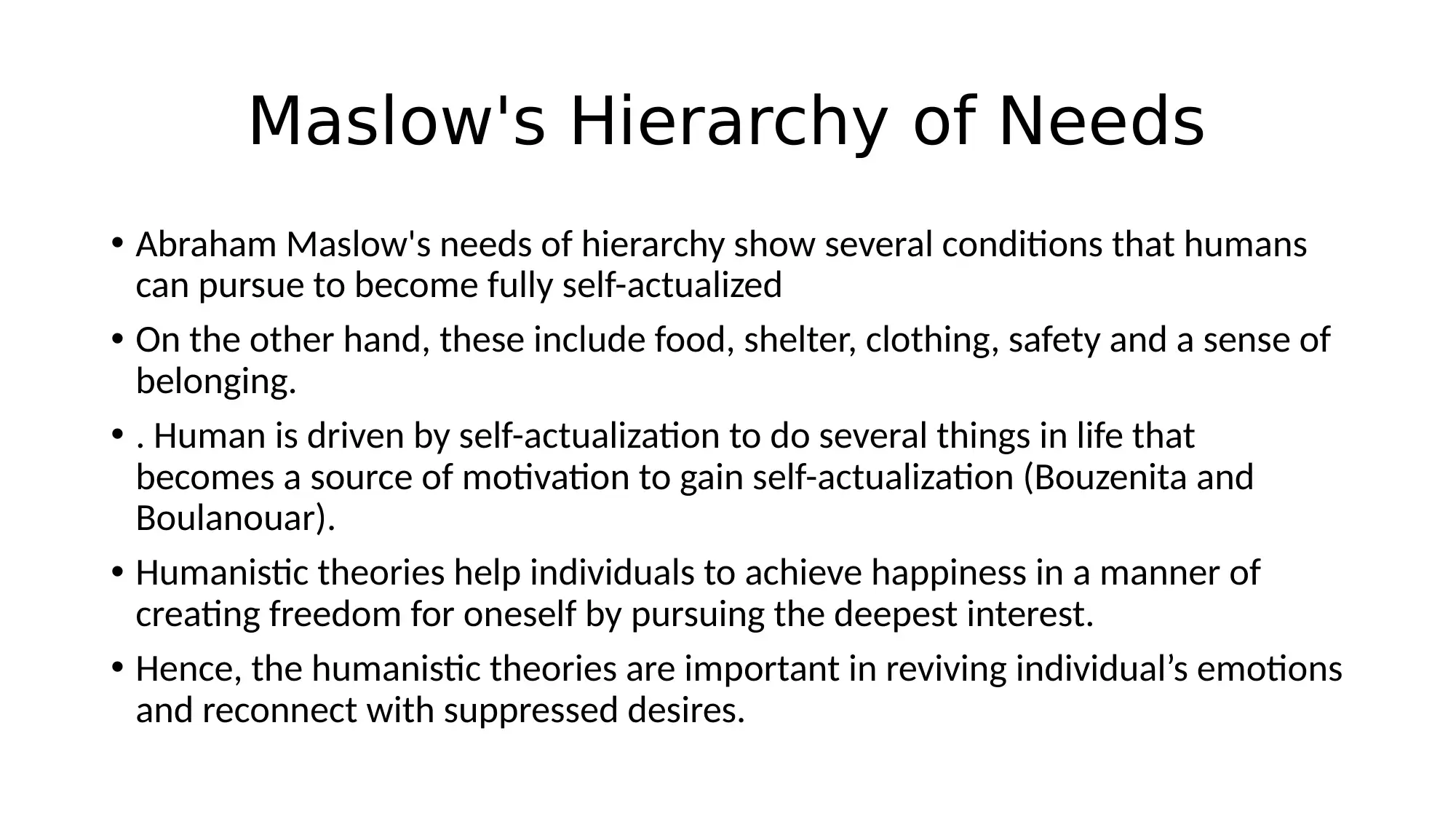
Maslow's Hierarchy of Needs
Abraham Maslow's needs of hierarchy show several conditions that humans
can pursue to become fully self-actualized
On the other hand, these include food, shelter, clothing, safety and a sense of
belonging.
. Human is driven by self-actualization to do several things in life that
becomes a source of motivation to gain self-actualization (Bouzenita and
Boulanouar).
Humanistic theories help individuals to achieve happiness in a manner of
creating freedom for oneself by pursuing the deepest interest.
Hence, the humanistic theories are important in reviving individual’s emotions
and reconnect with suppressed desires.
tabler-icon-diamond-filled.svg

Paraphrase This Document

Need a fresh take? Get an instant paraphrase of this document with our AI Paraphraser
Document Page
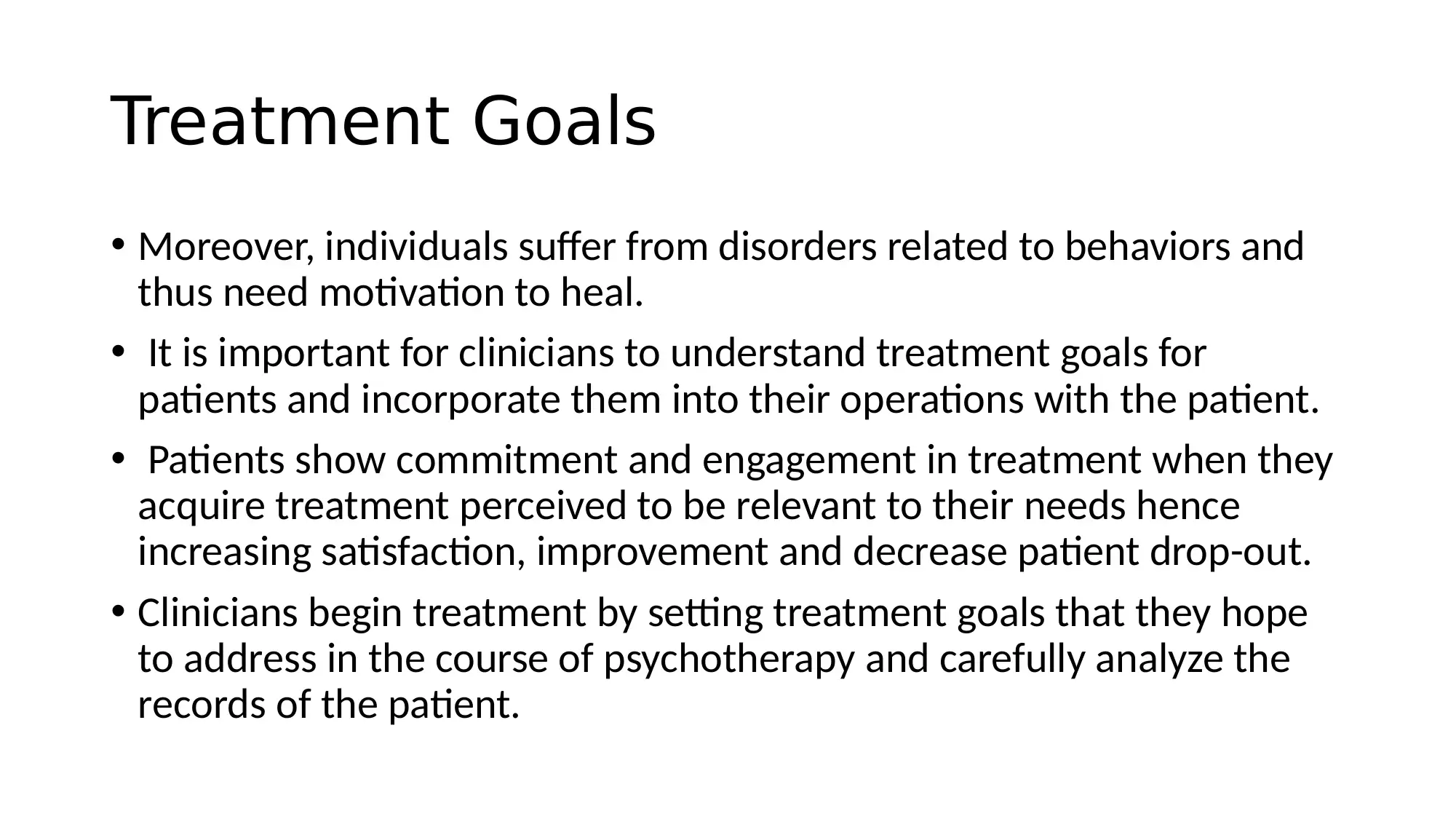
Treatment Goals
Moreover, individuals suffer from disorders related to behaviors and
thus need motivation to heal.
It is important for clinicians to understand treatment goals for
patients and incorporate them into their operations with the patient.
Patients show commitment and engagement in treatment when they
acquire treatment perceived to be relevant to their needs hence
increasing satisfaction, improvement and decrease patient drop-out.
Clinicians begin treatment by setting treatment goals that they hope
to address in the course of psychotherapy and carefully analyze the
records of the patient.
Document Page
Short-term Goals
The short-term goals to correct disorders related to emotions and
psychology include change of social behavior, improve physical health
and improve the relationship with spouse and other important
relationships at work.
The aim of change of social behavior is to make new friends, re-
contact new friends and increase number of relationships both family
and social relationships that will facilitate healing.
Document Page
Objectives
The objectives of improving physical health is to change one's diet
and engage in physical exercise more frequently to relieve stress and
facilitate improvement such as activities that fulfills their self and
meet their needs i.e. reactional activities.
tabler-icon-diamond-filled.svg

Paraphrase This Document

Need a fresh take? Get an instant paraphrase of this document with our AI Paraphraser
Document Page
Diagnosis(DX) for the Patients Case
In the presented case study, the patient is undergoing a depressive
condition which is associated with mood disorders.
The patient is unhappy to mean that she is experiencing a difficult
situation in her life. In addition, the patient is daily depressed and is
not interested in pleasure.
Besides, she is overwhelmed and lacks sleep. The patient lacks
energy as well as overeating.
Her social life is also affected and work too.
Document Page
DSM 5 Diagnosis
Based on the patient’s case, the DSM 5 diagnosis of the case
presented describes diagnosis for depression.
With the major symptoms such as depressed mood, loss of pleasure,
loss of interest, increase in appetite.
Feelings of guilt and worthlessness, loss of energy or associated
fatigue, impairment in occupational, family and socially functional.
Document Page
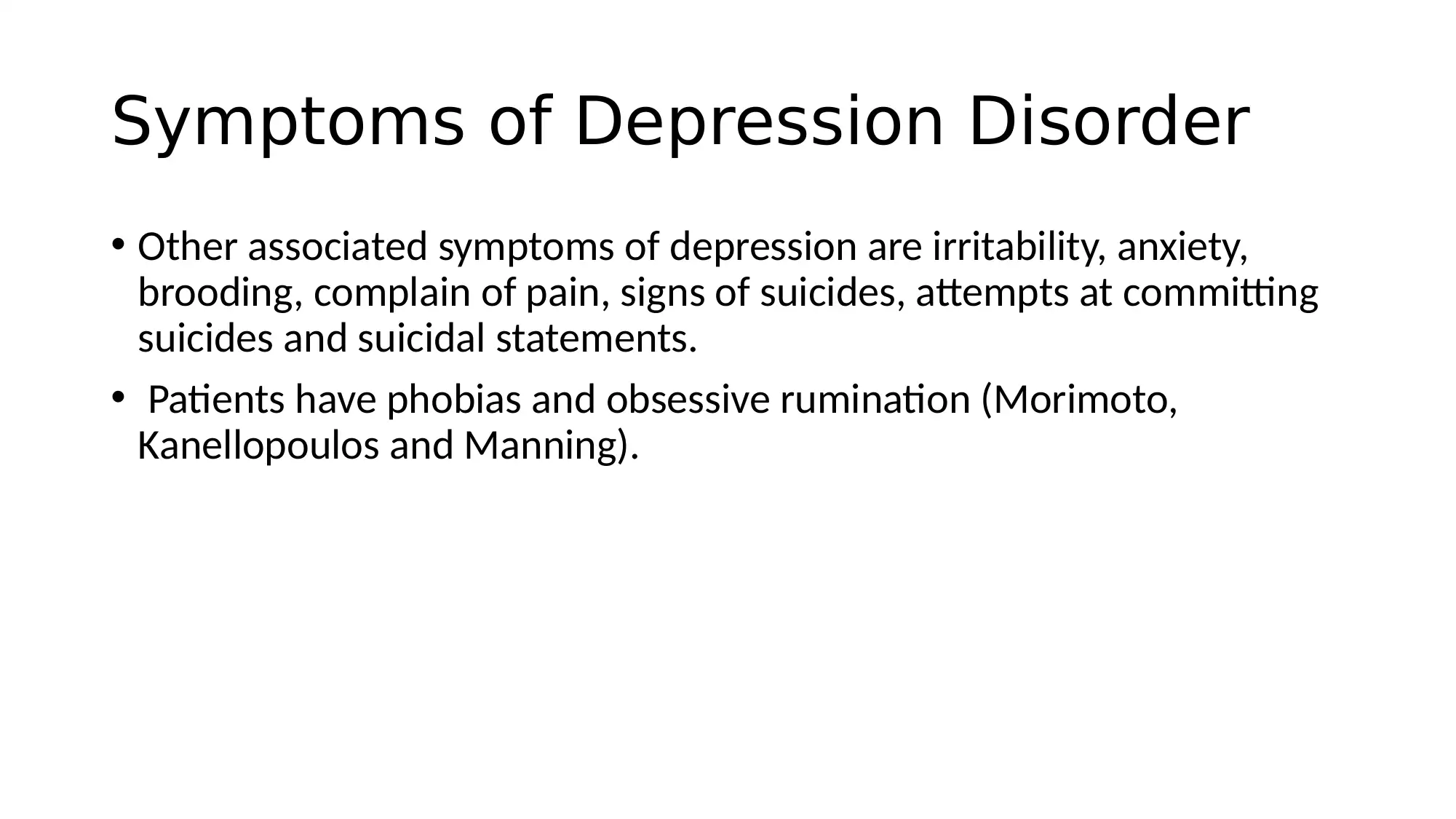
Symptoms of Depression Disorder
Other associated symptoms of depression are irritability, anxiety,
brooding, complain of pain, signs of suicides, attempts at committing
suicides and suicidal statements.
Patients have phobias and obsessive rumination (Morimoto,
Kanellopoulos and Manning).
tabler-icon-diamond-filled.svg

Paraphrase This Document

Need a fresh take? Get an instant paraphrase of this document with our AI Paraphraser
Document Page
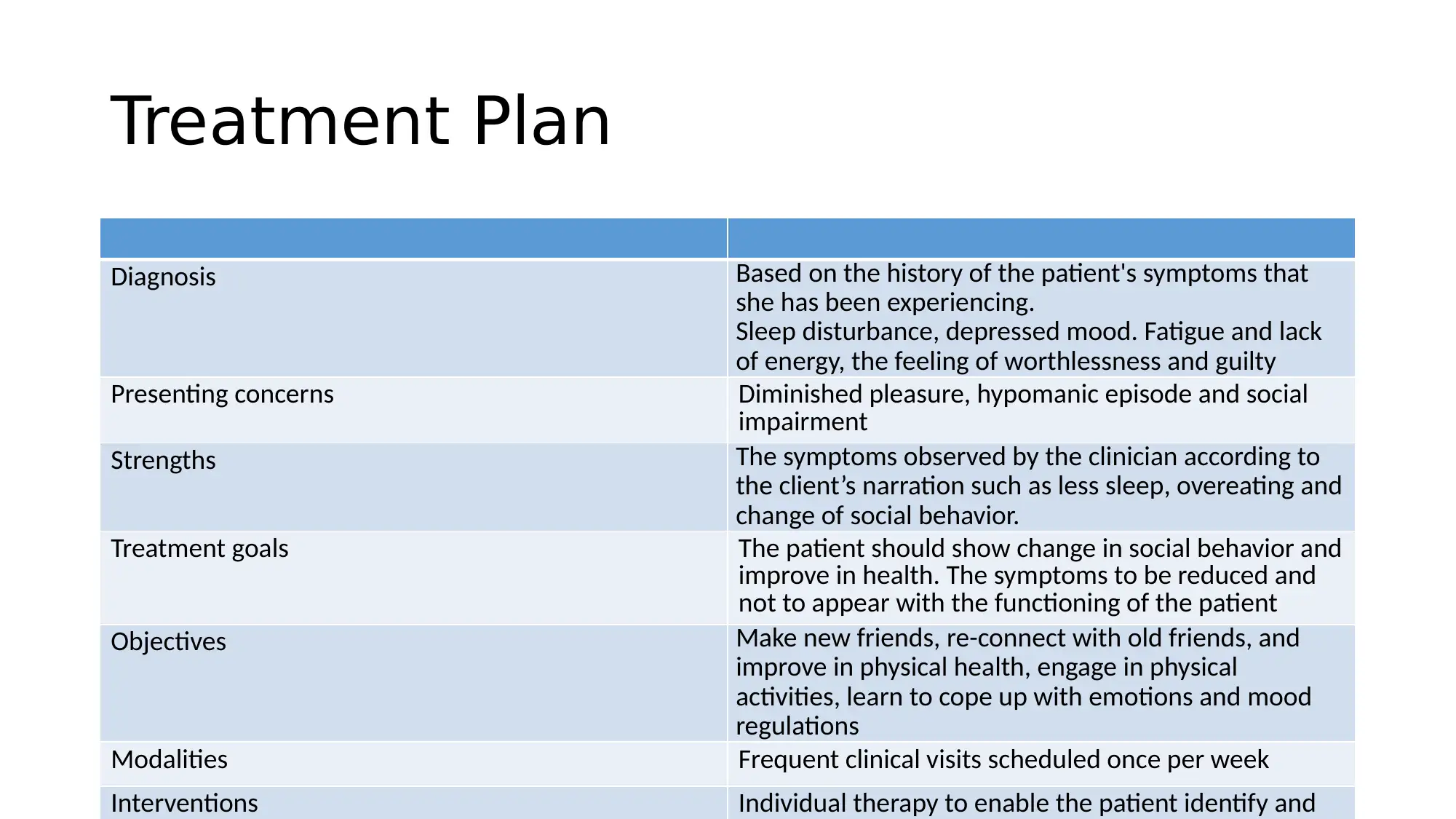
Treatment Plan
Diagnosis Based on the history of the patient's symptoms that
she has been experiencing.
Sleep disturbance, depressed mood. Fatigue and lack
of energy, the feeling of worthlessness and guilty
Presenting concerns Diminished pleasure, hypomanic episode and social
impairment
Strengths The symptoms observed by the clinician according to
the client’s narration such as less sleep, overeating and
change of social behavior.
Treatment goals The patient should show change in social behavior and
improve in health. The symptoms to be reduced and
not to appear with the functioning of the patient
Objectives Make new friends, re-connect with old friends, and
improve in physical health, engage in physical
activities, learn to cope up with emotions and mood
regulations
Modalities Frequent clinical visits scheduled once per week
Interventions Individual therapy to enable the patient identify and
Document Page
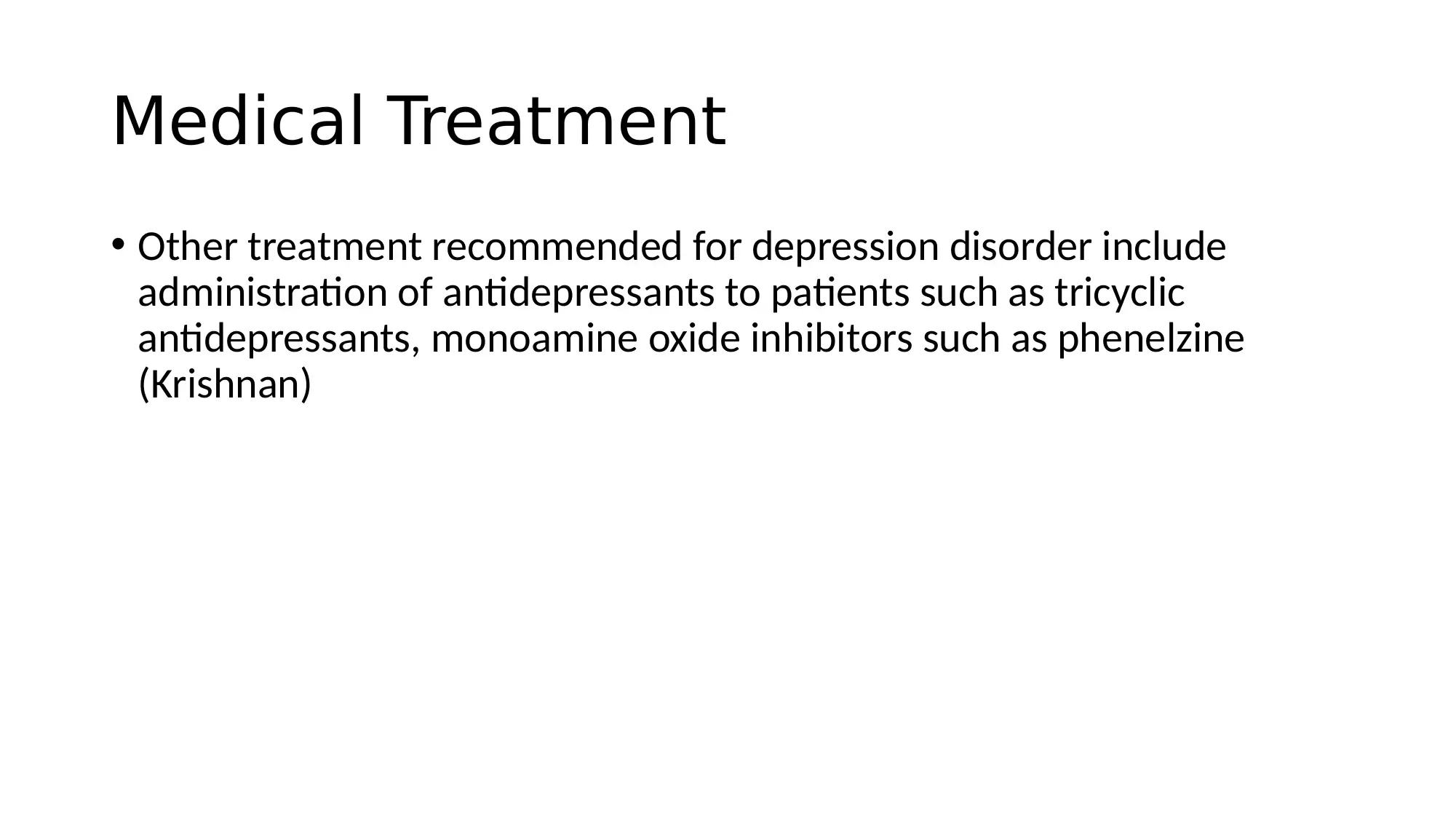
Medical Treatment
Other treatment recommended for depression disorder include
administration of antidepressants to patients such as tricyclic
antidepressants, monoamine oxide inhibitors such as phenelzine
(Krishnan)
chevron_up_icon
1 out of 15
circle_padding
hide_on_mobile
zoom_out_icon
[object Object]