Cloud Computing and Business Generation: Detailed Report Analysis
VerifiedAdded on 2021/04/16
|9
|1700
|41
Report
AI Summary
This report provides a detailed analysis of cloud computing and its profound impact on business generation, particularly within the tourism, leisure, and events (TLE) sector. It explores how cloud computing enables innovation, enhances efficiency, and fosters competitive advantages by integrating various business processes and stakeholders. The report delves into the application of cloud technology within TLE organizations, highlighting challenges such as integrating stakeholders and generating revenue, while showcasing the advantages like accurate decision-making, improved data integration, and increased business generation. The report also covers the history, development, and current applications of cloud computing, including its advantages, disadvantages, and estimated installation costs. Furthermore, the report references various sources that support its analysis, providing a comprehensive understanding of the subject.
Running head: CLOUD COMPUTING AND BUSINESS GENERATION
Cloud Computing and Business Generation
Name of the Student:
Name of the University:
Author Note:
Cloud Computing and Business Generation
Name of the Student:
Name of the University:
Author Note:
Paraphrase This Document
Need a fresh take? Get an instant paraphrase of this document with our AI Paraphraser

CLOUD COMPUTING AND BUSINESS GENERATION
1
Table of Contents
Innovation:................................................................................................................. 2
Application of innovation in TLE organization:.........................................................2
Challenges faced by TLE businesses and their use of cloud computing:....................4
Significance of innovation and technology in achieving competitive market
advantage:................................................................................................................. 4
History and development of cloud computing:........................................................5
Current application:................................................................................................. 5
Advantages and disadvantages:.............................................................................5
Advantages:............................................................................................................ 5
Disadvantages:........................................................................................................ 6
Estimated cost of installation of cloud:....................................................................6
References:................................................................................................................ 7
1
Table of Contents
Innovation:................................................................................................................. 2
Application of innovation in TLE organization:.........................................................2
Challenges faced by TLE businesses and their use of cloud computing:....................4
Significance of innovation and technology in achieving competitive market
advantage:................................................................................................................. 4
History and development of cloud computing:........................................................5
Current application:................................................................................................. 5
Advantages and disadvantages:.............................................................................5
Advantages:............................................................................................................ 5
Disadvantages:........................................................................................................ 6
Estimated cost of installation of cloud:....................................................................6
References:................................................................................................................ 7

CLOUD COMPUTING AND BUSINESS GENERATION
2
Innovation:
The term innovation refers to the application of new ways and methods to do
things in order to achieve expertise and efficiency. The global industries like the
tourism, leisure and events are undergoing rapid innovation to achieve efficiency
and sustainability. The tourism companies today use technology like cloud
computing to integrate their business operations to make them more efficient.
Application of innovation in TLE organization:
The tourism companies today use technology like cloud computing as their
focal technology to manage their complex business operations. The tourism and
event management organizations today serve several customers having diverse
requirements. They have to coordinate various things like destinations,
accommodation, flights and cars rentals as per the requirements of the customers
or travelers. Again, they have to manage customers having various needs like upper
class leisure customers prefer boutique hotels while business customers like
multinational companies prefer five star hotels with formal environment for their
delegates. It is clear that they have to coordinate between these customers and any
change in their requirements has impact on the entire booking and pricing of the
company for particular customers. They are also required to communicate the
changes to the parties like the accommodation owners. This business situation
clearly points out that the tourism business organizations require to use technology
which would enable them to coordinate between the customers and their business
partners like hotels (Hashem et al. 2015). They are also required to integrate their
internal process like pricing with the changing customer requirements. Moreover,
they also have to avoid error of multiple entry and error of no entry while
accounting of payments received from customers. Cloud enables the tourism
companies to gain and share the information with the concerned parties like hotel
authorities and car rental companies. The internal stakeholders like the accounts
departments can also use information to execute appropriate accounting entries.
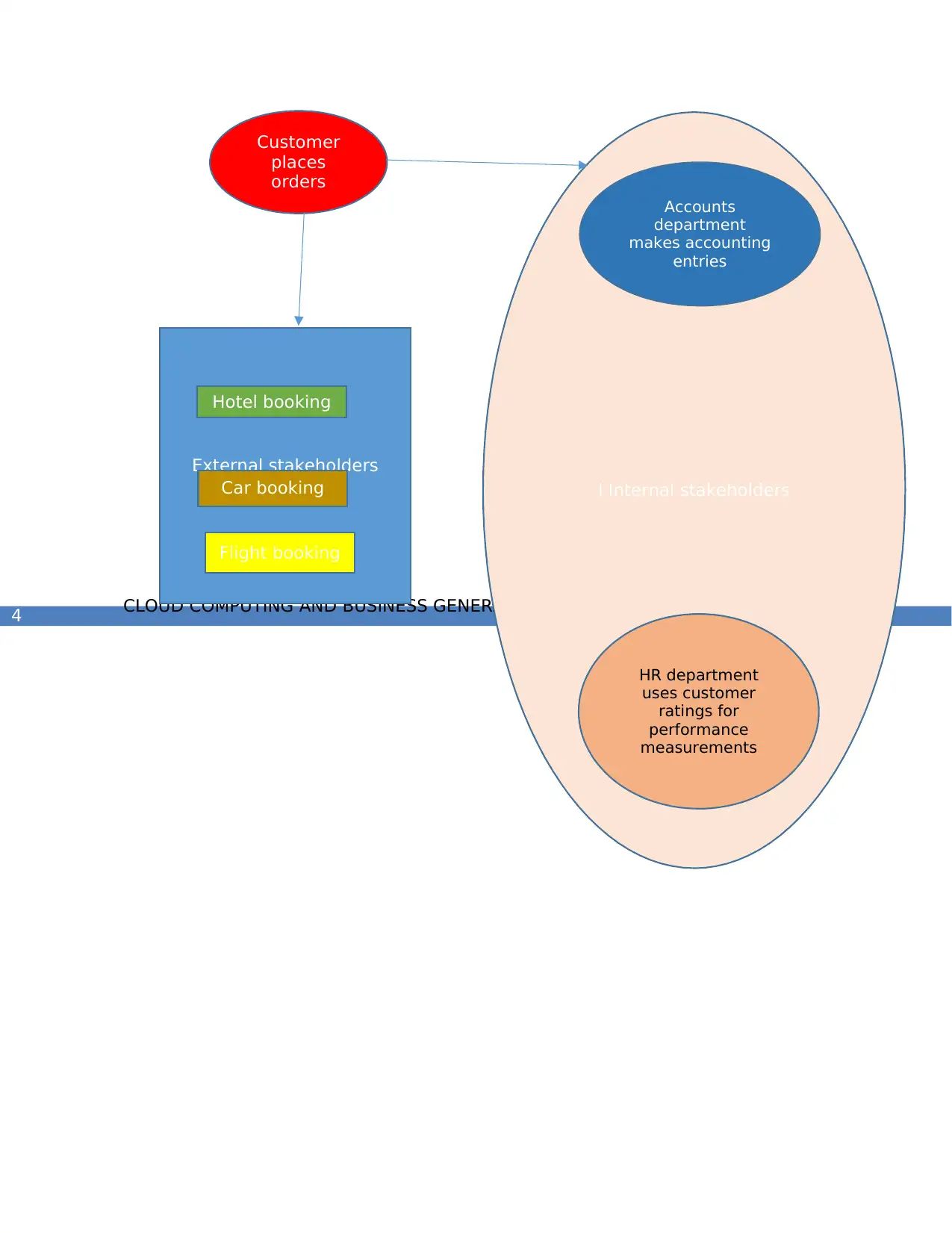
The marketing departments can store and manage the customer data and use it for
future business generation as shown below (Rittinghouse and Ransome 2016). This
analysis clearly points out that cloud cloud computing help business
organizations to overcome challenges of managing multiple business
2
Innovation:
The term innovation refers to the application of new ways and methods to do
things in order to achieve expertise and efficiency. The global industries like the
tourism, leisure and events are undergoing rapid innovation to achieve efficiency
and sustainability. The tourism companies today use technology like cloud
computing to integrate their business operations to make them more efficient.
Application of innovation in TLE organization:
The tourism companies today use technology like cloud computing as their
focal technology to manage their complex business operations. The tourism and
event management organizations today serve several customers having diverse
requirements. They have to coordinate various things like destinations,
accommodation, flights and cars rentals as per the requirements of the customers
or travelers. Again, they have to manage customers having various needs like upper
class leisure customers prefer boutique hotels while business customers like
multinational companies prefer five star hotels with formal environment for their
delegates. It is clear that they have to coordinate between these customers and any
change in their requirements has impact on the entire booking and pricing of the
company for particular customers. They are also required to communicate the
changes to the parties like the accommodation owners. This business situation
clearly points out that the tourism business organizations require to use technology
which would enable them to coordinate between the customers and their business
partners like hotels (Hashem et al. 2015). They are also required to integrate their
internal process like pricing with the changing customer requirements. Moreover,
they also have to avoid error of multiple entry and error of no entry while
accounting of payments received from customers. Cloud enables the tourism
companies to gain and share the information with the concerned parties like hotel
authorities and car rental companies. The internal stakeholders like the accounts
departments can also use information to execute appropriate accounting entries.
The marketing departments can store and manage the customer data and use it for
future business generation as shown below (Rittinghouse and Ransome 2016). This
analysis clearly points out that cloud cloud computing help business
organizations to overcome challenges of managing multiple business
⊘ This is a preview!⊘
Do you want full access?
Subscribe today to unlock all pages.

Trusted by 1+ million students worldwide

CLOUD COMPUTING AND BUSINESS GENERATION
3
partners and customer requirements by integrating several business
processes.
3
partners and customer requirements by integrating several business
processes.
Paraphrase This Document
Need a fresh take? Get an instant paraphrase of this document with our AI Paraphraser

CLOUD COMPUTING AND BUSINESS GENERATION
4
Customer
places
orders
l Internal stakeholders
Accounts
department
makes accounting
entries
HR department
uses customer
ratings for
performance
measurements
External stakeholders
Hotel booking
Car booking
Flight booking
4
Customer
places
orders
l Internal stakeholders
Accounts
department
makes accounting
entries
HR department
uses customer
ratings for
performance
measurements
External stakeholders
Hotel booking
Car booking
Flight booking

CLOUD COMPUTING AND BUSINESS GENERATION
5
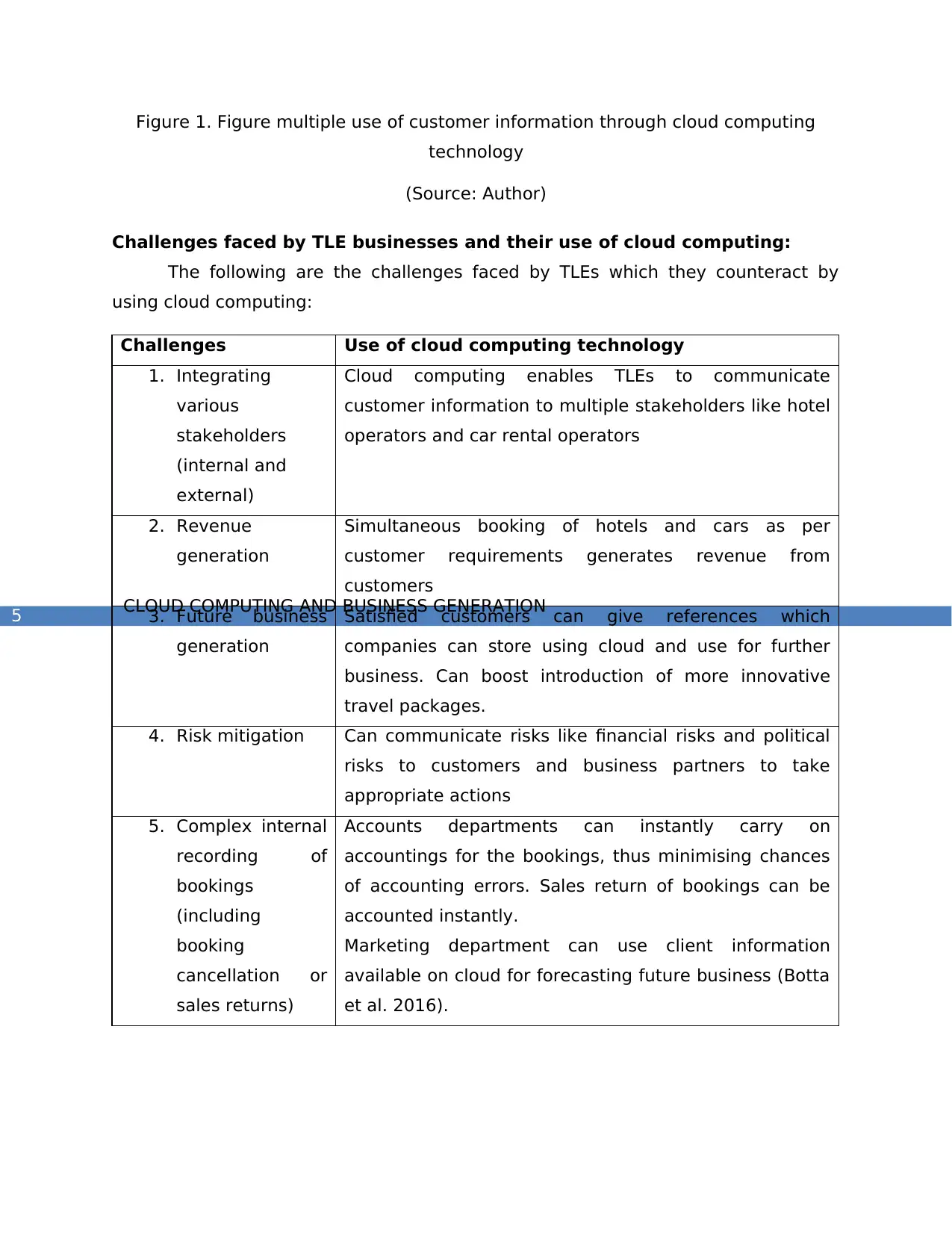
Figure 1. Figure multiple use of customer information through cloud computing
technology
(Source: Author)
Challenges faced by TLE businesses and their use of cloud computing:
The following are the challenges faced by TLEs which they counteract by
using cloud computing:
Challenges Use of cloud computing technology
1. Integrating
various
stakeholders
(internal and
external)
Cloud computing enables TLEs to communicate
customer information to multiple stakeholders like hotel
operators and car rental operators
2. Revenue
generation
Simultaneous booking of hotels and cars as per
customer requirements generates revenue from
customers
3. Future business
generation
Satisfied customers can give references which
companies can store using cloud and use for further
business. Can boost introduction of more innovative
travel packages.
4. Risk mitigation Can communicate risks like financial risks and political
risks to customers and business partners to take
appropriate actions
5. Complex internal
recording of
bookings
(including
booking
cancellation or
sales returns)
Accounts departments can instantly carry on
accountings for the bookings, thus minimising chances
of accounting errors. Sales return of bookings can be
accounted instantly.
Marketing department can use client information
available on cloud for forecasting future business (Botta
et al. 2016).
5
Figure 1. Figure multiple use of customer information through cloud computing
technology
(Source: Author)
Challenges faced by TLE businesses and their use of cloud computing:
The following are the challenges faced by TLEs which they counteract by
using cloud computing:
Challenges Use of cloud computing technology
1. Integrating
various
stakeholders
(internal and
external)
Cloud computing enables TLEs to communicate
customer information to multiple stakeholders like hotel
operators and car rental operators
2. Revenue
generation
Simultaneous booking of hotels and cars as per
customer requirements generates revenue from
customers
3. Future business
generation
Satisfied customers can give references which
companies can store using cloud and use for further
business. Can boost introduction of more innovative
travel packages.
4. Risk mitigation Can communicate risks like financial risks and political
risks to customers and business partners to take
appropriate actions
5. Complex internal
recording of
bookings
(including
booking
cancellation or
sales returns)
Accounts departments can instantly carry on
accountings for the bookings, thus minimising chances
of accounting errors. Sales return of bookings can be
accounted instantly.
Marketing department can use client information
available on cloud for forecasting future business (Botta
et al. 2016).
⊘ This is a preview!⊘
Do you want full access?
Subscribe today to unlock all pages.

Trusted by 1+ million students worldwide

CLOUD COMPUTING AND BUSINESS GENERATION
6
Significance of innovation and technology in achieving competitive market
advantage:
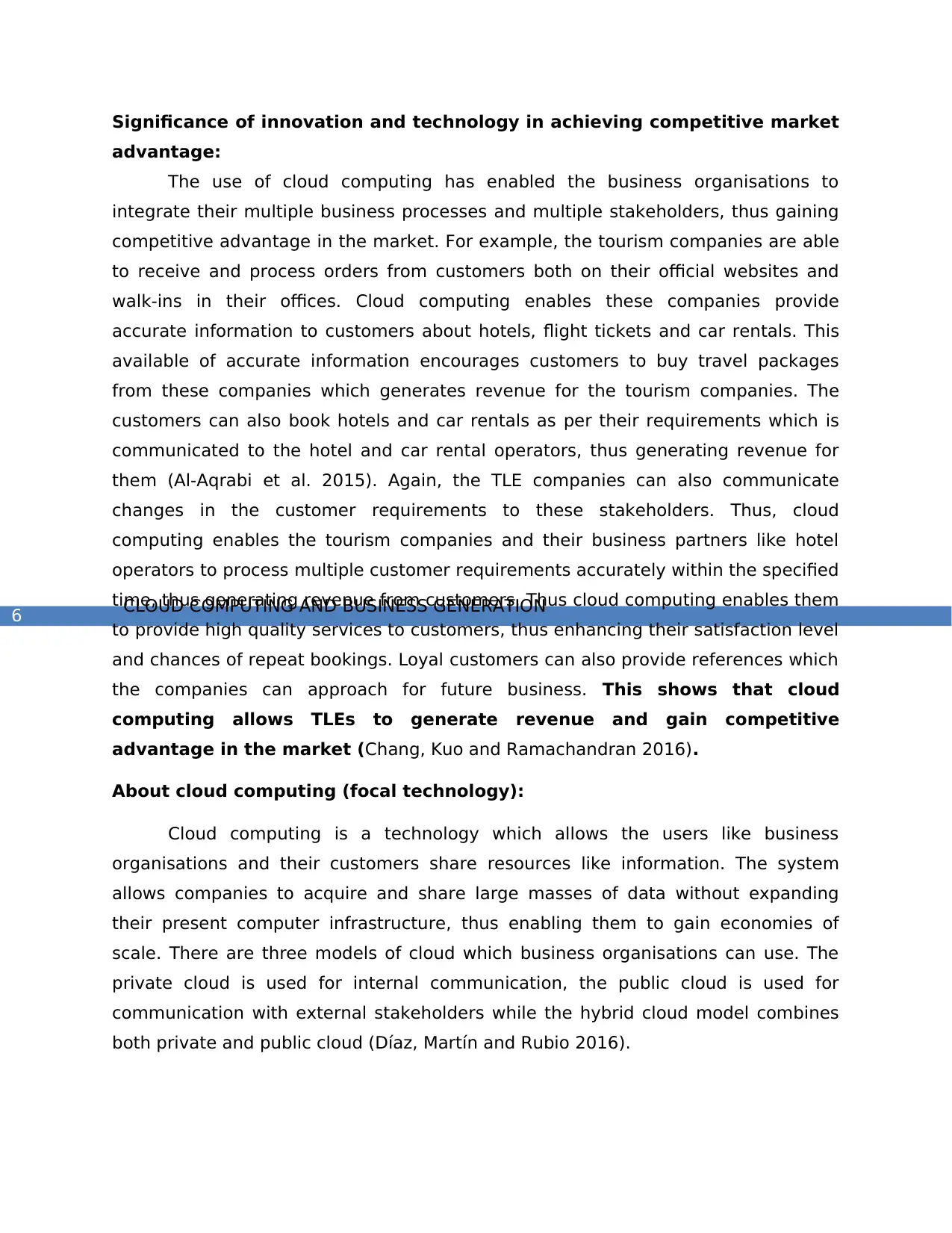
The use of cloud computing has enabled the business organisations to
integrate their multiple business processes and multiple stakeholders, thus gaining
competitive advantage in the market. For example, the tourism companies are able
to receive and process orders from customers both on their official websites and
walk-ins in their offices. Cloud computing enables these companies provide
accurate information to customers about hotels, flight tickets and car rentals. This
available of accurate information encourages customers to buy travel packages
from these companies which generates revenue for the tourism companies. The
customers can also book hotels and car rentals as per their requirements which is
communicated to the hotel and car rental operators, thus generating revenue for
them (Al-Aqrabi et al. 2015). Again, the TLE companies can also communicate
changes in the customer requirements to these stakeholders. Thus, cloud
computing enables the tourism companies and their business partners like hotel
operators to process multiple customer requirements accurately within the specified
time, thus generating revenue from customers. Thus cloud computing enables them
to provide high quality services to customers, thus enhancing their satisfaction level
and chances of repeat bookings. Loyal customers can also provide references which
the companies can approach for future business. This shows that cloud
computing allows TLEs to generate revenue and gain competitive
advantage in the market (Chang, Kuo and Ramachandran 2016).
About cloud computing (focal technology):
Cloud computing is a technology which allows the users like business
organisations and their customers share resources like information. The system
allows companies to acquire and share large masses of data without expanding
their present computer infrastructure, thus enabling them to gain economies of
scale. There are three models of cloud which business organisations can use. The
private cloud is used for internal communication, the public cloud is used for
communication with external stakeholders while the hybrid cloud model combines
both private and public cloud (Díaz, Martín and Rubio 2016).
6
Significance of innovation and technology in achieving competitive market
advantage:
The use of cloud computing has enabled the business organisations to
integrate their multiple business processes and multiple stakeholders, thus gaining
competitive advantage in the market. For example, the tourism companies are able
to receive and process orders from customers both on their official websites and
walk-ins in their offices. Cloud computing enables these companies provide
accurate information to customers about hotels, flight tickets and car rentals. This
available of accurate information encourages customers to buy travel packages
from these companies which generates revenue for the tourism companies. The
customers can also book hotels and car rentals as per their requirements which is
communicated to the hotel and car rental operators, thus generating revenue for
them (Al-Aqrabi et al. 2015). Again, the TLE companies can also communicate
changes in the customer requirements to these stakeholders. Thus, cloud
computing enables the tourism companies and their business partners like hotel
operators to process multiple customer requirements accurately within the specified
time, thus generating revenue from customers. Thus cloud computing enables them
to provide high quality services to customers, thus enhancing their satisfaction level
and chances of repeat bookings. Loyal customers can also provide references which
the companies can approach for future business. This shows that cloud
computing allows TLEs to generate revenue and gain competitive
advantage in the market (Chang, Kuo and Ramachandran 2016).
About cloud computing (focal technology):
Cloud computing is a technology which allows the users like business
organisations and their customers share resources like information. The system
allows companies to acquire and share large masses of data without expanding
their present computer infrastructure, thus enabling them to gain economies of
scale. There are three models of cloud which business organisations can use. The
private cloud is used for internal communication, the public cloud is used for
communication with external stakeholders while the hybrid cloud model combines
both private and public cloud (Díaz, Martín and Rubio 2016).
Paraphrase This Document
Need a fresh take? Get an instant paraphrase of this document with our AI Paraphraser

CLOUD COMPUTING AND BUSINESS GENERATION
7
History and development of cloud computing:
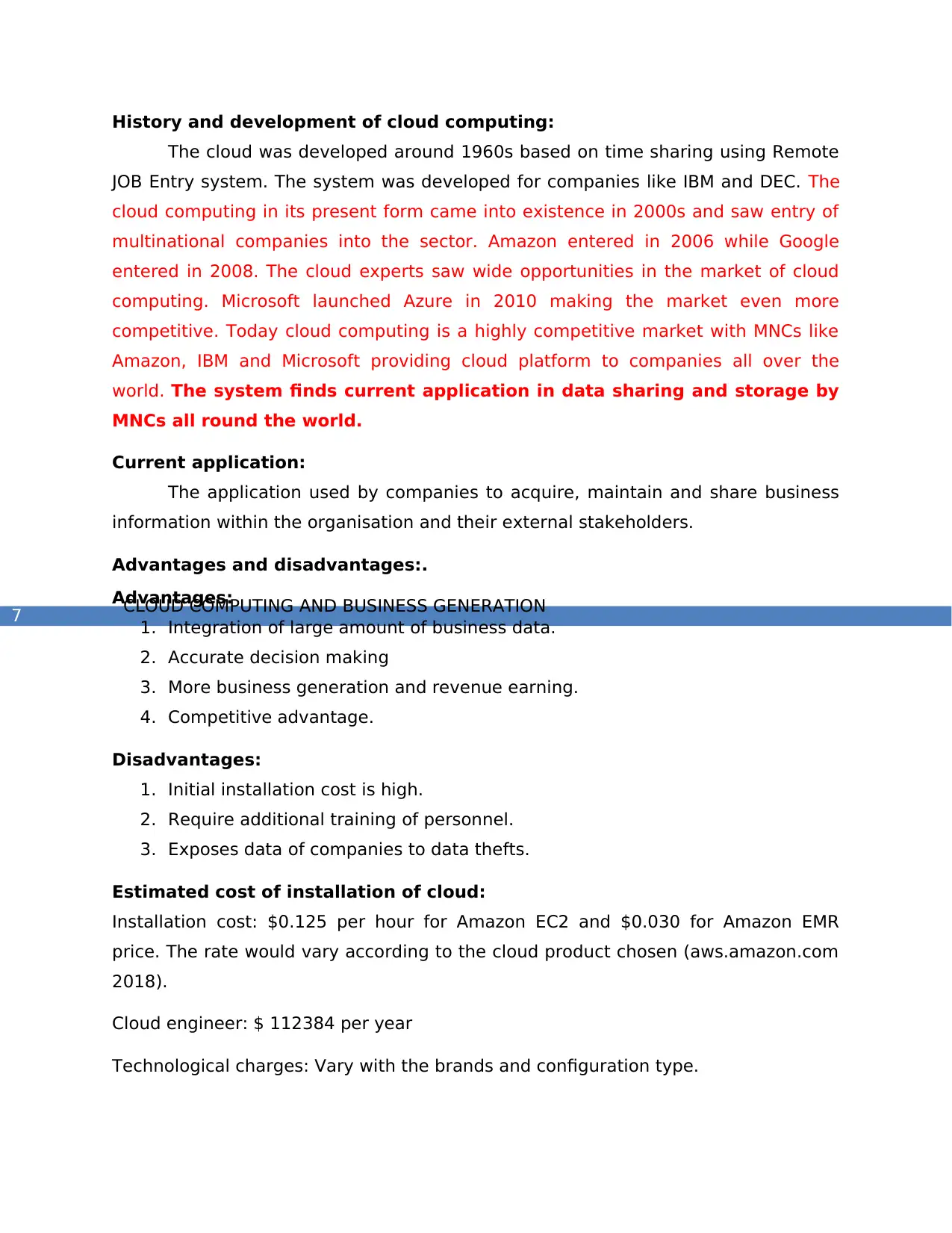
The cloud was developed around 1960s based on time sharing using Remote
JOB Entry system. The system was developed for companies like IBM and DEC. The
cloud computing in its present form came into existence in 2000s and saw entry of
multinational companies into the sector. Amazon entered in 2006 while Google
entered in 2008. The cloud experts saw wide opportunities in the market of cloud
computing. Microsoft launched Azure in 2010 making the market even more
competitive. Today cloud computing is a highly competitive market with MNCs like
Amazon, IBM and Microsoft providing cloud platform to companies all over the
world. The system finds current application in data sharing and storage by
MNCs all round the world.
Current application:
The application used by companies to acquire, maintain and share business
information within the organisation and their external stakeholders.
Advantages and disadvantages:.
Advantages:
1. Integration of large amount of business data.
2. Accurate decision making
3. More business generation and revenue earning.
4. Competitive advantage.
Disadvantages:
1. Initial installation cost is high.
2. Require additional training of personnel.
3. Exposes data of companies to data thefts.
Estimated cost of installation of cloud:
Installation cost: $0.125 per hour for Amazon EC2 and $0.030 for Amazon EMR
price. The rate would vary according to the cloud product chosen (aws.amazon.com
2018).
Cloud engineer: $ 112384 per year
Technological charges: Vary with the brands and configuration type.
7
History and development of cloud computing:
The cloud was developed around 1960s based on time sharing using Remote
JOB Entry system. The system was developed for companies like IBM and DEC. The
cloud computing in its present form came into existence in 2000s and saw entry of
multinational companies into the sector. Amazon entered in 2006 while Google
entered in 2008. The cloud experts saw wide opportunities in the market of cloud
computing. Microsoft launched Azure in 2010 making the market even more
competitive. Today cloud computing is a highly competitive market with MNCs like
Amazon, IBM and Microsoft providing cloud platform to companies all over the
world. The system finds current application in data sharing and storage by
MNCs all round the world.
Current application:
The application used by companies to acquire, maintain and share business
information within the organisation and their external stakeholders.
Advantages and disadvantages:.
Advantages:
1. Integration of large amount of business data.
2. Accurate decision making
3. More business generation and revenue earning.
4. Competitive advantage.
Disadvantages:
1. Initial installation cost is high.
2. Require additional training of personnel.
3. Exposes data of companies to data thefts.
Estimated cost of installation of cloud:
Installation cost: $0.125 per hour for Amazon EC2 and $0.030 for Amazon EMR
price. The rate would vary according to the cloud product chosen (aws.amazon.com
2018).
Cloud engineer: $ 112384 per year
Technological charges: Vary with the brands and configuration type.

CLOUD COMPUTING AND BUSINESS GENERATION
8
References:
Al-Aqrabi, H., Liu, L., Hill, R. and Antonopoulos, N., 2015. Cloud BI: future of business
intelligence in the cloud. Journal of Computer and System Sciences, 81(1), pp.85-96.
Amazon Web Services, Inc. 2018. AWS | Amazon EMR | Pricing. [online] Available at:
https://aws.amazon.com/emr/pricing/ [Accessed 21 Mar. 2018].
Botta, A., De Donato, W., Persico, V. and Pescapé, A., 2016. Integration of cloud
computing and internet of things: a survey. Future Generation Computer
Systems, 56, pp.684-700.
Chang, V., Kuo, Y.H. and Ramachandran, M., 2016. Cloud computing adoption
framework: A security framework for business clouds. Future Generation Computer
Systems, 57, pp.24-41.
Díaz, M., Martín, C. and Rubio, B., 2016. State-of-the-art, challenges, and open
issues in the integration of Internet of things and cloud computing. Journal of
Network and Computer Applications, 67, pp.99-117.
Hashem, I.A.T., Yaqoob, I., Anuar, N.B., Mokhtar, S., Gani, A. and Khan, S.U., 2015.
The rise of “big data” on cloud computing: Review and open research
issues. Information Systems, 47, pp.98-115.
Oliveira, T., Thomas, M. and Espadanal, M., 2014. Assessing the determinants of
cloud computing adoption: An analysis of the manufacturing and services
sectors. Information & Management, 51(5), pp.497-510.
Rittinghouse, J.W. and Ransome, J.F., 2016. Cloud computing: implementation,
management, and security. CRC press.
8
References:
Al-Aqrabi, H., Liu, L., Hill, R. and Antonopoulos, N., 2015. Cloud BI: future of business
intelligence in the cloud. Journal of Computer and System Sciences, 81(1), pp.85-96.
Amazon Web Services, Inc. 2018. AWS | Amazon EMR | Pricing. [online] Available at:
https://aws.amazon.com/emr/pricing/ [Accessed 21 Mar. 2018].
Botta, A., De Donato, W., Persico, V. and Pescapé, A., 2016. Integration of cloud
computing and internet of things: a survey. Future Generation Computer
Systems, 56, pp.684-700.
Chang, V., Kuo, Y.H. and Ramachandran, M., 2016. Cloud computing adoption
framework: A security framework for business clouds. Future Generation Computer
Systems, 57, pp.24-41.
Díaz, M., Martín, C. and Rubio, B., 2016. State-of-the-art, challenges, and open
issues in the integration of Internet of things and cloud computing. Journal of
Network and Computer Applications, 67, pp.99-117.
Hashem, I.A.T., Yaqoob, I., Anuar, N.B., Mokhtar, S., Gani, A. and Khan, S.U., 2015.
The rise of “big data” on cloud computing: Review and open research
issues. Information Systems, 47, pp.98-115.
Oliveira, T., Thomas, M. and Espadanal, M., 2014. Assessing the determinants of
cloud computing adoption: An analysis of the manufacturing and services
sectors. Information & Management, 51(5), pp.497-510.
Rittinghouse, J.W. and Ransome, J.F., 2016. Cloud computing: implementation,
management, and security. CRC press.
⊘ This is a preview!⊘
Do you want full access?
Subscribe today to unlock all pages.

Trusted by 1+ million students worldwide
1 out of 9
Related Documents
Your All-in-One AI-Powered Toolkit for Academic Success.
+13062052269
info@desklib.com
Available 24*7 on WhatsApp / Email
Unlock your academic potential
Copyright © 2020–2026 A2Z Services. All Rights Reserved. Developed and managed by ZUCOL.