A Comprehensive Analysis: Switzerland and Vietnam Living Standards
VerifiedAdded on 2022/08/19
|11
|2704
|7
Report
AI Summary
This report provides a comparative analysis of the living standards in Switzerland and Vietnam. It examines key economic indicators such as GDP growth, GDP per capita, income inequality (Gini coefficient), the Human Development Index (HDI), and poverty rates. The report highlights the significant differences in economic performance, with Switzerland demonstrating a higher standard of living due to factors like a skilled labor force, stable political system, and advanced service sectors. In contrast, Vietnam, a developing economy, shows a slower rate of economic growth but demonstrates improvements in its HDI and a reduction in poverty levels. The analysis includes discussions on the drivers of economic growth in both countries, the impact of economic policies, and the implications of these factors on the overall well-being of the populations. The conclusion emphasizes the divergent trajectories of the two economies and the importance of inclusive growth strategies for improving living standards in both nations, highlighting the need for effective policies to enhance economic indicators in Vietnam.
Running head: A COMPARISON BETWEEN THE LIVING STANDARDS OF TWO
COUNTRIES
A COMPARISON BETWEEN THE LIVING STANDARDS OF TWO COUNTRIES
Name of Student:
Name of University:
Author Note:
COUNTRIES
A COMPARISON BETWEEN THE LIVING STANDARDS OF TWO COUNTRIES
Name of Student:
Name of University:
Author Note:

Paraphrase This Document
Need a fresh take? Get an instant paraphrase of this document with our AI Paraphraser
1A COMPARISON BETWEEN THE LIVING STANDARDS OF TWO COUNTRIES
Table of Contents
Introduction......................................................................................................................................3
Discussion........................................................................................................................................3
Conclusion.......................................................................................................................................9
Reference List................................................................................................................................10
Table of Contents
Introduction......................................................................................................................................3
Discussion........................................................................................................................................3
Conclusion.......................................................................................................................................9
Reference List................................................................................................................................10
2A COMPARISON BETWEEN THE LIVING STANDARDS OF TWO COUNTRIES
Introduction
The growth of an economy is related to the standard of living. A rise in the value of
productive potential leads to economic growth that enhances the living standards with respect to
high rate of GDP growth, lower unemployment and positive profits. Economic analysis is
effective fir understanding the standard of living of two countries and the causes that led to such
findings. For effective analysis, comparison between developed and developing economy is
crucial.
Switzerland is a highly developed economy which is one of the most competitive
economies in the world. The country has an efficient trade market and is known as the country
with second highest per capita GDP (Vergani and Graf 2016). Vietnam is a developing country
and the growth trajectory shows a positive trend. The country has effectively shifted itself from a
poor economy towards lower middle income country. The aim of the paper is to undergo a
comparison between the performance of Switzerland and Vietnam with respect to several
economic parameters.
Discussion
Comparison between GDP growths of two countries
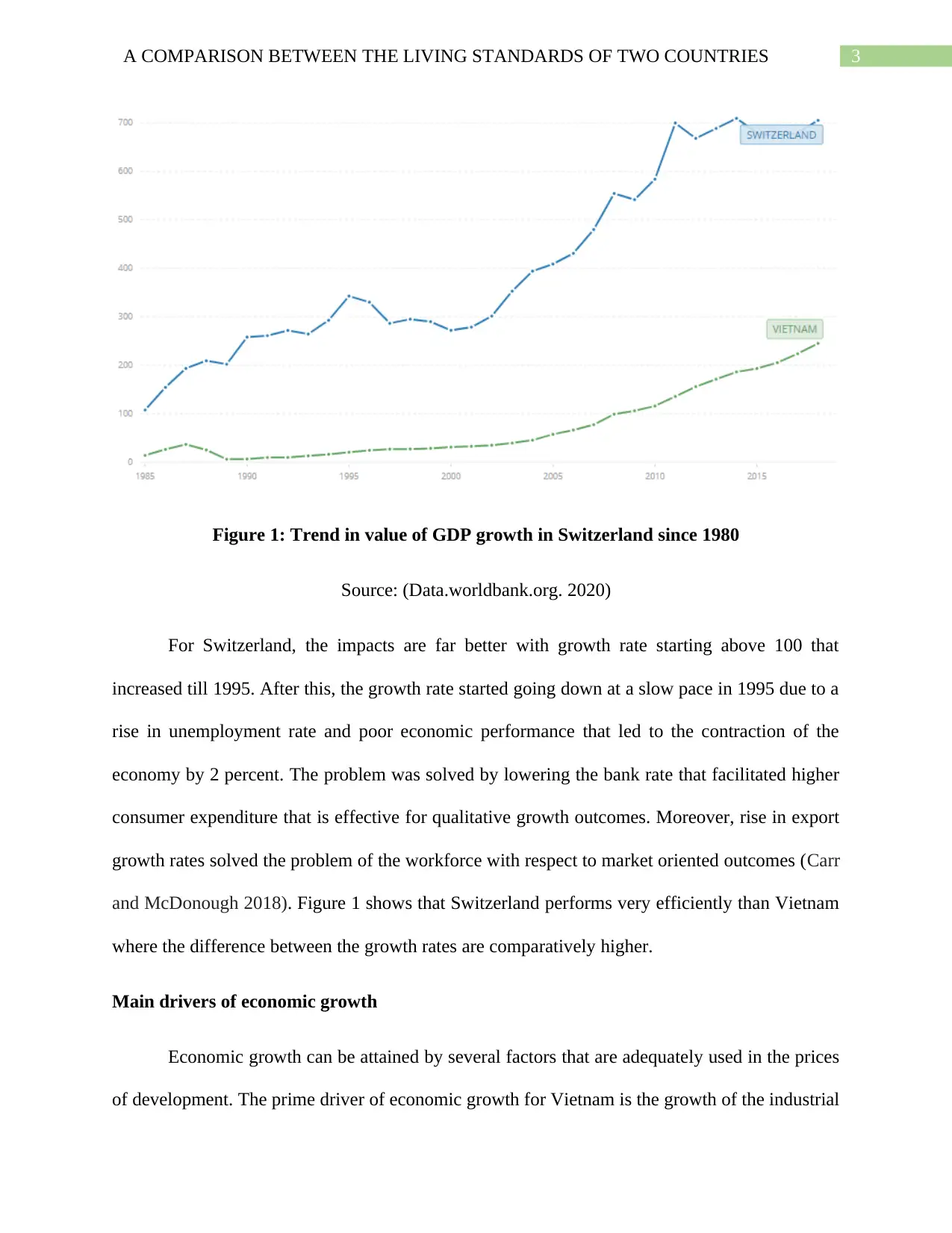
Figure 1, shows the rate of growth between the two economies in the period between
1985 till 2018. The growth trajectory is positive for both countries. The only difference is that
the rate is growth for Vietnam is much slower than that of Switzerland. Vietnam started its
journey with nearly zero rate of GDP growth during 1985, which fell to zero level by the end of
1990. After this, the economic growth started growing slowly till 200 after which it advanced at
a faster rate.
Introduction
The growth of an economy is related to the standard of living. A rise in the value of
productive potential leads to economic growth that enhances the living standards with respect to
high rate of GDP growth, lower unemployment and positive profits. Economic analysis is
effective fir understanding the standard of living of two countries and the causes that led to such
findings. For effective analysis, comparison between developed and developing economy is
crucial.
Switzerland is a highly developed economy which is one of the most competitive
economies in the world. The country has an efficient trade market and is known as the country
with second highest per capita GDP (Vergani and Graf 2016). Vietnam is a developing country
and the growth trajectory shows a positive trend. The country has effectively shifted itself from a
poor economy towards lower middle income country. The aim of the paper is to undergo a
comparison between the performance of Switzerland and Vietnam with respect to several
economic parameters.
Discussion
Comparison between GDP growths of two countries
Figure 1, shows the rate of growth between the two economies in the period between
1985 till 2018. The growth trajectory is positive for both countries. The only difference is that
the rate is growth for Vietnam is much slower than that of Switzerland. Vietnam started its
journey with nearly zero rate of GDP growth during 1985, which fell to zero level by the end of
1990. After this, the economic growth started growing slowly till 200 after which it advanced at
a faster rate.
⊘ This is a preview!⊘
Do you want full access?
Subscribe today to unlock all pages.

Trusted by 1+ million students worldwide
3A COMPARISON BETWEEN THE LIVING STANDARDS OF TWO COUNTRIES
Figure 1: Trend in value of GDP growth in Switzerland since 1980
Source: (Data.worldbank.org. 2020)
For Switzerland, the impacts are far better with growth rate starting above 100 that
increased till 1995. After this, the growth rate started going down at a slow pace in 1995 due to a
rise in unemployment rate and poor economic performance that led to the contraction of the
economy by 2 percent. The problem was solved by lowering the bank rate that facilitated higher
consumer expenditure that is effective for qualitative growth outcomes. Moreover, rise in export
growth rates solved the problem of the workforce with respect to market oriented outcomes (Carr
and McDonough 2018). Figure 1 shows that Switzerland performs very efficiently than Vietnam
where the difference between the growth rates are comparatively higher.
Main drivers of economic growth
Economic growth can be attained by several factors that are adequately used in the prices
of development. The prime driver of economic growth for Vietnam is the growth of the industrial
Figure 1: Trend in value of GDP growth in Switzerland since 1980
Source: (Data.worldbank.org. 2020)
For Switzerland, the impacts are far better with growth rate starting above 100 that
increased till 1995. After this, the growth rate started going down at a slow pace in 1995 due to a
rise in unemployment rate and poor economic performance that led to the contraction of the
economy by 2 percent. The problem was solved by lowering the bank rate that facilitated higher
consumer expenditure that is effective for qualitative growth outcomes. Moreover, rise in export
growth rates solved the problem of the workforce with respect to market oriented outcomes (Carr
and McDonough 2018). Figure 1 shows that Switzerland performs very efficiently than Vietnam
where the difference between the growth rates are comparatively higher.
Main drivers of economic growth
Economic growth can be attained by several factors that are adequately used in the prices
of development. The prime driver of economic growth for Vietnam is the growth of the industrial
Paraphrase This Document
Need a fresh take? Get an instant paraphrase of this document with our AI Paraphraser
4A COMPARISON BETWEEN THE LIVING STANDARDS OF TWO COUNTRIES
and service sector that led to the growth of both mining and manufacturing sector that is effective
or quality output and parameter. The service sector contributes half of the total GDP. The
industrial sector provides about 33.25 percent of the aggregate GDP of Vietnam and the rest 17
percent is contributed by the agricultural sector (Carr and McDonough 2018). This is effective
for the qualitative development of the economy with respect to several benefits that is proposed
to come in the near future.
The main driver of economic growth in Switzerland is the availability of skilled labors
who are employed in most of the sectors. The sectors that contributes to a part of the economic
growth are financial services, manufacturing, metals, chemicals, pharmaceuticals, electronics and
precision manufacturing. The service sector is highly developed due to the performance from all
the skilled labor force who contributes to a major part of the overall population. The sector
relating to financial services works effectively that leads to business development and growth of
the service sectors. The strength of the economy is formed due to long term monetary security,
low value added tax rates, highly skilled workers and political stability.
Living standards with respect to economic indicators
The standard of living of an economy is a reflection of an individual’s consumption
levels with respect to the economic state of the economy. The living standards can be judged
with respect to several economic indicators such as GDP per capita, income inequality, human
development index, and population with people below the poverty line, social progressive and
other parameters that has led to a change in standard of living of the two countries (Vanoni et al.
2016).
and service sector that led to the growth of both mining and manufacturing sector that is effective
or quality output and parameter. The service sector contributes half of the total GDP. The
industrial sector provides about 33.25 percent of the aggregate GDP of Vietnam and the rest 17
percent is contributed by the agricultural sector (Carr and McDonough 2018). This is effective
for the qualitative development of the economy with respect to several benefits that is proposed
to come in the near future.
The main driver of economic growth in Switzerland is the availability of skilled labors
who are employed in most of the sectors. The sectors that contributes to a part of the economic
growth are financial services, manufacturing, metals, chemicals, pharmaceuticals, electronics and
precision manufacturing. The service sector is highly developed due to the performance from all
the skilled labor force who contributes to a major part of the overall population. The sector
relating to financial services works effectively that leads to business development and growth of
the service sectors. The strength of the economy is formed due to long term monetary security,
low value added tax rates, highly skilled workers and political stability.
Living standards with respect to economic indicators
The standard of living of an economy is a reflection of an individual’s consumption
levels with respect to the economic state of the economy. The living standards can be judged
with respect to several economic indicators such as GDP per capita, income inequality, human
development index, and population with people below the poverty line, social progressive and
other parameters that has led to a change in standard of living of the two countries (Vanoni et al.
2016).
5A COMPARISON BETWEEN THE LIVING STANDARDS OF TWO COUNTRIES
GDP per capita- GDP per capita denotes the average income of an individual that is
measure of the country’s economic performance with respect to the total population. Switzerland
has second highest level of GDP per capita with a value of 80, 189.70 US dollars. This causes a
low unemployment rate and stable labor market with extensive healthcare and security system.
Vietnam’s per capita GDP is only about 2,343.12 US dollars that is 34 times the GDP per capita
of Switzerland.
Income inequality- Income inequality denotes the disparity in income distributions
among the people of the economy and accordingly people can invest or use goods and services
(Carr and McDonough 2018). The level of income inequality has fallen by 20 percent in 2016
which is estimated by the value of GINI index which was 32.5 in 2015 and has reached to about
32.25 in 2016. However, income inequality has increased in Vietnam from a level of 34.75 in
2015 to about 35.5 in 2016. This shows that there is a high disparity of income among
individuals in Vietnam with respect to Switzerland such that there is difference in the living
standards among the income earners.
Number of people living below the poverty line- The population of people living below
the poverty line denotes the people who are deprived from the basic amenities of life like food,
clothing and shelter Cailleret et al. 2017). According to reports established in 2017, about 8.2
percent of overall population lives below the poverty line which mostly comprise of people who
were not working, did not have access to school education, single parent families and population
over 65 years of age. In correspondence with the total population in Vietnam, about 8 percent of
population lived below the poverty line. The number of people who were deprived from basic
necessities in life decreased by 32 percent with respect to previous year data. More than 8.4
percent of the entire population stayed below the poverty line in 2013 which reached the level 8
GDP per capita- GDP per capita denotes the average income of an individual that is
measure of the country’s economic performance with respect to the total population. Switzerland
has second highest level of GDP per capita with a value of 80, 189.70 US dollars. This causes a
low unemployment rate and stable labor market with extensive healthcare and security system.
Vietnam’s per capita GDP is only about 2,343.12 US dollars that is 34 times the GDP per capita
of Switzerland.
Income inequality- Income inequality denotes the disparity in income distributions
among the people of the economy and accordingly people can invest or use goods and services
(Carr and McDonough 2018). The level of income inequality has fallen by 20 percent in 2016
which is estimated by the value of GINI index which was 32.5 in 2015 and has reached to about
32.25 in 2016. However, income inequality has increased in Vietnam from a level of 34.75 in
2015 to about 35.5 in 2016. This shows that there is a high disparity of income among
individuals in Vietnam with respect to Switzerland such that there is difference in the living
standards among the income earners.
Number of people living below the poverty line- The population of people living below
the poverty line denotes the people who are deprived from the basic amenities of life like food,
clothing and shelter Cailleret et al. 2017). According to reports established in 2017, about 8.2
percent of overall population lives below the poverty line which mostly comprise of people who
were not working, did not have access to school education, single parent families and population
over 65 years of age. In correspondence with the total population in Vietnam, about 8 percent of
population lived below the poverty line. The number of people who were deprived from basic
necessities in life decreased by 32 percent with respect to previous year data. More than 8.4
percent of the entire population stayed below the poverty line in 2013 which reached the level 8
⊘ This is a preview!⊘
Do you want full access?
Subscribe today to unlock all pages.
Trusted by 1+ million students worldwide
6A COMPARISON BETWEEN THE LIVING STANDARDS OF TWO COUNTRIES
percent by 2017. On the contrary, population staying below the poverty line is more than that of
Vietnam (Carr and McDonough 2018).
Although Switzerland is one of the most well-developed economy in the world with high
rate of economic growth, lowest levels of unemployment and inequality, people staying below
poverty line is more in comparison to developed economy. This proposes the condition of the
Switzerland economy. Income inequality and per capita income is estimated by doing an average
where the value may not lead to satisfying results because there may not be too much gap
between income levels or per capita income that is not effective for studying the structural
development of the paper with respect to effective outcomes (Cailleret et al. 2017). Moreover,
population in Vietnam is comparatively lower which enables the economy to maintain the
economic state.
Human Development Index (HDI)- HDI is an important measure of the performance of
the economy which takes into account economic and social dimensions and does not estimate
performance in terms of GDP growth. It uses several parameters to understand how well is the
economy performing in terms of living standards, health conditions, income levels, average years
of schooling and the level of education (Vergani and Graf 2016). The HDI index of Switzerland
is about 0.946 that has made its way into a very high human development category which ranks
second among the 189 countries. The HDI of Vietnam is 0.693 which scores the economy under
the medium development category and ranks 118 among 189 nations. HDI index proposes that
Vietnam stands way behind Switzerland whose rank is about 2. However, improvement in the
value of development index has been more for Vietnam which shows how has changed itself
from undeveloped to increasingly developing economy (Nguyen 2017). An increase of 13.7
percent by 2017. On the contrary, population staying below the poverty line is more than that of
Vietnam (Carr and McDonough 2018).
Although Switzerland is one of the most well-developed economy in the world with high
rate of economic growth, lowest levels of unemployment and inequality, people staying below
poverty line is more in comparison to developed economy. This proposes the condition of the
Switzerland economy. Income inequality and per capita income is estimated by doing an average
where the value may not lead to satisfying results because there may not be too much gap
between income levels or per capita income that is not effective for studying the structural
development of the paper with respect to effective outcomes (Cailleret et al. 2017). Moreover,
population in Vietnam is comparatively lower which enables the economy to maintain the
economic state.
Human Development Index (HDI)- HDI is an important measure of the performance of
the economy which takes into account economic and social dimensions and does not estimate
performance in terms of GDP growth. It uses several parameters to understand how well is the
economy performing in terms of living standards, health conditions, income levels, average years
of schooling and the level of education (Vergani and Graf 2016). The HDI index of Switzerland
is about 0.946 that has made its way into a very high human development category which ranks
second among the 189 countries. The HDI of Vietnam is 0.693 which scores the economy under
the medium development category and ranks 118 among 189 nations. HDI index proposes that
Vietnam stands way behind Switzerland whose rank is about 2. However, improvement in the
value of development index has been more for Vietnam which shows how has changed itself
from undeveloped to increasingly developing economy (Nguyen 2017). An increase of 13.7
Paraphrase This Document
Need a fresh take? Get an instant paraphrase of this document with our AI Paraphraser
7A COMPARISON BETWEEN THE LIVING STANDARDS OF TWO COUNTRIES
percent is seen in Switzerland in the period between 1990 and 2018. This rate of increment is
about 45.9 percent in Vietnam which shows effective development in the economy.
UN’s Multidimensional Poverty Index (MPI) - MPI has been introduced by Oxford
Poverty & Human Development Initiative (OPHI) which uses education, living standard and
health to indicate the poverty level experienced by the population (Kim and Nguyen 2017). This
is estimated with respect to the availability of development parameters like sanitation, electricity,
housing, and availability of assets, cooking fuel, nutrition, child mortality, years of schooling and
the attendance in schools. MPI is high for Switzerland due to efficient performance of the MPI
parameters. Vietnam stays way behind in this estimate.
Social Progress Index (SPI) - It estimates the ways social and environmental needs are
provided to the people of the economy with respect to stable outcomes and enabling properties.
Switzerland is accounted as one of the most socially advanced nations in the economy which
ranks as the third best economy in terms of SPI and this index keeps changing for Vietnam (Anh
Minh and Tran-Nam 2016). This can effectively change the way gods are sourced into the
economy with respect to effective outcomes and market statistics.
Comparison between economic growth and living standards of Switzerland and Vietnam
From the above parameters, it can be said that the level of economic performance and
living standards differ between the two countries. Switzerland has a high standard of living due
to low rate of unemployment, stabilized political system, effective sectors, skilled labor force,
high values in terms of HDI, MPI and SPI. In all these parameters Switzerland stys ahead of
Vietnam. However, the rate of development has been more effective for Vietnam with qualitative
growth with respect to market oriented outcomes. Vietnam stays ahead of Switzerland in terms
percent is seen in Switzerland in the period between 1990 and 2018. This rate of increment is
about 45.9 percent in Vietnam which shows effective development in the economy.
UN’s Multidimensional Poverty Index (MPI) - MPI has been introduced by Oxford
Poverty & Human Development Initiative (OPHI) which uses education, living standard and
health to indicate the poverty level experienced by the population (Kim and Nguyen 2017). This
is estimated with respect to the availability of development parameters like sanitation, electricity,
housing, and availability of assets, cooking fuel, nutrition, child mortality, years of schooling and
the attendance in schools. MPI is high for Switzerland due to efficient performance of the MPI
parameters. Vietnam stays way behind in this estimate.
Social Progress Index (SPI) - It estimates the ways social and environmental needs are
provided to the people of the economy with respect to stable outcomes and enabling properties.
Switzerland is accounted as one of the most socially advanced nations in the economy which
ranks as the third best economy in terms of SPI and this index keeps changing for Vietnam (Anh
Minh and Tran-Nam 2016). This can effectively change the way gods are sourced into the
economy with respect to effective outcomes and market statistics.
Comparison between economic growth and living standards of Switzerland and Vietnam
From the above parameters, it can be said that the level of economic performance and
living standards differ between the two countries. Switzerland has a high standard of living due
to low rate of unemployment, stabilized political system, effective sectors, skilled labor force,
high values in terms of HDI, MPI and SPI. In all these parameters Switzerland stys ahead of
Vietnam. However, the rate of development has been more effective for Vietnam with qualitative
growth with respect to market oriented outcomes. Vietnam stays ahead of Switzerland in terms
8A COMPARISON BETWEEN THE LIVING STANDARDS OF TWO COUNTRIES
of population living below the poverty line (Vidal Alejandro 2016). Switzerland being a highly
developed country has about 8.2 percent people living below poverty, even though
unemployment rate is very low.
Inclusive growth denotes that the progress of a country in a way such that every citizen
benefits from the growth. Exclusive growth means that only a portion of the population receives
the fruitful benefits of economic growth. Thus, difference in gini coefficient, income inequality
and poverty index say that the growth of both the countries are exclusive. Economic growth has
led to such living standards of the Switzerland where growth is dependent on quality parameters
that is effective for the organizational development in that country which is effective for the
further development (Pan and Ngo 2016). A boost in economic growth will lead to a rise in the
standard of living of the two countries. The economic growth is comparatively slower in
Vietnam and in to improve the economic growth, there is need for effective policies that is
crucial for the economic development and enhance the performance of the economic indicators.
This will effectively lead to strong growth objectives with respect to several policies and
outcomes. .
Conclusion
Thus, it can be concluded that the two economies has developed over the years. The
trajectory of economic growth is very high for developed economies like Switzerland. The rate
of economic growth is much slower in Vietnam. All the economic indicators has effectively
improved that is leading towards a quality standard of living for the two countries (Pan and Ngo
2016). The effective structure is the way gods are developed and arranged due to change in cost
effective parameters and outcomes. Most of the economic growth is governed by the
development of service sector in Vietnam where the main reason for economic growth in
of population living below the poverty line (Vidal Alejandro 2016). Switzerland being a highly
developed country has about 8.2 percent people living below poverty, even though
unemployment rate is very low.
Inclusive growth denotes that the progress of a country in a way such that every citizen
benefits from the growth. Exclusive growth means that only a portion of the population receives
the fruitful benefits of economic growth. Thus, difference in gini coefficient, income inequality
and poverty index say that the growth of both the countries are exclusive. Economic growth has
led to such living standards of the Switzerland where growth is dependent on quality parameters
that is effective for the organizational development in that country which is effective for the
further development (Pan and Ngo 2016). A boost in economic growth will lead to a rise in the
standard of living of the two countries. The economic growth is comparatively slower in
Vietnam and in to improve the economic growth, there is need for effective policies that is
crucial for the economic development and enhance the performance of the economic indicators.
This will effectively lead to strong growth objectives with respect to several policies and
outcomes. .
Conclusion
Thus, it can be concluded that the two economies has developed over the years. The
trajectory of economic growth is very high for developed economies like Switzerland. The rate
of economic growth is much slower in Vietnam. All the economic indicators has effectively
improved that is leading towards a quality standard of living for the two countries (Pan and Ngo
2016). The effective structure is the way gods are developed and arranged due to change in cost
effective parameters and outcomes. Most of the economic growth is governed by the
development of service sector in Vietnam where the main reason for economic growth in
⊘ This is a preview!⊘
Do you want full access?
Subscribe today to unlock all pages.
Trusted by 1+ million students worldwide
9A COMPARISON BETWEEN THE LIVING STANDARDS OF TWO COUNTRIES
Switzerland is the availability of skilled labor who use capital incentive techniques to drive
potential growth and maintain a high living stand.
Reference List
Anh, N.N., Minh, N.N. and Tran-Nam, B., 2016. Corruption and economic growth, with a focus
on Vietnam. Crime, Law and Social Change, 65(4-5), pp.307-324.
Cailleret, M., Jansen, S., Robert, E.M., Desoto, L., Aakala, T., Antos, J.A., Beikircher, B.,
Bigler, C., Bugmann, H., Caccianiga, M. and Čada, V., 2017. A synthesis of radial growth
patterns preceding tree mortality. Global change biology, 23(4), pp.1675-1690.
Carr, C. and McDonough, E., 2018. Integrative planning of post-suburban growth in the Glatt
Valley (Switzerland). Raumforschung und Raumordnung| Spatial Research and Planning, 76(2),
pp.109-122.
Data.worldbank.org. (2020). GDP growth (annual %) - Switzerland | Data. [online] Available at:
https://data.worldbank.org/indicator/NY.GDP.MKTP.KD.ZG?locations=CH&view=chart
[Accessed 31 Jan. 2020].
Kim, N.T. and Nguyen, H.H., 2017. Impacts of domestic savings on economic growth of
Vietnam. Asian Journal of Economic Modelling, 5(3), pp.245-252.
Nguyen, N.T.K., 2017. The long run and short run impacts of foreign direct investment and
export on economic growth of Vietnam. Asian Economic and Financial Review, 7(5), p.519.
Switzerland is the availability of skilled labor who use capital incentive techniques to drive
potential growth and maintain a high living stand.
Reference List
Anh, N.N., Minh, N.N. and Tran-Nam, B., 2016. Corruption and economic growth, with a focus
on Vietnam. Crime, Law and Social Change, 65(4-5), pp.307-324.
Cailleret, M., Jansen, S., Robert, E.M., Desoto, L., Aakala, T., Antos, J.A., Beikircher, B.,
Bigler, C., Bugmann, H., Caccianiga, M. and Čada, V., 2017. A synthesis of radial growth
patterns preceding tree mortality. Global change biology, 23(4), pp.1675-1690.
Carr, C. and McDonough, E., 2018. Integrative planning of post-suburban growth in the Glatt
Valley (Switzerland). Raumforschung und Raumordnung| Spatial Research and Planning, 76(2),
pp.109-122.
Data.worldbank.org. (2020). GDP growth (annual %) - Switzerland | Data. [online] Available at:
https://data.worldbank.org/indicator/NY.GDP.MKTP.KD.ZG?locations=CH&view=chart
[Accessed 31 Jan. 2020].
Kim, N.T. and Nguyen, H.H., 2017. Impacts of domestic savings on economic growth of
Vietnam. Asian Journal of Economic Modelling, 5(3), pp.245-252.
Nguyen, N.T.K., 2017. The long run and short run impacts of foreign direct investment and
export on economic growth of Vietnam. Asian Economic and Financial Review, 7(5), p.519.
Paraphrase This Document
Need a fresh take? Get an instant paraphrase of this document with our AI Paraphraser
10A COMPARISON BETWEEN THE LIVING STANDARDS OF TWO COUNTRIES
Pan, W.H. and Ngo, X.T., 2016. Endogenous growth theory and regional performance: The
moderating effects of special economic zones. Communist and Post-Communist Studies, 49(2),
pp.113-122.
Seo, J.Y., Matsui, T., Luo, J., Correa‐Baena, J.P., Giordano, F., Saliba, M., Schenk, K.,
Ummadisingu, A., Domanski, K., Hadadian, M. and Hagfeldt, A., 2016. Ionic liquid control
crystal growth to enhance planar perovskite solar cells efficiency. Advanced Energy
Materials, 6(20), p.1600767.
Vanoni, M., Bugmann, H., Nötzli, M. and Bigler, C., 2016. Quantifying the effects of drought on
abrupt growth decreases of major tree species in Switzerland. Ecology and evolution, 6(11),
pp.3555-3570.
Vergani, C. and Graf, F., 2016. Soil permeability, aggregate stability and root growth: a pot
experiment from a soil bioengineering perspective. Ecohydrology, 9(5), pp.830-842.
Vidal Alejandro, P., 2016. Cuba’s reform and economic growth: a comparative perspective with
Vietnam. Journal of Economic Policy Reform, 19(2), pp.148-165.
Pan, W.H. and Ngo, X.T., 2016. Endogenous growth theory and regional performance: The
moderating effects of special economic zones. Communist and Post-Communist Studies, 49(2),
pp.113-122.
Seo, J.Y., Matsui, T., Luo, J., Correa‐Baena, J.P., Giordano, F., Saliba, M., Schenk, K.,
Ummadisingu, A., Domanski, K., Hadadian, M. and Hagfeldt, A., 2016. Ionic liquid control
crystal growth to enhance planar perovskite solar cells efficiency. Advanced Energy
Materials, 6(20), p.1600767.
Vanoni, M., Bugmann, H., Nötzli, M. and Bigler, C., 2016. Quantifying the effects of drought on
abrupt growth decreases of major tree species in Switzerland. Ecology and evolution, 6(11),
pp.3555-3570.
Vergani, C. and Graf, F., 2016. Soil permeability, aggregate stability and root growth: a pot
experiment from a soil bioengineering perspective. Ecohydrology, 9(5), pp.830-842.
Vidal Alejandro, P., 2016. Cuba’s reform and economic growth: a comparative perspective with
Vietnam. Journal of Economic Policy Reform, 19(2), pp.148-165.

1 out of 11


Related Documents


Your All-in-One AI-Powered Toolkit for Academic Success.
+13062052269
info@desklib.com
Available 24*7 on WhatsApp / Email
![[object Object]](/_next/static/media/star-bottom.7253800d.svg)
Unlock your academic potential
Copyright © 2020–2026 A2Z Services. All Rights Reserved. Developed and managed by ZUCOL.