Critical Analysis: Examining Alligators in US Urban Sewer Systems
VerifiedAdded on 2024/04/26
|10
|1873
|413
Report
AI Summary
This report critically analyzes the hypothesis of alligators living in the sewer systems of major US cities. It evaluates evidence from various sources, including news reports and scientific studies, to assess the claim's validity. The analysis considers alternative hypotheses, such as environmental factors affecting alligator populations and misidentification of other creatures. Two primary resources are examined: one supporting the presence of alligators in sewers and another highlighting the challenges of their survival in such environments due to climate and pollution. The report rates each hypothesis based on testability, fruitfulness, scope, simplicity, and conservation, ultimately favoring the hypothesis that aligns with the warm environment of sewage systems, while acknowledging the challenges posed by pollutants. Desklib offers a wealth of similar academic resources for students.
Assessment Task 3
Critical Analysis Piece
1
Critical Analysis Piece
1

Paraphrase This Document
Need a fresh take? Get an instant paraphrase of this document with our AI Paraphraser
Contents
Step 1- Stating the Claims...............................................................................................................3
Step 2- Evaluating the Evidence......................................................................................................4
Step 3- Consider alternative hypotheses..........................................................................................6
Step 4- Rate according to the criteria of adequacy each hypothesis................................................8
Step 5- Conclusion...........................................................................................................................9
Referencing....................................................................................................................................10
List of Figures
Figure 1 Survey of relative density at marsh alligators...................................................................4
Figure 2 Queens alligator.................................................................................................................6
2
Step 1- Stating the Claims...............................................................................................................3
Step 2- Evaluating the Evidence......................................................................................................4
Step 3- Consider alternative hypotheses..........................................................................................6
Step 4- Rate according to the criteria of adequacy each hypothesis................................................8
Step 5- Conclusion...........................................................................................................................9
Referencing....................................................................................................................................10
List of Figures
Figure 1 Survey of relative density at marsh alligators...................................................................4
Figure 2 Queens alligator.................................................................................................................6
2
Step 1- Stating the Claims
The hypothesis here is- ‘It is possible that a population of alligators is living in the sewer system
under major cities in the USA’. This claim is mysterious and lurking out of sight because the
USA has cities like New York whose climate is way ahead cold for alligators. It is termed as a
hypothesis because there is limited evidence present for the proposed explanation and there has
to be a lot of further investigation. There are regular stories from 1932 in regards to the sighting
of sewer alligator in bowels of the city but its reliability factor is still unclear (Kilgannon, 2017).
Instead of fearing from them, the people are taking it as a pride. A story here is been thread
according to which rich NY families bought them from Florida and after they realized about their
deadly nature, they decided to dump into the sewer. It was believed that alligators have found
their way out through streamer. It is the perception here by some people that alligators exist in
sewers while some say that it is a hypothesis and can’t be trusted eventually.
The jargon which is difficult to understand is Steamer as here it is not a saucepan but is boat,
ship or a locomotive which is powered by steam. Another word is bowels which mean the inner
deepest areas of some place.
3
The hypothesis here is- ‘It is possible that a population of alligators is living in the sewer system
under major cities in the USA’. This claim is mysterious and lurking out of sight because the
USA has cities like New York whose climate is way ahead cold for alligators. It is termed as a
hypothesis because there is limited evidence present for the proposed explanation and there has
to be a lot of further investigation. There are regular stories from 1932 in regards to the sighting
of sewer alligator in bowels of the city but its reliability factor is still unclear (Kilgannon, 2017).
Instead of fearing from them, the people are taking it as a pride. A story here is been thread
according to which rich NY families bought them from Florida and after they realized about their
deadly nature, they decided to dump into the sewer. It was believed that alligators have found
their way out through streamer. It is the perception here by some people that alligators exist in
sewers while some say that it is a hypothesis and can’t be trusted eventually.
The jargon which is difficult to understand is Steamer as here it is not a saucepan but is boat,
ship or a locomotive which is powered by steam. Another word is bowels which mean the inner
deepest areas of some place.
3
⊘ This is a preview!⊘
Do you want full access?
Subscribe today to unlock all pages.

Trusted by 1+ million students worldwide
Step 2- Evaluating the Evidence
There are many tales of giant alligators in the city; one is when a person was driving back to JFK
airport to his home then he saw a crowd gathered around wherein everybody thought that there is
an alligator. It was a question mark as from sewers; rats and cockroaches are something
acceptable but not alligators.
Here first Hypotheses is ‘Underground Rivers: From the River Styx to the Rio San
Buenaventura, with occasional diversions’ written by Richard Heggen. Some evidence is here to
find out that whether alligators live in the sewer system or not. In September 1927, it was heard
that good-sized Florida alligator was sighted in a stream of storm-swollen. In July 1929, it was
found that an alligator of size 2-feet was found in a residential area. In May 1931 again 2-foot
specimen was originated in bushes. In June 1932 it was heard that an alligator was hunt by
Westchester Police. In September 1932 there was a news that six reptiles disappeared. February
1935 came with news that when boys were shoveling snow then a 6-foot gator was found and he
has been attacked but he falls off from passing steamer. Again two alligators and a seal were
spotted in Westchester country in 1935. In 1938, five alligators were spotted in a Lake called as
Huguenot. In August 1942 also a 4-foot alligator was found in Mindowaskin Lake (Heggen,
2015). These arguments support the claim that yes alligators exist in the sewer system.
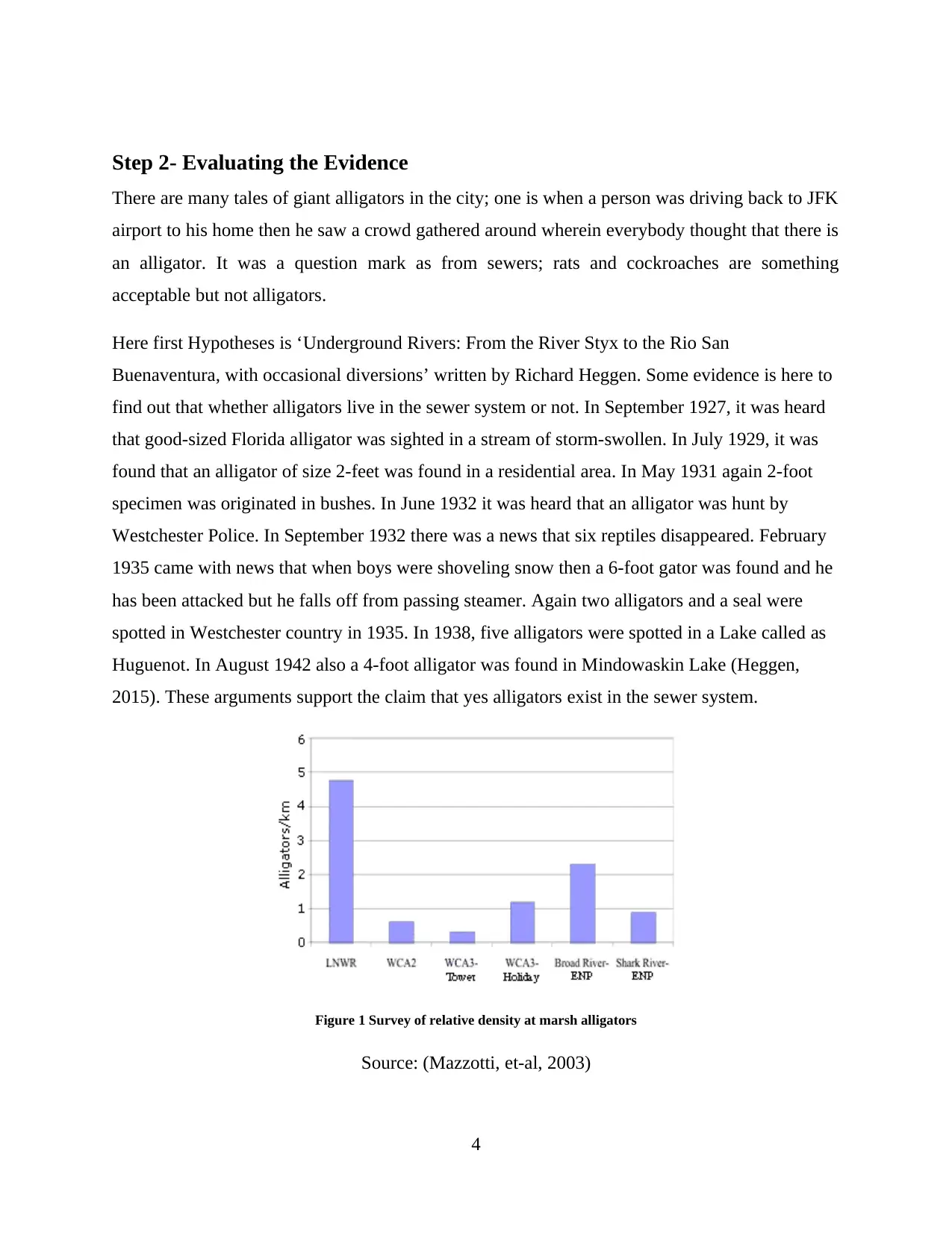
Figure 1 Survey of relative density at marsh alligators
Source: (Mazzotti, et-al, 2003)
4
There are many tales of giant alligators in the city; one is when a person was driving back to JFK
airport to his home then he saw a crowd gathered around wherein everybody thought that there is
an alligator. It was a question mark as from sewers; rats and cockroaches are something
acceptable but not alligators.
Here first Hypotheses is ‘Underground Rivers: From the River Styx to the Rio San
Buenaventura, with occasional diversions’ written by Richard Heggen. Some evidence is here to
find out that whether alligators live in the sewer system or not. In September 1927, it was heard
that good-sized Florida alligator was sighted in a stream of storm-swollen. In July 1929, it was
found that an alligator of size 2-feet was found in a residential area. In May 1931 again 2-foot
specimen was originated in bushes. In June 1932 it was heard that an alligator was hunt by
Westchester Police. In September 1932 there was a news that six reptiles disappeared. February
1935 came with news that when boys were shoveling snow then a 6-foot gator was found and he
has been attacked but he falls off from passing steamer. Again two alligators and a seal were
spotted in Westchester country in 1935. In 1938, five alligators were spotted in a Lake called as
Huguenot. In August 1942 also a 4-foot alligator was found in Mindowaskin Lake (Heggen,
2015). These arguments support the claim that yes alligators exist in the sewer system.
Figure 1 Survey of relative density at marsh alligators
Source: (Mazzotti, et-al, 2003)
4
Paraphrase This Document
Need a fresh take? Get an instant paraphrase of this document with our AI Paraphraser
All these were suspected by the persons living nearby to the alleged area. It is to be noted that
only one had been turned up in a sewer. The main point which does not allow any scope of
alligators in the USA is that these reptiles are accustomed to the warm climate only and not cold
climates as it is way too tough for alligators to survive in the sewer system of USA. Also, the
sewer bureau spokesperson said that sewer is not at all a health or even a fit place for alligators
to survive and above all there are thousands of men employed and neither of them while
building, repairing or maintaining could ever find out an alligator. It is next to impossible that
even a glimpse of such large alligators was not found in sewers (Radford, 2011). These
arguments while providing a tough competition to the above all urgings.
On the basis of above analysis and arguments, it can be easily said that there might be some
other kind of creature looked like alligators or may be some shadow or a vague vision. So, all the
evidence which supported the presence of alligators must be disregarded.
5
only one had been turned up in a sewer. The main point which does not allow any scope of
alligators in the USA is that these reptiles are accustomed to the warm climate only and not cold
climates as it is way too tough for alligators to survive in the sewer system of USA. Also, the
sewer bureau spokesperson said that sewer is not at all a health or even a fit place for alligators
to survive and above all there are thousands of men employed and neither of them while
building, repairing or maintaining could ever find out an alligator. It is next to impossible that
even a glimpse of such large alligators was not found in sewers (Radford, 2011). These
arguments while providing a tough competition to the above all urgings.
On the basis of above analysis and arguments, it can be easily said that there might be some
other kind of creature looked like alligators or may be some shadow or a vague vision. So, all the
evidence which supported the presence of alligators must be disregarded.
5
Step 3- Consider alternative hypotheses
In second hypotheses ‘Alligator Tales: New Lessons about Environmental Contaminants from a
Sentinel Species’ written by Matthew Milnes and Louis Guillette, it is stated that existence of
alligators in the sewer system of USA is unmanageable. This hypothesis says that environmental
acquaintance to the composite mixture of impurities from municipal and agricultural activities
manipulates the functioning and development of alligator’s endocrine and reproductive system.
The hard jargon words are- reproductive endocrinology and ecotoxicology. Reproductive
endocrinology is the term used for patients experiencing problems related to fertility.
Ecotoxicology is the effects of chemicals on the biological organisms, particularly at the
population.
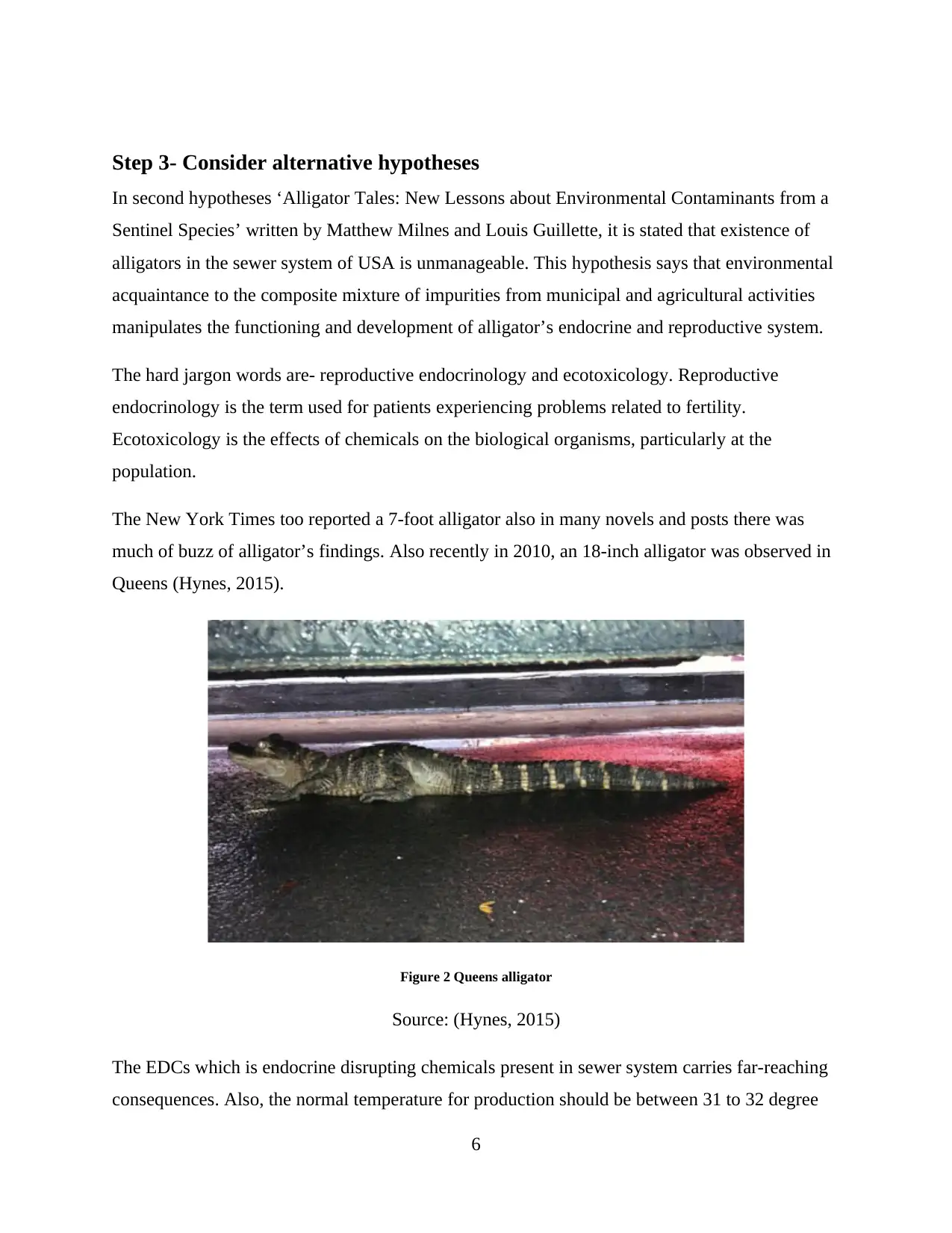
The New York Times too reported a 7-foot alligator also in many novels and posts there was
much of buzz of alligator’s findings. Also recently in 2010, an 18-inch alligator was observed in
Queens (Hynes, 2015).
Figure 2 Queens alligator
Source: (Hynes, 2015)
The EDCs which is endocrine disrupting chemicals present in sewer system carries far-reaching
consequences. Also, the normal temperature for production should be between 31 to 32 degree
6
In second hypotheses ‘Alligator Tales: New Lessons about Environmental Contaminants from a
Sentinel Species’ written by Matthew Milnes and Louis Guillette, it is stated that existence of
alligators in the sewer system of USA is unmanageable. This hypothesis says that environmental
acquaintance to the composite mixture of impurities from municipal and agricultural activities
manipulates the functioning and development of alligator’s endocrine and reproductive system.
The hard jargon words are- reproductive endocrinology and ecotoxicology. Reproductive
endocrinology is the term used for patients experiencing problems related to fertility.
Ecotoxicology is the effects of chemicals on the biological organisms, particularly at the
population.
The New York Times too reported a 7-foot alligator also in many novels and posts there was
much of buzz of alligator’s findings. Also recently in 2010, an 18-inch alligator was observed in
Queens (Hynes, 2015).
Figure 2 Queens alligator
Source: (Hynes, 2015)
The EDCs which is endocrine disrupting chemicals present in sewer system carries far-reaching
consequences. Also, the normal temperature for production should be between 31 to 32 degree
6
⊘ This is a preview!⊘
Do you want full access?
Subscribe today to unlock all pages.
Trusted by 1+ million students worldwide
Celsius. The success of any population or wildlife depends on the existence and efficacious
reproduction and not survival alone. Here in the USA, the temperature range is between -3.0
degree Celsius to 11.5 degree Celsius which does not stand any chance for even survival of
alligators and thus reproduction can’t be even thought of. It will become more challenging
especially for long-lived species.
7
reproduction and not survival alone. Here in the USA, the temperature range is between -3.0
degree Celsius to 11.5 degree Celsius which does not stand any chance for even survival of
alligators and thus reproduction can’t be even thought of. It will become more challenging
especially for long-lived species.
7
Paraphrase This Document
Need a fresh take? Get an instant paraphrase of this document with our AI Paraphraser
Step 4- Rate according to the criteria of adequacy each hypothesis
First resource: ‘Underground Rivers: From the River Styx to the Rio San Buenaventura, with
occasional diversions’
Second resource: ‘Alligator Tales: New Lessons about Environmental Contaminants from a
Sentinel Species’
These two hypotheses are competing for one, the research about the existence of the alligators’
existence in the sewage system is done. The research is undertaken by the number of various
elements such as online documents, books, research papers and more. The research becomes
more critical when the modes of both experimental and non-experimental conditions are applied.
Data collections and data analyses have been implemented so that different aspect of group
behavior, averages, tendencies, and properties can be achieved. According to the first resource,
the alligators are found to exist in the sewage system and there is the possibility that they might
be found there. As the analysis of the second resource has been done, the fact came out that the
some of the human-caused problems are making their existence in the problem.
Testability: The testability of the hypothesis is created with help of some of the techniques. The
techniques that used for the testability of the hypothesis can be interviews, questionnaire, attitude
scales and more. The other approach can be used on the basis of the validation of the evidence
from the source of collection of the data. Some of the questions are asked of the scientists who
are researching on the existence of the alligators. The calculation extracted is in favor of the
hypothesis which states the existence of the alligators.
Fruitfulness: The research has been done in both criteria favor and against. The hypothesis in
favor is more relevant as it is more observable and develops prediction when the statements of
the resource are analyzed.
Scope: The scope of each hypothesis is different as both resources have statements that
contradict each other. The scope of the first resource is more relevant to the hypothesis taken and
provides statistical data that might state the clear existence of the alligators and can be seen from
the book ‘The world beneath the sea’ (Emery, 2017).
8
First resource: ‘Underground Rivers: From the River Styx to the Rio San Buenaventura, with
occasional diversions’
Second resource: ‘Alligator Tales: New Lessons about Environmental Contaminants from a
Sentinel Species’
These two hypotheses are competing for one, the research about the existence of the alligators’
existence in the sewage system is done. The research is undertaken by the number of various
elements such as online documents, books, research papers and more. The research becomes
more critical when the modes of both experimental and non-experimental conditions are applied.
Data collections and data analyses have been implemented so that different aspect of group
behavior, averages, tendencies, and properties can be achieved. According to the first resource,
the alligators are found to exist in the sewage system and there is the possibility that they might
be found there. As the analysis of the second resource has been done, the fact came out that the
some of the human-caused problems are making their existence in the problem.
Testability: The testability of the hypothesis is created with help of some of the techniques. The
techniques that used for the testability of the hypothesis can be interviews, questionnaire, attitude
scales and more. The other approach can be used on the basis of the validation of the evidence
from the source of collection of the data. Some of the questions are asked of the scientists who
are researching on the existence of the alligators. The calculation extracted is in favor of the
hypothesis which states the existence of the alligators.
Fruitfulness: The research has been done in both criteria favor and against. The hypothesis in
favor is more relevant as it is more observable and develops prediction when the statements of
the resource are analyzed.
Scope: The scope of each hypothesis is different as both resources have statements that
contradict each other. The scope of the first resource is more relevant to the hypothesis taken and
provides statistical data that might state the clear existence of the alligators and can be seen from
the book ‘The world beneath the sea’ (Emery, 2017).
8
Simplicity: The first resource is the simplest explanation of the hypothesis as it hardly criticizes
the positivity of the presence of alligators in the sewage of major cities of the USA.
Conservation: The belief that the alligators move towards the warm environments to survive is
supported by the first source. The sewage water is however polluted and remains warms as
considered to the natural source of their habitats. The second source discusses the problem issues
that alligators don’t exist there due to sewage pollutants.
Step 5- Conclusion
The original hypothesis is in favor of the first resource as it provides the evidence and clarifies
the reason why alligators exist there and support their present existence. Instead of this, the
alternate hypothesis which is against this is the second resource that facilitates the presence of
evidence that condemns the presence existence of the alligators in the sewage of the major cities
of the USA. The justification is also discussed above that the presence of the alligators is more
favorable in the warm environment of the sewage system rather than the cold environment of the
natural habitats.
9
the positivity of the presence of alligators in the sewage of major cities of the USA.
Conservation: The belief that the alligators move towards the warm environments to survive is
supported by the first source. The sewage water is however polluted and remains warms as
considered to the natural source of their habitats. The second source discusses the problem issues
that alligators don’t exist there due to sewage pollutants.
Step 5- Conclusion
The original hypothesis is in favor of the first resource as it provides the evidence and clarifies
the reason why alligators exist there and support their present existence. Instead of this, the
alternate hypothesis which is against this is the second resource that facilitates the presence of
evidence that condemns the presence existence of the alligators in the sewage of the major cities
of the USA. The justification is also discussed above that the presence of the alligators is more
favorable in the warm environment of the sewage system rather than the cold environment of the
natural habitats.
9
⊘ This is a preview!⊘
Do you want full access?
Subscribe today to unlock all pages.
Trusted by 1+ million students worldwide
Referencing
Kilgannon, C. (2017). Gators in the Sewer? ‘I Want It to Be True’. Retrieved from
https://www.nytimes.com/2017/02/10/nyregion/gators-in-the-sewer-i-want-it-to-be-true.html
Heggen, R. (2015). Underground Rivers: From the River Styx to the Rio San Buenaventura, with
occasional diversions. Location: Publisher.
Radford, B. (2011). Do Alligators Really Live in New York City Sewers?. Retrieved from
https://www.livescience.com/33322-alligators-crocodiles-new-york-city-sewers.html
Hynes, T. (2015). Cities 101: Uncovering NYC’s Sewer Alligator Legend, Fact or Fiction?
. Retrieved from https://untappedcities.com/2015/03/10/cities-101-uncovering-nycs-sewer-
alligator-legend-fact-or-fiction/
Mazzotti, J. F., Rice, G. K., Brandt, L. A. (2003). Role of American Alligator (Alligator
mississippiensis) in Measuring Restoration Success in the Florida Everglades. Retrieved from
https://sofia.usgs.gov/geer/2003/posters/gator_restore/
Emery, D. (2017). Alligators in the Sewers of New York. Retrieved from
https://www.thoughtco.com/alligators-in-the-sewers-3298849
10
Kilgannon, C. (2017). Gators in the Sewer? ‘I Want It to Be True’. Retrieved from
https://www.nytimes.com/2017/02/10/nyregion/gators-in-the-sewer-i-want-it-to-be-true.html
Heggen, R. (2015). Underground Rivers: From the River Styx to the Rio San Buenaventura, with
occasional diversions. Location: Publisher.
Radford, B. (2011). Do Alligators Really Live in New York City Sewers?. Retrieved from
https://www.livescience.com/33322-alligators-crocodiles-new-york-city-sewers.html
Hynes, T. (2015). Cities 101: Uncovering NYC’s Sewer Alligator Legend, Fact or Fiction?
. Retrieved from https://untappedcities.com/2015/03/10/cities-101-uncovering-nycs-sewer-
alligator-legend-fact-or-fiction/
Mazzotti, J. F., Rice, G. K., Brandt, L. A. (2003). Role of American Alligator (Alligator
mississippiensis) in Measuring Restoration Success in the Florida Everglades. Retrieved from
https://sofia.usgs.gov/geer/2003/posters/gator_restore/
Emery, D. (2017). Alligators in the Sewers of New York. Retrieved from
https://www.thoughtco.com/alligators-in-the-sewers-3298849
10

1 out of 10


Your All-in-One AI-Powered Toolkit for Academic Success.
+13062052269
info@desklib.com
Available 24*7 on WhatsApp / Email
![[object Object]](/_next/static/media/star-bottom.7253800d.svg)
Unlock your academic potential
Copyright © 2020–2026 A2Z Services. All Rights Reserved. Developed and managed by ZUCOL.