Design and Development of a Solar Air Heater: Project Report
VerifiedAdded on 2020/06/04
|23
|6536
|35
Project
AI Summary
This project focuses on the design and development of a solar air heater as a sustainable alternative to conventional heating systems. The report begins with an introduction to renewable energy, ethical considerations for protecting the environment, and a discussion on worldwide and Irish energy consumption. It emphasizes the need for sustainable energy sources and the damage caused by non-renewable resources. The project outlines the objectives, including designing and manufacturing a solar air heater, performing experimental analysis, collecting and analyzing data, and preparing a final thesis. The report also covers the anatomy of the sun and its role as the primary energy source. The project aims to provide a practical and environmentally friendly solution for space heating, contributing to reduced carbon emissions and promoting the use of renewable energy sources. The project timeline and structure, along with the importance of sustainable energy practices, are also included. The project also highlights the importance of the Sustainable Energy Authority of Ireland (SEAI) and the country's efforts to adopt renewable energy sources, detailing the benefits of solar energy and its potential for job creation within the construction and renewable energy industries.
Design and Development of a
Solar Air Heater
Solar Air Heater

Paraphrase This Document
Need a fresh take? Get an instant paraphrase of this document with our AI Paraphraser
TABLE OF CONTENTS
Chapter 1- Introduction to Renewable Energy and Ethical Considerations for Protecting
Environment...............................................................................................................................3
1.1 Motivation and contextualization.....................................................................................3
1.2 Objectives and considerations..........................................................................................5
1.3 Paper structure..................................................................................................................6
Chapter 2- Worldwide and Ireland Energy Consumption..........................................................8
Chapter 3- The Sun..................................................................................................................11
3.1 Anatomy of the Sun.......................................................................................................11
REFERENCES.........................................................................................................................12
Figure 1: Comparison of consumption of energy of different countries including Ireland.......2
Figure 2: Division of various energy sources in the world as of 2014......................................3
Figure 3: Gantt chart for the project...........................................................................................5
Chapter 1- Introduction to Renewable Energy and Ethical Considerations for Protecting
Environment...............................................................................................................................3
1.1 Motivation and contextualization.....................................................................................3
1.2 Objectives and considerations..........................................................................................5
1.3 Paper structure..................................................................................................................6
Chapter 2- Worldwide and Ireland Energy Consumption..........................................................8
Chapter 3- The Sun..................................................................................................................11
3.1 Anatomy of the Sun.......................................................................................................11
REFERENCES.........................................................................................................................12
Figure 1: Comparison of consumption of energy of different countries including Ireland.......2
Figure 2: Division of various energy sources in the world as of 2014......................................3
Figure 3: Gantt chart for the project...........................................................................................5
Chapter 1- Introduction to Renewable Energy and Ethical Considerations
for Protecting Environment
1.1 Motivation and contextualization
This project covers various aspects of using the conventional energy sources and their
replacements in the modern times that are possible. It includes the details to the very core of a
proposed solution for the replacement of conventional methods of space heating. Heating,
ventilation and air conditioning (HVAC) in today’s world has become a necessity due to the
growth in the demands of human comfort and several industrial reforms that push the
maintenance of specific temperatures in work area.
In the recent few decades there have been a lot of studies, surveys and tests in order to
estimate, minimize or possibly eliminate the use of conventional energy resources in the
world. These important measures have become very crucial as the planet stands on the verge
of destruction by the emissions from these energy sources the human being has been
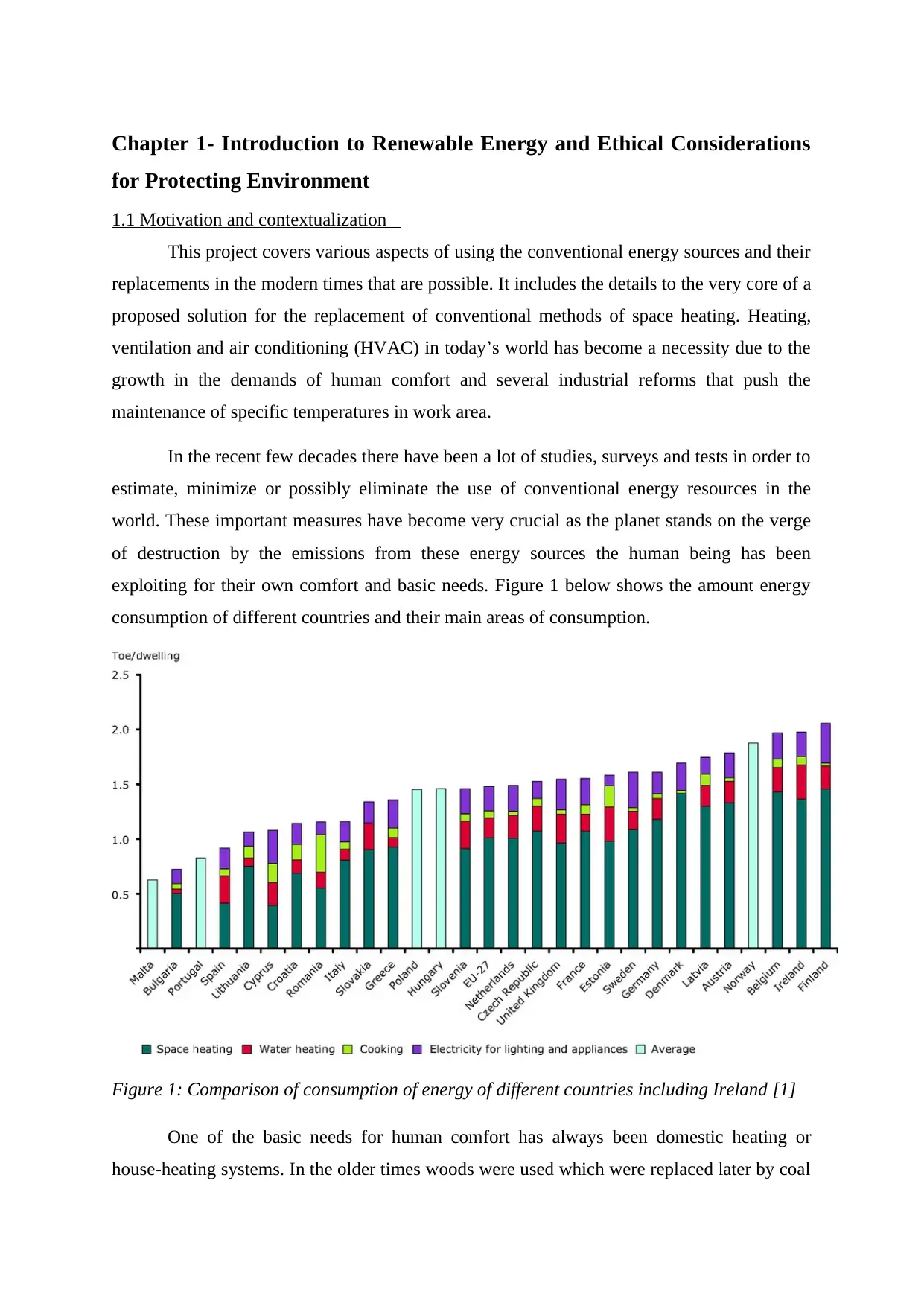
exploiting for their own comfort and basic needs. Figure 1 below shows the amount energy
consumption of different countries and their main areas of consumption.
Figure 1: Comparison of consumption of energy of different countries including Ireland [1]
One of the basic needs for human comfort has always been domestic heating or
house-heating systems. In the older times woods were used which were replaced later by coal
for Protecting Environment
1.1 Motivation and contextualization
This project covers various aspects of using the conventional energy sources and their
replacements in the modern times that are possible. It includes the details to the very core of a
proposed solution for the replacement of conventional methods of space heating. Heating,
ventilation and air conditioning (HVAC) in today’s world has become a necessity due to the
growth in the demands of human comfort and several industrial reforms that push the
maintenance of specific temperatures in work area.
In the recent few decades there have been a lot of studies, surveys and tests in order to
estimate, minimize or possibly eliminate the use of conventional energy resources in the
world. These important measures have become very crucial as the planet stands on the verge
of destruction by the emissions from these energy sources the human being has been
exploiting for their own comfort and basic needs. Figure 1 below shows the amount energy
consumption of different countries and their main areas of consumption.
Figure 1: Comparison of consumption of energy of different countries including Ireland [1]
One of the basic needs for human comfort has always been domestic heating or
house-heating systems. In the older times woods were used which were replaced later by coal
⊘ This is a preview!⊘
Do you want full access?
Subscribe today to unlock all pages.

Trusted by 1+ million students worldwide
and now they’ve been replaced by the electric space heaters. As the human population grows
with time, so does the need for more resource. However, the abundance of such resources
tends to decrease over time, leaving the world in need for better, smarter and eco-friendly
alternatives for such needs.
The main sources of electricity in the modern times are the coal and gas/oil which are
depleting over time, growing costlier and leaving an extravagant amount of 40 billion tons of
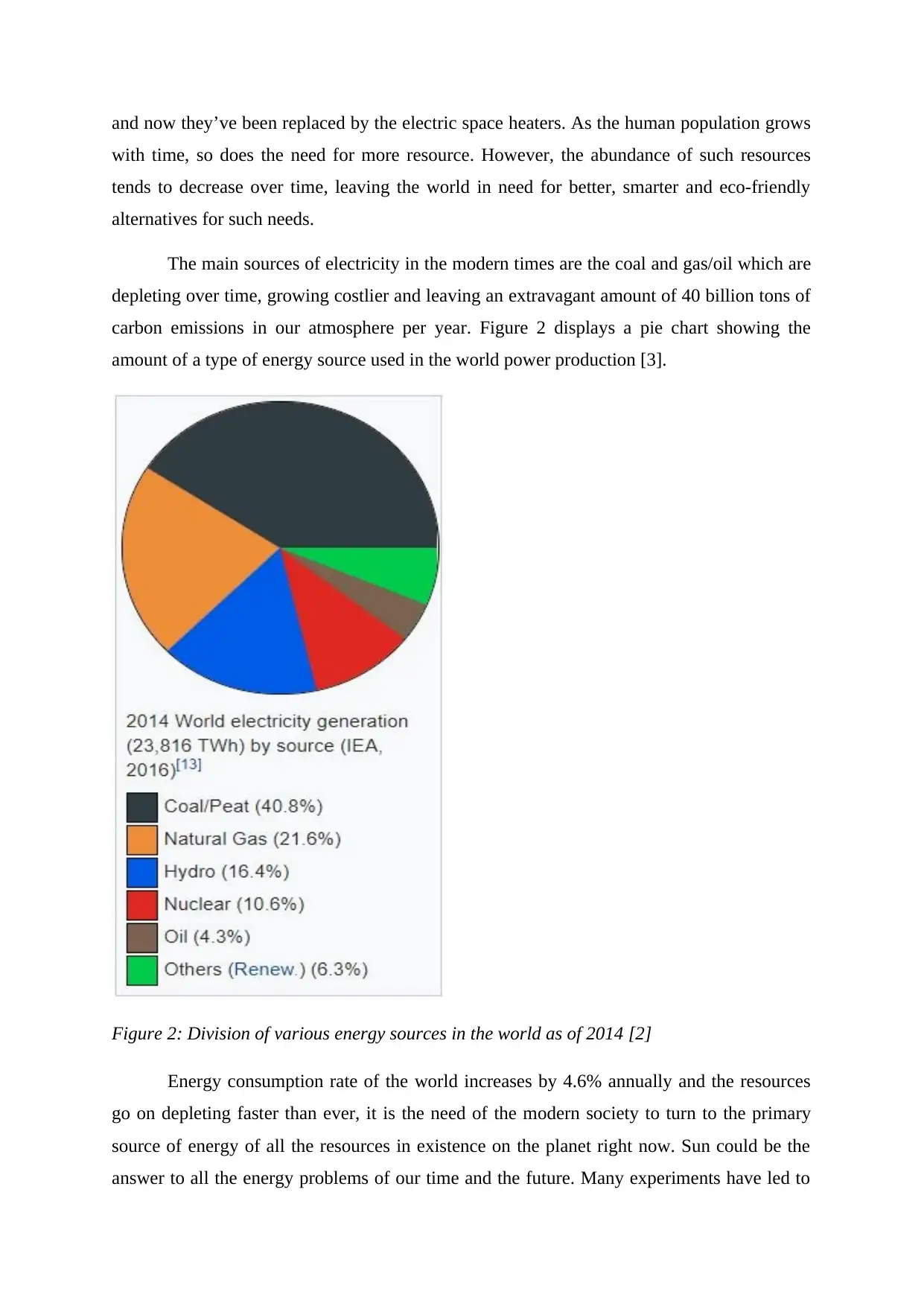
carbon emissions in our atmosphere per year. Figure 2 displays a pie chart showing the
amount of a type of energy source used in the world power production [3].
Figure 2: Division of various energy sources in the world as of 2014 [2]
Energy consumption rate of the world increases by 4.6% annually and the resources
go on depleting faster than ever, it is the need of the modern society to turn to the primary
source of energy of all the resources in existence on the planet right now. Sun could be the
answer to all the energy problems of our time and the future. Many experiments have led to
with time, so does the need for more resource. However, the abundance of such resources
tends to decrease over time, leaving the world in need for better, smarter and eco-friendly
alternatives for such needs.
The main sources of electricity in the modern times are the coal and gas/oil which are
depleting over time, growing costlier and leaving an extravagant amount of 40 billion tons of
carbon emissions in our atmosphere per year. Figure 2 displays a pie chart showing the
amount of a type of energy source used in the world power production [3].
Figure 2: Division of various energy sources in the world as of 2014 [2]
Energy consumption rate of the world increases by 4.6% annually and the resources
go on depleting faster than ever, it is the need of the modern society to turn to the primary
source of energy of all the resources in existence on the planet right now. Sun could be the
answer to all the energy problems of our time and the future. Many experiments have led to
Paraphrase This Document
Need a fresh take? Get an instant paraphrase of this document with our AI Paraphraser
the possibility of creation of efficient energy production systems directly powered by the
sunlight.
There are a lot of other renewable energy sources that hold a great potential to be our
mainstream energy sources such as geothermal energy, oceanic energy, hydro-power, wind
power (etc.) but this report focuses on the extent and methods of exploiting essentially the
main source behind all the power and motion existing on the planet.
1.2 Objectives and considerations
Damage inflicted on environment by non-renewable energy resources
Before we move forward to the world changing techniques and potential solutions of
reviving our dying planet, let us have a look at the damage that has already been inflicted by
our kind to the ever giving and nurturing nature. A brief discussion is carried out on how
different cycles and patterns of the environment have been affected by our selfish use of
natural offerings.
Carbon emissions such as CO2 make up for 80% of the total world greenhouse
emissions that collect in thermosphere and entrap the solar radiations to form a hot jacket that
heats up the planet, melting glaciers. This global glacier meltdown raises sea levels
threatening the coastal residents and ice dwelling species such as penguins and Polar bears
[5].
Rise in sea levels means the saltwater will come in contact to the freshwater sources
leading to added process of desalination for drinking and cooking purposes. The carbon can
remain in the atmosphere for 50-200 years which directly points out that emissions today will
continue the harm to the planet in the future as well.
As predicted by NASA, global warming holds the potential of changing the nature of
the weathers and may result in the occurrence of more destructive natural events such as
droughts, tropical storms, wildfires etcetera [4].
Climate change affects the food chain by shifting the weather making for seasonal
crops hard to withstand the sudden changes. With ever-changing climate, animals are forced
to migrate to the northern hemisphere and as a result, most of them are hunted on the way.
These damages inflicted may or may not sound very significant right now but they are
real and have all the potential to grow over time. This again lays more emphasis on
sunlight.
There are a lot of other renewable energy sources that hold a great potential to be our
mainstream energy sources such as geothermal energy, oceanic energy, hydro-power, wind
power (etc.) but this report focuses on the extent and methods of exploiting essentially the
main source behind all the power and motion existing on the planet.
1.2 Objectives and considerations
Damage inflicted on environment by non-renewable energy resources
Before we move forward to the world changing techniques and potential solutions of
reviving our dying planet, let us have a look at the damage that has already been inflicted by
our kind to the ever giving and nurturing nature. A brief discussion is carried out on how
different cycles and patterns of the environment have been affected by our selfish use of
natural offerings.
Carbon emissions such as CO2 make up for 80% of the total world greenhouse
emissions that collect in thermosphere and entrap the solar radiations to form a hot jacket that
heats up the planet, melting glaciers. This global glacier meltdown raises sea levels
threatening the coastal residents and ice dwelling species such as penguins and Polar bears
[5].
Rise in sea levels means the saltwater will come in contact to the freshwater sources
leading to added process of desalination for drinking and cooking purposes. The carbon can
remain in the atmosphere for 50-200 years which directly points out that emissions today will
continue the harm to the planet in the future as well.
As predicted by NASA, global warming holds the potential of changing the nature of
the weathers and may result in the occurrence of more destructive natural events such as
droughts, tropical storms, wildfires etcetera [4].
Climate change affects the food chain by shifting the weather making for seasonal
crops hard to withstand the sudden changes. With ever-changing climate, animals are forced
to migrate to the northern hemisphere and as a result, most of them are hunted on the way.
These damages inflicted may or may not sound very significant right now but they are
real and have all the potential to grow over time. This again lays more emphasis on
researches (such as this project) for finding better alternatives over time to reduce the effects
of such emissions and eliminate their use gradually reducing it over time.
A lot of positivity in the behaviour of governments and general masses has been
observed in the past few years regarding the acceptance of effects of the emissions on the
environment. The necessary steps are being taken accordingly and with time many
alternatives have been found to substitute for the conventional sources of energy.
Exploiting the primary source – Our Sun
As stated earlier, our very own Sun is our primary source of energy. All the motion
that exists on the planet is given by the energy that sun has showered over the earth in the
past and is doing the same right now. None of the life would have existed if it wasn’t for the
earth to fall in the goldilocks zone of our sun. The goldilocks zone is a region around a star
which is most likely to have the conditions for life on it.
We use natural gas, oil and coal that was formed by the plant and animal decay which
are the carbon-based life forms that lived under the sun which supplied essential heat for the
existence of water in liquid state [6].
The wind energy is created by the movement in the oceans which is rendered by
continuous evaporation of water and condensation back to water in the form of rain. As the
upper layer of ocean is heated by the sun, the vapours rise upwards forming the wind due to
dislocations in the atmosphere. As the water vapour formed by the sun heat passes over
colder areas such as mountains or other relatively less warm areas, it condenses to form the
rain which serves as a source of irrigation in many farming areas. As the rain pours down in
hills and mountains, it travels downhill and can be used as hydropower by putting
hydropower plants in its way [6, 7].
The electromagnetic radiation from the sun heat up the earth from the inside. This
process melts the inner core of the earth and maintains it in the molten state. The mineral
rocks and metals also exist in the molten state in the earth helping maintain the magnetic
poles of our planet. This molten matter from inside the earth is also used for geothermal
energy production [7].
1.3 Paper structure
This project
of such emissions and eliminate their use gradually reducing it over time.
A lot of positivity in the behaviour of governments and general masses has been
observed in the past few years regarding the acceptance of effects of the emissions on the
environment. The necessary steps are being taken accordingly and with time many
alternatives have been found to substitute for the conventional sources of energy.
Exploiting the primary source – Our Sun
As stated earlier, our very own Sun is our primary source of energy. All the motion
that exists on the planet is given by the energy that sun has showered over the earth in the
past and is doing the same right now. None of the life would have existed if it wasn’t for the
earth to fall in the goldilocks zone of our sun. The goldilocks zone is a region around a star
which is most likely to have the conditions for life on it.
We use natural gas, oil and coal that was formed by the plant and animal decay which
are the carbon-based life forms that lived under the sun which supplied essential heat for the
existence of water in liquid state [6].
The wind energy is created by the movement in the oceans which is rendered by
continuous evaporation of water and condensation back to water in the form of rain. As the
upper layer of ocean is heated by the sun, the vapours rise upwards forming the wind due to
dislocations in the atmosphere. As the water vapour formed by the sun heat passes over
colder areas such as mountains or other relatively less warm areas, it condenses to form the
rain which serves as a source of irrigation in many farming areas. As the rain pours down in
hills and mountains, it travels downhill and can be used as hydropower by putting
hydropower plants in its way [6, 7].
The electromagnetic radiation from the sun heat up the earth from the inside. This
process melts the inner core of the earth and maintains it in the molten state. The mineral
rocks and metals also exist in the molten state in the earth helping maintain the magnetic
poles of our planet. This molten matter from inside the earth is also used for geothermal
energy production [7].
1.3 Paper structure
This project
⊘ This is a preview!⊘
Do you want full access?
Subscribe today to unlock all pages.
Trusted by 1+ million students worldwide
Aim of this project is to develop a small scale alternative dwelling system for air heating.
There are five main parts of this project:
1. Design and development of a solar air heater
2. Manufacturing of this heater
3. Performing experimental analysis on this design
4. Collecting and analyzing test data
5. Writing the final theses and preparing presentation slides and poster (will be run in
parallel).
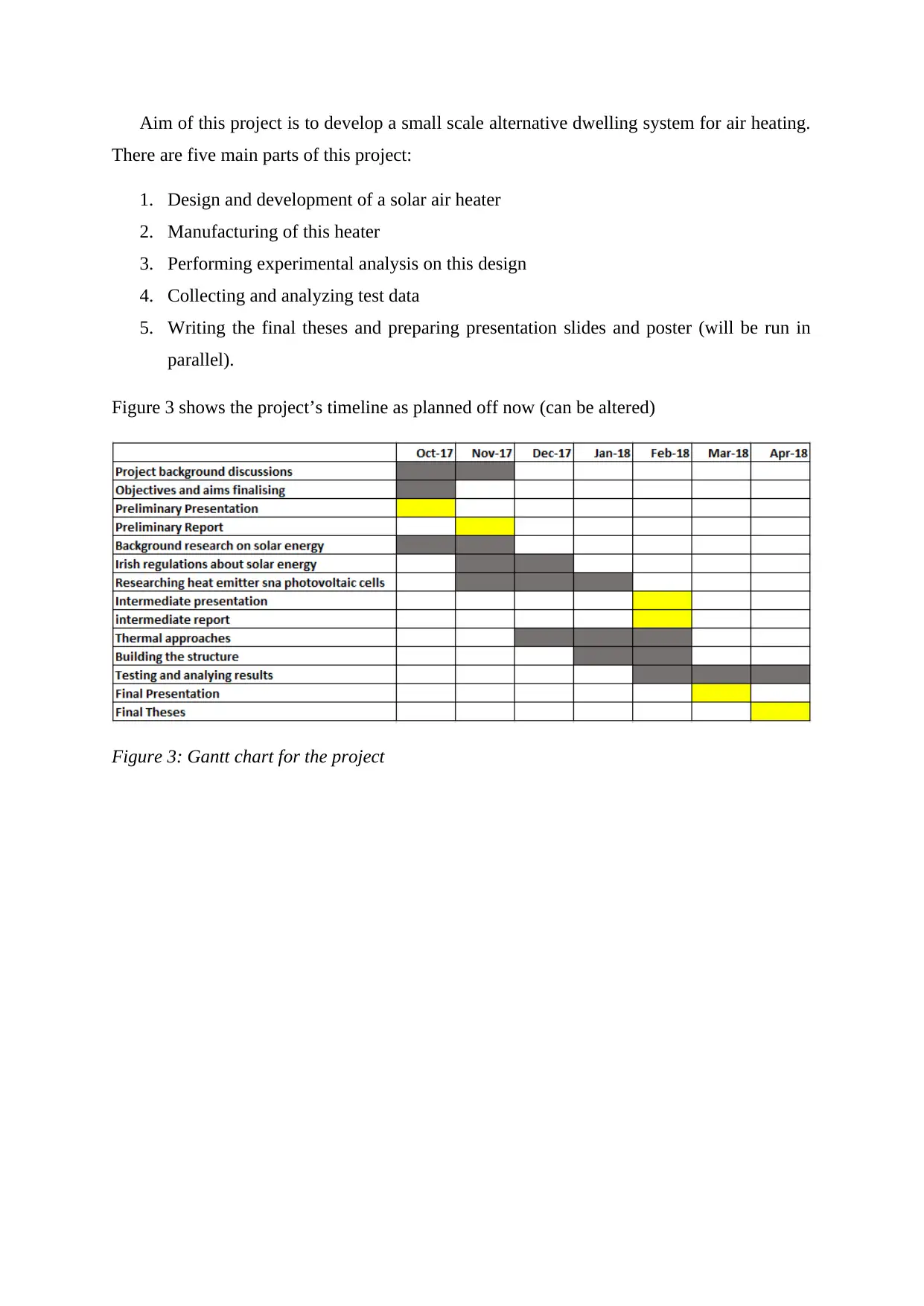
Figure 3 shows the project’s timeline as planned off now (can be altered)
Figure 3: Gantt chart for the project
There are five main parts of this project:
1. Design and development of a solar air heater
2. Manufacturing of this heater
3. Performing experimental analysis on this design
4. Collecting and analyzing test data
5. Writing the final theses and preparing presentation slides and poster (will be run in
parallel).
Figure 3 shows the project’s timeline as planned off now (can be altered)
Figure 3: Gantt chart for the project
Paraphrase This Document
Need a fresh take? Get an instant paraphrase of this document with our AI Paraphraser
Chapter 2- Worldwide and Ireland Energy Consumption
It is firstly on referring to the role of a concerned organisation named Sustainable
Energy Authority of Ireland’s (SEAI) where in accordance to their ascertained mission and
vision, they are aspiring to transform Ireland into a sustainable society. This is basically on
considering their attempt of bringing energy based structures by adopting renewable
techniques and practices [9]. Although, at the time of operating towards the attainment of
such sustainable goals, SEAI took a vital approach of informing the government towards the
same as a way of giving some effective suggestions for a successful adoption of such
sustainable tactic. This is mainly on considering the fact where government plays an essential
role in bringing this notion into practice.
It can be done with assistance of various flexibility programmes along with invention
all over the nation. This is also on referring to a special concern of SEAI where they are
aimed at making a greener Ireland by focussing more upon the adoption of greener
technology [12]. As a result, to which, they are hereby looking for a leading transformation
by adopting the scheme of a decarbonised energy system. However, SEAI operating at a
global level is known to make a considerate use of worldwide statistics to input the same in
their undertaken plans. On whose basis, they together tend to advice the investors and policy
makers, all over the globe.
According to SEAI, Ireland is primarily required to concentrate upon bringing
improvement in their production procedures by using sustainable sources of energy. It is
together on considering the statistics obtained for the year 2014 that demonstrated the use of
renewable sources of energy by Ireland [15]. This involved a leading use of hydro, wind,
landfill, biogas, gas and biomass for the purpose of gross power consumption for
approximately 23% which is nearly equal to the estimated ratio of the entire world. This in
turn clearly determined the requirement of making lot more efforts by Ireland with respect to
the adoption of renewable energy resources with a potent of progressing more into this area.
As per the findings of SEAI in the year 2015, the carbon intensity of electricity has
been found to drop by 49% since the year 1990 and has been found to be 457g CO2/k Wh in
the year 2014. Such intense diminution has been observed due to a substantial rise of new
technical deployment all around the globe [8]. This is also on considering the relevance of
Ireland being the first global nation having certain potential policies for the adoption of
renewable energy sources for producing energy. However, on referring to the fact, it has
It is firstly on referring to the role of a concerned organisation named Sustainable
Energy Authority of Ireland’s (SEAI) where in accordance to their ascertained mission and
vision, they are aspiring to transform Ireland into a sustainable society. This is basically on
considering their attempt of bringing energy based structures by adopting renewable
techniques and practices [9]. Although, at the time of operating towards the attainment of
such sustainable goals, SEAI took a vital approach of informing the government towards the
same as a way of giving some effective suggestions for a successful adoption of such
sustainable tactic. This is mainly on considering the fact where government plays an essential
role in bringing this notion into practice.
It can be done with assistance of various flexibility programmes along with invention
all over the nation. This is also on referring to a special concern of SEAI where they are
aimed at making a greener Ireland by focussing more upon the adoption of greener
technology [12]. As a result, to which, they are hereby looking for a leading transformation
by adopting the scheme of a decarbonised energy system. However, SEAI operating at a
global level is known to make a considerate use of worldwide statistics to input the same in
their undertaken plans. On whose basis, they together tend to advice the investors and policy
makers, all over the globe.
According to SEAI, Ireland is primarily required to concentrate upon bringing
improvement in their production procedures by using sustainable sources of energy. It is
together on considering the statistics obtained for the year 2014 that demonstrated the use of
renewable sources of energy by Ireland [15]. This involved a leading use of hydro, wind,
landfill, biogas, gas and biomass for the purpose of gross power consumption for
approximately 23% which is nearly equal to the estimated ratio of the entire world. This in
turn clearly determined the requirement of making lot more efforts by Ireland with respect to
the adoption of renewable energy resources with a potent of progressing more into this area.
As per the findings of SEAI in the year 2015, the carbon intensity of electricity has
been found to drop by 49% since the year 1990 and has been found to be 457g CO2/k Wh in
the year 2014. Such intense diminution has been observed due to a substantial rise of new
technical deployment all around the globe [8]. This is also on considering the relevance of
Ireland being the first global nation having certain potential policies for the adoption of
renewable energy sources for producing energy. However, on referring to the fact, it has
together been found that the fossil fuels generate from the use of all sort of energies for the
process of producing in Ireland accounts 90%.
Getting deeper into the research of renewable energy sources, one is required to
consider a vital statement given by the European Photovoltaic Industry Association in the
year 2014 about the creation of 6 new occupations for installing each 1MW sola Photovoltaic
system [13]. An installed capacity of 500MW is thereby apparent to generate approximately
3, 000 Irish occupations by the end of the year 2020. Referring to the growth of solar
marketplace for the residences is also evident to result into the growth of Ireland’s
construction industry. However, on considering the fitting procedure, 50% cost will be
representing an installation in the domestic scheme.
It in turn indicates the settlement of the remaining 50% costs that will be partially
covered and benefitted in regard to skilled labours such as plumbers, engineers and
electricians, etc. This is referred to be a beneficial aspect where there together exists a scope
of providing several employment opportunities to the unskilled and unemployed workers in
the profile of technicians required to be employed in the large-scale projects of solar
transformation [10]. It is due to a specific requisition of such high scale projects that usually
requires a huge set of semi-skilled labours. Although, they can be employed as fitters or
installers with limited level of training to work on the field. This is basically to offer them a
career path where this will also result in an effective progress of Irish population.
This is also with respect to the framed set of polices on whose basis, ISEA has
assessed a prime requirement of governmental support for a short to medium time period. It is
basically on considering the future forecast done for the year 2020 where Ireland is
significantly aimed at a pure deployment of solar power energy at a commercial level [18].
For this purpose, it is important for its governmental bodies to acknowledge the exact costs
behind undertaking such affirmative approach. On its successful enforcement, the exchequer
is proven to have a positive influence with no obligation on the independent power producers
to pay taxes on the income earned from the generated power.
Though, in accordance to the ISEA body, UK has been specified to be a close
contender of Ireland in terms of adopting renewable sources of energy for their business-
related practices. It is mainly because of having analogous climatic condition where both of
them are active EU members [14]. As a result, to which, they both are known to face
comparable issues with an alike concern of paying high charges on the import of solar
process of producing in Ireland accounts 90%.
Getting deeper into the research of renewable energy sources, one is required to
consider a vital statement given by the European Photovoltaic Industry Association in the
year 2014 about the creation of 6 new occupations for installing each 1MW sola Photovoltaic
system [13]. An installed capacity of 500MW is thereby apparent to generate approximately
3, 000 Irish occupations by the end of the year 2020. Referring to the growth of solar
marketplace for the residences is also evident to result into the growth of Ireland’s
construction industry. However, on considering the fitting procedure, 50% cost will be
representing an installation in the domestic scheme.
It in turn indicates the settlement of the remaining 50% costs that will be partially
covered and benefitted in regard to skilled labours such as plumbers, engineers and
electricians, etc. This is referred to be a beneficial aspect where there together exists a scope
of providing several employment opportunities to the unskilled and unemployed workers in
the profile of technicians required to be employed in the large-scale projects of solar
transformation [10]. It is due to a specific requisition of such high scale projects that usually
requires a huge set of semi-skilled labours. Although, they can be employed as fitters or
installers with limited level of training to work on the field. This is basically to offer them a
career path where this will also result in an effective progress of Irish population.
This is also with respect to the framed set of polices on whose basis, ISEA has
assessed a prime requirement of governmental support for a short to medium time period. It is
basically on considering the future forecast done for the year 2020 where Ireland is
significantly aimed at a pure deployment of solar power energy at a commercial level [18].
For this purpose, it is important for its governmental bodies to acknowledge the exact costs
behind undertaking such affirmative approach. On its successful enforcement, the exchequer
is proven to have a positive influence with no obligation on the independent power producers
to pay taxes on the income earned from the generated power.
Though, in accordance to the ISEA body, UK has been specified to be a close
contender of Ireland in terms of adopting renewable sources of energy for their business-
related practices. It is mainly because of having analogous climatic condition where both of
them are active EU members [14]. As a result, to which, they both are known to face
comparable issues with an alike concern of paying high charges on the import of solar
⊘ This is a preview!⊘
Do you want full access?
Subscribe today to unlock all pages.
Trusted by 1+ million students worldwide
modules. However, on relating the above acknowledged findings with that to other EU
members like Spain and Italy, the solar market of UK has comparatively grown very late.
This resulted in the formulation of a more supportable regulatory solar framework by
UK government. ISEA has also determined some other relative considerations of UK
government where they are known to assist in the provisioning of guaranteed loans to the
individuals by banks [16]. It is specially for those who are referring to furnish their houses by
installing solar equipment’s. Through which, the government is expecting to increase the
value of solar equipment’s where these fitted tools will reflect as a security to the investors. It
is where the bank will hold it as a property for the reimbursement of their provided loan.
members like Spain and Italy, the solar market of UK has comparatively grown very late.
This resulted in the formulation of a more supportable regulatory solar framework by
UK government. ISEA has also determined some other relative considerations of UK
government where they are known to assist in the provisioning of guaranteed loans to the
individuals by banks [16]. It is specially for those who are referring to furnish their houses by
installing solar equipment’s. Through which, the government is expecting to increase the
value of solar equipment’s where these fitted tools will reflect as a security to the investors. It
is where the bank will hold it as a property for the reimbursement of their provided loan.
Paraphrase This Document
Need a fresh take? Get an instant paraphrase of this document with our AI Paraphraser
Chapter 3- The Sun
3.1 Anatomy of the Sun
This section has presented the composition of Sun where it is referred to be the closet
star to Earth where there exists a mean distance of 149.60 million km among them. Sun as a
star consists of an enormous sphere that mostly comprises with several ionized gases namely
hydrogen and helium. Although, among both these ionized gases, helium is of the lowest
quantity indicating a presence of merely 7.8%. Whereas, hydrogen is known to exists in the
ratio of 92.1% [20]. Sun is heavy weighed component with an enumerated mass of
1.989*1030 Kg where it is also a well-known fact where Sun tends to held all its elements
together. Although, it is mainly because of tremendous gravitational attraction that is 28
times more than that to the gravitational force of Earth. This in turn results into the
production of huge pressure where the temperature lies at its core. Also, it is known to have
an equatorial ambit of 695, 508 km with an eccentricity of nearly 6 km in accordance to the
report produced NASA.
This is on considering a proven fact about sun where it is referred to be a celestial
body with no hard surfacing on it. Also, it is separated into 6 major regions namely, the core,
an inner convective zone, a radiative zone, an observable surface known as photosphere, an
outermost region, a chromosphere and the corona [21]. Within this structure, the temperature
is usually known to fall less than 2, 000, 000 degrees Celsius in the corrective zone where
one can already detect the presence of hot plasma in the firm of big foams that usually moves
up. It has thereby received the title of convection cells where directly above the convective
zone, there together exists the sun’s surface that is split into 3 atmospheric parts namely
corona, chromosphere and photosphere.
Herein, the photosphere is referred to be 500 km dense and from where the sun tends
to outflow its radiation which is later detected as sunlight by us on the Earth. However, there
exists an identified gap of exact 8 minutes, when the sun seeps its radiation in the form of
sunlight for us and we observe the same on the earth [19]. It is though stated to be a visible
light which is easily noticeable from Earth due to the 2 weaken layers, spoofed above. As a
result, to which, one cannot perceive it, counter to the illumination of the photosphere.
This is on considering the presence of sunspots that usually refer to those areas which
has sturdy magnetic pitches in the photosphere. Although, they are duskier and shadier that
3.1 Anatomy of the Sun
This section has presented the composition of Sun where it is referred to be the closet
star to Earth where there exists a mean distance of 149.60 million km among them. Sun as a
star consists of an enormous sphere that mostly comprises with several ionized gases namely
hydrogen and helium. Although, among both these ionized gases, helium is of the lowest
quantity indicating a presence of merely 7.8%. Whereas, hydrogen is known to exists in the
ratio of 92.1% [20]. Sun is heavy weighed component with an enumerated mass of
1.989*1030 Kg where it is also a well-known fact where Sun tends to held all its elements
together. Although, it is mainly because of tremendous gravitational attraction that is 28
times more than that to the gravitational force of Earth. This in turn results into the
production of huge pressure where the temperature lies at its core. Also, it is known to have
an equatorial ambit of 695, 508 km with an eccentricity of nearly 6 km in accordance to the
report produced NASA.
This is on considering a proven fact about sun where it is referred to be a celestial
body with no hard surfacing on it. Also, it is separated into 6 major regions namely, the core,
an inner convective zone, a radiative zone, an observable surface known as photosphere, an
outermost region, a chromosphere and the corona [21]. Within this structure, the temperature
is usually known to fall less than 2, 000, 000 degrees Celsius in the corrective zone where
one can already detect the presence of hot plasma in the firm of big foams that usually moves
up. It has thereby received the title of convection cells where directly above the convective
zone, there together exists the sun’s surface that is split into 3 atmospheric parts namely
corona, chromosphere and photosphere.
Herein, the photosphere is referred to be 500 km dense and from where the sun tends
to outflow its radiation which is later detected as sunlight by us on the Earth. However, there
exists an identified gap of exact 8 minutes, when the sun seeps its radiation in the form of
sunlight for us and we observe the same on the earth [19]. It is though stated to be a visible
light which is easily noticeable from Earth due to the 2 weaken layers, spoofed above. As a
result, to which, one cannot perceive it, counter to the illumination of the photosphere.
This is on considering the presence of sunspots that usually refer to those areas which
has sturdy magnetic pitches in the photosphere. Although, they are duskier and shadier that
their surrounding areas where the total number of sunspots tends to fluctuate once in every 11
years and is referred to be a part of a magnetic activity cycle by the sun [22]. There together
exists some other considerate facts related to this cycle that results in blasting the sun via
massive coronal mass expulsions and sunnier solar flashes. Commonly, the usual temperature
of photosphere is referred to be near around 5, 500 degrees Celsius. Despite of not being a
solid layer, this surface is still known as sun’s surface.
There together exists a tenuous corona along with the chromosphere where both of
these lies directly above the photosphere. However, the chromosphere is specified to be 2,
000 km thick with an increasing temperature that often goes beyond 20, 000 degrees Celsius.
It is a layer that can be mostly seen at the time of total solar eclipse in dark red colour [18].
Corona on other hand is referred to be the uppermost atmospheric part whose temperature
tends to increase with its increasing distance from the solar surface. Despite of having a very
little density, its temperature in an average range from 1, 000, 000 to 2, 000, 000 degrees
Celsius.
3.2 Solar radiation
Sun is known as an inexhaustible energy resource where its solar radiation is
referred to be a fundamental part of distinct renewable sources of energy. Although, the solar
radiation is stated to be a nonstop input variable provided by the sun. It is on considering a
fact where the sun is known to radiate its energy in every direction nevertheless, a very slight
share of this energy is known to fall onto the earth. This portion of energy exposed on earth’s
position is relative to the Sun and is defined as a solar constant in regard to an estimated area
of 1 sqm [23]. This possesses a general global mean value of nearly E0= 1365 W/m2.
Although, it is referred to be a constant value which is subjected to the changes that takes
place due to the existence of the sun spots created at the time of solar activity variation
caused from the eccentricity of earth’s orbit. It is basically due to the tactic used to measure it
where its dimension is measured from a flat surface which is externally located on Earth’s
atmosphere and the values are being measured from those satellites that are directly above the
Earth’s atmosphere. It is equivalent to be in maximum value, this way it could be attenuated
towards some of the factors for example, pollution, clouds and also includes the component
of atmosphere. The radiations that are direct of solar are defined as fraction of solar
irradiance that are helpful enough to traverses the atmosphere of earth unobstructed. On the
other hand, diffuse radiations are related with irradiance components that enable to traversing
the atmosphere is reflected with the help of some sort of interference. More specifically, it
years and is referred to be a part of a magnetic activity cycle by the sun [22]. There together
exists some other considerate facts related to this cycle that results in blasting the sun via
massive coronal mass expulsions and sunnier solar flashes. Commonly, the usual temperature
of photosphere is referred to be near around 5, 500 degrees Celsius. Despite of not being a
solid layer, this surface is still known as sun’s surface.
There together exists a tenuous corona along with the chromosphere where both of
these lies directly above the photosphere. However, the chromosphere is specified to be 2,
000 km thick with an increasing temperature that often goes beyond 20, 000 degrees Celsius.
It is a layer that can be mostly seen at the time of total solar eclipse in dark red colour [18].
Corona on other hand is referred to be the uppermost atmospheric part whose temperature
tends to increase with its increasing distance from the solar surface. Despite of having a very
little density, its temperature in an average range from 1, 000, 000 to 2, 000, 000 degrees
Celsius.
3.2 Solar radiation
Sun is known as an inexhaustible energy resource where its solar radiation is
referred to be a fundamental part of distinct renewable sources of energy. Although, the solar
radiation is stated to be a nonstop input variable provided by the sun. It is on considering a
fact where the sun is known to radiate its energy in every direction nevertheless, a very slight
share of this energy is known to fall onto the earth. This portion of energy exposed on earth’s
position is relative to the Sun and is defined as a solar constant in regard to an estimated area
of 1 sqm [23]. This possesses a general global mean value of nearly E0= 1365 W/m2.
Although, it is referred to be a constant value which is subjected to the changes that takes
place due to the existence of the sun spots created at the time of solar activity variation
caused from the eccentricity of earth’s orbit. It is basically due to the tactic used to measure it
where its dimension is measured from a flat surface which is externally located on Earth’s
atmosphere and the values are being measured from those satellites that are directly above the
Earth’s atmosphere. It is equivalent to be in maximum value, this way it could be attenuated
towards some of the factors for example, pollution, clouds and also includes the component
of atmosphere. The radiations that are direct of solar are defined as fraction of solar
irradiance that are helpful enough to traverses the atmosphere of earth unobstructed. On the
other hand, diffuse radiations are related with irradiance components that enable to traversing
the atmosphere is reflected with the help of some sort of interference. More specifically, it
⊘ This is a preview!⊘
Do you want full access?
Subscribe today to unlock all pages.
Trusted by 1+ million students worldwide

1 out of 23


Related Documents


Your All-in-One AI-Powered Toolkit for Academic Success.
+13062052269
info@desklib.com
Available 24*7 on WhatsApp / Email
![[object Object]](/_next/static/media/star-bottom.7253800d.svg)
Unlock your academic potential
Copyright © 2020–2026 A2Z Services. All Rights Reserved. Developed and managed by ZUCOL.