Operations Report: Analyzing Quality and Layout Strategies - MG6.02
VerifiedAdded on 2022/10/04
|7
|1178
|52
Report
AI Summary
This report addresses key concepts in operations management, focusing on quality control and layout strategies within various industries. The report begins with an analysis of defects in accounts receivable using techniques such as Pareto charts. It then explores layout strategies through flowcharts for processes like drive-through purchasing and fishbone diagrams for identifying causes of machining defects. Furthermore, the report presents case studies on customer satisfaction within online shopping, healthcare, and banking sectors. It includes cause-and-effect diagrams illustrating the factors that lead to customer dissatisfaction. The report also includes problem-solving exercises related to layout optimization in a kitchen environment and site selection for a Hard Rock Cafe. This report provides a comprehensive overview of operations management principles and practical applications.
Running head: DESIGNING & IMPROVING OPERATIONS
DESIGNING & IMPROVING OPERATIONS
Name of student
Name of university
Author’s note:
DESIGNING & IMPROVING OPERATIONS
Name of student
Name of university
Author’s note:
Paraphrase This Document
Need a fresh take? Get an instant paraphrase of this document with our AI Paraphraser

1
DESIGNING & IMPROVING OPERATIONS
Potential quality service problems
Dissatisfied online shopping customer
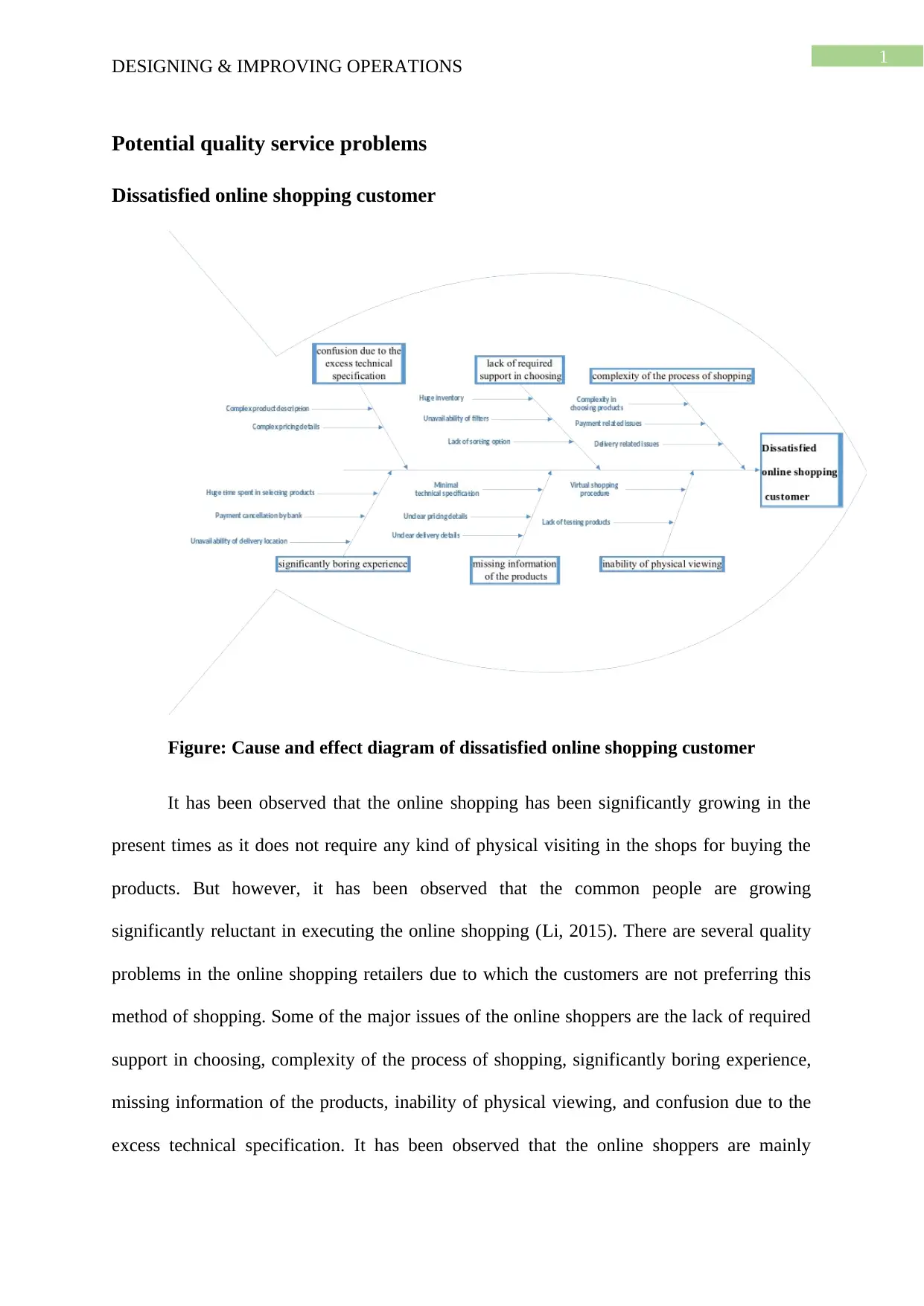
Figure: Cause and effect diagram of dissatisfied online shopping customer
It has been observed that the online shopping has been significantly growing in the
present times as it does not require any kind of physical visiting in the shops for buying the
products. But however, it has been observed that the common people are growing
significantly reluctant in executing the online shopping (Li, 2015). There are several quality
problems in the online shopping retailers due to which the customers are not preferring this
method of shopping. Some of the major issues of the online shoppers are the lack of required
support in choosing, complexity of the process of shopping, significantly boring experience,
missing information of the products, inability of physical viewing, and confusion due to the
excess technical specification. It has been observed that the online shoppers are mainly
DESIGNING & IMPROVING OPERATIONS
Potential quality service problems
Dissatisfied online shopping customer
Figure: Cause and effect diagram of dissatisfied online shopping customer
It has been observed that the online shopping has been significantly growing in the
present times as it does not require any kind of physical visiting in the shops for buying the
products. But however, it has been observed that the common people are growing
significantly reluctant in executing the online shopping (Li, 2015). There are several quality
problems in the online shopping retailers due to which the customers are not preferring this
method of shopping. Some of the major issues of the online shoppers are the lack of required
support in choosing, complexity of the process of shopping, significantly boring experience,
missing information of the products, inability of physical viewing, and confusion due to the
excess technical specification. It has been observed that the online shoppers are mainly

2
DESIGNING & IMPROVING OPERATIONS
affected by the lack of choosing from the large inventory of the companies, where the
shoppers have to go through huge assortment of products for selecting any particular product.
The complexity of the shopping websites is another reason why the customers do not prefer
this method of shopping. In some of the situations, it has been observed that the missing
information on the products drives the customers away from the websites (McLean &
Wilson, 2016). The customers significantly hates dealing with the returns and they
extensively refuse to purchase any product online if the information on the product is missing
and it does not provide the required information for understanding the product and make the
purchase. In the situations when there are significantly excess specifications in any product,
the customers tends to ignore the product and move on to any other website or even make the
purchase physically from any shop. These are considered as the major reasons why any
customer on the online shopping platform could be dissatisfied with the service provider.
Dissatisfied hospital patient
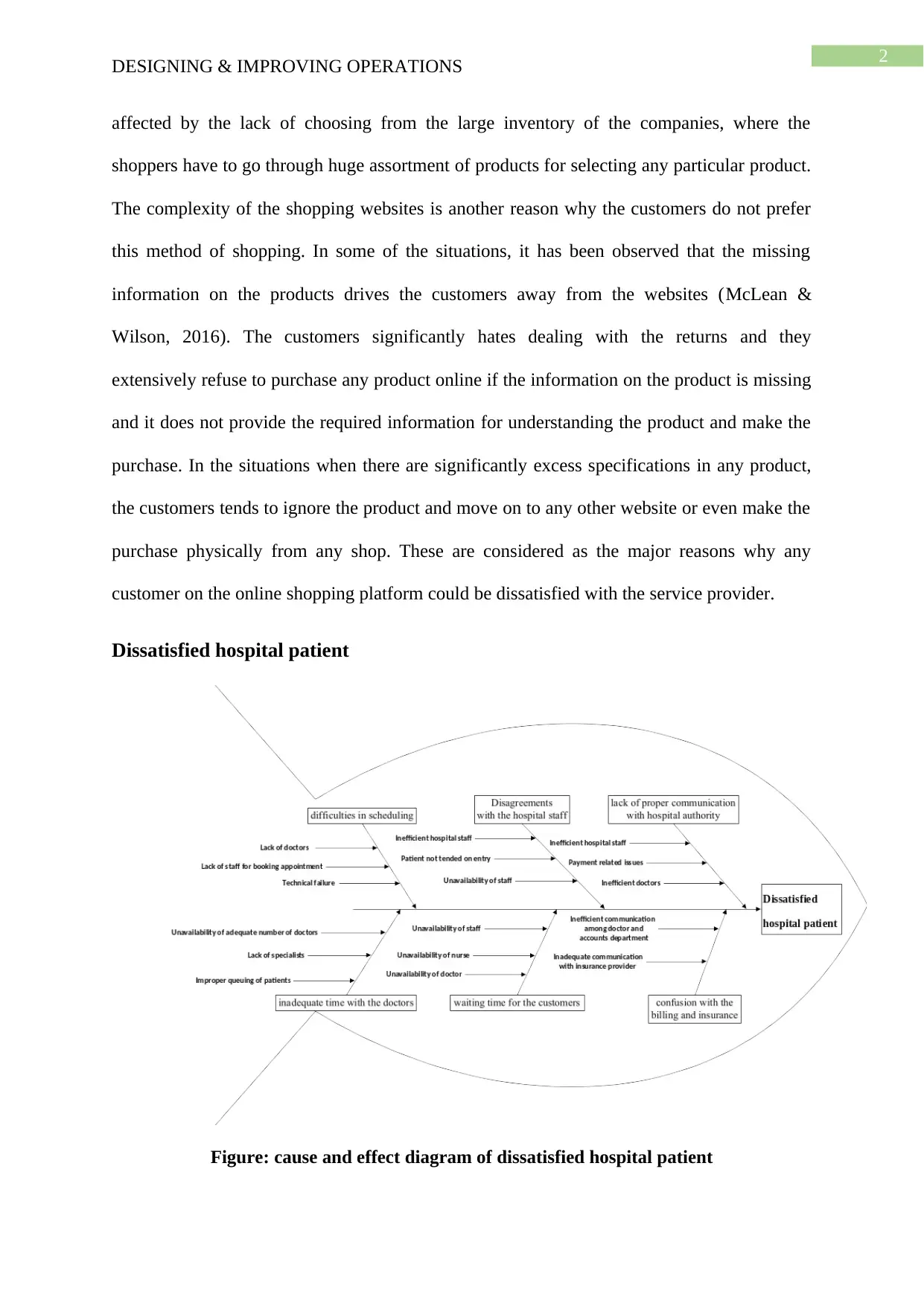
Figure: cause and effect diagram of dissatisfied hospital patient
DESIGNING & IMPROVING OPERATIONS
affected by the lack of choosing from the large inventory of the companies, where the
shoppers have to go through huge assortment of products for selecting any particular product.
The complexity of the shopping websites is another reason why the customers do not prefer
this method of shopping. In some of the situations, it has been observed that the missing
information on the products drives the customers away from the websites (McLean &
Wilson, 2016). The customers significantly hates dealing with the returns and they
extensively refuse to purchase any product online if the information on the product is missing
and it does not provide the required information for understanding the product and make the
purchase. In the situations when there are significantly excess specifications in any product,
the customers tends to ignore the product and move on to any other website or even make the
purchase physically from any shop. These are considered as the major reasons why any
customer on the online shopping platform could be dissatisfied with the service provider.
Dissatisfied hospital patient
Figure: cause and effect diagram of dissatisfied hospital patient
⊘ This is a preview!⊘
Do you want full access?
Subscribe today to unlock all pages.

Trusted by 1+ million students worldwide

3
DESIGNING & IMPROVING OPERATIONS
The healthcare is considered as the most important sector for the customers. They
intend to receive the best quality healthcare support from the hospitals and do not face any
kind of difficulty in gaining treatment (Woldeyohanes et al. 2015). Still, there are some issues
that are presently residing in the healthcare organisations and it has led to the dissatisfaction
among the various customers. Some of the common issues faced by the customers are
difficulties in scheduling, disagreements with the hospital staff, lack of proper
communication with the hospital authority, inadequate time with the doctors, significantly
waiting time for the customers and the confusion with the billing and insurance. The most
common issue faced by the customers is the difficulties in scheduling. Each healthcare
organisation requires to take and then manage the appointments but this process could be
significantly difficulty, stressful as well as confusing for the patients who need the treatment
at early as possible. When the customers have to wait for significant amount of time on the
phone or in the hospitals, they cannot cancel the appointment as they would be charged with
an extensive cancellation fee. This creates the situation of uneasiness among the customers
and the preference of visiting the hospital diminishes (Asefa, Kassa & Dessalegn, 2014).
Without the proper communication channel among the various staff and the doctors in the
hospital, the customer cannot get the optimised services that are required by the customers. It
creates the situation when the preference of the customers for the hospital decreases
significantly. When the customers do not gain the adequate time with the doctors it creates
the issue of dissatisfaction. It is the primary task of the patients in the hospital to contact with
the doctors and spend significant time with them for conveying the issues but when the
hospital has the significant shortage of doctors, the doctors cannot spend too much time with
any single patient.
DESIGNING & IMPROVING OPERATIONS
The healthcare is considered as the most important sector for the customers. They
intend to receive the best quality healthcare support from the hospitals and do not face any
kind of difficulty in gaining treatment (Woldeyohanes et al. 2015). Still, there are some issues
that are presently residing in the healthcare organisations and it has led to the dissatisfaction
among the various customers. Some of the common issues faced by the customers are
difficulties in scheduling, disagreements with the hospital staff, lack of proper
communication with the hospital authority, inadequate time with the doctors, significantly
waiting time for the customers and the confusion with the billing and insurance. The most
common issue faced by the customers is the difficulties in scheduling. Each healthcare
organisation requires to take and then manage the appointments but this process could be
significantly difficulty, stressful as well as confusing for the patients who need the treatment
at early as possible. When the customers have to wait for significant amount of time on the
phone or in the hospitals, they cannot cancel the appointment as they would be charged with
an extensive cancellation fee. This creates the situation of uneasiness among the customers
and the preference of visiting the hospital diminishes (Asefa, Kassa & Dessalegn, 2014).
Without the proper communication channel among the various staff and the doctors in the
hospital, the customer cannot get the optimised services that are required by the customers. It
creates the situation when the preference of the customers for the hospital decreases
significantly. When the customers do not gain the adequate time with the doctors it creates
the issue of dissatisfaction. It is the primary task of the patients in the hospital to contact with
the doctors and spend significant time with them for conveying the issues but when the
hospital has the significant shortage of doctors, the doctors cannot spend too much time with
any single patient.
Paraphrase This Document
Need a fresh take? Get an instant paraphrase of this document with our AI Paraphraser

4
DESIGNING & IMPROVING OPERATIONS
Dissatisfied banking customer
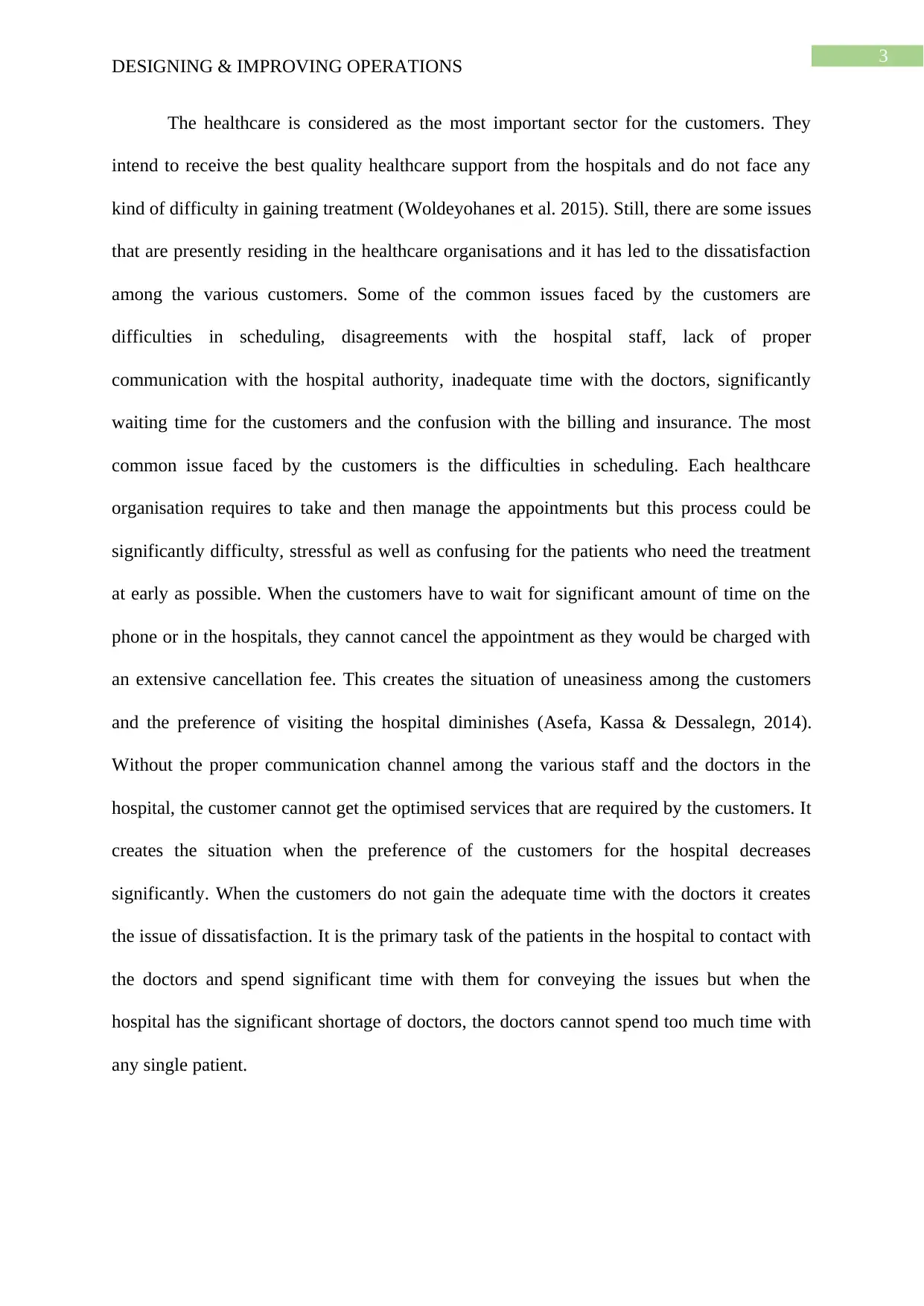
Figure: Cause and effect diagram of dissatisfied banking customer
The banking sector is the growing industry in the present times as majority of the
population prefers to keep their money in the banks and avail the banking services. Still there
are some issues prevailing in the banks that are creating the significant dissatisfaction among
the customers. Some of the common issues are the excessive hidden fees, significantly poor
customer service, funds or checks bouncing, mistakes made by the banking employees
(Kombo, 2015). It has been observed that customers are frequently unaware of any kind of
specific coverage like the overdraft protection. The significantly long queues in the banks for
doing any kind of banking services is the kind of issue that is required to be resolved for
providing the adequate services to the customers. These kinds of services creates uneasy
among the customers when significant amount is deducted from the account without the
knowledge of the customers (Karim & Chowdhury, 2014). There are significant issues due to
DESIGNING & IMPROVING OPERATIONS
Dissatisfied banking customer
Figure: Cause and effect diagram of dissatisfied banking customer
The banking sector is the growing industry in the present times as majority of the
population prefers to keep their money in the banks and avail the banking services. Still there
are some issues prevailing in the banks that are creating the significant dissatisfaction among
the customers. Some of the common issues are the excessive hidden fees, significantly poor
customer service, funds or checks bouncing, mistakes made by the banking employees
(Kombo, 2015). It has been observed that customers are frequently unaware of any kind of
specific coverage like the overdraft protection. The significantly long queues in the banks for
doing any kind of banking services is the kind of issue that is required to be resolved for
providing the adequate services to the customers. These kinds of services creates uneasy
among the customers when significant amount is deducted from the account without the
knowledge of the customers (Karim & Chowdhury, 2014). There are significant issues due to

5
DESIGNING & IMPROVING OPERATIONS
poor customer services in the banks and it makes customer reluctant to maintain the loyalty
with a bank.
DESIGNING & IMPROVING OPERATIONS
poor customer services in the banks and it makes customer reluctant to maintain the loyalty
with a bank.
⊘ This is a preview!⊘
Do you want full access?
Subscribe today to unlock all pages.

Trusted by 1+ million students worldwide

6
DESIGNING & IMPROVING OPERATIONS
References
Asefa, A., Kassa, A., & Dessalegn, M. (2014). Patient satisfaction with outpatient health
services in Hawassa University Teaching hospital, Southern Ethiopia. Journal of
Public Health and Epidemiology, 6(2), 101-110.
Karim, R., & Chowdhury, A. T. (2014). Customer satisfaction on service quality in private
commercial banking sector in Bangladesh. British Journal of Marketing Studies, 2(2),
1-11.
Kombo, F. (2015). Customer satisfaction in the Kenyan banking industry. Journal of
International Studies.
Li, C. Y. (2015). Switching barriers and customer retention: Why customers dissatisfied with
online service recovery remain loyal. Journal of Service Theory and Practice, 25(4),
370-393.
McLean, G., & Wilson, A. (2016). Evolving the online customer experience… is there a role
for online customer support?. Computers in Human Behavior, 60, 602-610.
Woldeyohanes, T. R., Woldehaimanot, T. E., Kerie, M. W., Mengistie, M. A., & Yesuf, E. A.
(2015). Perceived patient satisfaction with in-patient services at Jimma University
Specialized Hospital, Southwest Ethiopia. BMC research notes, 8(1), 285.
DESIGNING & IMPROVING OPERATIONS
References
Asefa, A., Kassa, A., & Dessalegn, M. (2014). Patient satisfaction with outpatient health
services in Hawassa University Teaching hospital, Southern Ethiopia. Journal of
Public Health and Epidemiology, 6(2), 101-110.
Karim, R., & Chowdhury, A. T. (2014). Customer satisfaction on service quality in private
commercial banking sector in Bangladesh. British Journal of Marketing Studies, 2(2),
1-11.
Kombo, F. (2015). Customer satisfaction in the Kenyan banking industry. Journal of
International Studies.
Li, C. Y. (2015). Switching barriers and customer retention: Why customers dissatisfied with
online service recovery remain loyal. Journal of Service Theory and Practice, 25(4),
370-393.
McLean, G., & Wilson, A. (2016). Evolving the online customer experience… is there a role
for online customer support?. Computers in Human Behavior, 60, 602-610.
Woldeyohanes, T. R., Woldehaimanot, T. E., Kerie, M. W., Mengistie, M. A., & Yesuf, E. A.
(2015). Perceived patient satisfaction with in-patient services at Jimma University
Specialized Hospital, Southwest Ethiopia. BMC research notes, 8(1), 285.
1 out of 7
Related Documents
Your All-in-One AI-Powered Toolkit for Academic Success.
+13062052269
info@desklib.com
Available 24*7 on WhatsApp / Email
Unlock your academic potential
Copyright © 2020–2026 A2Z Services. All Rights Reserved. Developed and managed by ZUCOL.