Comprehensive Report on DNA Replication: Process and Significance

Verified

Added on  2023/06/15

|8
|424
|211
Report
AI Summary
This report provides an overview of DNA replication, a fundamental process for biological inheritance. It highlights that DNA is a double helical structure made of nucleotides, each containing a nitrogen base, sugar, and phosphate group. The four nitrogenous bases are adenine, thymine, guanine, and cytosine. DNA replication produces two identical copies of DNA from a single original strand and is essential for cell division. The mechanism is similar across organisms and includes semi-conservative, conservative, and disruptive forms. Key aspects of DNA replication include its semi-conservative nature, initiation at the origin, synthesis in the 5’-3’ direction, semi-discontinuous replication, the need for RNA primers, and the formation of Okazaki fragments on the lagging strand. The lagging strand experiences a slight delay and undergoes discontinuous replication in small fragments.
Document Page
DNA Replication
tabler-icon-diamond-filled.svg

Paraphrase This Document

Need a fresh take? Get an instant paraphrase of this document with our AI Paraphraser
Document Page
INTRODUCTION
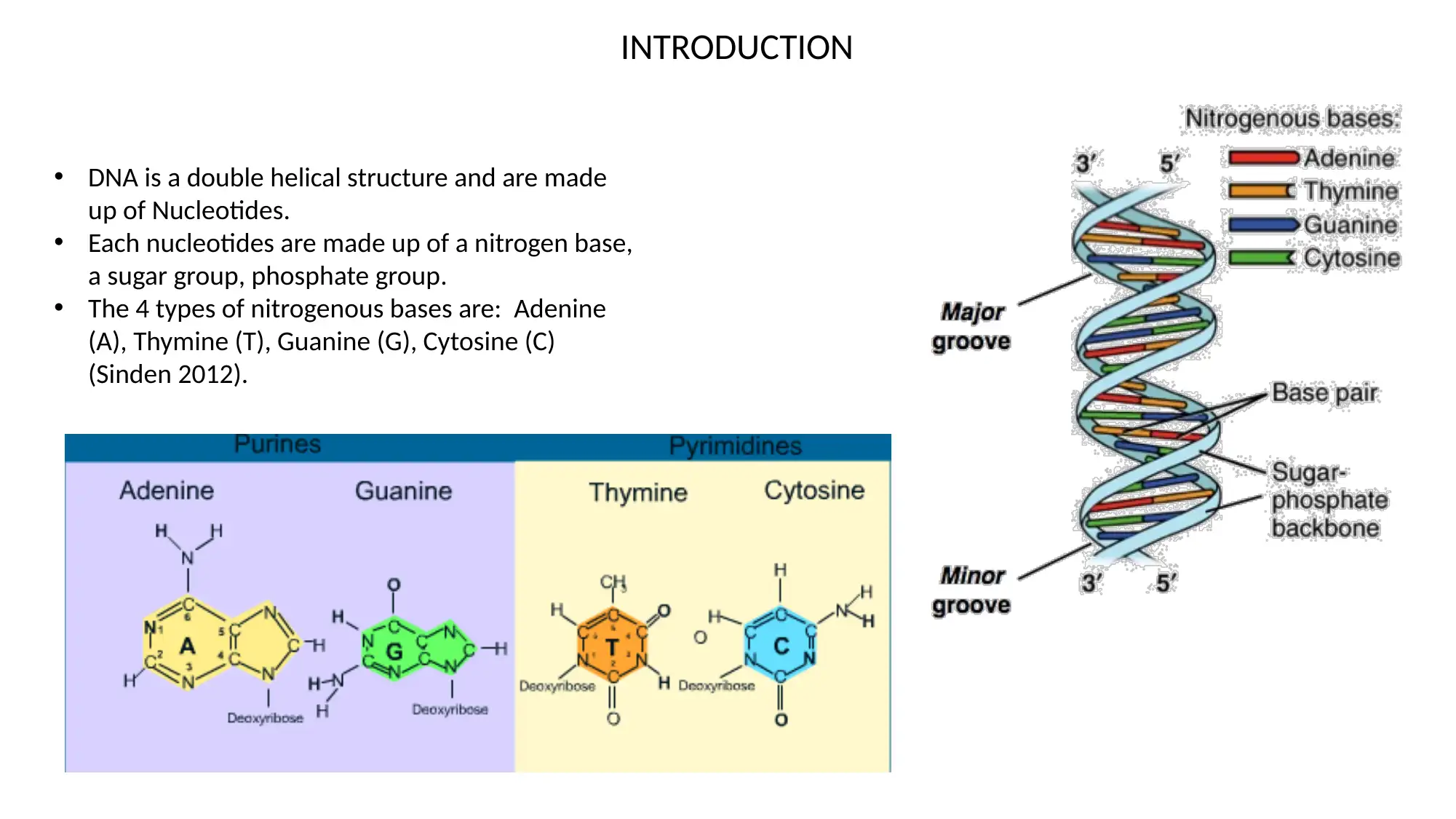
DNA is a double helical structure and are made
up of Nucleotides.
Each nucleotides are made up of a nitrogen base,
a sugar group, phosphate group.
The 4 types of nitrogenous bases are: Adenine
(A), Thymine (T), Guanine (G), Cytosine (C)
(Sinden 2012).
Document Page
INTRODUCTION
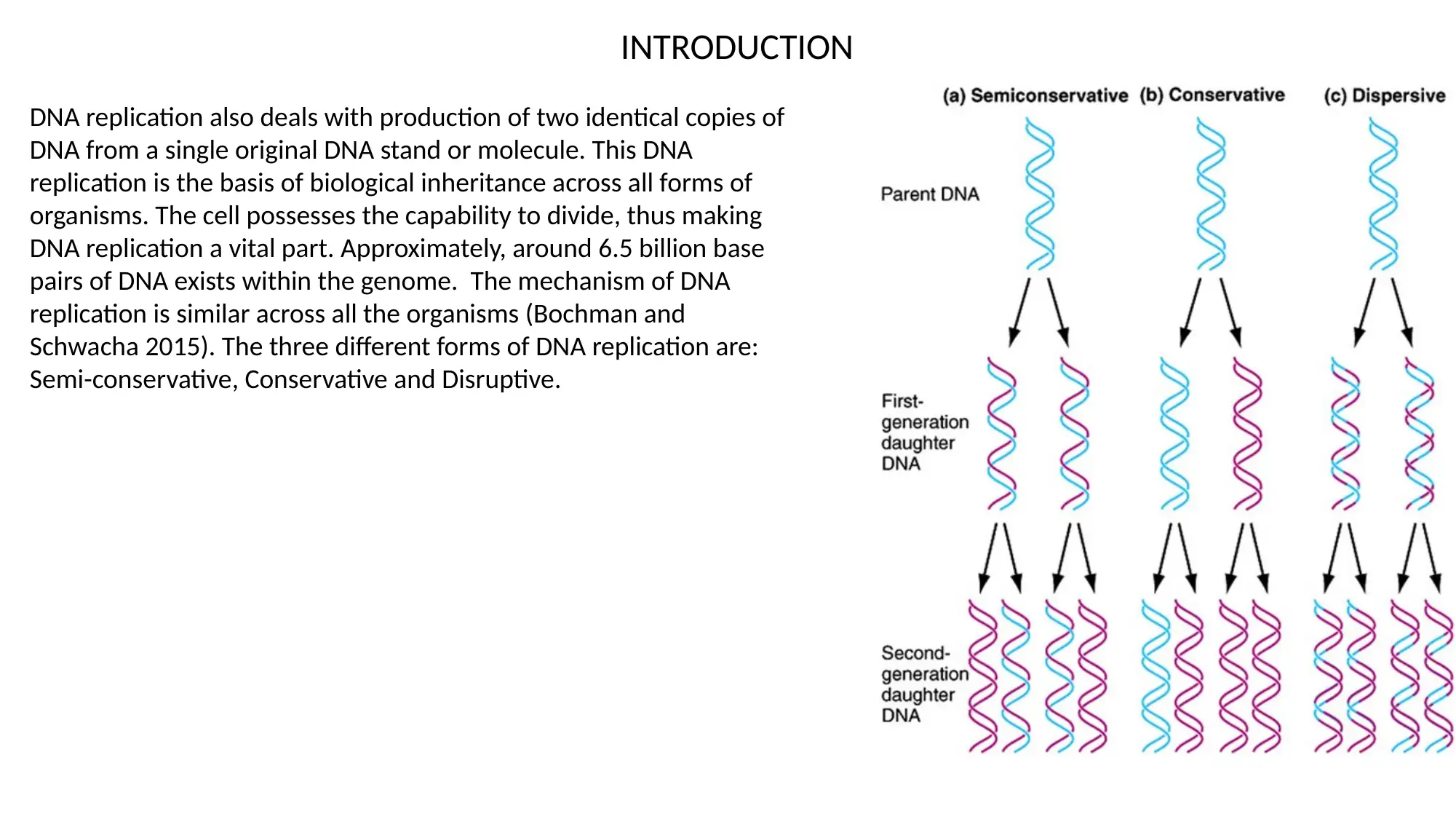
DNA replication also deals with production of two identical copies of
DNA from a single original DNA stand or molecule. This DNA
replication is the basis of biological inheritance across all forms of
organisms. The cell possesses the capability to divide, thus making
DNA replication a vital part. Approximately, around 6.5 billion base
pairs of DNA exists within the genome. The mechanism of DNA
replication is similar across all the organisms (Bochman and
Schwacha 2015). The three different forms of DNA replication are:
Semi-conservative, Conservative and Disruptive.
Document Page
IMPORTANT POINTS TO NOTE ON DNA REPLICATION
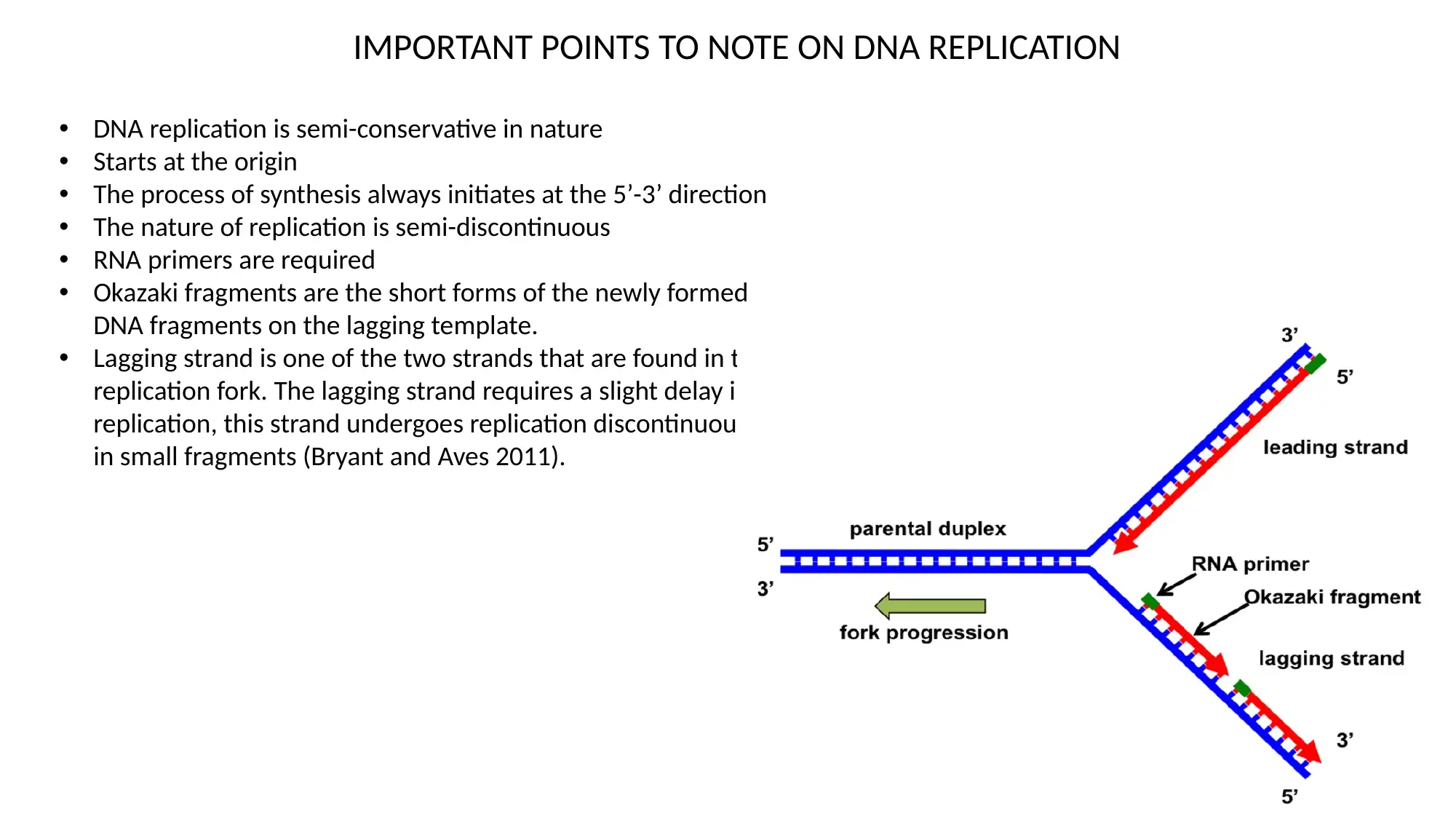
DNA replication is semi-conservative in nature
Starts at the origin
The process of synthesis always initiates at the 5’-3’ direction
The nature of replication is semi-discontinuous
RNA primers are required
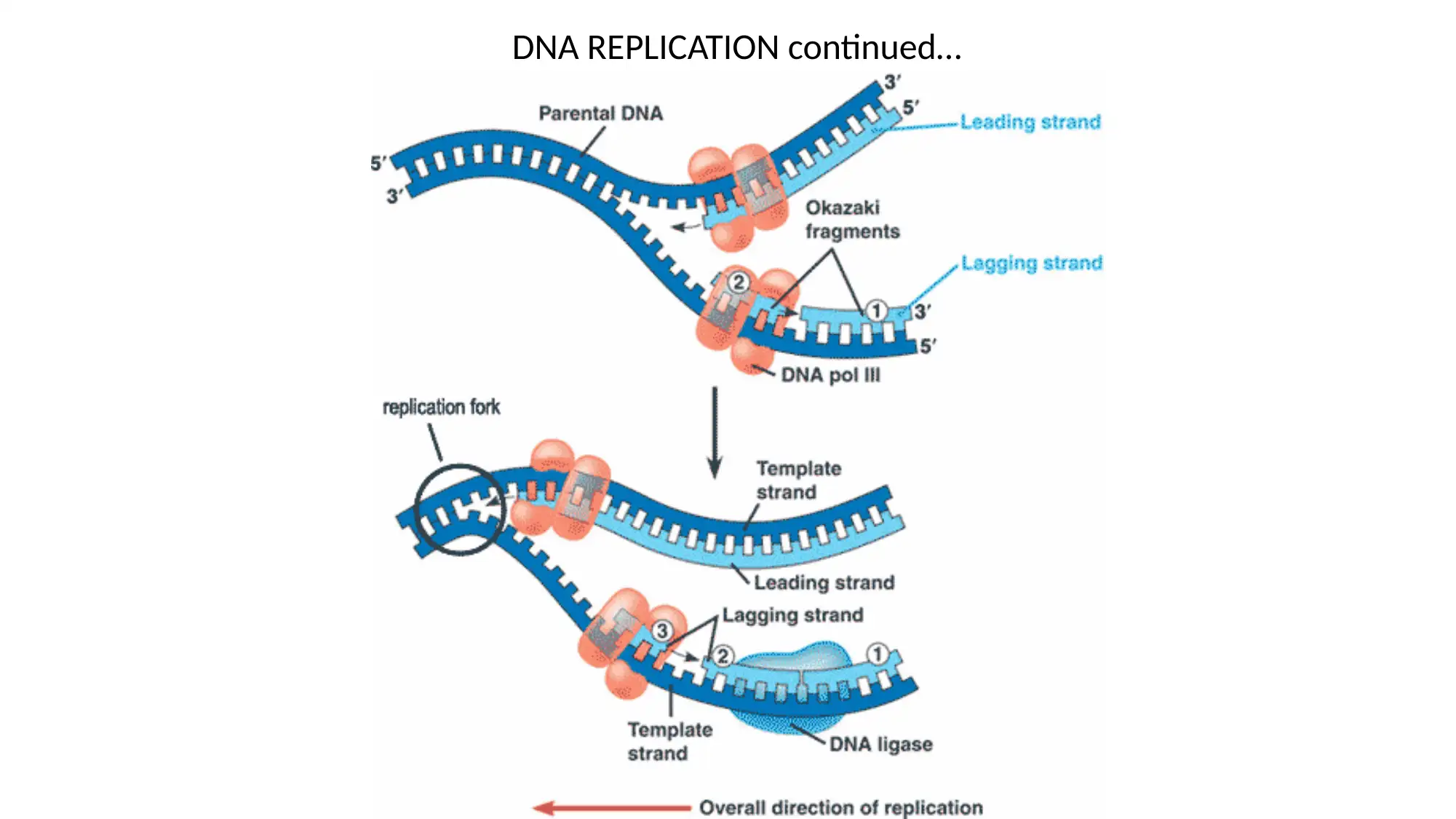
Okazaki fragments are the short forms of the newly formed
DNA fragments on the lagging template.
Lagging strand is one of the two strands that are found in the
replication fork. The lagging strand requires a slight delay in
replication, this strand undergoes replication discontinuously
in small fragments (Bryant and Aves 2011).
tabler-icon-diamond-filled.svg

Paraphrase This Document

Need a fresh take? Get an instant paraphrase of this document with our AI Paraphraser
Document Page
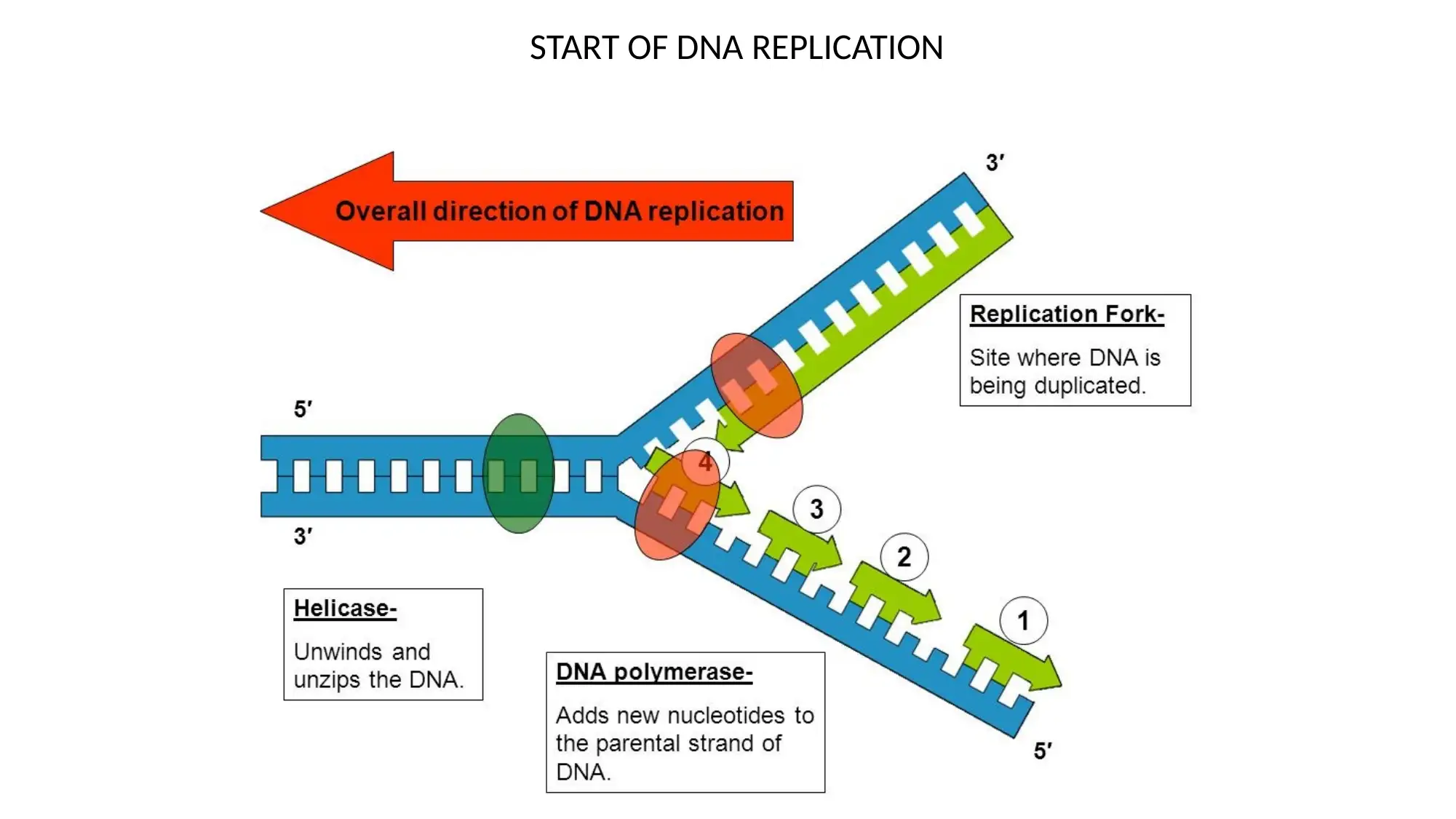
START OF DNA REPLICATION
Document Page
DNA REPLICATION continued…
Document Page
REFERENCE
Bochman, M.L. and Schwacha, A., 2015. DNA replication: strand separation unravelled. Nature, 524(7564),
p.166.
Bryant, J.A. and Aves, S.J., 2011. Initiation of DNA replication: functional and evolutionary aspects. Annals of
botany, 107(7), pp.1119-1126.
Blitzblau, H.G., Chan, C.S., Hochwagen, A. and Bell, S.P., 2012. Separation of DNA replication from the assembly
of break-competent meiotic chromosomes. PLoS genetics, 8(5), p.e1002643.
Clark, D.P. and Pazdernik, N.J., 2009. DNA-Synthese in vivo und in vitro. In Molekulare Biotechnologie (pp. 87-
117). Spektrum Akademischer Verlag.
Sinden, R.R., 2012. DNA structure and function. Elsevier.
tabler-icon-diamond-filled.svg

Paraphrase This Document

Need a fresh take? Get an instant paraphrase of this document with our AI Paraphraser
Document Page
chevron_up_icon
1 out of 8
circle_padding
hide_on_mobile
zoom_out_icon
[object Object]