Economics Assignment on Financial Crisis and International Trade

Verified

Added on  2023/06/07

|9
|1587
|393
Homework Assignment
AI Summary
This economics assignment delves into several key concepts, starting with an analysis of asset demand and supply in the context of perceived risk, examining how a shift from risky to risk-free perception impacts market dynamics and potentially creates asset bubbles. It further investigates the effects of eliminating import tariffs, using China's beef market as a case study, highlighting both the welfare gains and potential adverse effects on specific sectors. Finally, the assignment explores the concept of externalities, particularly negative externalities in debt contracts and housing markets, and discusses potential government interventions like shared responsibility mortgages to mitigate these effects. The assignment concludes by touching on the securitization of assets and the disproportionate demand for safe debts, referencing the role of these factors in contributing to financial crises. Desklib provides numerous resources for students, including similar solved assignments and past papers.
Document Page
Running head: ECONOMICS ASSIGNMENT
Economics Assignment
Name of the Student
Name of the University
Course ID
tabler-icon-diamond-filled.svg

Paraphrase This Document

Need a fresh take? Get an instant paraphrase of this document with our AI Paraphraser
Document Page
1ECONOMICS ASSIGNMENT
Table of Contents
Question 1........................................................................................................................................2
Question a....................................................................................................................................2
Question b....................................................................................................................................3
Question c....................................................................................................................................3
Question 2........................................................................................................................................4
Question a....................................................................................................................................4
Question b....................................................................................................................................5
Question 3........................................................................................................................................6
Question a....................................................................................................................................6
Question b....................................................................................................................................7
Question c....................................................................................................................................8
Document Page
2ECONOMICS ASSIGNMENT
Question 1
Question a
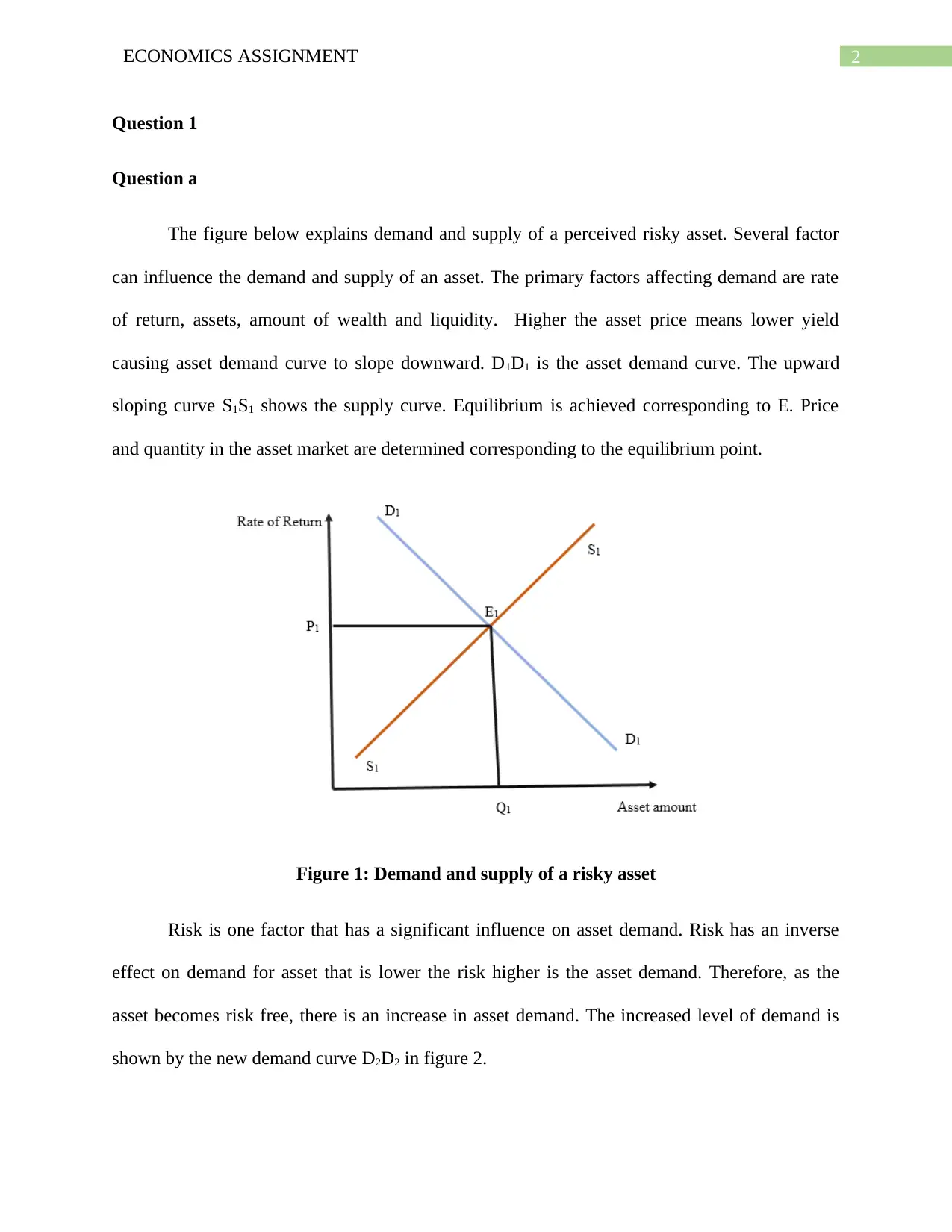
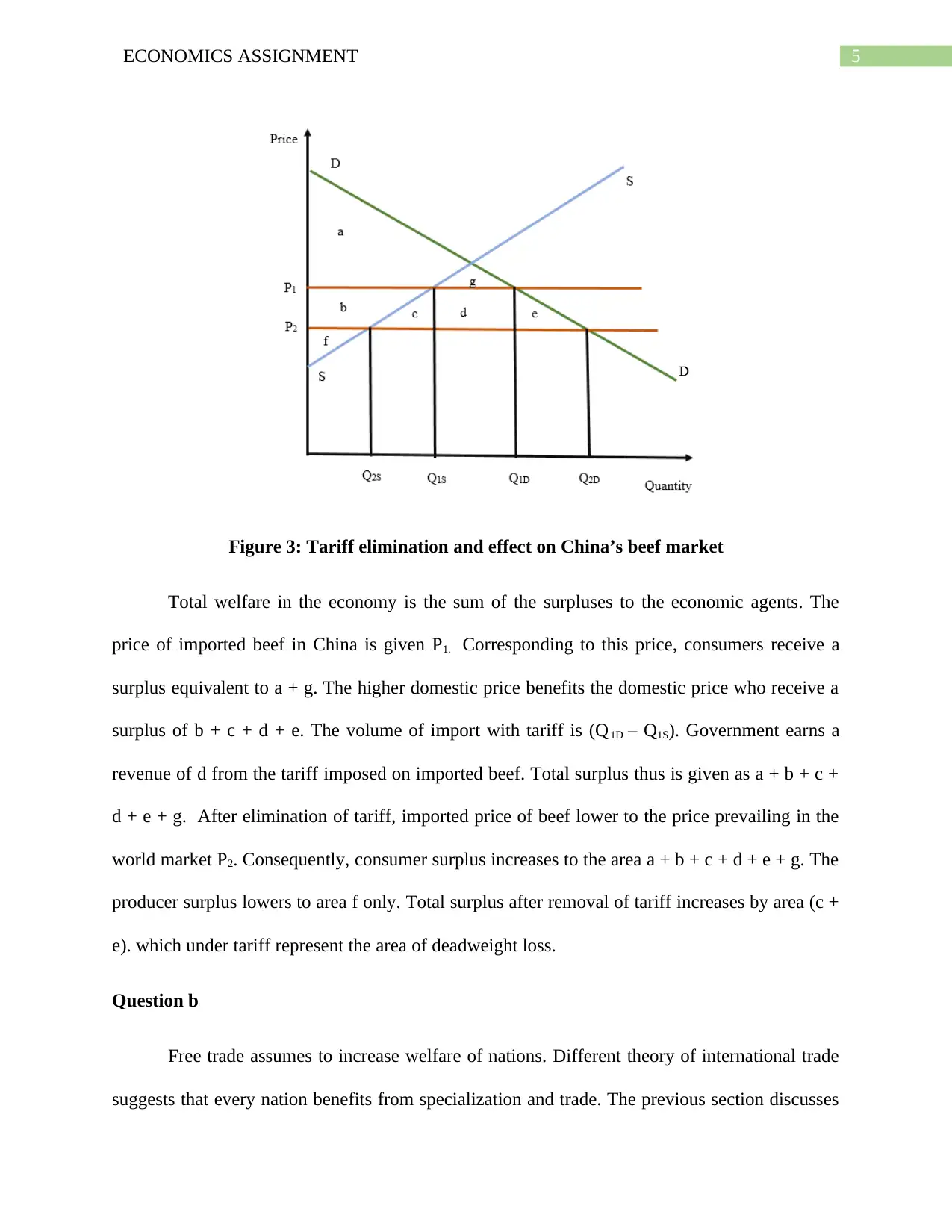
The figure below explains demand and supply of a perceived risky asset. Several factor
can influence the demand and supply of an asset. The primary factors affecting demand are rate
of return, assets, amount of wealth and liquidity. Higher the asset price means lower yield
causing asset demand curve to slope downward. D1D1 is the asset demand curve. The upward
sloping curve S1S1 shows the supply curve. Equilibrium is achieved corresponding to E. Price
and quantity in the asset market are determined corresponding to the equilibrium point.
Figure 1: Demand and supply of a risky asset
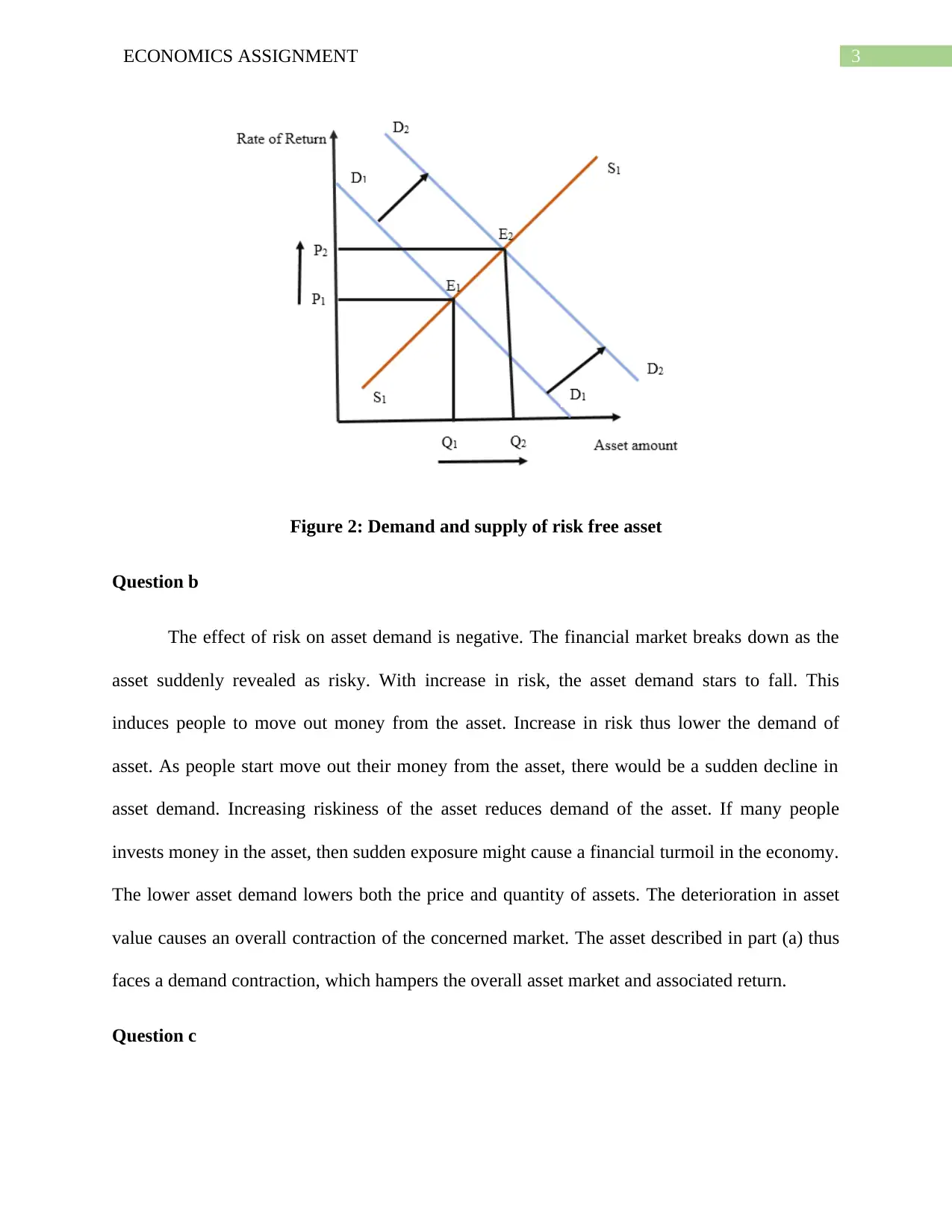
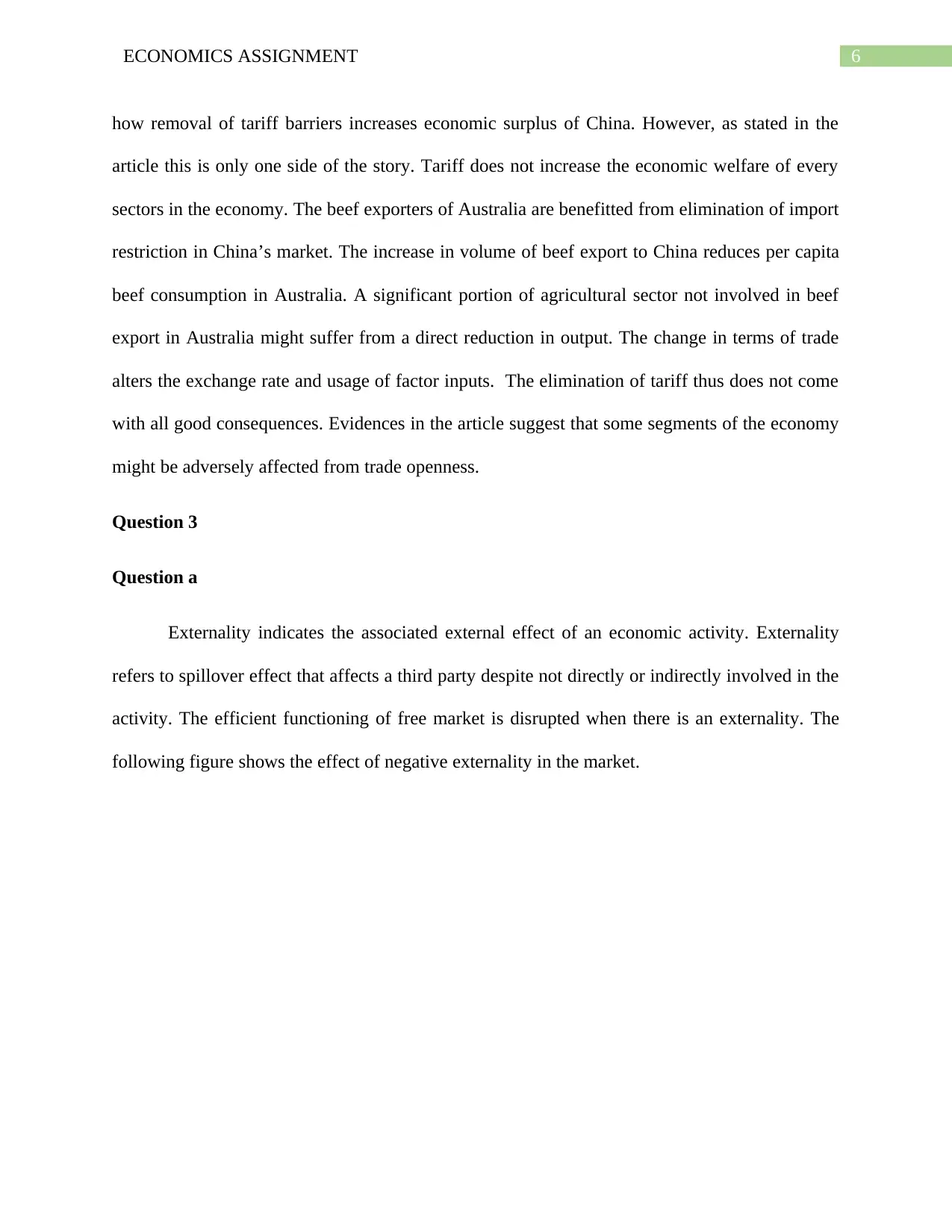
Risk is one factor that has a significant influence on asset demand. Risk has an inverse
effect on demand for asset that is lower the risk higher is the asset demand. Therefore, as the
asset becomes risk free, there is an increase in asset demand. The increased level of demand is
shown by the new demand curve D2D2 in figure 2.
Document Page
3ECONOMICS ASSIGNMENT
Figure 2: Demand and supply of risk free asset
Question b
The effect of risk on asset demand is negative. The financial market breaks down as the
asset suddenly revealed as risky. With increase in risk, the asset demand stars to fall. This
induces people to move out money from the asset. Increase in risk thus lower the demand of
asset. As people start move out their money from the asset, there would be a sudden decline in
asset demand. Increasing riskiness of the asset reduces demand of the asset. If many people
invests money in the asset, then sudden exposure might cause a financial turmoil in the economy.
The lower asset demand lowers both the price and quantity of assets. The deterioration in asset
value causes an overall contraction of the concerned market. The asset described in part (a) thus
faces a demand contraction, which hampers the overall asset market and associated return.
Question c
tabler-icon-diamond-filled.svg

Paraphrase This Document

Need a fresh take? Get an instant paraphrase of this document with our AI Paraphraser
Document Page
4ECONOMICS ASSIGNMENT
When an asset is risk free, investors try to invest more in that asset to get a secure return
in future. The market of a risk free asset always attracts many people to invest in the asset
market. The increased demand side pressure of the particular asset causes price of the asset to
increase continuously. The continuous increase in demand and price of an asset forms a bubble
in the asset market. The sudden exposure of the asset towards risk adds volatility in the asset
market. Investors panic and withdraw money from the asset market. The added riskiness of the
asset reduces expected return of the asset. There is then a sudden drop in asset prices. The bubble
that was formed due to incorrect assumption of riskiness of the concerned asset then burst
heading to a macroeconomic crisis. The asset market then crashes leading to a break-down of
financial market. The situation is same as that happened during global financial crisis of United
States in 2007 – 2008.
Question 2
Question a
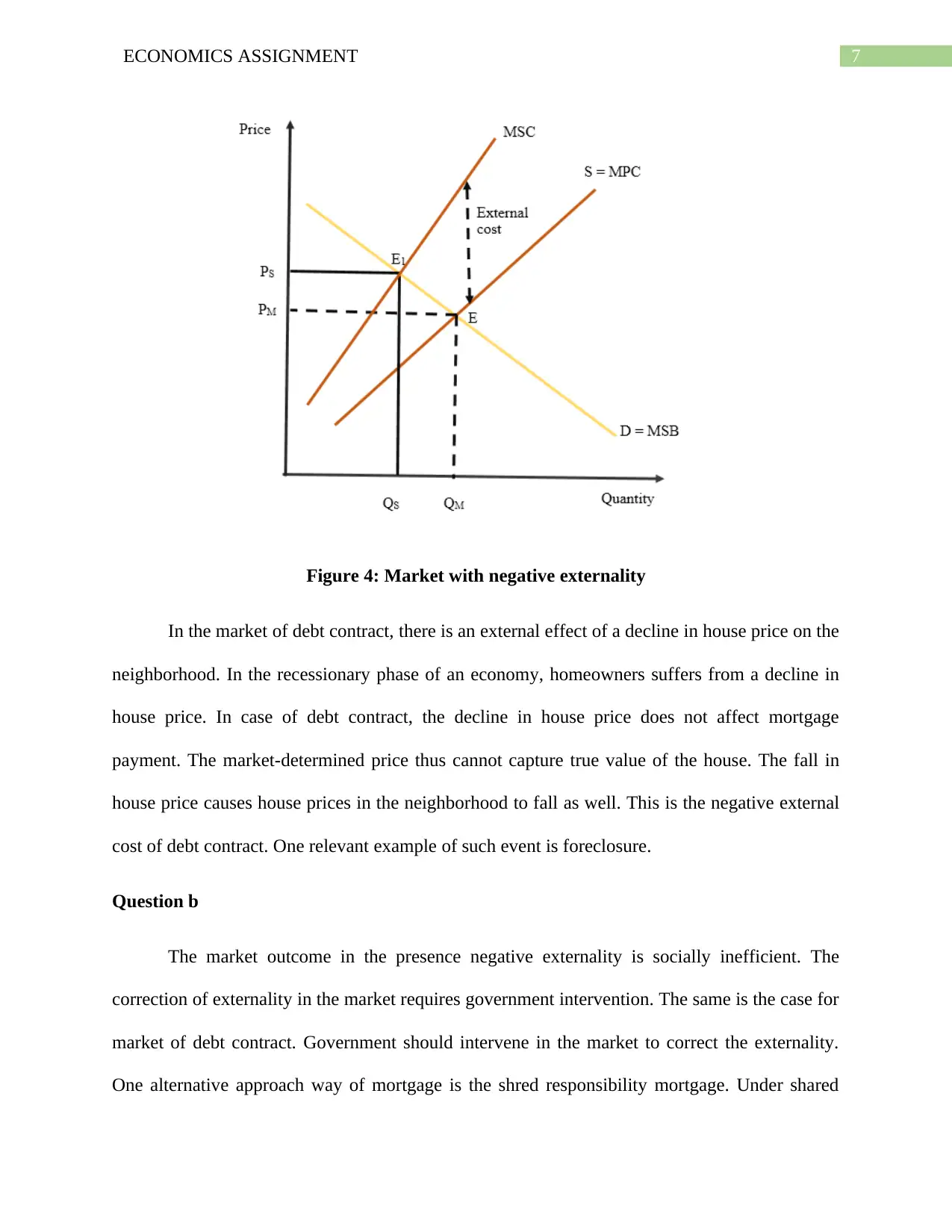
The elimination of import tariff from China’s beef market lead to free trade situation. The
welfare analysis of the two situations are described in the figure below.
Document Page
5ECONOMICS ASSIGNMENT
Figure 3: Tariff elimination and effect on China’s beef market
Total welfare in the economy is the sum of the surpluses to the economic agents. The
price of imported beef in China is given P1. Corresponding to this price, consumers receive a
surplus equivalent to a + g. The higher domestic price benefits the domestic price who receive a
surplus of b + c + d + e. The volume of import with tariff is (Q1D – Q1S). Government earns a
revenue of d from the tariff imposed on imported beef. Total surplus thus is given as a + b + c +
d + e + g. After elimination of tariff, imported price of beef lower to the price prevailing in the
world market P2. Consequently, consumer surplus increases to the area a + b + c + d + e + g. The
producer surplus lowers to area f only. Total surplus after removal of tariff increases by area (c +
e). which under tariff represent the area of deadweight loss.
Question b
Free trade assumes to increase welfare of nations. Different theory of international trade
suggests that every nation benefits from specialization and trade. The previous section discusses
Document Page
6ECONOMICS ASSIGNMENT
how removal of tariff barriers increases economic surplus of China. However, as stated in the
article this is only one side of the story. Tariff does not increase the economic welfare of every
sectors in the economy. The beef exporters of Australia are benefitted from elimination of import
restriction in China’s market. The increase in volume of beef export to China reduces per capita
beef consumption in Australia. A significant portion of agricultural sector not involved in beef
export in Australia might suffer from a direct reduction in output. The change in terms of trade
alters the exchange rate and usage of factor inputs. The elimination of tariff thus does not come
with all good consequences. Evidences in the article suggest that some segments of the economy
might be adversely affected from trade openness.
Question 3
Question a
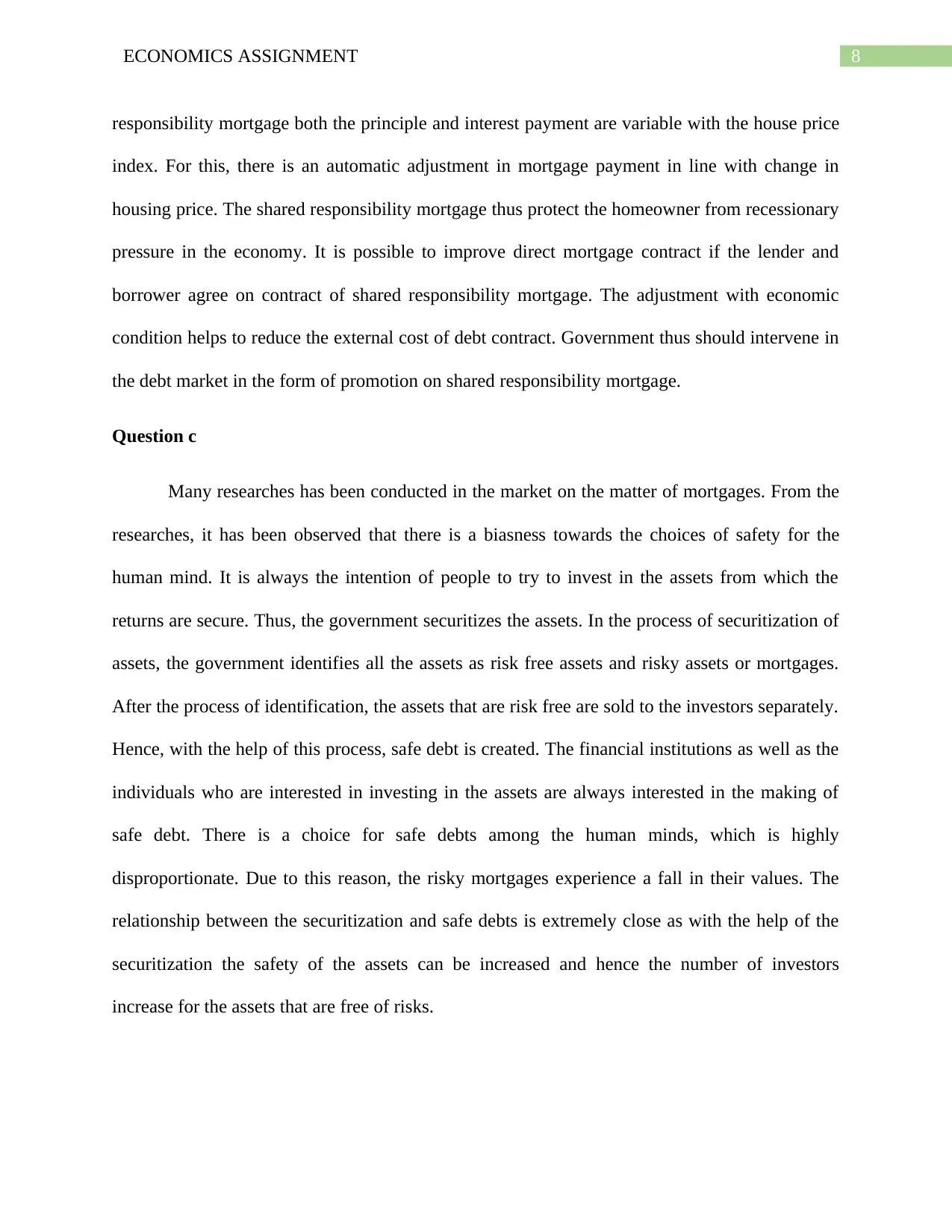
Externality indicates the associated external effect of an economic activity. Externality
refers to spillover effect that affects a third party despite not directly or indirectly involved in the
activity. The efficient functioning of free market is disrupted when there is an externality. The
following figure shows the effect of negative externality in the market.
tabler-icon-diamond-filled.svg

Paraphrase This Document

Need a fresh take? Get an instant paraphrase of this document with our AI Paraphraser
Document Page
7ECONOMICS ASSIGNMENT
Figure 4: Market with negative externality
In the market of debt contract, there is an external effect of a decline in house price on the
neighborhood. In the recessionary phase of an economy, homeowners suffers from a decline in
house price. In case of debt contract, the decline in house price does not affect mortgage
payment. The market-determined price thus cannot capture true value of the house. The fall in
house price causes house prices in the neighborhood to fall as well. This is the negative external
cost of debt contract. One relevant example of such event is foreclosure.
Question b
The market outcome in the presence negative externality is socially inefficient. The
correction of externality in the market requires government intervention. The same is the case for
market of debt contract. Government should intervene in the market to correct the externality.
One alternative approach way of mortgage is the shred responsibility mortgage. Under shared
Document Page
8ECONOMICS ASSIGNMENT
responsibility mortgage both the principle and interest payment are variable with the house price
index. For this, there is an automatic adjustment in mortgage payment in line with change in
housing price. The shared responsibility mortgage thus protect the homeowner from recessionary
pressure in the economy. It is possible to improve direct mortgage contract if the lender and
borrower agree on contract of shared responsibility mortgage. The adjustment with economic
condition helps to reduce the external cost of debt contract. Government thus should intervene in
the debt market in the form of promotion on shared responsibility mortgage.
Question c
Many researches has been conducted in the market on the matter of mortgages. From the
researches, it has been observed that there is a biasness towards the choices of safety for the
human mind. It is always the intention of people to try to invest in the assets from which the
returns are secure. Thus, the government securitizes the assets. In the process of securitization of
assets, the government identifies all the assets as risk free assets and risky assets or mortgages.
After the process of identification, the assets that are risk free are sold to the investors separately.
Hence, with the help of this process, safe debt is created. The financial institutions as well as the
individuals who are interested in investing in the assets are always interested in the making of
safe debt. There is a choice for safe debts among the human minds, which is highly
disproportionate. Due to this reason, the risky mortgages experience a fall in their values. The
relationship between the securitization and safe debts is extremely close as with the help of the
securitization the safety of the assets can be increased and hence the number of investors
increase for the assets that are free of risks.
chevron_up_icon
1 out of 9
circle_padding
hide_on_mobile
zoom_out_icon
[object Object]