Research Proposal: Marketing Techniques for Toyota's Performance
VerifiedAdded on 2020/04/21
|9
|1531
|85
Report
AI Summary
This research proposal critically evaluates the effectiveness of traditional versus modern marketing techniques in improving organizational performance, specifically focusing on Toyota. The proposal outlines the research objectives, which include analyzing both traditional and modern marketing techniques used by Toyota and assessing their impact on performance. The literature review discusses traditional marketing methods like advertisements and personal selling, alongside modern approaches such as digital media and social media marketing. The research methodology employs a mixed-methods approach, combining qualitative and quantitative data collection through interviews with marketing managers and surveys of employees. The research design includes exploratory, explanatory, and descriptive elements. Data will be collected from primary sources, including interviews and surveys, and secondary sources, such as company reports and academic literature. The research employs a convenient sampling method, with a sample size of 10 managers for interviews and 60 employees for surveys. The study also addresses research limitations, ethical considerations, and provides a detailed time schedule for the research process. This research aims to provide insights into the effectiveness of different marketing strategies used by Toyota.
Running head: RESEARCH PROPOSAL
Research proposal “A critical evaluation of the effectiveness of traditional versus modern
marketing techniques in improving organisational performance”
Name of the Student:
Name of the University:
Author note:
Research proposal “A critical evaluation of the effectiveness of traditional versus modern
marketing techniques in improving organisational performance”
Name of the Student:
Name of the University:
Author note:
Paraphrase This Document
Need a fresh take? Get an instant paraphrase of this document with our AI Paraphraser

1RESEARCH PROPOSAL
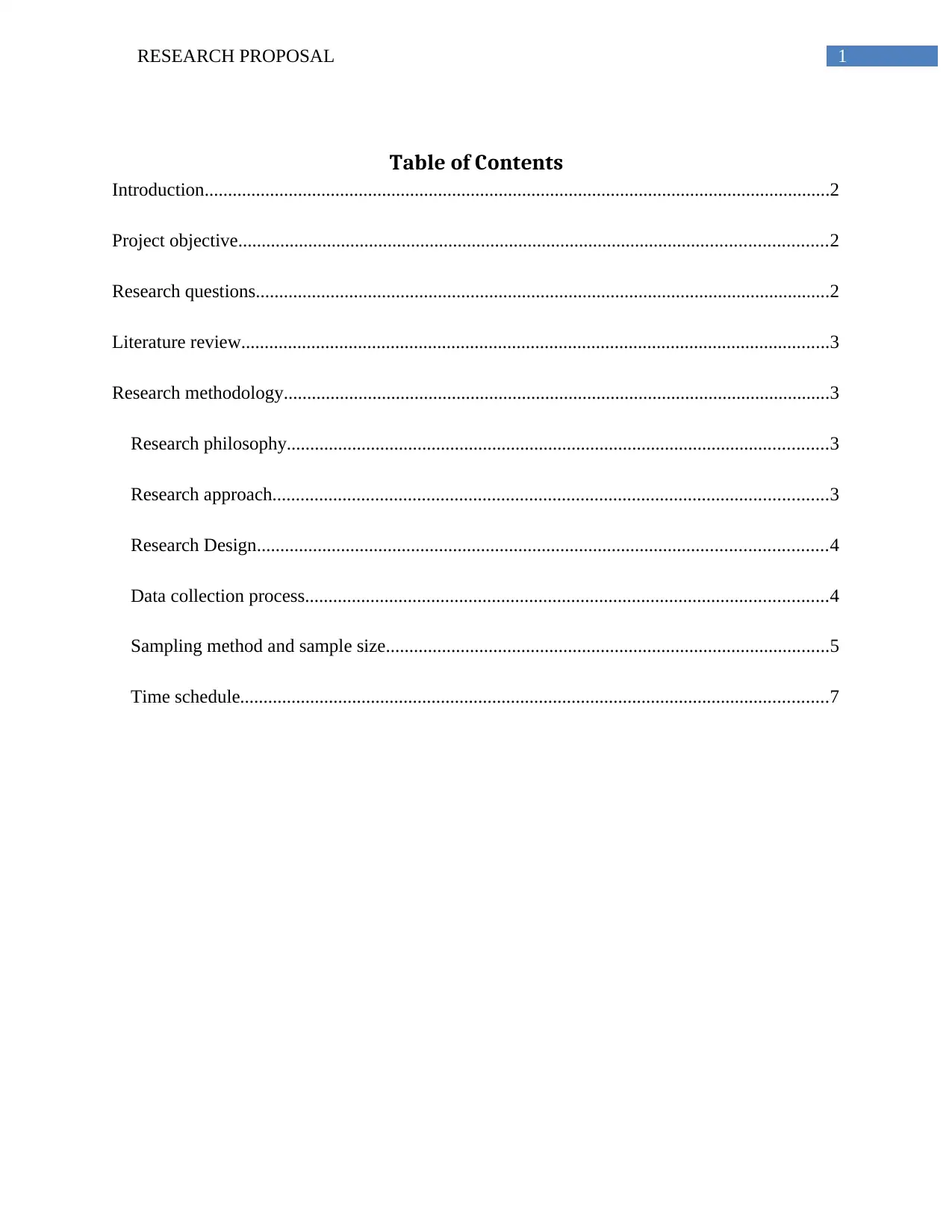
Table of Contents
Introduction......................................................................................................................................2
Project objective..............................................................................................................................2
Research questions...........................................................................................................................2
Literature review..............................................................................................................................3
Research methodology.....................................................................................................................3
Research philosophy....................................................................................................................3
Research approach.......................................................................................................................3
Research Design..........................................................................................................................4
Data collection process................................................................................................................4
Sampling method and sample size...............................................................................................5
Time schedule..............................................................................................................................7
Table of Contents
Introduction......................................................................................................................................2
Project objective..............................................................................................................................2
Research questions...........................................................................................................................2
Literature review..............................................................................................................................3
Research methodology.....................................................................................................................3
Research philosophy....................................................................................................................3
Research approach.......................................................................................................................3
Research Design..........................................................................................................................4
Data collection process................................................................................................................4
Sampling method and sample size...............................................................................................5
Time schedule..............................................................................................................................7

2RESEARCH PROPOSAL
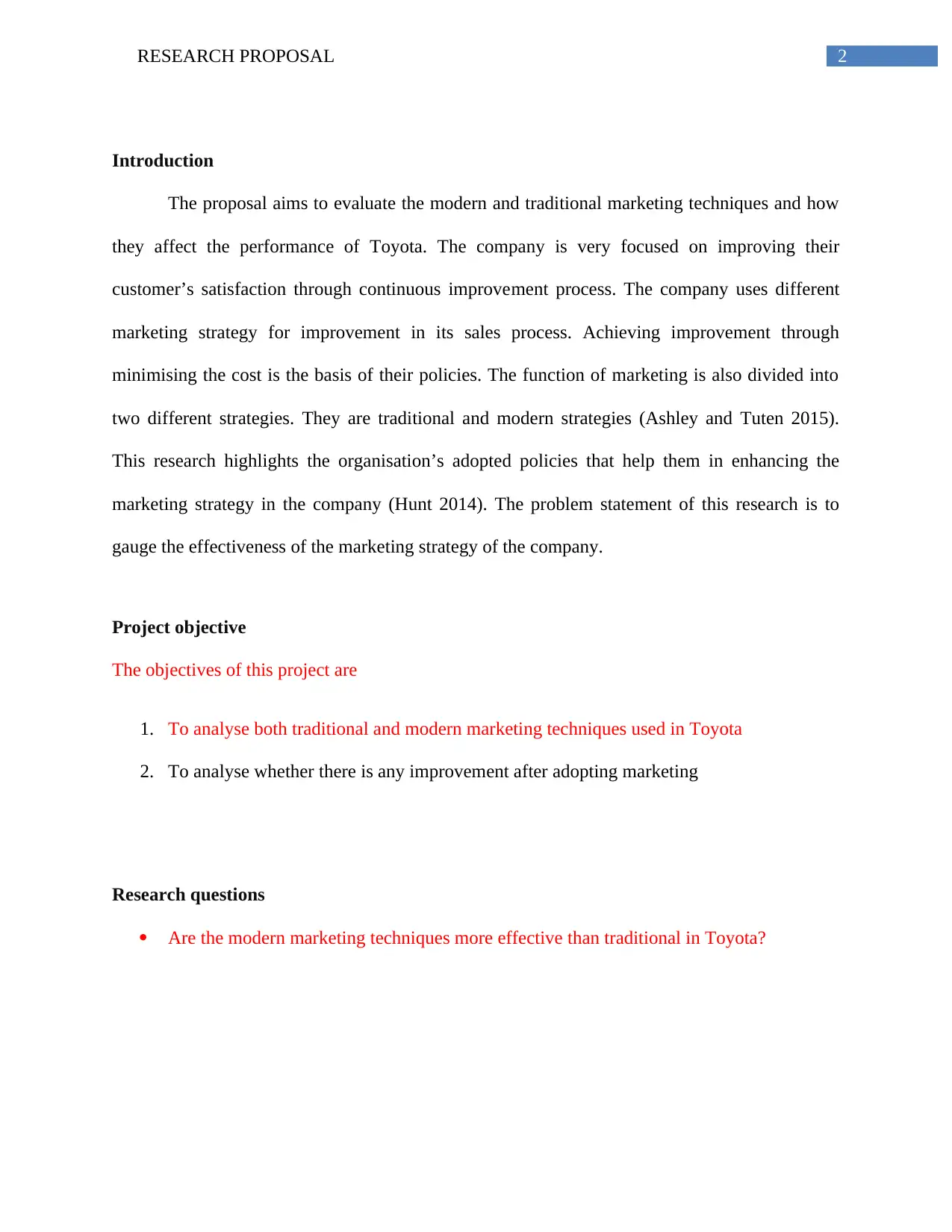
Introduction
The proposal aims to evaluate the modern and traditional marketing techniques and how
they affect the performance of Toyota. The company is very focused on improving their
customer’s satisfaction through continuous improvement process. The company uses different
marketing strategy for improvement in its sales process. Achieving improvement through
minimising the cost is the basis of their policies. The function of marketing is also divided into
two different strategies. They are traditional and modern strategies (Ashley and Tuten 2015).
This research highlights the organisation’s adopted policies that help them in enhancing the
marketing strategy in the company (Hunt 2014). The problem statement of this research is to
gauge the effectiveness of the marketing strategy of the company.
Project objective
The objectives of this project are
1. To analyse both traditional and modern marketing techniques used in Toyota
2. To analyse whether there is any improvement after adopting marketing
Research questions
Are the modern marketing techniques more effective than traditional in Toyota?
Introduction
The proposal aims to evaluate the modern and traditional marketing techniques and how
they affect the performance of Toyota. The company is very focused on improving their
customer’s satisfaction through continuous improvement process. The company uses different
marketing strategy for improvement in its sales process. Achieving improvement through
minimising the cost is the basis of their policies. The function of marketing is also divided into
two different strategies. They are traditional and modern strategies (Ashley and Tuten 2015).
This research highlights the organisation’s adopted policies that help them in enhancing the
marketing strategy in the company (Hunt 2014). The problem statement of this research is to
gauge the effectiveness of the marketing strategy of the company.
Project objective
The objectives of this project are
1. To analyse both traditional and modern marketing techniques used in Toyota
2. To analyse whether there is any improvement after adopting marketing
Research questions
Are the modern marketing techniques more effective than traditional in Toyota?
⊘ This is a preview!⊘
Do you want full access?
Subscribe today to unlock all pages.

Trusted by 1+ million students worldwide

3RESEARCH PROPOSAL
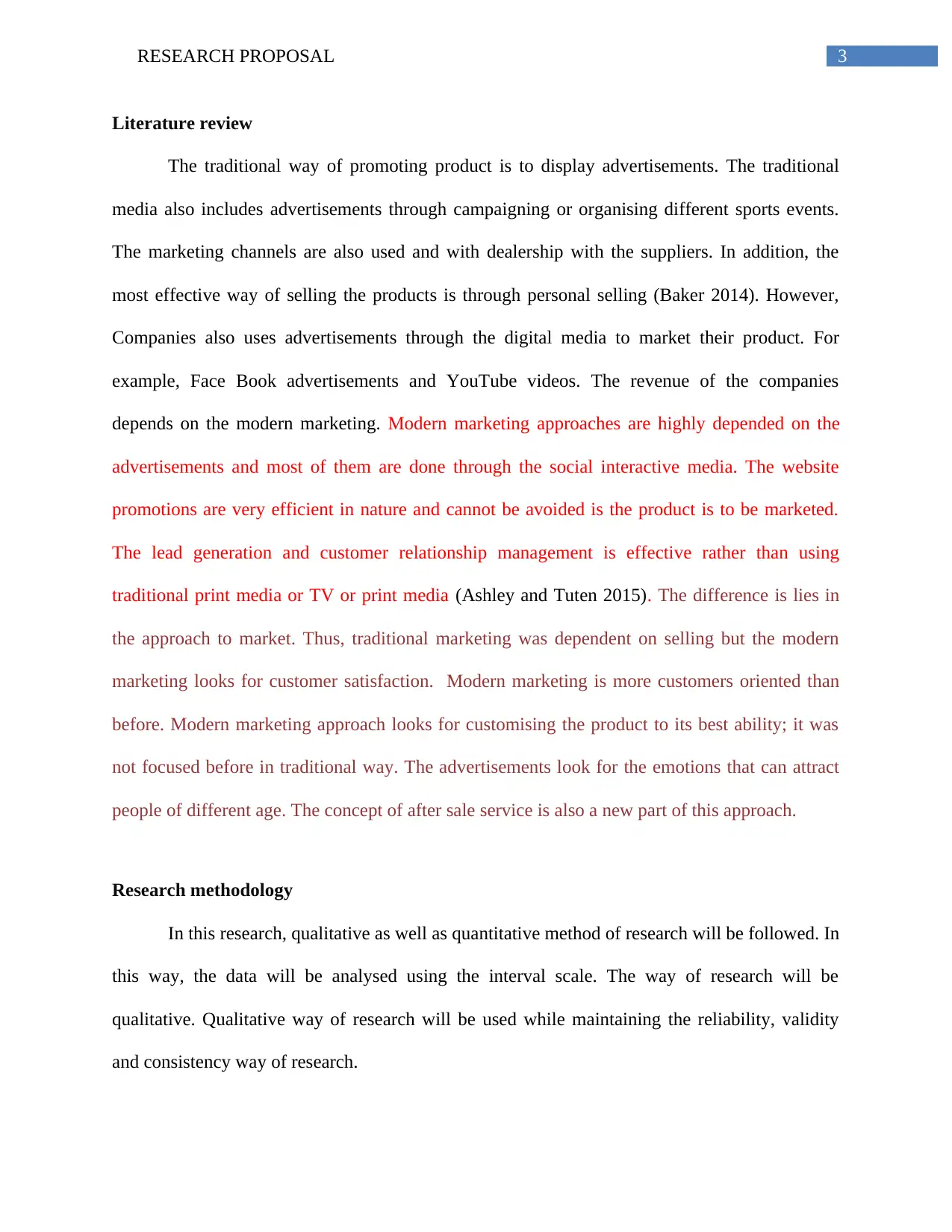
Literature review
The traditional way of promoting product is to display advertisements. The traditional
media also includes advertisements through campaigning or organising different sports events.
The marketing channels are also used and with dealership with the suppliers. In addition, the
most effective way of selling the products is through personal selling (Baker 2014). However,
Companies also uses advertisements through the digital media to market their product. For
example, Face Book advertisements and YouTube videos. The revenue of the companies
depends on the modern marketing. Modern marketing approaches are highly depended on the
advertisements and most of them are done through the social interactive media. The website
promotions are very efficient in nature and cannot be avoided is the product is to be marketed.
The lead generation and customer relationship management is effective rather than using
traditional print media or TV or print media (Ashley and Tuten 2015). The difference is lies in
the approach to market. Thus, traditional marketing was dependent on selling but the modern
marketing looks for customer satisfaction. Modern marketing is more customers oriented than
before. Modern marketing approach looks for customising the product to its best ability; it was
not focused before in traditional way. The advertisements look for the emotions that can attract
people of different age. The concept of after sale service is also a new part of this approach.
Research methodology
In this research, qualitative as well as quantitative method of research will be followed. In
this way, the data will be analysed using the interval scale. The way of research will be
qualitative. Qualitative way of research will be used while maintaining the reliability, validity
and consistency way of research.
Literature review
The traditional way of promoting product is to display advertisements. The traditional
media also includes advertisements through campaigning or organising different sports events.
The marketing channels are also used and with dealership with the suppliers. In addition, the
most effective way of selling the products is through personal selling (Baker 2014). However,
Companies also uses advertisements through the digital media to market their product. For
example, Face Book advertisements and YouTube videos. The revenue of the companies
depends on the modern marketing. Modern marketing approaches are highly depended on the
advertisements and most of them are done through the social interactive media. The website
promotions are very efficient in nature and cannot be avoided is the product is to be marketed.
The lead generation and customer relationship management is effective rather than using
traditional print media or TV or print media (Ashley and Tuten 2015). The difference is lies in
the approach to market. Thus, traditional marketing was dependent on selling but the modern
marketing looks for customer satisfaction. Modern marketing is more customers oriented than
before. Modern marketing approach looks for customising the product to its best ability; it was
not focused before in traditional way. The advertisements look for the emotions that can attract
people of different age. The concept of after sale service is also a new part of this approach.
Research methodology
In this research, qualitative as well as quantitative method of research will be followed. In
this way, the data will be analysed using the interval scale. The way of research will be
qualitative. Qualitative way of research will be used while maintaining the reliability, validity
and consistency way of research.
Paraphrase This Document
Need a fresh take? Get an instant paraphrase of this document with our AI Paraphraser

4RESEARCH PROPOSAL
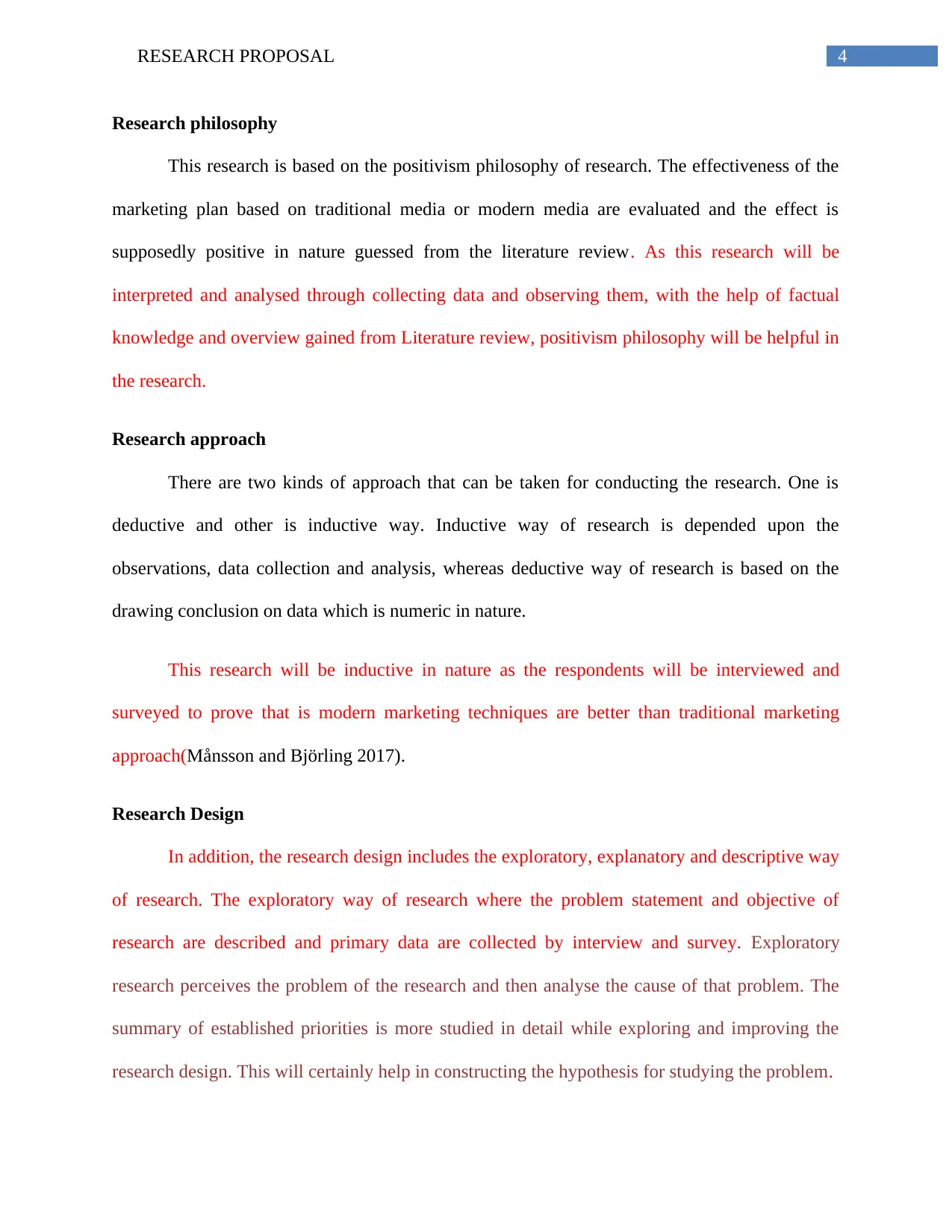
Research philosophy
This research is based on the positivism philosophy of research. The effectiveness of the
marketing plan based on traditional media or modern media are evaluated and the effect is
supposedly positive in nature guessed from the literature review. As this research will be
interpreted and analysed through collecting data and observing them, with the help of factual
knowledge and overview gained from Literature review, positivism philosophy will be helpful in
the research.
Research approach
There are two kinds of approach that can be taken for conducting the research. One is
deductive and other is inductive way. Inductive way of research is depended upon the
observations, data collection and analysis, whereas deductive way of research is based on the
drawing conclusion on data which is numeric in nature.
This research will be inductive in nature as the respondents will be interviewed and
surveyed to prove that is modern marketing techniques are better than traditional marketing
approach(Månsson and Björling 2017).
Research Design
In addition, the research design includes the exploratory, explanatory and descriptive way
of research. The exploratory way of research where the problem statement and objective of
research are described and primary data are collected by interview and survey. Exploratory
research perceives the problem of the research and then analyse the cause of that problem. The
summary of established priorities is more studied in detail while exploring and improving the
research design. This will certainly help in constructing the hypothesis for studying the problem.
Research philosophy
This research is based on the positivism philosophy of research. The effectiveness of the
marketing plan based on traditional media or modern media are evaluated and the effect is
supposedly positive in nature guessed from the literature review. As this research will be
interpreted and analysed through collecting data and observing them, with the help of factual
knowledge and overview gained from Literature review, positivism philosophy will be helpful in
the research.
Research approach
There are two kinds of approach that can be taken for conducting the research. One is
deductive and other is inductive way. Inductive way of research is depended upon the
observations, data collection and analysis, whereas deductive way of research is based on the
drawing conclusion on data which is numeric in nature.
This research will be inductive in nature as the respondents will be interviewed and
surveyed to prove that is modern marketing techniques are better than traditional marketing
approach(Månsson and Björling 2017).
Research Design
In addition, the research design includes the exploratory, explanatory and descriptive way
of research. The exploratory way of research where the problem statement and objective of
research are described and primary data are collected by interview and survey. Exploratory
research perceives the problem of the research and then analyse the cause of that problem. The
summary of established priorities is more studied in detail while exploring and improving the
research design. This will certainly help in constructing the hypothesis for studying the problem.

5RESEARCH PROPOSAL
Data collection process
The data will be collected from different sources both primary and secondary. To resolve
the problem given in the proposal the data will be collected from the company Toyota Spare
Parts wholesale. The managers in marketing department of the company will be interviewed for
to get insights into the implementation strategy of the modern marketing policies in the company
has adopted (Fraley and Hudson 2014). The employees of the company will be surveyed for
gauging their perspective on the effectiveness of the company’s marketing strategy. Two
different groups of questionnaires will be formed to ask the managers with options of open-
ended answers and the other group of questionnaire will be close ended for the survey purpose
(Mackey and Gass 2015). After that, the data on revenue of the company for the last five years
will be analysed based on the different market channels they used. For that, the annual reports
must be collected of Toyota and the expense data on the marketing will be used. This will be
compared with the revenue for further insights in the effectiveness of the company’s marketing
expense. The primary source of data will be the interview records of the managers and the
secondary will be obtained from the review report of the company and journals and books for
literature the review on the identifying the effectiveness of the company’s marketing techniques
(Flick 2015).
Sampling method and sample size
There are two kinds of sampling method one is probability based and another is non-
probability based sampling. The respondents are chosen properly. Based on the relevancy of the
data the method will be chosen. Here the sampling method will also be convenient sampling
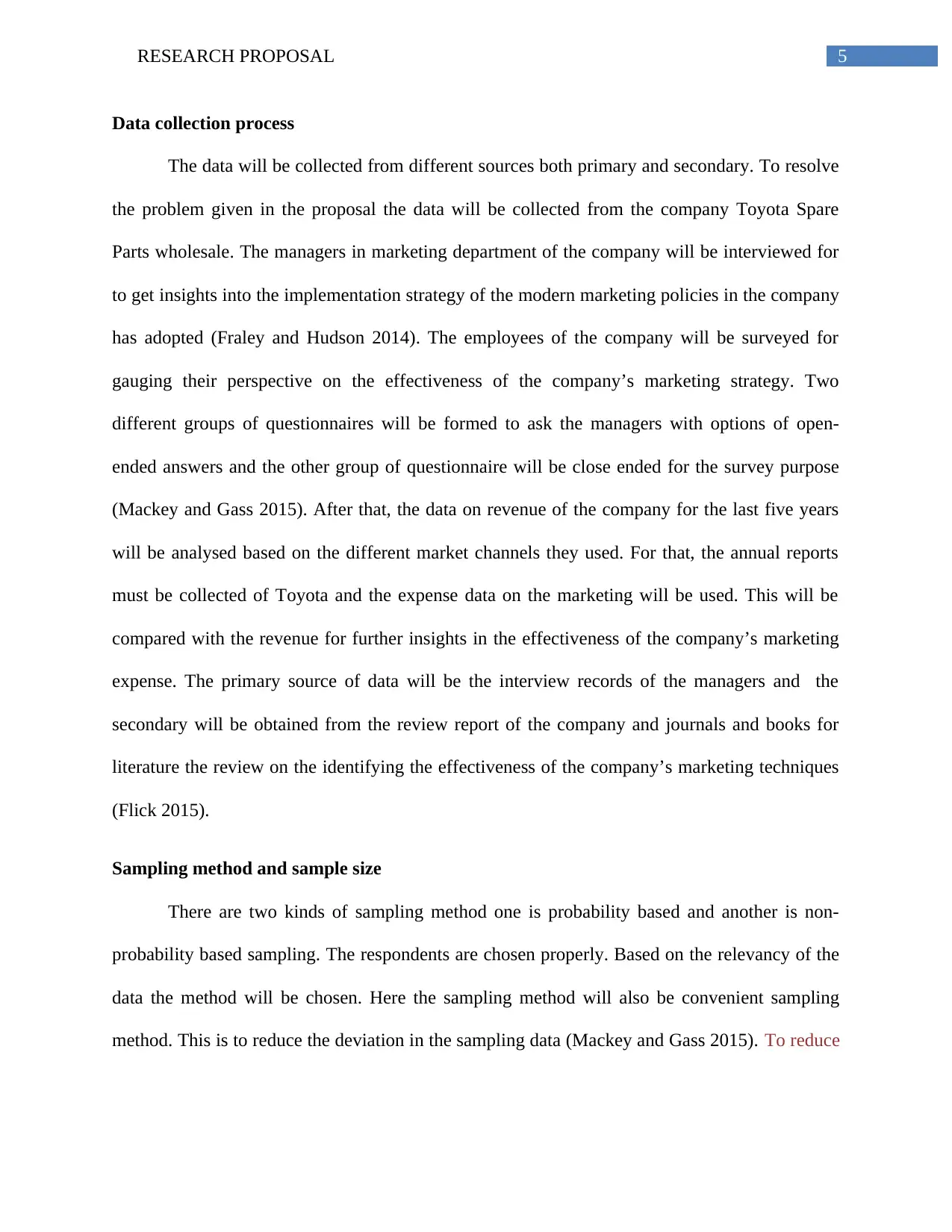
method. This is to reduce the deviation in the sampling data (Mackey and Gass 2015). To reduce
Data collection process
The data will be collected from different sources both primary and secondary. To resolve
the problem given in the proposal the data will be collected from the company Toyota Spare
Parts wholesale. The managers in marketing department of the company will be interviewed for
to get insights into the implementation strategy of the modern marketing policies in the company
has adopted (Fraley and Hudson 2014). The employees of the company will be surveyed for
gauging their perspective on the effectiveness of the company’s marketing strategy. Two
different groups of questionnaires will be formed to ask the managers with options of open-
ended answers and the other group of questionnaire will be close ended for the survey purpose
(Mackey and Gass 2015). After that, the data on revenue of the company for the last five years
will be analysed based on the different market channels they used. For that, the annual reports
must be collected of Toyota and the expense data on the marketing will be used. This will be
compared with the revenue for further insights in the effectiveness of the company’s marketing
expense. The primary source of data will be the interview records of the managers and the
secondary will be obtained from the review report of the company and journals and books for
literature the review on the identifying the effectiveness of the company’s marketing techniques
(Flick 2015).
Sampling method and sample size
There are two kinds of sampling method one is probability based and another is non-
probability based sampling. The respondents are chosen properly. Based on the relevancy of the
data the method will be chosen. Here the sampling method will also be convenient sampling
method. This is to reduce the deviation in the sampling data (Mackey and Gass 2015). To reduce
⊘ This is a preview!⊘
Do you want full access?
Subscribe today to unlock all pages.

Trusted by 1+ million students worldwide

6RESEARCH PROPOSAL
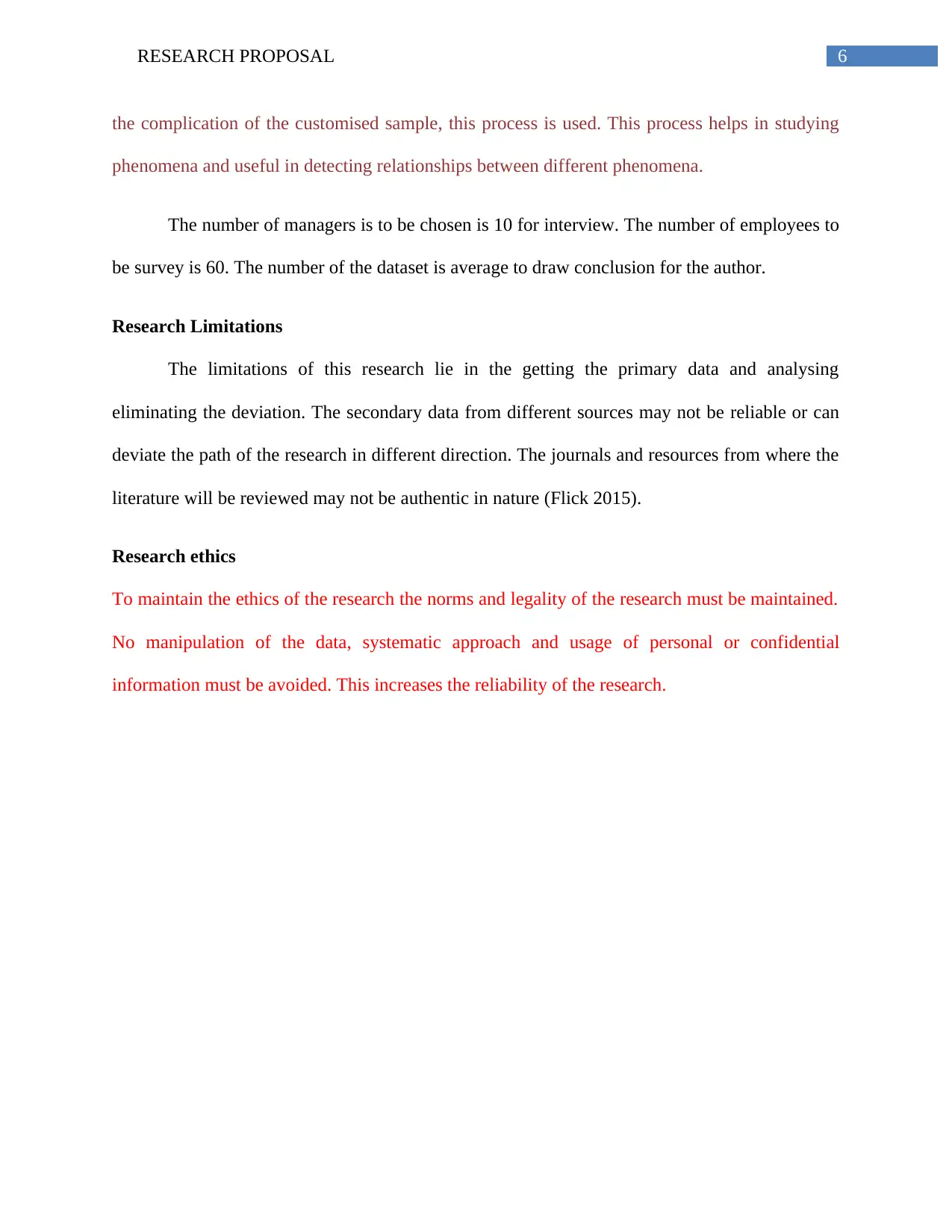
the complication of the customised sample, this process is used. This process helps in studying
phenomena and useful in detecting relationships between different phenomena.
The number of managers is to be chosen is 10 for interview. The number of employees to
be survey is 60. The number of the dataset is average to draw conclusion for the author.
Research Limitations
The limitations of this research lie in the getting the primary data and analysing
eliminating the deviation. The secondary data from different sources may not be reliable or can
deviate the path of the research in different direction. The journals and resources from where the
literature will be reviewed may not be authentic in nature (Flick 2015).
Research ethics
To maintain the ethics of the research the norms and legality of the research must be maintained.
No manipulation of the data, systematic approach and usage of personal or confidential
information must be avoided. This increases the reliability of the research.
the complication of the customised sample, this process is used. This process helps in studying
phenomena and useful in detecting relationships between different phenomena.
The number of managers is to be chosen is 10 for interview. The number of employees to
be survey is 60. The number of the dataset is average to draw conclusion for the author.
Research Limitations
The limitations of this research lie in the getting the primary data and analysing
eliminating the deviation. The secondary data from different sources may not be reliable or can
deviate the path of the research in different direction. The journals and resources from where the
literature will be reviewed may not be authentic in nature (Flick 2015).
Research ethics
To maintain the ethics of the research the norms and legality of the research must be maintained.
No manipulation of the data, systematic approach and usage of personal or confidential
information must be avoided. This increases the reliability of the research.
Paraphrase This Document
Need a fresh take? Get an instant paraphrase of this document with our AI Paraphraser

7RESEARCH PROPOSAL
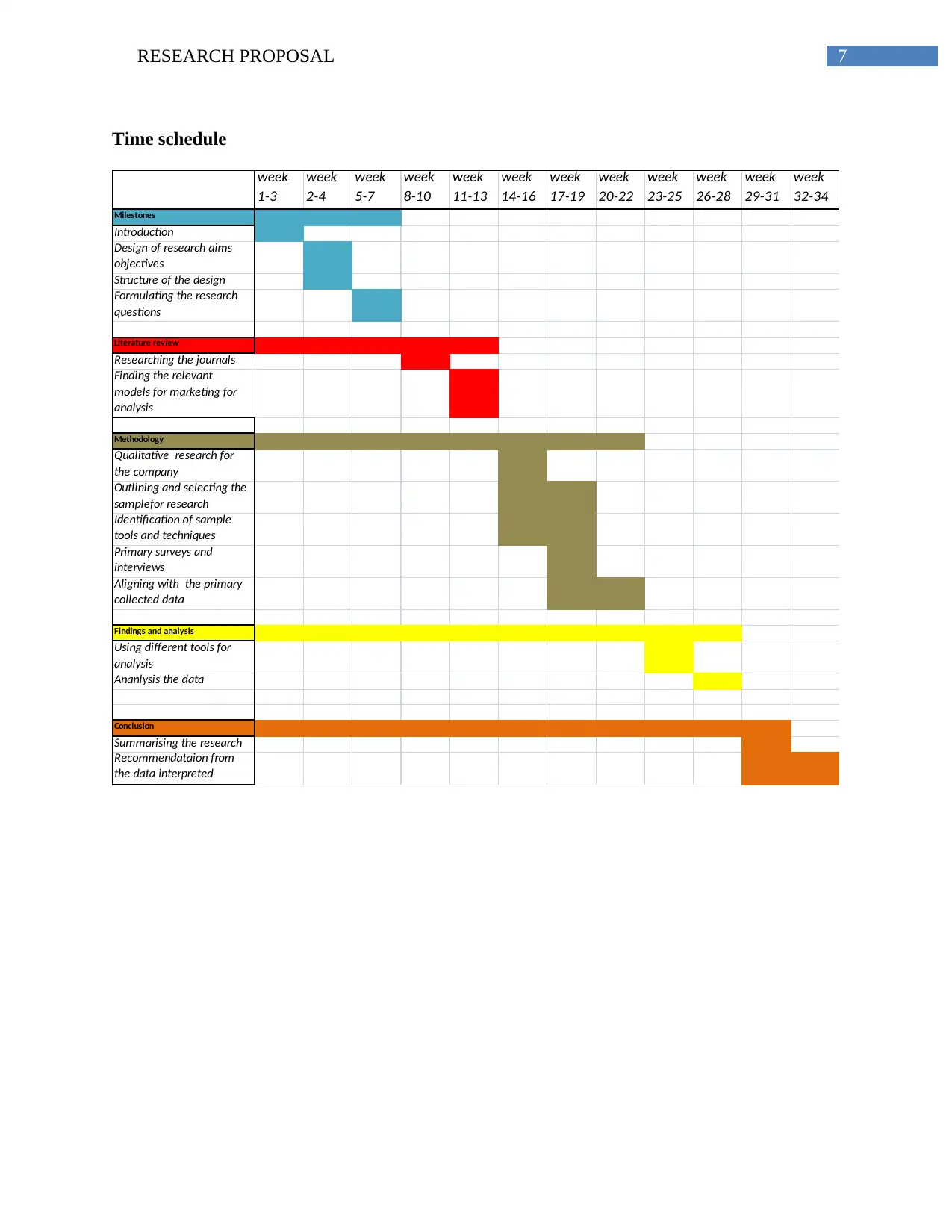
Time schedule
week
1-3
week
2-4
week
5-7
week
8-10
week
11-13
week
14-16
week
17-19
week
20-22
week
23-25
week
26-28
week
29-31
week
32-34
Milestones
Introduction
Design of research aims
objectives
Structure of the design
Formulating the research
questions
Literature review
Researching the journals
Finding the relevant
models for marketing for
analysis
Methodology
Qualitative research for
the company
Outlining and selecting the
samplefor research
Identification of sample
tools and techniques
Primary surveys and
interviews
Aligning with the primary
collected data
Findings and analysis
Using different tools for
analysis
Ananlysis the data
Conclusion
Summarising the research
Recommendataion from
the data interpreted
Time schedule
week
1-3
week
2-4
week
5-7
week
8-10
week
11-13
week
14-16
week
17-19
week
20-22
week
23-25
week
26-28
week
29-31
week
32-34
Milestones
Introduction
Design of research aims
objectives
Structure of the design
Formulating the research
questions
Literature review
Researching the journals
Finding the relevant
models for marketing for
analysis
Methodology
Qualitative research for
the company
Outlining and selecting the
samplefor research
Identification of sample
tools and techniques
Primary surveys and
interviews
Aligning with the primary
collected data
Findings and analysis
Using different tools for
analysis
Ananlysis the data
Conclusion
Summarising the research
Recommendataion from
the data interpreted

8RESEARCH PROPOSAL
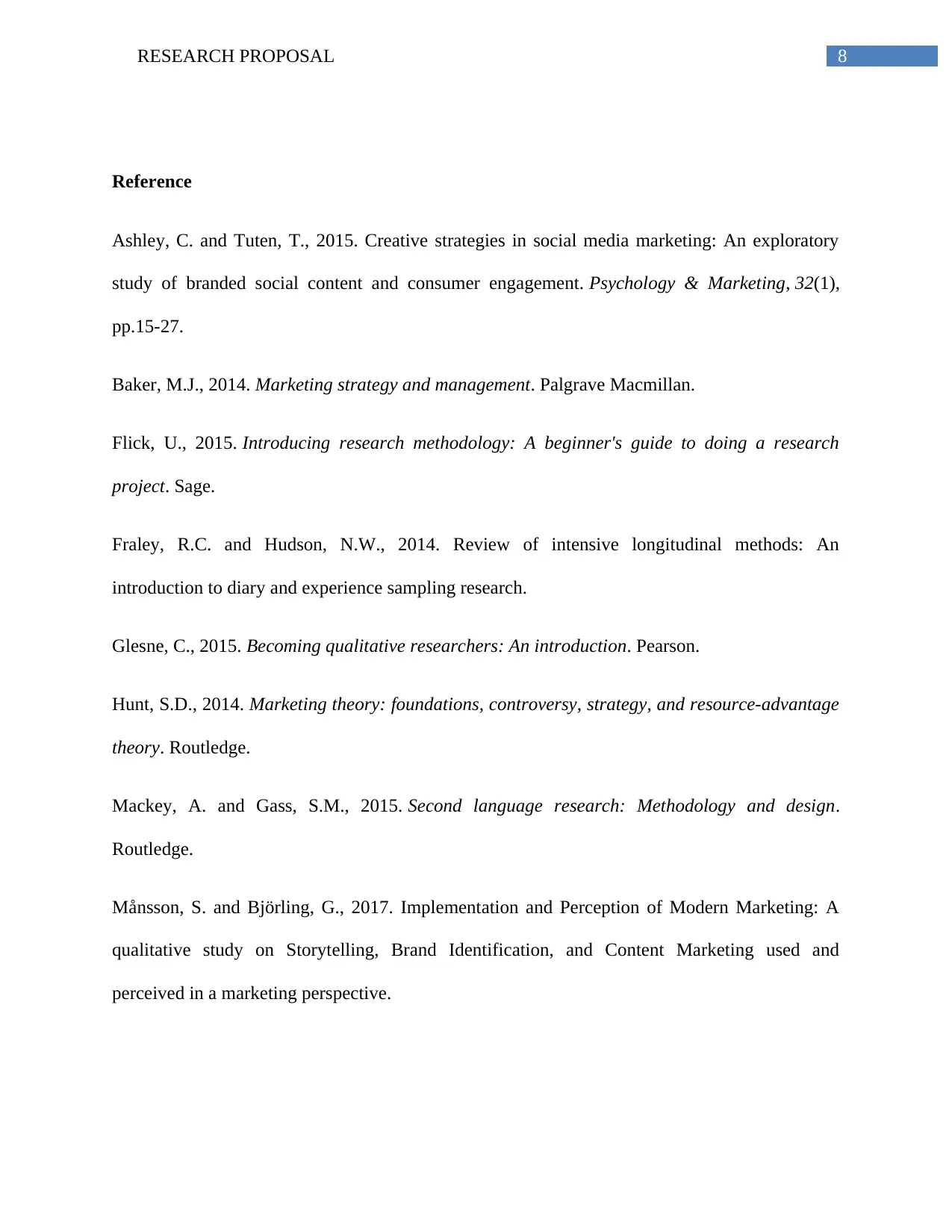
Reference
Ashley, C. and Tuten, T., 2015. Creative strategies in social media marketing: An exploratory
study of branded social content and consumer engagement. Psychology & Marketing, 32(1),
pp.15-27.
Baker, M.J., 2014. Marketing strategy and management. Palgrave Macmillan.
Flick, U., 2015. Introducing research methodology: A beginner's guide to doing a research
project. Sage.
Fraley, R.C. and Hudson, N.W., 2014. Review of intensive longitudinal methods: An
introduction to diary and experience sampling research.
Glesne, C., 2015. Becoming qualitative researchers: An introduction. Pearson.
Hunt, S.D., 2014. Marketing theory: foundations, controversy, strategy, and resource-advantage
theory. Routledge.
Mackey, A. and Gass, S.M., 2015. Second language research: Methodology and design.
Routledge.
Månsson, S. and Björling, G., 2017. Implementation and Perception of Modern Marketing: A
qualitative study on Storytelling, Brand Identification, and Content Marketing used and
perceived in a marketing perspective.
Reference
Ashley, C. and Tuten, T., 2015. Creative strategies in social media marketing: An exploratory
study of branded social content and consumer engagement. Psychology & Marketing, 32(1),
pp.15-27.
Baker, M.J., 2014. Marketing strategy and management. Palgrave Macmillan.
Flick, U., 2015. Introducing research methodology: A beginner's guide to doing a research
project. Sage.
Fraley, R.C. and Hudson, N.W., 2014. Review of intensive longitudinal methods: An
introduction to diary and experience sampling research.
Glesne, C., 2015. Becoming qualitative researchers: An introduction. Pearson.
Hunt, S.D., 2014. Marketing theory: foundations, controversy, strategy, and resource-advantage
theory. Routledge.
Mackey, A. and Gass, S.M., 2015. Second language research: Methodology and design.
Routledge.
Månsson, S. and Björling, G., 2017. Implementation and Perception of Modern Marketing: A
qualitative study on Storytelling, Brand Identification, and Content Marketing used and
perceived in a marketing perspective.
⊘ This is a preview!⊘
Do you want full access?
Subscribe today to unlock all pages.

Trusted by 1+ million students worldwide
1 out of 9
Related Documents
Your All-in-One AI-Powered Toolkit for Academic Success.
+13062052269
info@desklib.com
Available 24*7 on WhatsApp / Email
Unlock your academic potential
Copyright © 2020–2026 A2Z Services. All Rights Reserved. Developed and managed by ZUCOL.