Sustainability and Business: FLO Strategy, Fair Trade Analysis Report
VerifiedAdded on 2021/01/02
|19
|5586
|456
Report
AI Summary
This report delves into the Fairtrade Labelling Organisation (FLO) strategy, evaluating its approach to fair trade and sustainability within the business context. It examines the introduction and justification of FLO's strategy, focusing on the certification of coffee and other products. The report analyzes the mainstreaming of fair trade coffee, emphasizing the importance of organic coffee and its impact on producers, buyers, and the environment. It also addresses climate change and its effect on business. The report reviews literature, provides a critical analysis, and offers recommendations for future strategies. The report highlights the role of organic coffee, the supply chain, and the importance of fair trade in promoting economic justice and environmental sustainability. The report provides recommendations for FLO to ensure the success and sustainability of fair trade.
SUSTAINABILITY and BUSINESS

Paraphrase This Document
Need a fresh take? Get an instant paraphrase of this document with our AI Paraphraser
Contents
TASK 3............................................................................................................................................1
Introduction..................................................................................................................................1
Strategy of FLO...........................................................................................................................1
Justification of strategy................................................................................................................2
Conclusion...................................................................................................................................6
TASK 4............................................................................................................................................6
Introduction..................................................................................................................................6
Aim..............................................................................................................................................7
Objectives....................................................................................................................................7
Review of literature.....................................................................................................................7
Critical review of questions.......................................................................................................10
Recommendation.......................................................................................................................13
Conclusion.................................................................................................................................13
REFERENCES..............................................................................................................................15
TASK 3............................................................................................................................................1
Introduction..................................................................................................................................1
Strategy of FLO...........................................................................................................................1
Justification of strategy................................................................................................................2
Conclusion...................................................................................................................................6
TASK 4............................................................................................................................................6
Introduction..................................................................................................................................6
Aim..............................................................................................................................................7
Objectives....................................................................................................................................7
Review of literature.....................................................................................................................7
Critical review of questions.......................................................................................................10
Recommendation.......................................................................................................................13
Conclusion.................................................................................................................................13
REFERENCES..............................................................................................................................15
TASK 3
Introduction
In way of promoting fair and standardise trading of commodities which are especially
produced or manufactured in developing countries to help their producers at time when they are
selling their produced products to developed countries. So for this practise, Fair Trade movement
was started so that under this, member nations could be provided higher and fair price for their
exported product to improve social and environmental standards (Nelson and Martin, 2015). The
main focus of this movement was in providing good price to traders of commodity which is
manufactured in their country and when they are exporting it to some other countries but
domestic nation is also consuming that on same way. So in this context in year 1997, Born,
Germany Fairtrade International which is also known as Fairtrade Labelling Organisation
International (FLO) was established.
Strategy of FLO
This Fairtrade Labelling Organisation International (FLO) is that organisation which is
responsible for giving certificate to food products, handicraft, coffee, flowers and gold. This
organisation is called to unite 20 labelling initiatives within 21 countries of world and producers
network. The Fairtrade coffee is certified coffee which is been produced to fair trade standards as
creating trading partnership that must be based on transparency, respect, equality and fair price in
international trade. This type of partnership will be contributing into better trading conditions
offered to farmers of coffee beans in developing countries like that of India, Brazil and
Bangladesh for sustainable developments (Fairtrade Labelling Organisations International
(FLO), 2018). FLO is the organisation which is engaged into activities which is mainly
supporting farmers and producers of coffee bean with sustainable environmental farming
practice and prohibiting forced or child labour.
With the help of Fair trade, there was tremendous increment in demand of certified coffee
and banana in international market but still market share in most of the countries is very small.
The major strategy for Fair trade coffee and organisation was going mainstream including sales
of coffee through bigger brands like Starbucks in year 2010 sold 1/5th of Fair trade coffee in
USA. While it was also included that total value of Fair Trade certified coffee or other products
sold in year 2011 was just $7 billion (Lernoud and Willer, 2018). So the organisation underlined
its growth strategy which is that of mainstreaming Fair Trade coffee into non-speciality brands
1
Introduction
In way of promoting fair and standardise trading of commodities which are especially
produced or manufactured in developing countries to help their producers at time when they are
selling their produced products to developed countries. So for this practise, Fair Trade movement
was started so that under this, member nations could be provided higher and fair price for their
exported product to improve social and environmental standards (Nelson and Martin, 2015). The
main focus of this movement was in providing good price to traders of commodity which is
manufactured in their country and when they are exporting it to some other countries but
domestic nation is also consuming that on same way. So in this context in year 1997, Born,
Germany Fairtrade International which is also known as Fairtrade Labelling Organisation
International (FLO) was established.
Strategy of FLO
This Fairtrade Labelling Organisation International (FLO) is that organisation which is
responsible for giving certificate to food products, handicraft, coffee, flowers and gold. This
organisation is called to unite 20 labelling initiatives within 21 countries of world and producers
network. The Fairtrade coffee is certified coffee which is been produced to fair trade standards as
creating trading partnership that must be based on transparency, respect, equality and fair price in
international trade. This type of partnership will be contributing into better trading conditions
offered to farmers of coffee beans in developing countries like that of India, Brazil and
Bangladesh for sustainable developments (Fairtrade Labelling Organisations International
(FLO), 2018). FLO is the organisation which is engaged into activities which is mainly
supporting farmers and producers of coffee bean with sustainable environmental farming
practice and prohibiting forced or child labour.
With the help of Fair trade, there was tremendous increment in demand of certified coffee
and banana in international market but still market share in most of the countries is very small.
The major strategy for Fair trade coffee and organisation was going mainstream including sales
of coffee through bigger brands like Starbucks in year 2010 sold 1/5th of Fair trade coffee in
USA. While it was also included that total value of Fair Trade certified coffee or other products
sold in year 2011 was just $7 billion (Lernoud and Willer, 2018). So the organisation underlined
its growth strategy which is that of mainstreaming Fair Trade coffee into non-speciality brands
1
⊘ This is a preview!⊘
Do you want full access?
Subscribe today to unlock all pages.

Trusted by 1+ million students worldwide
like that of Maxwell House and Folgers sold in supermarkets. The standardised price of coffee in
most of countries is $8.99 per 10 ounce bag. It was believed that this strategy of FLO which is
aiming at mainstreaming coffee is recognised to as most important strategy for the upcoming
future of Fair trade. However, the strategy which is laid down by FLO concerning about
mainstreaming is not that much helpful while it is increasing overall size of coffee market as it is
not stressing upon role of small producers.
This mainstreaming trade means strategy which is helping to national and international
sectors to strengthen trade among traders and consumers in way of achieving sustainable
development growth (Nelson and Phillips, 2018). This will continuously increase trading system
in supporting growth of backward section of society like small farmers, providing jobs in sector
like that of agriculture and reduction in poverty as well. This mainstreaming trade will be
creating fundamental relationship between buyers and producers by giving better quality of
products at fair price to buyers and empowerment to the producers (Fairtrade International,
2018). The mainstreaming of products will only be possible when retailers are playing certain
role in expanding markers in way of helping producers and workers as well. Fair trade is the only
phenomenon which is dealing with social, economic and environmental aspect of trading yet
then also, popularity of this system is counterpointed with alternative commodity network.
Justification of strategy
It is advised that mainstreaming of coffee will be successful only when FLO is promoting
organic coffee beans which will be both, changes in coming future and is based on initiative
taken by FLO. As this organic coffee is having sales of over 72000 tonnes each year which is
77% of total fair trade. In this terms, USA is the largest and fastest growing markets of fair trade
organic certified coffee which is selling about 24000 tonnes of coffee per year in USA. So
alternatively, FLO must be undertaking organic coffee in way that it becomes successful and will
also lead to sustainable change in future (Krumbiegel, Maertens and Wollni, 2018). This organic
coffee bean which is been traded in Fair Trade organisation is helpful for producers, buyers and
environment as well. As for farmers who would be adopting this organic farming, it will be more
environmental friendly and sustainable as compared to pesticides. Whereas, organic coffee will
also be good for health of consumers who are consuming it as it would not be containing any
toxic residue or pesticides or fertilisers.
2
most of countries is $8.99 per 10 ounce bag. It was believed that this strategy of FLO which is
aiming at mainstreaming coffee is recognised to as most important strategy for the upcoming
future of Fair trade. However, the strategy which is laid down by FLO concerning about
mainstreaming is not that much helpful while it is increasing overall size of coffee market as it is
not stressing upon role of small producers.
This mainstreaming trade means strategy which is helping to national and international
sectors to strengthen trade among traders and consumers in way of achieving sustainable
development growth (Nelson and Phillips, 2018). This will continuously increase trading system
in supporting growth of backward section of society like small farmers, providing jobs in sector
like that of agriculture and reduction in poverty as well. This mainstreaming trade will be
creating fundamental relationship between buyers and producers by giving better quality of
products at fair price to buyers and empowerment to the producers (Fairtrade International,
2018). The mainstreaming of products will only be possible when retailers are playing certain
role in expanding markers in way of helping producers and workers as well. Fair trade is the only
phenomenon which is dealing with social, economic and environmental aspect of trading yet
then also, popularity of this system is counterpointed with alternative commodity network.
Justification of strategy
It is advised that mainstreaming of coffee will be successful only when FLO is promoting
organic coffee beans which will be both, changes in coming future and is based on initiative
taken by FLO. As this organic coffee is having sales of over 72000 tonnes each year which is
77% of total fair trade. In this terms, USA is the largest and fastest growing markets of fair trade
organic certified coffee which is selling about 24000 tonnes of coffee per year in USA. So
alternatively, FLO must be undertaking organic coffee in way that it becomes successful and will
also lead to sustainable change in future (Krumbiegel, Maertens and Wollni, 2018). This organic
coffee bean which is been traded in Fair Trade organisation is helpful for producers, buyers and
environment as well. As for farmers who would be adopting this organic farming, it will be more
environmental friendly and sustainable as compared to pesticides. Whereas, organic coffee will
also be good for health of consumers who are consuming it as it would not be containing any
toxic residue or pesticides or fertilisers.
2
Paraphrase This Document
Need a fresh take? Get an instant paraphrase of this document with our AI Paraphraser
The mission of FLO will be promoting trade partnership, economic justice and
sustainability of environment which will be committed with support of other institutions. So, it
will be providing protection to poor and small farmers or producers who are having less amount
of resources especially when price are falling down. They are included within FLO that the
trader who is certified must be buying from those producer who are also having certification for
selling and producing. Under this, they will FLO to pay minimum which is as per framework of
FLO and also having sustainable cost of production. This would be same when the price of
product in market is minimum. It is obliged by trader that they are paying social premium as
well, that would involve economic, social and environmental development of the community.
There are still very small sales within the Fair Trade market but the growth is very much
extensive which is having stronger market share like 1/5th in USA. There are number of products
which are sold under this Fair Trade market like that of tea, cocoa, banana, wines, vegetable and
cotton.
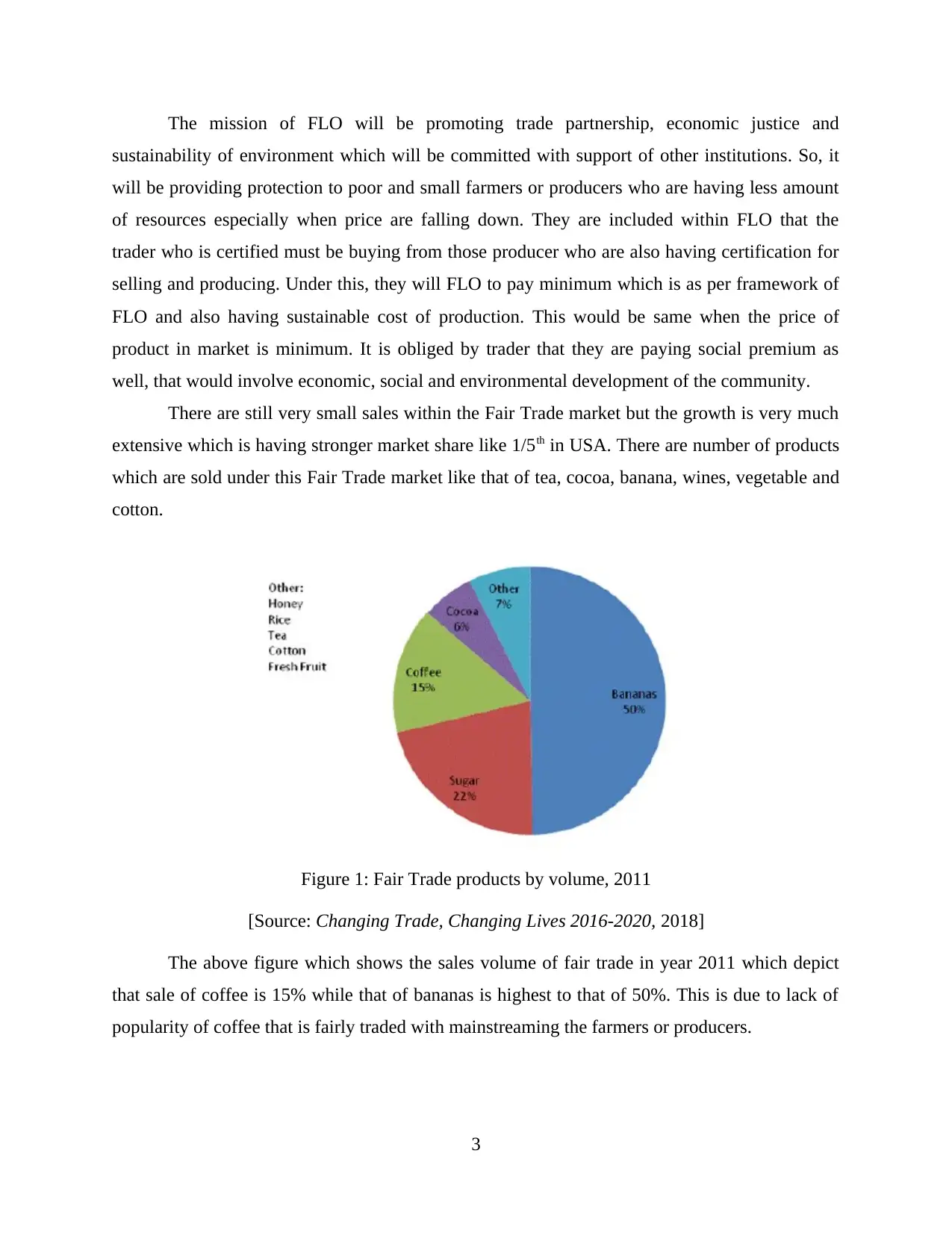
Figure 1: Fair Trade products by volume, 2011
[Source: Changing Trade, Changing Lives 2016-2020, 2018]
The above figure which shows the sales volume of fair trade in year 2011 which depict
that sale of coffee is 15% while that of bananas is highest to that of 50%. This is due to lack of
popularity of coffee that is fairly traded with mainstreaming the farmers or producers.
3
sustainability of environment which will be committed with support of other institutions. So, it
will be providing protection to poor and small farmers or producers who are having less amount
of resources especially when price are falling down. They are included within FLO that the
trader who is certified must be buying from those producer who are also having certification for
selling and producing. Under this, they will FLO to pay minimum which is as per framework of
FLO and also having sustainable cost of production. This would be same when the price of
product in market is minimum. It is obliged by trader that they are paying social premium as
well, that would involve economic, social and environmental development of the community.
There are still very small sales within the Fair Trade market but the growth is very much
extensive which is having stronger market share like 1/5th in USA. There are number of products
which are sold under this Fair Trade market like that of tea, cocoa, banana, wines, vegetable and
cotton.
Figure 1: Fair Trade products by volume, 2011
[Source: Changing Trade, Changing Lives 2016-2020, 2018]
The above figure which shows the sales volume of fair trade in year 2011 which depict
that sale of coffee is 15% while that of bananas is highest to that of 50%. This is due to lack of
popularity of coffee that is fairly traded with mainstreaming the farmers or producers.
3
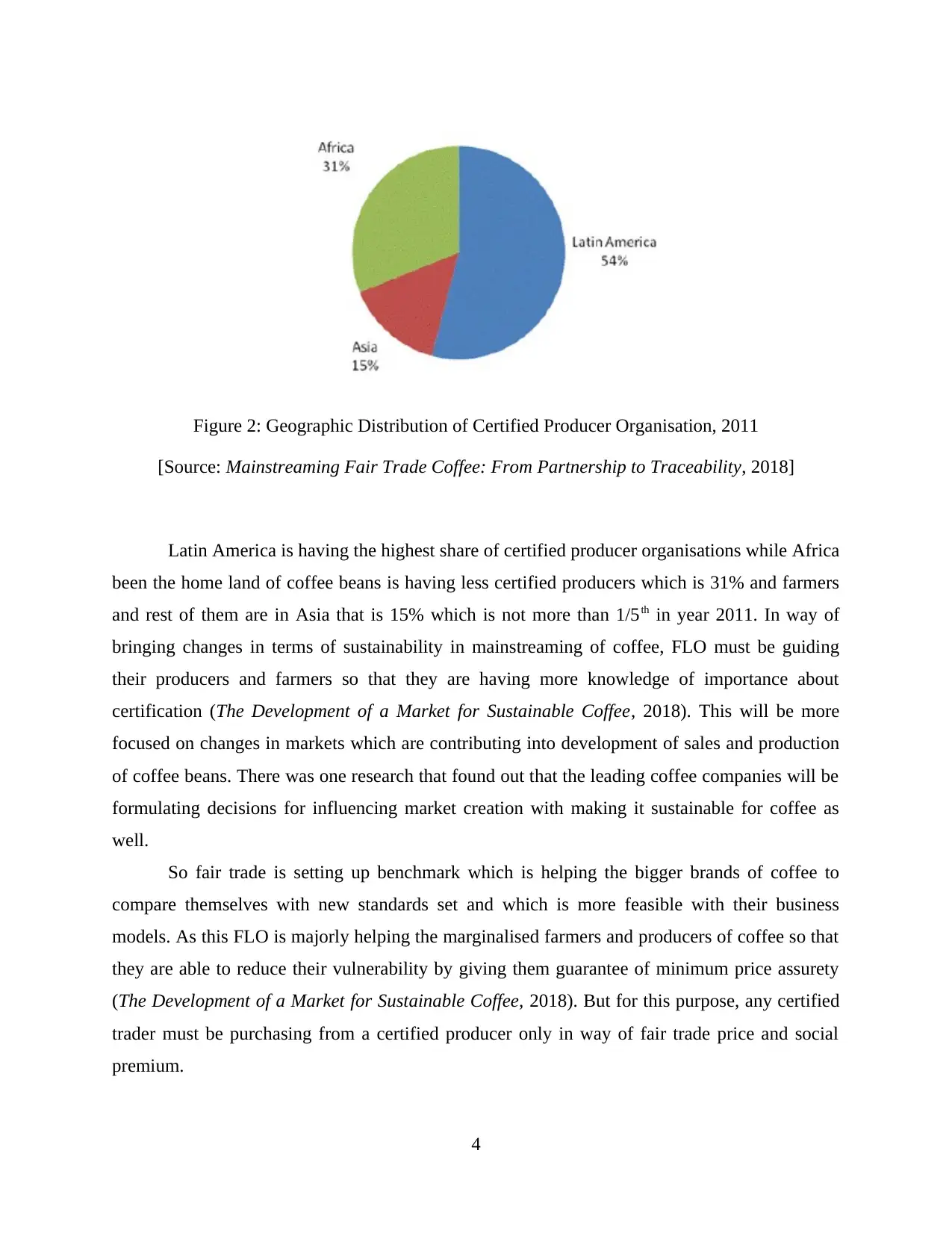
Figure 2: Geographic Distribution of Certified Producer Organisation, 2011
[Source: Mainstreaming Fair Trade Coffee: From Partnership to Traceability, 2018]
Latin America is having the highest share of certified producer organisations while Africa
been the home land of coffee beans is having less certified producers which is 31% and farmers
and rest of them are in Asia that is 15% which is not more than 1/5th in year 2011. In way of
bringing changes in terms of sustainability in mainstreaming of coffee, FLO must be guiding
their producers and farmers so that they are having more knowledge of importance about
certification (The Development of a Market for Sustainable Coffee, 2018). This will be more
focused on changes in markets which are contributing into development of sales and production
of coffee beans. There was one research that found out that the leading coffee companies will be
formulating decisions for influencing market creation with making it sustainable for coffee as
well.
So fair trade is setting up benchmark which is helping the bigger brands of coffee to
compare themselves with new standards set and which is more feasible with their business
models. As this FLO is majorly helping the marginalised farmers and producers of coffee so that
they are able to reduce their vulnerability by giving them guarantee of minimum price assurety
(The Development of a Market for Sustainable Coffee, 2018). But for this purpose, any certified
trader must be purchasing from a certified producer only in way of fair trade price and social
premium.
4
[Source: Mainstreaming Fair Trade Coffee: From Partnership to Traceability, 2018]
Latin America is having the highest share of certified producer organisations while Africa
been the home land of coffee beans is having less certified producers which is 31% and farmers
and rest of them are in Asia that is 15% which is not more than 1/5th in year 2011. In way of
bringing changes in terms of sustainability in mainstreaming of coffee, FLO must be guiding
their producers and farmers so that they are having more knowledge of importance about
certification (The Development of a Market for Sustainable Coffee, 2018). This will be more
focused on changes in markets which are contributing into development of sales and production
of coffee beans. There was one research that found out that the leading coffee companies will be
formulating decisions for influencing market creation with making it sustainable for coffee as
well.
So fair trade is setting up benchmark which is helping the bigger brands of coffee to
compare themselves with new standards set and which is more feasible with their business
models. As this FLO is majorly helping the marginalised farmers and producers of coffee so that
they are able to reduce their vulnerability by giving them guarantee of minimum price assurety
(The Development of a Market for Sustainable Coffee, 2018). But for this purpose, any certified
trader must be purchasing from a certified producer only in way of fair trade price and social
premium.
4
⊘ This is a preview!⊘
Do you want full access?
Subscribe today to unlock all pages.
Trusted by 1+ million students worldwide
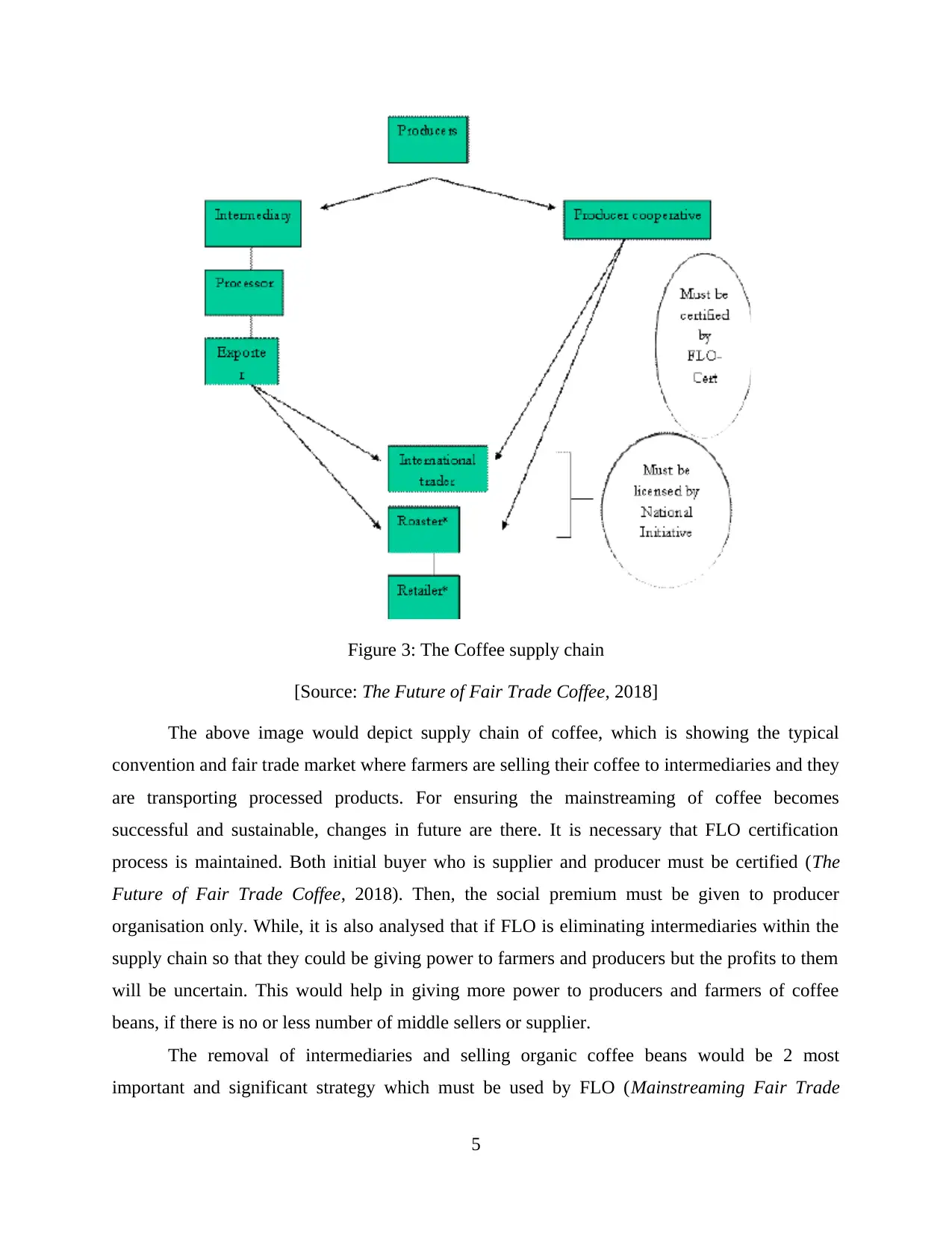
Figure 3: The Coffee supply chain
[Source: The Future of Fair Trade Coffee, 2018]
The above image would depict supply chain of coffee, which is showing the typical
convention and fair trade market where farmers are selling their coffee to intermediaries and they
are transporting processed products. For ensuring the mainstreaming of coffee becomes
successful and sustainable, changes in future are there. It is necessary that FLO certification
process is maintained. Both initial buyer who is supplier and producer must be certified (The
Future of Fair Trade Coffee, 2018). Then, the social premium must be given to producer
organisation only. While, it is also analysed that if FLO is eliminating intermediaries within the
supply chain so that they could be giving power to farmers and producers but the profits to them
will be uncertain. This would help in giving more power to producers and farmers of coffee
beans, if there is no or less number of middle sellers or supplier.
The removal of intermediaries and selling organic coffee beans would be 2 most
important and significant strategy which must be used by FLO (Mainstreaming Fair Trade
5
[Source: The Future of Fair Trade Coffee, 2018]
The above image would depict supply chain of coffee, which is showing the typical
convention and fair trade market where farmers are selling their coffee to intermediaries and they
are transporting processed products. For ensuring the mainstreaming of coffee becomes
successful and sustainable, changes in future are there. It is necessary that FLO certification
process is maintained. Both initial buyer who is supplier and producer must be certified (The
Future of Fair Trade Coffee, 2018). Then, the social premium must be given to producer
organisation only. While, it is also analysed that if FLO is eliminating intermediaries within the
supply chain so that they could be giving power to farmers and producers but the profits to them
will be uncertain. This would help in giving more power to producers and farmers of coffee
beans, if there is no or less number of middle sellers or supplier.
The removal of intermediaries and selling organic coffee beans would be 2 most
important and significant strategy which must be used by FLO (Mainstreaming Fair Trade
5
Paraphrase This Document
Need a fresh take? Get an instant paraphrase of this document with our AI Paraphraser
Coffee: From Partnership to Traceability, 2018). This would be helping in sustainable
development of this fair trade which is more successful in future. The price must be giving
minimum profit to producers or farmers of coffee beans the label of product must be explaining
the meaning of fair trade to its consumer. This would be helpful for customers to support
farming, promot the environment practice and ensuring that all of them are getting complete
benefit from coffee beans. As FLO being responsible for certifying food products also including
coffee as the fair trade, this is because market share of coffee is less than 3.8% and 6.1% of the
speciality coffee market as well.
Conclusion
The discussion is valid that FLO must be contributing into growth and innovation of
farmers and producers of coffee beans. Their main aim is to reach greater number of consumers
so that producers are getting better profits for their production of coffee and the future of fair
trade could be better. The ultimate aim or objective is to provide access to good supplier who
will be giving them good price of their products in way of earning profits with fair trade
movement. But, both supplier and producer must be certified by FLO, so that they could trade
goods and bearing the cost of certification as well. In the fair trade, compromising with the
economic and social standards could not be done as both of them are the most essential part of
this movement. So, it is concluded that FLO must be trying to involve organic coffee into its
dealing with they must be indulging into removing number of intermediaries with supply chain
of coffee market which both are helping to contribute into success of fair trade.
TASK 4
Introduction
Since Industrial Revolution took place in 1820-1840, the average temperature of earth is
increasing as on 1880-2015 which raised to 0.9°C which is 1.5°F. 2016 is recorded to as hottest
year in terms of increased in temperature since the process of record keeping began (Climate
Change Adaptation, 2018). This increase in earth’s normal temperature is due to rise in the
Greenhouse Gas (GHGs) in atmosphere which are like that of Carbon dioxide (CO2), Nitrous
oxide (N2O) and methane (CH4). These would be measured in accordance with emission of these
GHGs. There are many primary sources of these GHGs like that of clearing of forest, burning of
fossil fuels including coal, gas and oil and other agricultural activities or practise.
6
development of this fair trade which is more successful in future. The price must be giving
minimum profit to producers or farmers of coffee beans the label of product must be explaining
the meaning of fair trade to its consumer. This would be helpful for customers to support
farming, promot the environment practice and ensuring that all of them are getting complete
benefit from coffee beans. As FLO being responsible for certifying food products also including
coffee as the fair trade, this is because market share of coffee is less than 3.8% and 6.1% of the
speciality coffee market as well.
Conclusion
The discussion is valid that FLO must be contributing into growth and innovation of
farmers and producers of coffee beans. Their main aim is to reach greater number of consumers
so that producers are getting better profits for their production of coffee and the future of fair
trade could be better. The ultimate aim or objective is to provide access to good supplier who
will be giving them good price of their products in way of earning profits with fair trade
movement. But, both supplier and producer must be certified by FLO, so that they could trade
goods and bearing the cost of certification as well. In the fair trade, compromising with the
economic and social standards could not be done as both of them are the most essential part of
this movement. So, it is concluded that FLO must be trying to involve organic coffee into its
dealing with they must be indulging into removing number of intermediaries with supply chain
of coffee market which both are helping to contribute into success of fair trade.
TASK 4
Introduction
Since Industrial Revolution took place in 1820-1840, the average temperature of earth is
increasing as on 1880-2015 which raised to 0.9°C which is 1.5°F. 2016 is recorded to as hottest
year in terms of increased in temperature since the process of record keeping began (Climate
Change Adaptation, 2018). This increase in earth’s normal temperature is due to rise in the
Greenhouse Gas (GHGs) in atmosphere which are like that of Carbon dioxide (CO2), Nitrous
oxide (N2O) and methane (CH4). These would be measured in accordance with emission of these
GHGs. There are many primary sources of these GHGs like that of clearing of forest, burning of
fossil fuels including coal, gas and oil and other agricultural activities or practise.
6
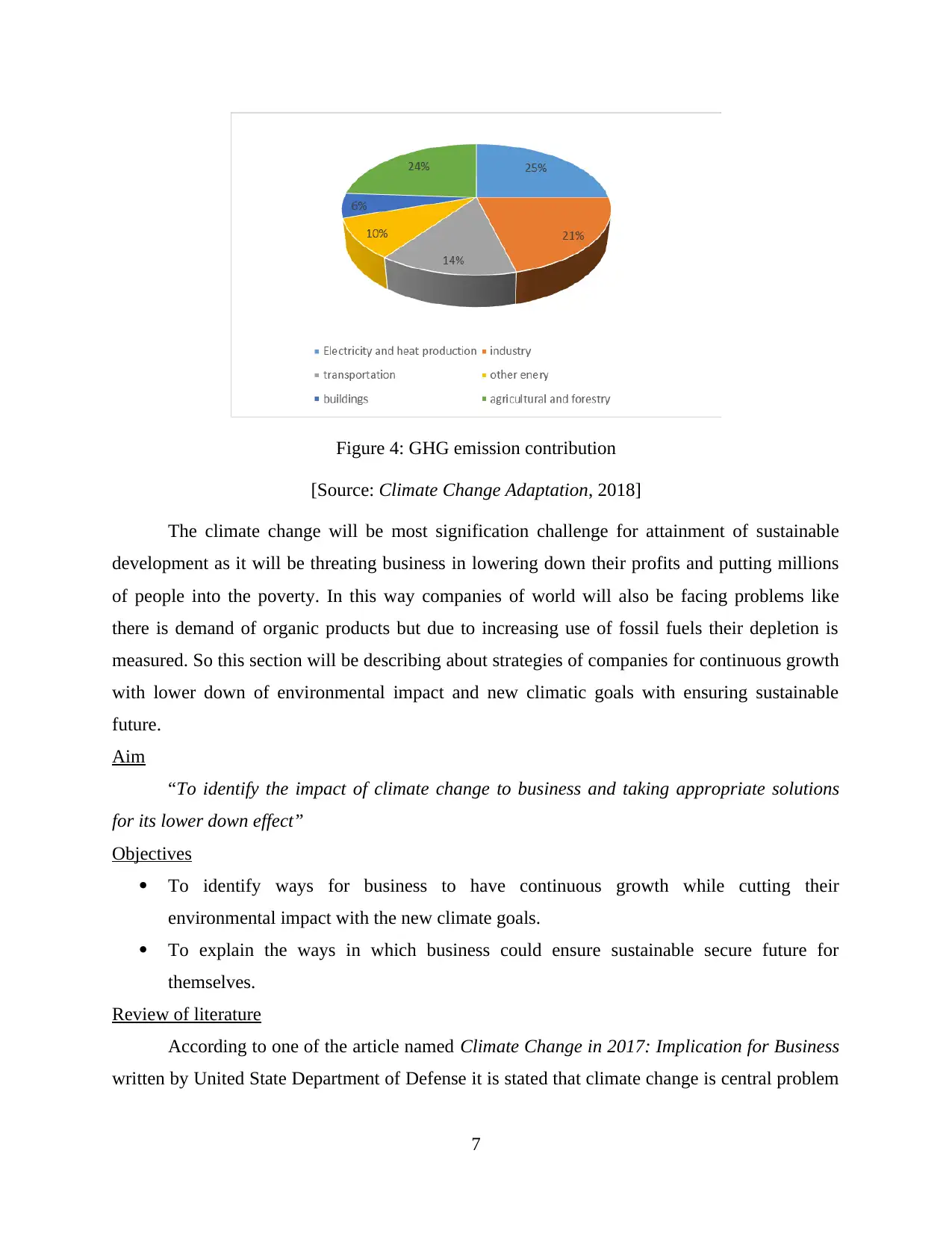
Figure 4: GHG emission contribution
[Source: Climate Change Adaptation, 2018]
The climate change will be most signification challenge for attainment of sustainable
development as it will be threating business in lowering down their profits and putting millions
of people into the poverty. In this way companies of world will also be facing problems like
there is demand of organic products but due to increasing use of fossil fuels their depletion is
measured. So this section will be describing about strategies of companies for continuous growth
with lower down of environmental impact and new climatic goals with ensuring sustainable
future.
Aim
“To identify the impact of climate change to business and taking appropriate solutions
for its lower down effect”
Objectives
To identify ways for business to have continuous growth while cutting their
environmental impact with the new climate goals.
To explain the ways in which business could ensure sustainable secure future for
themselves.
Review of literature
According to one of the article named Climate Change in 2017: Implication for Business
written by United State Department of Defense it is stated that climate change is central problem
7
[Source: Climate Change Adaptation, 2018]
The climate change will be most signification challenge for attainment of sustainable
development as it will be threating business in lowering down their profits and putting millions
of people into the poverty. In this way companies of world will also be facing problems like
there is demand of organic products but due to increasing use of fossil fuels their depletion is
measured. So this section will be describing about strategies of companies for continuous growth
with lower down of environmental impact and new climatic goals with ensuring sustainable
future.
Aim
“To identify the impact of climate change to business and taking appropriate solutions
for its lower down effect”
Objectives
To identify ways for business to have continuous growth while cutting their
environmental impact with the new climate goals.
To explain the ways in which business could ensure sustainable secure future for
themselves.
Review of literature
According to one of the article named Climate Change in 2017: Implication for Business
written by United State Department of Defense it is stated that climate change is central problem
7
⊘ This is a preview!⊘
Do you want full access?
Subscribe today to unlock all pages.
Trusted by 1+ million students worldwide
which is been faced by world in current scenario. This shows that temperature of earth is
increasing each year and this warming is majorly caused due to human emission of GHC which
are the greenhouse gases (How to help your company prepare for climate change in, 2016).
While there is serious discussion all across the world which is including that what must be done
in response to this problem of climate change. But there are many economist who state that in
way of reducing global emission there would be requirement of huge cost and who will be
paying this cost. It is feared that the most of the solutions which are proposed in reducing the
emission will be inefficient and expensive as well (Climate Change in 2017: Implication for
Business, 2016). So it is included that cost of implementing solution of climate changes and their
regulatory changes are included to as major challenges of climate change for private companies.
There are many firms as they are identifying climate change as serious threat on their
sustainability. While there are some other who take this as positive point in promoting
technologies which would be decreasing impact of climate change in way of reducing
greenhouse gas emission and then this could be helpful; for whole world as well. There are many
companies which would be persuading the actions of government while others that of state or
industry and global carbon policies.
As against the above stated reasons of climatic change there are 200 countries of world in
their joint and international statements stated that human activities are the major cause of global
climatic change (BUSINESS RESPONSE TO CLIMATE CHANGE, 2018). The countries like that
of France, Germany, India, Brazil, Italy, Russia, Canada, US, Japan, China, Russia and UK are
the one. Some other researchers include that human factors or activities could not be regarded to
as reason of climate change. There are changes in temperature of ice, ocean and surface which
would be looking out for pattern of warning for the rise in temperature of earth. There are
included many impact of climate change like rising sea levels, changes in pattern of weather,
pressure on food and water, risk of security and politics, risk of human health and impact upon
wildlife and ecosystem. All these impacts will be increasing or rising concentration of GHG and
are also expected to rise.
Rise in sea level- The increase of earth’s temperature will be causing melting of ice
which will ultimately cause rise of sea water and level. The rate of global sea level rise (GSLR)
is increasing from year 1870 to about 3.5 mm every year and till 2100 it would be to 2 meters
(Adapt your business to climate change, 2018). This estimation depends upon greenhouse effects
8
increasing each year and this warming is majorly caused due to human emission of GHC which
are the greenhouse gases (How to help your company prepare for climate change in, 2016).
While there is serious discussion all across the world which is including that what must be done
in response to this problem of climate change. But there are many economist who state that in
way of reducing global emission there would be requirement of huge cost and who will be
paying this cost. It is feared that the most of the solutions which are proposed in reducing the
emission will be inefficient and expensive as well (Climate Change in 2017: Implication for
Business, 2016). So it is included that cost of implementing solution of climate changes and their
regulatory changes are included to as major challenges of climate change for private companies.
There are many firms as they are identifying climate change as serious threat on their
sustainability. While there are some other who take this as positive point in promoting
technologies which would be decreasing impact of climate change in way of reducing
greenhouse gas emission and then this could be helpful; for whole world as well. There are many
companies which would be persuading the actions of government while others that of state or
industry and global carbon policies.
As against the above stated reasons of climatic change there are 200 countries of world in
their joint and international statements stated that human activities are the major cause of global
climatic change (BUSINESS RESPONSE TO CLIMATE CHANGE, 2018). The countries like that
of France, Germany, India, Brazil, Italy, Russia, Canada, US, Japan, China, Russia and UK are
the one. Some other researchers include that human factors or activities could not be regarded to
as reason of climate change. There are changes in temperature of ice, ocean and surface which
would be looking out for pattern of warning for the rise in temperature of earth. There are
included many impact of climate change like rising sea levels, changes in pattern of weather,
pressure on food and water, risk of security and politics, risk of human health and impact upon
wildlife and ecosystem. All these impacts will be increasing or rising concentration of GHG and
are also expected to rise.
Rise in sea level- The increase of earth’s temperature will be causing melting of ice
which will ultimately cause rise of sea water and level. The rate of global sea level rise (GSLR)
is increasing from year 1870 to about 3.5 mm every year and till 2100 it would be to 2 meters
(Adapt your business to climate change, 2018). This estimation depends upon greenhouse effects
8
Paraphrase This Document
Need a fresh take? Get an instant paraphrase of this document with our AI Paraphraser
and warming of air or water of oceans as well. About 1.7 million people of Pacific are expected
to migrate like that of Fiji which would be due to rise in sea levels by 2050.
Changes in pattern of weather- There are not solid evidence of this impact but then also
it is noted that rate of water evaporation is slightly changing, then in precipitation which is
becoming low and pressure is increasing resulting in changes with pattern of rainfall in whole
world. But this is not the same case in all countries of world as some of them are experiencing
heavy rainfall and others are having extreme level of droughts.
Figure 5: Climate change
[Source: Environmentally-friendly business is profitable business, 2018]
Pressure on food and water- It was witnessed that only 16% of total croplands were
irrigated in 2014 while those were producing 36% of global harvest in same year. There are
shortage of water in areas which are agricultural namely India and Pakistan which is threating
the sustainability of agricultural into this region. Global production of food is also impacted by
increase in temperature, weather condition and increase level of CO2.
Risk of security and politics- Political instability is also somewhere linked with changes
in climate like in case of countries like that of India, Argentina. The price of food increase in
these countries during the time of 2007-2008 which were called to as food riots so this caused
9
to migrate like that of Fiji which would be due to rise in sea levels by 2050.
Changes in pattern of weather- There are not solid evidence of this impact but then also
it is noted that rate of water evaporation is slightly changing, then in precipitation which is
becoming low and pressure is increasing resulting in changes with pattern of rainfall in whole
world. But this is not the same case in all countries of world as some of them are experiencing
heavy rainfall and others are having extreme level of droughts.
Figure 5: Climate change
[Source: Environmentally-friendly business is profitable business, 2018]
Pressure on food and water- It was witnessed that only 16% of total croplands were
irrigated in 2014 while those were producing 36% of global harvest in same year. There are
shortage of water in areas which are agricultural namely India and Pakistan which is threating
the sustainability of agricultural into this region. Global production of food is also impacted by
increase in temperature, weather condition and increase level of CO2.
Risk of security and politics- Political instability is also somewhere linked with changes
in climate like in case of countries like that of India, Argentina. The price of food increase in
these countries during the time of 2007-2008 which were called to as food riots so this caused
9
instability of political condition (What business can do for sustainable development, 2018). Then
the war of Syria and Somalia were both closely linked with famine and drought which were
caused by climatic change.
Risk of human health- There are chance of rise of the disease and injury that are leading
to death due to higher temperature. In year 2003 there were 70000 people who died in heat wave
of Europe, then in 50000 died in 2010 within Russia. The vector and water borne disease are
increasing which is due to insects and other carriers who are carrying these disease into higher
latitudes.
Impact upon wildlife and ecosystem- This is the most affected areas of world wildlife
area been put into risk of getting extinct in the coming century. The extinctions rates are 100
times more than that of normal rates which seems to be heading the world towards the 6th mass
extinction event very soon which is also called to as Holocene extinction. It was estimated that
till 2100 about 30-50% of total land and marine animal species will be getting extinct. As the
change of climate will be having its significant effect on oceans and marine life as well, the
temperature of earth over last 100 years is raise to about 0.74°C. This is making sea water more
acidic impacting survival and reproduction of animals of water which is all due to change in
climate of earth (Climate Change: A Conceptual Framework, 2018). Apart from this there are
about 1 billion population of whole world who are depending upon sea food on their daily life
bases like that of coral reef which is their prime source of protein as well.
Critical review of questions
Business continue to grow while cutting their environmental impact in line with new climate
goals
According to Branzei, Russell and Whiteman, (2017) there are many implication of
climatic changes on business and other wide range like that of wildlife, food, sea level, human
health and security risk as well. This changes in climate will be affecting business in number of
ways especially the unpredictable change in weather impact directly on activities of business like
that risk of shortage of water or that of flooding. Thus it will be causing disturbance to company
and insurance will be difficult to obtain. Other than these the measures which central or state
government are taking in view of decreasing impact of GHG will also be impacting business or
decisions taken. This will include climate change agreements if the company is in energy
10
the war of Syria and Somalia were both closely linked with famine and drought which were
caused by climatic change.
Risk of human health- There are chance of rise of the disease and injury that are leading
to death due to higher temperature. In year 2003 there were 70000 people who died in heat wave
of Europe, then in 50000 died in 2010 within Russia. The vector and water borne disease are
increasing which is due to insects and other carriers who are carrying these disease into higher
latitudes.
Impact upon wildlife and ecosystem- This is the most affected areas of world wildlife
area been put into risk of getting extinct in the coming century. The extinctions rates are 100
times more than that of normal rates which seems to be heading the world towards the 6th mass
extinction event very soon which is also called to as Holocene extinction. It was estimated that
till 2100 about 30-50% of total land and marine animal species will be getting extinct. As the
change of climate will be having its significant effect on oceans and marine life as well, the
temperature of earth over last 100 years is raise to about 0.74°C. This is making sea water more
acidic impacting survival and reproduction of animals of water which is all due to change in
climate of earth (Climate Change: A Conceptual Framework, 2018). Apart from this there are
about 1 billion population of whole world who are depending upon sea food on their daily life
bases like that of coral reef which is their prime source of protein as well.
Critical review of questions
Business continue to grow while cutting their environmental impact in line with new climate
goals
According to Branzei, Russell and Whiteman, (2017) there are many implication of
climatic changes on business and other wide range like that of wildlife, food, sea level, human
health and security risk as well. This changes in climate will be affecting business in number of
ways especially the unpredictable change in weather impact directly on activities of business like
that risk of shortage of water or that of flooding. Thus it will be causing disturbance to company
and insurance will be difficult to obtain. Other than these the measures which central or state
government are taking in view of decreasing impact of GHG will also be impacting business or
decisions taken. This will include climate change agreements if the company is in energy
10
⊘ This is a preview!⊘
Do you want full access?
Subscribe today to unlock all pages.
Trusted by 1+ million students worldwide

1 out of 19


Related Documents


Your All-in-One AI-Powered Toolkit for Academic Success.
+13062052269
info@desklib.com
Available 24*7 on WhatsApp / Email
![[object Object]](/_next/static/media/star-bottom.7253800d.svg)
Unlock your academic potential
Copyright © 2020–2026 A2Z Services. All Rights Reserved. Developed and managed by ZUCOL.