Marketing Research Report: Primary, Secondary, and Analytical Tools
VerifiedAdded on  2019/10/09
|7
|1255
|438
Report
AI Summary
This report provides a comprehensive overview of marketing research, differentiating between primary and secondary research methods. It explores various sources of marketing information, categorizing them into internal and external sources, and further dividing external sources into primary and secondary data. The report details the presentation of qualitative and quantitative information, outlining methods such as surveys, interviews, and observations. Additionally, it delves into analytical tools for sales analysis, market size, and demand forecasting, emphasizing the importance of these tools in understanding customer needs and market dynamics. Finally, the report discusses the suitability, relevance, validity, and reliability of market information, highlighting the significance of up-to-date and relevant data for effective marketing strategies.
Gathering
Marketing
Research
STUDENT NAME
Institution
Marketing
Research
STUDENT NAME
Institution
Paraphrase This Document
Need a fresh take? Get an instant paraphrase of this document with our AI Paraphraser

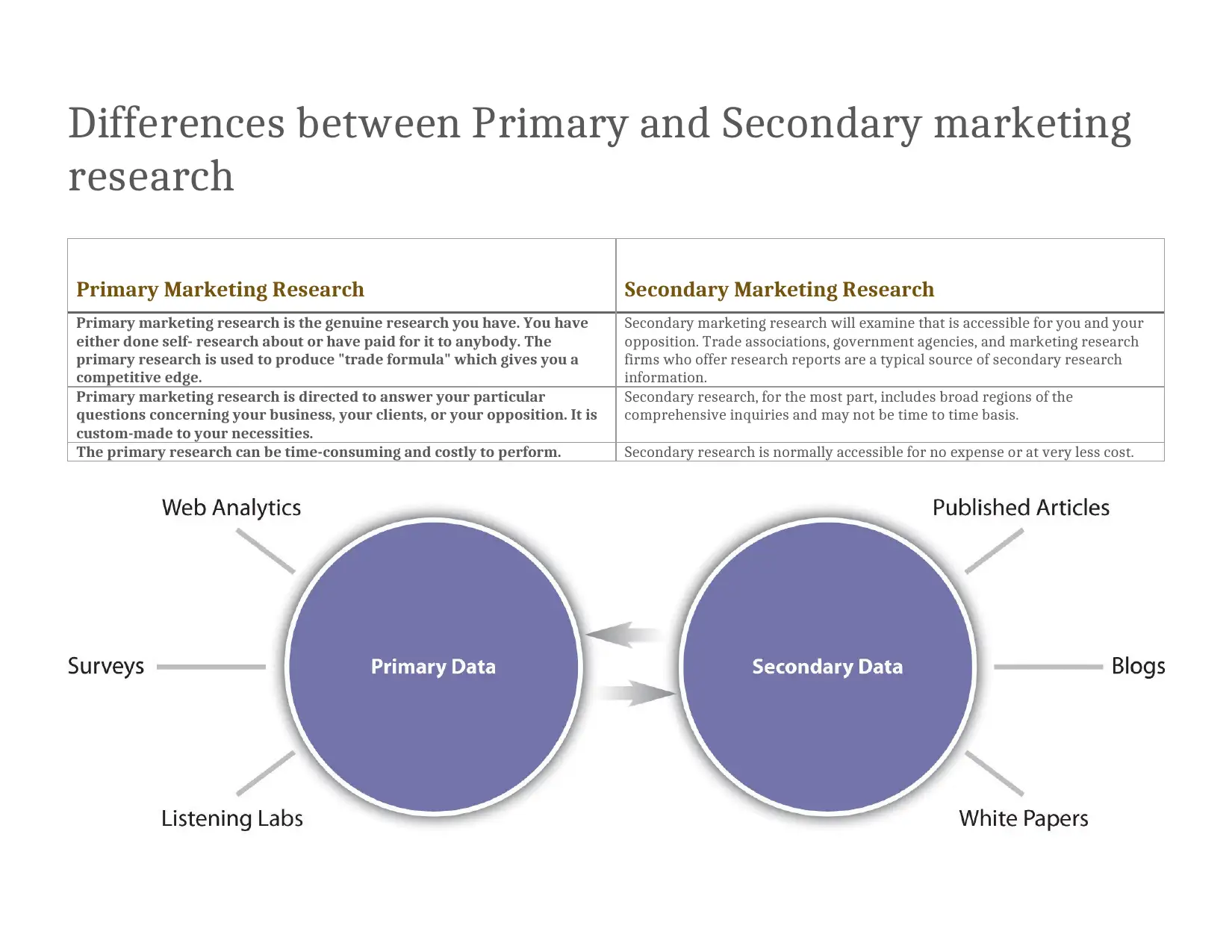
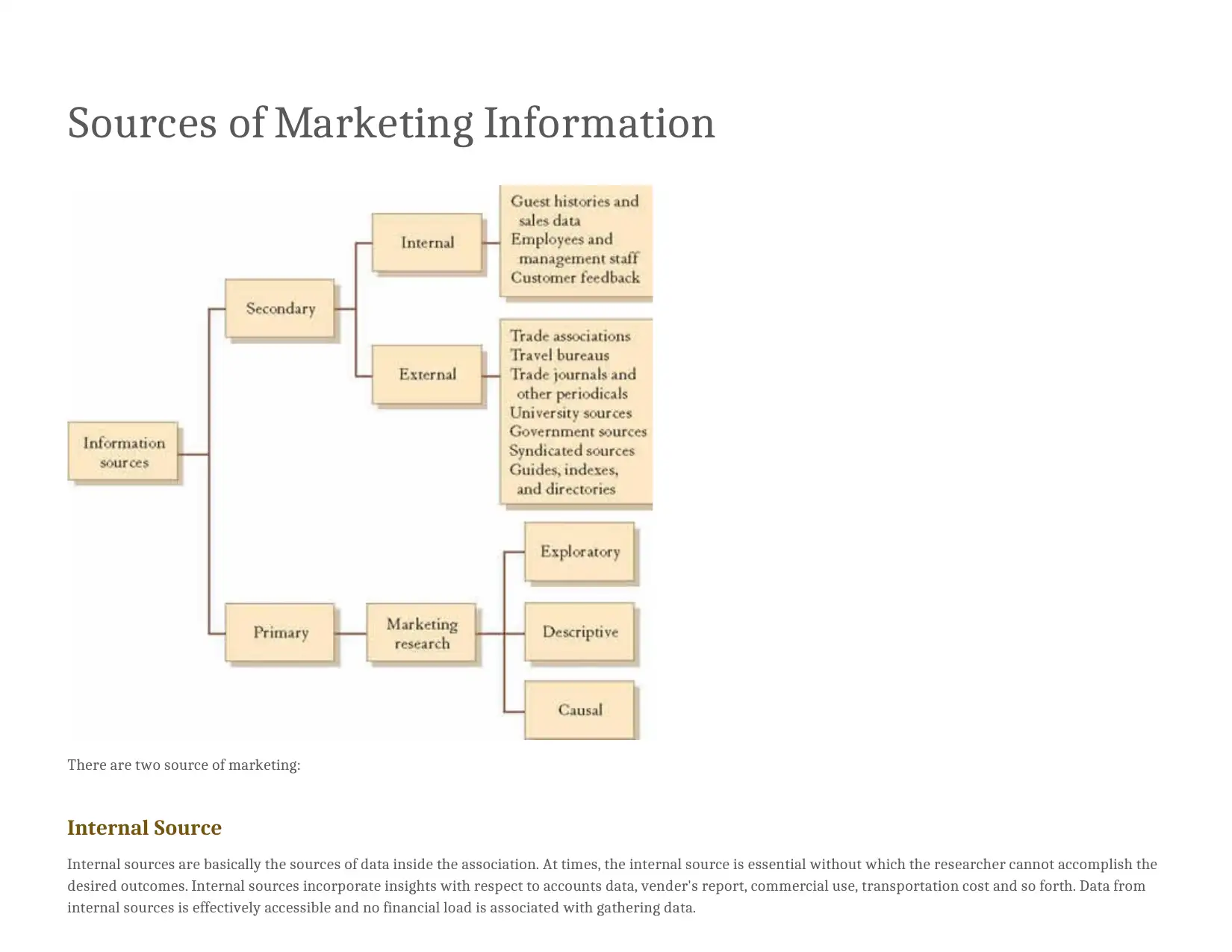
Differences between Primary and Secondary marketing
research
Primary Marketing Research Secondary Marketing Research
Primary marketing research is the genuine research you have. You have
either done self- research about or have paid for it to anybody. The
primary research is used to produce "trade formula" which gives you a
competitive edge.
Secondary marketing research will examine that is accessible for you and your
opposition. Trade associations, government agencies, and marketing research
firms who offer research reports are a typical source of secondary research
information.
Primary marketing research is directed to answer your particular
questions concerning your business, your clients, or your opposition. It is
custom-made to your necessities.
Secondary research, for the most part, includes broad regions of the
comprehensive inquiries and may not be time to time basis.
The primary research can be time-consuming and costly to perform. Secondary research is normally accessible for no expense or at very less cost.
research
Primary Marketing Research Secondary Marketing Research
Primary marketing research is the genuine research you have. You have
either done self- research about or have paid for it to anybody. The
primary research is used to produce "trade formula" which gives you a
competitive edge.
Secondary marketing research will examine that is accessible for you and your
opposition. Trade associations, government agencies, and marketing research
firms who offer research reports are a typical source of secondary research
information.
Primary marketing research is directed to answer your particular
questions concerning your business, your clients, or your opposition. It is
custom-made to your necessities.
Secondary research, for the most part, includes broad regions of the
comprehensive inquiries and may not be time to time basis.
The primary research can be time-consuming and costly to perform. Secondary research is normally accessible for no expense or at very less cost.

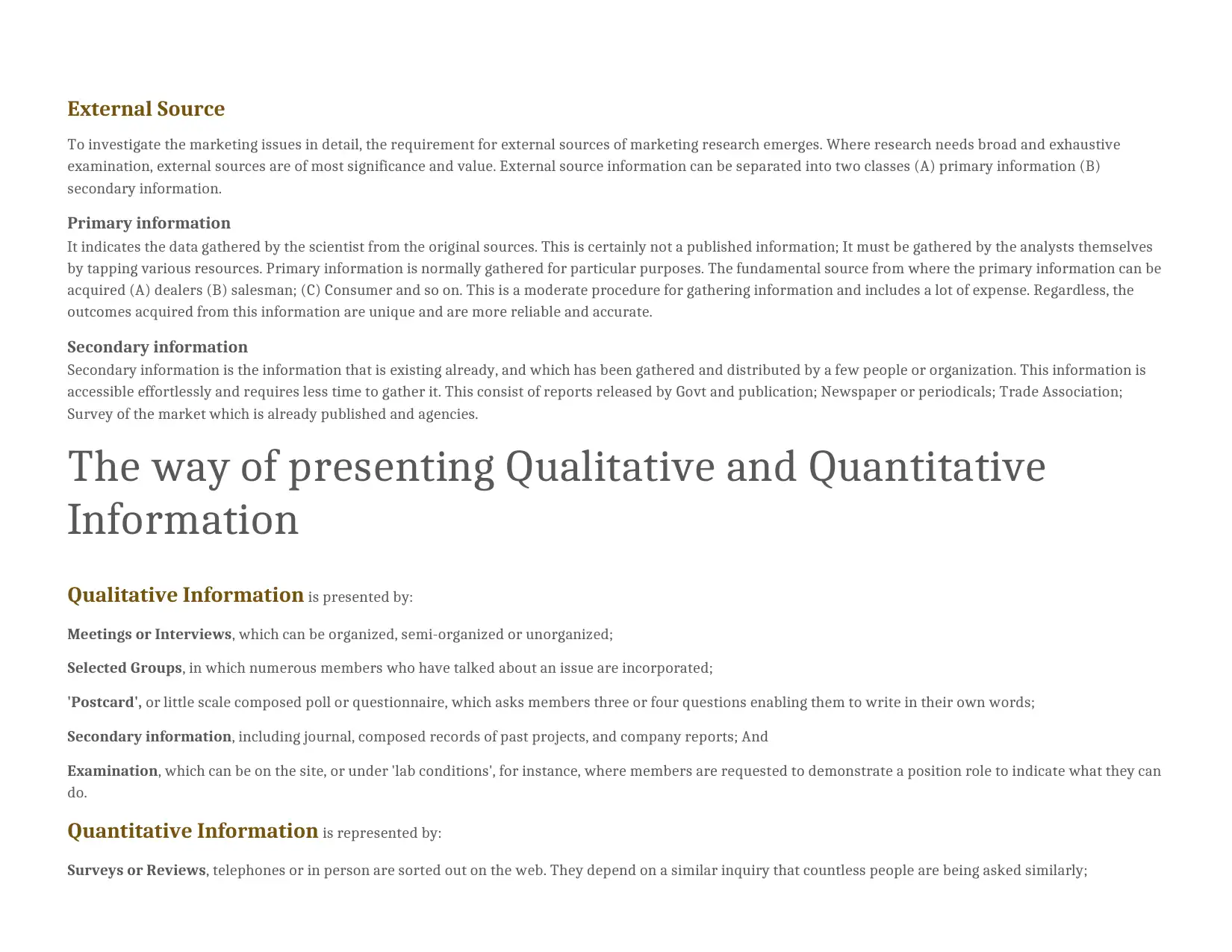
Sources of Marketing Information
There are two source of marketing:
Internal Source
Internal sources are basically the sources of data inside the association. At times, the internal source is essential without which the researcher cannot accomplish the
desired outcomes. Internal sources incorporate insights with respect to accounts data, vender's report, commercial use, transportation cost and so forth. Data from
internal sources is effectively accessible and no financial load is associated with gathering data.
There are two source of marketing:
Internal Source
Internal sources are basically the sources of data inside the association. At times, the internal source is essential without which the researcher cannot accomplish the
desired outcomes. Internal sources incorporate insights with respect to accounts data, vender's report, commercial use, transportation cost and so forth. Data from
internal sources is effectively accessible and no financial load is associated with gathering data.
⊘ This is a preview!⊘
Do you want full access?
Subscribe today to unlock all pages.

Trusted by 1+ million students worldwide

External Source
To investigate the marketing issues in detail, the requirement for external sources of marketing research emerges. Where research needs broad and exhaustive
examination, external sources are of most significance and value. External source information can be separated into two classes (A) primary information (B)
secondary information.
Primary information
It indicates the data gathered by the scientist from the original sources. This is certainly not a published information; It must be gathered by the analysts themselves
by tapping various resources. Primary information is normally gathered for particular purposes. The fundamental source from where the primary information can be
acquired (A) dealers (B) salesman; (C) Consumer and so on. This is a moderate procedure for gathering information and includes a lot of expense. Regardless, the
outcomes acquired from this information are unique and are more reliable and accurate.
Secondary information
Secondary information is the information that is existing already, and which has been gathered and distributed by a few people or organization. This information is
accessible effortlessly and requires less time to gather it. This consist of reports released by Govt and publication; Newspaper or periodicals; Trade Association;
Survey of the market which is already published and agencies.
The way of presenting Qualitative and Quantitative
Information
Qualitative Information is presented by:
Meetings or Interviews, which can be organized, semi-organized or unorganized;
Selected Groups, in which numerous members who have talked about an issue are incorporated;
'Postcard', or little scale composed poll or questionnaire, which asks members three or four questions enabling them to write in their own words;
Secondary information, including journal, composed records of past projects, and company reports; And
Examination, which can be on the site, or under 'lab conditions', for instance, where members are requested to demonstrate a position role to indicate what they can
do.
Quantitative Information is represented by:
Surveys or Reviews, telephones or in person are sorted out on the web. They depend on a similar inquiry that countless people are being asked similarly;
To investigate the marketing issues in detail, the requirement for external sources of marketing research emerges. Where research needs broad and exhaustive
examination, external sources are of most significance and value. External source information can be separated into two classes (A) primary information (B)
secondary information.
Primary information
It indicates the data gathered by the scientist from the original sources. This is certainly not a published information; It must be gathered by the analysts themselves
by tapping various resources. Primary information is normally gathered for particular purposes. The fundamental source from where the primary information can be
acquired (A) dealers (B) salesman; (C) Consumer and so on. This is a moderate procedure for gathering information and includes a lot of expense. Regardless, the
outcomes acquired from this information are unique and are more reliable and accurate.
Secondary information
Secondary information is the information that is existing already, and which has been gathered and distributed by a few people or organization. This information is
accessible effortlessly and requires less time to gather it. This consist of reports released by Govt and publication; Newspaper or periodicals; Trade Association;
Survey of the market which is already published and agencies.
The way of presenting Qualitative and Quantitative
Information
Qualitative Information is presented by:
Meetings or Interviews, which can be organized, semi-organized or unorganized;
Selected Groups, in which numerous members who have talked about an issue are incorporated;
'Postcard', or little scale composed poll or questionnaire, which asks members three or four questions enabling them to write in their own words;
Secondary information, including journal, composed records of past projects, and company reports; And
Examination, which can be on the site, or under 'lab conditions', for instance, where members are requested to demonstrate a position role to indicate what they can
do.
Quantitative Information is represented by:
Surveys or Reviews, telephones or in person are sorted out on the web. They depend on a similar inquiry that countless people are being asked similarly;
Paraphrase This Document
Need a fresh take? Get an instant paraphrase of this document with our AI Paraphraser

Observation, which can either be associated with counting the number of events of a specific occasion, for example, how frequently a specific word is utilized in the
meeting, or observation information is coded to convert into numbers; And
Secondary information, for example, organization accounts
Analytical tools for Sales
Analysis of needs that are not met
Business is all about addressing the necessities of clients. Needs that are not met need Analytics is the need to feature whether there is a neglected need around your
services or products or in your market, which you can meet to expand consumer loyalty and income. Helpful tools for not met investigation incorporate qualitative
surveys, focus groups, and interviews. You can also utilize tools like Google Trends to enable find to out what clients are hunting down.
For Example: Presently it is exceptionally cheap and quick to make inquiries to your clients. Make a discussion and online forum or welcome your clients to like their
Facebook page and join the critic's groups.
Analytics for Market Size
In a case that you don't know the size and capability of your market then you can undoubtedly conclude how feasible your business offer is. Market Size Analytics is
the way toward working at how enormous the market is for your services and products, and whether there is adequate sufficient potential. Market size is measured
in frequency, volume or value. It includes data from a trade association, government report and customer surveys.
For example: Although the size of the market is very large, this does not mean that it is profitable; like if already a smartphone have then it is very unlikely that I will
buy another one.
Demand Forecasting
It is important to know the demand for being competitive. The demand forecasting is a tool of predictive investigation that is used to evaluate the number of services
or products your clients are probably going to purchase. It is beyond guesses and monitors the current information from the historical market information or test
markets. Diagnostic methods, for example, time series analysis can be extremely helpful here.
For Example The store builds its load of a few things during the hurricane season since they know from the past information that the demand used to increase.
meeting, or observation information is coded to convert into numbers; And
Secondary information, for example, organization accounts
Analytical tools for Sales
Analysis of needs that are not met
Business is all about addressing the necessities of clients. Needs that are not met need Analytics is the need to feature whether there is a neglected need around your
services or products or in your market, which you can meet to expand consumer loyalty and income. Helpful tools for not met investigation incorporate qualitative
surveys, focus groups, and interviews. You can also utilize tools like Google Trends to enable find to out what clients are hunting down.
For Example: Presently it is exceptionally cheap and quick to make inquiries to your clients. Make a discussion and online forum or welcome your clients to like their
Facebook page and join the critic's groups.
Analytics for Market Size
In a case that you don't know the size and capability of your market then you can undoubtedly conclude how feasible your business offer is. Market Size Analytics is
the way toward working at how enormous the market is for your services and products, and whether there is adequate sufficient potential. Market size is measured
in frequency, volume or value. It includes data from a trade association, government report and customer surveys.
For example: Although the size of the market is very large, this does not mean that it is profitable; like if already a smartphone have then it is very unlikely that I will
buy another one.
Demand Forecasting
It is important to know the demand for being competitive. The demand forecasting is a tool of predictive investigation that is used to evaluate the number of services
or products your clients are probably going to purchase. It is beyond guesses and monitors the current information from the historical market information or test
markets. Diagnostic methods, for example, time series analysis can be extremely helpful here.
For Example The store builds its load of a few things during the hurricane season since they know from the past information that the demand used to increase.

Analysis of the suitability, relevance, validity and
reliability of market information
Suitability
A market strategy which is suitable that meets a firm's, and often legitimate, criteria, that a strategy of marketing is suitable for the hazard tolerances and methods
for a client or investor.
Relevance
A market strategy should be relevance, it should have usefulness to what it is being made for.
Validity
Validity indicates the measurement scale capability to measure what it is meant to measure, and degrees that are free of random and systematic mistake.
Reliability
Reliability is characterized as the degree on which the estimation is free from error and gives steady outcomes after some time. There are three ways to deal with
assessing reliability:
1. Equivalent form reliability
2. Test Reset Reliability
3. Internal Consistency Reliability
reliability of market information
Suitability
A market strategy which is suitable that meets a firm's, and often legitimate, criteria, that a strategy of marketing is suitable for the hazard tolerances and methods
for a client or investor.
Relevance
A market strategy should be relevance, it should have usefulness to what it is being made for.
Validity
Validity indicates the measurement scale capability to measure what it is meant to measure, and degrees that are free of random and systematic mistake.
Reliability
Reliability is characterized as the degree on which the estimation is free from error and gives steady outcomes after some time. There are three ways to deal with
assessing reliability:
1. Equivalent form reliability
2. Test Reset Reliability
3. Internal Consistency Reliability
⊘ This is a preview!⊘
Do you want full access?
Subscribe today to unlock all pages.

Trusted by 1+ million students worldwide

Up-to-date and relevant market information
2
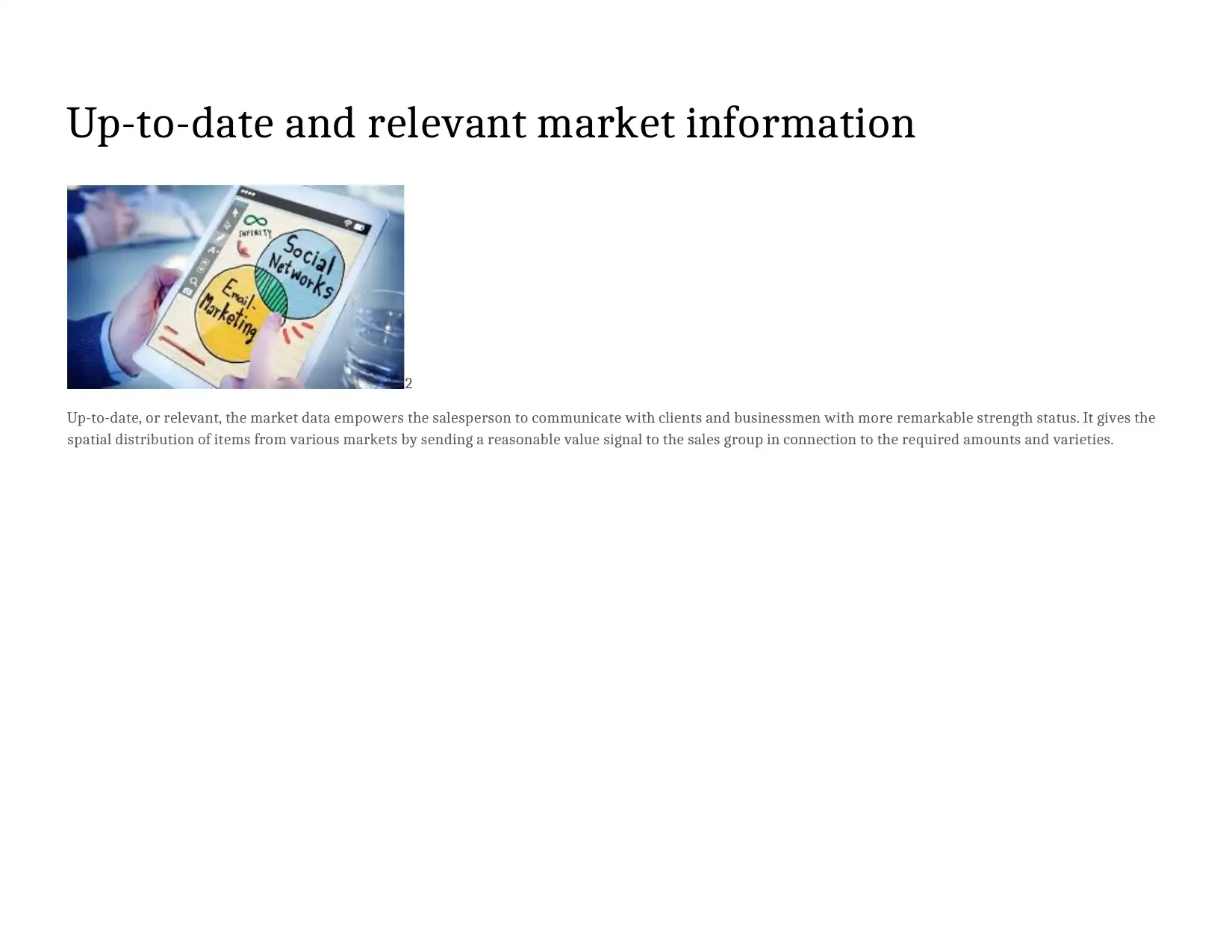
Up-to-date, or relevant, the market data empowers the salesperson to communicate with clients and businessmen with more remarkable strength status. It gives the
spatial distribution of items from various markets by sending a reasonable value signal to the sales group in connection to the required amounts and varieties.
2
Up-to-date, or relevant, the market data empowers the salesperson to communicate with clients and businessmen with more remarkable strength status. It gives the
spatial distribution of items from various markets by sending a reasonable value signal to the sales group in connection to the required amounts and varieties.
1 out of 7
Related Documents
Your All-in-One AI-Powered Toolkit for Academic Success.
 +13062052269
info@desklib.com
Available 24*7 on WhatsApp / Email
Unlock your academic potential
Copyright © 2020–2026 A2Z Services. All Rights Reserved. Developed and managed by ZUCOL.