DMD Case Study: Genetic Counseling and Inheritance Patterns

Verified

Added on  2021/10/29

|7
|1322
|194
Case Study
AI Summary
This case study presents a detailed analysis of a family affected by Duchenne Muscular Dystrophy (DMD), an X-linked genetic disorder. The assignment begins with a pedigree chart based on limited family information and then addresses key questions regarding the genetic basis of DMD, its inheritance patterns, and the implications for family members. The student provides genetic counseling recommendations, explaining the 50% chance of a daughter being a carrier and the importance of genetic testing. The response covers the incidence of DMD, the role of the dystrophin gene, clinical presentations, and the importance of testing the daughter's carrier status. It outlines DNA testing methods (duplication/deletion and sequencing) for diagnosis and discusses resources for DMD information, including websites and programs like the Decode Duchenne program. The student emphasizes the need for genetic testing and counseling to help families understand and manage the risks associated with DMD.
Document Page
Running head: GENETICS CASE STUDY ON DMD 1
Genetics case study on DMD
Name of the Student
Name of the University
Author Note
tabler-icon-diamond-filled.svg

Paraphrase This Document

Need a fresh take? Get an instant paraphrase of this document with our AI Paraphraser
Document Page
GENETICS CASE STUDY ON DMD 2
Genetics case study on DMD
Answer for the activity 1:
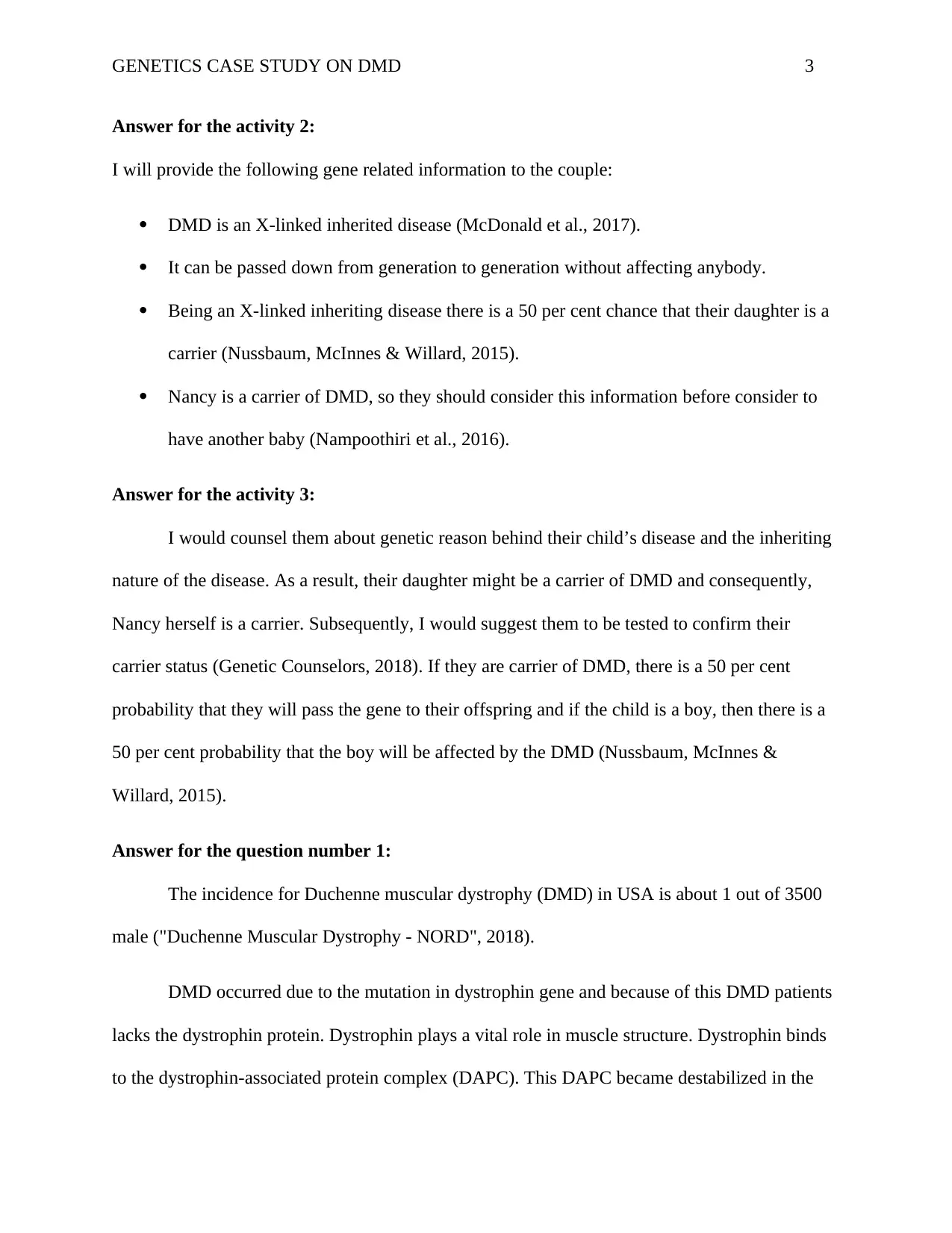
Figure 1: Pedigree drawing of Nancy and Tom’s Family
In this pedigree drawing (Figure 1), going back two generation from proband is not
possible because of inadequate data as no further information was not provided by Nancy and
Tom.
Very little information is provided by Nancy and Tom for this pedigree chart. Little to no
information is provided about Nancy’s family side. No name, age or family complications
(related to disease) were mentioned to the doctor of nursing practice. Hence, above mentioned
information is needed to make this pedigree chart more informative.
Document Page
GENETICS CASE STUDY ON DMD 3
Answer for the activity 2:
I will provide the following gene related information to the couple:
DMD is an X-linked inherited disease (McDonald et al., 2017).
It can be passed down from generation to generation without affecting anybody.
Being an X-linked inheriting disease there is a 50 per cent chance that their daughter is a
carrier (Nussbaum, McInnes & Willard, 2015).
Nancy is a carrier of DMD, so they should consider this information before consider to
have another baby (Nampoothiri et al., 2016).
Answer for the activity 3:
I would counsel them about genetic reason behind their child’s disease and the inheriting
nature of the disease. As a result, their daughter might be a carrier of DMD and consequently,
Nancy herself is a carrier. Subsequently, I would suggest them to be tested to confirm their
carrier status (Genetic Counselors, 2018). If they are carrier of DMD, there is a 50 per cent
probability that they will pass the gene to their offspring and if the child is a boy, then there is a
50 per cent probability that the boy will be affected by the DMD (Nussbaum, McInnes &
Willard, 2015).
Answer for the question number 1:
The incidence for Duchenne muscular dystrophy (DMD) in USA is about 1 out of 3500
male ("Duchenne Muscular Dystrophy - NORD", 2018).
DMD occurred due to the mutation in dystrophin gene and because of this DMD patients
lacks the dystrophin protein. Dystrophin plays a vital role in muscle structure. Dystrophin binds
to the dystrophin-associated protein complex (DAPC). This DAPC became destabilized in the
Document Page
GENETICS CASE STUDY ON DMD 4
absence of dystrophin which in turn leads to the diminished level of member proteins. This leads
to the gradual membrane leakage and fibre damage which contributes to the pathogenesis of the
DMD patients (Nussbaum, McInnes & Willard, 2015).
Clinical presentation of DMD includes weakness, growth delay, behavioural and
cognitive disorder, elevated tranaminases and CK, and orthopaedic complications.
Patient with DMD became wheelchair dependent at the age of 12 years. Very few patient
with DMD survive beyond the age of 30. The median age for DMD patient is 19 years
(Landfeldt et al., 2017).
Answer to the question number 2:
Nancy and Tom should test their daughter’s carrier status. Their daughter has a 50 per
cent chance of being a carrier and she can passed the mutation to her offspring and if her
offspring is a boy, then there is a 50% chance that he will have the disease (Nussbaum, McInnes
& Willard, 2015). Hence, it is important to check their daughter’s carrier status. Additionally,
carriers have a higher chance of heart problem. Thus, if she is a carrier, she should be checked up
a doctor regularly.
DMD is an X-linked inherited pattern which can be passed through from parent to child.
Hence, Nancy and Tom’s daughter should check her carrier status before planning to have a baby
(Nampoothiri et al., 2016).
Answer to the question number 3
DNA test will be very informative for Nancy to better predict the risk of having another
affected son as it will confirm the genetic mutation in the DMD gene.
tabler-icon-diamond-filled.svg

Paraphrase This Document

Need a fresh take? Get an instant paraphrase of this document with our AI Paraphraser
Document Page
GENETICS CASE STUDY ON DMD 5
Currently, DNA testing for DMD gene performed in two method which are duplication or
deletion and sequencing. The test is performed by collecting blood samples from the patients.
Duplication or deletion method searches for significant changes in gene and sequencing method
finds the instruction of the DMD gene. By performing this two methods together, the disease can
be detected in 95 per cent of patients (Coote et al., 2018).
Answer to the question number 4
They should test for dystropin mutation during an ongoing pregnancy.
Decode Duchenne program of PPMD (Parent Project Muscular Dystrophy) offers free
genetic sample to the qualified applicants. Also, an individual can contact a genetic counsellor by
contacting DuchenneConnect Coordinators (Common Questions, 2018).
Answer to the question number 5
There are various resources available for DMD and DMD testing. Most reliable of them
is National Human Genome Research Institute’s information about DMD (Learning About
Duchenne Muscular Dystrophy, 2018). Apart from that, official website of Duchenne.com
(Home, 2018) and Parent Project Muscular Dystrophy (Parent Project Muscular Dystrophy
(PPMD) | Fighting to End Duchenne, 2018) are also very reliable.
Document Page
GENETICS CASE STUDY ON DMD 6
References
Common Questions. (2018). Retrieved from https://www.duchenne.com/questions#question-
genetic-testing
Coote, D. J., Davis, M. R., Cabrera, M., Needham, M., Laing, N. G., & Nowak, K. J. (2018).
CUGC for Duchenne muscular dystrophy (DMD). European Journal of Human Genetics,
1.
Duchenne Muscular Dystrophy - NORD. (2018). Retrieved from https://rarediseases.org/rare-
diseases/duchenne-muscular-dystrophy/
Genetic Counselors. (2018). Retrieved from
https://learn.genetics.utah.edu/content/disorders/counselors/
Home. (2018). Retrieved from https://www.duchenne.com/
Landfeldt, E., Eagle, M., Straub, V., Lochmüller, H., Bushby, K., & Lindgren, P. (2017).
Mortality cost of Duchenne muscular dystrophy. Global & Regional Health Technology
Assessment, 4(1), grhta-5000260.
Learning About Duchenne Muscular Dystrophy. (2018). Retrieved from
https://www.genome.gov/19518854/learning-about-duchenne-muscular-dystrophy/
McDonald, C. M., Campbell, C., Torricelli, R. E., Finkel, R. S., Flanigan, K. M., Goemans,
N., ... & Osorio, A. N. (2017). Ataluren in patients with nonsense mutation Duchenne
muscular dystrophy (ACT DMD): a multicentre, randomised, double-blind, placebo-
controlled, phase 3 trial. The Lancet, 390(10101), 1489-1498.
Document Page
GENETICS CASE STUDY ON DMD 7
Nampoothiri, S., Yesodharan, D., Ramachandran, R. P., & France, L. (2016). Duchenne
Muscular Dystrophy (DMD): Pre-conceptional Counseling. Journal of Fetal
Medicine, 3(1), 19-24.
Nussbaum, R. L., McInnes, R. R., & Willard, H. F. (2015). Thompson & Thompson Genetics in
Medicine E-Book. Elsevier Health Sciences.
Parent Project Muscular Dystrophy (PPMD) | Fighting to End Duchenne. (2018). Retrieved from
https://www.parentprojectmd.org/
chevron_up_icon
1 out of 7
circle_padding
hide_on_mobile
zoom_out_icon
[object Object]