Ford Motor Company: Business Overview in Germany and Brazil
VerifiedAdded on 2023/01/11
|17
|4155
|26
Report
AI Summary
This report provides a comprehensive analysis of Ford Motor Company's business operations in Germany and Brazil. It begins with an overview of Ford's global presence and market share, followed by an in-depth examination of the market structure and macroeconomic indicators of both countries. The report delves into monetary and fiscal policies, as well as foreign trade policy instruments, impacting Ford's performance. Key macroeconomic factors such as GDP, unemployment, inflation, interest rates, and balance of payments are analyzed to assess market stability and potential challenges. The report also considers Germany's position within the European Union and Brazil's economic struggles, evaluating how these factors influence Ford's strategic decisions and market performance. The report provides insights into the sales figures, market share, and growth rates of Ford in both countries, highlighting opportunities and challenges for the company.
Report for FORD
Germany and Brazil
Germany and Brazil

Paraphrase This Document
Need a fresh take? Get an instant paraphrase of this document with our AI Paraphraser
Business overview.............................................................................................................................3
Analysis of the market structure and macroeconomics indicators- Germany and Brazil.................3
Analysis of The monetary and fiscal policy....................................................................................12
Analysis of foreign trade policy instruments:.................................................................................13
References.......................................................................................................................................15
2
Analysis of the market structure and macroeconomics indicators- Germany and Brazil.................3
Analysis of The monetary and fiscal policy....................................................................................12
Analysis of foreign trade policy instruments:.................................................................................13
References.......................................................................................................................................15
2
Business overview
Trading market attributes and its related macroeconomics dynamics has a significant
impact on selecting the optimal operational structure in each country. In this essay, we
will analyze the operation model by Ford motor company in two important markets, which
are Germany and Brazil and how it could improve its performance in the upcoming
period. We will analyse the company status Quo, market dynamics, the macroeconomic
indicators and the fiscal and monetary policies applied in each country. We will examine
also how those two countries trade with their neighbors who share regional trade
agreement, especially with the US as FORD is an American company. We will reflect
also on the position of Germany as a European Union country that holds a strong
economic position around the world while Brazil is struggling in fixing their economic
status started from the last decade.
Ford motor Company is the oldest US Automaker (FORD, 2019). It is a multinational
company that has about 100 plants around the world and roughly 200,000 employees
(FORD, 2019). Ford produces more than five million automobile and commercial vehicle
per year, which make it number five largest companies round the world (FORD 2019).
They initiated a partnership with many automaker companies that enhanced their
positions in the global market. The company produces different products starting from
Sedan cars, Pick-up cars and SUVs (FORD, 2019). Ford sales in Germany as per 2019
Year-to-date IMS data is equal to 118,000 units compared to 111,000 unit in the same
period of 2018 with growth equals to 6.4 % and market share equal to 7.8 % in 2019
compared to 7.4 % in 2018 (Kraftfahrt-Bundesamt, 2019).In Brazil, Ford sales fluctuate
according to the type of the market. In the new passenger vehicles market, Ford sold
205,000 unit in 2018 compared to 188,900 unit in 2017 with growth equals to 9% versus
2017 sales and achieving 10.2 % market share versus 9.8 % in 2017. Moreover, Ford
sold 20,600 units in 2018 in the light commercial vehicle market vs 17,800 units in 2017
with 15.3 % growth over the last year (ANFAVEA, 2019). However, the market share has
decreased from 5.6 % in 2017 to 5.5% in 2018 as the market growth was higher than
Ford sales growth. When it comes to the trucks market, ford sales in 2018 was 9,300
units vs 7,800 in 2017 with 19% growth vs last year and 15% market share vs 12.3 %
market share in 2017 (ANFAVEA, 2019). That means the company is doing a great job
in Brazil in terms of units sales and market access. However, that is not necessarily
reflected in increasing the profit of the company.
Analysis of the market structure and macroeconomics indicators- Germany
and Brazil
From Macroeconomic indicators prospective, Germany economy came fifth among the
biggest economies worldwide with numerical GDP equal to 3.67 trillion as per the last
calculation in 2017 with GDP per capita equal to 46700 USD in 2017. Moreover, GDP
growth in 2018 was equal to 0.8 % (The World Bank Group, 2019). The unemployment
rate in Germany is one of the lowest countries in the world with 3.4 % in 2019 compared
to 11% in 2005 (Husna, 2019), which reflects the market growth and the opportunity for
FORD in terms of increasing the aggregate demand. An important point to notice that
this small rate was achieved although the government offers high unemployment
2
Trading market attributes and its related macroeconomics dynamics has a significant
impact on selecting the optimal operational structure in each country. In this essay, we
will analyze the operation model by Ford motor company in two important markets, which
are Germany and Brazil and how it could improve its performance in the upcoming
period. We will analyse the company status Quo, market dynamics, the macroeconomic
indicators and the fiscal and monetary policies applied in each country. We will examine
also how those two countries trade with their neighbors who share regional trade
agreement, especially with the US as FORD is an American company. We will reflect
also on the position of Germany as a European Union country that holds a strong
economic position around the world while Brazil is struggling in fixing their economic
status started from the last decade.
Ford motor Company is the oldest US Automaker (FORD, 2019). It is a multinational
company that has about 100 plants around the world and roughly 200,000 employees
(FORD, 2019). Ford produces more than five million automobile and commercial vehicle
per year, which make it number five largest companies round the world (FORD 2019).
They initiated a partnership with many automaker companies that enhanced their
positions in the global market. The company produces different products starting from
Sedan cars, Pick-up cars and SUVs (FORD, 2019). Ford sales in Germany as per 2019
Year-to-date IMS data is equal to 118,000 units compared to 111,000 unit in the same
period of 2018 with growth equals to 6.4 % and market share equal to 7.8 % in 2019
compared to 7.4 % in 2018 (Kraftfahrt-Bundesamt, 2019).In Brazil, Ford sales fluctuate
according to the type of the market. In the new passenger vehicles market, Ford sold
205,000 unit in 2018 compared to 188,900 unit in 2017 with growth equals to 9% versus
2017 sales and achieving 10.2 % market share versus 9.8 % in 2017. Moreover, Ford
sold 20,600 units in 2018 in the light commercial vehicle market vs 17,800 units in 2017
with 15.3 % growth over the last year (ANFAVEA, 2019). However, the market share has
decreased from 5.6 % in 2017 to 5.5% in 2018 as the market growth was higher than
Ford sales growth. When it comes to the trucks market, ford sales in 2018 was 9,300
units vs 7,800 in 2017 with 19% growth vs last year and 15% market share vs 12.3 %
market share in 2017 (ANFAVEA, 2019). That means the company is doing a great job
in Brazil in terms of units sales and market access. However, that is not necessarily
reflected in increasing the profit of the company.
Analysis of the market structure and macroeconomics indicators- Germany
and Brazil
From Macroeconomic indicators prospective, Germany economy came fifth among the
biggest economies worldwide with numerical GDP equal to 3.67 trillion as per the last
calculation in 2017 with GDP per capita equal to 46700 USD in 2017. Moreover, GDP
growth in 2018 was equal to 0.8 % (The World Bank Group, 2019). The unemployment
rate in Germany is one of the lowest countries in the world with 3.4 % in 2019 compared
to 11% in 2005 (Husna, 2019), which reflects the market growth and the opportunity for
FORD in terms of increasing the aggregate demand. An important point to notice that
this small rate was achieved although the government offers high unemployment
2
⊘ This is a preview!⊘
Do you want full access?
Subscribe today to unlock all pages.

Trusted by 1+ million students worldwide
benefits compared to many other countries, which again confirms the high activity of the
market and the purchasing power of the population. The Automobile market faced some
challenges in the last two quarters in 2018, due to the scandals imposed in Volksvegan
because of their car's emissions (Mathiesen & Neslen, 2019). As Reuter reported, is the
imposed pollution standards or car industry that may affect Ford if did not follow
implementing such standards. This is an important factor to be considered by FORD
when selecting the models that will be sold in Germany. In addition to that, theCar
market size is relatively potential compared to the number of population (Chinadaily,
2018). In 2018, the number of new vehicles sold was equal to 3,435,778 cars, which set
Germany as the fifth highest car market in the world (Kraftfahrt-Bundesamt, 2019). The
economic growth and the low unemployment rate is an excellent opportunity for FORD to
grow in sales in this market due to the increase in the aggregate demand and
accordingly the increase in aggregate supply. However, the internal competition between
FORD and the local companies, such as VS and BMW, is very tough. Therefore, Ford
must focus on the innovative models, as the car standards are very high in Germany.
On the other hand, Brazil is one of the top 10 countries worldwide when it comes to
GDP, Which contributes by 2.06 trillion USD (The World Bank Group, 2019). However,
the country is under strong economic stress as confirmed by finance secretary Waldery
Rodrirues (Lewis, 2019). The country faced a drop in the GDP in 2015 and 2016 by -3.5
and -3.3 (TRADING ECONOMICS, 2019). Nevertheless, the economy started to gain
growth at the beginning of 2017 and it showed a reasonable growth rate moving forward
until 2024 (International Monetary fund, 2019). The government faced in May some
protests against proposed freezing in the budget assigned for education, which raise
some question about the future of the economy in Brazil. In addition to that , Brazil
unemployment rate has raised to 12.7 % in 2019 (Lima, 2003), which reflects the market
recession, relative to Germany, and the reduction of aggregate demand, which could
affect importing cars from outside Brazil due to the reduction in the purchase power of
customers because of the unemployment . Moreover, The investors are waiting for fixing
the current national debt related to the current pension system and waiting for executing
the new proposal that will reduce the retirement pension expenditures by almost one
trillion USD in 10 years (Lewis, 2019). Furthermore, the planned growth of the GDP
didn’t go as planned due to the mine incident happened in January 2019, which led to
the shutdown of the mines of some companies as they were not able to guarantee the
safety measures. Therefore, FORD should be alert about their forecast about the supply
as the market may suffer market recession at any time.
GDP Growth Rates from 2000 till 2017:
2
market and the purchasing power of the population. The Automobile market faced some
challenges in the last two quarters in 2018, due to the scandals imposed in Volksvegan
because of their car's emissions (Mathiesen & Neslen, 2019). As Reuter reported, is the
imposed pollution standards or car industry that may affect Ford if did not follow
implementing such standards. This is an important factor to be considered by FORD
when selecting the models that will be sold in Germany. In addition to that, theCar
market size is relatively potential compared to the number of population (Chinadaily,
2018). In 2018, the number of new vehicles sold was equal to 3,435,778 cars, which set
Germany as the fifth highest car market in the world (Kraftfahrt-Bundesamt, 2019). The
economic growth and the low unemployment rate is an excellent opportunity for FORD to
grow in sales in this market due to the increase in the aggregate demand and
accordingly the increase in aggregate supply. However, the internal competition between
FORD and the local companies, such as VS and BMW, is very tough. Therefore, Ford
must focus on the innovative models, as the car standards are very high in Germany.
On the other hand, Brazil is one of the top 10 countries worldwide when it comes to
GDP, Which contributes by 2.06 trillion USD (The World Bank Group, 2019). However,
the country is under strong economic stress as confirmed by finance secretary Waldery
Rodrirues (Lewis, 2019). The country faced a drop in the GDP in 2015 and 2016 by -3.5
and -3.3 (TRADING ECONOMICS, 2019). Nevertheless, the economy started to gain
growth at the beginning of 2017 and it showed a reasonable growth rate moving forward
until 2024 (International Monetary fund, 2019). The government faced in May some
protests against proposed freezing in the budget assigned for education, which raise
some question about the future of the economy in Brazil. In addition to that , Brazil
unemployment rate has raised to 12.7 % in 2019 (Lima, 2003), which reflects the market
recession, relative to Germany, and the reduction of aggregate demand, which could
affect importing cars from outside Brazil due to the reduction in the purchase power of
customers because of the unemployment . Moreover, The investors are waiting for fixing
the current national debt related to the current pension system and waiting for executing
the new proposal that will reduce the retirement pension expenditures by almost one
trillion USD in 10 years (Lewis, 2019). Furthermore, the planned growth of the GDP
didn’t go as planned due to the mine incident happened in January 2019, which led to
the shutdown of the mines of some companies as they were not able to guarantee the
safety measures. Therefore, FORD should be alert about their forecast about the supply
as the market may suffer market recession at any time.
GDP Growth Rates from 2000 till 2017:
2
Paraphrase This Document
Need a fresh take? Get an instant paraphrase of this document with our AI Paraphraser
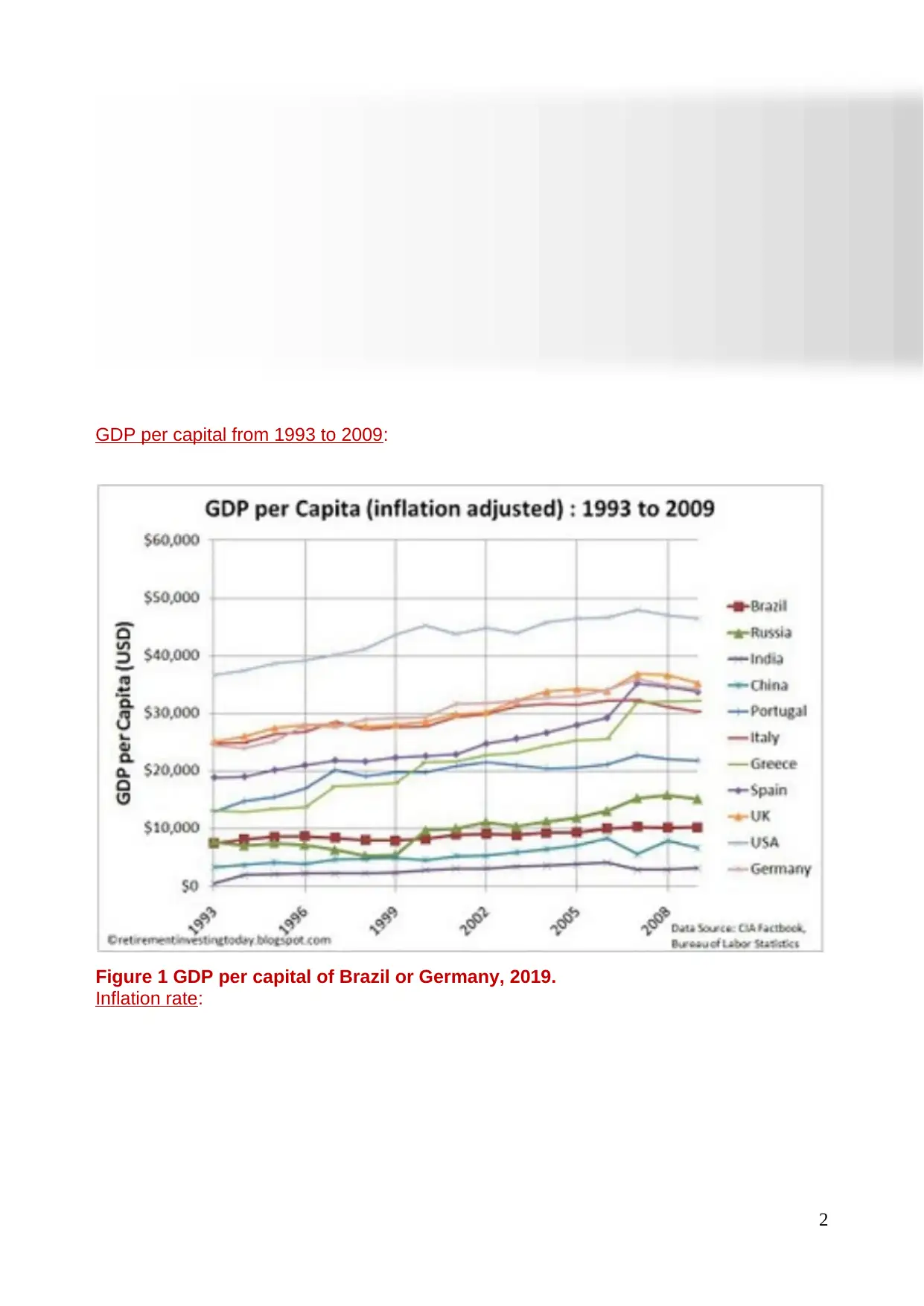
GDP per capital from 1993 to 2009:
Figure 1 GDP per capital of Brazil or Germany, 2019.
Inflation rate:
2
Figure 1 GDP per capital of Brazil or Germany, 2019.
Inflation rate:
2
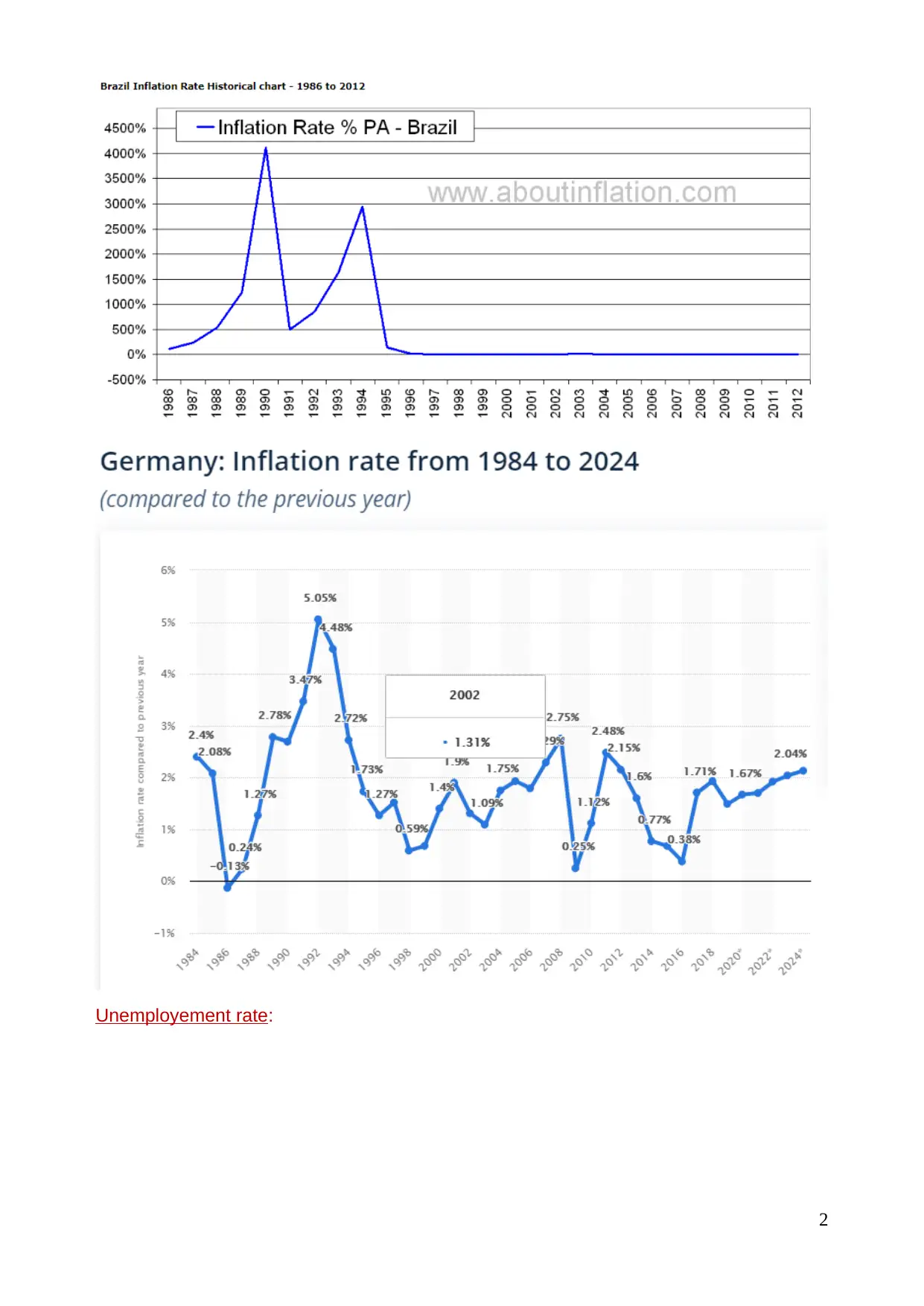
Unemployement rate:
2
2
⊘ This is a preview!⊘
Do you want full access?
Subscribe today to unlock all pages.
Trusted by 1+ million students worldwide
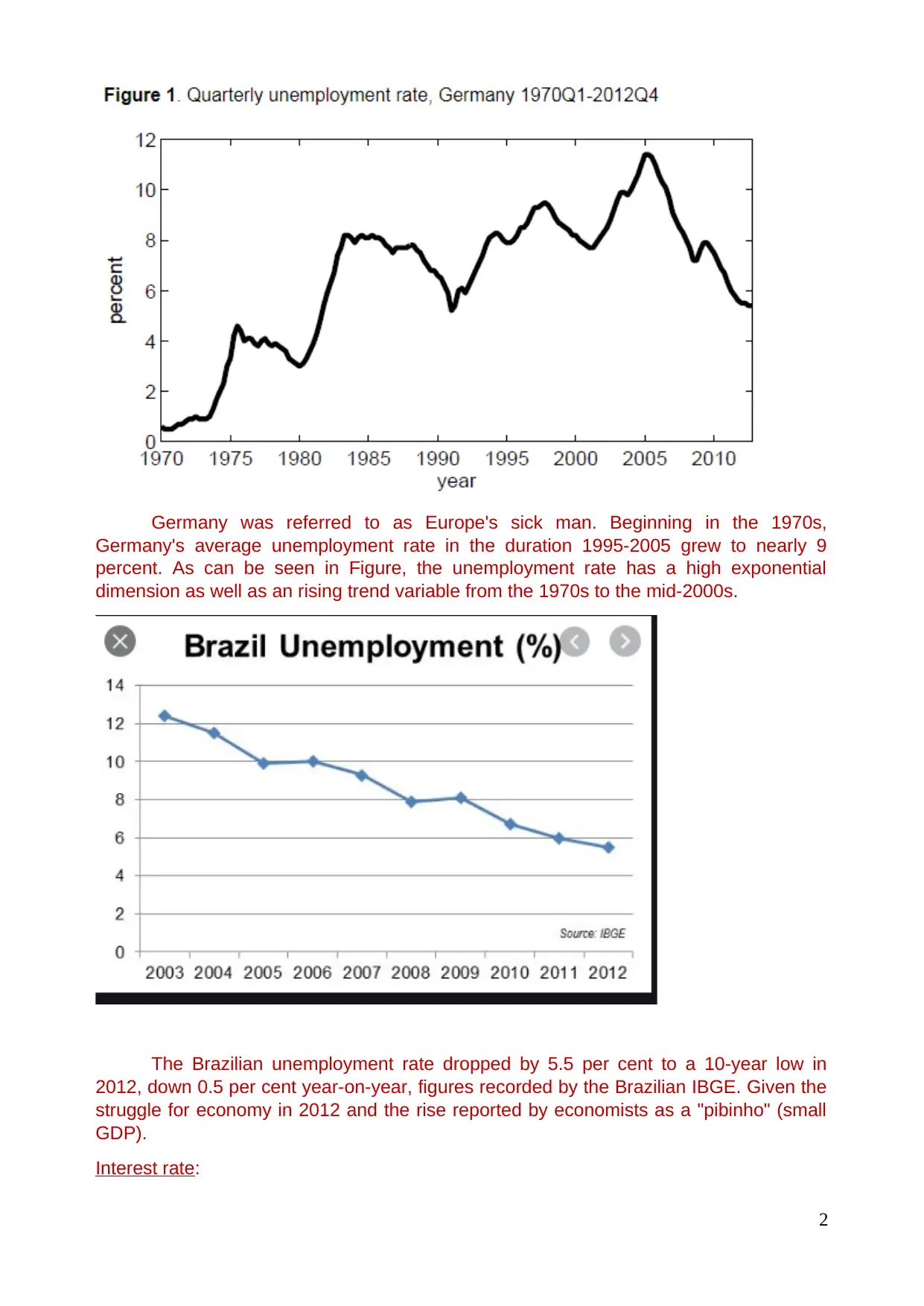
Germany was referred to as Europe's sick man. Beginning in the 1970s,
Germany's average unemployment rate in the duration 1995-2005 grew to nearly 9
percent. As can be seen in Figure, the unemployment rate has a high exponential
dimension as well as an rising trend variable from the 1970s to the mid-2000s.
The Brazilian unemployment rate dropped by 5.5 per cent to a 10-year low in
2012, down 0.5 per cent year-on-year, figures recorded by the Brazilian IBGE. Given the
struggle for economy in 2012 and the rise reported by economists as a "pibinho" (small
GDP).
Interest rate:
2
Germany's average unemployment rate in the duration 1995-2005 grew to nearly 9
percent. As can be seen in Figure, the unemployment rate has a high exponential
dimension as well as an rising trend variable from the 1970s to the mid-2000s.
The Brazilian unemployment rate dropped by 5.5 per cent to a 10-year low in
2012, down 0.5 per cent year-on-year, figures recorded by the Brazilian IBGE. Given the
struggle for economy in 2012 and the rise reported by economists as a "pibinho" (small
GDP).
Interest rate:
2
Paraphrase This Document
Need a fresh take? Get an instant paraphrase of this document with our AI Paraphraser
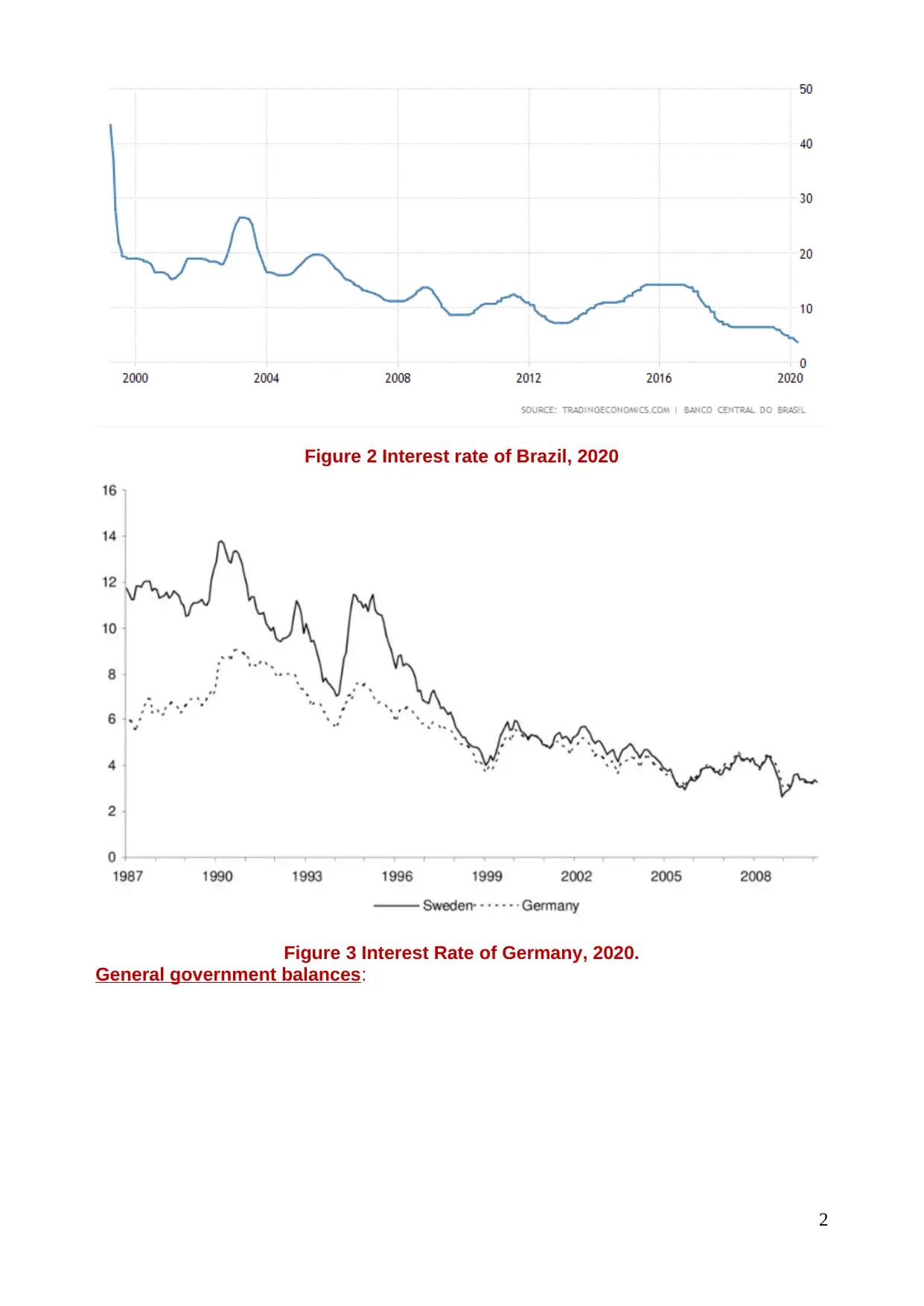
Figure 2 Interest rate of Brazil, 2020
Figure 3 Interest Rate of Germany, 2020.
General government balances:
2
Figure 3 Interest Rate of Germany, 2020.
General government balances:
2
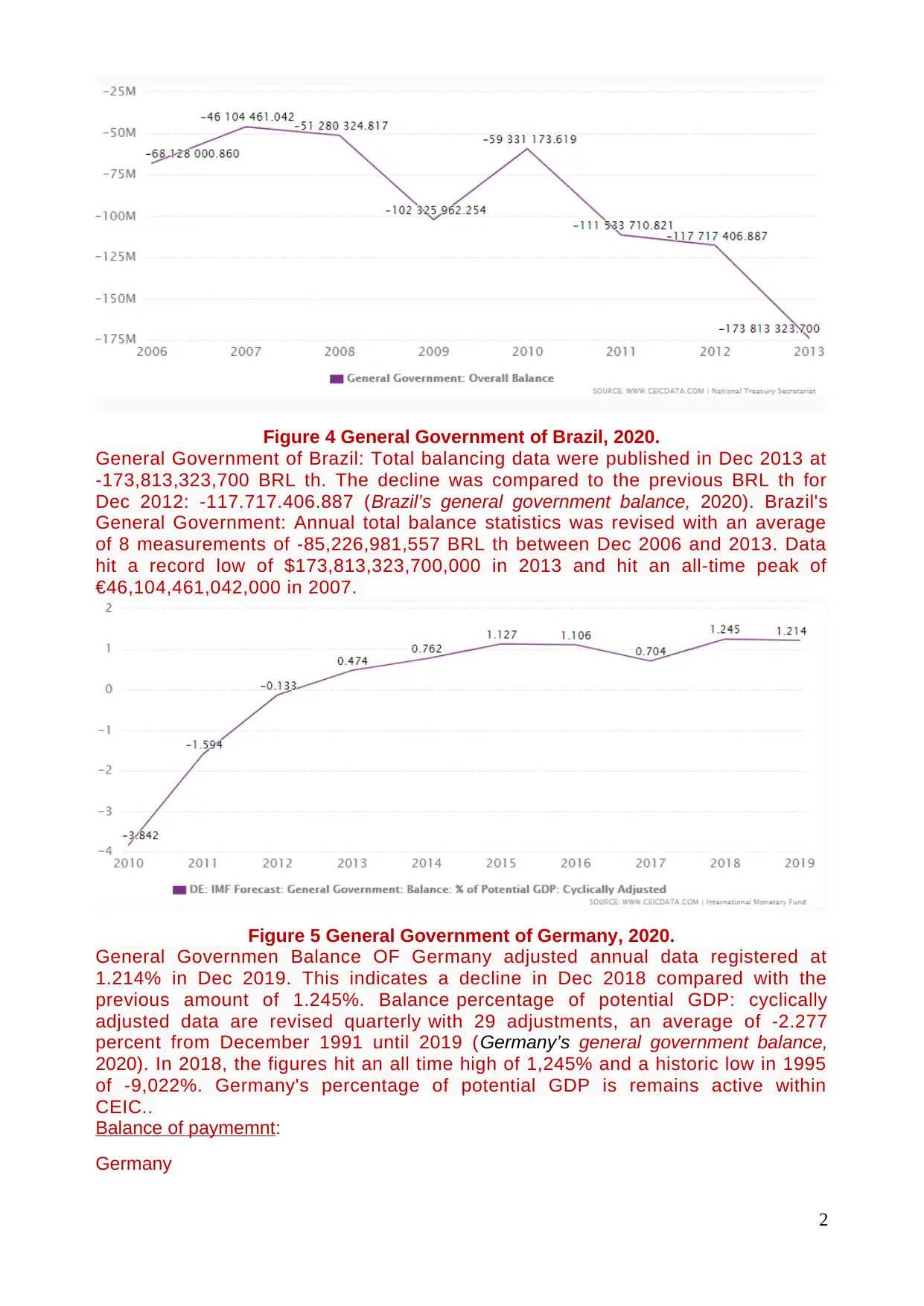
Figure 4 General Government of Brazil, 2020.
General Government of Brazil: Total balancing data were published in Dec 2013 at
-173,813,323,700 BRL th. The decline was compared to the previous BRL th for
Dec 2012: -117.717.406.887 (Brazil’s general government balance, 2020). Brazil's
General Government: Annual total balance statistics was revised with an average
of 8 measurements of -85,226,981,557 BRL th between Dec 2006 and 2013. Data
hit a record low of $173,813,323,700,000 in 2013 and hit an all-time peak of
€46,104,461,042,000 in 2007.
Figure 5 General Government of Germany, 2020.
General Governmen Balance OF Germany adjusted annual data registered at
1.214% in Dec 2019. This indicates a decline in Dec 2018 compared with the
previous amount of 1.245%. Balance percentage of potential GDP: cyclically
adjusted data are revised quarterly with 29 adjustments, an average of -2.277
percent from December 1991 until 2019 (Germany’s general government balance,
2020). In 2018, the figures hit an all time high of 1,245% and a historic low in 1995
of -9,022%. Germany's percentage of potential GDP is remains active within
CEIC..
Balance of paymemnt:
Germany
2
General Government of Brazil: Total balancing data were published in Dec 2013 at
-173,813,323,700 BRL th. The decline was compared to the previous BRL th for
Dec 2012: -117.717.406.887 (Brazil’s general government balance, 2020). Brazil's
General Government: Annual total balance statistics was revised with an average
of 8 measurements of -85,226,981,557 BRL th between Dec 2006 and 2013. Data
hit a record low of $173,813,323,700,000 in 2013 and hit an all-time peak of
€46,104,461,042,000 in 2007.
Figure 5 General Government of Germany, 2020.
General Governmen Balance OF Germany adjusted annual data registered at
1.214% in Dec 2019. This indicates a decline in Dec 2018 compared with the
previous amount of 1.245%. Balance percentage of potential GDP: cyclically
adjusted data are revised quarterly with 29 adjustments, an average of -2.277
percent from December 1991 until 2019 (Germany’s general government balance,
2020). In 2018, the figures hit an all time high of 1,245% and a historic low in 1995
of -9,022%. Germany's percentage of potential GDP is remains active within
CEIC..
Balance of paymemnt:
Germany
2
⊘ This is a preview!⊘
Do you want full access?
Subscribe today to unlock all pages.
Trusted by 1+ million students worldwide
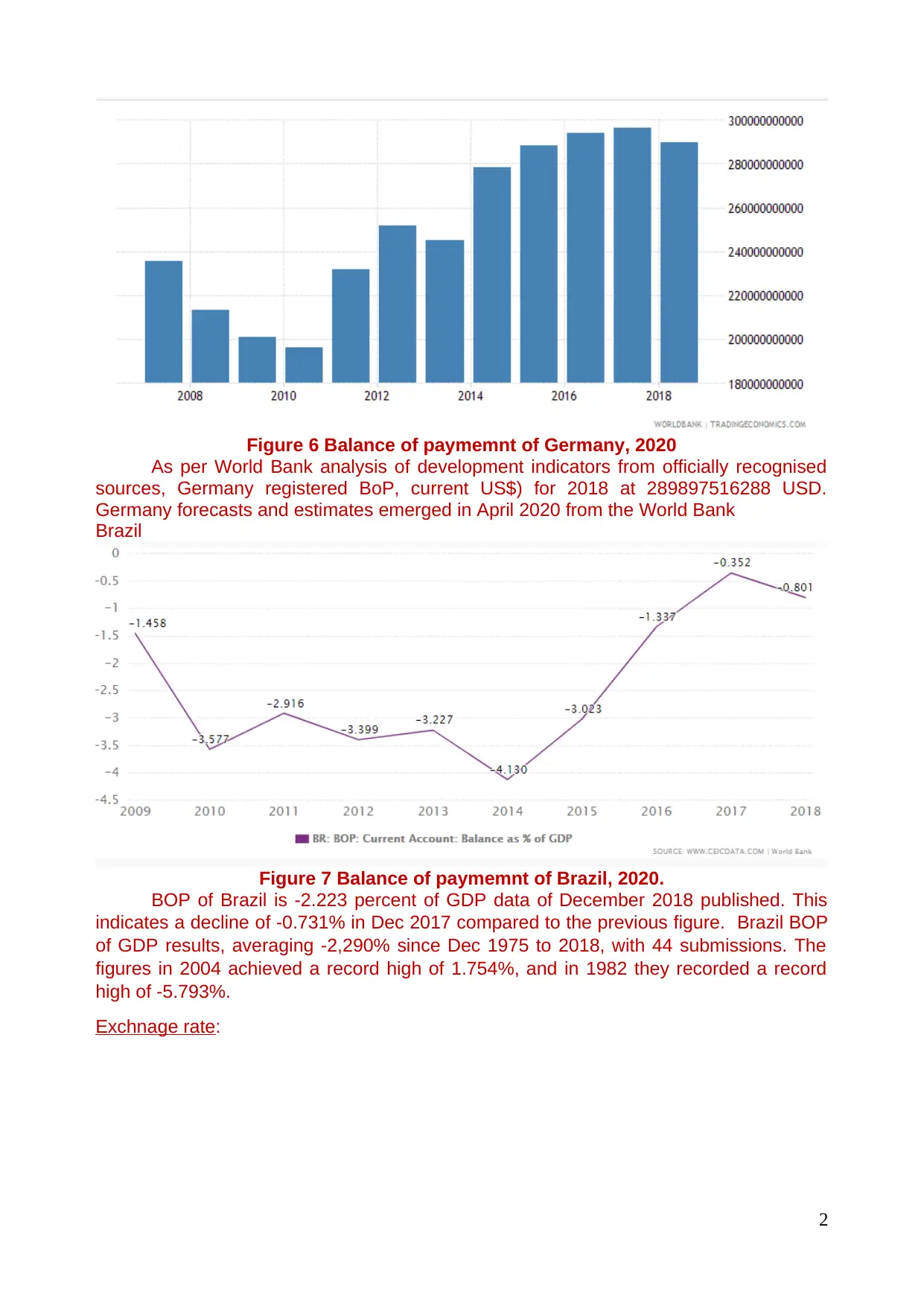
Figure 6 Balance of paymemnt of Germany, 2020
As per World Bank analysis of development indicators from officially recognised
sources, Germany registered BoP, current US$) for 2018 at 289897516288 USD.
Germany forecasts and estimates emerged in April 2020 from the World Bank
Brazil
Figure 7 Balance of paymemnt of Brazil, 2020.
BOP of Brazil is -2.223 percent of GDP data of December 2018 published. This
indicates a decline of -0.731% in Dec 2017 compared to the previous figure. Brazil BOP
of GDP results, averaging -2,290% since Dec 1975 to 2018, with 44 submissions. The
figures in 2004 achieved a record high of 1.754%, and in 1982 they recorded a record
high of -5.793%.
Exchnage rate:
2
As per World Bank analysis of development indicators from officially recognised
sources, Germany registered BoP, current US$) for 2018 at 289897516288 USD.
Germany forecasts and estimates emerged in April 2020 from the World Bank
Brazil
Figure 7 Balance of paymemnt of Brazil, 2020.
BOP of Brazil is -2.223 percent of GDP data of December 2018 published. This
indicates a decline of -0.731% in Dec 2017 compared to the previous figure. Brazil BOP
of GDP results, averaging -2,290% since Dec 1975 to 2018, with 44 submissions. The
figures in 2004 achieved a record high of 1.754%, and in 1982 they recorded a record
high of -5.793%.
Exchnage rate:
2
Paraphrase This Document
Need a fresh take? Get an instant paraphrase of this document with our AI Paraphraser
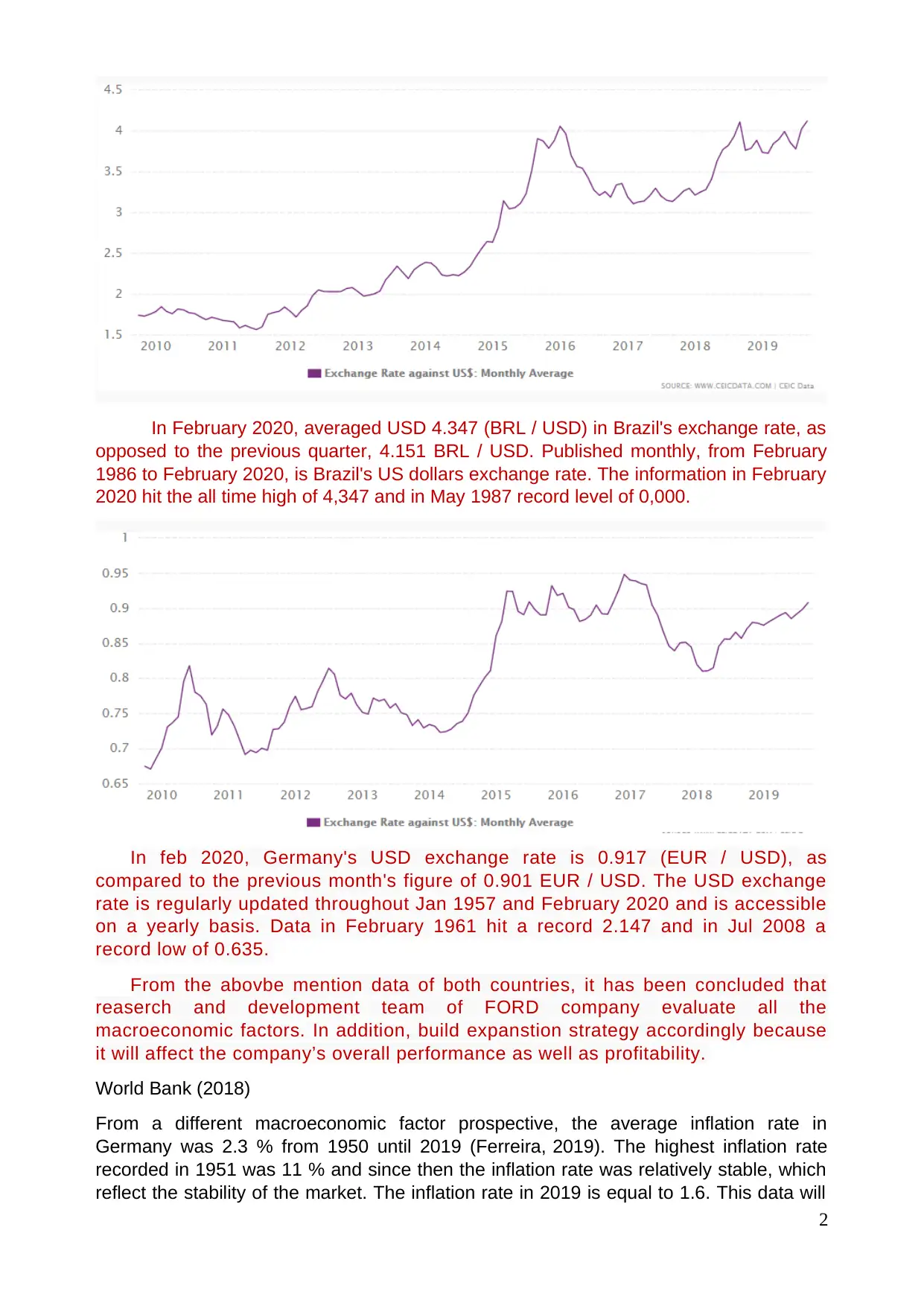
In February 2020, averaged USD 4.347 (BRL / USD) in Brazil's exchange rate, as
opposed to the previous quarter, 4.151 BRL / USD. Published monthly, from February
1986 to February 2020, is Brazil's US dollars exchange rate. The information in February
2020 hit the all time high of 4,347 and in May 1987 record level of 0,000.
In feb 2020, Germany's USD exchange rate is 0.917 (EUR / USD), as
compared to the previous month's figure of 0.901 EUR / USD. The USD exchange
rate is regularly updated throughout Jan 1957 and February 2020 and is accessible
on a yearly basis. Data in February 1961 hit a record 2.147 and in Jul 2008 a
record low of 0.635.
From the abovbe mention data of both countries, it has been concluded that
reaserch and development team of FORD company evaluate all the
macroeconomic factors. In addition, build expanstion strategy accordingly because
it will affect the company’s overall performance as well as profitability.
World Bank (2018)
From a different macroeconomic factor prospective, the average inflation rate in
Germany was 2.3 % from 1950 until 2019 (Ferreira, 2019). The highest inflation rate
recorded in 1951 was 11 % and since then the inflation rate was relatively stable, which
reflect the stability of the market. The inflation rate in 2019 is equal to 1.6. This data will
2
opposed to the previous quarter, 4.151 BRL / USD. Published monthly, from February
1986 to February 2020, is Brazil's US dollars exchange rate. The information in February
2020 hit the all time high of 4,347 and in May 1987 record level of 0,000.
In feb 2020, Germany's USD exchange rate is 0.917 (EUR / USD), as
compared to the previous month's figure of 0.901 EUR / USD. The USD exchange
rate is regularly updated throughout Jan 1957 and February 2020 and is accessible
on a yearly basis. Data in February 1961 hit a record 2.147 and in Jul 2008 a
record low of 0.635.
From the abovbe mention data of both countries, it has been concluded that
reaserch and development team of FORD company evaluate all the
macroeconomic factors. In addition, build expanstion strategy accordingly because
it will affect the company’s overall performance as well as profitability.
World Bank (2018)
From a different macroeconomic factor prospective, the average inflation rate in
Germany was 2.3 % from 1950 until 2019 (Ferreira, 2019). The highest inflation rate
recorded in 1951 was 11 % and since then the inflation rate was relatively stable, which
reflect the stability of the market. The inflation rate in 2019 is equal to 1.6. This data will
2
reflect on higher stability in terms of the prices of the car market goods and eventually on
Ford sales. Accordingly, the sales of the company will not be affected in its real value
due to the stable inflation rates of the market. On the other hand, in Brazil, the average
inflation rate from 1980 until 2018 is 345 %. The inflation rate reached its peak in 1990
recording 6821% increase versus the previous year. The forecasted inflation rate in 2019
equals to 4.7. This data reflects the instability of the market the need to be alert on
FORD automobiles prices to react according to these rates as the market may suffer
from prolonged recession until reducing this inflation, which may affect FORD sales. We
need also to examine the price elasticity also to decide the percentage that could
increase in FORD vehicles’ prices.
The national debt of both countries and the general government balances are important
factors that we need to take in consideration when considering the investment decisions.
In Germany, the government budget recorded a surplus for the fifth year in a row. In
2019, the government budget excess is equal to 1.7 % from the GDP, which is equal to
59.19 Billion Euro. It is beneficial for the FORD company to expand their operations in
this location. This factor matches the stability of Inflation rates and the low
unemployment percentage and confirms the stability of the market. Therefore, it is not
expected that Germany will not impose any additional taxes to the populace and
accordingly there is no fear of losing the purchasing power for the customers. It is the
another additional opportunity to FORD because higher tax minimize the profitability or
lower tax maximize the overall output. On the other hand, the Brazilian government
deficit in 2018 forecasted to be equal to 7.1 % of the country GDP. In addition to that, the
general government balances are in negative from 2002 until 2018. This is because of
the drop in investment and commodities values. This data reflects the instability of the
Brazil market that may lead to prolonged recessions. Another important point to be
mentioned, which may affect the investment decisions, is the balance of payments in
both countries, which is with the surplus in terms of export and import net sales
(TRADING ECONOMICS, 2019). In Brazil, this surplus is thanks to their commodities
while in Germany the surplus resulted from their industrial products. This surplus will
reflect in increasing the stability of the exchange rate and reduce the fear of
depreciation. Macro economic factor of both countroes affect the FORD company and its
performance. Productivity issues may be the most extreme in Ford's Brazil economy, but
the market as a whole is troubled, even as the greatest economic downturn in Latin
America has ever seen a double-digit rise in automotive sales.
Analysis of The monetary and fiscal policy
When it comes to the instrument policies applied in both countries to enhance the
economy in 2019, Germany is applying an expansionary fiscal policy to tackle the
relatively low rate of growth in 2018 (Ellyatt, 2019). By lowering tax revenues (Koranyi &
Lawrence, 2019). As confirmed by Olaf Scholz the minister of finance, Germany is
running an expansionary fiscal policy in 2019 (Setser, 2019) that expected to reach the
1.5 growth percentage to avoid the recession that may happen especially after the Brexit
(Koranyi & Lawrence, 2019). The revenue estimate in Germany was cut to 793 billion
euros from 804 billion euros, this cut will be reflected on increasing the purchasing power
of the cosumers’ pockets.It will generate great opportunity for ford company and helps in
improving their performance. On the other hand, As Brazil didn’t achieve the forecasted
GDP growth so far in 2019, it is expected that they will change their fiscal policy.
2
Ford sales. Accordingly, the sales of the company will not be affected in its real value
due to the stable inflation rates of the market. On the other hand, in Brazil, the average
inflation rate from 1980 until 2018 is 345 %. The inflation rate reached its peak in 1990
recording 6821% increase versus the previous year. The forecasted inflation rate in 2019
equals to 4.7. This data reflects the instability of the market the need to be alert on
FORD automobiles prices to react according to these rates as the market may suffer
from prolonged recession until reducing this inflation, which may affect FORD sales. We
need also to examine the price elasticity also to decide the percentage that could
increase in FORD vehicles’ prices.
The national debt of both countries and the general government balances are important
factors that we need to take in consideration when considering the investment decisions.
In Germany, the government budget recorded a surplus for the fifth year in a row. In
2019, the government budget excess is equal to 1.7 % from the GDP, which is equal to
59.19 Billion Euro. It is beneficial for the FORD company to expand their operations in
this location. This factor matches the stability of Inflation rates and the low
unemployment percentage and confirms the stability of the market. Therefore, it is not
expected that Germany will not impose any additional taxes to the populace and
accordingly there is no fear of losing the purchasing power for the customers. It is the
another additional opportunity to FORD because higher tax minimize the profitability or
lower tax maximize the overall output. On the other hand, the Brazilian government
deficit in 2018 forecasted to be equal to 7.1 % of the country GDP. In addition to that, the
general government balances are in negative from 2002 until 2018. This is because of
the drop in investment and commodities values. This data reflects the instability of the
Brazil market that may lead to prolonged recessions. Another important point to be
mentioned, which may affect the investment decisions, is the balance of payments in
both countries, which is with the surplus in terms of export and import net sales
(TRADING ECONOMICS, 2019). In Brazil, this surplus is thanks to their commodities
while in Germany the surplus resulted from their industrial products. This surplus will
reflect in increasing the stability of the exchange rate and reduce the fear of
depreciation. Macro economic factor of both countroes affect the FORD company and its
performance. Productivity issues may be the most extreme in Ford's Brazil economy, but
the market as a whole is troubled, even as the greatest economic downturn in Latin
America has ever seen a double-digit rise in automotive sales.
Analysis of The monetary and fiscal policy
When it comes to the instrument policies applied in both countries to enhance the
economy in 2019, Germany is applying an expansionary fiscal policy to tackle the
relatively low rate of growth in 2018 (Ellyatt, 2019). By lowering tax revenues (Koranyi &
Lawrence, 2019). As confirmed by Olaf Scholz the minister of finance, Germany is
running an expansionary fiscal policy in 2019 (Setser, 2019) that expected to reach the
1.5 growth percentage to avoid the recession that may happen especially after the Brexit
(Koranyi & Lawrence, 2019). The revenue estimate in Germany was cut to 793 billion
euros from 804 billion euros, this cut will be reflected on increasing the purchasing power
of the cosumers’ pockets.It will generate great opportunity for ford company and helps in
improving their performance. On the other hand, As Brazil didn’t achieve the forecasted
GDP growth so far in 2019, it is expected that they will change their fiscal policy.
2
⊘ This is a preview!⊘
Do you want full access?
Subscribe today to unlock all pages.
Trusted by 1+ million students worldwide

1 out of 17


Related Documents


Your All-in-One AI-Powered Toolkit for Academic Success.
+13062052269
info@desklib.com
Available 24*7 on WhatsApp / Email
![[object Object]](/_next/static/media/star-bottom.7253800d.svg)
Unlock your academic potential
Copyright © 2020–2026 A2Z Services. All Rights Reserved. Developed and managed by ZUCOL.