International Project Management: Hanoi-Hai Phong Expressway Project
VerifiedAdded on 2023/07/21
|37
|7246
|495
Project
AI Summary
This project report provides a comprehensive analysis of the Hanoi-Hai Phong Expressway project, an international endeavor aimed at improving connectivity between Hanoi and Hai Phong in Vietnam. The report details the project's context, objectives, and scope, highlighting its significance in enhancing economic development and addressing transportation challenges. It identifies key stakeholders, including government entities, contractors, local residents, and suppliers, and examines their respective roles and interests. Furthermore, the report delves into project tasks, time management, cost management, and risk management, offering insights into the project's financial aspects, potential risks, and mitigation strategies. It also discusses economic scenarios that could affect the project's sustainability and provides recommendations for ensuring its long-term success. This analysis provides a holistic view of the project's complexities and its impact on the region's economic and social landscape.
VIETNAM NATIONAL UNIVERSITY
INTERNATIONAL SCHOOL
FINAL ASSIGNMENT
INTERNATIONAL PROJECT MANAGEMENT
Hai Phong – Hanoi Expressway
Teacher : Nguyễn Phú Hưng
Class : INE300902
Group : 5
INTERNATIONAL SCHOOL
FINAL ASSIGNMENT
INTERNATIONAL PROJECT MANAGEMENT
Hai Phong – Hanoi Expressway
Teacher : Nguyễn Phú Hưng
Class : INE300902
Group : 5

Paraphrase This Document
Need a fresh take? Get an instant paraphrase of this document with our AI Paraphraser
Hanoi- Haiphong Expressway
NGUYEN Thi Ngoc Anh, NGUYEN Ngoc Quynh Trang, HA Dinh Nam
NGUYEN Thi Ngoc Anh, NGUYEN Ngoc Quynh Trang, HA Dinh Nam
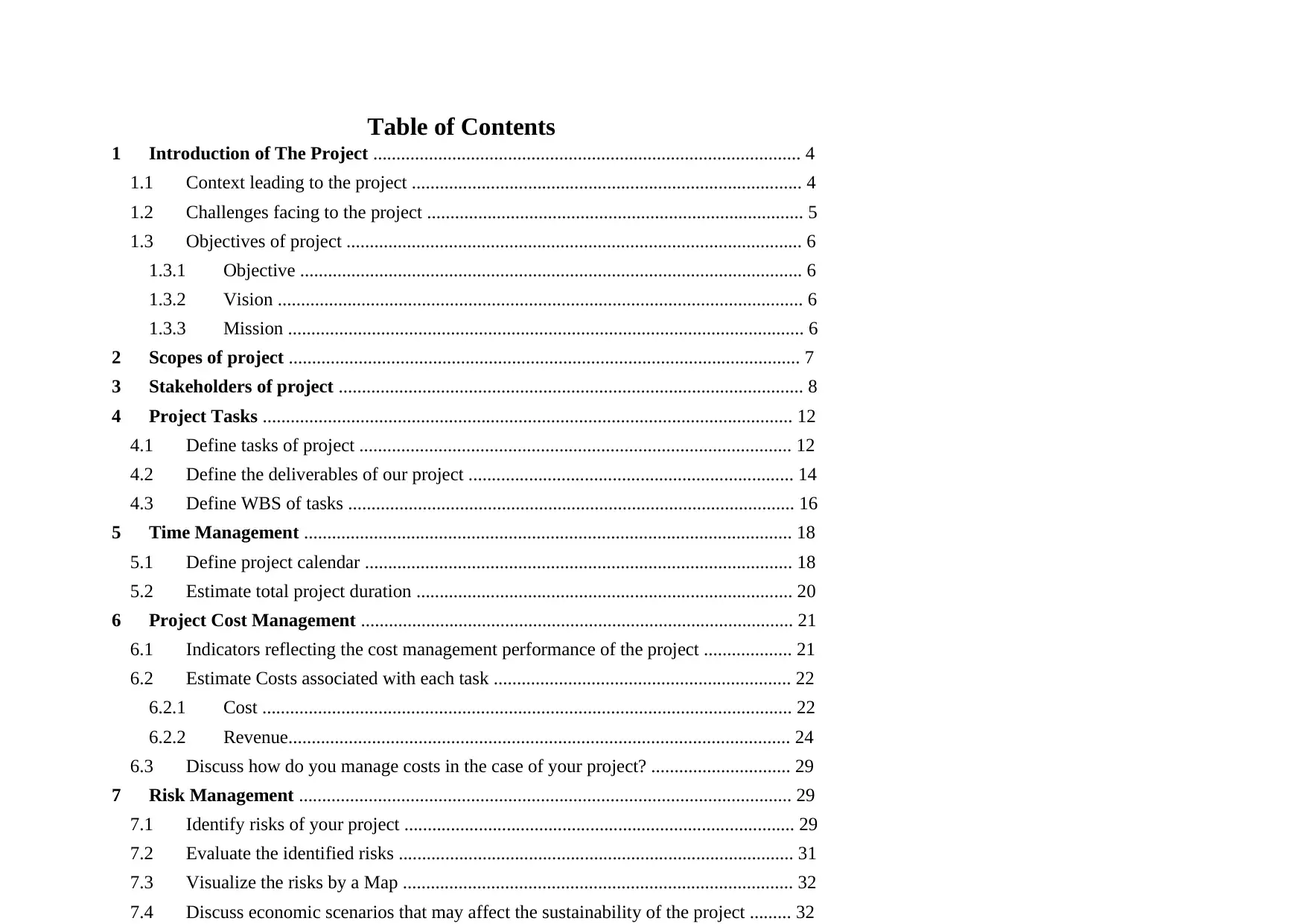
Table of Contents
1 Introduction of The Project ............................................................................................ 4
1.1 Context leading to the project .................................................................................... 4
1.2 Challenges facing to the project ................................................................................. 5
1.3 Objectives of project .................................................................................................. 6
1.3.1 Objective ............................................................................................................ 6
1.3.2 Vision ................................................................................................................. 6
1.3.3 Mission ............................................................................................................... 6
2 Scopes of project .............................................................................................................. 7
3 Stakeholders of project .................................................................................................... 8
4 Project Tasks .................................................................................................................. 12
4.1 Define tasks of project ............................................................................................. 12
4.2 Define the deliverables of our project ...................................................................... 14
4.3 Define WBS of tasks ................................................................................................ 16
5 Time Management ......................................................................................................... 18
5.1 Define project calendar ............................................................................................ 18
5.2 Estimate total project duration ................................................................................. 20
6 Project Cost Management ............................................................................................. 21
6.1 Indicators reflecting the cost management performance of the project ................... 21
6.2 Estimate Costs associated with each task ................................................................ 22
6.2.1 Cost .................................................................................................................. 22
6.2.2 Revenue............................................................................................................ 24
6.3 Discuss how do you manage costs in the case of your project? .............................. 29
7 Risk Management .......................................................................................................... 29
7.1 Identify risks of your project .................................................................................... 29
7.2 Evaluate the identified risks ..................................................................................... 31
7.3 Visualize the risks by a Map .................................................................................... 32
7.4 Discuss economic scenarios that may affect the sustainability of the project ......... 32
1 Introduction of The Project ............................................................................................ 4
1.1 Context leading to the project .................................................................................... 4
1.2 Challenges facing to the project ................................................................................. 5
1.3 Objectives of project .................................................................................................. 6
1.3.1 Objective ............................................................................................................ 6
1.3.2 Vision ................................................................................................................. 6
1.3.3 Mission ............................................................................................................... 6
2 Scopes of project .............................................................................................................. 7
3 Stakeholders of project .................................................................................................... 8
4 Project Tasks .................................................................................................................. 12
4.1 Define tasks of project ............................................................................................. 12
4.2 Define the deliverables of our project ...................................................................... 14
4.3 Define WBS of tasks ................................................................................................ 16
5 Time Management ......................................................................................................... 18
5.1 Define project calendar ............................................................................................ 18
5.2 Estimate total project duration ................................................................................. 20
6 Project Cost Management ............................................................................................. 21
6.1 Indicators reflecting the cost management performance of the project ................... 21
6.2 Estimate Costs associated with each task ................................................................ 22
6.2.1 Cost .................................................................................................................. 22
6.2.2 Revenue............................................................................................................ 24
6.3 Discuss how do you manage costs in the case of your project? .............................. 29
7 Risk Management .......................................................................................................... 29
7.1 Identify risks of your project .................................................................................... 29
7.2 Evaluate the identified risks ..................................................................................... 31
7.3 Visualize the risks by a Map .................................................................................... 32
7.4 Discuss economic scenarios that may affect the sustainability of the project ......... 32
⊘ This is a preview!⊘
Do you want full access?
Subscribe today to unlock all pages.

Trusted by 1+ million students worldwide
List of Figure
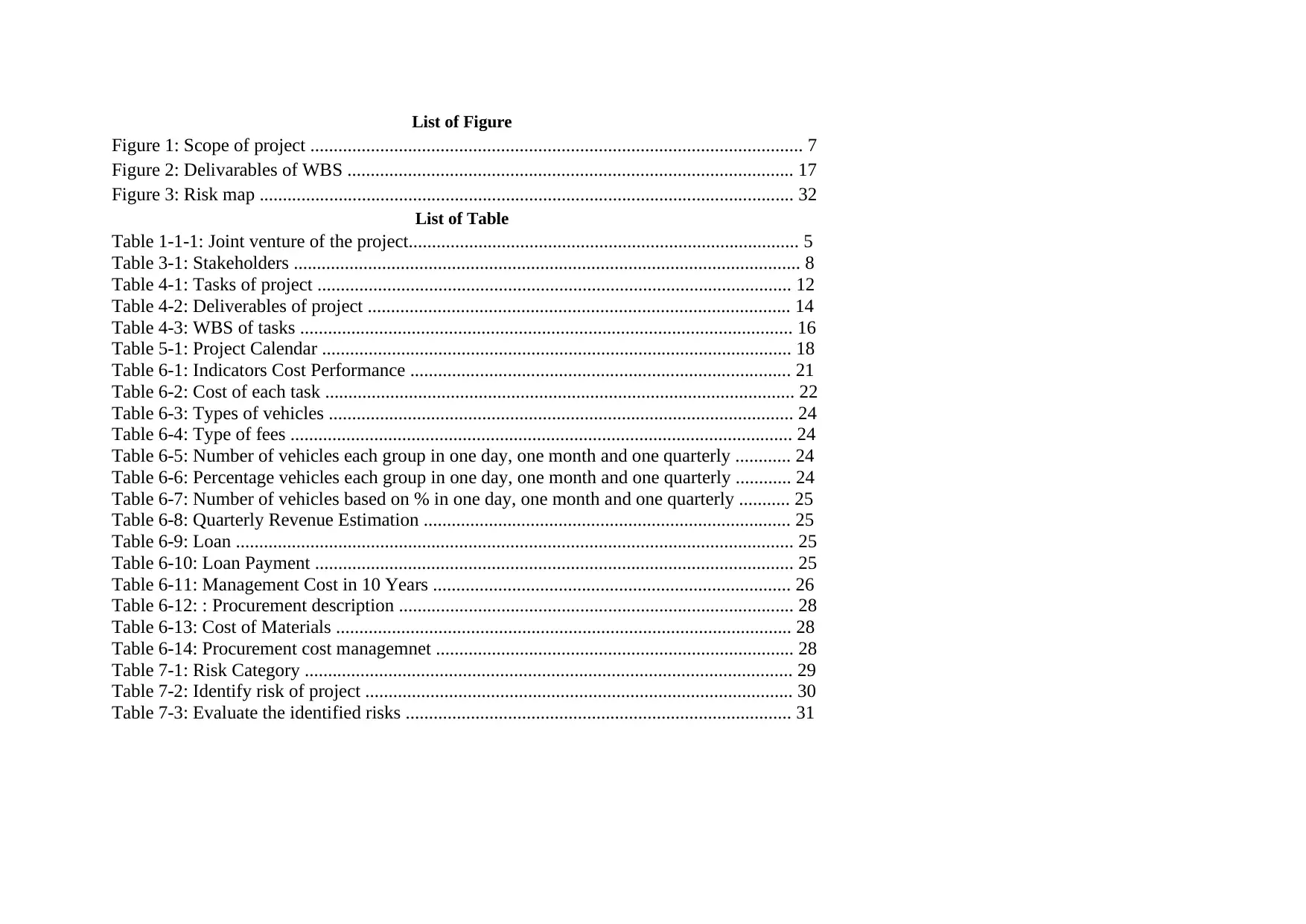
Figure 1: Scope of project .......................................................................................................... 7
Figure 2: Delivarables of WBS ................................................................................................ 17
Figure 3: Risk map ................................................................................................................... 32
List of Table
Table 1-1-1: Joint venture of the project.................................................................................... 5
Table 3-1: Stakeholders ............................................................................................................. 8
Table 4-1: Tasks of project ...................................................................................................... 12
Table 4-2: Deliverables of project ........................................................................................... 14
Table 4-3: WBS of tasks .......................................................................................................... 16
Table 5-1: Project Calendar ..................................................................................................... 18
Table 6-1: Indicators Cost Performance .................................................................................. 21
Table 6-2: Cost of each task ..................................................................................................... 22
Table 6-3: Types of vehicles .................................................................................................... 24
Table 6-4: Type of fees ............................................................................................................ 24
Table 6-5: Number of vehicles each group in one day, one month and one quarterly ............ 24
Table 6-6: Percentage vehicles each group in one day, one month and one quarterly ............ 24
Table 6-7: Number of vehicles based on % in one day, one month and one quarterly ........... 25
Table 6-8: Quarterly Revenue Estimation ............................................................................... 25
Table 6-9: Loan ........................................................................................................................ 25
Table 6-10: Loan Payment ....................................................................................................... 25
Table 6-11: Management Cost in 10 Years ............................................................................. 26
Table 6-12: : Procurement description ..................................................................................... 28
Table 6-13: Cost of Materials .................................................................................................. 28
Table 6-14: Procurement cost managemnet ............................................................................. 28
Table 7-1: Risk Category ......................................................................................................... 29
Table 7-2: Identify risk of project ............................................................................................ 30
Table 7-3: Evaluate the identified risks ................................................................................... 31
Figure 1: Scope of project .......................................................................................................... 7
Figure 2: Delivarables of WBS ................................................................................................ 17
Figure 3: Risk map ................................................................................................................... 32
List of Table
Table 1-1-1: Joint venture of the project.................................................................................... 5
Table 3-1: Stakeholders ............................................................................................................. 8
Table 4-1: Tasks of project ...................................................................................................... 12
Table 4-2: Deliverables of project ........................................................................................... 14
Table 4-3: WBS of tasks .......................................................................................................... 16
Table 5-1: Project Calendar ..................................................................................................... 18
Table 6-1: Indicators Cost Performance .................................................................................. 21
Table 6-2: Cost of each task ..................................................................................................... 22
Table 6-3: Types of vehicles .................................................................................................... 24
Table 6-4: Type of fees ............................................................................................................ 24
Table 6-5: Number of vehicles each group in one day, one month and one quarterly ............ 24
Table 6-6: Percentage vehicles each group in one day, one month and one quarterly ............ 24
Table 6-7: Number of vehicles based on % in one day, one month and one quarterly ........... 25
Table 6-8: Quarterly Revenue Estimation ............................................................................... 25
Table 6-9: Loan ........................................................................................................................ 25
Table 6-10: Loan Payment ....................................................................................................... 25
Table 6-11: Management Cost in 10 Years ............................................................................. 26
Table 6-12: : Procurement description ..................................................................................... 28
Table 6-13: Cost of Materials .................................................................................................. 28
Table 6-14: Procurement cost managemnet ............................................................................. 28
Table 7-1: Risk Category ......................................................................................................... 29
Table 7-2: Identify risk of project ............................................................................................ 30
Table 7-3: Evaluate the identified risks ................................................................................... 31
Paraphrase This Document
Need a fresh take? Get an instant paraphrase of this document with our AI Paraphraser
1 Introduction of The Project
1.1 Context leading to the project
Located centrally in the northern region of the country, Hanoi, Hai Phong and Quang Ninh
have come a strong economic triangle, determining the social and economic development of
the area. Before the launch of Hanoi- HaiPhong expressway project, Highway 5 is the main
axis road connecting 2 cities and and is responsible to carry a big volume of goods and
passengers. However, it has been overloaded for the past few years due to the development of
industrial zones and living groups along the highway. Besides, it was often congested and
prone to accidents. This limited the mobility of goods and people between the two cities,
affecting economic development and social welfare in the region. These issues leading to
increase demand for efficient and reliable transportation networks.
Recognizing the importance of improving transportation infrastructure, the expressway project
was launched as part of its wider plan to enhance the country's connectivity and
competitiveness. The project was also seen as a critical step towards achieving Vietnam's
national development goals, including reducing poverty and promoting sustainable economic
growth.
The Hanoi- Haiphong expressway is a major freight corridor for Vietnam's Northern Pivotal
Economic Region as well as the Hanoi-Haiphong Economic Corridor. This is a 105.5 km long
class A expressway project from Hanoi, passing through Hung Yen and Hai Duong provinces
and to the port city of Hai Phong, providing a modern and efficient transportation link between
the two cities and contributing to the economic and social development of the northern
region.
This project is international because it is managed by the China Road and Bridge Corporation.
The Hanoi-Haiphong Expressway is an international project because it was financed by the
Multilateral Investment Guarantee Agency (MIGA) which is part of the World Bank Group.
Additionally, Meinhardt International (Singapore-based engineering company) in association
with Japan Engineering Consultants provided the construction supervision services. Hadicon
(Vietnamese company) was engaged in conducting survey and design works for three packages
of the expressway for a total length of approximately 30km. Joton (Vietnamese firm) was the
supplier of traffic paints for the project.
1.1 Context leading to the project
Located centrally in the northern region of the country, Hanoi, Hai Phong and Quang Ninh
have come a strong economic triangle, determining the social and economic development of
the area. Before the launch of Hanoi- HaiPhong expressway project, Highway 5 is the main
axis road connecting 2 cities and and is responsible to carry a big volume of goods and
passengers. However, it has been overloaded for the past few years due to the development of
industrial zones and living groups along the highway. Besides, it was often congested and
prone to accidents. This limited the mobility of goods and people between the two cities,
affecting economic development and social welfare in the region. These issues leading to
increase demand for efficient and reliable transportation networks.
Recognizing the importance of improving transportation infrastructure, the expressway project
was launched as part of its wider plan to enhance the country's connectivity and
competitiveness. The project was also seen as a critical step towards achieving Vietnam's
national development goals, including reducing poverty and promoting sustainable economic
growth.
The Hanoi- Haiphong expressway is a major freight corridor for Vietnam's Northern Pivotal
Economic Region as well as the Hanoi-Haiphong Economic Corridor. This is a 105.5 km long
class A expressway project from Hanoi, passing through Hung Yen and Hai Duong provinces
and to the port city of Hai Phong, providing a modern and efficient transportation link between
the two cities and contributing to the economic and social development of the northern
region.
This project is international because it is managed by the China Road and Bridge Corporation.
The Hanoi-Haiphong Expressway is an international project because it was financed by the
Multilateral Investment Guarantee Agency (MIGA) which is part of the World Bank Group.
Additionally, Meinhardt International (Singapore-based engineering company) in association
with Japan Engineering Consultants provided the construction supervision services. Hadicon
(Vietnamese company) was engaged in conducting survey and design works for three packages
of the expressway for a total length of approximately 30km. Joton (Vietnamese firm) was the
supplier of traffic paints for the project.
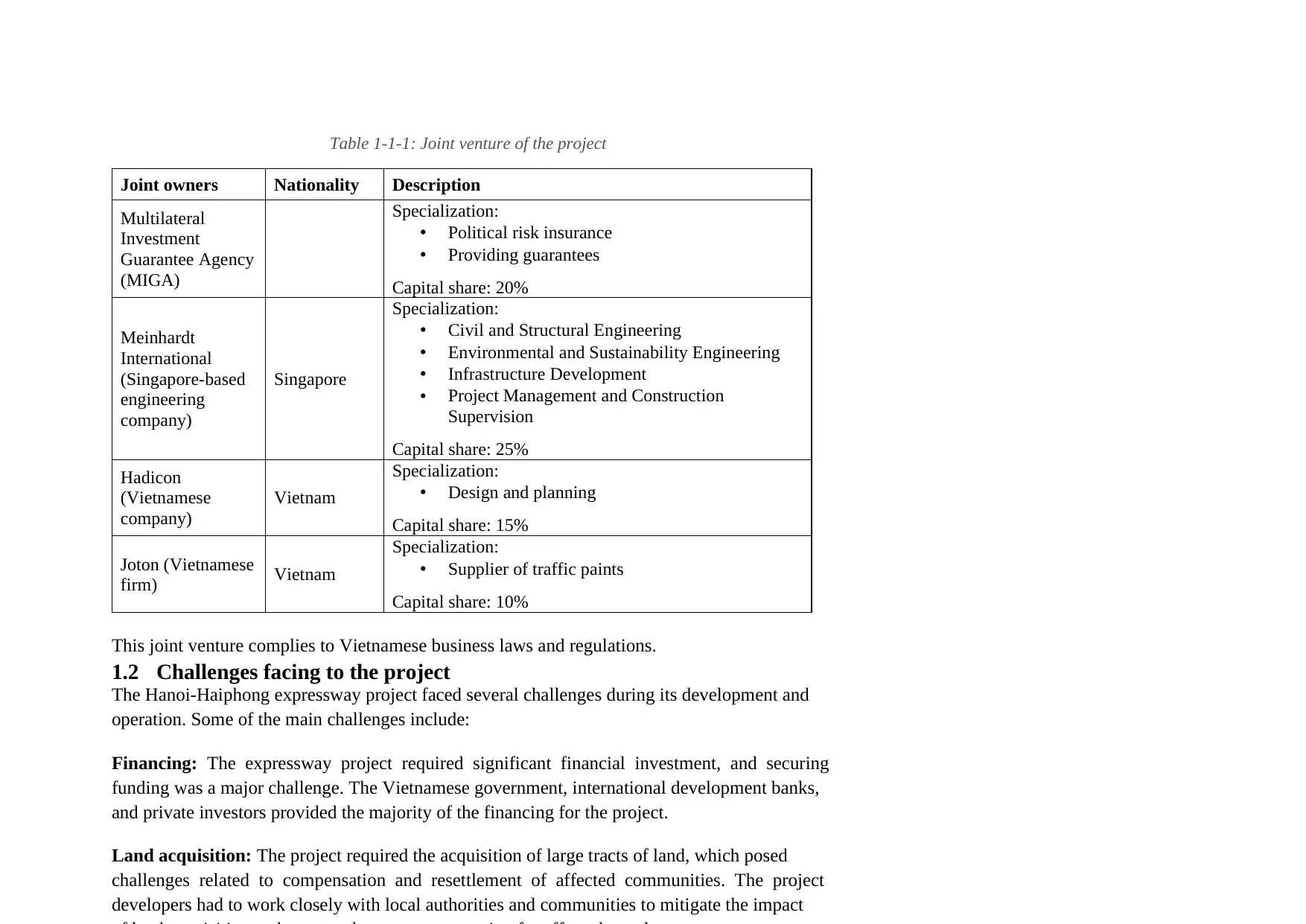
Table 1-1-1: Joint venture of the project
Joint owners Nationality Description
Multilateral
Investment
Guarantee Agency
(MIGA)
Specialization:
• Political risk insurance
• Providing guarantees
Capital share: 20%
Meinhardt
International
(Singapore-based
engineering
company)
Singapore
Specialization:
• Civil and Structural Engineering
• Environmental and Sustainability Engineering
• Infrastructure Development
• Project Management and Construction
Supervision
Capital share: 25%
Hadicon
(Vietnamese
company)
Vietnam
Specialization:
• Design and planning
Capital share: 15%
Joton (Vietnamese
firm) Vietnam
Specialization:
• Supplier of traffic paints
Capital share: 10%
This joint venture complies to Vietnamese business laws and regulations.
1.2 Challenges facing to the project
The Hanoi-Haiphong expressway project faced several challenges during its development and
operation. Some of the main challenges include:
Financing: The expressway project required significant financial investment, and securing
funding was a major challenge. The Vietnamese government, international development banks,
and private investors provided the majority of the financing for the project.
Land acquisition: The project required the acquisition of large tracts of land, which posed
challenges related to compensation and resettlement of affected communities. The project
developers had to work closely with local authorities and communities to mitigate the impact
Joint owners Nationality Description
Multilateral
Investment
Guarantee Agency
(MIGA)
Specialization:
• Political risk insurance
• Providing guarantees
Capital share: 20%
Meinhardt
International
(Singapore-based
engineering
company)
Singapore
Specialization:
• Civil and Structural Engineering
• Environmental and Sustainability Engineering
• Infrastructure Development
• Project Management and Construction
Supervision
Capital share: 25%
Hadicon
(Vietnamese
company)
Vietnam
Specialization:
• Design and planning
Capital share: 15%
Joton (Vietnamese
firm) Vietnam
Specialization:
• Supplier of traffic paints
Capital share: 10%
This joint venture complies to Vietnamese business laws and regulations.
1.2 Challenges facing to the project
The Hanoi-Haiphong expressway project faced several challenges during its development and
operation. Some of the main challenges include:
Financing: The expressway project required significant financial investment, and securing
funding was a major challenge. The Vietnamese government, international development banks,
and private investors provided the majority of the financing for the project.
Land acquisition: The project required the acquisition of large tracts of land, which posed
challenges related to compensation and resettlement of affected communities. The project
developers had to work closely with local authorities and communities to mitigate the impact
⊘ This is a preview!⊘
Do you want full access?
Subscribe today to unlock all pages.
Trusted by 1+ million students worldwide
Maintenance: The Hanoi-Haiphong expressway requires regular maintenance and repairs to
ensure its safe and efficient operation. The project developers face challenges related to funding
and implementing effective maintenance strategies to ensure the expressway's long-term
sustainability.
1.3 Objectives of project
1.3.1 Objective
The objective of the Hanoi-Haiphong expressway project is to provide a high-speed and safe
transportation network between Hanoi and the port city of Haiphong. The project aims to
reduce travel time between the two cities and improve access to key economic zones, industrial
parks, and tourist destinations. In addition, the goal of the Hanoi - Hai Phong highway is to
connect with the Ha Long - Hai Phong highway to complete the connection of the Northern
economic triangle including the provinces and cities of Hanoi - Hai Phong - Quang Ninh. . The
expressway is expected to support the growth of the region's manufacturing and export sectors
and enhance the competition of businesses in the area.
1.3.2 Vision
The vision of the Hanoi-Haiphong expressway project is to create a world-class transportation
network that connectivity and fosters economic triangle development in northern Vietnam. The
project seeks to improve the region's infrastructure and increase its attractiveness to investors,
tourists, and businesses. The expressway will also contribute to reducing traffic congestion and
improving road safety.
1.3.3 Mission
The mission of the Hanoi-Haiphong Expressway project is to build a high-quality expressway
that meets the needs of travelers, businesses, and communities in the region. The project aims
to provide a safe and comfortable driving experience, reduce traffic congestion and accidents,
and enhance the economic competition of Hanoi and Haiphong in particular and the Northern
key economic triangle in general. The project also seeks to promote sustainable development
by minimizing the environmental impact of the expressway and demonstrating that it is
integrated with local communities and natural resources.
ensure its safe and efficient operation. The project developers face challenges related to funding
and implementing effective maintenance strategies to ensure the expressway's long-term
sustainability.
1.3 Objectives of project
1.3.1 Objective
The objective of the Hanoi-Haiphong expressway project is to provide a high-speed and safe
transportation network between Hanoi and the port city of Haiphong. The project aims to
reduce travel time between the two cities and improve access to key economic zones, industrial
parks, and tourist destinations. In addition, the goal of the Hanoi - Hai Phong highway is to
connect with the Ha Long - Hai Phong highway to complete the connection of the Northern
economic triangle including the provinces and cities of Hanoi - Hai Phong - Quang Ninh. . The
expressway is expected to support the growth of the region's manufacturing and export sectors
and enhance the competition of businesses in the area.
1.3.2 Vision
The vision of the Hanoi-Haiphong expressway project is to create a world-class transportation
network that connectivity and fosters economic triangle development in northern Vietnam. The
project seeks to improve the region's infrastructure and increase its attractiveness to investors,
tourists, and businesses. The expressway will also contribute to reducing traffic congestion and
improving road safety.
1.3.3 Mission
The mission of the Hanoi-Haiphong Expressway project is to build a high-quality expressway
that meets the needs of travelers, businesses, and communities in the region. The project aims
to provide a safe and comfortable driving experience, reduce traffic congestion and accidents,
and enhance the economic competition of Hanoi and Haiphong in particular and the Northern
key economic triangle in general. The project also seeks to promote sustainable development
by minimizing the environmental impact of the expressway and demonstrating that it is
integrated with local communities and natural resources.
Paraphrase This Document
Need a fresh take? Get an instant paraphrase of this document with our AI Paraphraser
7
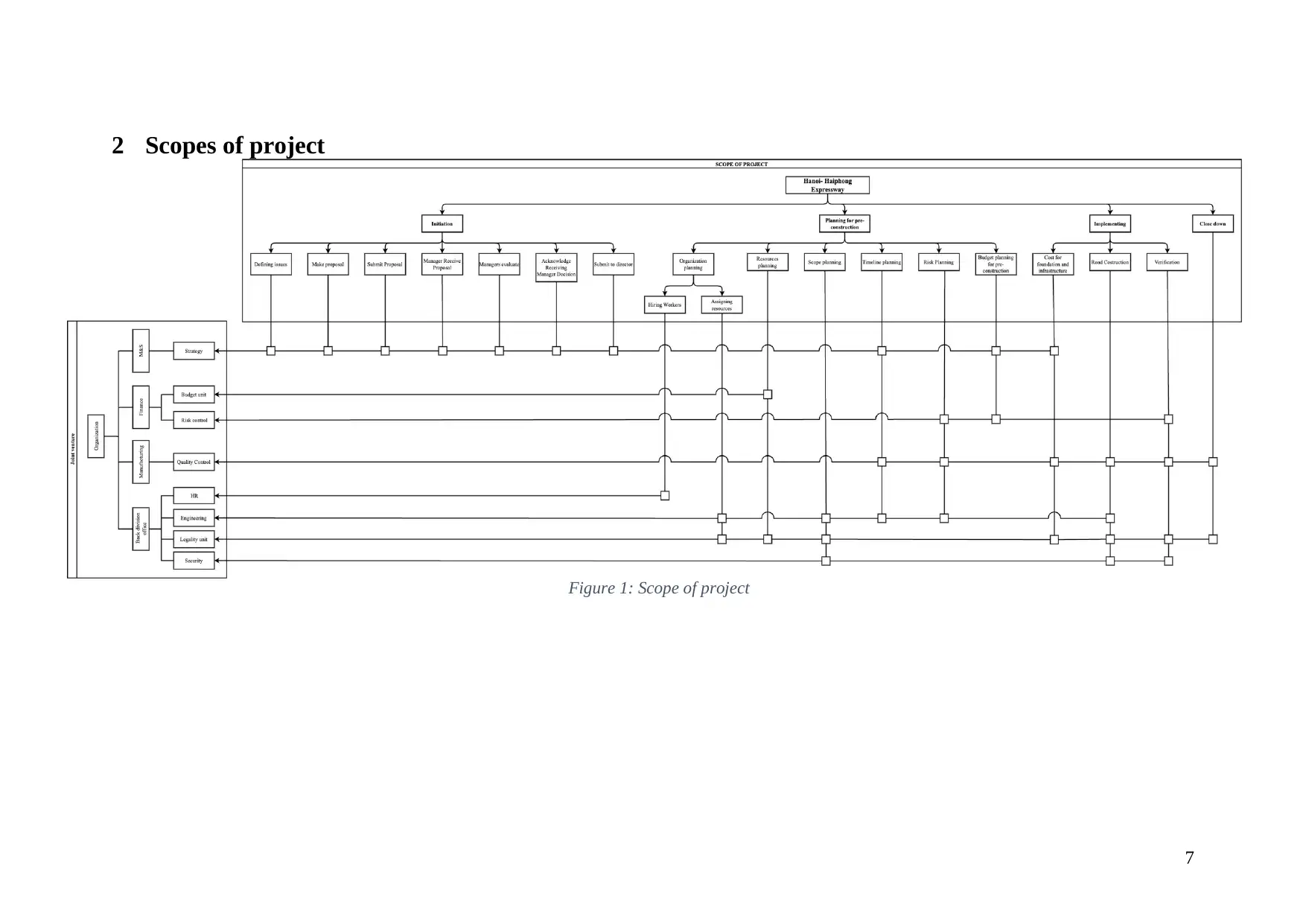
2 Scopes of project
Figure 1: Scope of project
2 Scopes of project
Figure 1: Scope of project
8
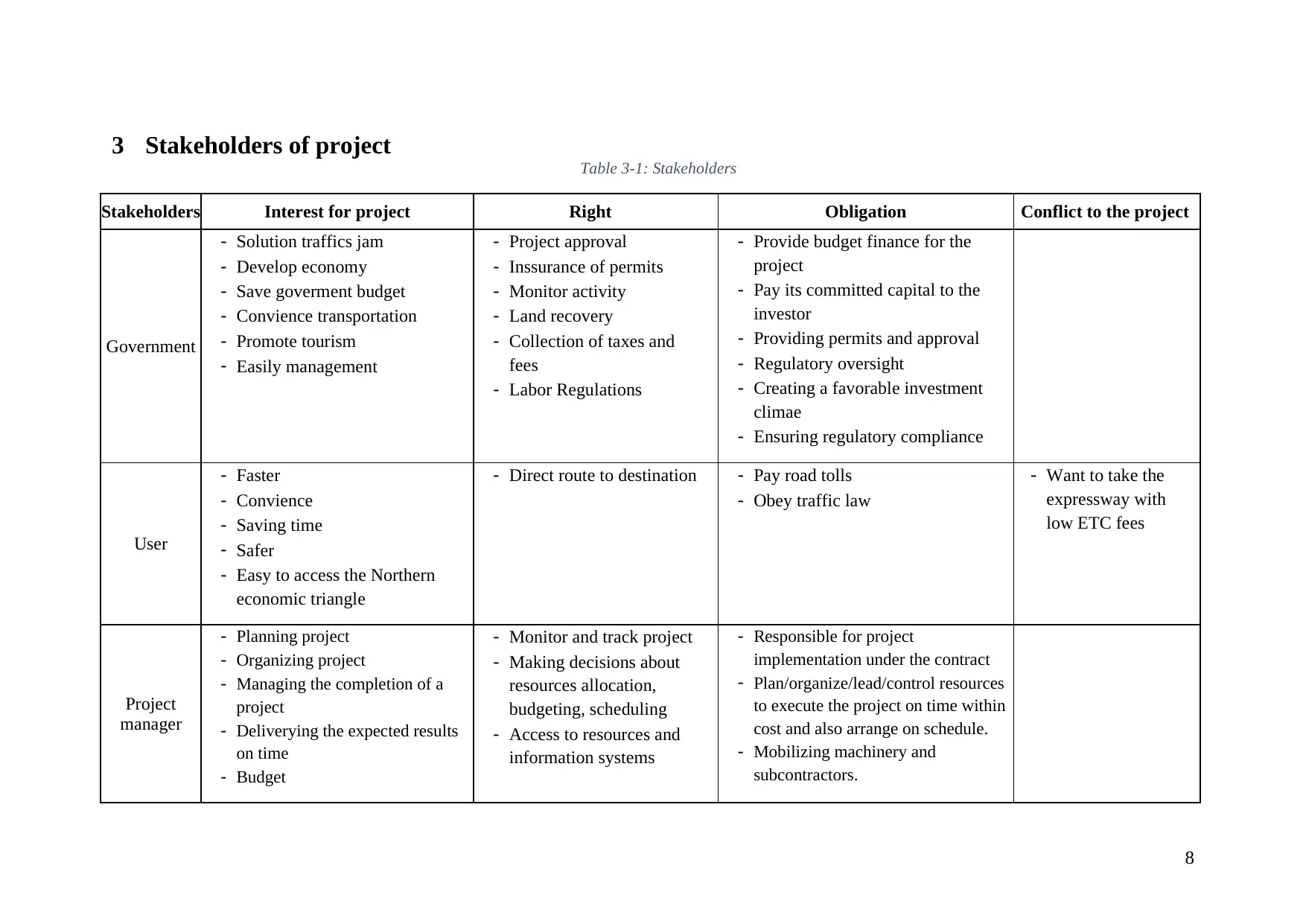
3 Stakeholders of project Table 3-1: Stakeholders
Stakeholders Interest for project Right Obligation Conflict to the project
Government
- Solution traffics jam
- Develop economy
- Save goverment budget
- Convience transportation
- Promote tourism
- Easily management
- Project approval
- Inssurance of permits
- Monitor activity
- Land recovery
- Collection of taxes and
fees
- Labor Regulations
- Provide budget finance for the
project
- Pay its committed capital to the
investor
- Providing permits and approval
- Regulatory oversight
- Creating a favorable investment
climae
- Ensuring regulatory compliance
User
- Faster
- Convience
- Saving time
- Safer
- Easy to access the Northern
economic triangle
- Direct route to destination - Pay road tolls
- Obey traffic law
- Want to take the
expressway with
low ETC fees
Project
manager
- Planning project
- Organizing project
- Managing the completion of a
project
- Deliverying the expected results
on time
- Budget
- Monitor and track project
- Making decisions about
resources allocation,
budgeting, scheduling
- Access to resources and
information systems
- Responsible for project
implementation under the contract
- Plan/organize/lead/control resources
to execute the project on time within
cost and also arrange on schedule.
- Mobilizing machinery and
subcontractors.
3 Stakeholders of project Table 3-1: Stakeholders
Stakeholders Interest for project Right Obligation Conflict to the project
Government
- Solution traffics jam
- Develop economy
- Save goverment budget
- Convience transportation
- Promote tourism
- Easily management
- Project approval
- Inssurance of permits
- Monitor activity
- Land recovery
- Collection of taxes and
fees
- Labor Regulations
- Provide budget finance for the
project
- Pay its committed capital to the
investor
- Providing permits and approval
- Regulatory oversight
- Creating a favorable investment
climae
- Ensuring regulatory compliance
User
- Faster
- Convience
- Saving time
- Safer
- Easy to access the Northern
economic triangle
- Direct route to destination - Pay road tolls
- Obey traffic law
- Want to take the
expressway with
low ETC fees
Project
manager
- Planning project
- Organizing project
- Managing the completion of a
project
- Deliverying the expected results
on time
- Budget
- Monitor and track project
- Making decisions about
resources allocation,
budgeting, scheduling
- Access to resources and
information systems
- Responsible for project
implementation under the contract
- Plan/organize/lead/control resources
to execute the project on time within
cost and also arrange on schedule.
- Mobilizing machinery and
subcontractors.
⊘ This is a preview!⊘
Do you want full access?
Subscribe today to unlock all pages.
Trusted by 1+ million students worldwide
9
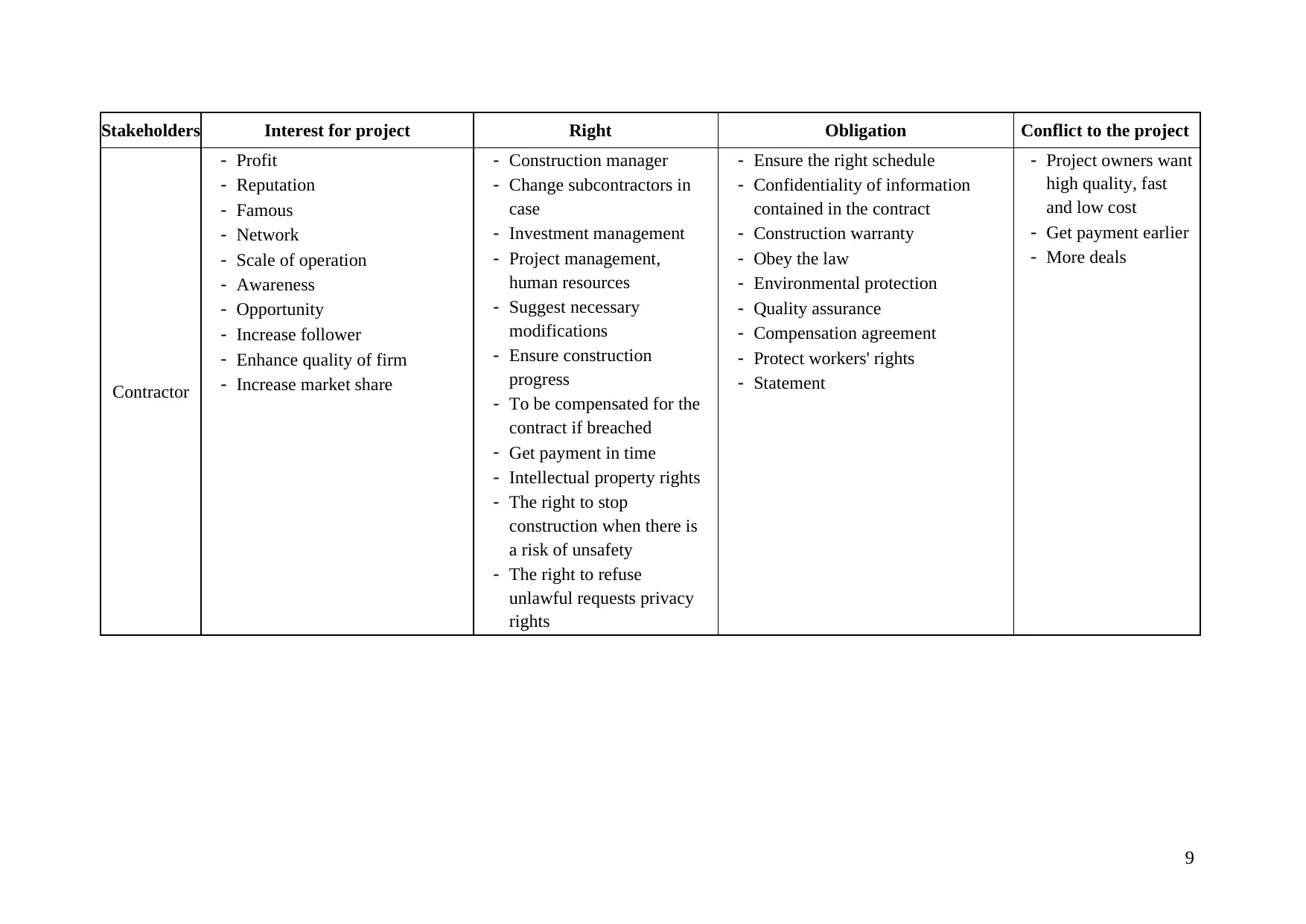
Stakeholders Interest for project Right Obligation Conflict to the project
Contractor
- Profit
- Reputation
- Famous
- Network
- Scale of operation
- Awareness
- Opportunity
- Increase follower
- Enhance quality of firm
- Increase market share
- Construction manager
- Change subcontractors in
case
- Investment management
- Project management,
human resources
- Suggest necessary
modifications
- Ensure construction
progress
- To be compensated for the
contract if breached
- Get payment in time
- Intellectual property rights
- The right to stop
construction when there is
a risk of unsafety
- The right to refuse
unlawful requests privacy
rights
- Ensure the right schedule
- Confidentiality of information
contained in the contract
- Construction warranty
- Obey the law
- Environmental protection
- Quality assurance
- Compensation agreement
- Protect workers' rights
- Statement
- Project owners want
high quality, fast
and low cost
- Get payment earlier
- More deals
Stakeholders Interest for project Right Obligation Conflict to the project
Contractor
- Profit
- Reputation
- Famous
- Network
- Scale of operation
- Awareness
- Opportunity
- Increase follower
- Enhance quality of firm
- Increase market share
- Construction manager
- Change subcontractors in
case
- Investment management
- Project management,
human resources
- Suggest necessary
modifications
- Ensure construction
progress
- To be compensated for the
contract if breached
- Get payment in time
- Intellectual property rights
- The right to stop
construction when there is
a risk of unsafety
- The right to refuse
unlawful requests privacy
rights
- Ensure the right schedule
- Confidentiality of information
contained in the contract
- Construction warranty
- Obey the law
- Environmental protection
- Quality assurance
- Compensation agreement
- Protect workers' rights
- Statement
- Project owners want
high quality, fast
and low cost
- Get payment earlier
- More deals
Paraphrase This Document
Need a fresh take? Get an instant paraphrase of this document with our AI Paraphraser
10
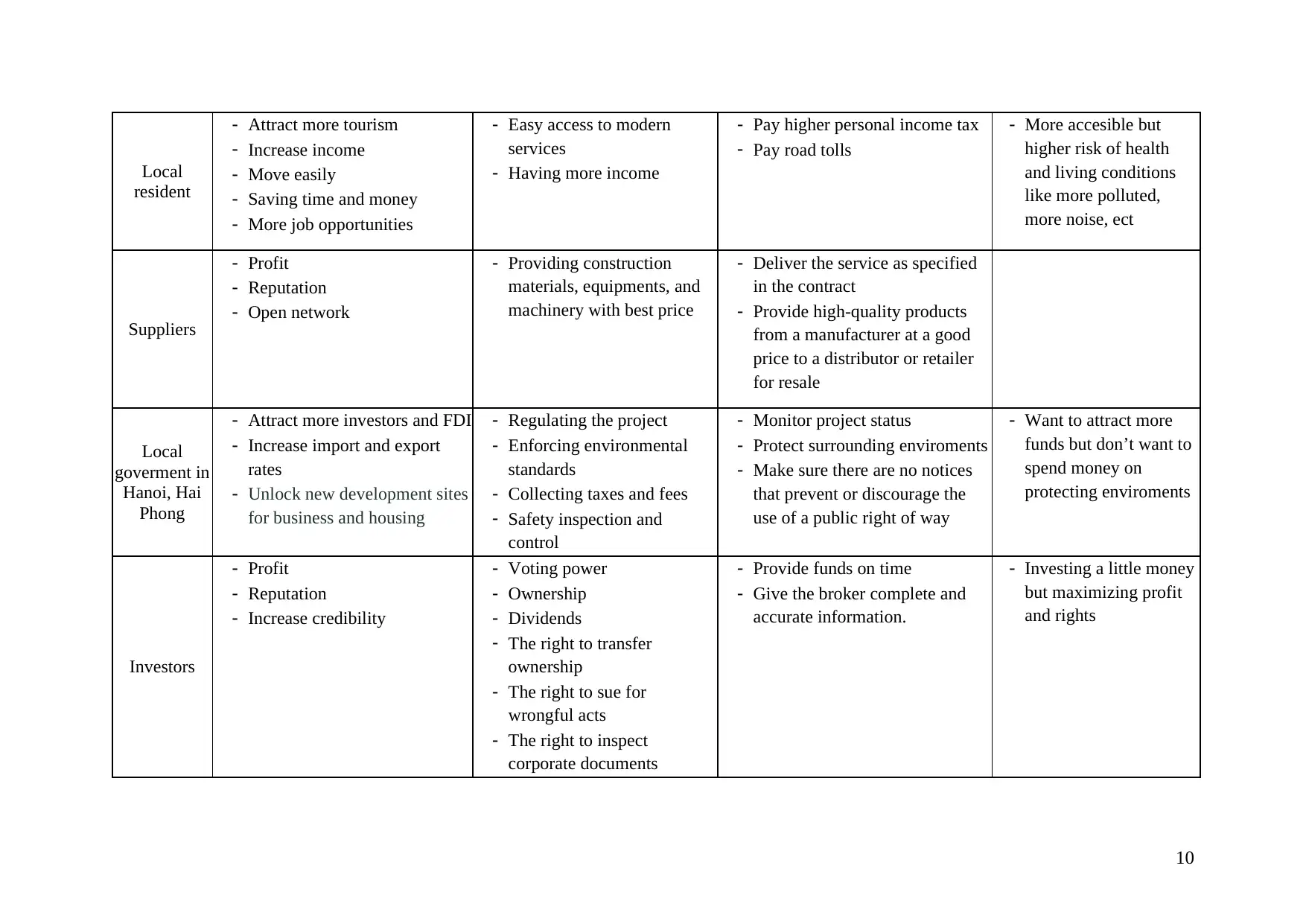
Local
resident
- Attract more tourism
- Increase income
- Move easily
- Saving time and money
- More job opportunities
- Easy access to modern
services
- Having more income
- Pay higher personal income tax
- Pay road tolls
- More accesible but
higher risk of health
and living conditions
like more polluted,
more noise, ect
Suppliers
- Profit
- Reputation
- Open network
- Providing construction
materials, equipments, and
machinery with best price
- Deliver the service as specified
in the contract
- Provide high-quality products
from a manufacturer at a good
price to a distributor or retailer
for resale
Local
goverment in
Hanoi, Hai
Phong
- Attract more investors and FDI
- Increase import and export
rates
- Unlock new development sites
for business and housing
- Regulating the project
- Enforcing environmental
standards
- Collecting taxes and fees
- Safety inspection and
control
- Monitor project status
- Protect surrounding enviroments
- Make sure there are no notices
that prevent or discourage the
use of a public right of way
- Want to attract more
funds but don’t want to
spend money on
protecting enviroments
Investors
- Profit
- Reputation
- Increase credibility
- Voting power
- Ownership
- Dividends
- The right to transfer
ownership
- The right to sue for
wrongful acts
- The right to inspect
corporate documents
- Provide funds on time
- Give the broker complete and
accurate information.
- Investing a little money
but maximizing profit
and rights
Local
resident
- Attract more tourism
- Increase income
- Move easily
- Saving time and money
- More job opportunities
- Easy access to modern
services
- Having more income
- Pay higher personal income tax
- Pay road tolls
- More accesible but
higher risk of health
and living conditions
like more polluted,
more noise, ect
Suppliers
- Profit
- Reputation
- Open network
- Providing construction
materials, equipments, and
machinery with best price
- Deliver the service as specified
in the contract
- Provide high-quality products
from a manufacturer at a good
price to a distributor or retailer
for resale
Local
goverment in
Hanoi, Hai
Phong
- Attract more investors and FDI
- Increase import and export
rates
- Unlock new development sites
for business and housing
- Regulating the project
- Enforcing environmental
standards
- Collecting taxes and fees
- Safety inspection and
control
- Monitor project status
- Protect surrounding enviroments
- Make sure there are no notices
that prevent or discourage the
use of a public right of way
- Want to attract more
funds but don’t want to
spend money on
protecting enviroments
Investors
- Profit
- Reputation
- Increase credibility
- Voting power
- Ownership
- Dividends
- The right to transfer
ownership
- The right to sue for
wrongful acts
- The right to inspect
corporate documents
- Provide funds on time
- Give the broker complete and
accurate information.
- Investing a little money
but maximizing profit
and rights
11
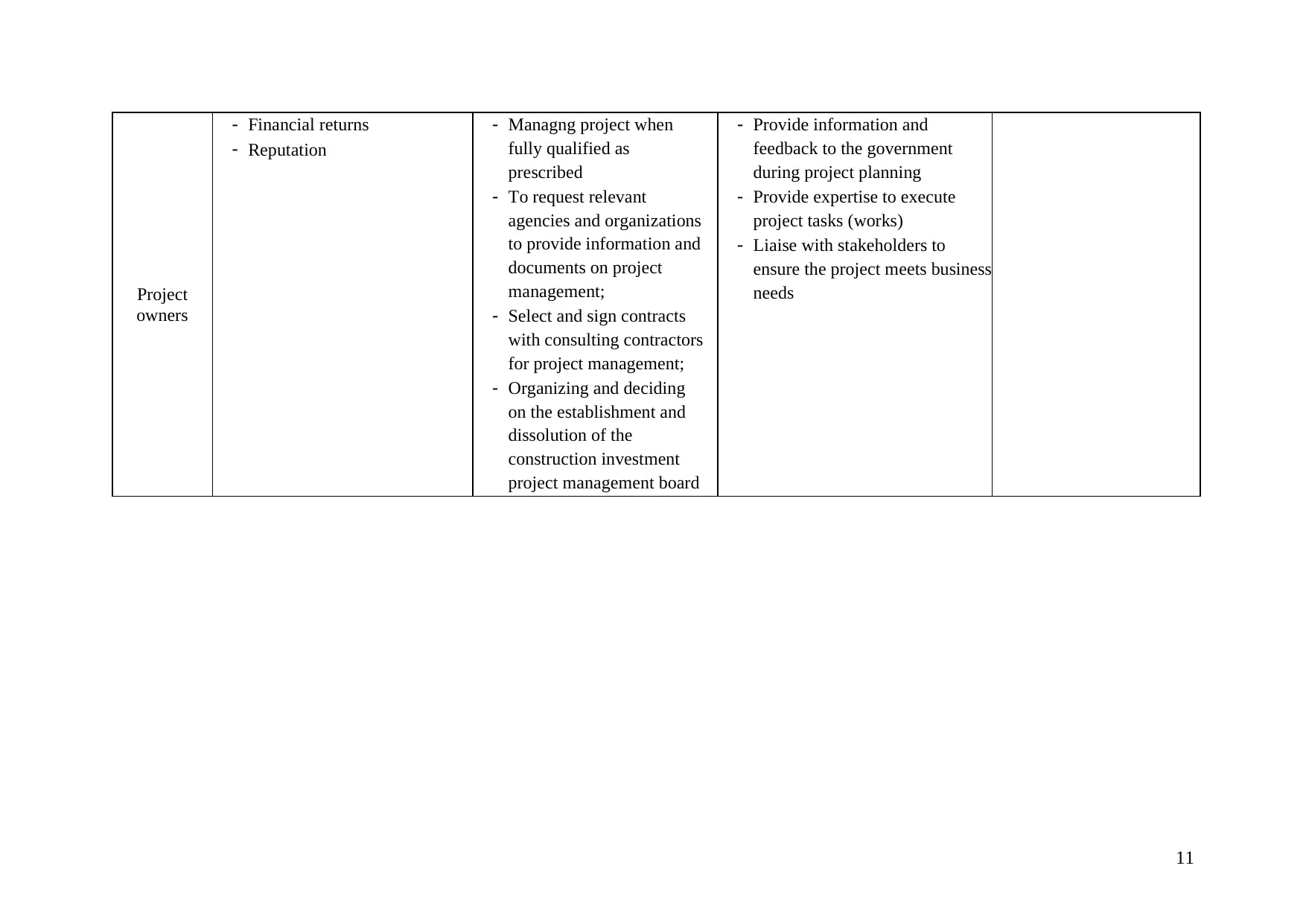
Project
owners
- Financial returns
- Reputation
- Managng project when
fully qualified as
prescribed
- To request relevant
agencies and organizations
to provide information and
documents on project
management;
- Select and sign contracts
with consulting contractors
for project management;
- Organizing and deciding
on the establishment and
dissolution of the
construction investment
project management board
- Provide information and
feedback to the government
during project planning
- Provide expertise to execute
project tasks (works)
- Liaise with stakeholders to
ensure the project meets business
needs
Project
owners
- Financial returns
- Reputation
- Managng project when
fully qualified as
prescribed
- To request relevant
agencies and organizations
to provide information and
documents on project
management;
- Select and sign contracts
with consulting contractors
for project management;
- Organizing and deciding
on the establishment and
dissolution of the
construction investment
project management board
- Provide information and
feedback to the government
during project planning
- Provide expertise to execute
project tasks (works)
- Liaise with stakeholders to
ensure the project meets business
needs
⊘ This is a preview!⊘
Do you want full access?
Subscribe today to unlock all pages.
Trusted by 1+ million students worldwide

1 out of 37


Related Documents


Your All-in-One AI-Powered Toolkit for Academic Success.
+13062052269
info@desklib.com
Available 24*7 on WhatsApp / Email
![[object Object]](/_next/static/media/star-bottom.7253800d.svg)
Unlock your academic potential
Copyright © 2020–2026 A2Z Services. All Rights Reserved. Developed and managed by ZUCOL.