Home Safety Presentation: Health Promotion for 3-5 Year Old Children

Verified

Added on  2023/06/09

|10
|341
|122
Presentation
AI Summary
This presentation on home safety emphasizes the importance of creating a safe home environment for children between three and five years old, a critical age when children become more independent and explore their limits. It highlights that most home injuries are predictable and preventable by addressing potential hazards in various rooms, including the living room (candles, photo frames, televisions), bedroom (windows, cords), kitchen (access, cabinets, stove), and bathroom (faucets, wastebaskets). The presentation references research on child development and parental safety practices, promoting awareness and proactive measures to minimize risks and ensure a safer upbringing. Desklib offers a wealth of resources, including past papers and solved assignments, to further support students in related studies.
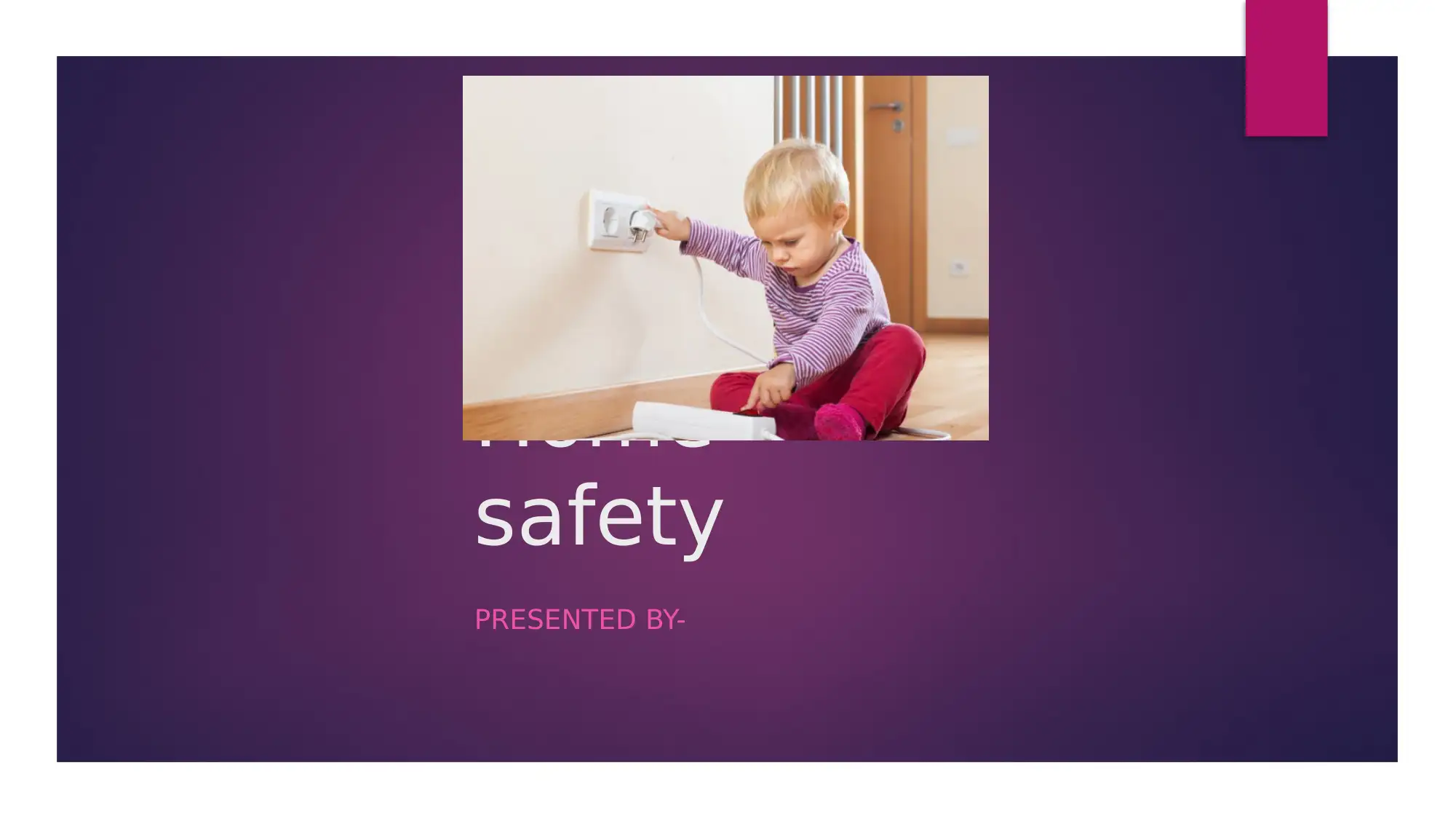
Document Page
Home
safety
PRESENTED BY-
tabler-icon-diamond-filled.svg

Paraphrase This Document

Need a fresh take? Get an instant paraphrase of this document with our AI Paraphraser
Document Page
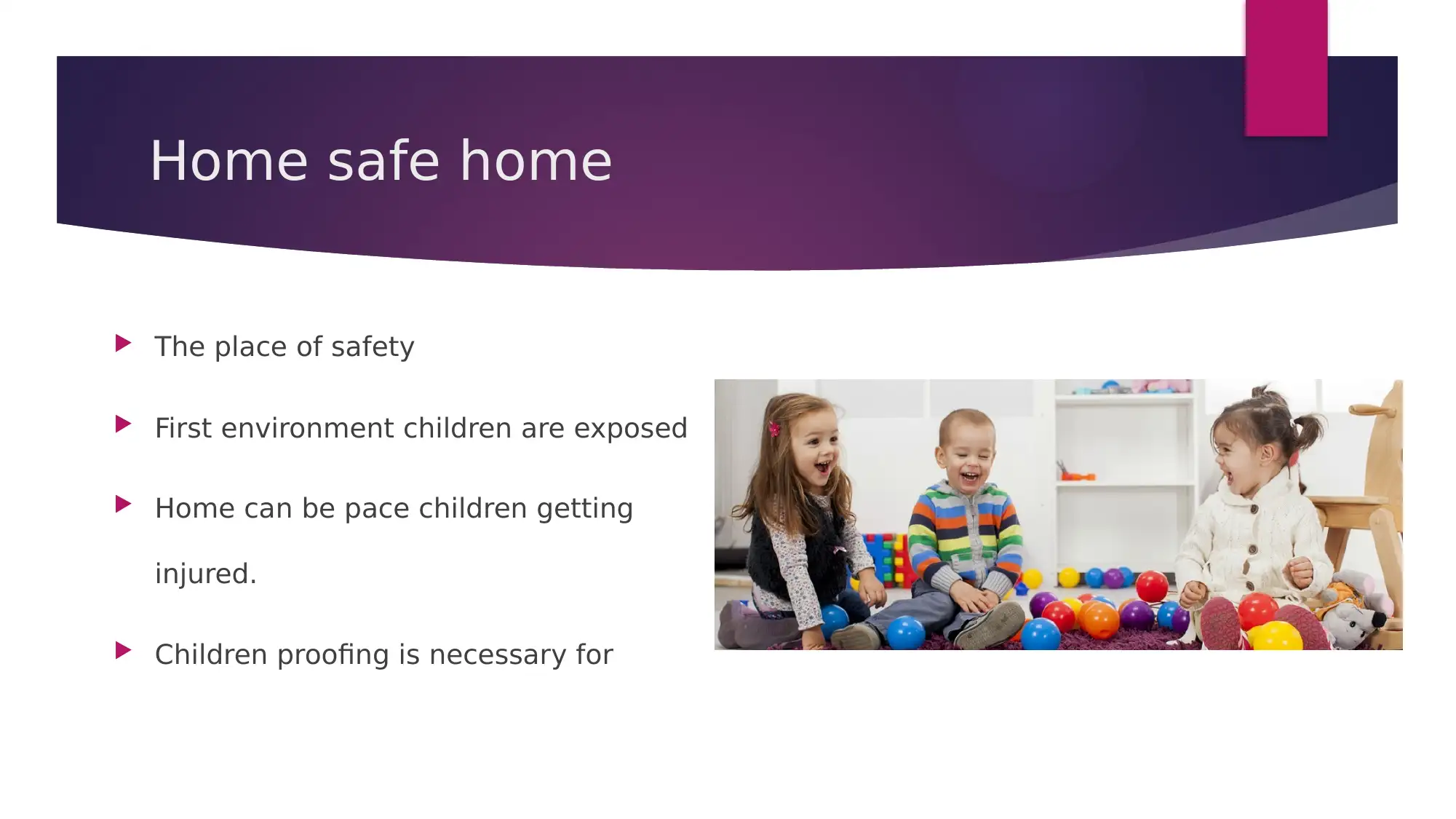
Home safe home
The place of safety
First environment children are exposed
Home can be pace children getting
injured.
Children proofing is necessary for
Document Page
Home safety
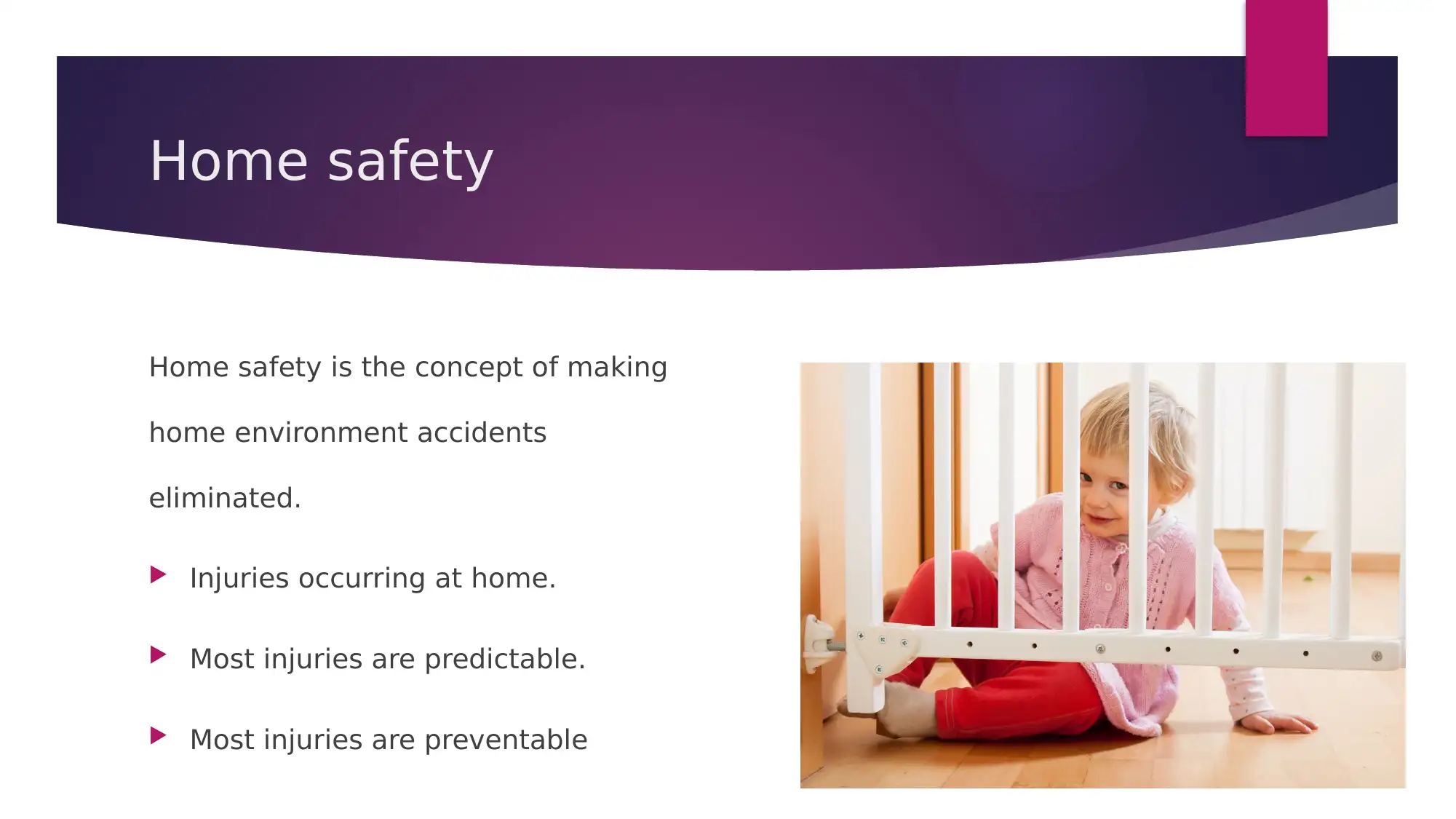
Home safety is the concept of making
home environment accidents
eliminated.
Injuries occurring at home.
Most injuries are predictable.
Most injuries are preventable
Document Page
3-5 years children
Children becomes independent.
They try their limits
Improved gross motor skills
They like active activities
Improved fine motor skill
They understand language and
conversation
They understand emotions
They can build sentences
tabler-icon-diamond-filled.svg

Paraphrase This Document

Need a fresh take? Get an instant paraphrase of this document with our AI Paraphraser
Document Page
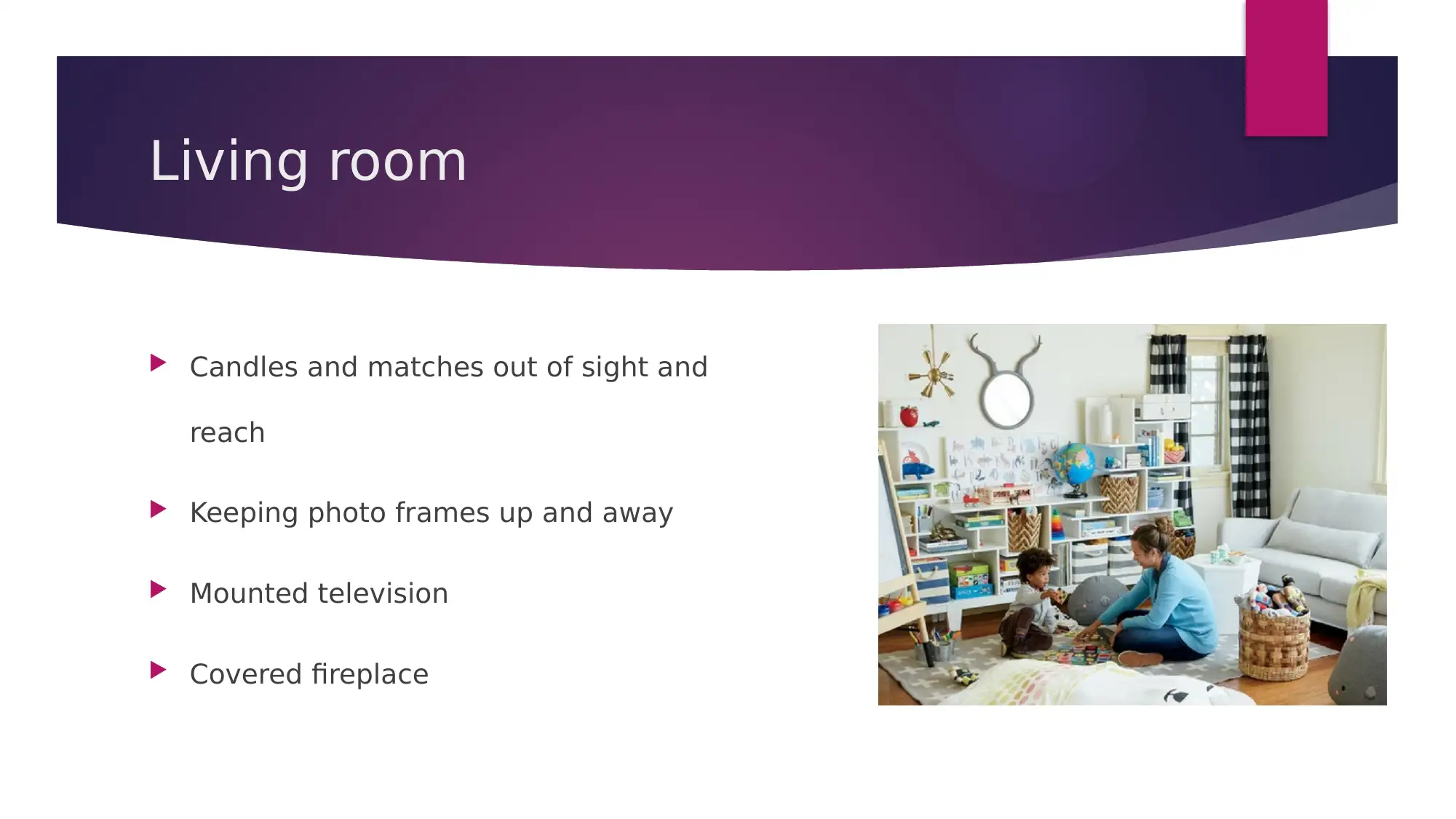
Living room
Candles and matches out of sight and
reach
Keeping photo frames up and away
Mounted television
Covered fireplace
Document Page
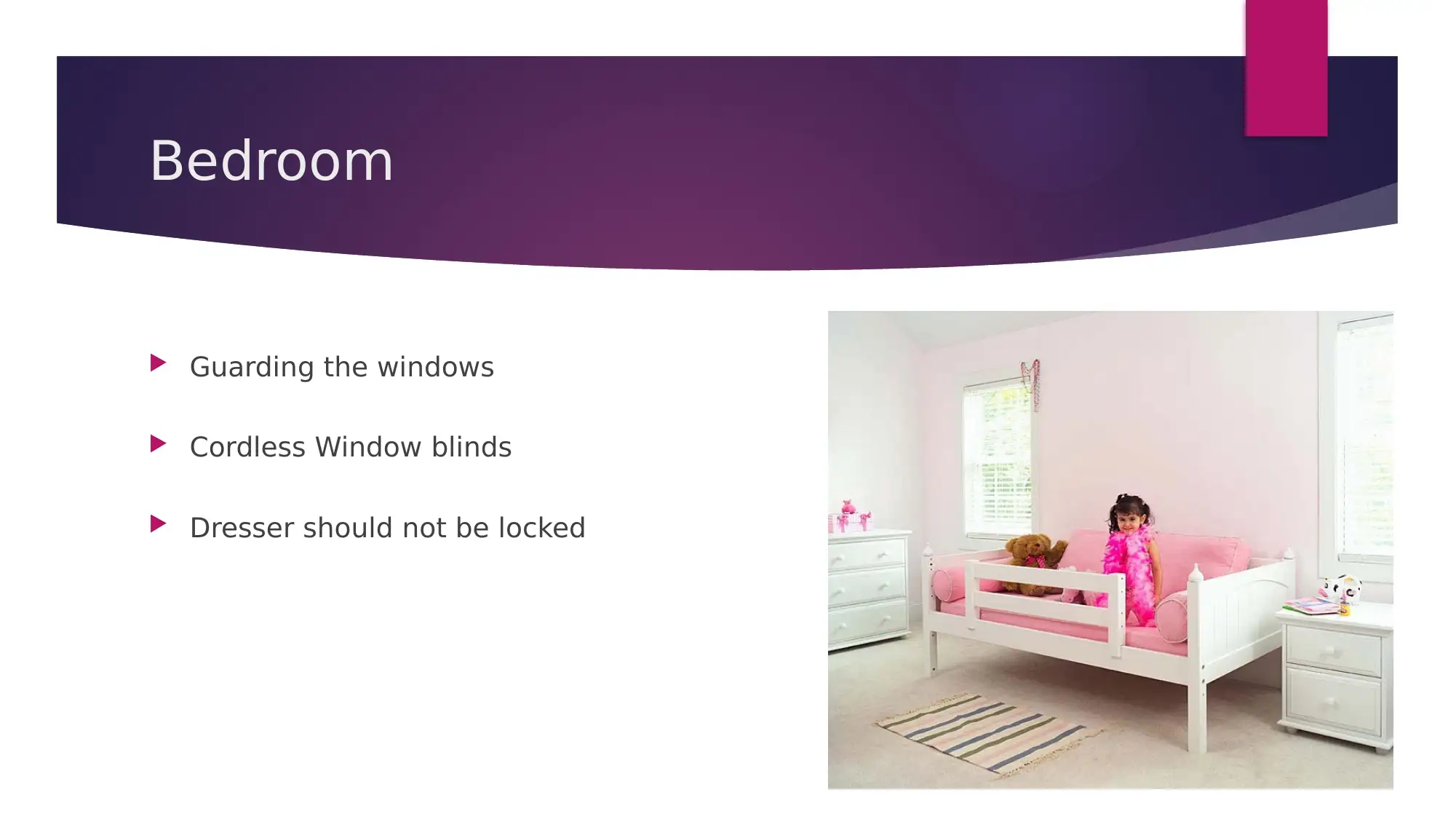
Bedroom
Guarding the windows
Cordless Window blinds
Dresser should not be locked
Document Page
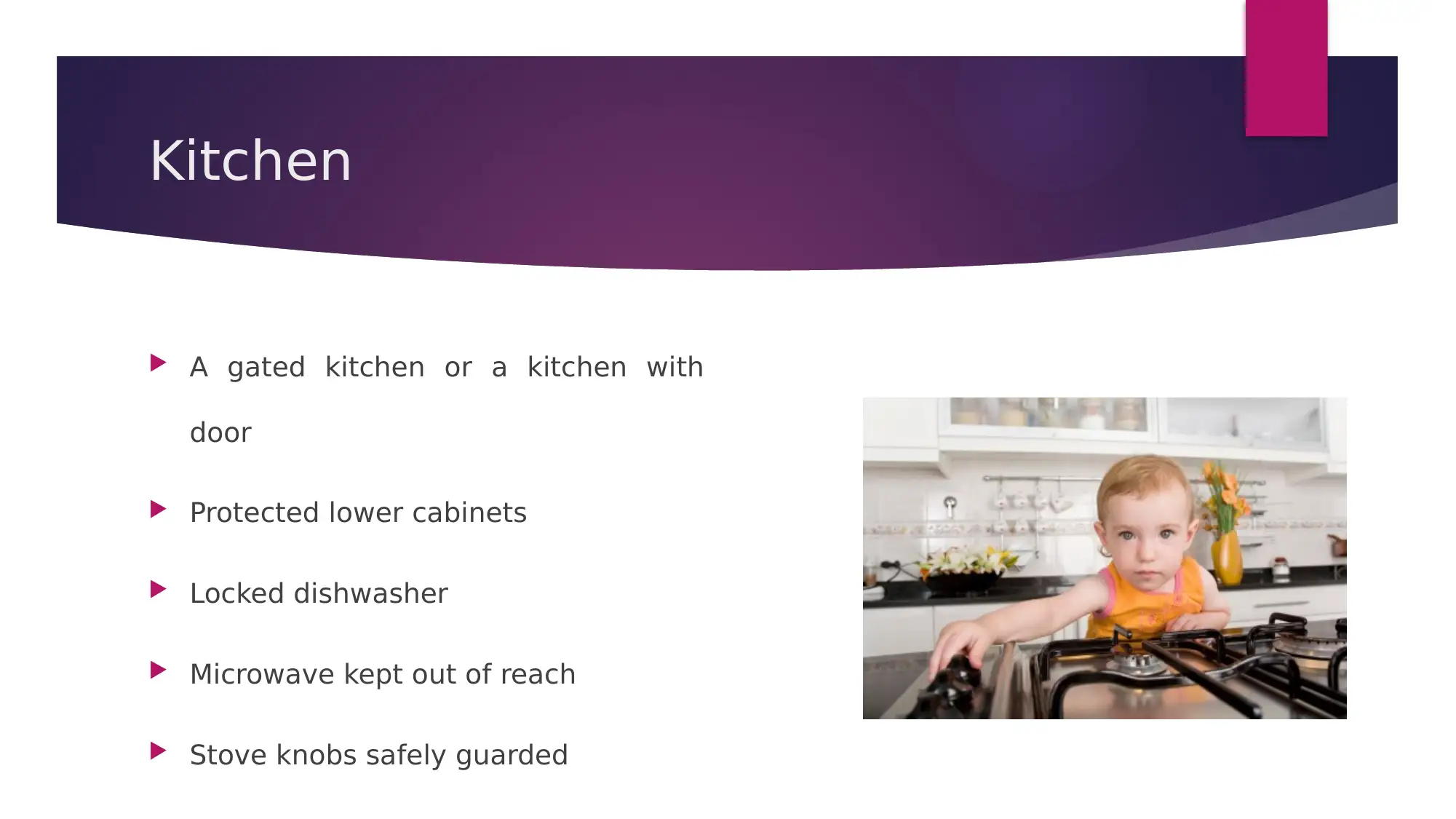
Kitchen
A gated kitchen or a kitchen with
door
Protected lower cabinets
Locked dishwasher
Microwave kept out of reach
Stove knobs safely guarded
tabler-icon-diamond-filled.svg

Paraphrase This Document

Need a fresh take? Get an instant paraphrase of this document with our AI Paraphraser
Document Page
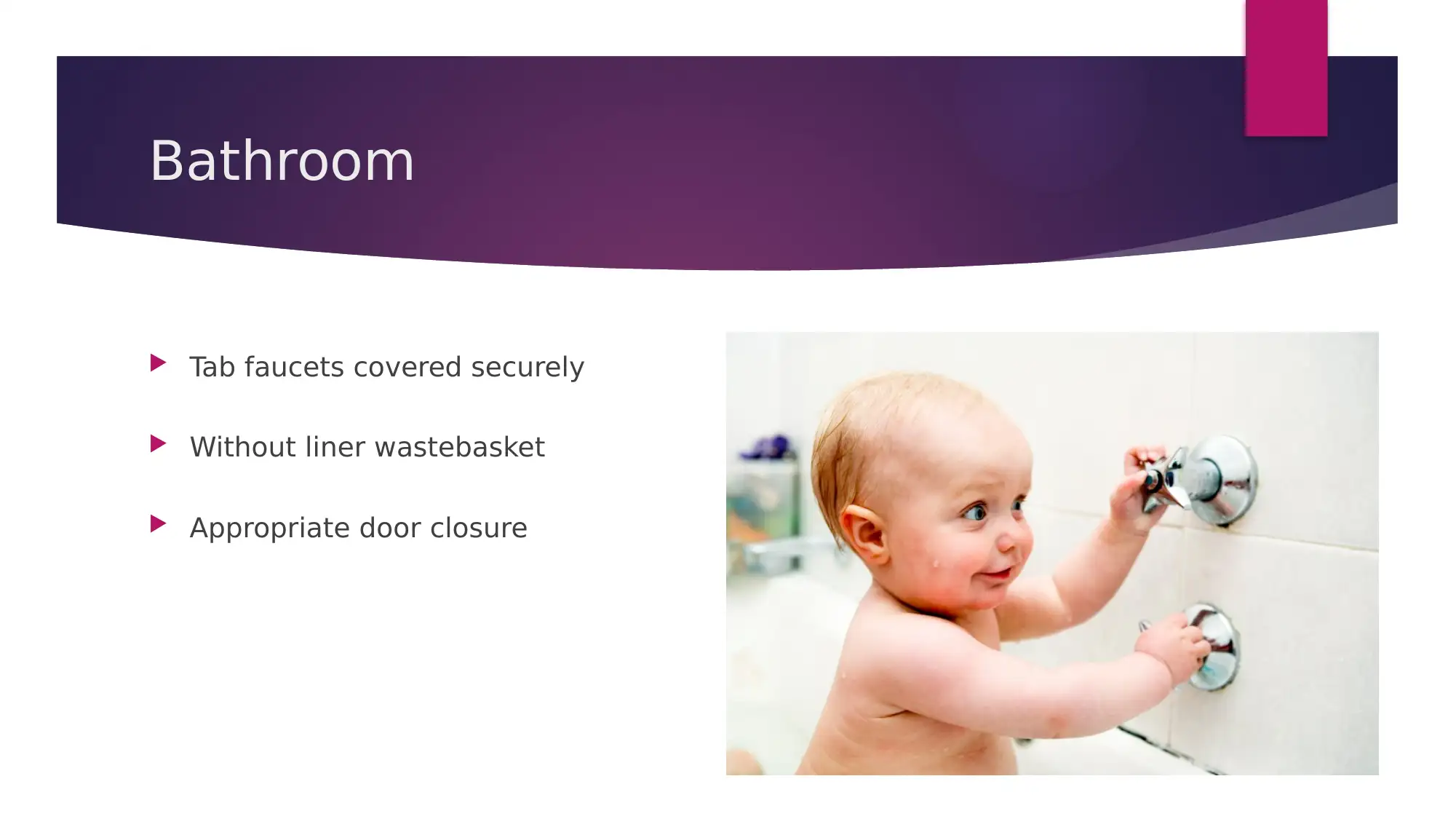
Bathroom
Tab faucets covered securely
Without liner wastebasket
Appropriate door closure
Document Page
References:
Mangin, K. S., Horwood, L. J., & Woodward, L. J. (2017). Cognitive development
trajectories of very preterm and typically developing children. Child
development, 88(1), 282-298.
Morrongiello, B. A. (2018). Preventing Unintentional Injuries to Young Children in
the Home: Understanding and Influencing Parents’ Safety Practices. Child
Development Perspectives.
Palaiologou, I. (2016). Children under five and digital technologies: implications for
early years pedagogy. European Early Childhood Education Research
Journal, 24(1), 5-24.
Tyler, D. (2017). ‘Setting the Child Free’: Teachers, Mothers and Child-centred
Pedagogy in the 1930s Kindergarten. In Gender matters in educational
administration and policy (pp. 49-67). Routledge.
Document Page
THANK
YOU
chevron_up_icon
1 out of 10
circle_padding
hide_on_mobile
zoom_out_icon
[object Object]