Honeywell BPR Case Study: Lessons in Radical Change Management
VerifiedAdded on 2023/06/03
|15
|4640
|449
Case Study
AI Summary
This case study delves into Honeywell International Corporation's journey with radical change, specifically focusing on their business process reengineering (BPR) initiatives. It highlights the company's initial challenges, the implementation of process improvements to redefine business processes, the execution of these changes, and the critical lessons learned throughout the transformation. The study emphasizes the importance of a well-developed change plan, effective communication of the change vision across the organization, and prioritizing change management. Key principles such as teamwork, communication, process mapping, and fail-safe mechanisms are examined in detail, illustrating how Honeywell leveraged these elements to achieve significant improvements in efficiency, defect reduction, and overall performance. The analysis also touches on the role of technology and leadership in driving successful change within the organization, providing valuable insights for other companies undergoing similar transformations. Desklib offers this case study and other solved assignments to aid students in their studies.

Honeywell change case 1
HONEYWELL CHANGE CASE
By
Course
Tutor
University
City/State
Date
HONEYWELL CHANGE CASE
By
Course
Tutor
University
City/State
Date

Paraphrase This Document
Need a fresh take? Get an instant paraphrase of this document with our AI Paraphraser
Honeywell change case 2
Table of Contents
Cover page......................................................................................................................1
Table of content..............................................................................................................2
Table of figures...............................................................................................................3
1. EXECUTIVE SUMMARY...............................................................................4
2. Introduction........................................................................................................4
3. THE ORGANISATION’S STRATEGY........................................................5
4. Honeywell International Corporation.............................................................5
5. PROCESSES AND DEFECT DIAGNOSIS..................................................6
6. The Total Plant TM paradigm.........................................................................6
7. Process mapping................................................................................................7
8. Teamwork..........................................................................................................8
9. Fail-safe..............................................................................................................8
10. ROLE OF PEOPLE AND TECHNOLOGY................................................10
11. Communication.................................................................................................10
12. Information technology....................................................................................10
13. IMPLEMENTATION AND EXECUTION..................................................11
14. Lesson learnt......................................................................................................14
15. Conclusion..........................................................................................................14
List of references............................................................................................................15
Table of Contents
Cover page......................................................................................................................1
Table of content..............................................................................................................2
Table of figures...............................................................................................................3
1. EXECUTIVE SUMMARY...............................................................................4
2. Introduction........................................................................................................4
3. THE ORGANISATION’S STRATEGY........................................................5
4. Honeywell International Corporation.............................................................5
5. PROCESSES AND DEFECT DIAGNOSIS..................................................6
6. The Total Plant TM paradigm.........................................................................6
7. Process mapping................................................................................................7
8. Teamwork..........................................................................................................8
9. Fail-safe..............................................................................................................8
10. ROLE OF PEOPLE AND TECHNOLOGY................................................10
11. Communication.................................................................................................10
12. Information technology....................................................................................10
13. IMPLEMENTATION AND EXECUTION..................................................11
14. Lesson learnt......................................................................................................14
15. Conclusion..........................................................................................................14
List of references............................................................................................................15

Honeywell change case 3
Table of figures
Figure 1…………………………………………………………………………7
Figure 2…………………………………………………………………………8
Figure 3…………………………………………………………………………10
Table of figures
Figure 1…………………………………………………………………………7
Figure 2…………………………………………………………………………8
Figure 3…………………………………………………………………………10
⊘ This is a preview!⊘
Do you want full access?
Subscribe today to unlock all pages.

Trusted by 1+ million students worldwide
Honeywell change case 4
1. EXECUTIVE SUMMARY
Honeywell International Corporation is a multibillionaire-dollar industry, which its primary
purpose is the production of the control systems and products used in the control of heat and air
in the commercial buildings and avionics systems. For that reason, the organisation was capable
of employing over 52000 individuals and the management of the operations in 95 nations.
Having the organisation carrying out activities in over 94 countries its business, the firm had to
face some of the various challenges and risks. Importantly, for the organisation to achieve its
goals and objectives, the concept of risk management and strategic management tends to play a
vital role. Therefore, honey well’s risk management remained carried out in two different forms.
The first form of handling risk management in the organisation was cyber risk management and
the second of control the risk remained carried out operationally.
Pollack and Pollack (2015) argue that, the ideology of new program introduction has also
positively contributed to the achievement of the success for Honeywell organisation. For
instance, the opening of the integrated risk management improved the risk of the currency
translation which was a significant threat the organisation was experiencing for the last
numerous decades. Ideally, the proposed program improved the aggregated retention of about
$29 million. A reasonable explanation for that line of thinking is that, while the traditional
insurance remained perceived as a business necessity, the modern program remained viewed as
the commodity to cover all possible risk that the organisation could encounter. On the other
hand, the contemporary application of risk management that remained operating under the
insurance policy, it had not gained the degree of acceptance by the entire broader business
community.
2. Introduction
The drastic improvement of technology has remained to be a contributing factor to most of the
organization in the modern societies. For the last few decades, most of the organization have
experienced development and advancement in their performance because technology has created
an opportunities for the same firms. Honeywell International Corporation is one of the
remarkable firms that have felt the changed in their performance due to the development and
improvement of the technology. In this context, Honeywell organisation has adopted the concept
of business re-engineering as the primary form that the firm deploy to conduct its business
activities. Persson, and Jeppsson (2017) asserts that most of the employees in an organizational
1. EXECUTIVE SUMMARY
Honeywell International Corporation is a multibillionaire-dollar industry, which its primary
purpose is the production of the control systems and products used in the control of heat and air
in the commercial buildings and avionics systems. For that reason, the organisation was capable
of employing over 52000 individuals and the management of the operations in 95 nations.
Having the organisation carrying out activities in over 94 countries its business, the firm had to
face some of the various challenges and risks. Importantly, for the organisation to achieve its
goals and objectives, the concept of risk management and strategic management tends to play a
vital role. Therefore, honey well’s risk management remained carried out in two different forms.
The first form of handling risk management in the organisation was cyber risk management and
the second of control the risk remained carried out operationally.
Pollack and Pollack (2015) argue that, the ideology of new program introduction has also
positively contributed to the achievement of the success for Honeywell organisation. For
instance, the opening of the integrated risk management improved the risk of the currency
translation which was a significant threat the organisation was experiencing for the last
numerous decades. Ideally, the proposed program improved the aggregated retention of about
$29 million. A reasonable explanation for that line of thinking is that, while the traditional
insurance remained perceived as a business necessity, the modern program remained viewed as
the commodity to cover all possible risk that the organisation could encounter. On the other
hand, the contemporary application of risk management that remained operating under the
insurance policy, it had not gained the degree of acceptance by the entire broader business
community.
2. Introduction
The drastic improvement of technology has remained to be a contributing factor to most of the
organization in the modern societies. For the last few decades, most of the organization have
experienced development and advancement in their performance because technology has created
an opportunities for the same firms. Honeywell International Corporation is one of the
remarkable firms that have felt the changed in their performance due to the development and
improvement of the technology. In this context, Honeywell organisation has adopted the concept
of business re-engineering as the primary form that the firm deploy to conduct its business
activities. Persson, and Jeppsson (2017) asserts that most of the employees in an organizational
Paraphrase This Document
Need a fresh take? Get an instant paraphrase of this document with our AI Paraphraser
Honeywell change case 5
setting tend to become resistance to changes due to various reasons. Some of the employees feel
that change may make them an comfortable or may even lead to losing of their jobs.
Consequently, the dramatic changes that Honeywell organization has experienced failed to
materialize because of the resistance to change. For that matter, this case study will attempt to
discuss in detail the various radical changes with an aim to uncover how this particular
organization achieved it success. For that information captivated in this study, it will remain used
to facilitate and help other organization to be on their toes to ensure that they achieve success by
residual transformation.
3. THE ORGANISATION’S STRATEGY
4. Honeywell International Corporation
Christin Jurisch et al. (2014 p.50) reveals that Honeywell is an industrial automation firm
responsible for designing, manufacturing and configuration of the control unit systems that air
regulators that stay used in the commercial buildings. The vision of the organisation is to ensure
that their clients can attain the excellent control capability process. The organisation has
deployed various marketing strategies that have played a vital role in the success of the
organisation. For instance, the organisation has developed a marketing plan and marketing
strategies, which includes promotion strategies. In the marketing planning process, Honeywell
has developed a rigorous review of the marketing functions that articulates for the marketing
objectives and goals thus helping the organisation to increase its profitability.
According to Grant (2016 p. 78), back in 1989, Honeywell management team started the WCM
program for the examining the lagging organisation performance results. Technically, WCM
played a crucial role in the establishment of the ambitious goals, short cycle production, defect
reduction in the firm, and material management. According to the management team, the sole
purpose of this program was to reduce the defect by a significant factor of ten in the production
department, and the cycle time by a factor of five. Additionally, this kind of program also
considered the dogma of environmental conservation for both the employees and the production
of goods. In that regard, the organisation remains to be an ethical-social firm. In that point of
view, the WCM also narrowed down to support teamwork am the employees in the firms. In
essence, the program avoided the concept of assigning the specific task to the employees within a
particular area of the factory and adopted the philosophy of charging the employee on building
the entire product.
setting tend to become resistance to changes due to various reasons. Some of the employees feel
that change may make them an comfortable or may even lead to losing of their jobs.
Consequently, the dramatic changes that Honeywell organization has experienced failed to
materialize because of the resistance to change. For that matter, this case study will attempt to
discuss in detail the various radical changes with an aim to uncover how this particular
organization achieved it success. For that information captivated in this study, it will remain used
to facilitate and help other organization to be on their toes to ensure that they achieve success by
residual transformation.
3. THE ORGANISATION’S STRATEGY
4. Honeywell International Corporation
Christin Jurisch et al. (2014 p.50) reveals that Honeywell is an industrial automation firm
responsible for designing, manufacturing and configuration of the control unit systems that air
regulators that stay used in the commercial buildings. The vision of the organisation is to ensure
that their clients can attain the excellent control capability process. The organisation has
deployed various marketing strategies that have played a vital role in the success of the
organisation. For instance, the organisation has developed a marketing plan and marketing
strategies, which includes promotion strategies. In the marketing planning process, Honeywell
has developed a rigorous review of the marketing functions that articulates for the marketing
objectives and goals thus helping the organisation to increase its profitability.
According to Grant (2016 p. 78), back in 1989, Honeywell management team started the WCM
program for the examining the lagging organisation performance results. Technically, WCM
played a crucial role in the establishment of the ambitious goals, short cycle production, defect
reduction in the firm, and material management. According to the management team, the sole
purpose of this program was to reduce the defect by a significant factor of ten in the production
department, and the cycle time by a factor of five. Additionally, this kind of program also
considered the dogma of environmental conservation for both the employees and the production
of goods. In that regard, the organisation remains to be an ethical-social firm. In that point of
view, the WCM also narrowed down to support teamwork am the employees in the firms. In
essence, the program avoided the concept of assigning the specific task to the employees within a
particular area of the factory and adopted the philosophy of charging the employee on building
the entire product.
Honeywell change case 6
Jurisch et al. (2016, p.795) evaluates that, Honeywell organization happens to structure its
business depending on the various characteristics that remain based on the time of product,
market and technology used. This type of restructuring tends to reflect changes that the
organization faced to the operation and working of the workforce by the introduction of changes
and programmes implementation. Additionally, the organization has made it clear that it is even
changing to a total plant paradigm. The organization is still expanding its operation to the charge
of the bio and medical devices. Honeywell International Corporation remains managed by Darius
Adamczyk as the chairperson and CEO. The organization deploys a transactional form of
leadership where there is an effective communication between the managers and the workforce.
This form of leadership has also contributed to the success of the organization as the duties
remain delegated to the various workers in the organization and get them done according to the
instructions.
Considering Mashhadi et al. (2016, p.400), Honeywell being an excellent organization that is
purposed to achieving its goals and objectives, the organization tends to face various
competitions from the rivals in the market platforms. Honeywell have continued fighting so that
they can overdue the fellow competitor by deploying the porter five-force model for scanning the
opportunities in the market platforms. For instance, the firm has offered the satellite
communication and cockpit system responsible of the repulsion of the Honeywell aerospace
products. Nevertheless, the organization has engaged the concept of turbocharger, which remains
purposed to improve the efficiency and performance of the greater vehicles.
5. PROCESSES AND DEFECT DIAGNOSIS
6. The TotalPlantTM paradigm
Zaidi et al (2016 p. 100) shows that the entire plant paradigm is one of the remarkable systematic
follows of events that remained deployed in Honeywell industries to trigger for change. It went
further to the provision of a level of dissatisfaction among the employees. Technically, the
paradigm deployed four central principles for success. Therefore, each of the four principles is
ideal for the understating the systematic follow of the event in the Honeywell industry to attain
change. The central principles of this concept are teamwork, communication, process mapping,
and fail-safe.
Pollack and Pollack (2015) argues that in any operating organisation, there are some of the
critical challenges that employee must face. For the organisation to overcome these problems,
Jurisch et al. (2016, p.795) evaluates that, Honeywell organization happens to structure its
business depending on the various characteristics that remain based on the time of product,
market and technology used. This type of restructuring tends to reflect changes that the
organization faced to the operation and working of the workforce by the introduction of changes
and programmes implementation. Additionally, the organization has made it clear that it is even
changing to a total plant paradigm. The organization is still expanding its operation to the charge
of the bio and medical devices. Honeywell International Corporation remains managed by Darius
Adamczyk as the chairperson and CEO. The organization deploys a transactional form of
leadership where there is an effective communication between the managers and the workforce.
This form of leadership has also contributed to the success of the organization as the duties
remain delegated to the various workers in the organization and get them done according to the
instructions.
Considering Mashhadi et al. (2016, p.400), Honeywell being an excellent organization that is
purposed to achieving its goals and objectives, the organization tends to face various
competitions from the rivals in the market platforms. Honeywell have continued fighting so that
they can overdue the fellow competitor by deploying the porter five-force model for scanning the
opportunities in the market platforms. For instance, the firm has offered the satellite
communication and cockpit system responsible of the repulsion of the Honeywell aerospace
products. Nevertheless, the organization has engaged the concept of turbocharger, which remains
purposed to improve the efficiency and performance of the greater vehicles.
5. PROCESSES AND DEFECT DIAGNOSIS
6. The TotalPlantTM paradigm
Zaidi et al (2016 p. 100) shows that the entire plant paradigm is one of the remarkable systematic
follows of events that remained deployed in Honeywell industries to trigger for change. It went
further to the provision of a level of dissatisfaction among the employees. Technically, the
paradigm deployed four central principles for success. Therefore, each of the four principles is
ideal for the understating the systematic follow of the event in the Honeywell industry to attain
change. The central principles of this concept are teamwork, communication, process mapping,
and fail-safe.
Pollack and Pollack (2015) argues that in any operating organisation, there are some of the
critical challenges that employee must face. For the organisation to overcome these problems,
⊘ This is a preview!⊘
Do you want full access?
Subscribe today to unlock all pages.
Trusted by 1+ million students worldwide
Honeywell change case 7
training and education on how to deal with the important situation to find the solution is critical.
Therefore, in the context of the Honeywell industries, for the four total plant paradigm principles
to make sense, there was a need for the employees to be trained ion them and empowered so that
they clearly understand them and gain knowledge on how to use them.
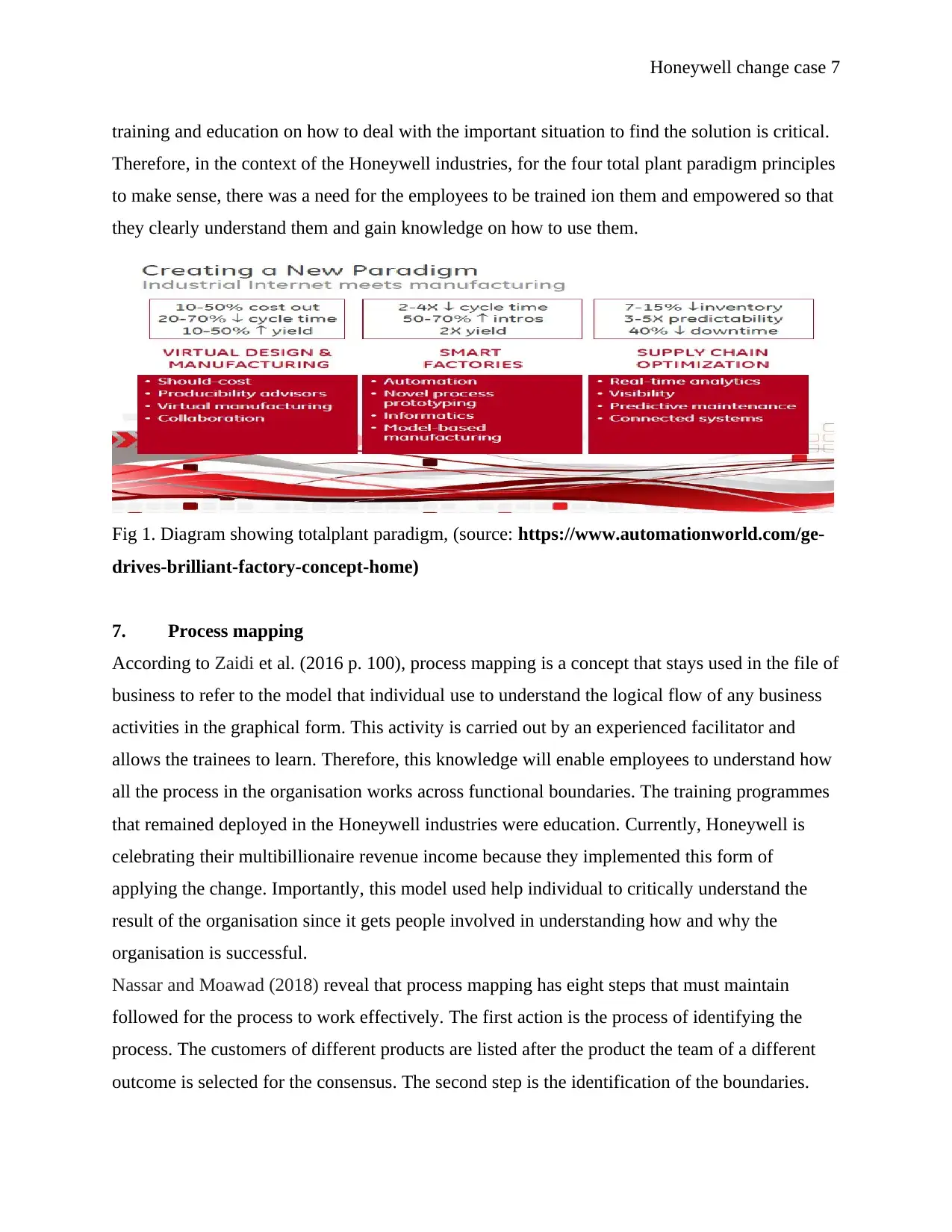
Fig 1. Diagram showing totalplant paradigm, (source: https://www.automationworld.com/ge-
drives-brilliant-factory-concept-home)
7. Process mapping
According to Zaidi et al. (2016 p. 100), process mapping is a concept that stays used in the file of
business to refer to the model that individual use to understand the logical flow of any business
activities in the graphical form. This activity is carried out by an experienced facilitator and
allows the trainees to learn. Therefore, this knowledge will enable employees to understand how
all the process in the organisation works across functional boundaries. The training programmes
that remained deployed in the Honeywell industries were education. Currently, Honeywell is
celebrating their multibillionaire revenue income because they implemented this form of
applying the change. Importantly, this model used help individual to critically understand the
result of the organisation since it gets people involved in understanding how and why the
organisation is successful.
Nassar and Moawad (2018) reveal that process mapping has eight steps that must maintain
followed for the process to work effectively. The first action is the process of identifying the
process. The customers of different products are listed after the product the team of a different
outcome is selected for the consensus. The second step is the identification of the boundaries.
training and education on how to deal with the important situation to find the solution is critical.
Therefore, in the context of the Honeywell industries, for the four total plant paradigm principles
to make sense, there was a need for the employees to be trained ion them and empowered so that
they clearly understand them and gain knowledge on how to use them.
Fig 1. Diagram showing totalplant paradigm, (source: https://www.automationworld.com/ge-
drives-brilliant-factory-concept-home)
7. Process mapping
According to Zaidi et al. (2016 p. 100), process mapping is a concept that stays used in the file of
business to refer to the model that individual use to understand the logical flow of any business
activities in the graphical form. This activity is carried out by an experienced facilitator and
allows the trainees to learn. Therefore, this knowledge will enable employees to understand how
all the process in the organisation works across functional boundaries. The training programmes
that remained deployed in the Honeywell industries were education. Currently, Honeywell is
celebrating their multibillionaire revenue income because they implemented this form of
applying the change. Importantly, this model used help individual to critically understand the
result of the organisation since it gets people involved in understanding how and why the
organisation is successful.
Nassar and Moawad (2018) reveal that process mapping has eight steps that must maintain
followed for the process to work effectively. The first action is the process of identifying the
process. The customers of different products are listed after the product the team of a different
outcome is selected for the consensus. The second step is the identification of the boundaries.
Paraphrase This Document
Need a fresh take? Get an instant paraphrase of this document with our AI Paraphraser
Honeywell change case 8
This explains the total period that it takes the product to reach the client. Thirdly, ensure that
each team has a cross-functional representation of each firm do that all individuals that are
included in the production of the product are done. Fourthly, the creation of the transformation
map, the map will cover all the activities that involve the information and product flow in the
entire organisation. The fifth step is the identification of the cycle time of the whole levels in the
process.
According to Zaidi et al (2016 p. 100), the cycle time is calculated by considering the total time
taken by the product to travel through the processing process. The sixth step is the identification
of the opportunities for further improvement, but they should not be adding the resources. Some
of the opportunities that were identified in the organisation included the typical waiting and
storage steps. The seventh step revolves around the must do the map. This make makes a clear
description of the improvement that has been made in the organisation. It also includes the
pictures and so that it depicts how the process will look like after the entire process has been
improved. Finally, the last step is to develop the final implementation plan, which has to cover
the implementation confirmation. Therefore, having deployed the above steps, the team has the
responsibility to prioritise the opportunities for improvement basing their reasoning in the cycle
time of quality.
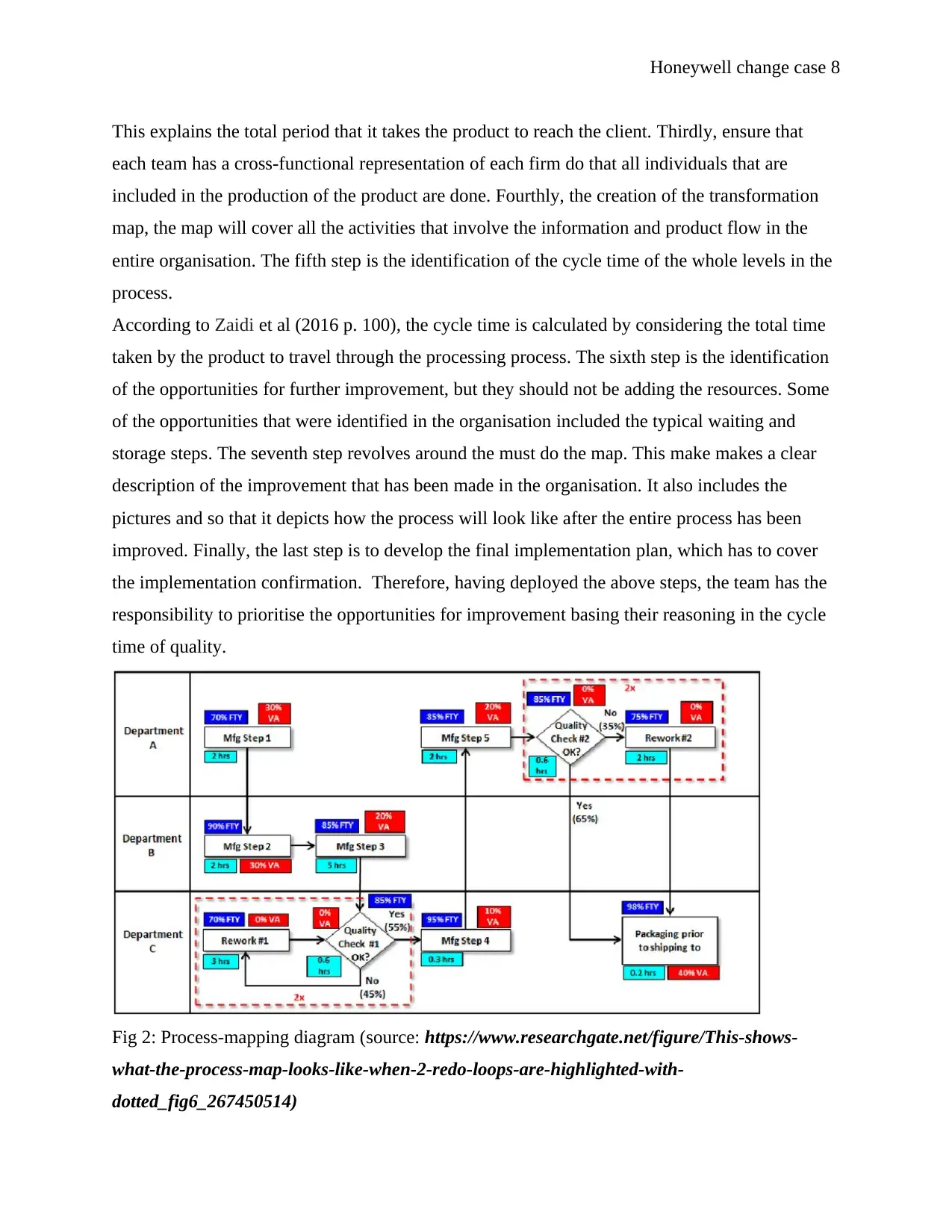
Fig 2: Process-mapping diagram (source: https://www.researchgate.net/figure/This-shows-
what-the-process-map-looks-like-when-2-redo-loops-are-highlighted-with-
dotted_fig6_267450514)
This explains the total period that it takes the product to reach the client. Thirdly, ensure that
each team has a cross-functional representation of each firm do that all individuals that are
included in the production of the product are done. Fourthly, the creation of the transformation
map, the map will cover all the activities that involve the information and product flow in the
entire organisation. The fifth step is the identification of the cycle time of the whole levels in the
process.
According to Zaidi et al (2016 p. 100), the cycle time is calculated by considering the total time
taken by the product to travel through the processing process. The sixth step is the identification
of the opportunities for further improvement, but they should not be adding the resources. Some
of the opportunities that were identified in the organisation included the typical waiting and
storage steps. The seventh step revolves around the must do the map. This make makes a clear
description of the improvement that has been made in the organisation. It also includes the
pictures and so that it depicts how the process will look like after the entire process has been
improved. Finally, the last step is to develop the final implementation plan, which has to cover
the implementation confirmation. Therefore, having deployed the above steps, the team has the
responsibility to prioritise the opportunities for improvement basing their reasoning in the cycle
time of quality.
Fig 2: Process-mapping diagram (source: https://www.researchgate.net/figure/This-shows-
what-the-process-map-looks-like-when-2-redo-loops-are-highlighted-with-
dotted_fig6_267450514)
Honeywell change case 9
8. Teamwork
According to El-Sayed (2017 p. 56), teamwork is another important factor in the Honeywell
industry deployed to identify the defect. In reality, collaboration does not happen naturally.
There must be dedication and effort to earn it. For the employees or people to accept change,
there is the need for training them ion the importance of the change and working together.
Honeywell deployed then manufacturing vision that was used to create the basis and background
of teamwork. This concept tends to the genesis and the crisis of cooperation as it articulated that
all employees own the success of the overall activities of any organisations.
9. Fail-safe
Sanchez-Ruiz and Blanco (2017) reveals that, failsafe is an ideological method that remains used
in the discipline if business to identify the defect, scrutinise it and understand the central cause of
the same. Moreover, it contains the side of offering the solution to the identified problem.
Ideally, a rational thought for this point of view is that failsafe is a method that guarantees defect
free in an organisation. Technically, as process mapping is responsible for diagramming the
entire industries activities, fail safing remains purposed to diagnose a deficiency in an
organisation. For that matter, fail-safe has a various aspect that defines it. Honeywell industry
deploys the PDCA cycle to offer the roadmap to the team working among the employees to
ensure no errors that happen in the rest of the working time.
Additionally, by considering the PDCA cycle, it offers a sound method of data collection and
technology is vital for effective data transmission and delivery. For instance, in the Honeywell
industry, it has placed its priorities and massive investment on the state-of-the-art innovation.
The fail-safe methodology has various steps that should stay followed to identify a problem. The
first step involves the identification of the defect in an organisation. This suggests the
epitomising data by the use of the Pareto chart. After critical analysis, the problem is logged, and
it reveals the type of defect and the possible outcomes. The second step is the identification of
the primary cause of the issues. It is the responsibility of the team members to identify in the
mapping process where red flag exists and rectify accordingly. The third step involves majorly
with the generation of the alternative solutions to the defects. The fourth step is primarily
evaluating and choosing the solution. This is the screening of the entire solutions that have been
presented and choose the best alternative among the rest. Finally, an implementation action plan
8. Teamwork
According to El-Sayed (2017 p. 56), teamwork is another important factor in the Honeywell
industry deployed to identify the defect. In reality, collaboration does not happen naturally.
There must be dedication and effort to earn it. For the employees or people to accept change,
there is the need for training them ion the importance of the change and working together.
Honeywell deployed then manufacturing vision that was used to create the basis and background
of teamwork. This concept tends to the genesis and the crisis of cooperation as it articulated that
all employees own the success of the overall activities of any organisations.
9. Fail-safe
Sanchez-Ruiz and Blanco (2017) reveals that, failsafe is an ideological method that remains used
in the discipline if business to identify the defect, scrutinise it and understand the central cause of
the same. Moreover, it contains the side of offering the solution to the identified problem.
Ideally, a rational thought for this point of view is that failsafe is a method that guarantees defect
free in an organisation. Technically, as process mapping is responsible for diagramming the
entire industries activities, fail safing remains purposed to diagnose a deficiency in an
organisation. For that matter, fail-safe has a various aspect that defines it. Honeywell industry
deploys the PDCA cycle to offer the roadmap to the team working among the employees to
ensure no errors that happen in the rest of the working time.
Additionally, by considering the PDCA cycle, it offers a sound method of data collection and
technology is vital for effective data transmission and delivery. For instance, in the Honeywell
industry, it has placed its priorities and massive investment on the state-of-the-art innovation.
The fail-safe methodology has various steps that should stay followed to identify a problem. The
first step involves the identification of the defect in an organisation. This suggests the
epitomising data by the use of the Pareto chart. After critical analysis, the problem is logged, and
it reveals the type of defect and the possible outcomes. The second step is the identification of
the primary cause of the issues. It is the responsibility of the team members to identify in the
mapping process where red flag exists and rectify accordingly. The third step involves majorly
with the generation of the alternative solutions to the defects. The fourth step is primarily
evaluating and choosing the solution. This is the screening of the entire solutions that have been
presented and choose the best alternative among the rest. Finally, an implementation action plan
⊘ This is a preview!⊘
Do you want full access?
Subscribe today to unlock all pages.
Trusted by 1+ million students worldwide
Honeywell change case 10
remains created. In this section, all individuals who are affected by the change are identified.
Therefore, the responsible team considers the clients, suppliers and offer support to the team.
Additionally, the team also have the power to decide how the device will stay created and finally
implemented.
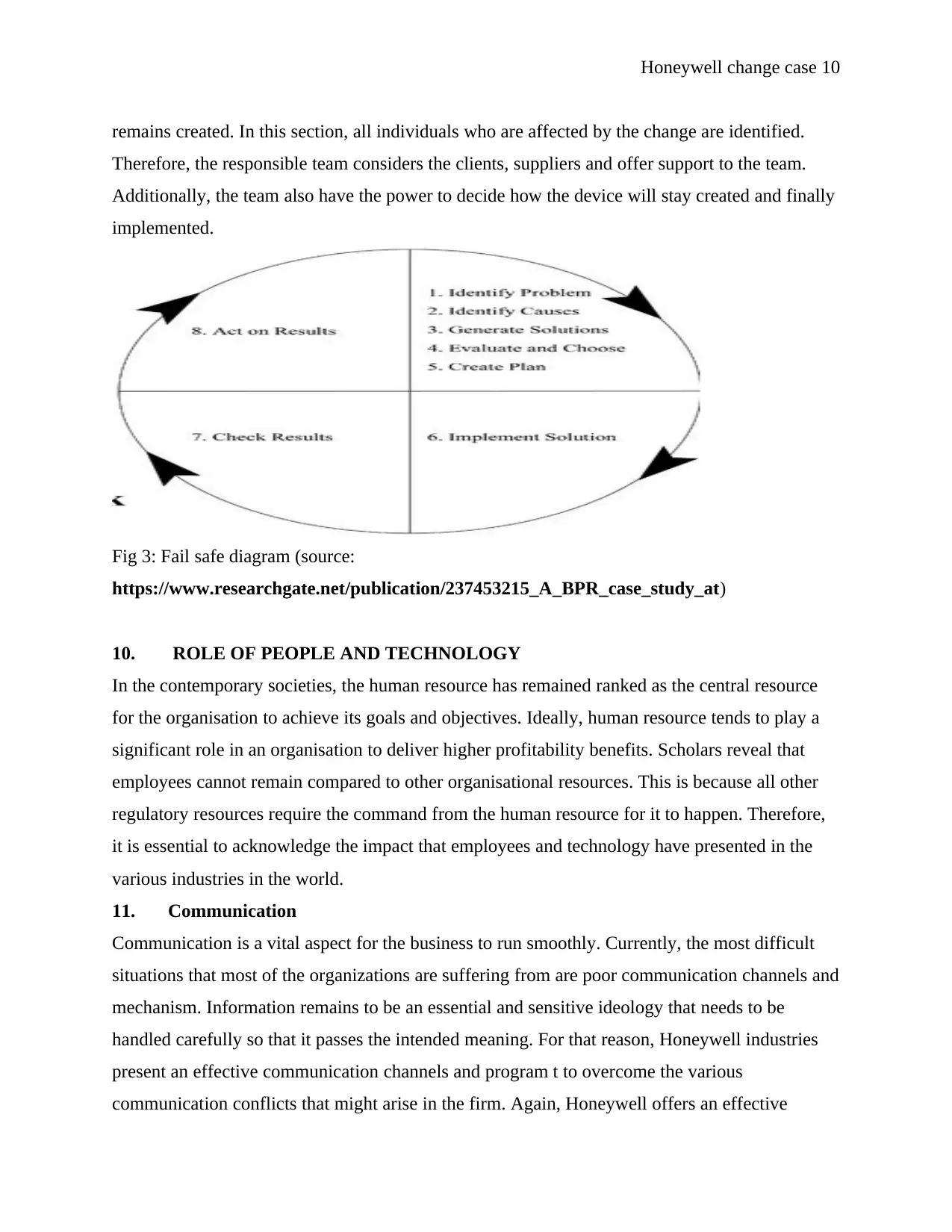
Fig 3: Fail safe diagram (source:
https://www.researchgate.net/publication/237453215_A_BPR_case_study_at)
10. ROLE OF PEOPLE AND TECHNOLOGY
In the contemporary societies, the human resource has remained ranked as the central resource
for the organisation to achieve its goals and objectives. Ideally, human resource tends to play a
significant role in an organisation to deliver higher profitability benefits. Scholars reveal that
employees cannot remain compared to other organisational resources. This is because all other
regulatory resources require the command from the human resource for it to happen. Therefore,
it is essential to acknowledge the impact that employees and technology have presented in the
various industries in the world.
11. Communication
Communication is a vital aspect for the business to run smoothly. Currently, the most difficult
situations that most of the organizations are suffering from are poor communication channels and
mechanism. Information remains to be an essential and sensitive ideology that needs to be
handled carefully so that it passes the intended meaning. For that reason, Honeywell industries
present an effective communication channels and program t to overcome the various
communication conflicts that might arise in the firm. Again, Honeywell offers an effective
remains created. In this section, all individuals who are affected by the change are identified.
Therefore, the responsible team considers the clients, suppliers and offer support to the team.
Additionally, the team also have the power to decide how the device will stay created and finally
implemented.
Fig 3: Fail safe diagram (source:
https://www.researchgate.net/publication/237453215_A_BPR_case_study_at)
10. ROLE OF PEOPLE AND TECHNOLOGY
In the contemporary societies, the human resource has remained ranked as the central resource
for the organisation to achieve its goals and objectives. Ideally, human resource tends to play a
significant role in an organisation to deliver higher profitability benefits. Scholars reveal that
employees cannot remain compared to other organisational resources. This is because all other
regulatory resources require the command from the human resource for it to happen. Therefore,
it is essential to acknowledge the impact that employees and technology have presented in the
various industries in the world.
11. Communication
Communication is a vital aspect for the business to run smoothly. Currently, the most difficult
situations that most of the organizations are suffering from are poor communication channels and
mechanism. Information remains to be an essential and sensitive ideology that needs to be
handled carefully so that it passes the intended meaning. For that reason, Honeywell industries
present an effective communication channels and program t to overcome the various
communication conflicts that might arise in the firm. Again, Honeywell offers an effective
Paraphrase This Document
Need a fresh take? Get an instant paraphrase of this document with our AI Paraphraser
Honeywell change case 11
conflict resolution training that remains aimed to help the teams to deal with any conflict that
may arise in a positive way.
Therefore, the concept that is gained via training plays a significant role in managing an
organization as it reduces the number of conflict in the firm and increasing mutual
understanding. Moreover, the strict management of Honeywell industries have also facilitated for
the people to change. For instance, the pushing of the people to meet what is beyond the way
expectation makes them to think and realize that they need to change their plan and how they do
their things. Generally, the role of communication skill is to ensure that there is no conflict and
fight in an organization and increasing the profitability of an organization.
12. Information technology
AlShathry (2016 p. 510) opines that most of the organisation currently depends on technology to
perform their operations. For instance, the Honeywell industries entirely depend on information
technology automation for it to have their daily activity done in their plant. Since this industry is
solely used to produce automation and devices that must be of higher quality, it needs to
incorporate information technology so that it can win their clients’ attention. The primary
purpose of information technology in Honeywell industries to ensure the company produces
world-class products since the production process tends to have the various complex
manufacturing process. Therefore, all the information technology that remains deployed in the
organisation is viewable at each stage of the production cell. Besides, information technology
remains used in the organisation to support the offices that are integrated into the total systems.
The organisation engineers and computer experts ensure that the systems are running continuous
and no defect occurs.
Persson and Jeppsson (2017) assert that the top management tends to use the information system
to monitors and evaluate the production performance in the various department of the
organisation. In conjunction to back in 1989, the organisation had not established a well
sustainable IT in the organisation a factor that contributed to the failure of the firm hitting their
targets. The information technology remained incorporated in the firm via the mapping process
that could support production and later transformed the system to match the map. Currently, the
It department of Honeywell is one of the most advanced experts who are capable of linking
technology to the manufacturing process thus contributing to the great strides to the line of
service provision with the need of the business.
conflict resolution training that remains aimed to help the teams to deal with any conflict that
may arise in a positive way.
Therefore, the concept that is gained via training plays a significant role in managing an
organization as it reduces the number of conflict in the firm and increasing mutual
understanding. Moreover, the strict management of Honeywell industries have also facilitated for
the people to change. For instance, the pushing of the people to meet what is beyond the way
expectation makes them to think and realize that they need to change their plan and how they do
their things. Generally, the role of communication skill is to ensure that there is no conflict and
fight in an organization and increasing the profitability of an organization.
12. Information technology
AlShathry (2016 p. 510) opines that most of the organisation currently depends on technology to
perform their operations. For instance, the Honeywell industries entirely depend on information
technology automation for it to have their daily activity done in their plant. Since this industry is
solely used to produce automation and devices that must be of higher quality, it needs to
incorporate information technology so that it can win their clients’ attention. The primary
purpose of information technology in Honeywell industries to ensure the company produces
world-class products since the production process tends to have the various complex
manufacturing process. Therefore, all the information technology that remains deployed in the
organisation is viewable at each stage of the production cell. Besides, information technology
remains used in the organisation to support the offices that are integrated into the total systems.
The organisation engineers and computer experts ensure that the systems are running continuous
and no defect occurs.
Persson and Jeppsson (2017) assert that the top management tends to use the information system
to monitors and evaluate the production performance in the various department of the
organisation. In conjunction to back in 1989, the organisation had not established a well
sustainable IT in the organisation a factor that contributed to the failure of the firm hitting their
targets. The information technology remained incorporated in the firm via the mapping process
that could support production and later transformed the system to match the map. Currently, the
It department of Honeywell is one of the most advanced experts who are capable of linking
technology to the manufacturing process thus contributing to the great strides to the line of
service provision with the need of the business.
Honeywell change case 12
13. IMPLEMENTATION AND EXECUTION
According to Mathew et al (2015 p.129), Honeywell happens to have the four-core mechanism
that tends to facilitate more profitability thus contributing to the greater success. The central
arrangements are active communication channels and programs, teamwork, fail-safe, and process
mapping. Under normal circumstance, what typically makes a difference between success and
failure is the mechanism of execution deployed. In that a regard, it remains to be a responsibility
of the top management to conduct education to the workforce on the concept of the central four-
core aspect so that they understand their importance.
Taylor et al. (2015 p. 6) asserts that for the managers to achieve this ideology, they have to
employ a facilitative form of leadership so that employees can see the need for change. Besides,
provision of remuneration to the various teams that meet their target needs to be activated so that
the workforce is motivated. Again, organisational structure is another aspect that is vital for the
achievement of the objectives and goals of an organisation. A sensible thought for that line is
that the environment should be made conducive to support new technology and innovations. In
essence, the execution process tends to flow from the top managing corporate vision to the
management and workers in the context of strategic planning.
For Honeywell, the ideology of change is not a big deal because the industry has remained
embracing this philosophy for the past numerous decades. Additionally, Honeywell has been
ranked as the top industries that exploit quality management. This ranked has been achieved
since the organisation is consistency with training programs and reward of value. For that reason,
the concept of execution is much more comfortable in this organisation as compared to other
organisations. Even though the organisation is well organised, there are some of the execution
barriers seen in the firm. According to the Honeywell journal, the most significant barrier that
the organisation is experiencing is the execution challenge with the middle of the management
rank. This remains to be a challenge because the middle management continues to be experts in
the specific areas. For that matter, the managers are not capable of seeing the importance of the
cross-specialisation due to the limit of the mind to the flow of material form of handling a
problem.
Honeywell industry has successfully incorporated the integrated corporate social responsibility
as one of the social innovation for the running of their activities. Honeywell decides to adopt this
form of social innovation with an aim to balance their social, environment, and economical
13. IMPLEMENTATION AND EXECUTION
According to Mathew et al (2015 p.129), Honeywell happens to have the four-core mechanism
that tends to facilitate more profitability thus contributing to the greater success. The central
arrangements are active communication channels and programs, teamwork, fail-safe, and process
mapping. Under normal circumstance, what typically makes a difference between success and
failure is the mechanism of execution deployed. In that a regard, it remains to be a responsibility
of the top management to conduct education to the workforce on the concept of the central four-
core aspect so that they understand their importance.
Taylor et al. (2015 p. 6) asserts that for the managers to achieve this ideology, they have to
employ a facilitative form of leadership so that employees can see the need for change. Besides,
provision of remuneration to the various teams that meet their target needs to be activated so that
the workforce is motivated. Again, organisational structure is another aspect that is vital for the
achievement of the objectives and goals of an organisation. A sensible thought for that line is
that the environment should be made conducive to support new technology and innovations. In
essence, the execution process tends to flow from the top managing corporate vision to the
management and workers in the context of strategic planning.
For Honeywell, the ideology of change is not a big deal because the industry has remained
embracing this philosophy for the past numerous decades. Additionally, Honeywell has been
ranked as the top industries that exploit quality management. This ranked has been achieved
since the organisation is consistency with training programs and reward of value. For that reason,
the concept of execution is much more comfortable in this organisation as compared to other
organisations. Even though the organisation is well organised, there are some of the execution
barriers seen in the firm. According to the Honeywell journal, the most significant barrier that
the organisation is experiencing is the execution challenge with the middle of the management
rank. This remains to be a challenge because the middle management continues to be experts in
the specific areas. For that matter, the managers are not capable of seeing the importance of the
cross-specialisation due to the limit of the mind to the flow of material form of handling a
problem.
Honeywell industry has successfully incorporated the integrated corporate social responsibility
as one of the social innovation for the running of their activities. Honeywell decides to adopt this
form of social innovation with an aim to balance their social, environment, and economical
⊘ This is a preview!⊘
Do you want full access?
Subscribe today to unlock all pages.
Trusted by 1+ million students worldwide

1 out of 15


Related Documents


Your All-in-One AI-Powered Toolkit for Academic Success.
+13062052269
info@desklib.com
Available 24*7 on WhatsApp / Email
![[object Object]](/_next/static/media/star-bottom.7253800d.svg)
Unlock your academic potential
Copyright © 2020–2026 A2Z Services. All Rights Reserved. Developed and managed by ZUCOL.