The Importance of Hospitality Management Education in Cyprus 2018
VerifiedAdded on 2023/06/10
|100
|23908
|372
Dissertation
AI Summary
This dissertation investigates the importance of hospitality management education in enhancing the workforce ability within Cyprus's hospitality industry, a sector that has experienced significant economic growth in recent years. The study addresses challenges such as language and cultural barriers faced by employees and explores how management education can improve professional skills and customer service. The research employs regression analysis and unstructured interviews to test the hypothesis that hospitality management education has a significant impact on workforce ability. The findings contribute recommendations for overcoming challenges and expanding the hospitality industry beyond regional boundaries. The study also acknowledges limitations and suggests future research directions.
Running head: HOSPITALITY MANAGEMENT EDUCATION
Hospitality Management Education
(Topic: The importance of hospitality management education in the hospitality workforce,
case study Cyprus on hospitality industry 2018)
Name of the Student
Name of the University
Author’s Note
Hospitality Management Education
(Topic: The importance of hospitality management education in the hospitality workforce,
case study Cyprus on hospitality industry 2018)
Name of the Student
Name of the University
Author’s Note

Paraphrase This Document
Need a fresh take? Get an instant paraphrase of this document with our AI Paraphraser

1
HOSPITALITY MANAGEMENT EDUCATION
Acknowledgement
In order to accomplish the entire project I have provided immense effort and dedication. Still, the
paper could not have been possible if I did not have a support of these individuals. I am grateful
to all my seniors who have constantly supported me in conducting the project and rectified my
mistake without losing any patience. I want to pay my gratitude to my guide especially without
whom I could not collect data such an organized way. The acknowledgement would not be
completed without showing utmost gratitude of my friend circle.
HOSPITALITY MANAGEMENT EDUCATION
Acknowledgement
In order to accomplish the entire project I have provided immense effort and dedication. Still, the
paper could not have been possible if I did not have a support of these individuals. I am grateful
to all my seniors who have constantly supported me in conducting the project and rectified my
mistake without losing any patience. I want to pay my gratitude to my guide especially without
whom I could not collect data such an organized way. The acknowledgement would not be
completed without showing utmost gratitude of my friend circle.
2
HOSPITALITY MANAGEMENT EDUCATION
Abstract
This very specific study has focused to make detailed overview on how employees with the help
of effective hospitality management education can strengthen their workforce ability and
competency skill. In last five years hospitality and tourism industry in Cyprus has reached
enormous economic growth which enables the business experts in developing their country and
enhancing employability opportunity. The primary objective of this study is to critically
understand the importance of hospitality management education in enhancing the hospitality
workforce ability of Cyprus hospitality industry.
Hospitality management education has significant impact in enhancing workforce ability of
hospitality industry Literature review is considered as one of the most significant parts that need
to be critically evaluated by amalgamating the opinion of numerous eminent scholars. By
maintaining appropriate data collection method the research would are analyzed from different
perspectives. In order to prove hypothesis based on two research variables the study has focused
to use regression analysis. Apart from regression analysis tools the study has used unstructured
interview method where the participants are asked some descriptive questions regarding the
identified research problem. A null hypothesis also formed for this research study, which is
“hospitality management education has no significant impact in enhancing workforce ability of
hospitality industry”.
HOSPITALITY MANAGEMENT EDUCATION
Abstract
This very specific study has focused to make detailed overview on how employees with the help
of effective hospitality management education can strengthen their workforce ability and
competency skill. In last five years hospitality and tourism industry in Cyprus has reached
enormous economic growth which enables the business experts in developing their country and
enhancing employability opportunity. The primary objective of this study is to critically
understand the importance of hospitality management education in enhancing the hospitality
workforce ability of Cyprus hospitality industry.
Hospitality management education has significant impact in enhancing workforce ability of
hospitality industry Literature review is considered as one of the most significant parts that need
to be critically evaluated by amalgamating the opinion of numerous eminent scholars. By
maintaining appropriate data collection method the research would are analyzed from different
perspectives. In order to prove hypothesis based on two research variables the study has focused
to use regression analysis. Apart from regression analysis tools the study has used unstructured
interview method where the participants are asked some descriptive questions regarding the
identified research problem. A null hypothesis also formed for this research study, which is
“hospitality management education has no significant impact in enhancing workforce ability of
hospitality industry”.
⊘ This is a preview!⊘
Do you want full access?
Subscribe today to unlock all pages.

Trusted by 1+ million students worldwide
3
HOSPITALITY MANAGEMENT EDUCATION
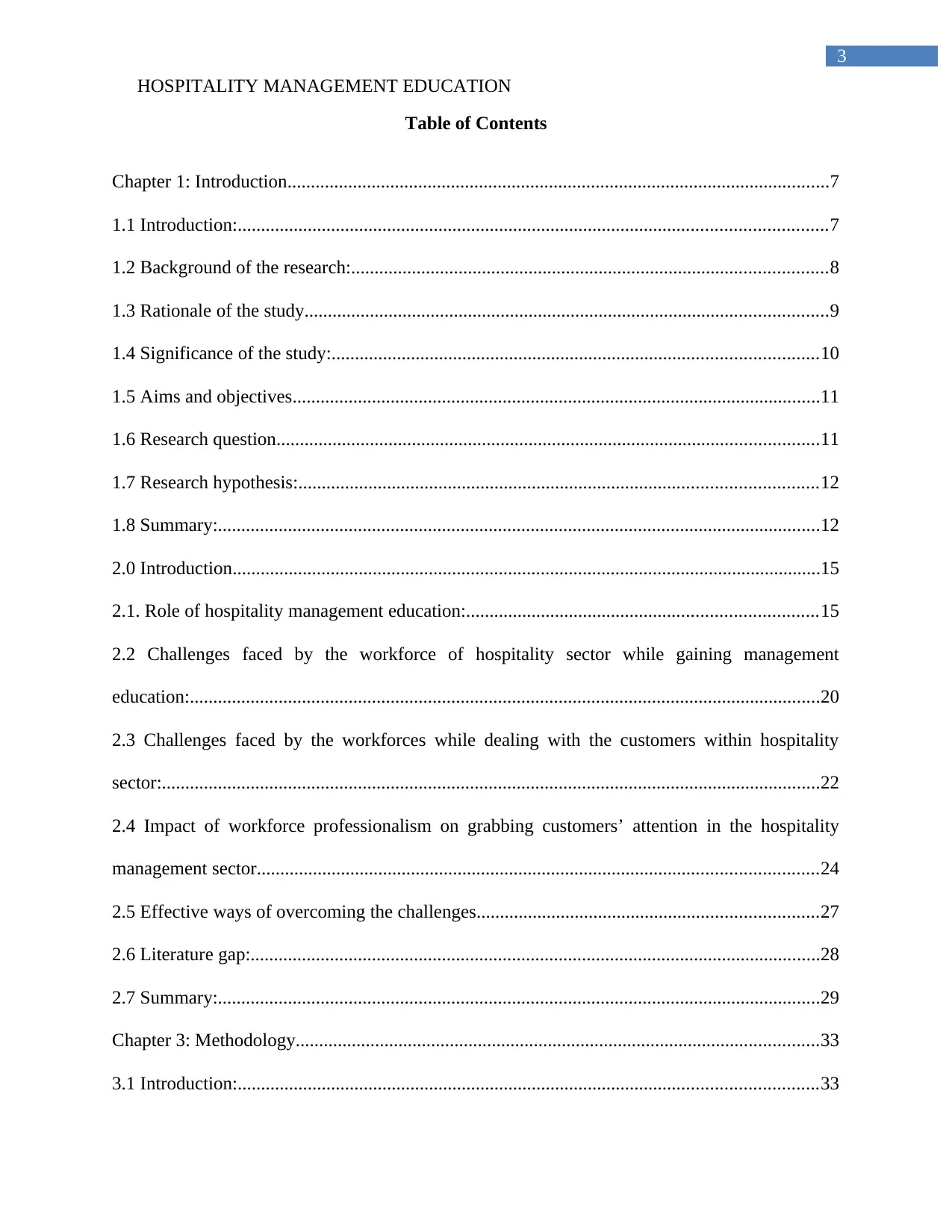
Table of Contents
Chapter 1: Introduction....................................................................................................................7
1.1 Introduction:..............................................................................................................................7
1.2 Background of the research:......................................................................................................8
1.3 Rationale of the study................................................................................................................9
1.4 Significance of the study:........................................................................................................10
1.5 Aims and objectives.................................................................................................................11
1.6 Research question....................................................................................................................11
1.7 Research hypothesis:...............................................................................................................12
1.8 Summary:.................................................................................................................................12
2.0 Introduction..............................................................................................................................15
2.1. Role of hospitality management education:...........................................................................15
2.2 Challenges faced by the workforce of hospitality sector while gaining management
education:.......................................................................................................................................20
2.3 Challenges faced by the workforces while dealing with the customers within hospitality
sector:.............................................................................................................................................22
2.4 Impact of workforce professionalism on grabbing customers’ attention in the hospitality
management sector........................................................................................................................24
2.5 Effective ways of overcoming the challenges.........................................................................27
2.6 Literature gap:..........................................................................................................................28
2.7 Summary:.................................................................................................................................29
Chapter 3: Methodology................................................................................................................33
3.1 Introduction:............................................................................................................................33
HOSPITALITY MANAGEMENT EDUCATION
Table of Contents
Chapter 1: Introduction....................................................................................................................7
1.1 Introduction:..............................................................................................................................7
1.2 Background of the research:......................................................................................................8
1.3 Rationale of the study................................................................................................................9
1.4 Significance of the study:........................................................................................................10
1.5 Aims and objectives.................................................................................................................11
1.6 Research question....................................................................................................................11
1.7 Research hypothesis:...............................................................................................................12
1.8 Summary:.................................................................................................................................12
2.0 Introduction..............................................................................................................................15
2.1. Role of hospitality management education:...........................................................................15
2.2 Challenges faced by the workforce of hospitality sector while gaining management
education:.......................................................................................................................................20
2.3 Challenges faced by the workforces while dealing with the customers within hospitality
sector:.............................................................................................................................................22
2.4 Impact of workforce professionalism on grabbing customers’ attention in the hospitality
management sector........................................................................................................................24
2.5 Effective ways of overcoming the challenges.........................................................................27
2.6 Literature gap:..........................................................................................................................28
2.7 Summary:.................................................................................................................................29
Chapter 3: Methodology................................................................................................................33
3.1 Introduction:............................................................................................................................33
Paraphrase This Document
Need a fresh take? Get an instant paraphrase of this document with our AI Paraphraser
4
HOSPITALITY MANAGEMENT EDUCATION
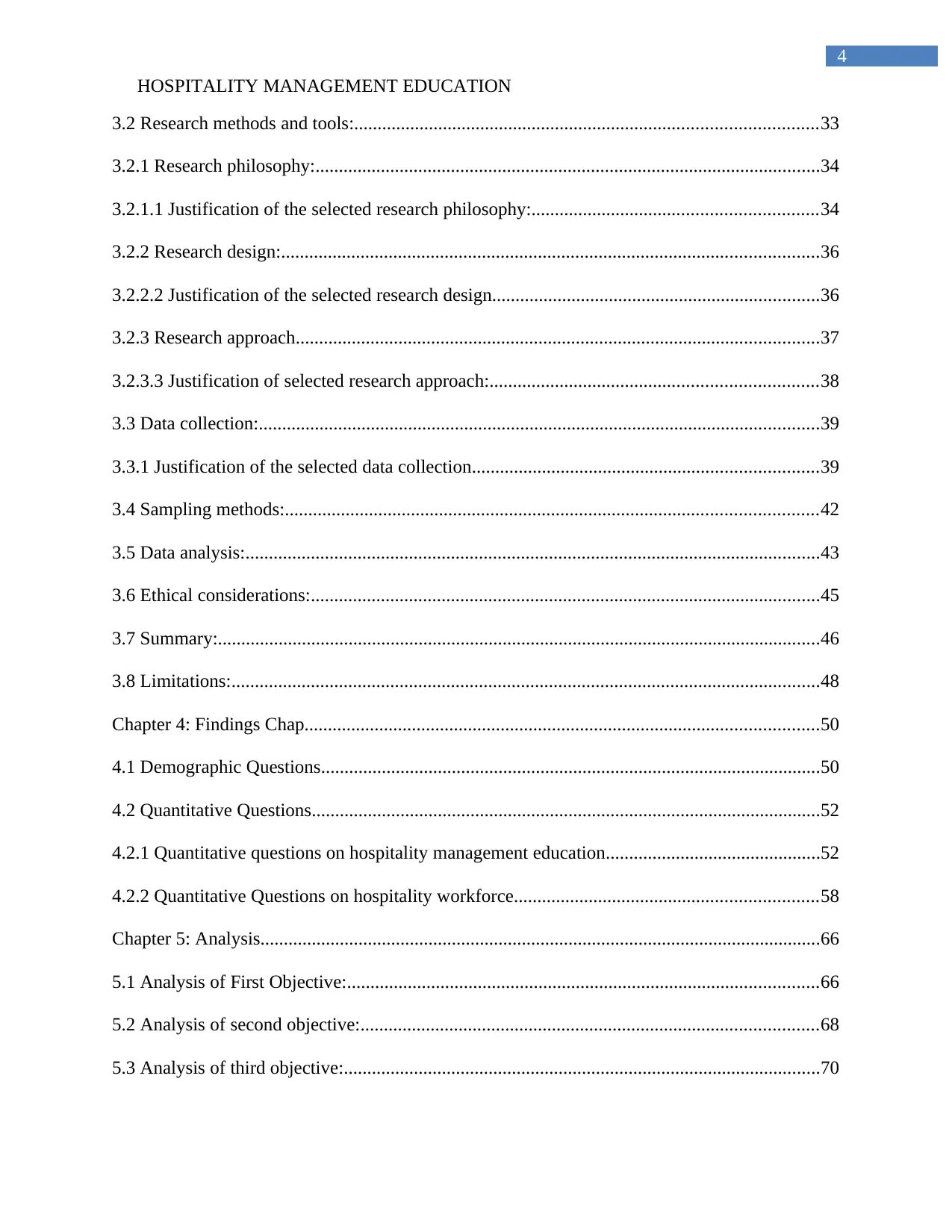
3.2 Research methods and tools:...................................................................................................33
3.2.1 Research philosophy:............................................................................................................34
3.2.1.1 Justification of the selected research philosophy:.............................................................34
3.2.2 Research design:...................................................................................................................36
3.2.2.2 Justification of the selected research design......................................................................36
3.2.3 Research approach................................................................................................................37
3.2.3.3 Justification of selected research approach:......................................................................38
3.3 Data collection:........................................................................................................................39
3.3.1 Justification of the selected data collection..........................................................................39
3.4 Sampling methods:..................................................................................................................42
3.5 Data analysis:...........................................................................................................................43
3.6 Ethical considerations:.............................................................................................................45
3.7 Summary:.................................................................................................................................46
3.8 Limitations:..............................................................................................................................48
Chapter 4: Findings Chap..............................................................................................................50
4.1 Demographic Questions...........................................................................................................50
4.2 Quantitative Questions.............................................................................................................52
4.2.1 Quantitative questions on hospitality management education..............................................52
4.2.2 Quantitative Questions on hospitality workforce.................................................................58
Chapter 5: Analysis........................................................................................................................66
5.1 Analysis of First Objective:.....................................................................................................66
5.2 Analysis of second objective:..................................................................................................68
5.3 Analysis of third objective:......................................................................................................70
HOSPITALITY MANAGEMENT EDUCATION
3.2 Research methods and tools:...................................................................................................33
3.2.1 Research philosophy:............................................................................................................34
3.2.1.1 Justification of the selected research philosophy:.............................................................34
3.2.2 Research design:...................................................................................................................36
3.2.2.2 Justification of the selected research design......................................................................36
3.2.3 Research approach................................................................................................................37
3.2.3.3 Justification of selected research approach:......................................................................38
3.3 Data collection:........................................................................................................................39
3.3.1 Justification of the selected data collection..........................................................................39
3.4 Sampling methods:..................................................................................................................42
3.5 Data analysis:...........................................................................................................................43
3.6 Ethical considerations:.............................................................................................................45
3.7 Summary:.................................................................................................................................46
3.8 Limitations:..............................................................................................................................48
Chapter 4: Findings Chap..............................................................................................................50
4.1 Demographic Questions...........................................................................................................50
4.2 Quantitative Questions.............................................................................................................52
4.2.1 Quantitative questions on hospitality management education..............................................52
4.2.2 Quantitative Questions on hospitality workforce.................................................................58
Chapter 5: Analysis........................................................................................................................66
5.1 Analysis of First Objective:.....................................................................................................66
5.2 Analysis of second objective:..................................................................................................68
5.3 Analysis of third objective:......................................................................................................70
5
HOSPITALITY MANAGEMENT EDUCATION
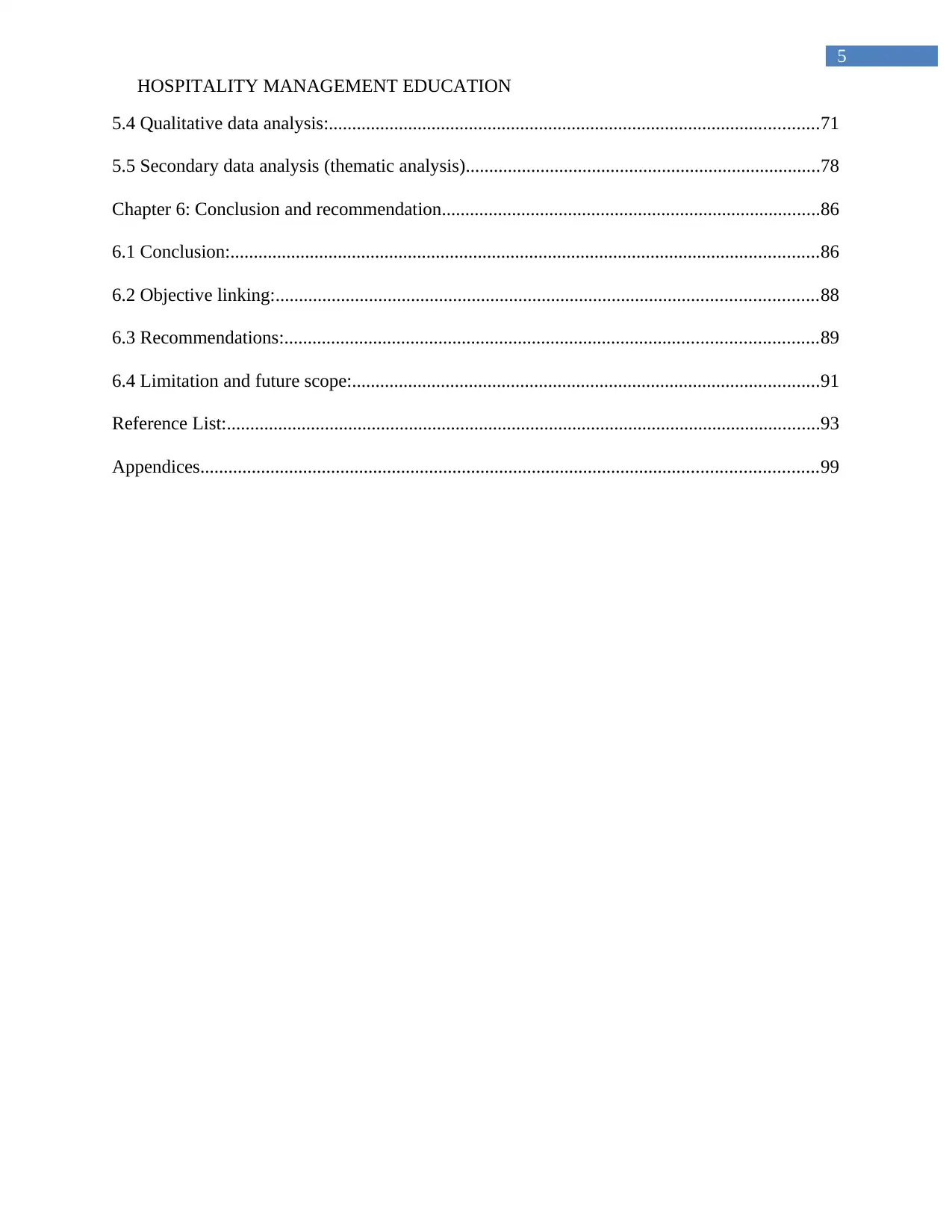
5.4 Qualitative data analysis:.........................................................................................................71
5.5 Secondary data analysis (thematic analysis)............................................................................78
Chapter 6: Conclusion and recommendation.................................................................................86
6.1 Conclusion:..............................................................................................................................86
6.2 Objective linking:....................................................................................................................88
6.3 Recommendations:..................................................................................................................89
6.4 Limitation and future scope:....................................................................................................91
Reference List:...............................................................................................................................93
Appendices....................................................................................................................................99
HOSPITALITY MANAGEMENT EDUCATION
5.4 Qualitative data analysis:.........................................................................................................71
5.5 Secondary data analysis (thematic analysis)............................................................................78
Chapter 6: Conclusion and recommendation.................................................................................86
6.1 Conclusion:..............................................................................................................................86
6.2 Objective linking:....................................................................................................................88
6.3 Recommendations:..................................................................................................................89
6.4 Limitation and future scope:....................................................................................................91
Reference List:...............................................................................................................................93
Appendices....................................................................................................................................99
⊘ This is a preview!⊘
Do you want full access?
Subscribe today to unlock all pages.
Trusted by 1+ million students worldwide

6
HOSPITALITY MANAGEMENT EDUCATION
Chapter 1: Introduction
1.1 Introduction:
As per business industry report of Cyprus tourism contributed 10.7% of the GDP which
helps the country in rendering immense economic growth. The employment in the tourism
industry of Cyprus is estimated as 113,000 jobs. It is estimated that around 3 million tourists
from various geographical backgrounds and cultural attitudes like to visit in Cyrus for enjoying
the tourism destinations of Cyprus. Therefore, business persons belonging to hospitality sectors
have focused in establishing hotels and guest houses for providing service facilities to the tourists
(Brown, Arendt and Bosselman 2014). As per geographic location however, Cyprus is
considered as third largest island countries belonging in the Eastern Mediterranean.
However, due to its regional culture and psychographic backgrounds the employees
associated with hospitality industry lack effective professionalism that prevents the organizations
in maintaining good rapport with the visitors. This specific issue has become a major concern to
many of the researchers and practitioners. As per their point of view employees associated with
the Cyprus hospitality management sector need to build their educational background properly.
Systematic management education in hospitality sector would help the employees or workforces
to enhance their professional skills and competency.
Employees would not have to be restricted within specific language skills and cultural
attitude. In quest of expanding the hospitality industry in the international market, the employees
need to enhance their management education. This very specific study has focused to make
HOSPITALITY MANAGEMENT EDUCATION
Chapter 1: Introduction
1.1 Introduction:
As per business industry report of Cyprus tourism contributed 10.7% of the GDP which
helps the country in rendering immense economic growth. The employment in the tourism
industry of Cyprus is estimated as 113,000 jobs. It is estimated that around 3 million tourists
from various geographical backgrounds and cultural attitudes like to visit in Cyrus for enjoying
the tourism destinations of Cyprus. Therefore, business persons belonging to hospitality sectors
have focused in establishing hotels and guest houses for providing service facilities to the tourists
(Brown, Arendt and Bosselman 2014). As per geographic location however, Cyprus is
considered as third largest island countries belonging in the Eastern Mediterranean.
However, due to its regional culture and psychographic backgrounds the employees
associated with hospitality industry lack effective professionalism that prevents the organizations
in maintaining good rapport with the visitors. This specific issue has become a major concern to
many of the researchers and practitioners. As per their point of view employees associated with
the Cyprus hospitality management sector need to build their educational background properly.
Systematic management education in hospitality sector would help the employees or workforces
to enhance their professional skills and competency.
Employees would not have to be restricted within specific language skills and cultural
attitude. In quest of expanding the hospitality industry in the international market, the employees
need to enhance their management education. This very specific study has focused to make
Paraphrase This Document
Need a fresh take? Get an instant paraphrase of this document with our AI Paraphraser
7
HOSPITALITY MANAGEMENT EDUCATION
detailed overview on how employees with the help of effective hospitality management
education can strengthen their workforce ability and competency skill. In quest of evaluating
data and information the study has used various methodological tools as well as data analysis
procedure. Methodological tools enable the researcher in collecting appropriate data from
different reliable and valid resources.
1.2 Background of the research:
In last five years hospitality and tourism industry in Cyprus has reached enormous
economic growth which enables the business experts in developing their country and enhancing
employability opportunity (Barron, Leask and Fyall 2014). With the dynamic progress of
hospitality industry one major issue has also been observed. Employees associated with the
services face several barriers among which language barriers, psychological barriers, cultural
barriers and religious barriers are the most prominent. On the other hand, it is observed that the
tourists who tend to visit the destinations of Cyprus are from different geographical backgrounds.
Therefore, employees need to have global management training based on which they can
deliver effective services to the customers from global market (Robinson, Solnet and Breakey
2014). However, the employees associated with the hospitality industry of Cyprus are not
efficient enough in dealing with the international customers. However, the researcher has thus
identified the issue that hospitality management education is highly important for enhancing
workforce ability (Hertzman, Moreo and Wiener 2015). Before entering the employees within
practical services the individuals need to get effective education and management training for
enhancing their professional skills. Hospitality management education enables the employees in
rendering multi-lingual flexibility. With the help of professional training procedure employees
HOSPITALITY MANAGEMENT EDUCATION
detailed overview on how employees with the help of effective hospitality management
education can strengthen their workforce ability and competency skill. In quest of evaluating
data and information the study has used various methodological tools as well as data analysis
procedure. Methodological tools enable the researcher in collecting appropriate data from
different reliable and valid resources.
1.2 Background of the research:
In last five years hospitality and tourism industry in Cyprus has reached enormous
economic growth which enables the business experts in developing their country and enhancing
employability opportunity (Barron, Leask and Fyall 2014). With the dynamic progress of
hospitality industry one major issue has also been observed. Employees associated with the
services face several barriers among which language barriers, psychological barriers, cultural
barriers and religious barriers are the most prominent. On the other hand, it is observed that the
tourists who tend to visit the destinations of Cyprus are from different geographical backgrounds.
Therefore, employees need to have global management training based on which they can
deliver effective services to the customers from global market (Robinson, Solnet and Breakey
2014). However, the employees associated with the hospitality industry of Cyprus are not
efficient enough in dealing with the international customers. However, the researcher has thus
identified the issue that hospitality management education is highly important for enhancing
workforce ability (Hertzman, Moreo and Wiener 2015). Before entering the employees within
practical services the individuals need to get effective education and management training for
enhancing their professional skills. Hospitality management education enables the employees in
rendering multi-lingual flexibility. With the help of professional training procedure employees
8
HOSPITALITY MANAGEMENT EDUCATION
gain knowledge how to deal with the customers of different geographical backgrounds and
attitudes (Grobelna and Marciszewska 2016). Therefore, researchers have showed their concern
on evaluating the importance of importance of hospitality management education in the
hospitality workforce.
1.3 Rationale of the study
The importance of hospitality management education in the hospitality workforce has
become a major concern to many of the researchers and practitioners. It is identified that tourism
business market is one of the largest sectors of rendering economic growth (Grobelna 2015). As
per the report of 2016, the destinations of Cyprus have been awarded as “the best destination for
responsible tourism”. As per political and socio-cultural set up of Cyprus the tourists do not
have to face any difficulties in enjoying the holiday destinations. The visitors are out of trouble
from any political chaos. However, there are total 790 accommodation units in Cyprus which
constantly provides effective support to the visitors. A major problem is identified that customers
from different geographical backgrounds while using the services are facing challenges (Riley
2014). Employees are unable to make effective cross cultural communication.
Tourism operators even have to face innumerable difficulties in interacting with the
visitors due to language barrier and other management problem. Therefore, the issue has been
highlighted that employees associated with Cyprus industry are not efficient enough in dealing
with the international customers (Brown, Thomas and Bosselman 2015). Psychological barrier
and language barrier are the two most importance factors due to which employees are unable to
fulfil the needs and demands of the service users. Therefore, hospitality management education
has become a necessity for the workforce of hospitality industry of Cyprus. The primary
HOSPITALITY MANAGEMENT EDUCATION
gain knowledge how to deal with the customers of different geographical backgrounds and
attitudes (Grobelna and Marciszewska 2016). Therefore, researchers have showed their concern
on evaluating the importance of importance of hospitality management education in the
hospitality workforce.
1.3 Rationale of the study
The importance of hospitality management education in the hospitality workforce has
become a major concern to many of the researchers and practitioners. It is identified that tourism
business market is one of the largest sectors of rendering economic growth (Grobelna 2015). As
per the report of 2016, the destinations of Cyprus have been awarded as “the best destination for
responsible tourism”. As per political and socio-cultural set up of Cyprus the tourists do not
have to face any difficulties in enjoying the holiday destinations. The visitors are out of trouble
from any political chaos. However, there are total 790 accommodation units in Cyprus which
constantly provides effective support to the visitors. A major problem is identified that customers
from different geographical backgrounds while using the services are facing challenges (Riley
2014). Employees are unable to make effective cross cultural communication.
Tourism operators even have to face innumerable difficulties in interacting with the
visitors due to language barrier and other management problem. Therefore, the issue has been
highlighted that employees associated with Cyprus industry are not efficient enough in dealing
with the international customers (Brown, Thomas and Bosselman 2015). Psychological barrier
and language barrier are the two most importance factors due to which employees are unable to
fulfil the needs and demands of the service users. Therefore, hospitality management education
has become a necessity for the workforce of hospitality industry of Cyprus. The primary
⊘ This is a preview!⊘
Do you want full access?
Subscribe today to unlock all pages.
Trusted by 1+ million students worldwide
9
HOSPITALITY MANAGEMENT EDUCATION
advantages that a hospitality management education can provide include management
competency, decision making skill, time management skill, maintaining effective customer
service system and so on. After receiving effective development, training the people associated
with the hospitality industry would be able to meet customers’ needs and demands that would
successfully enable Cyprus to expand their entire business process beyond going the regional
geographic boundary (Wang and Tsai 2014). While identifying the research issue it has also been
observed that the employees are facing challenges enormously in receiving proper education in
hospitality management (Vasquez 2014). Economic constraints are one of the most important
reasons due to which the existing staffs are unable to enhancing their higher educational
backgrounds in hospitality management sector.
1.4 Significance of the study:
At the very initial business scenario, Cyprus was not successful to expand their tourism
business sector enormously. People from various geographical backgrounds and attitudes did not
show their interest in choosing their holiday destination in Cyprus. In last five years the entire
business scenario has faced a devastating change (Zaitseva et al. 2016). Five major cities of
Cyprus such as Famagusta, Paphos,Limassol, Larnaca and Nicosia have immensely improved
their geographic attraction. At the same time, the number of hotels and guest houses has been
raised enormously. Around 3.2 million visitors like to enter in tourist destinations of Cyprus. As
a result, the island country has faced remarkable economic growth as well as employability
opportunity.
However, it is observed that as per the rate of business enhancement the regional staffs of
Cyprus associated with hospitality industry are not well trained and professional to fulfil the
HOSPITALITY MANAGEMENT EDUCATION
advantages that a hospitality management education can provide include management
competency, decision making skill, time management skill, maintaining effective customer
service system and so on. After receiving effective development, training the people associated
with the hospitality industry would be able to meet customers’ needs and demands that would
successfully enable Cyprus to expand their entire business process beyond going the regional
geographic boundary (Wang and Tsai 2014). While identifying the research issue it has also been
observed that the employees are facing challenges enormously in receiving proper education in
hospitality management (Vasquez 2014). Economic constraints are one of the most important
reasons due to which the existing staffs are unable to enhancing their higher educational
backgrounds in hospitality management sector.
1.4 Significance of the study:
At the very initial business scenario, Cyprus was not successful to expand their tourism
business sector enormously. People from various geographical backgrounds and attitudes did not
show their interest in choosing their holiday destination in Cyprus. In last five years the entire
business scenario has faced a devastating change (Zaitseva et al. 2016). Five major cities of
Cyprus such as Famagusta, Paphos,Limassol, Larnaca and Nicosia have immensely improved
their geographic attraction. At the same time, the number of hotels and guest houses has been
raised enormously. Around 3.2 million visitors like to enter in tourist destinations of Cyprus. As
a result, the island country has faced remarkable economic growth as well as employability
opportunity.
However, it is observed that as per the rate of business enhancement the regional staffs of
Cyprus associated with hospitality industry are not well trained and professional to fulfil the
Paraphrase This Document
Need a fresh take? Get an instant paraphrase of this document with our AI Paraphraser

10
HOSPITALITY MANAGEMENT EDUCATION
needs and demands of international customers. In this situation, the researchers and practitioners
have showed their interest in highlighting the issue that hospitality management education has
significant impact in enhancing workforce ability of hospitality industry (Van der Wagen and
Goonetilleke 2015). While discussing the importance of higher education among the employees
in hospitality management sector some of the major challenges faced by the employees have also
been discussed critically.
1.5 Aims and objectives
This very specific study has aimed to evaluate the importance of hospitality management
education in the hospitality workforce. The primary objectives of this research paper are as
follows:
To critically understand the importance of hospitality management education in enhancing
the hospitality workforce ability of Cyprus hospitality industry
To evaluate the factors how workforce within hospitality industry face challenges in
customer services without management education
To provide some of the major recommendations on how hospitality management education is
effective in overcoming challenges faced by workforces
1.6 Research question
The research questions identified for the research issue are as follows:
What is the importance of hospitality management education in enhancing the hospitality
workforce ability of Cyprus hospitality industry?
HOSPITALITY MANAGEMENT EDUCATION
needs and demands of international customers. In this situation, the researchers and practitioners
have showed their interest in highlighting the issue that hospitality management education has
significant impact in enhancing workforce ability of hospitality industry (Van der Wagen and
Goonetilleke 2015). While discussing the importance of higher education among the employees
in hospitality management sector some of the major challenges faced by the employees have also
been discussed critically.
1.5 Aims and objectives
This very specific study has aimed to evaluate the importance of hospitality management
education in the hospitality workforce. The primary objectives of this research paper are as
follows:
To critically understand the importance of hospitality management education in enhancing
the hospitality workforce ability of Cyprus hospitality industry
To evaluate the factors how workforce within hospitality industry face challenges in
customer services without management education
To provide some of the major recommendations on how hospitality management education is
effective in overcoming challenges faced by workforces
1.6 Research question
The research questions identified for the research issue are as follows:
What is the importance of hospitality management education in enhancing the hospitality
workforce ability of Cyprus hospitality industry?
11
HOSPITALITY MANAGEMENT EDUCATION
What are the factors that workforce within hospitality industry faces challenges in customer
services without management education?
What should be the major recommendations of overcoming the challenges faced by
workforces?
1.7 Research hypothesis:
The research hypothesis set for evaluating the issue is as follows:
H0: Hospitality management education has no significant impact in enhancing workforce ability
of hospitality industry
H1: Hospitality management education has significant impact in enhancing workforce ability of
hospitality industry
1.8 Summary:
While summarizing the entire study the research issue has focused to make in-depth
overview about importance of hospitality management education in the hospitality workforce in
Cyprus. It is evaluated from the perspectives of different eminent scholars that with the dynamic
progress of hospitality industry one major issue have also been observed. Therefore, business
persons belonging to hospitality sectors have focused in establishing hotels and guest houses for
providing service facilities to the tourists (Breakey, Robinson and Brenner 2014). This specific
issue has become a major concern to many of the researchers and practitioners. As per their point
of view employees associated with the Cyprus hospitality management sector need to build their
educational background properly.
HOSPITALITY MANAGEMENT EDUCATION
What are the factors that workforce within hospitality industry faces challenges in customer
services without management education?
What should be the major recommendations of overcoming the challenges faced by
workforces?
1.7 Research hypothesis:
The research hypothesis set for evaluating the issue is as follows:
H0: Hospitality management education has no significant impact in enhancing workforce ability
of hospitality industry
H1: Hospitality management education has significant impact in enhancing workforce ability of
hospitality industry
1.8 Summary:
While summarizing the entire study the research issue has focused to make in-depth
overview about importance of hospitality management education in the hospitality workforce in
Cyprus. It is evaluated from the perspectives of different eminent scholars that with the dynamic
progress of hospitality industry one major issue have also been observed. Therefore, business
persons belonging to hospitality sectors have focused in establishing hotels and guest houses for
providing service facilities to the tourists (Breakey, Robinson and Brenner 2014). This specific
issue has become a major concern to many of the researchers and practitioners. As per their point
of view employees associated with the Cyprus hospitality management sector need to build their
educational background properly.
⊘ This is a preview!⊘
Do you want full access?
Subscribe today to unlock all pages.
Trusted by 1+ million students worldwide

1 out of 100


Related Documents


Your All-in-One AI-Powered Toolkit for Academic Success.
+13062052269
info@desklib.com
Available 24*7 on WhatsApp / Email
![[object Object]](/_next/static/media/star-bottom.7253800d.svg)
Unlock your academic potential
Copyright © 2020–2026 A2Z Services. All Rights Reserved. Developed and managed by ZUCOL.