Human Resource Management Report: Analysis of TESCO Stores Ltd.
VerifiedAdded on 2020/11/12
|12
|3611
|177
Report
AI Summary
This report provides a comprehensive analysis of Human Resource Management (HRM) practices at TESCO Stores Ltd. It begins with an introduction to the company and the scope of HRM, covering functions such as recruitment and selection, training and development, and employee relations. The report then delves into the differences between personnel management and HRM, along with the responsibilities of line managers within TESCO. Task 2 focuses on human resource planning, including its importance, the steps involved, and the techniques used for recruitment and selection. Task 3 explores reward management strategies, performance evaluation methods, and job evaluation procedures. Finally, Task 4 examines strategic HRM, including its objectives, implementation, and the impact of external factors. The report concludes with an overview of the key findings and their implications for TESCO's HRM practices.

HUMAN RESOURCE
MANAGEMENT
MANAGEMENT

Paraphrase This Document
Need a fresh take? Get an instant paraphrase of this document with our AI Paraphraser
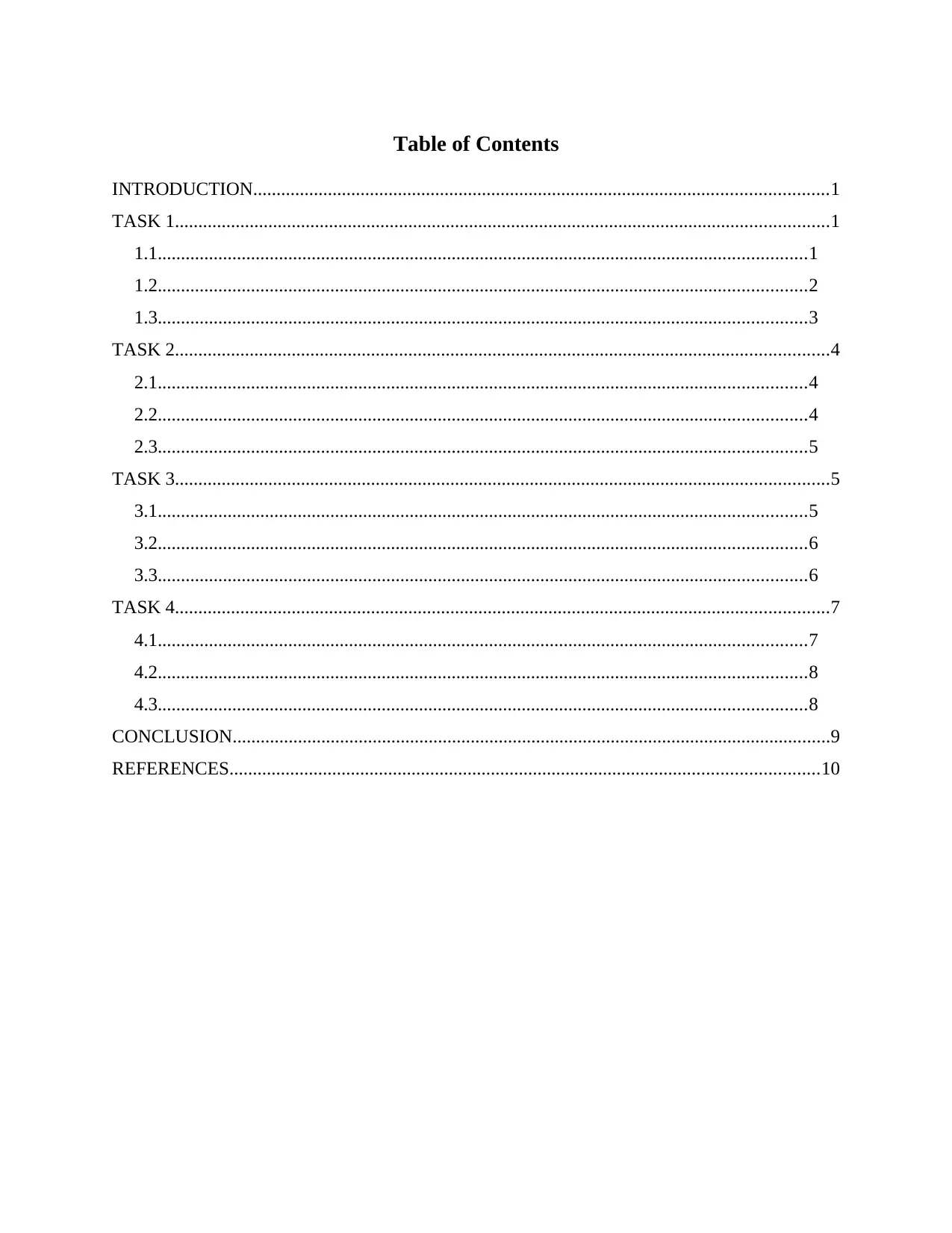
Table of Contents
INTRODUCTION...........................................................................................................................1
TASK 1............................................................................................................................................1
1.1...........................................................................................................................................1
1.2...........................................................................................................................................2
1.3...........................................................................................................................................3
TASK 2............................................................................................................................................4
2.1...........................................................................................................................................4
2.2...........................................................................................................................................4
2.3...........................................................................................................................................5
TASK 3............................................................................................................................................5
3.1...........................................................................................................................................5
3.2...........................................................................................................................................6
3.3...........................................................................................................................................6
TASK 4............................................................................................................................................7
4.1...........................................................................................................................................7
4.2...........................................................................................................................................8
4.3...........................................................................................................................................8
CONCLUSION................................................................................................................................9
REFERENCES..............................................................................................................................10
INTRODUCTION...........................................................................................................................1
TASK 1............................................................................................................................................1
1.1...........................................................................................................................................1
1.2...........................................................................................................................................2
1.3...........................................................................................................................................3
TASK 2............................................................................................................................................4
2.1...........................................................................................................................................4
2.2...........................................................................................................................................4
2.3...........................................................................................................................................5
TASK 3............................................................................................................................................5
3.1...........................................................................................................................................5
3.2...........................................................................................................................................6
3.3...........................................................................................................................................6
TASK 4............................................................................................................................................7
4.1...........................................................................................................................................7
4.2...........................................................................................................................................8
4.3...........................................................................................................................................8
CONCLUSION................................................................................................................................9
REFERENCES..............................................................................................................................10
INTRODUCTION
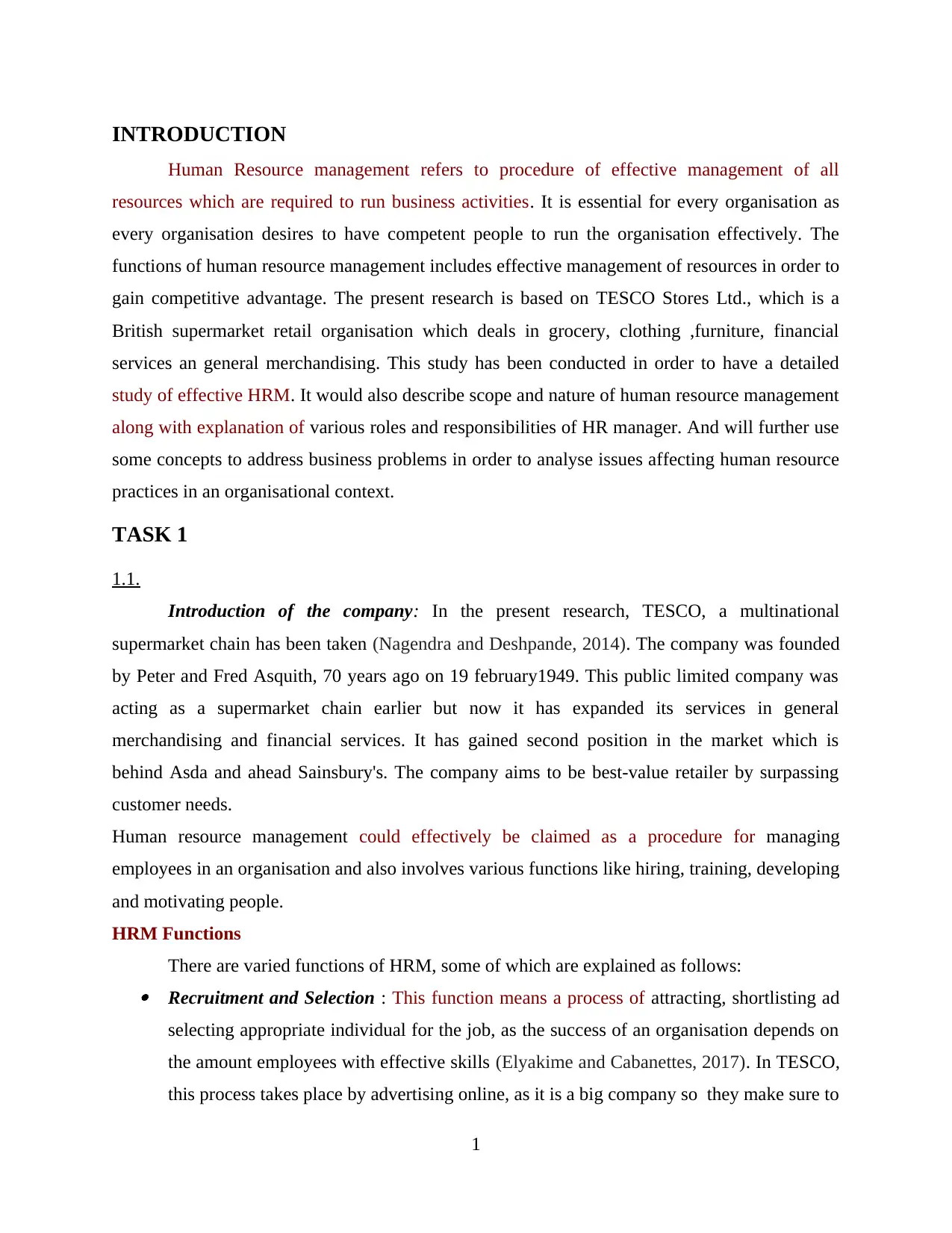
Human Resource management refers to procedure of effective management of all
resources which are required to run business activities. It is essential for every organisation as
every organisation desires to have competent people to run the organisation effectively. The
functions of human resource management includes effective management of resources in order to
gain competitive advantage. The present research is based on TESCO Stores Ltd., which is a
British supermarket retail organisation which deals in grocery, clothing ,furniture, financial
services an general merchandising. This study has been conducted in order to have a detailed
study of effective HRM. It would also describe scope and nature of human resource management
along with explanation of various roles and responsibilities of HR manager. And will further use
some concepts to address business problems in order to analyse issues affecting human resource
practices in an organisational context.
TASK 1
1.1.
Introduction of the company: In the present research, TESCO, a multinational
supermarket chain has been taken (Nagendra and Deshpande, 2014). The company was founded
by Peter and Fred Asquith, 70 years ago on 19 february1949. This public limited company was
acting as a supermarket chain earlier but now it has expanded its services in general
merchandising and financial services. It has gained second position in the market which is
behind Asda and ahead Sainsbury's. The company aims to be best-value retailer by surpassing
customer needs.
Human resource management could effectively be claimed as a procedure for managing
employees in an organisation and also involves various functions like hiring, training, developing
and motivating people.
HRM Functions
There are varied functions of HRM, some of which are explained as follows: Recruitment and Selection : This function means a process of attracting, shortlisting ad
selecting appropriate individual for the job, as the success of an organisation depends on
the amount employees with effective skills (Elyakime and Cabanettes, 2017). In TESCO,
this process takes place by advertising online, as it is a big company so they make sure to
1
Human Resource management refers to procedure of effective management of all
resources which are required to run business activities. It is essential for every organisation as
every organisation desires to have competent people to run the organisation effectively. The
functions of human resource management includes effective management of resources in order to
gain competitive advantage. The present research is based on TESCO Stores Ltd., which is a
British supermarket retail organisation which deals in grocery, clothing ,furniture, financial
services an general merchandising. This study has been conducted in order to have a detailed
study of effective HRM. It would also describe scope and nature of human resource management
along with explanation of various roles and responsibilities of HR manager. And will further use
some concepts to address business problems in order to analyse issues affecting human resource
practices in an organisational context.
TASK 1
1.1.
Introduction of the company: In the present research, TESCO, a multinational
supermarket chain has been taken (Nagendra and Deshpande, 2014). The company was founded
by Peter and Fred Asquith, 70 years ago on 19 february1949. This public limited company was
acting as a supermarket chain earlier but now it has expanded its services in general
merchandising and financial services. It has gained second position in the market which is
behind Asda and ahead Sainsbury's. The company aims to be best-value retailer by surpassing
customer needs.
Human resource management could effectively be claimed as a procedure for managing
employees in an organisation and also involves various functions like hiring, training, developing
and motivating people.
HRM Functions
There are varied functions of HRM, some of which are explained as follows: Recruitment and Selection : This function means a process of attracting, shortlisting ad
selecting appropriate individual for the job, as the success of an organisation depends on
the amount employees with effective skills (Elyakime and Cabanettes, 2017). In TESCO,
this process takes place by advertising online, as it is a big company so they make sure to
1
⊘ This is a preview!⊘
Do you want full access?
Subscribe today to unlock all pages.

Trusted by 1+ million students worldwide
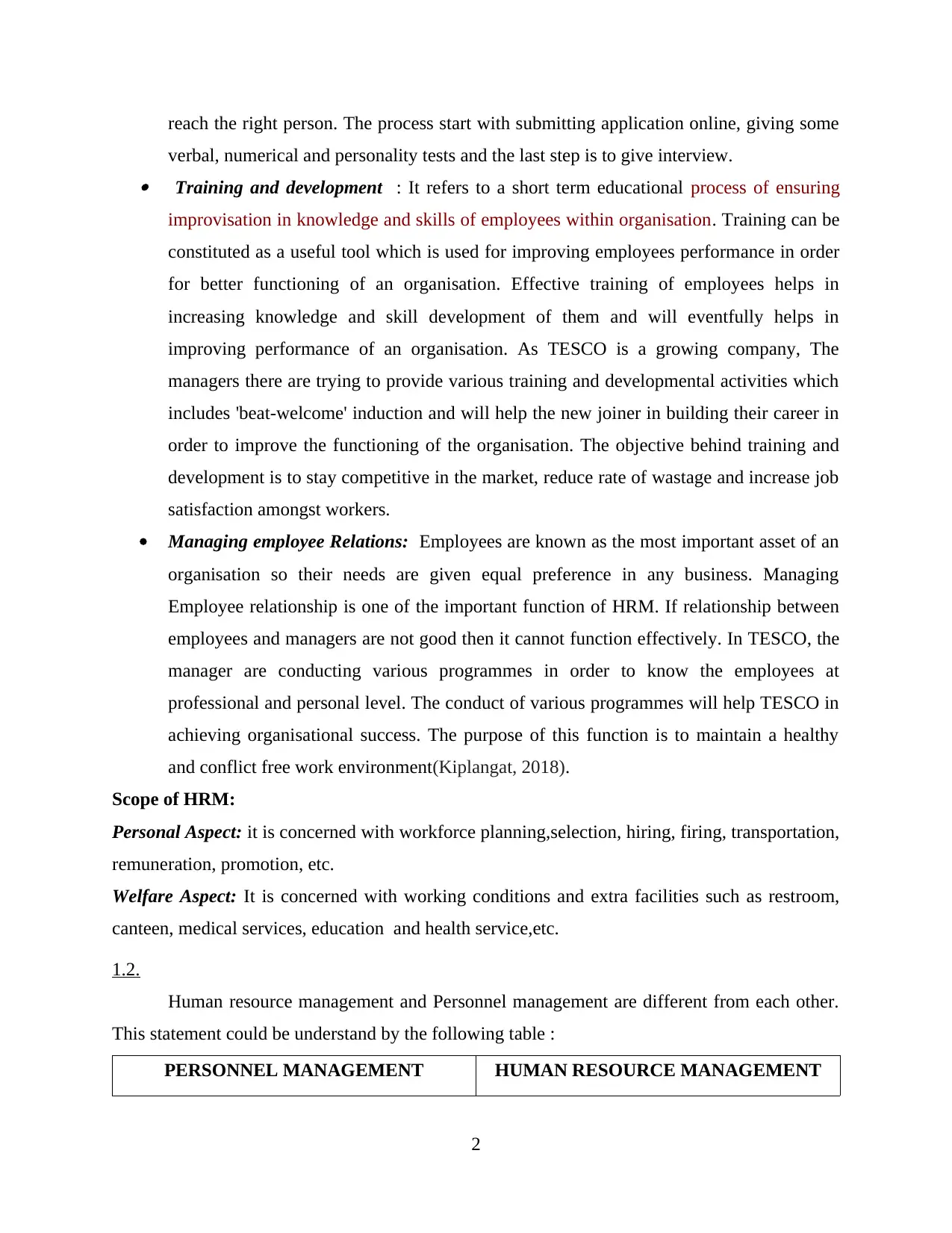
reach the right person. The process start with submitting application online, giving some
verbal, numerical and personality tests and the last step is to give interview. Training and development : It refers to a short term educational process of ensuring
improvisation in knowledge and skills of employees within organisation. Training can be
constituted as a useful tool which is used for improving employees performance in order
for better functioning of an organisation. Effective training of employees helps in
increasing knowledge and skill development of them and will eventfully helps in
improving performance of an organisation. As TESCO is a growing company, The
managers there are trying to provide various training and developmental activities which
includes 'beat-welcome' induction and will help the new joiner in building their career in
order to improve the functioning of the organisation. The objective behind training and
development is to stay competitive in the market, reduce rate of wastage and increase job
satisfaction amongst workers.
Managing employee Relations: Employees are known as the most important asset of an
organisation so their needs are given equal preference in any business. Managing
Employee relationship is one of the important function of HRM. If relationship between
employees and managers are not good then it cannot function effectively. In TESCO, the
manager are conducting various programmes in order to know the employees at
professional and personal level. The conduct of various programmes will help TESCO in
achieving organisational success. The purpose of this function is to maintain a healthy
and conflict free work environment(Kiplangat, 2018).
Scope of HRM:
Personal Aspect: it is concerned with workforce planning,selection, hiring, firing, transportation,
remuneration, promotion, etc.
Welfare Aspect: It is concerned with working conditions and extra facilities such as restroom,
canteen, medical services, education and health service,etc.
1.2.
Human resource management and Personnel management are different from each other.
This statement could be understand by the following table :
PERSONNEL MANAGEMENT HUMAN RESOURCE MANAGEMENT
2
verbal, numerical and personality tests and the last step is to give interview. Training and development : It refers to a short term educational process of ensuring
improvisation in knowledge and skills of employees within organisation. Training can be
constituted as a useful tool which is used for improving employees performance in order
for better functioning of an organisation. Effective training of employees helps in
increasing knowledge and skill development of them and will eventfully helps in
improving performance of an organisation. As TESCO is a growing company, The
managers there are trying to provide various training and developmental activities which
includes 'beat-welcome' induction and will help the new joiner in building their career in
order to improve the functioning of the organisation. The objective behind training and
development is to stay competitive in the market, reduce rate of wastage and increase job
satisfaction amongst workers.
Managing employee Relations: Employees are known as the most important asset of an
organisation so their needs are given equal preference in any business. Managing
Employee relationship is one of the important function of HRM. If relationship between
employees and managers are not good then it cannot function effectively. In TESCO, the
manager are conducting various programmes in order to know the employees at
professional and personal level. The conduct of various programmes will help TESCO in
achieving organisational success. The purpose of this function is to maintain a healthy
and conflict free work environment(Kiplangat, 2018).
Scope of HRM:
Personal Aspect: it is concerned with workforce planning,selection, hiring, firing, transportation,
remuneration, promotion, etc.
Welfare Aspect: It is concerned with working conditions and extra facilities such as restroom,
canteen, medical services, education and health service,etc.
1.2.
Human resource management and Personnel management are different from each other.
This statement could be understand by the following table :
PERSONNEL MANAGEMENT HUMAN RESOURCE MANAGEMENT
2
Paraphrase This Document
Need a fresh take? Get an instant paraphrase of this document with our AI Paraphraser
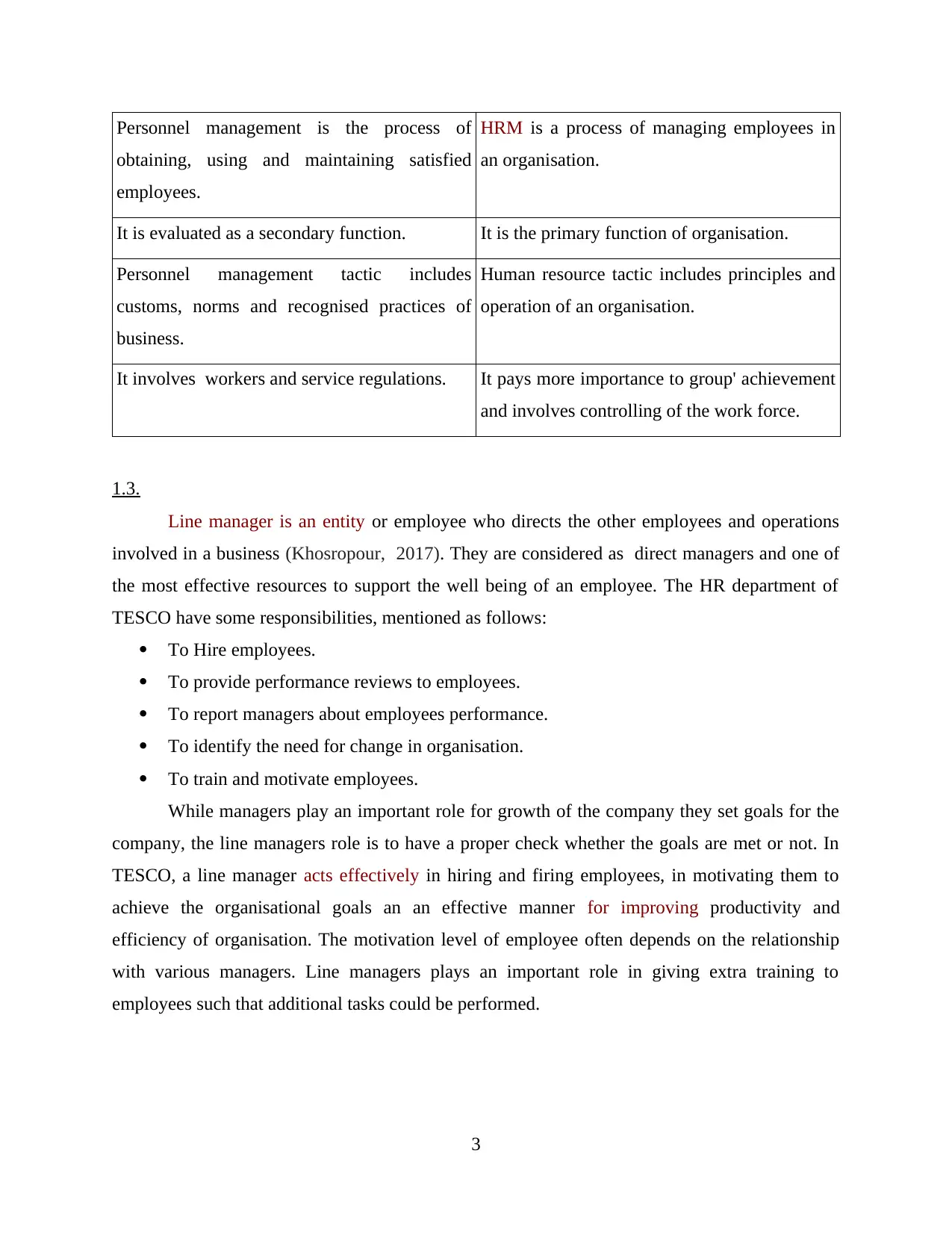
Personnel management is the process of
obtaining, using and maintaining satisfied
employees.
HRM is a process of managing employees in
an organisation.
It is evaluated as a secondary function. It is the primary function of organisation.
Personnel management tactic includes
customs, norms and recognised practices of
business.
Human resource tactic includes principles and
operation of an organisation.
It involves workers and service regulations. It pays more importance to group' achievement
and involves controlling of the work force.
1.3.
Line manager is an entity or employee who directs the other employees and operations
involved in a business (Khosropour, 2017). They are considered as direct managers and one of
the most effective resources to support the well being of an employee. The HR department of
TESCO have some responsibilities, mentioned as follows:
To Hire employees.
To provide performance reviews to employees.
To report managers about employees performance.
To identify the need for change in organisation.
To train and motivate employees.
While managers play an important role for growth of the company they set goals for the
company, the line managers role is to have a proper check whether the goals are met or not. In
TESCO, a line manager acts effectively in hiring and firing employees, in motivating them to
achieve the organisational goals an an effective manner for improving productivity and
efficiency of organisation. The motivation level of employee often depends on the relationship
with various managers. Line managers plays an important role in giving extra training to
employees such that additional tasks could be performed.
3
obtaining, using and maintaining satisfied
employees.
HRM is a process of managing employees in
an organisation.
It is evaluated as a secondary function. It is the primary function of organisation.
Personnel management tactic includes
customs, norms and recognised practices of
business.
Human resource tactic includes principles and
operation of an organisation.
It involves workers and service regulations. It pays more importance to group' achievement
and involves controlling of the work force.
1.3.
Line manager is an entity or employee who directs the other employees and operations
involved in a business (Khosropour, 2017). They are considered as direct managers and one of
the most effective resources to support the well being of an employee. The HR department of
TESCO have some responsibilities, mentioned as follows:
To Hire employees.
To provide performance reviews to employees.
To report managers about employees performance.
To identify the need for change in organisation.
To train and motivate employees.
While managers play an important role for growth of the company they set goals for the
company, the line managers role is to have a proper check whether the goals are met or not. In
TESCO, a line manager acts effectively in hiring and firing employees, in motivating them to
achieve the organisational goals an an effective manner for improving productivity and
efficiency of organisation. The motivation level of employee often depends on the relationship
with various managers. Line managers plays an important role in giving extra training to
employees such that additional tasks could be performed.
3
TASK 2
2.1.
Human Resource planning is concerned with essential aspect of HRM as the basic aim
behind it is to fulfil the manpower objectives. It helps to aims business strategy with operation
(Shonia and et. al., 2018). The importance of of HRP in an organisational context is given as
follows: Dealing with alterations: At TESCO, HRP helps in dealing with the changes which are
related to the external factors. This aids in assessing the present human resources by HR
inventory and will also recruit individual required for the job. Effective utilisation of human Resources: For an organisation it is very important to
utilise its resources effectively in order to attain objectives. TESCO will utilise its human
resource effectively to minimise the cost of production.
Reduced Uncertainty: Effective human resource planning aids a company in reducing its
uncertainty which occurs due to sudden modifications in human resource management
processes.
2.2.
Human Resource Planning Refers to a process of assessing manpower requirements for
future (Noe and et. al., 2017). It attempts to provide required manpower for performing
organisational activities. Various steps involved in human resource planning are: Assessment of Human Resources: This is the first step, which analyse all the internal
along with external factors to analyse HR availability such that it becomes easier for HR
manager to analyse strength and weakness of organisation. Demand Forecasting: This is procedure of identifying needs of human resources related
to quantity and quality. This evaluation is done in order to determine the amount of
workers with specific skills and knowledge needed by the company. Supply Forecasting: It is the process of estimating supply manpower given for current
resources and future availability of human resources in an organisation. This stage
determines, the ability of company to appoint staff which are required.
4
2.1.
Human Resource planning is concerned with essential aspect of HRM as the basic aim
behind it is to fulfil the manpower objectives. It helps to aims business strategy with operation
(Shonia and et. al., 2018). The importance of of HRP in an organisational context is given as
follows: Dealing with alterations: At TESCO, HRP helps in dealing with the changes which are
related to the external factors. This aids in assessing the present human resources by HR
inventory and will also recruit individual required for the job. Effective utilisation of human Resources: For an organisation it is very important to
utilise its resources effectively in order to attain objectives. TESCO will utilise its human
resource effectively to minimise the cost of production.
Reduced Uncertainty: Effective human resource planning aids a company in reducing its
uncertainty which occurs due to sudden modifications in human resource management
processes.
2.2.
Human Resource Planning Refers to a process of assessing manpower requirements for
future (Noe and et. al., 2017). It attempts to provide required manpower for performing
organisational activities. Various steps involved in human resource planning are: Assessment of Human Resources: This is the first step, which analyse all the internal
along with external factors to analyse HR availability such that it becomes easier for HR
manager to analyse strength and weakness of organisation. Demand Forecasting: This is procedure of identifying needs of human resources related
to quantity and quality. This evaluation is done in order to determine the amount of
workers with specific skills and knowledge needed by the company. Supply Forecasting: It is the process of estimating supply manpower given for current
resources and future availability of human resources in an organisation. This stage
determines, the ability of company to appoint staff which are required.
4
⊘ This is a preview!⊘
Do you want full access?
Subscribe today to unlock all pages.
Trusted by 1+ million students worldwide
Matching Demand And Supply: The next stage is to match supply and demand. Within
this stage, demand and supply will be brought at an equal position to determine shortages
and over staffing positions (Cascio, 2015).
Action Plan: The very last stage of HR planning process, which determines shortages
and surplus. It is followed by controlling and evaluation of HR performance in relation to
determine whether HR planning matches with Human Resource objectives and policies.
An actioned plan will be made on the basis of changing time and conditions.
2.3.
Effectiveness of an organisation depends upon the Techniques used for recruitment and
selection (DeCenzo, Robbins and Verhulst, 2016). Recruitment and Selection techniques used at
TESCO helped in increasing its effectiveness, The effectiveness of these techniques is as
follows:
Attracting and encouraging more candidates to apply for job.
Enhancement in potential candidates pool at reduced cost.
Determining the appropriateness of individuals by identifying and preparing job
applicants.
Meeting the organisations social and legal obligations by managing composition of
workforce.
TESCO can fill 80% of its job by selecting and enlistingthe right individual for their
organisational culture.
TASK 3
3.1.
Reward management means formulation along with implementation of policies and
strategies in order to reward employees fairly, adequately and equitably according to their
provided value to the organisation(Paillé and et. al., 2014). TESCO is one of the biggest retailing
chain of UK with many competitors like Sainsbury and Tesco. The various reward management
strategies used by TESCO are bonuses, discounts, star points, voluntary benefits, colleague share
ownership plan, spare plan , pension, etc. Reports of the company have analysed that TESCO
have development that anticipates the skyline and the company is required to gain Netto stores in
5
this stage, demand and supply will be brought at an equal position to determine shortages
and over staffing positions (Cascio, 2015).
Action Plan: The very last stage of HR planning process, which determines shortages
and surplus. It is followed by controlling and evaluation of HR performance in relation to
determine whether HR planning matches with Human Resource objectives and policies.
An actioned plan will be made on the basis of changing time and conditions.
2.3.
Effectiveness of an organisation depends upon the Techniques used for recruitment and
selection (DeCenzo, Robbins and Verhulst, 2016). Recruitment and Selection techniques used at
TESCO helped in increasing its effectiveness, The effectiveness of these techniques is as
follows:
Attracting and encouraging more candidates to apply for job.
Enhancement in potential candidates pool at reduced cost.
Determining the appropriateness of individuals by identifying and preparing job
applicants.
Meeting the organisations social and legal obligations by managing composition of
workforce.
TESCO can fill 80% of its job by selecting and enlistingthe right individual for their
organisational culture.
TASK 3
3.1.
Reward management means formulation along with implementation of policies and
strategies in order to reward employees fairly, adequately and equitably according to their
provided value to the organisation(Paillé and et. al., 2014). TESCO is one of the biggest retailing
chain of UK with many competitors like Sainsbury and Tesco. The various reward management
strategies used by TESCO are bonuses, discounts, star points, voluntary benefits, colleague share
ownership plan, spare plan , pension, etc. Reports of the company have analysed that TESCO
have development that anticipates the skyline and the company is required to gain Netto stores in
5
Paraphrase This Document
Need a fresh take? Get an instant paraphrase of this document with our AI Paraphraser
UK which will help TESCO in building number of stores. For this purpose it needs top consider
the needs and necessities of organisation.
3.2.
Evaluation of performance is beneficial for both employer as well as employee. Various
methods used by TESCO to monitor performance of employees are as follows: Holding a stand-up meeting: Conduct of this meeting helps TESCO in letting all the
individuals know what is going on in the organisation. It is a small meeting staff talks
about operational data that other people id required to know (Cooke, Saini and Wang,
2014). 360 Degree Evaluation : Under this method, the performance of the employee is
measured through feedback generated from immediate companions,bosses and sub-
ordinates. This method helps in analysing the acceptability and compatibility of an
employee in an organisation and will also examine whether the performance of employee
changes when he performs in other department or not. Self -evaluation method: This methods determines how much an individual is aware of
his-her performance. In this method, employees are required to evaluate their
performances through using a form that require multiple choice answers and essay type
answers. At TESCO this method of evaluation helps an employee to compare their
present performance with that f their past performance.
Use of formal point of reference and estimation: Setting temporary targets and due dates
helps in monitoring employee performance as well as helps representatives in
accomplishment of objectives by making their activities more reliable.
3.3.
Job Evaluation refers to a procedure of determining the value of a job by comparison
with other jobs of the organisation. Their are various steps involved in job evaluation procedure,
they are:1. Know-how: It is the sum total of the skills possessed by an individual which are required
for competitive job performance. It includes three dimensions i.e., specialised
skills,managerial skills and human resource skills (Foster, 2014).
6
the needs and necessities of organisation.
3.2.
Evaluation of performance is beneficial for both employer as well as employee. Various
methods used by TESCO to monitor performance of employees are as follows: Holding a stand-up meeting: Conduct of this meeting helps TESCO in letting all the
individuals know what is going on in the organisation. It is a small meeting staff talks
about operational data that other people id required to know (Cooke, Saini and Wang,
2014). 360 Degree Evaluation : Under this method, the performance of the employee is
measured through feedback generated from immediate companions,bosses and sub-
ordinates. This method helps in analysing the acceptability and compatibility of an
employee in an organisation and will also examine whether the performance of employee
changes when he performs in other department or not. Self -evaluation method: This methods determines how much an individual is aware of
his-her performance. In this method, employees are required to evaluate their
performances through using a form that require multiple choice answers and essay type
answers. At TESCO this method of evaluation helps an employee to compare their
present performance with that f their past performance.
Use of formal point of reference and estimation: Setting temporary targets and due dates
helps in monitoring employee performance as well as helps representatives in
accomplishment of objectives by making their activities more reliable.
3.3.
Job Evaluation refers to a procedure of determining the value of a job by comparison
with other jobs of the organisation. Their are various steps involved in job evaluation procedure,
they are:1. Know-how: It is the sum total of the skills possessed by an individual which are required
for competitive job performance. It includes three dimensions i.e., specialised
skills,managerial skills and human resource skills (Foster, 2014).
6
2. Problem-solving: It refers to optimally use know-how to identify, delineate and solve
problems. It is utilisation of the thinking and challenging environment.
3. Accountability: It refers to determine an organisations value by measuring the type and
value a job can add. It includes three dimensions I.e.., scope, impact and freedom to act.
Factors determining pay: Knowledge: It is the education possessed by an individual by specialised training and
previous work experience. Experience: It acts as a determinant for deciding pay rates and wages. The more
experienced individuals will preferred rather than inexperienced ones.
Compensation: This pay is a governmentally ordered pay floor that determines
organisations to pay a certain amount of money to the respective individuals according to
their performance (Buettner, 2015).
TASK 4
4.1.
Strategic Human Resource Management is the procedure of attracting, creating,
rewarding as well as retaining employees to ensure benefit of both employees and organisation.
It includes all the aspects of human resource such as hiring, firing, payroll and discipline in a
collaborative manner to boost the quality of work experiences (Renz, 2016). There are some
issues faced affecting strategic human resource management , they are explained as follows: Health policies and practices: These are defined as various plans and action which are
required to be taken to achieve specific healthcare goals of the company. Alcohol and Drug abuse: Consumption of alcohol and drug amongst individuals affected
the performance of company. Stress of work: Stress may occur due to workload and pressure to complete task on time.
At TESCO, stress amongst was there as there is lot of pressure on the employees to
complete task before the assigned time (Ployhart, and et. al., 2014). Counselling at workplace: It will act as a motivating factor amongst employees. As
counselling help in building trust amongst employees, they get a homely feeling from the
company.
7
problems. It is utilisation of the thinking and challenging environment.
3. Accountability: It refers to determine an organisations value by measuring the type and
value a job can add. It includes three dimensions I.e.., scope, impact and freedom to act.
Factors determining pay: Knowledge: It is the education possessed by an individual by specialised training and
previous work experience. Experience: It acts as a determinant for deciding pay rates and wages. The more
experienced individuals will preferred rather than inexperienced ones.
Compensation: This pay is a governmentally ordered pay floor that determines
organisations to pay a certain amount of money to the respective individuals according to
their performance (Buettner, 2015).
TASK 4
4.1.
Strategic Human Resource Management is the procedure of attracting, creating,
rewarding as well as retaining employees to ensure benefit of both employees and organisation.
It includes all the aspects of human resource such as hiring, firing, payroll and discipline in a
collaborative manner to boost the quality of work experiences (Renz, 2016). There are some
issues faced affecting strategic human resource management , they are explained as follows: Health policies and practices: These are defined as various plans and action which are
required to be taken to achieve specific healthcare goals of the company. Alcohol and Drug abuse: Consumption of alcohol and drug amongst individuals affected
the performance of company. Stress of work: Stress may occur due to workload and pressure to complete task on time.
At TESCO, stress amongst was there as there is lot of pressure on the employees to
complete task before the assigned time (Ployhart, and et. al., 2014). Counselling at workplace: It will act as a motivating factor amongst employees. As
counselling help in building trust amongst employees, they get a homely feeling from the
company.
7
⊘ This is a preview!⊘
Do you want full access?
Subscribe today to unlock all pages.
Trusted by 1+ million students worldwide
Absenteeism: It refers to the number of times an employee remains absent at the
workplace. An employee remains absent generally when he is not satisfied with the work
environment or pay rates.
Accidents at work: Accidents is considered as a huge risk for any business. It may occur
when an employee is treated unfairly in an organisation or due to not giving attention
while performing a task or activity.
All the above mentioned issues can highly affect the functioning of an organisation, so it
is required for an organisation to effectively evaluate all the factors present in the external and
internal environment.
4.2.
The major issues which are affecting strategic strategic human resource management are
mentioned as follows:
Consumption of alcohol and drug at TESCO will highly affect the organisational
performance. As the by consuming alcohol or drug, the individuals will loose the ability
to go to the workplace and perform any task or activity which will eventually make him
loose his efficiency.
Absenteeism at TESCO is at a minimal rate, it is because the employees working there
are not satisfied with the work environment or either with the payroll system.
Absenteeism at workplace could be reduced by treating employees respectfully and
motivating them timely and pay them fairly and adequately(Al Ariss, Cascio and Paauwe,
2014).
Employees working at TESCO are facing huge stress at the working environment which
is because of of workload and pressure to complete the task as soon as possible. The
managers are not considering the employees as humans. Workload could be reduced by
giving proper intervals in organisation and delegation of work between different
individuals, it will help in completion of task before time.
4.3.
The impact on various acts is mentioned as follows: Sex Discrimination Act: It says each individual, regardless of their gender, is equal. It
says that an individual must not be differentiated because of their sex, status and symbol.
8
workplace. An employee remains absent generally when he is not satisfied with the work
environment or pay rates.
Accidents at work: Accidents is considered as a huge risk for any business. It may occur
when an employee is treated unfairly in an organisation or due to not giving attention
while performing a task or activity.
All the above mentioned issues can highly affect the functioning of an organisation, so it
is required for an organisation to effectively evaluate all the factors present in the external and
internal environment.
4.2.
The major issues which are affecting strategic strategic human resource management are
mentioned as follows:
Consumption of alcohol and drug at TESCO will highly affect the organisational
performance. As the by consuming alcohol or drug, the individuals will loose the ability
to go to the workplace and perform any task or activity which will eventually make him
loose his efficiency.
Absenteeism at TESCO is at a minimal rate, it is because the employees working there
are not satisfied with the work environment or either with the payroll system.
Absenteeism at workplace could be reduced by treating employees respectfully and
motivating them timely and pay them fairly and adequately(Al Ariss, Cascio and Paauwe,
2014).
Employees working at TESCO are facing huge stress at the working environment which
is because of of workload and pressure to complete the task as soon as possible. The
managers are not considering the employees as humans. Workload could be reduced by
giving proper intervals in organisation and delegation of work between different
individuals, it will help in completion of task before time.
4.3.
The impact on various acts is mentioned as follows: Sex Discrimination Act: It says each individual, regardless of their gender, is equal. It
says that an individual must not be differentiated because of their sex, status and symbol.
8
Paraphrase This Document
Need a fresh take? Get an instant paraphrase of this document with our AI Paraphraser
In this act, direct and indirect discrimination is unlawful. Occasionally jobs do not have
to observe with this act in cases if they are achieved by a certain sex. Equality Act, 2010 : This act legally protect the individuals from discrimination at the
workplace. This act described various in which it is unlawful to treat someone. Under this
act it is easier to understand and strengthening protection in some cases. The act
strengthens, simplifies and harmonise the present legislation to provide a new law for
discrimination which will protect individuals from any sort of unfair treatment and
promotes fairness.
Data Protection Act: This act was made in order to protect the data stored on the
personal computers. It was developed to control the personal and customer information
used by governmental and organisational bodies. This act explains that an individual has
the right to be informed regarding how the data has been used.
CONCLUSION
From the above data it has been analysed that Human resource management plays an
important role in growth and development of an organisation in the competitive world. It is very
importance for a human resource manager to effectively manage human resources, business
activities, functions and operations. Various roles and responsibilities has also been analysed
which will help in determining an individuals performance in an organisation. HRM practices
like training and development, motivation, flexible working hours and various important
activities will help in raising the productivity and performance of TESCO. The study has
determined various issues faced by strategic human resource management i.e., stress.
Consumption of alcohol, absenteeism of employees, etc. The impact of regulatory and legal
framework was determined by application of sex discrimination act, equality act and data
protection act.
9
to observe with this act in cases if they are achieved by a certain sex. Equality Act, 2010 : This act legally protect the individuals from discrimination at the
workplace. This act described various in which it is unlawful to treat someone. Under this
act it is easier to understand and strengthening protection in some cases. The act
strengthens, simplifies and harmonise the present legislation to provide a new law for
discrimination which will protect individuals from any sort of unfair treatment and
promotes fairness.
Data Protection Act: This act was made in order to protect the data stored on the
personal computers. It was developed to control the personal and customer information
used by governmental and organisational bodies. This act explains that an individual has
the right to be informed regarding how the data has been used.
CONCLUSION
From the above data it has been analysed that Human resource management plays an
important role in growth and development of an organisation in the competitive world. It is very
importance for a human resource manager to effectively manage human resources, business
activities, functions and operations. Various roles and responsibilities has also been analysed
which will help in determining an individuals performance in an organisation. HRM practices
like training and development, motivation, flexible working hours and various important
activities will help in raising the productivity and performance of TESCO. The study has
determined various issues faced by strategic human resource management i.e., stress.
Consumption of alcohol, absenteeism of employees, etc. The impact of regulatory and legal
framework was determined by application of sex discrimination act, equality act and data
protection act.
9
REFERENCES
Books and Journals
Al Ariss, A., Cascio, W. F. and Paauwe, J., 2014. Talent management: Current theories and
future research directions. Journal of World Business. 49(2). pp.173-179.
Buettner, R., 2015, January. A systematic literature review of crowdsourcing research from a
human resource management perspective. In 2015 48th Hawaii International
Conference on System Sciences (pp. 4609-4618). IEEE.
Cascio, W. F., 2015. Managing human resources. McGraw-Hill.
Cooke, F. L., Saini, D. S. and Wang, J., 2014. Talent management in China and India: A
comparison of management perceptions and human resource practices. Journal of World
Business. 49(2). pp.225-235.
DeCenzo, D. A., Robbins, S. P. and Verhulst, S. L., 2016. Fundamentals of Human Resource
Management, Binder Ready Version. John Wiley & Sons.
Elyakime, B. and Cabanettes, A., 2017. Looking towards assets managemnet of French family
private forest properties. Cahiers du LEF-Laboratoire d'Economie Forestiére,
AgroParisTech-INRA, (11).
Foster, E. C., 2014. Human resource management. In Software Engineering (pp. 253-269).
Apress, Berkeley, CA.
Khosropour, A., 2017. A panel data analysis of the relationship between corporate social
responsibility and earnings managemnet: evidence from Iran. QUID: Investigación,
Ciencia y Tecnología. (1). pp.2423-2431.
Kiplangat, M. C., 2018. The Influence of human resource practices on performance of faith
based health facilities in Kajiado County (Doctoral dissertation, Strathmore University).
Nagendra, A. and Deshpande, M., 2014. Human Resource Information Systems (HRIS) in HR
planning and development in mid to large sized organizations. Procedia-Social and
Behavioral Sciences. 133. pp.61-67.
Noe, R. A. And et. al., 2017. Human resource management: Gaining a competitive advantage.
New York, NY: McGraw-Hill Education.
Paillé, P. and et. al., 2014. The impact of human resource management on environmental
performance: An employee-level study. Journal of Business Ethics. 121(3). pp.451-466.
Ployhart, R. E. And et. al., 2014. Human capital is dead; long live human capital
resources!. Journal of management. 40(2). pp.371-398.
Renz, D. O., 2016. The Jossey-Bass handbook of nonprofit leadership and management. John
Wiley & Sons.
Shonia, N. and et. al., 2018. Personal Management Challenges in Georgian Commercial
Banks. Problems of Management in the 21St Century. 13(1).
10
Books and Journals
Al Ariss, A., Cascio, W. F. and Paauwe, J., 2014. Talent management: Current theories and
future research directions. Journal of World Business. 49(2). pp.173-179.
Buettner, R., 2015, January. A systematic literature review of crowdsourcing research from a
human resource management perspective. In 2015 48th Hawaii International
Conference on System Sciences (pp. 4609-4618). IEEE.
Cascio, W. F., 2015. Managing human resources. McGraw-Hill.
Cooke, F. L., Saini, D. S. and Wang, J., 2014. Talent management in China and India: A
comparison of management perceptions and human resource practices. Journal of World
Business. 49(2). pp.225-235.
DeCenzo, D. A., Robbins, S. P. and Verhulst, S. L., 2016. Fundamentals of Human Resource
Management, Binder Ready Version. John Wiley & Sons.
Elyakime, B. and Cabanettes, A., 2017. Looking towards assets managemnet of French family
private forest properties. Cahiers du LEF-Laboratoire d'Economie Forestiére,
AgroParisTech-INRA, (11).
Foster, E. C., 2014. Human resource management. In Software Engineering (pp. 253-269).
Apress, Berkeley, CA.
Khosropour, A., 2017. A panel data analysis of the relationship between corporate social
responsibility and earnings managemnet: evidence from Iran. QUID: Investigación,
Ciencia y Tecnología. (1). pp.2423-2431.
Kiplangat, M. C., 2018. The Influence of human resource practices on performance of faith
based health facilities in Kajiado County (Doctoral dissertation, Strathmore University).
Nagendra, A. and Deshpande, M., 2014. Human Resource Information Systems (HRIS) in HR
planning and development in mid to large sized organizations. Procedia-Social and
Behavioral Sciences. 133. pp.61-67.
Noe, R. A. And et. al., 2017. Human resource management: Gaining a competitive advantage.
New York, NY: McGraw-Hill Education.
Paillé, P. and et. al., 2014. The impact of human resource management on environmental
performance: An employee-level study. Journal of Business Ethics. 121(3). pp.451-466.
Ployhart, R. E. And et. al., 2014. Human capital is dead; long live human capital
resources!. Journal of management. 40(2). pp.371-398.
Renz, D. O., 2016. The Jossey-Bass handbook of nonprofit leadership and management. John
Wiley & Sons.
Shonia, N. and et. al., 2018. Personal Management Challenges in Georgian Commercial
Banks. Problems of Management in the 21St Century. 13(1).
10
⊘ This is a preview!⊘
Do you want full access?
Subscribe today to unlock all pages.
Trusted by 1+ million students worldwide

1 out of 12


Related Documents


Your All-in-One AI-Powered Toolkit for Academic Success.
+13062052269
info@desklib.com
Available 24*7 on WhatsApp / Email
![[object Object]](/_next/static/media/star-bottom.7253800d.svg)
Unlock your academic potential
Copyright © 2020–2026 A2Z Services. All Rights Reserved. Developed and managed by ZUCOL.