BSBCUS501: Assessment Report on Quality Customer Service - Task 2
VerifiedAdded on 2022/09/09
|8
|1484
|19
Report
AI Summary
This report, prepared for the BSBCUS501 unit, focuses on managing quality customer service. It begins by defining quality in customer service and outlining key customer service quality standards. The report emphasizes the importance of transparent communication, personalized CRM software, and equal employment opportunities. It then explores the impact of anti-discrimination, consumer protection, privacy, industrial relations, and WHS laws on customer service. The report also addresses environmental issues and provides a code of practices for customer service. Techniques for analyzing customer behavior, conducting customer needs research, and the role of public relations are discussed. The report further covers product promotions, complaint handling, serving customers with special needs, market research, and the required resources for great customer service. Finally, it explores strategies for obtaining customer feedback, reviewing customer service levels, and provides references to support the information presented.
BSBCUS501
TASK 2
TASK 2
Paraphrase This Document
Need a fresh take? Get an instant paraphrase of this document with our AI Paraphraser

TABLE OF CONTENTS
1.......................................................................................................................................................1
2.......................................................................................................................................................1
3.......................................................................................................................................................1
4.......................................................................................................................................................1
5.......................................................................................................................................................2
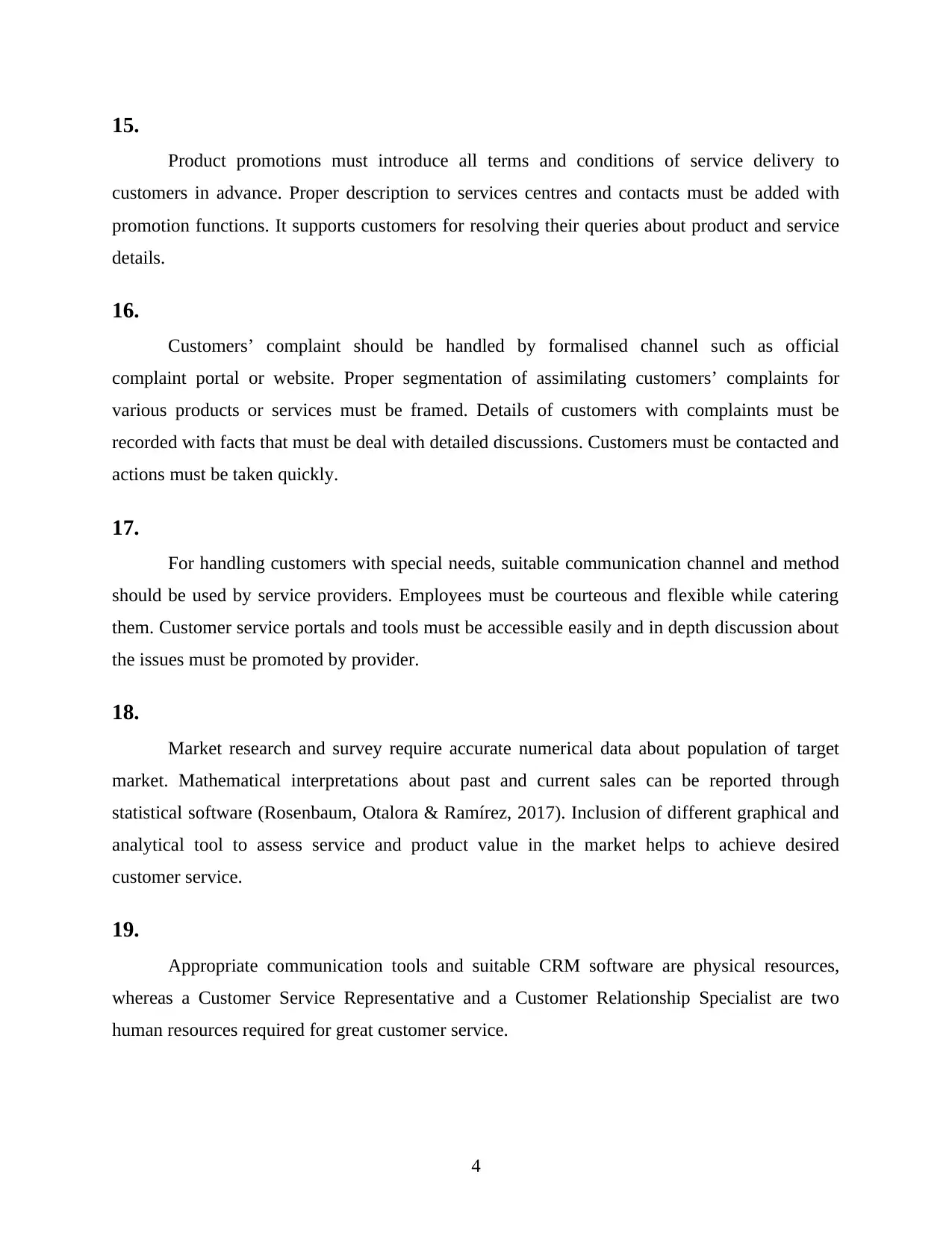
6.......................................................................................................................................................2
7.......................................................................................................................................................2
8.......................................................................................................................................................2
9.......................................................................................................................................................2
10.....................................................................................................................................................3
11.....................................................................................................................................................3
12.....................................................................................................................................................3
13.....................................................................................................................................................3
14.....................................................................................................................................................3
15.....................................................................................................................................................4
16.....................................................................................................................................................4
17.....................................................................................................................................................4
18.....................................................................................................................................................4
19.....................................................................................................................................................4
20.....................................................................................................................................................5
21.....................................................................................................................................................5
REFERENCES................................................................................................................................6
1.......................................................................................................................................................1
2.......................................................................................................................................................1
3.......................................................................................................................................................1
4.......................................................................................................................................................1
5.......................................................................................................................................................2
6.......................................................................................................................................................2
7.......................................................................................................................................................2
8.......................................................................................................................................................2
9.......................................................................................................................................................2
10.....................................................................................................................................................3
11.....................................................................................................................................................3
12.....................................................................................................................................................3
13.....................................................................................................................................................3
14.....................................................................................................................................................3
15.....................................................................................................................................................4
16.....................................................................................................................................................4
17.....................................................................................................................................................4
18.....................................................................................................................................................4
19.....................................................................................................................................................4
20.....................................................................................................................................................5
21.....................................................................................................................................................5
REFERENCES................................................................................................................................6

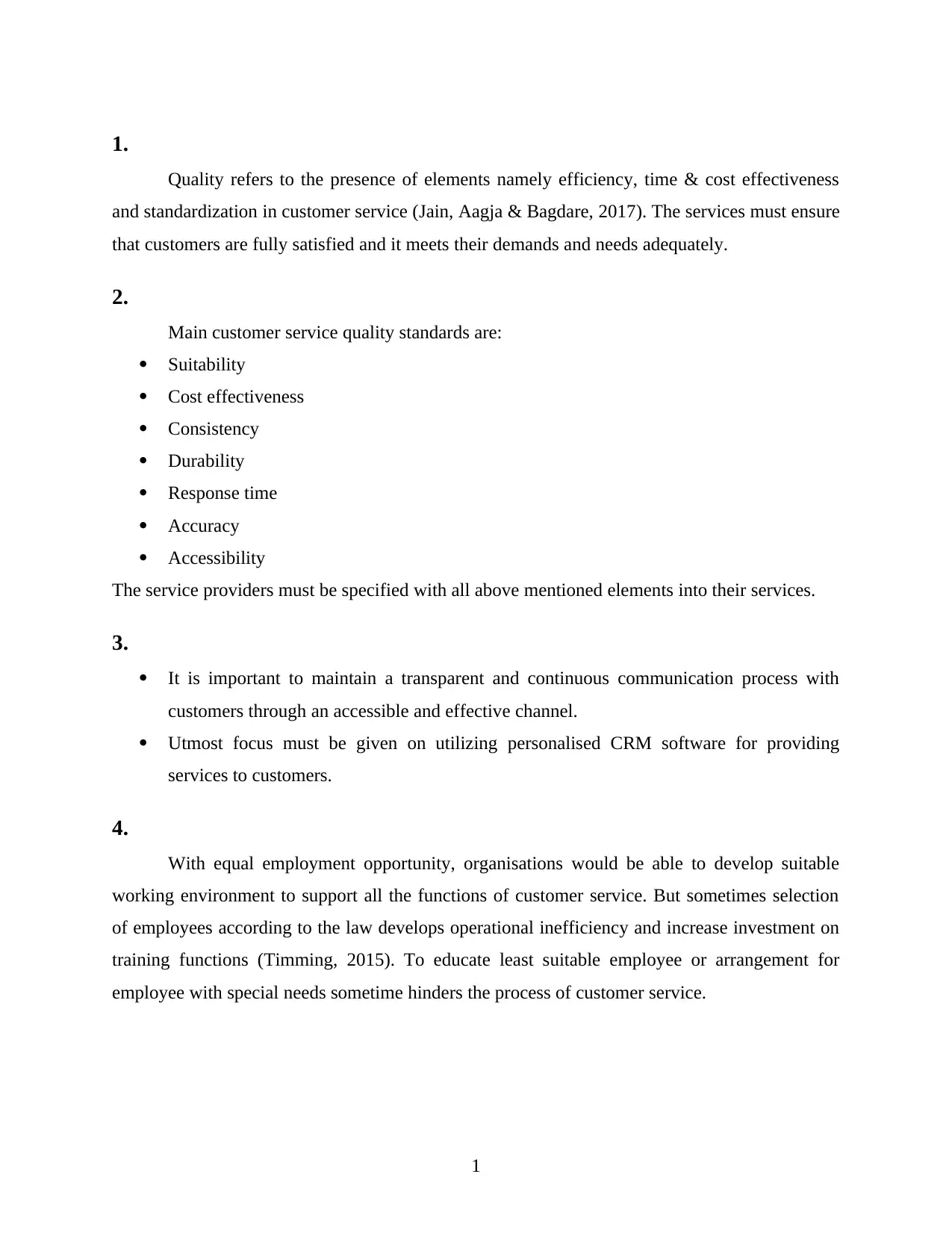
1.
Quality refers to the presence of elements namely efficiency, time & cost effectiveness
and standardization in customer service (Jain, Aagja & Bagdare, 2017). The services must ensure
that customers are fully satisfied and it meets their demands and needs adequately.
2.
Main customer service quality standards are:
Suitability
Cost effectiveness
Consistency
Durability
Response time
Accuracy
Accessibility
The service providers must be specified with all above mentioned elements into their services.
3.
It is important to maintain a transparent and continuous communication process with
customers through an accessible and effective channel.
Utmost focus must be given on utilizing personalised CRM software for providing
services to customers.
4.
With equal employment opportunity, organisations would be able to develop suitable
working environment to support all the functions of customer service. But sometimes selection
of employees according to the law develops operational inefficiency and increase investment on
training functions (Timming, 2015). To educate least suitable employee or arrangement for
employee with special needs sometime hinders the process of customer service.
1
Quality refers to the presence of elements namely efficiency, time & cost effectiveness
and standardization in customer service (Jain, Aagja & Bagdare, 2017). The services must ensure
that customers are fully satisfied and it meets their demands and needs adequately.
2.
Main customer service quality standards are:
Suitability
Cost effectiveness
Consistency
Durability
Response time
Accuracy
Accessibility
The service providers must be specified with all above mentioned elements into their services.
3.
It is important to maintain a transparent and continuous communication process with
customers through an accessible and effective channel.
Utmost focus must be given on utilizing personalised CRM software for providing
services to customers.
4.
With equal employment opportunity, organisations would be able to develop suitable
working environment to support all the functions of customer service. But sometimes selection
of employees according to the law develops operational inefficiency and increase investment on
training functions (Timming, 2015). To educate least suitable employee or arrangement for
employee with special needs sometime hinders the process of customer service.
1
⊘ This is a preview!⊘
Do you want full access?
Subscribe today to unlock all pages.

Trusted by 1+ million students worldwide

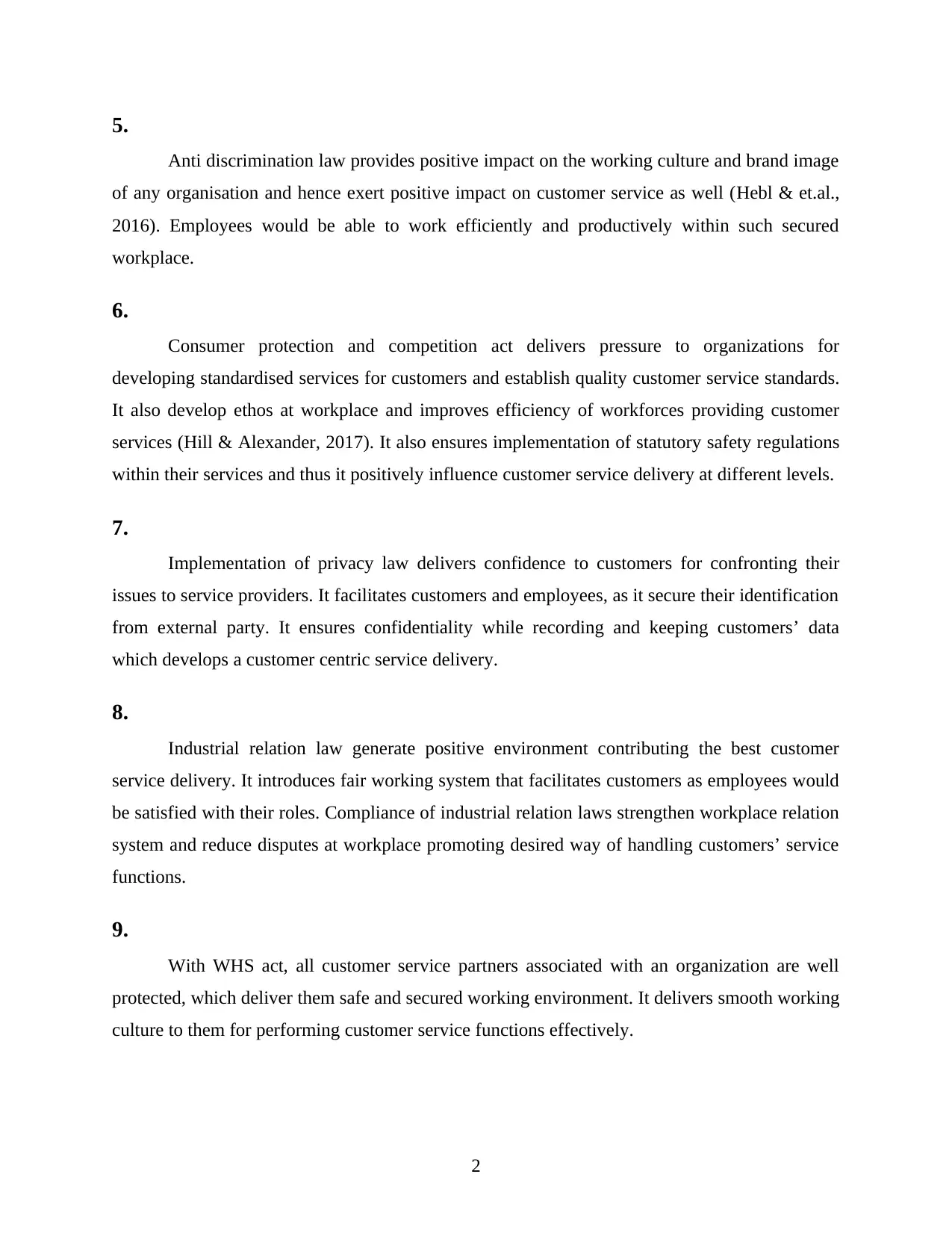
5.
Anti discrimination law provides positive impact on the working culture and brand image
of any organisation and hence exert positive impact on customer service as well (Hebl & et.al.,
2016). Employees would be able to work efficiently and productively within such secured
workplace.
6.
Consumer protection and competition act delivers pressure to organizations for
developing standardised services for customers and establish quality customer service standards.
It also develop ethos at workplace and improves efficiency of workforces providing customer
services (Hill & Alexander, 2017). It also ensures implementation of statutory safety regulations
within their services and thus it positively influence customer service delivery at different levels.
7.
Implementation of privacy law delivers confidence to customers for confronting their
issues to service providers. It facilitates customers and employees, as it secure their identification
from external party. It ensures confidentiality while recording and keeping customers’ data
which develops a customer centric service delivery.
8.
Industrial relation law generate positive environment contributing the best customer
service delivery. It introduces fair working system that facilitates customers as employees would
be satisfied with their roles. Compliance of industrial relation laws strengthen workplace relation
system and reduce disputes at workplace promoting desired way of handling customers’ service
functions.
9.
With WHS act, all customer service partners associated with an organization are well
protected, which deliver them safe and secured working environment. It delivers smooth working
culture to them for performing customer service functions effectively.
2
Anti discrimination law provides positive impact on the working culture and brand image
of any organisation and hence exert positive impact on customer service as well (Hebl & et.al.,
2016). Employees would be able to work efficiently and productively within such secured
workplace.
6.
Consumer protection and competition act delivers pressure to organizations for
developing standardised services for customers and establish quality customer service standards.
It also develop ethos at workplace and improves efficiency of workforces providing customer
services (Hill & Alexander, 2017). It also ensures implementation of statutory safety regulations
within their services and thus it positively influence customer service delivery at different levels.
7.
Implementation of privacy law delivers confidence to customers for confronting their
issues to service providers. It facilitates customers and employees, as it secure their identification
from external party. It ensures confidentiality while recording and keeping customers’ data
which develops a customer centric service delivery.
8.
Industrial relation law generate positive environment contributing the best customer
service delivery. It introduces fair working system that facilitates customers as employees would
be satisfied with their roles. Compliance of industrial relation laws strengthen workplace relation
system and reduce disputes at workplace promoting desired way of handling customers’ service
functions.
9.
With WHS act, all customer service partners associated with an organization are well
protected, which deliver them safe and secured working environment. It delivers smooth working
culture to them for performing customer service functions effectively.
2
Paraphrase This Document
Need a fresh take? Get an instant paraphrase of this document with our AI Paraphraser

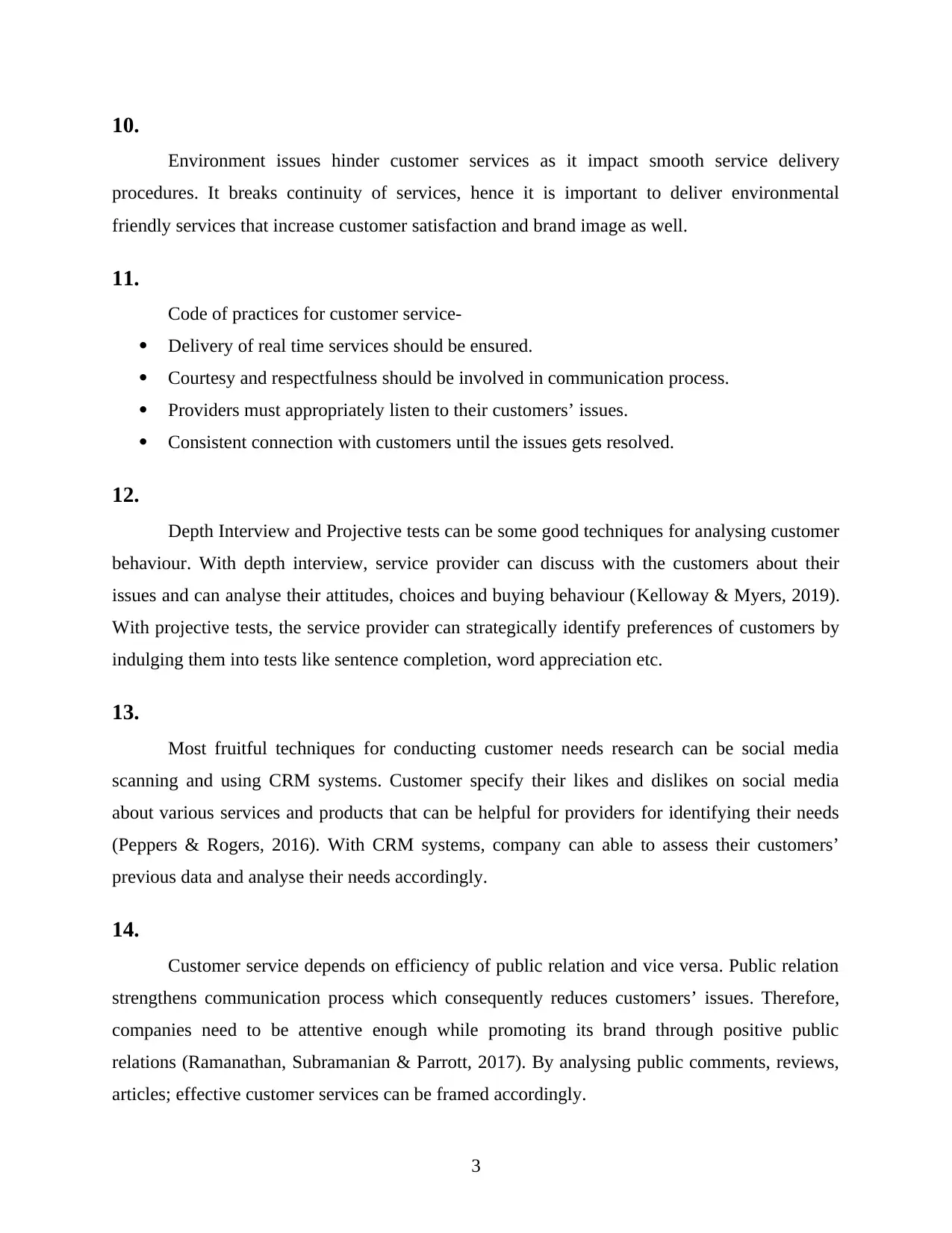
10.
Environment issues hinder customer services as it impact smooth service delivery
procedures. It breaks continuity of services, hence it is important to deliver environmental
friendly services that increase customer satisfaction and brand image as well.
11.
Code of practices for customer service-
Delivery of real time services should be ensured.
Courtesy and respectfulness should be involved in communication process.
Providers must appropriately listen to their customers’ issues.
Consistent connection with customers until the issues gets resolved.
12.
Depth Interview and Projective tests can be some good techniques for analysing customer
behaviour. With depth interview, service provider can discuss with the customers about their
issues and can analyse their attitudes, choices and buying behaviour (Kelloway & Myers, 2019).
With projective tests, the service provider can strategically identify preferences of customers by
indulging them into tests like sentence completion, word appreciation etc.
13.
Most fruitful techniques for conducting customer needs research can be social media
scanning and using CRM systems. Customer specify their likes and dislikes on social media
about various services and products that can be helpful for providers for identifying their needs
(Peppers & Rogers, 2016). With CRM systems, company can able to assess their customers’
previous data and analyse their needs accordingly.
14.
Customer service depends on efficiency of public relation and vice versa. Public relation
strengthens communication process which consequently reduces customers’ issues. Therefore,
companies need to be attentive enough while promoting its brand through positive public
relations (Ramanathan, Subramanian & Parrott, 2017). By analysing public comments, reviews,
articles; effective customer services can be framed accordingly.
3
Environment issues hinder customer services as it impact smooth service delivery
procedures. It breaks continuity of services, hence it is important to deliver environmental
friendly services that increase customer satisfaction and brand image as well.
11.
Code of practices for customer service-
Delivery of real time services should be ensured.
Courtesy and respectfulness should be involved in communication process.
Providers must appropriately listen to their customers’ issues.
Consistent connection with customers until the issues gets resolved.
12.
Depth Interview and Projective tests can be some good techniques for analysing customer
behaviour. With depth interview, service provider can discuss with the customers about their
issues and can analyse their attitudes, choices and buying behaviour (Kelloway & Myers, 2019).
With projective tests, the service provider can strategically identify preferences of customers by
indulging them into tests like sentence completion, word appreciation etc.
13.
Most fruitful techniques for conducting customer needs research can be social media
scanning and using CRM systems. Customer specify their likes and dislikes on social media
about various services and products that can be helpful for providers for identifying their needs
(Peppers & Rogers, 2016). With CRM systems, company can able to assess their customers’
previous data and analyse their needs accordingly.
14.
Customer service depends on efficiency of public relation and vice versa. Public relation
strengthens communication process which consequently reduces customers’ issues. Therefore,
companies need to be attentive enough while promoting its brand through positive public
relations (Ramanathan, Subramanian & Parrott, 2017). By analysing public comments, reviews,
articles; effective customer services can be framed accordingly.
3

15.
Product promotions must introduce all terms and conditions of service delivery to
customers in advance. Proper description to services centres and contacts must be added with
promotion functions. It supports customers for resolving their queries about product and service
details.
16.
Customers’ complaint should be handled by formalised channel such as official
complaint portal or website. Proper segmentation of assimilating customers’ complaints for
various products or services must be framed. Details of customers with complaints must be
recorded with facts that must be deal with detailed discussions. Customers must be contacted and
actions must be taken quickly.
17.
For handling customers with special needs, suitable communication channel and method
should be used by service providers. Employees must be courteous and flexible while catering
them. Customer service portals and tools must be accessible easily and in depth discussion about
the issues must be promoted by provider.
18.
Market research and survey require accurate numerical data about population of target
market. Mathematical interpretations about past and current sales can be reported through
statistical software (Rosenbaum, Otalora & Ramírez, 2017). Inclusion of different graphical and
analytical tool to assess service and product value in the market helps to achieve desired
customer service.
19.
Appropriate communication tools and suitable CRM software are physical resources,
whereas a Customer Service Representative and a Customer Relationship Specialist are two
human resources required for great customer service.
4
Product promotions must introduce all terms and conditions of service delivery to
customers in advance. Proper description to services centres and contacts must be added with
promotion functions. It supports customers for resolving their queries about product and service
details.
16.
Customers’ complaint should be handled by formalised channel such as official
complaint portal or website. Proper segmentation of assimilating customers’ complaints for
various products or services must be framed. Details of customers with complaints must be
recorded with facts that must be deal with detailed discussions. Customers must be contacted and
actions must be taken quickly.
17.
For handling customers with special needs, suitable communication channel and method
should be used by service providers. Employees must be courteous and flexible while catering
them. Customer service portals and tools must be accessible easily and in depth discussion about
the issues must be promoted by provider.
18.
Market research and survey require accurate numerical data about population of target
market. Mathematical interpretations about past and current sales can be reported through
statistical software (Rosenbaum, Otalora & Ramírez, 2017). Inclusion of different graphical and
analytical tool to assess service and product value in the market helps to achieve desired
customer service.
19.
Appropriate communication tools and suitable CRM software are physical resources,
whereas a Customer Service Representative and a Customer Relationship Specialist are two
human resources required for great customer service.
4
⊘ This is a preview!⊘
Do you want full access?
Subscribe today to unlock all pages.

Trusted by 1+ million students worldwide

20.
Live chat sessions, personalized surveys through emails and online feedback forms can
be some common strategies to obtain feedback from customers. Monitoring social media
platforms and feedbacks just after service delivery can also be used for receiving relevant
experiences and feedback of customers.
21.
Record of on-time delivery services and measuring the rate of filling orders can be
accessed for effectively reviewing the customer service level. Along with it, Stock-out rate can
also be determined or measured by a company to review the level of its customer service
function.
5
Live chat sessions, personalized surveys through emails and online feedback forms can
be some common strategies to obtain feedback from customers. Monitoring social media
platforms and feedbacks just after service delivery can also be used for receiving relevant
experiences and feedback of customers.
21.
Record of on-time delivery services and measuring the rate of filling orders can be
accessed for effectively reviewing the customer service level. Along with it, Stock-out rate can
also be determined or measured by a company to review the level of its customer service
function.
5
Paraphrase This Document
Need a fresh take? Get an instant paraphrase of this document with our AI Paraphraser

REFERENCES
Hebl, M., Ruggs, E., Martinez, L., Trump-Steele, R., & Nittrouer, C. (2016). Understanding and
reducing interpersonal discrimination in the workplace.
Hill, N., & Alexander, J. (2017). The handbook of customer satisfaction and loyalty
measurement. Routledge.
Jain, R., Aagja, J., & Bagdare, S. (2017). Customer experience–a review and research
agenda. Journal of Service Theory and Practice, 27(3), 642-662.
Kelloway, E. K., & Myers, V. (2019). Leading the service-profit chain: how leaders’ behaviors
can affect customer experience. Examining the Role of Well-being in the Marketing Discipline
(Research in Occupational Stress and Well Being, Vol. 17), Emerald Publishing Limited, 71-90.
Peppers, D., & Rogers, M. (2016). Managing customer experience and relationships: A strategic
framework. John Wiley & Sons.
Ramanathan, U., Subramanian, N., & Parrott, G. (2017). Role of social media in retail network
operations and marketing to enhance customer satisfaction. International Journal of Operations
& Production Management, 37(1), 105-123.
Rosenbaum, M. S., Otalora, M. L., & Ramírez, G. C. (2017). How to create a realistic customer
journey map. Business Horizons, 60(1), 143-150.
Timming, A. R. (2015). Visible tattoos in the service sector: a new challenge to recruitment and
selection. Work, employment and society, 29(1), 60-78.
6
Hebl, M., Ruggs, E., Martinez, L., Trump-Steele, R., & Nittrouer, C. (2016). Understanding and
reducing interpersonal discrimination in the workplace.
Hill, N., & Alexander, J. (2017). The handbook of customer satisfaction and loyalty
measurement. Routledge.
Jain, R., Aagja, J., & Bagdare, S. (2017). Customer experience–a review and research
agenda. Journal of Service Theory and Practice, 27(3), 642-662.
Kelloway, E. K., & Myers, V. (2019). Leading the service-profit chain: how leaders’ behaviors
can affect customer experience. Examining the Role of Well-being in the Marketing Discipline
(Research in Occupational Stress and Well Being, Vol. 17), Emerald Publishing Limited, 71-90.
Peppers, D., & Rogers, M. (2016). Managing customer experience and relationships: A strategic
framework. John Wiley & Sons.
Ramanathan, U., Subramanian, N., & Parrott, G. (2017). Role of social media in retail network
operations and marketing to enhance customer satisfaction. International Journal of Operations
& Production Management, 37(1), 105-123.
Rosenbaum, M. S., Otalora, M. L., & Ramírez, G. C. (2017). How to create a realistic customer
journey map. Business Horizons, 60(1), 143-150.
Timming, A. R. (2015). Visible tattoos in the service sector: a new challenge to recruitment and
selection. Work, employment and society, 29(1), 60-78.
6
1 out of 8
Related Documents
Your All-in-One AI-Powered Toolkit for Academic Success.
+13062052269
info@desklib.com
Available 24*7 on WhatsApp / Email
Unlock your academic potential
Copyright © 2020–2025 A2Z Services. All Rights Reserved. Developed and managed by ZUCOL.