IT Communications Training Plan: Objectives, Methods, and Scalability

Verified

Added on  2023/06/15

|10
|395
|364
Report
AI Summary
This report details an IT communications training plan, outlining key objectives such as determining training needs, identifying the number of employees requiring training, understanding adult learning principles, and creating a detailed training blueprint. It explores various training methods, including individual hands-on training, classroom-style instruction, seminar-style demonstrations, computer-based training, and book-based self-paced learning. The plan emphasizes understanding end-user needs through skill level evaluation, clarifying responsibilities, and providing tiered training levels. It also covers the creation of a training program that highlights software purpose, differences from previous software, potential future issues, and security concerns, targeting staff and various departments. The report stresses the importance of a scalable training program for flexibility and cost-effectiveness, concluding with the advantages of employee training, such as organizational growth, improved customer service, increased performance, and reduced errors. References to relevant literature support the training plan's development and rationale.

Document Page
IT COMMUNICATIONS
tabler-icon-diamond-filled.svg

Paraphrase This Document

Need a fresh take? Get an instant paraphrase of this document with our AI Paraphraser
Document Page
Objectives
The main objectives of the training plan involves the following:
Determining the type of training that is required
Determination of the number of employees that needs training
Understanding the ways of providing fast training for the adult learners
Understanding the audience
making a detailed blueprint
Document Page
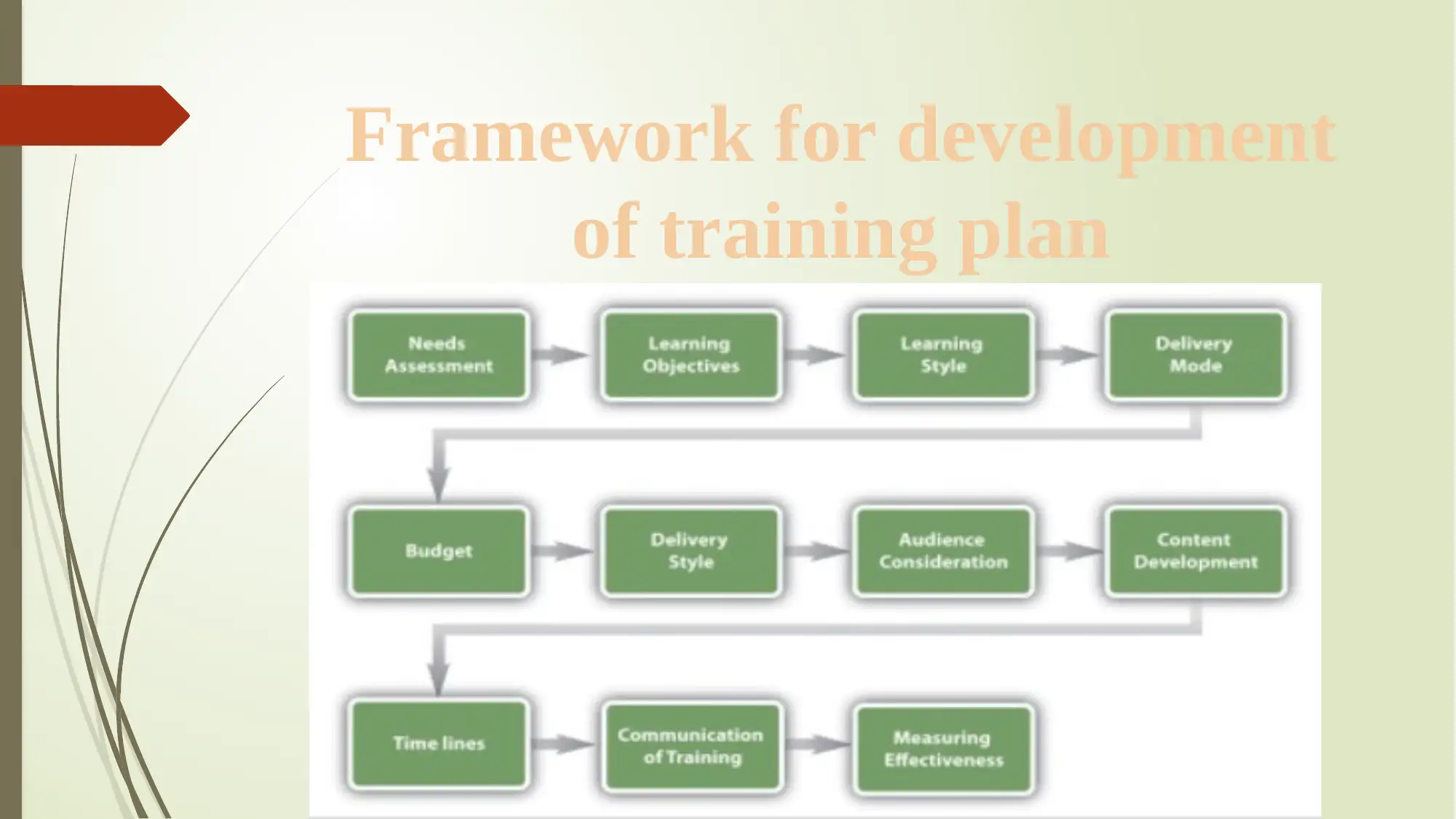
Framework for development
of training plan
Document Page
Methods of training
There is a need of considering several factors while
determining the method of training and there are mainly
few methods of providing training and they are listed
below:
Individual hands-on training
Hands-on classroom style instructor led training
Seminar style group demonstration
Computer based training
Book-based self-paced training
tabler-icon-diamond-filled.svg

Paraphrase This Document

Need a fresh take? Get an instant paraphrase of this document with our AI Paraphraser
Document Page
Needs of end-users
Evaluation of the technical skill level
Making them understand their responsibility
Providing different levels of training
Technical novices will need more focused, step-by-
step instruction in basics
Document Page
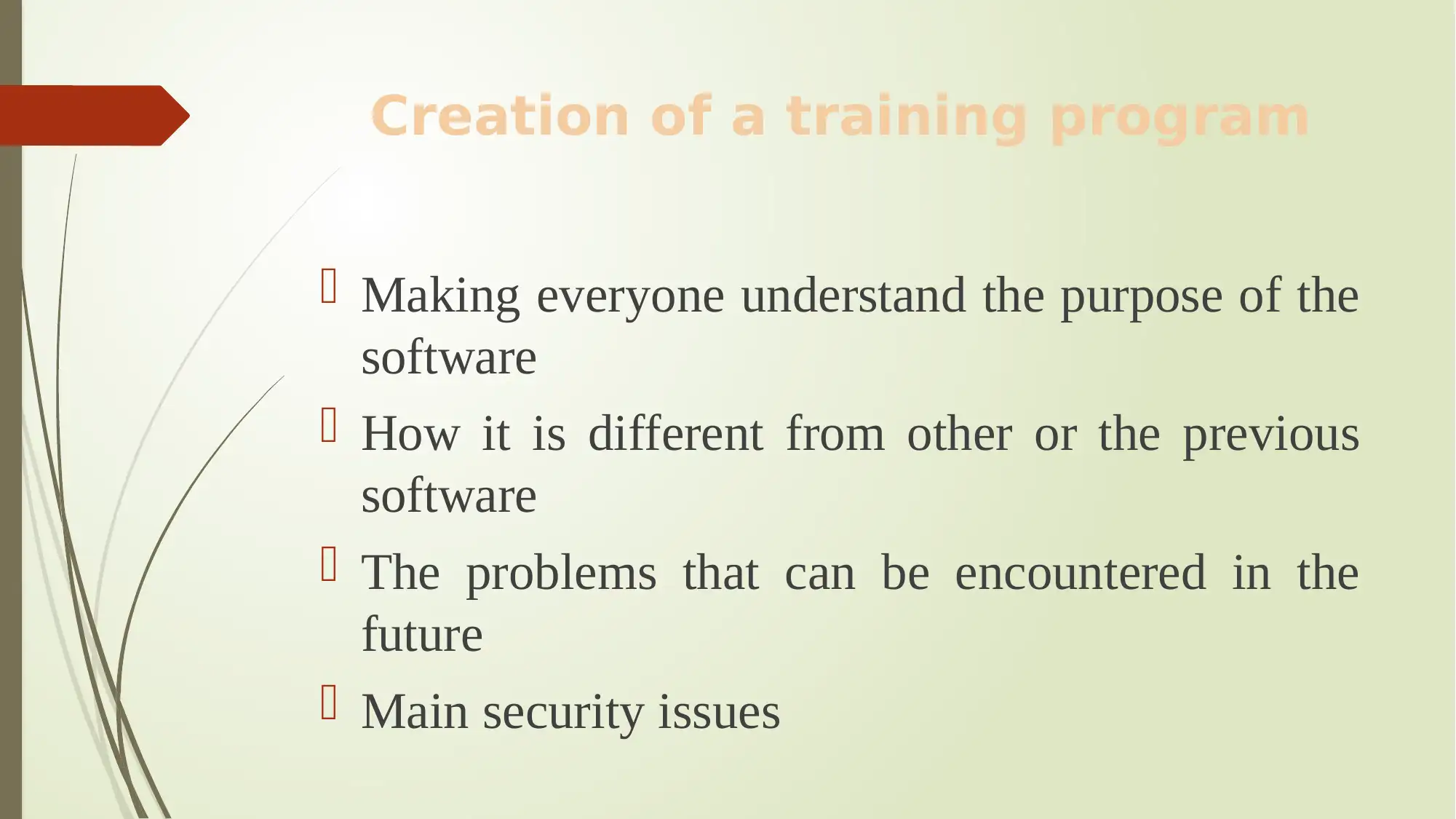
Creation of a training program
Making everyone understand the purpose of the
software
How it is different from other or the previous
software
The problems that can be encountered in the
future
Main security issues
Document Page
Audience
Staff
Departments
tabler-icon-diamond-filled.svg

Paraphrase This Document

Need a fresh take? Get an instant paraphrase of this document with our AI Paraphraser
Document Page
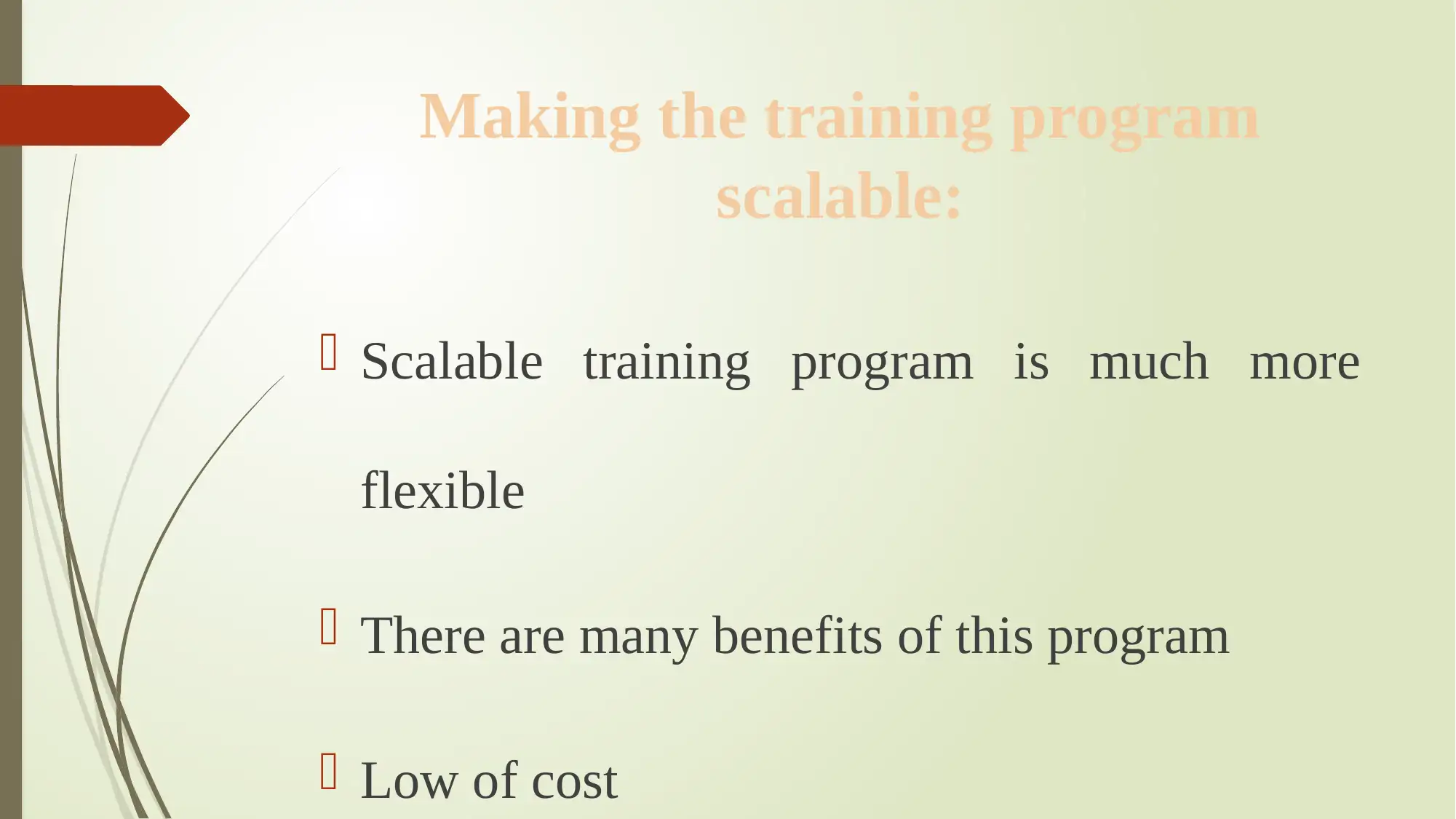
Making the training program
scalable:
Scalable training program is much more
flexible
There are many benefits of this program
Low of cost
Document Page
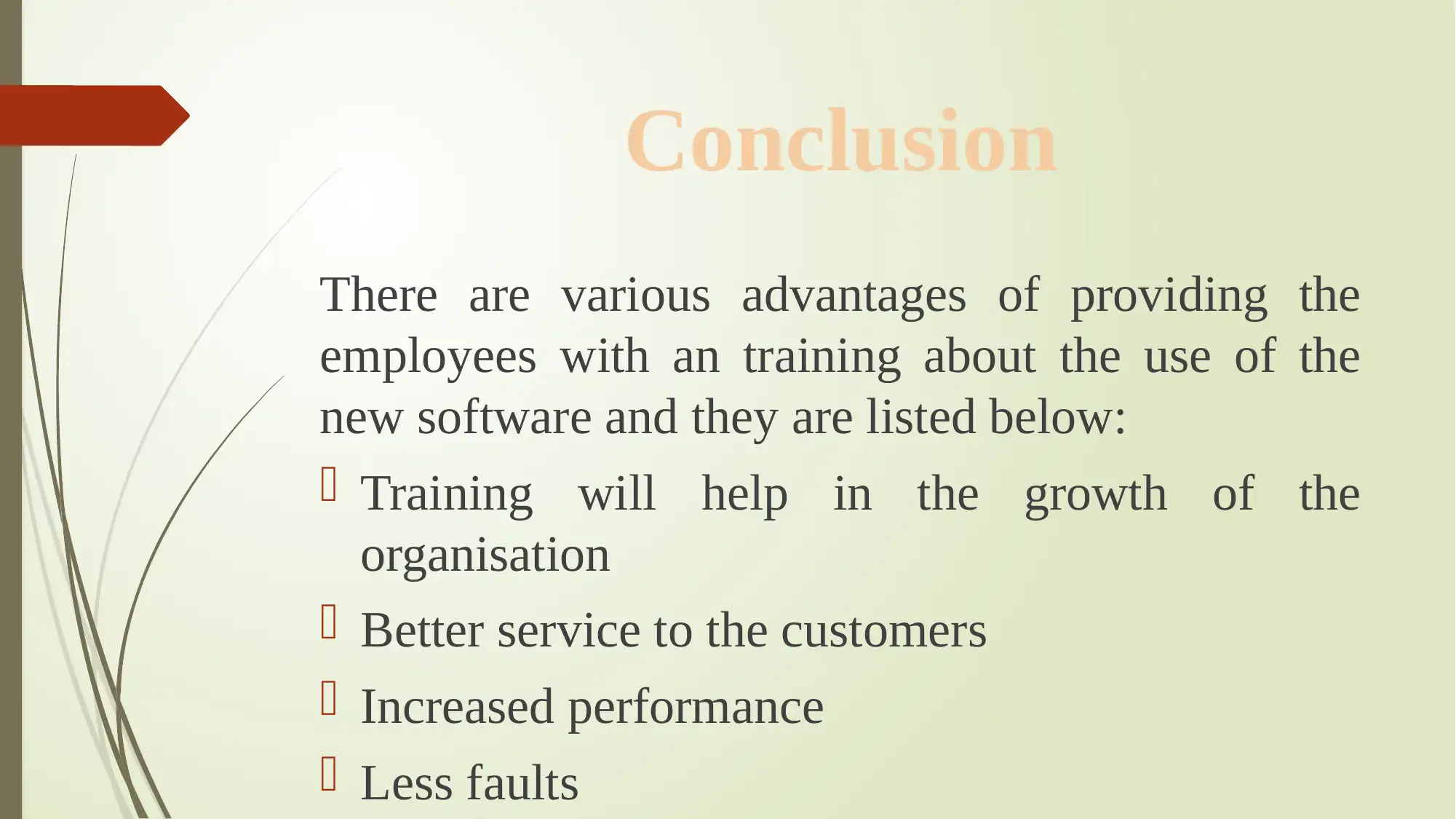
Conclusion
There are various advantages of providing the
employees with an training about the use of the
new software and they are listed below:
Training will help in the growth of the
organisation
Better service to the customers
Increased performance
Less faults
Document Page
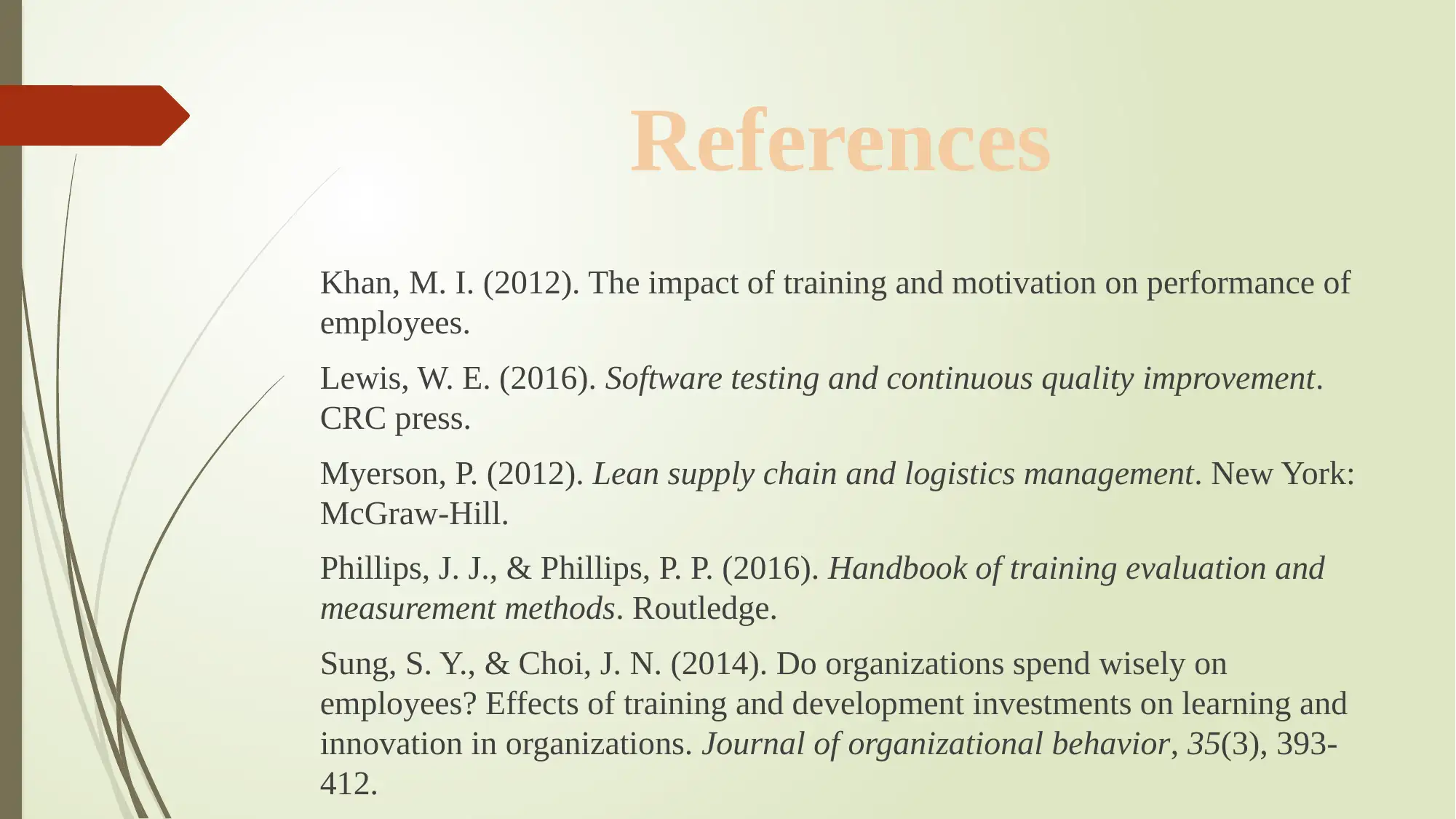
References
Khan, M. I. (2012). The impact of training and motivation on performance of
employees.
Lewis, W. E. (2016). Software testing and continuous quality improvement.
CRC press.
Myerson, P. (2012). Lean supply chain and logistics management. New York:
McGraw-Hill.
Phillips, J. J., & Phillips, P. P. (2016). Handbook of training evaluation and
measurement methods. Routledge.
Sung, S. Y., & Choi, J. N. (2014). Do organizations spend wisely on
employees? Effects of training and development investments on learning and
innovation in organizations. Journal of organizational behavior, 35(3), 393-
412.
chevron_up_icon
1 out of 10
circle_padding
hide_on_mobile
zoom_out_icon
[object Object]