Accounting Analysis: Larson & Dynamic Contract Key Issues
VerifiedAdded on 2023/06/15
|9
|2122
|142
Report
AI Summary
This report identifies and analyzes various accounting issues within the Larson & Dynamic contract, focusing on revenue recognition, ethical considerations, and compliance with accounting standards. The analysis highlights issues such as the price protection clause, coupon strategies, and the impact of refund/exchange policies on revenue recognition. It emphasizes the importance of adhering to FASB accounting standards, particularly concerning inventory valuation and revenue recognition timing. The report also examines how the four criteria for revenue recognition—persuasive evidence of arrangement, delivery of goods, fixed pricing, and assured collectability—apply to the contract. Ultimately, the report underscores the need for precise and ethical accounting practices to ensure the financial health and compliance of the business, with reference to AICPA code of professional conduct.
A report to Rosalie Gerst
Identifying and A analysing
the various accounting Issues
in the Larson & Dynamic
contract
Identifying and A analysing
the various accounting Issues
in the Larson & Dynamic
contract

Paraphrase This Document
Need a fresh take? Get an instant paraphrase of this document with our AI Paraphraser


TABLE OF CONTENTS
INTRODUCTION...........................................................................................................................3
MAIN BODY...................................................................................................................................3
CONCLUSION................................................................................................................................7
REFERENCES................................................................................................................................8
INTRODUCTION...........................................................................................................................3
MAIN BODY...................................................................................................................................3
CONCLUSION................................................................................................................................7
REFERENCES................................................................................................................................8
⊘ This is a preview!⊘
Do you want full access?
Subscribe today to unlock all pages.

Trusted by 1+ million students worldwide
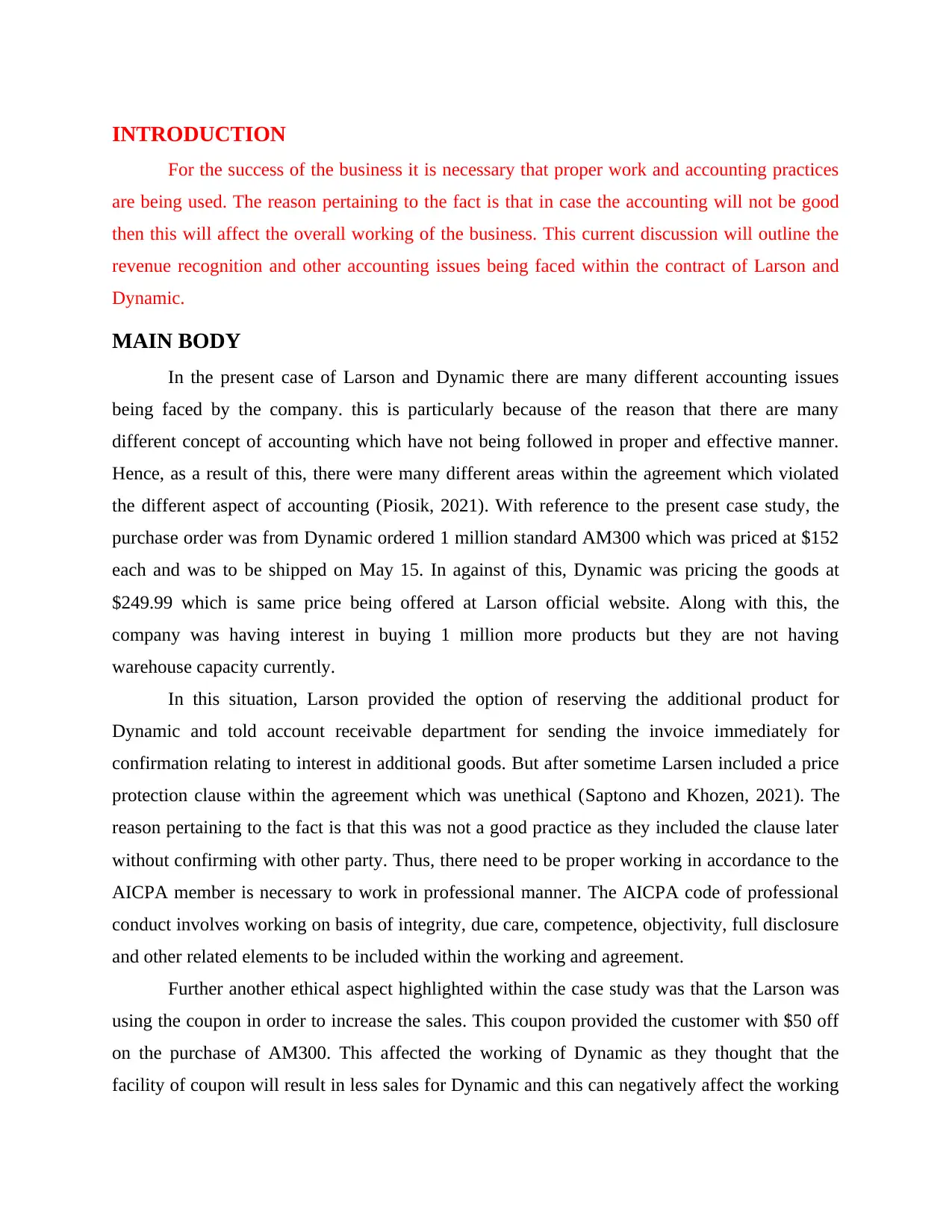
INTRODUCTION
For the success of the business it is necessary that proper work and accounting practices
are being used. The reason pertaining to the fact is that in case the accounting will not be good
then this will affect the overall working of the business. This current discussion will outline the
revenue recognition and other accounting issues being faced within the contract of Larson and
Dynamic.
MAIN BODY
In the present case of Larson and Dynamic there are many different accounting issues
being faced by the company. this is particularly because of the reason that there are many
different concept of accounting which have not being followed in proper and effective manner.
Hence, as a result of this, there were many different areas within the agreement which violated
the different aspect of accounting (Piosik, 2021). With reference to the present case study, the
purchase order was from Dynamic ordered 1 million standard AM300 which was priced at $152
each and was to be shipped on May 15. In against of this, Dynamic was pricing the goods at
$249.99 which is same price being offered at Larson official website. Along with this, the
company was having interest in buying 1 million more products but they are not having
warehouse capacity currently.
In this situation, Larson provided the option of reserving the additional product for
Dynamic and told account receivable department for sending the invoice immediately for
confirmation relating to interest in additional goods. But after sometime Larsen included a price
protection clause within the agreement which was unethical (Saptono and Khozen, 2021). The
reason pertaining to the fact is that this was not a good practice as they included the clause later
without confirming with other party. Thus, there need to be proper working in accordance to the
AICPA member is necessary to work in professional manner. The AICPA code of professional
conduct involves working on basis of integrity, due care, competence, objectivity, full disclosure
and other related elements to be included within the working and agreement.
Further another ethical aspect highlighted within the case study was that the Larson was
using the coupon in order to increase the sales. This coupon provided the customer with $50 off
on the purchase of AM300. This affected the working of Dynamic as they thought that the
facility of coupon will result in less sales for Dynamic and this can negatively affect the working
For the success of the business it is necessary that proper work and accounting practices
are being used. The reason pertaining to the fact is that in case the accounting will not be good
then this will affect the overall working of the business. This current discussion will outline the
revenue recognition and other accounting issues being faced within the contract of Larson and
Dynamic.
MAIN BODY
In the present case of Larson and Dynamic there are many different accounting issues
being faced by the company. this is particularly because of the reason that there are many
different concept of accounting which have not being followed in proper and effective manner.
Hence, as a result of this, there were many different areas within the agreement which violated
the different aspect of accounting (Piosik, 2021). With reference to the present case study, the
purchase order was from Dynamic ordered 1 million standard AM300 which was priced at $152
each and was to be shipped on May 15. In against of this, Dynamic was pricing the goods at
$249.99 which is same price being offered at Larson official website. Along with this, the
company was having interest in buying 1 million more products but they are not having
warehouse capacity currently.
In this situation, Larson provided the option of reserving the additional product for
Dynamic and told account receivable department for sending the invoice immediately for
confirmation relating to interest in additional goods. But after sometime Larsen included a price
protection clause within the agreement which was unethical (Saptono and Khozen, 2021). The
reason pertaining to the fact is that this was not a good practice as they included the clause later
without confirming with other party. Thus, there need to be proper working in accordance to the
AICPA member is necessary to work in professional manner. The AICPA code of professional
conduct involves working on basis of integrity, due care, competence, objectivity, full disclosure
and other related elements to be included within the working and agreement.
Further another ethical aspect highlighted within the case study was that the Larson was
using the coupon in order to increase the sales. This coupon provided the customer with $50 off
on the purchase of AM300. This affected the working of Dynamic as they thought that the
facility of coupon will result in less sales for Dynamic and this can negatively affect the working
Paraphrase This Document
Need a fresh take? Get an instant paraphrase of this document with our AI Paraphraser
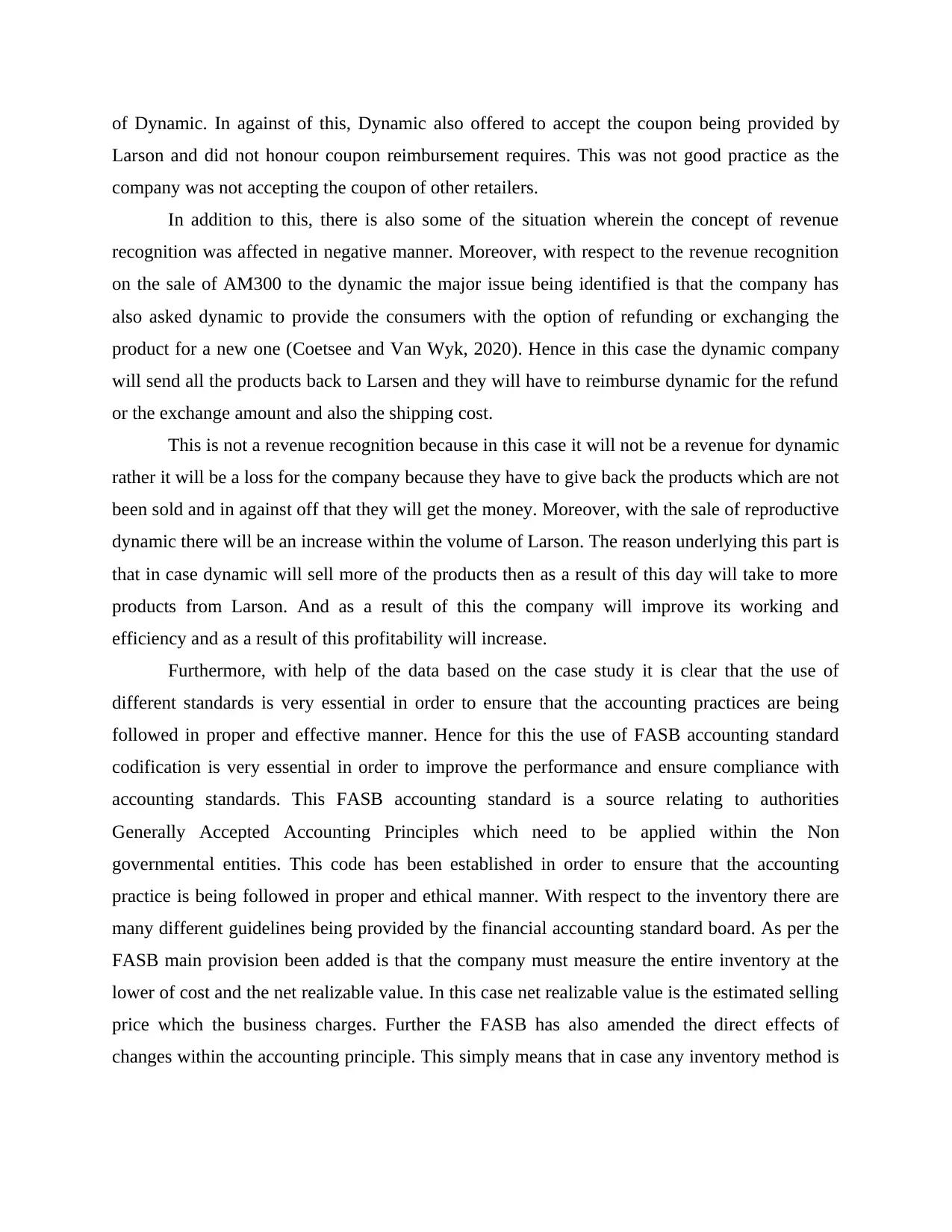
of Dynamic. In against of this, Dynamic also offered to accept the coupon being provided by
Larson and did not honour coupon reimbursement requires. This was not good practice as the
company was not accepting the coupon of other retailers.
In addition to this, there is also some of the situation wherein the concept of revenue
recognition was affected in negative manner. Moreover, with respect to the revenue recognition
on the sale of AM300 to the dynamic the major issue being identified is that the company has
also asked dynamic to provide the consumers with the option of refunding or exchanging the
product for a new one (Coetsee and Van Wyk, 2020). Hence in this case the dynamic company
will send all the products back to Larsen and they will have to reimburse dynamic for the refund
or the exchange amount and also the shipping cost.
This is not a revenue recognition because in this case it will not be a revenue for dynamic
rather it will be a loss for the company because they have to give back the products which are not
been sold and in against off that they will get the money. Moreover, with the sale of reproductive
dynamic there will be an increase within the volume of Larson. The reason underlying this part is
that in case dynamic will sell more of the products then as a result of this day will take to more
products from Larson. And as a result of this the company will improve its working and
efficiency and as a result of this profitability will increase.
Furthermore, with help of the data based on the case study it is clear that the use of
different standards is very essential in order to ensure that the accounting practices are being
followed in proper and effective manner. Hence for this the use of FASB accounting standard
codification is very essential in order to improve the performance and ensure compliance with
accounting standards. This FASB accounting standard is a source relating to authorities
Generally Accepted Accounting Principles which need to be applied within the Non
governmental entities. This code has been established in order to ensure that the accounting
practice is being followed in proper and ethical manner. With respect to the inventory there are
many different guidelines being provided by the financial accounting standard board. As per the
FASB main provision been added is that the company must measure the entire inventory at the
lower of cost and the net realizable value. In this case net realizable value is the estimated selling
price which the business charges. Further the FASB has also amended the direct effects of
changes within the accounting principle. This simply means that in case any inventory method is
Larson and did not honour coupon reimbursement requires. This was not good practice as the
company was not accepting the coupon of other retailers.
In addition to this, there is also some of the situation wherein the concept of revenue
recognition was affected in negative manner. Moreover, with respect to the revenue recognition
on the sale of AM300 to the dynamic the major issue being identified is that the company has
also asked dynamic to provide the consumers with the option of refunding or exchanging the
product for a new one (Coetsee and Van Wyk, 2020). Hence in this case the dynamic company
will send all the products back to Larsen and they will have to reimburse dynamic for the refund
or the exchange amount and also the shipping cost.
This is not a revenue recognition because in this case it will not be a revenue for dynamic
rather it will be a loss for the company because they have to give back the products which are not
been sold and in against off that they will get the money. Moreover, with the sale of reproductive
dynamic there will be an increase within the volume of Larson. The reason underlying this part is
that in case dynamic will sell more of the products then as a result of this day will take to more
products from Larson. And as a result of this the company will improve its working and
efficiency and as a result of this profitability will increase.
Furthermore, with help of the data based on the case study it is clear that the use of
different standards is very essential in order to ensure that the accounting practices are being
followed in proper and effective manner. Hence for this the use of FASB accounting standard
codification is very essential in order to improve the performance and ensure compliance with
accounting standards. This FASB accounting standard is a source relating to authorities
Generally Accepted Accounting Principles which need to be applied within the Non
governmental entities. This code has been established in order to ensure that the accounting
practice is being followed in proper and ethical manner. With respect to the inventory there are
many different guidelines being provided by the financial accounting standard board. As per the
FASB main provision been added is that the company must measure the entire inventory at the
lower of cost and the net realizable value. In this case net realizable value is the estimated selling
price which the business charges. Further the FASB has also amended the direct effects of
changes within the accounting principle. This simply means that in case any inventory method is
being changed then all the related facts must be deferred within the Asset and liabilities so that
the accounting equation is being settled.
Further with respect to the revenue recognition it can be stated that the revenue must be
recognized at the time when it has initiated and not when the settlement has taken place. For
instance, when a dynamic has an ordered 1 million of product and interested in taking one more
million (Lyons and Tarasovich, 2018). at that time Larson has asked the account receivable
department to send the invoice to the company for confirmation but in this case dynamic has
show the interest but has not confirm that whether they will buy the goods or not. Hence in this
particular case the company had not too included within the accounts because dynamic has not
yet approved the same. Thus in this particular case the transaction must be recognised only when
dynamic has confirmed that they will buy the remaining goods within the specified period of
time. It is very essential for the business to get successful that they must effectively recognise the
revenues at correct time so that proper accounting can be undertaken.
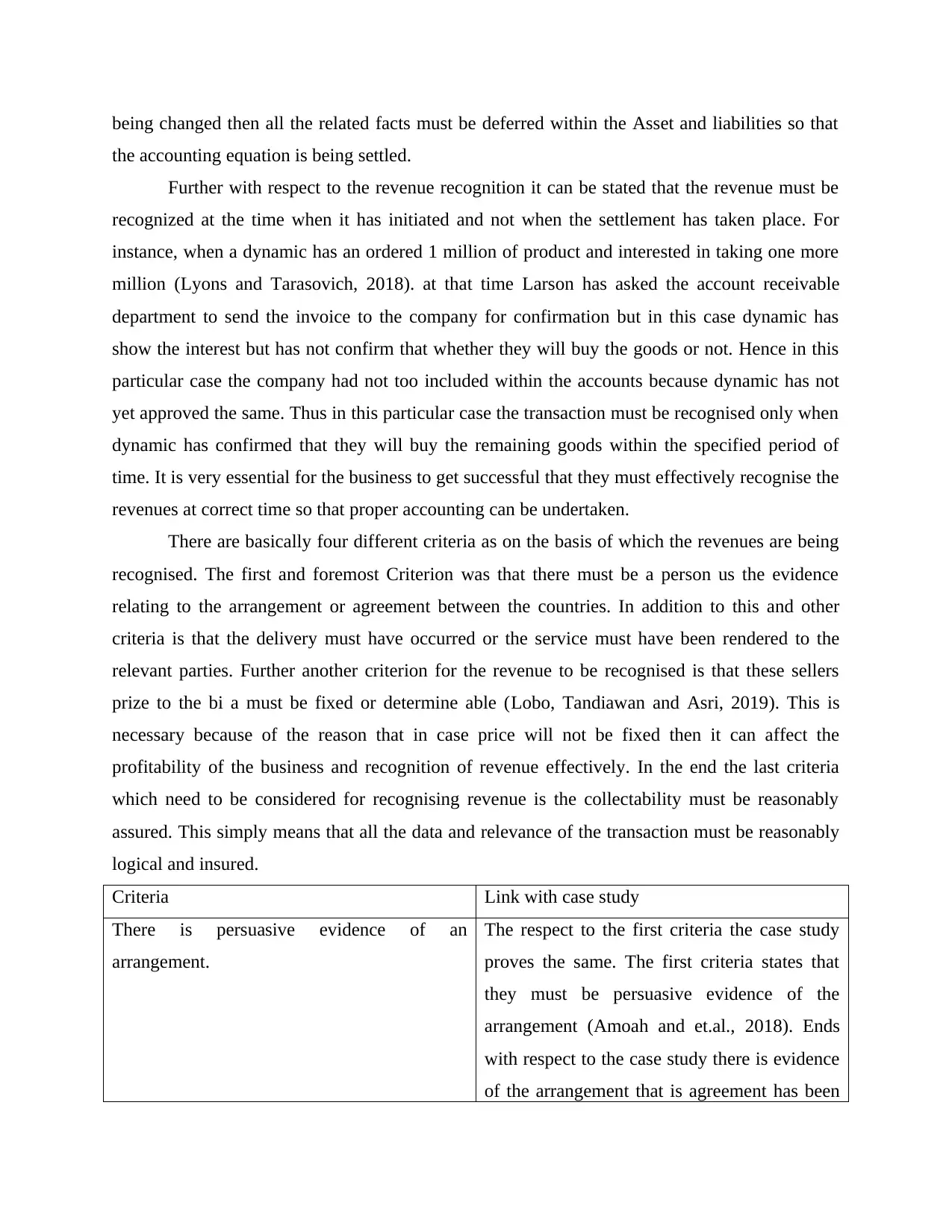
There are basically four different criteria as on the basis of which the revenues are being
recognised. The first and foremost Criterion was that there must be a person us the evidence
relating to the arrangement or agreement between the countries. In addition to this and other
criteria is that the delivery must have occurred or the service must have been rendered to the
relevant parties. Further another criterion for the revenue to be recognised is that these sellers
prize to the bi a must be fixed or determine able (Lobo, Tandiawan and Asri, 2019). This is
necessary because of the reason that in case price will not be fixed then it can affect the
profitability of the business and recognition of revenue effectively. In the end the last criteria
which need to be considered for recognising revenue is the collectability must be reasonably
assured. This simply means that all the data and relevance of the transaction must be reasonably
logical and insured.
Criteria Link with case study
There is persuasive evidence of an
arrangement.
The respect to the first criteria the case study
proves the same. The first criteria states that
they must be persuasive evidence of the
arrangement (Amoah and et.al., 2018). Ends
with respect to the case study there is evidence
of the arrangement that is agreement has been
the accounting equation is being settled.
Further with respect to the revenue recognition it can be stated that the revenue must be
recognized at the time when it has initiated and not when the settlement has taken place. For
instance, when a dynamic has an ordered 1 million of product and interested in taking one more
million (Lyons and Tarasovich, 2018). at that time Larson has asked the account receivable
department to send the invoice to the company for confirmation but in this case dynamic has
show the interest but has not confirm that whether they will buy the goods or not. Hence in this
particular case the company had not too included within the accounts because dynamic has not
yet approved the same. Thus in this particular case the transaction must be recognised only when
dynamic has confirmed that they will buy the remaining goods within the specified period of
time. It is very essential for the business to get successful that they must effectively recognise the
revenues at correct time so that proper accounting can be undertaken.
There are basically four different criteria as on the basis of which the revenues are being
recognised. The first and foremost Criterion was that there must be a person us the evidence
relating to the arrangement or agreement between the countries. In addition to this and other
criteria is that the delivery must have occurred or the service must have been rendered to the
relevant parties. Further another criterion for the revenue to be recognised is that these sellers
prize to the bi a must be fixed or determine able (Lobo, Tandiawan and Asri, 2019). This is
necessary because of the reason that in case price will not be fixed then it can affect the
profitability of the business and recognition of revenue effectively. In the end the last criteria
which need to be considered for recognising revenue is the collectability must be reasonably
assured. This simply means that all the data and relevance of the transaction must be reasonably
logical and insured.
Criteria Link with case study
There is persuasive evidence of an
arrangement.
The respect to the first criteria the case study
proves the same. The first criteria states that
they must be persuasive evidence of the
arrangement (Amoah and et.al., 2018). Ends
with respect to the case study there is evidence
of the arrangement that is agreement has been
⊘ This is a preview!⊘
Do you want full access?
Subscribe today to unlock all pages.
Trusted by 1+ million students worldwide
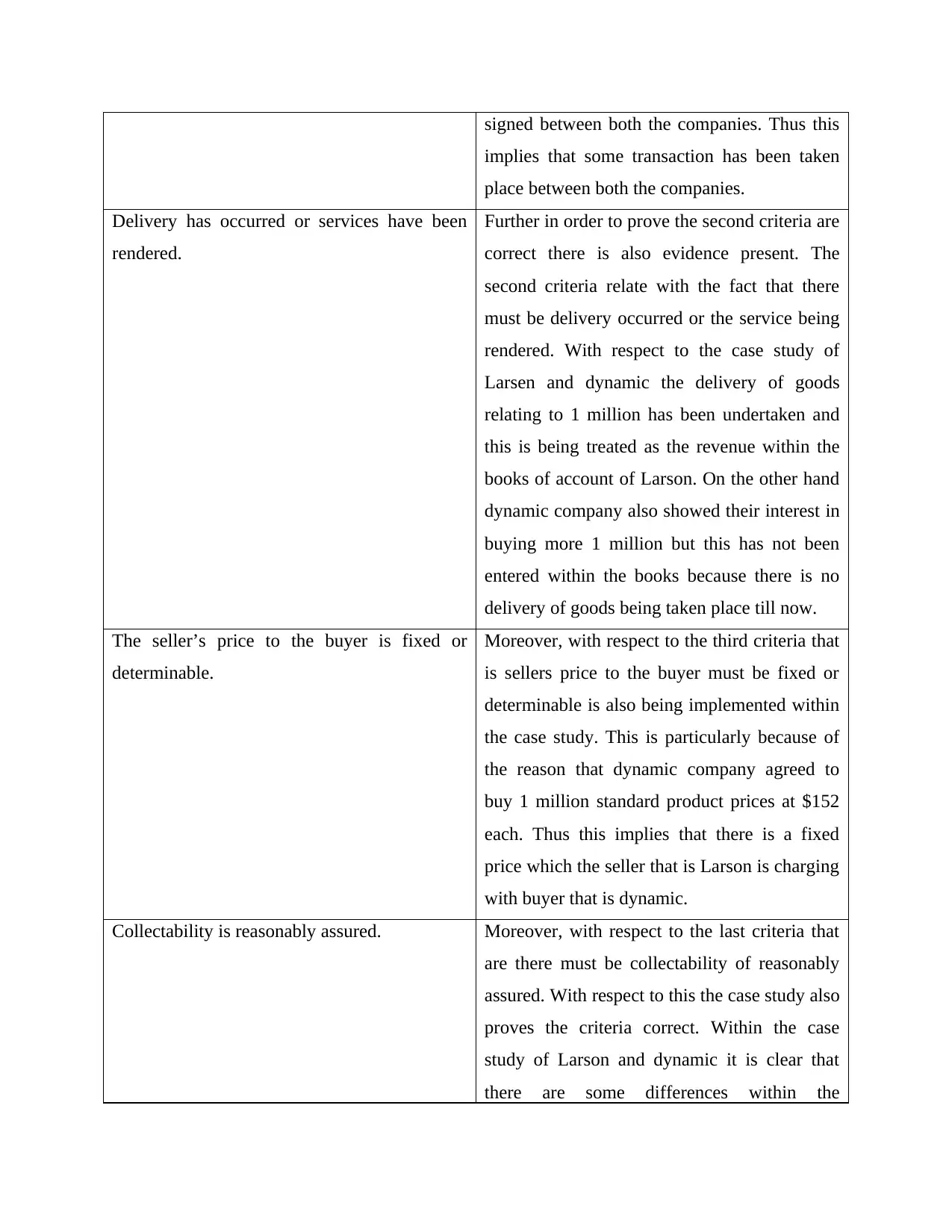
signed between both the companies. Thus this
implies that some transaction has been taken
place between both the companies.
Delivery has occurred or services have been
rendered.
Further in order to prove the second criteria are
correct there is also evidence present. The
second criteria relate with the fact that there
must be delivery occurred or the service being
rendered. With respect to the case study of
Larsen and dynamic the delivery of goods
relating to 1 million has been undertaken and
this is being treated as the revenue within the
books of account of Larson. On the other hand
dynamic company also showed their interest in
buying more 1 million but this has not been
entered within the books because there is no
delivery of goods being taken place till now.
The seller’s price to the buyer is fixed or
determinable.
Moreover, with respect to the third criteria that
is sellers price to the buyer must be fixed or
determinable is also being implemented within
the case study. This is particularly because of
the reason that dynamic company agreed to
buy 1 million standard product prices at $152
each. Thus this implies that there is a fixed
price which the seller that is Larson is charging
with buyer that is dynamic.
Collectability is reasonably assured. Moreover, with respect to the last criteria that
are there must be collectability of reasonably
assured. With respect to this the case study also
proves the criteria correct. Within the case
study of Larson and dynamic it is clear that
there are some differences within the
implies that some transaction has been taken
place between both the companies.
Delivery has occurred or services have been
rendered.
Further in order to prove the second criteria are
correct there is also evidence present. The
second criteria relate with the fact that there
must be delivery occurred or the service being
rendered. With respect to the case study of
Larsen and dynamic the delivery of goods
relating to 1 million has been undertaken and
this is being treated as the revenue within the
books of account of Larson. On the other hand
dynamic company also showed their interest in
buying more 1 million but this has not been
entered within the books because there is no
delivery of goods being taken place till now.
The seller’s price to the buyer is fixed or
determinable.
Moreover, with respect to the third criteria that
is sellers price to the buyer must be fixed or
determinable is also being implemented within
the case study. This is particularly because of
the reason that dynamic company agreed to
buy 1 million standard product prices at $152
each. Thus this implies that there is a fixed
price which the seller that is Larson is charging
with buyer that is dynamic.
Collectability is reasonably assured. Moreover, with respect to the last criteria that
are there must be collectability of reasonably
assured. With respect to this the case study also
proves the criteria correct. Within the case
study of Larson and dynamic it is clear that
there are some differences within the
Paraphrase This Document
Need a fresh take? Get an instant paraphrase of this document with our AI Paraphraser
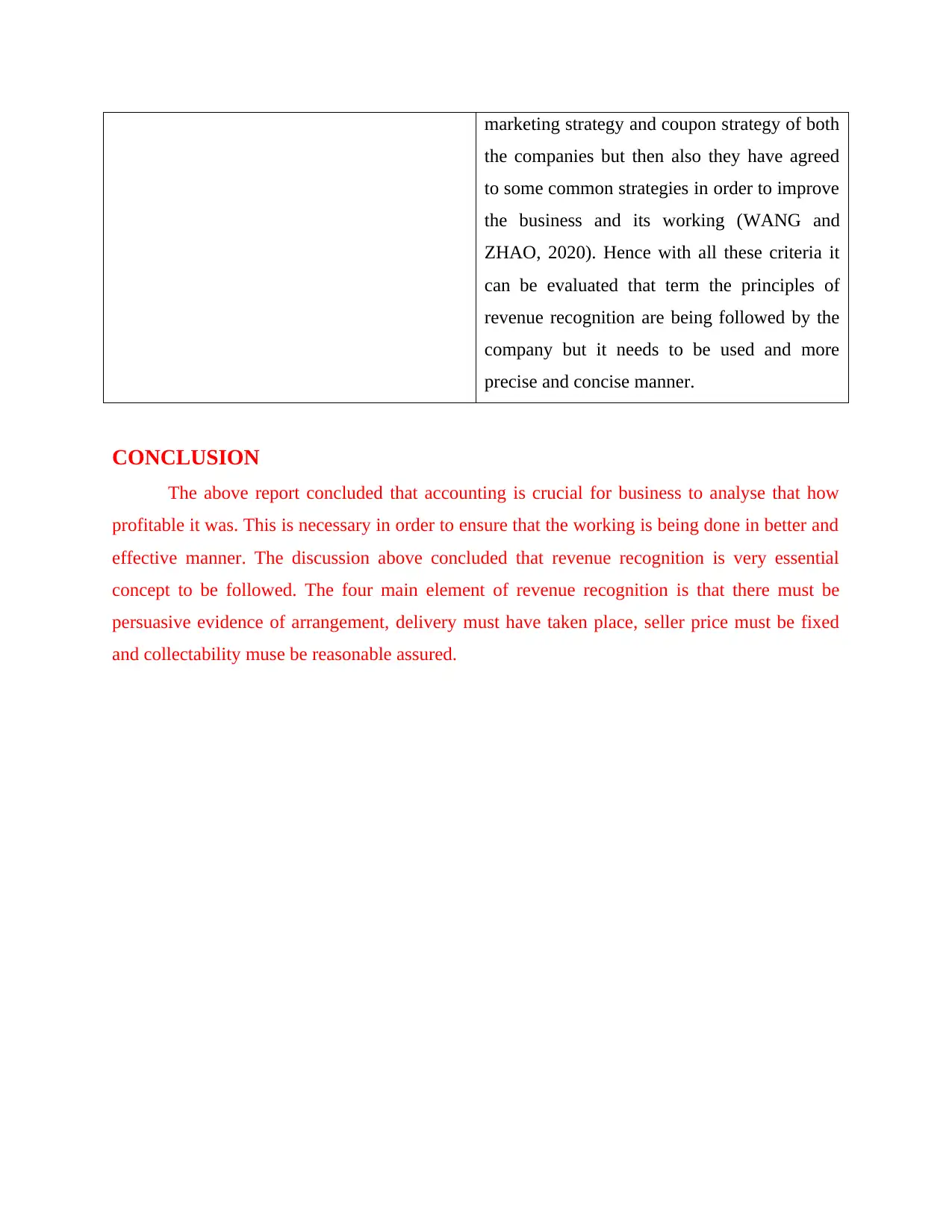
marketing strategy and coupon strategy of both
the companies but then also they have agreed
to some common strategies in order to improve
the business and its working (WANG and
ZHAO, 2020). Hence with all these criteria it
can be evaluated that term the principles of
revenue recognition are being followed by the
company but it needs to be used and more
precise and concise manner.
CONCLUSION
The above report concluded that accounting is crucial for business to analyse that how
profitable it was. This is necessary in order to ensure that the working is being done in better and
effective manner. The discussion above concluded that revenue recognition is very essential
concept to be followed. The four main element of revenue recognition is that there must be
persuasive evidence of arrangement, delivery must have taken place, seller price must be fixed
and collectability muse be reasonable assured.
the companies but then also they have agreed
to some common strategies in order to improve
the business and its working (WANG and
ZHAO, 2020). Hence with all these criteria it
can be evaluated that term the principles of
revenue recognition are being followed by the
company but it needs to be used and more
precise and concise manner.
CONCLUSION
The above report concluded that accounting is crucial for business to analyse that how
profitable it was. This is necessary in order to ensure that the working is being done in better and
effective manner. The discussion above concluded that revenue recognition is very essential
concept to be followed. The four main element of revenue recognition is that there must be
persuasive evidence of arrangement, delivery must have taken place, seller price must be fixed
and collectability muse be reasonable assured.
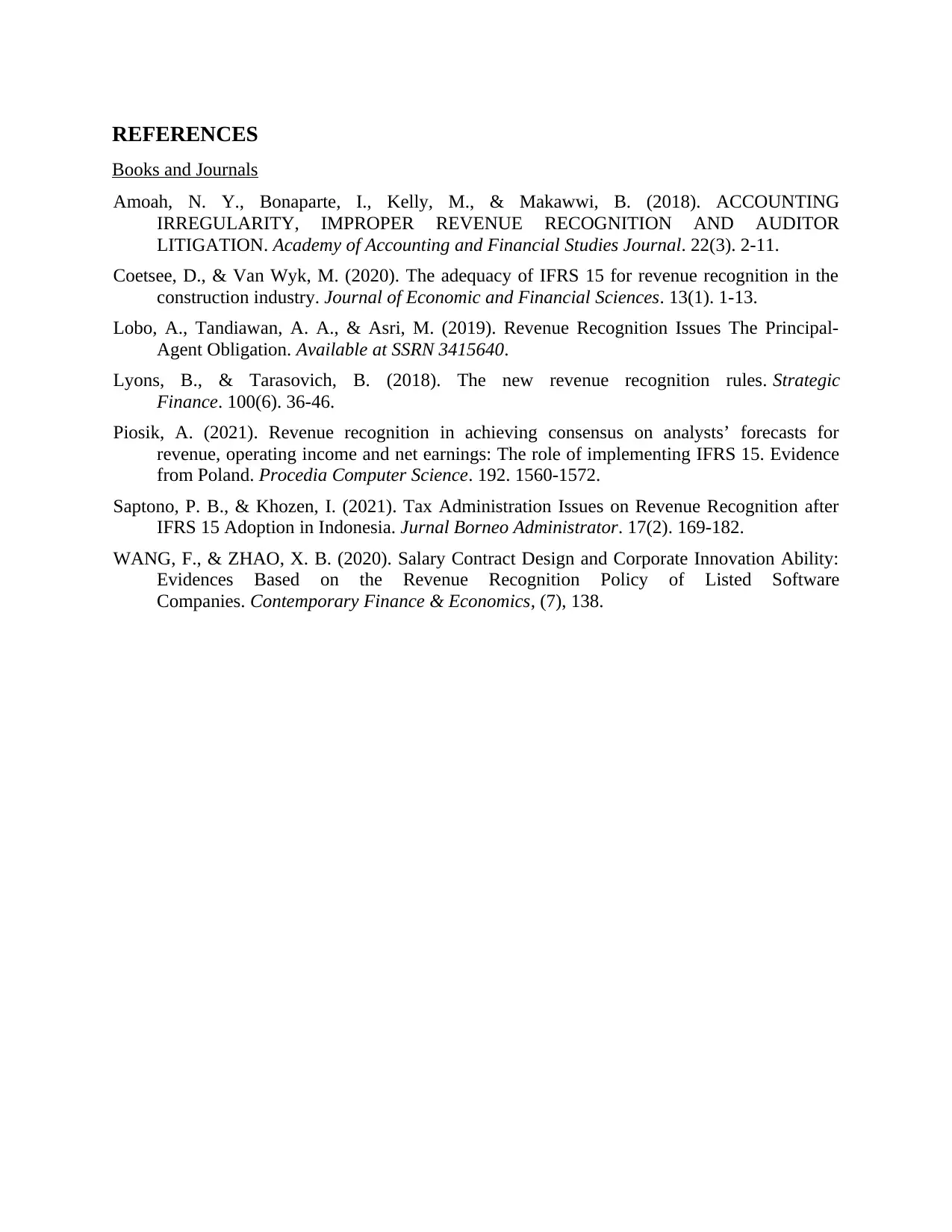
REFERENCES
Books and Journals
Amoah, N. Y., Bonaparte, I., Kelly, M., & Makawwi, B. (2018). ACCOUNTING
IRREGULARITY, IMPROPER REVENUE RECOGNITION AND AUDITOR
LITIGATION. Academy of Accounting and Financial Studies Journal. 22(3). 2-11.
Coetsee, D., & Van Wyk, M. (2020). The adequacy of IFRS 15 for revenue recognition in the
construction industry. Journal of Economic and Financial Sciences. 13(1). 1-13.
Lobo, A., Tandiawan, A. A., & Asri, M. (2019). Revenue Recognition Issues The Principal-
Agent Obligation. Available at SSRN 3415640.
Lyons, B., & Tarasovich, B. (2018). The new revenue recognition rules. Strategic
Finance. 100(6). 36-46.
Piosik, A. (2021). Revenue recognition in achieving consensus on analysts’ forecasts for
revenue, operating income and net earnings: The role of implementing IFRS 15. Evidence
from Poland. Procedia Computer Science. 192. 1560-1572.
Saptono, P. B., & Khozen, I. (2021). Tax Administration Issues on Revenue Recognition after
IFRS 15 Adoption in Indonesia. Jurnal Borneo Administrator. 17(2). 169-182.
WANG, F., & ZHAO, X. B. (2020). Salary Contract Design and Corporate Innovation Ability:
Evidences Based on the Revenue Recognition Policy of Listed Software
Companies. Contemporary Finance & Economics, (7), 138.
Books and Journals
Amoah, N. Y., Bonaparte, I., Kelly, M., & Makawwi, B. (2018). ACCOUNTING
IRREGULARITY, IMPROPER REVENUE RECOGNITION AND AUDITOR
LITIGATION. Academy of Accounting and Financial Studies Journal. 22(3). 2-11.
Coetsee, D., & Van Wyk, M. (2020). The adequacy of IFRS 15 for revenue recognition in the
construction industry. Journal of Economic and Financial Sciences. 13(1). 1-13.
Lobo, A., Tandiawan, A. A., & Asri, M. (2019). Revenue Recognition Issues The Principal-
Agent Obligation. Available at SSRN 3415640.
Lyons, B., & Tarasovich, B. (2018). The new revenue recognition rules. Strategic
Finance. 100(6). 36-46.
Piosik, A. (2021). Revenue recognition in achieving consensus on analysts’ forecasts for
revenue, operating income and net earnings: The role of implementing IFRS 15. Evidence
from Poland. Procedia Computer Science. 192. 1560-1572.
Saptono, P. B., & Khozen, I. (2021). Tax Administration Issues on Revenue Recognition after
IFRS 15 Adoption in Indonesia. Jurnal Borneo Administrator. 17(2). 169-182.
WANG, F., & ZHAO, X. B. (2020). Salary Contract Design and Corporate Innovation Ability:
Evidences Based on the Revenue Recognition Policy of Listed Software
Companies. Contemporary Finance & Economics, (7), 138.
⊘ This is a preview!⊘
Do you want full access?
Subscribe today to unlock all pages.
Trusted by 1+ million students worldwide

1 out of 9


Related Documents


Your All-in-One AI-Powered Toolkit for Academic Success.
+13062052269
info@desklib.com
Available 24*7 on WhatsApp / Email
![[object Object]](/_next/static/media/star-bottom.7253800d.svg)
Unlock your academic potential
Copyright © 2020–2026 A2Z Services. All Rights Reserved. Developed and managed by ZUCOL.