BUS 601 Operations Management: Quality Control at Lockheed Martin

Verified

Added on  2023/06/03

|12
|801
|97
Presentation
AI Summary
This presentation provides an overview of quality control and improvement at Lockheed Martin, focusing on continuous improvement strategies. It defines continuous improvement as a periodic adjustment of services, products, and processes to enhance quality and competitiveness. The presentation explores the operation's framework, including incremental and breakthrough strategies, and its applicability across various sectors such as aerospace, security, defense, and technologies. It highlights Lockheed Martin's competitive advantages achieved through continuous improvement, such as meeting environmental goals and increasing revenue. The presentation details the four-step continuous improvement process: planning, implementation, study, and action, along with the advantages and disadvantages of its application. Recommendations for future improvement include considering the cost of applications and employing other quality control operations. The presentation concludes with a summary of key points and emphasizes the need for complementary quality control strategies for better competitive advantage. Desklib offers a wide array of study resources, including past papers and solved assignments to support students.
Document Page
BUS 601 OPERATIONS
MANAGEMENT
Student’s Name
Quality Control and Improvement at Lockheed Martin
tabler-icon-diamond-filled.svg

Paraphrase This Document

Need a fresh take? Get an instant paraphrase of this document with our AI Paraphraser
Document Page
Introduction
Currently, competition is at the pick both in the international market
and in the local areas.
The fact behind this ideology is that failure to offer quality products,
services and processes to the customers lures them to satisfy their
taste and preferences from competitors.
It is therefore significant to employ quality control and improvement
operations such as process quality control, use of control charts,
designing of quality control systems, lean and six sigma, and
continuous improvement strategy.
This presentation is therefore brought forth to explore various aspects
related to continuous quality improvement as presented by Lockheed
Martin corporation operations.
Document Page
Operation definition
Continuous improvement refers to the concept of periodically making
adjustments in the service, product and process involved in the
operations of the company with a fundamental aim of promoting
quality for competitiveness in the market area.
The developmental strategy of developing the product, process and
service can either be incremental or breakthrough.
The incremental strategy operates over predetermined period unlike
the breakthrough strategy whereby all the operations are compiled
together and performed as an entity.
Document Page
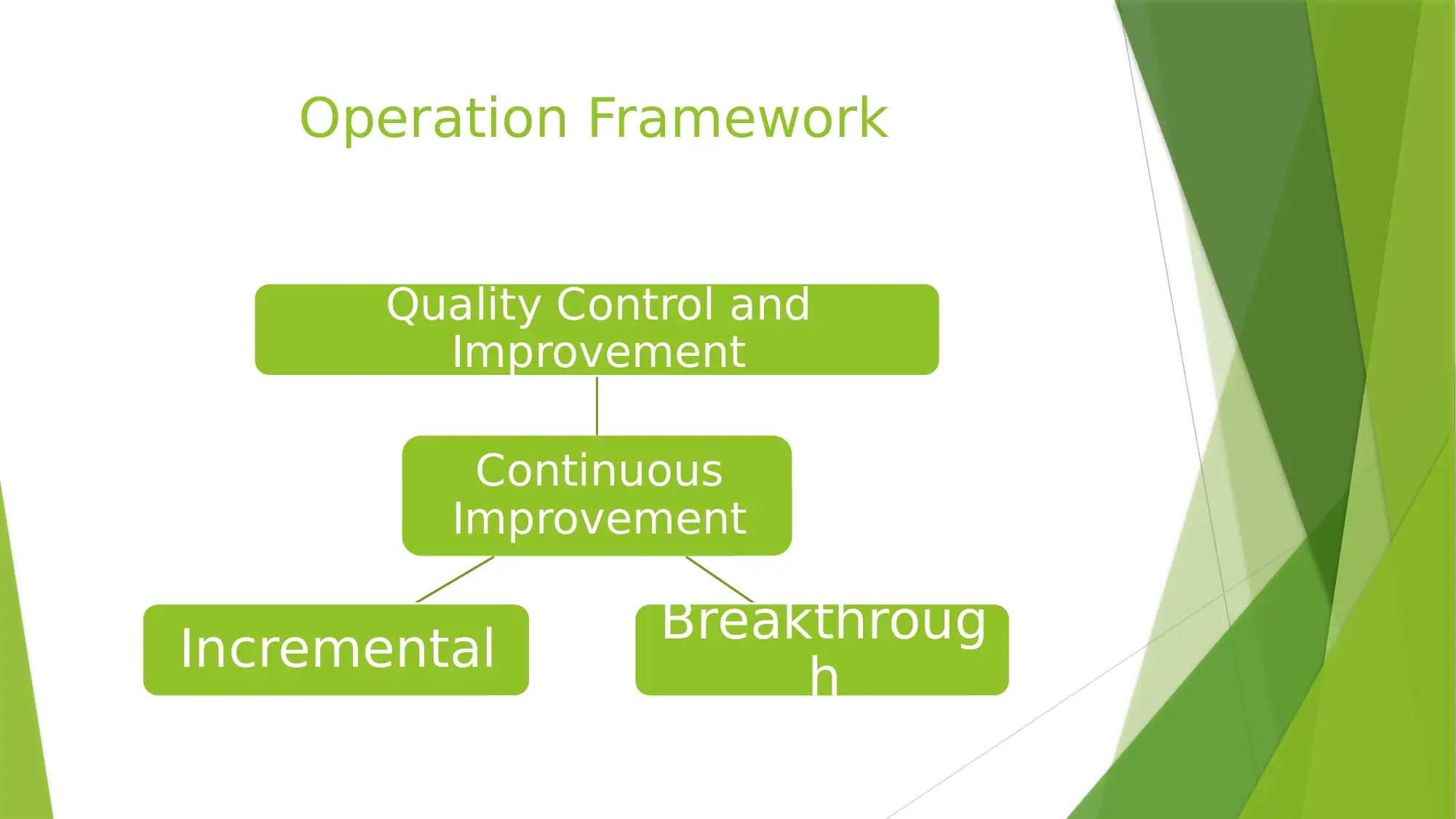
Operation Framework
Continuous
Improvement
Quality Control and
Improvement
Breakthroug
h
Incremental
tabler-icon-diamond-filled.svg

Paraphrase This Document

Need a fresh take? Get an instant paraphrase of this document with our AI Paraphraser
Document Page
Industry and Sector of Application
Quality control and management through continuous improvement is
applicable in diversity of industries across the globe.
This presentation brings forth Lockheed Martin corporation as a typical
example of a company in which the operation management topic displays its
supremacy.
Lockheed Martin operates in different sectors and industries which includes:
Aerospace
Security
Defense
Technologies
Document Page
Operations Competitive Advantage
Continuous improvement has made the company to achieve the five
year global environmental goals which includes standards linked to
energy, health and safety, credits and the environmental
conservation.
Continuous improvement has enhanced revenue improvement by
12% since 2007 in the company (ENNA, 2018).
Continuous improvement has promoted complementary and
satisfactory achievement of the goals set within the company.
Document Page
Operation Process
Continuous improvement involves four major steps which include:
I. Planning
Planning involves the process of determining what is supposed to be done in order
to attain the predetermined goals and objectives of the company (Richards, 2018).
ii. Implementation
After a plan has been made, the plan is then transformed into action.
Implementation therefore refers to the process of transforming the documented
plan into action.
iii. Study
Involves the study of the effect brought about by the implementation of the plan.
iv. Action
At this stage, the company takes action to spread the plan to other sectors is
successful and corrective measures taken in the case whereby the plan has been
unsuccessful.
tabler-icon-diamond-filled.svg

Paraphrase This Document

Need a fresh take? Get an instant paraphrase of this document with our AI Paraphraser
Document Page
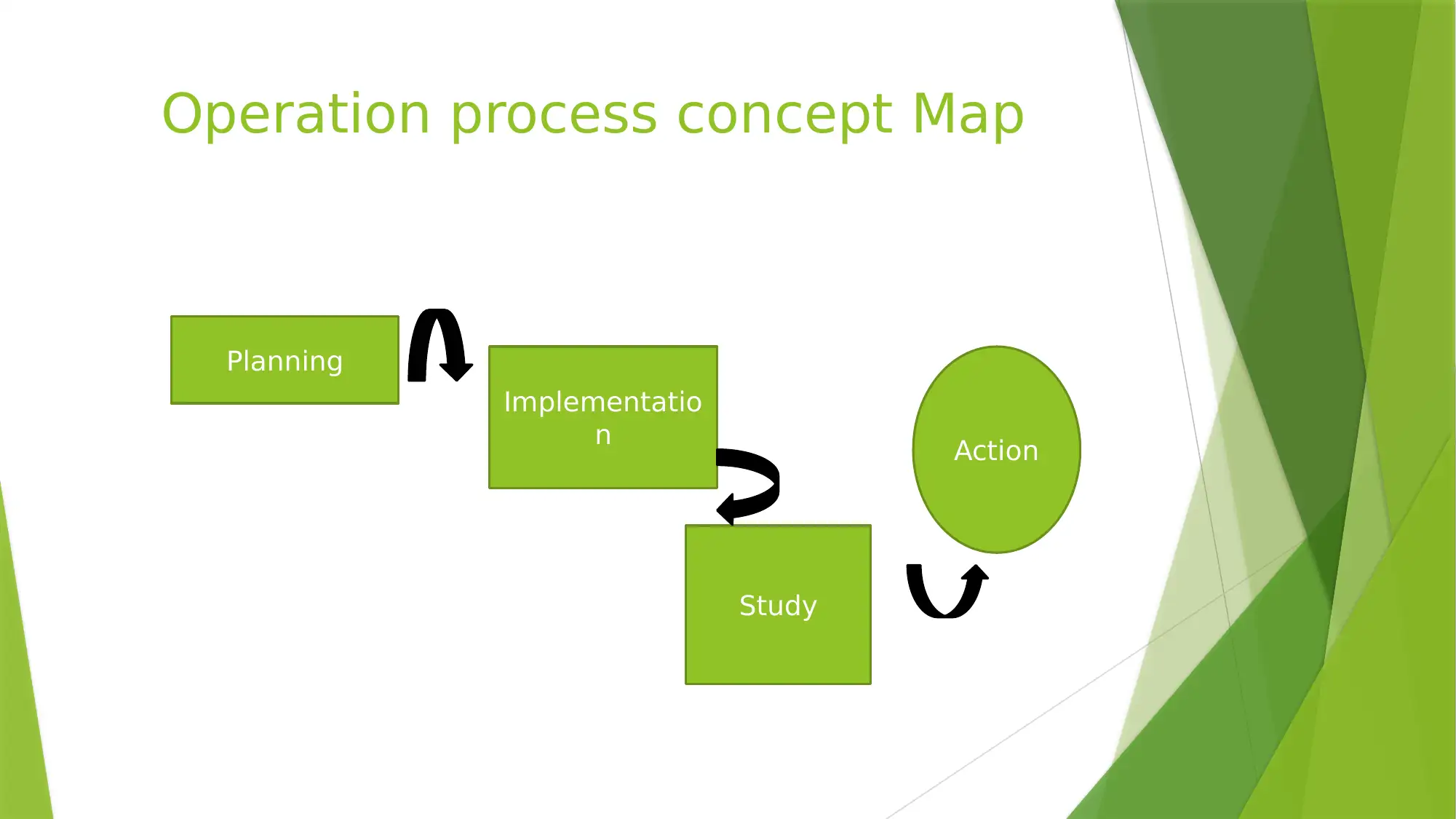
Operation process concept Map
Planning
Implementatio
n
Study
Action
Document Page
Operations Applications Advantages
and Disadvantages
Advantages
Achievement of global objectives such as environmental safety
Achievement of organizational goals and objectives
Increase the total revenue of the company
Disadvantages
The processes involved in the application of continuous improvement
are time consuming
Some of the applications in continuous improvement are capital
intensive
Document Page
Recommendations for Future
Improvement
The company should consider the cost of the improvement
applications to ensure that the strategy is more economical to
provide a competitive advantage.
The company should employ other quality control and improvement
operations such as process quality control, use of control charts,
designing of quality control systems, lean and six sigma in order to
enhance its competitiveness.
tabler-icon-diamond-filled.svg

Paraphrase This Document

Need a fresh take? Get an instant paraphrase of this document with our AI Paraphraser
Document Page
Summary and Closing
The two categories of the continuous improvement quality control
strategy include incremental and breakthrough strategy
Continuous improvement applies in industries and sectors such as
defense, security, aerospace and technologies
Continuous improvement for enhancing achievement of global objectives,
organizational objectives, and promoting growth of the business.
The side backs associated with continuous implementation include the
cost of involved application and the time factor
The continuous improvement process is a procedural activity involving
planning, implementation, study and action
For better achievement of competitive advantage, different quality control
strategies need to complement each other.
Document Page
References
Richards, L. (2018). Steps in Continuous Improvement Process. Retrieved
from: https://
smallbusiness.chron.com/steps-continuous-improvement-process-4529.h
tml
. [Accessed on 16, October 2018].
ENNA (2018). Continuous improvement helps Lockheed Martin hit
sustainability goals. Retrieved from:
https://enna.com/2012/05/31/continuous-improvement-helps-lockheed-m
artin-hit-sustainability-goals
/ [Accessed on 16, October 2018]
chevron_up_icon
1 out of 12
circle_padding
hide_on_mobile
zoom_out_icon
[object Object]