HI6005: Management Report on Goal Setting and MBO Techniques
VerifiedAdded on 2023/06/11
|9
|4291
|205
Report
AI Summary
This report provides an overview of the importance of goal setting and planning in business management, emphasizing how these practices enhance business efficiency, productivity, and overall growth. It delves into the 'management by objectives' (MBO) technique, highlighting the role of managers in setting and achieving organizational goals within specified timeframes. The report also addresses contingency factors that influence a manager’s planning approach, including environmental and economic uncertainties, and discusses various types of plans, such as strategic, tactical, and operational planning, designed to cope with different situations. Furthermore, the report outlines the benefits of well-defined goals, using the SMART framework (Specific, Measurable, Attainable, Relevant, Time-bound), and underscores the importance of adapting plans to address failures and improve organizational growth. Desklib provides additional resources and solved assignments for students.

Management and Organization in Global environment

Paraphrase This Document
Need a fresh take? Get an instant paraphrase of this document with our AI Paraphraser

Executive summary
The following report explains how much it is important to plan the business and set a goal to achieve the required target. Setting up the
goals and then working according to them increases the business efficiency. In order to manage everything in a perfect manner, goal setting is
required it also help increase the productivity. Settling and planning a goal also improves the working conditions and plays an important role in
task management and therefore business growth. It also mentions how the objective approach towards the management is necessary and
important. In order for an organization to solve all the problems or manage all the events, it is required to handle the management with
objectives. While working in an organization several plans are required and they are mentioned below.
The following report explains how much it is important to plan the business and set a goal to achieve the required target. Setting up the
goals and then working according to them increases the business efficiency. In order to manage everything in a perfect manner, goal setting is
required it also help increase the productivity. Settling and planning a goal also improves the working conditions and plays an important role in
task management and therefore business growth. It also mentions how the objective approach towards the management is necessary and
important. In order for an organization to solve all the problems or manage all the events, it is required to handle the management with
objectives. While working in an organization several plans are required and they are mentioned below.

Table of Contents
Executive summary..................................................................................................................................................................................................1
Overview......................................................................................................................................................................................................................3
Goal setting and planning.............................................................................................................................................................................................3
Outlining the benefits of goal setting and planning..................................................................................................................................................3
Importance of well-defined goals -...........................................................................................................................................................................3
Management by objectives...........................................................................................................................................................................................3
Contingency factors which influence a manager’s approach to planning....................................................................................................................4
Different types of plan..................................................................................................................................................................................................4
Conclusion....................................................................................................................................................................................................................6
References....................................................................................................................................................................................................................7
Executive summary..................................................................................................................................................................................................1
Overview......................................................................................................................................................................................................................3
Goal setting and planning.............................................................................................................................................................................................3
Outlining the benefits of goal setting and planning..................................................................................................................................................3
Importance of well-defined goals -...........................................................................................................................................................................3
Management by objectives...........................................................................................................................................................................................3
Contingency factors which influence a manager’s approach to planning....................................................................................................................4
Different types of plan..................................................................................................................................................................................................4
Conclusion....................................................................................................................................................................................................................6
References....................................................................................................................................................................................................................7
⊘ This is a preview!⊘
Do you want full access?
Subscribe today to unlock all pages.

Trusted by 1+ million students worldwide
Overview
For an organization to pay attention to its business and stay focused it is required to set some goals and planning the whole process.
Setting and planning the goals ought to help the business to grow and improving the business in several ways because it focuses on the direct
way to achieve the goals and increase the productivity as well as a performance of the business. The following report also explains the
‘management by objective’ technique. This methodology consists of few plans and strategies composed of the managers to achieve the required
target or objectives within a decided time limit. In case of managing the team, it is required to come up with a proper plan after going through all
the contingency factors because these factors play a major role in planning and allow the managers to plan efficiently. It is necessary to take
these factors into consideration, if not taken; the company might face a huge number of losses and failures (Nelis, et. al, 2018). To make sure
that the business does not stop under any condition and work smoothly under unfavorable conditions, the organization should have a plan which
might be beneficial for them and all such plans designed by an organization to cope with such a situation are discussed in this report. To create
goals for long-term one should follow strategic planning and for short-term goals, tactical planning is being used and the other type of planning
is operational planning which helps in achieving a particular goal and its objectives by implying several methods.
Goal setting and planning
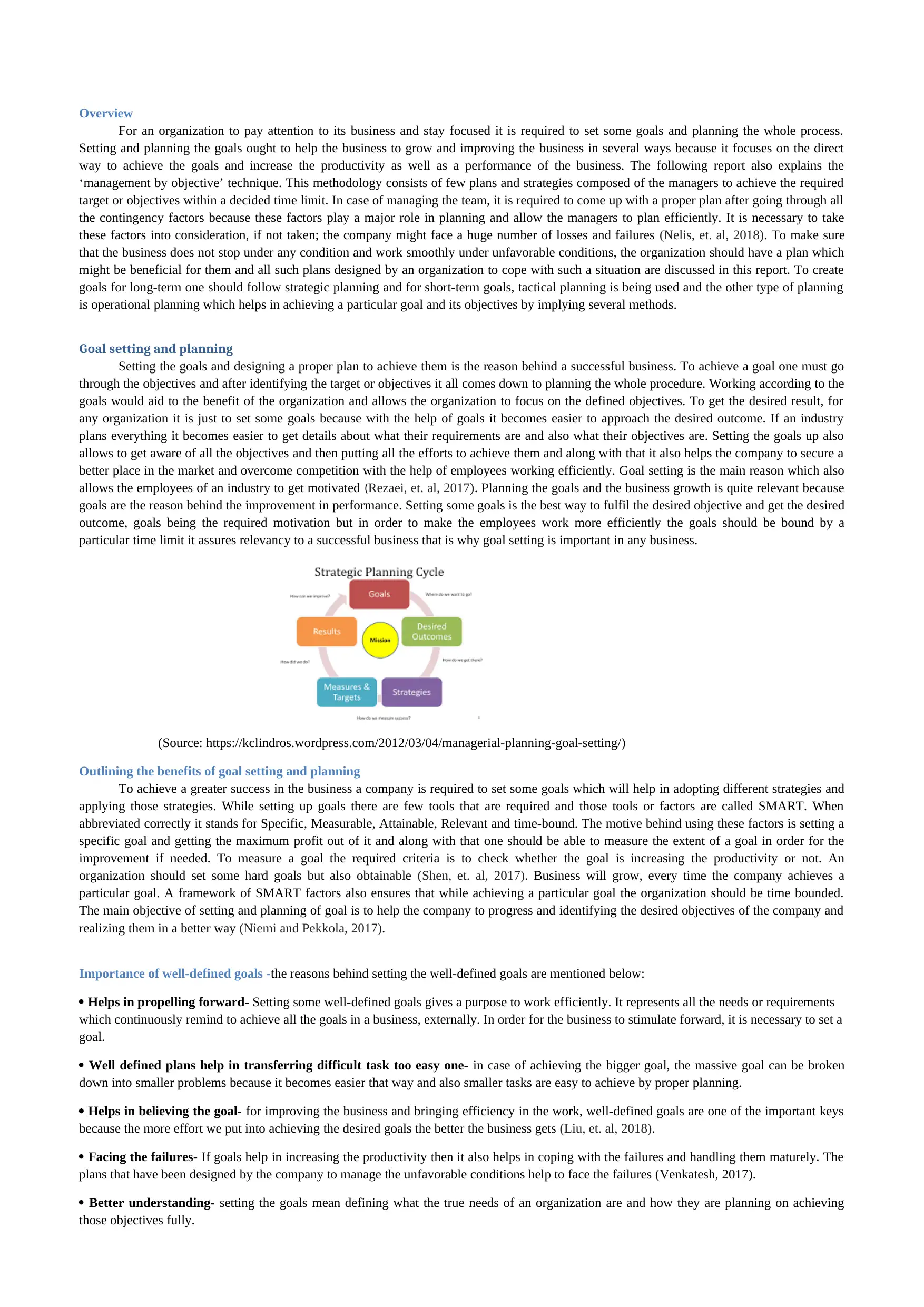
Setting the goals and designing a proper plan to achieve them is the reason behind a successful business. To achieve a goal one must go
through the objectives and after identifying the target or objectives it all comes down to planning the whole procedure. Working according to the
goals would aid to the benefit of the organization and allows the organization to focus on the defined objectives. To get the desired result, for
any organization it is just to set some goals because with the help of goals it becomes easier to approach the desired outcome. If an industry
plans everything it becomes easier to get details about what their requirements are and also what their objectives are. Setting the goals up also
allows to get aware of all the objectives and then putting all the efforts to achieve them and along with that it also helps the company to secure a
better place in the market and overcome competition with the help of employees working efficiently. Goal setting is the main reason which also
allows the employees of an industry to get motivated (Rezaei, et. al, 2017). Planning the goals and the business growth is quite relevant because
goals are the reason behind the improvement in performance. Setting some goals is the best way to fulfil the desired objective and get the desired
outcome, goals being the required motivation but in order to make the employees work more efficiently the goals should be bound by a
particular time limit it assures relevancy to a successful business that is why goal setting is important in any business.
(Source: https://kclindros.wordpress.com/2012/03/04/managerial-planning-goal-setting/)
Outlining the benefits of goal setting and planning
To achieve a greater success in the business a company is required to set some goals which will help in adopting different strategies and
applying those strategies. While setting up goals there are few tools that are required and those tools or factors are called SMART. When
abbreviated correctly it stands for Specific, Measurable, Attainable, Relevant and time-bound. The motive behind using these factors is setting a
specific goal and getting the maximum profit out of it and along with that one should be able to measure the extent of a goal in order for the
improvement if needed. To measure a goal the required criteria is to check whether the goal is increasing the productivity or not. An
organization should set some hard goals but also obtainable (Shen, et. al, 2017). Business will grow, every time the company achieves a
particular goal. A framework of SMART factors also ensures that while achieving a particular goal the organization should be time bounded.
The main objective of setting and planning of goal is to help the company to progress and identifying the desired objectives of the company and
realizing them in a better way (Niemi and Pekkola, 2017).
Importance of well-defined goals -the reasons behind setting the well-defined goals are mentioned below:
Helps in propelling forward- Setting some well-defined goals gives a purpose to work efficiently. It represents all the needs or requirements
which continuously remind to achieve all the goals in a business, externally. In order for the business to stimulate forward, it is necessary to set a
goal.
Well defined plans help in transferring difficult task too easy one- in case of achieving the bigger goal, the massive goal can be broken
down into smaller problems because it becomes easier that way and also smaller tasks are easy to achieve by proper planning.
Helps in believing the goal- for improving the business and bringing efficiency in the work, well-defined goals are one of the important keys
because the more effort we put into achieving the desired goals the better the business gets (Liu, et. al, 2018).
Facing the failures- If goals help in increasing the productivity then it also helps in coping with the failures and handling them maturely. The
plans that have been designed by the company to manage the unfavorable conditions help to face the failures (Venkatesh, 2017).
Better understanding- setting the goals mean defining what the true needs of an organization are and how they are planning on achieving
those objectives fully.
For an organization to pay attention to its business and stay focused it is required to set some goals and planning the whole process.
Setting and planning the goals ought to help the business to grow and improving the business in several ways because it focuses on the direct
way to achieve the goals and increase the productivity as well as a performance of the business. The following report also explains the
‘management by objective’ technique. This methodology consists of few plans and strategies composed of the managers to achieve the required
target or objectives within a decided time limit. In case of managing the team, it is required to come up with a proper plan after going through all
the contingency factors because these factors play a major role in planning and allow the managers to plan efficiently. It is necessary to take
these factors into consideration, if not taken; the company might face a huge number of losses and failures (Nelis, et. al, 2018). To make sure
that the business does not stop under any condition and work smoothly under unfavorable conditions, the organization should have a plan which
might be beneficial for them and all such plans designed by an organization to cope with such a situation are discussed in this report. To create
goals for long-term one should follow strategic planning and for short-term goals, tactical planning is being used and the other type of planning
is operational planning which helps in achieving a particular goal and its objectives by implying several methods.
Goal setting and planning
Setting the goals and designing a proper plan to achieve them is the reason behind a successful business. To achieve a goal one must go
through the objectives and after identifying the target or objectives it all comes down to planning the whole procedure. Working according to the
goals would aid to the benefit of the organization and allows the organization to focus on the defined objectives. To get the desired result, for
any organization it is just to set some goals because with the help of goals it becomes easier to approach the desired outcome. If an industry
plans everything it becomes easier to get details about what their requirements are and also what their objectives are. Setting the goals up also
allows to get aware of all the objectives and then putting all the efforts to achieve them and along with that it also helps the company to secure a
better place in the market and overcome competition with the help of employees working efficiently. Goal setting is the main reason which also
allows the employees of an industry to get motivated (Rezaei, et. al, 2017). Planning the goals and the business growth is quite relevant because
goals are the reason behind the improvement in performance. Setting some goals is the best way to fulfil the desired objective and get the desired
outcome, goals being the required motivation but in order to make the employees work more efficiently the goals should be bound by a
particular time limit it assures relevancy to a successful business that is why goal setting is important in any business.
(Source: https://kclindros.wordpress.com/2012/03/04/managerial-planning-goal-setting/)
Outlining the benefits of goal setting and planning
To achieve a greater success in the business a company is required to set some goals which will help in adopting different strategies and
applying those strategies. While setting up goals there are few tools that are required and those tools or factors are called SMART. When
abbreviated correctly it stands for Specific, Measurable, Attainable, Relevant and time-bound. The motive behind using these factors is setting a
specific goal and getting the maximum profit out of it and along with that one should be able to measure the extent of a goal in order for the
improvement if needed. To measure a goal the required criteria is to check whether the goal is increasing the productivity or not. An
organization should set some hard goals but also obtainable (Shen, et. al, 2017). Business will grow, every time the company achieves a
particular goal. A framework of SMART factors also ensures that while achieving a particular goal the organization should be time bounded.
The main objective of setting and planning of goal is to help the company to progress and identifying the desired objectives of the company and
realizing them in a better way (Niemi and Pekkola, 2017).
Importance of well-defined goals -the reasons behind setting the well-defined goals are mentioned below:
Helps in propelling forward- Setting some well-defined goals gives a purpose to work efficiently. It represents all the needs or requirements
which continuously remind to achieve all the goals in a business, externally. In order for the business to stimulate forward, it is necessary to set a
goal.
Well defined plans help in transferring difficult task too easy one- in case of achieving the bigger goal, the massive goal can be broken
down into smaller problems because it becomes easier that way and also smaller tasks are easy to achieve by proper planning.
Helps in believing the goal- for improving the business and bringing efficiency in the work, well-defined goals are one of the important keys
because the more effort we put into achieving the desired goals the better the business gets (Liu, et. al, 2018).
Facing the failures- If goals help in increasing the productivity then it also helps in coping with the failures and handling them maturely. The
plans that have been designed by the company to manage the unfavorable conditions help to face the failures (Venkatesh, 2017).
Better understanding- setting the goals mean defining what the true needs of an organization are and how they are planning on achieving
those objectives fully.
Paraphrase This Document
Need a fresh take? Get an instant paraphrase of this document with our AI Paraphraser
Improved growth-an organization succeeds because of planning and setting up some well-defined goals to achieve their target. These goals
help the organization to secure a better position in the market and improve their previous position by increasing the productivity and work
efficiency (Melan, 2017). Only after analyzing the market as well as competitors the goals are made to overcome competition and business
growth in the market.
Management by objectives
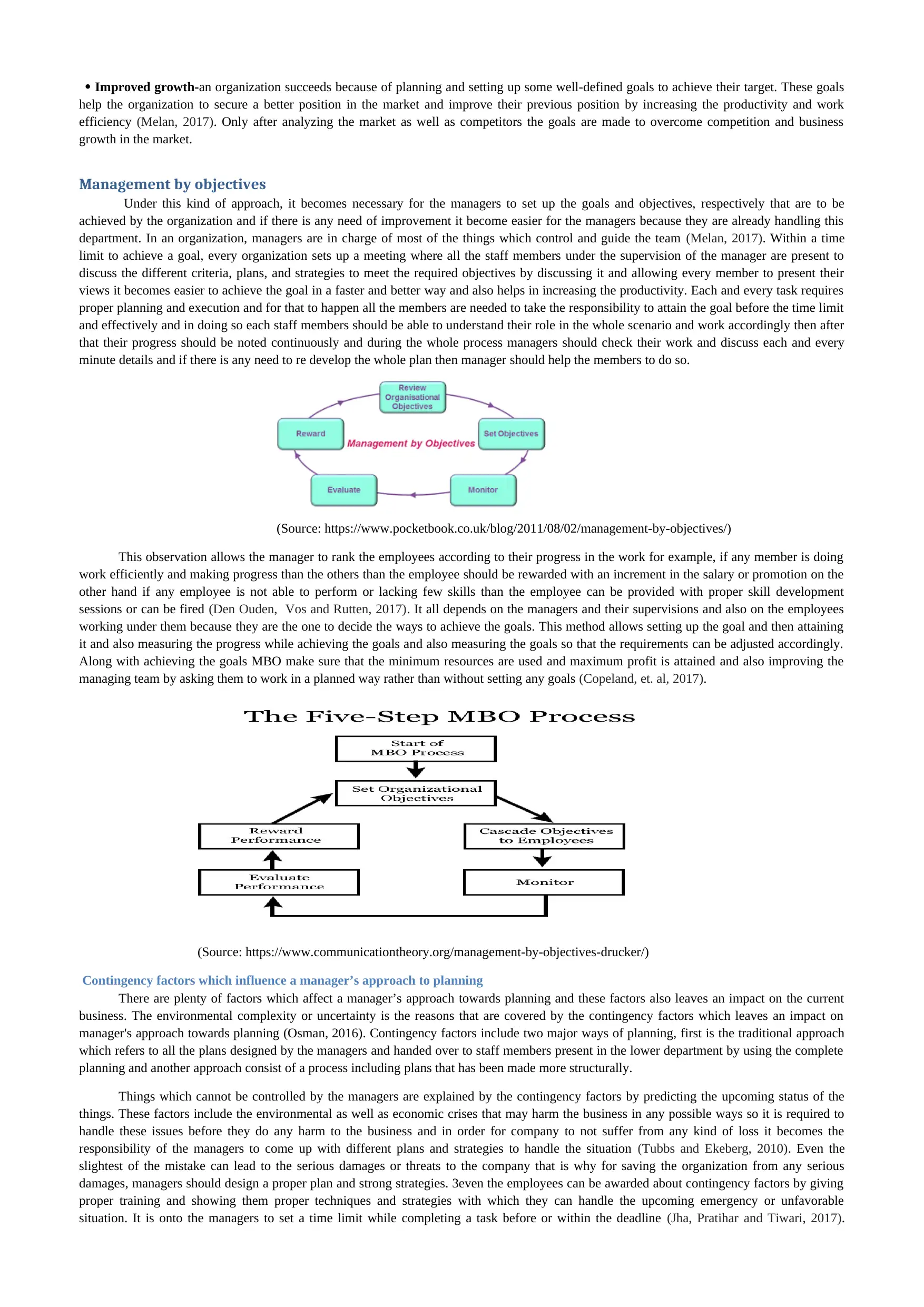
Under this kind of approach, it becomes necessary for the managers to set up the goals and objectives, respectively that are to be
achieved by the organization and if there is any need of improvement it become easier for the managers because they are already handling this
department. In an organization, managers are in charge of most of the things which control and guide the team (Melan, 2017). Within a time
limit to achieve a goal, every organization sets up a meeting where all the staff members under the supervision of the manager are present to
discuss the different criteria, plans, and strategies to meet the required objectives by discussing it and allowing every member to present their
views it becomes easier to achieve the goal in a faster and better way and also helps in increasing the productivity. Each and every task requires
proper planning and execution and for that to happen all the members are needed to take the responsibility to attain the goal before the time limit
and effectively and in doing so each staff members should be able to understand their role in the whole scenario and work accordingly then after
that their progress should be noted continuously and during the whole process managers should check their work and discuss each and every
minute details and if there is any need to re develop the whole plan then manager should help the members to do so.
(Source: https://www.pocketbook.co.uk/blog/2011/08/02/management-by-objectives/)
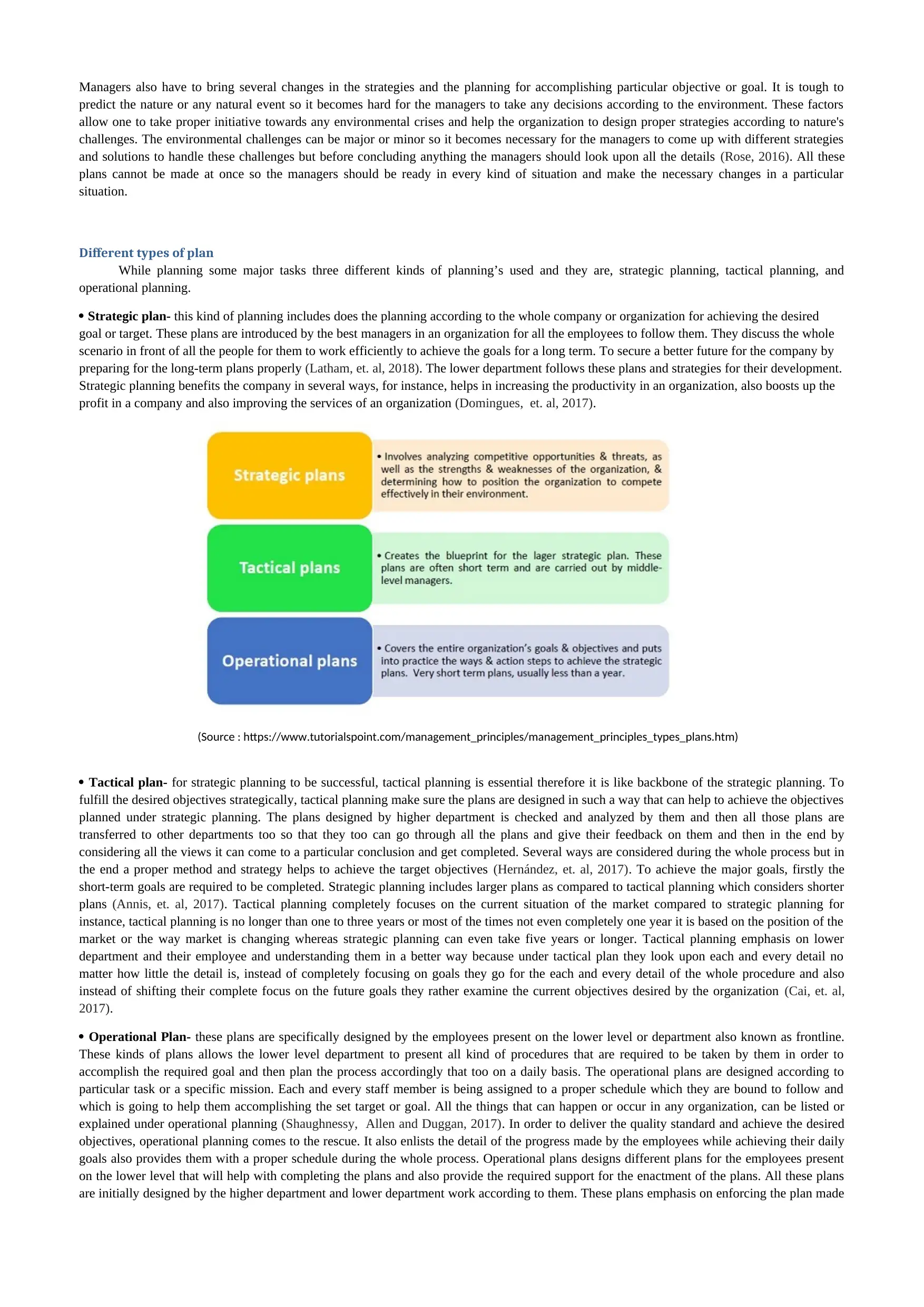
This observation allows the manager to rank the employees according to their progress in the work for example, if any member is doing
work efficiently and making progress than the others than the employee should be rewarded with an increment in the salary or promotion on the
other hand if any employee is not able to perform or lacking few skills than the employee can be provided with proper skill development
sessions or can be fired (Den Ouden, Vos and Rutten, 2017). It all depends on the managers and their supervisions and also on the employees
working under them because they are the one to decide the ways to achieve the goals. This method allows setting up the goal and then attaining
it and also measuring the progress while achieving the goals and also measuring the goals so that the requirements can be adjusted accordingly.
Along with achieving the goals MBO make sure that the minimum resources are used and maximum profit is attained and also improving the
managing team by asking them to work in a planned way rather than without setting any goals (Copeland, et. al, 2017).
(Source: https://www.communicationtheory.org/management-by-objectives-drucker/)
Contingency factors which influence a manager’s approach to planning
There are plenty of factors which affect a manager’s approach towards planning and these factors also leaves an impact on the current
business. The environmental complexity or uncertainty is the reasons that are covered by the contingency factors which leaves an impact on
manager's approach towards planning (Osman, 2016). Contingency factors include two major ways of planning, first is the traditional approach
which refers to all the plans designed by the managers and handed over to staff members present in the lower department by using the complete
planning and another approach consist of a process including plans that has been made more structurally.
Things which cannot be controlled by the managers are explained by the contingency factors by predicting the upcoming status of the
things. These factors include the environmental as well as economic crises that may harm the business in any possible ways so it is required to
handle these issues before they do any harm to the business and in order for company to not suffer from any kind of loss it becomes the
responsibility of the managers to come up with different plans and strategies to handle the situation (Tubbs and Ekeberg, 2010). Even the
slightest of the mistake can lead to the serious damages or threats to the company that is why for saving the organization from any serious
damages, managers should design a proper plan and strong strategies. 3even the employees can be awarded about contingency factors by giving
proper training and showing them proper techniques and strategies with which they can handle the upcoming emergency or unfavorable
situation. It is onto the managers to set a time limit while completing a task before or within the deadline (Jha, Pratihar and Tiwari, 2017).
help the organization to secure a better position in the market and improve their previous position by increasing the productivity and work
efficiency (Melan, 2017). Only after analyzing the market as well as competitors the goals are made to overcome competition and business
growth in the market.
Management by objectives
Under this kind of approach, it becomes necessary for the managers to set up the goals and objectives, respectively that are to be
achieved by the organization and if there is any need of improvement it become easier for the managers because they are already handling this
department. In an organization, managers are in charge of most of the things which control and guide the team (Melan, 2017). Within a time
limit to achieve a goal, every organization sets up a meeting where all the staff members under the supervision of the manager are present to
discuss the different criteria, plans, and strategies to meet the required objectives by discussing it and allowing every member to present their
views it becomes easier to achieve the goal in a faster and better way and also helps in increasing the productivity. Each and every task requires
proper planning and execution and for that to happen all the members are needed to take the responsibility to attain the goal before the time limit
and effectively and in doing so each staff members should be able to understand their role in the whole scenario and work accordingly then after
that their progress should be noted continuously and during the whole process managers should check their work and discuss each and every
minute details and if there is any need to re develop the whole plan then manager should help the members to do so.
(Source: https://www.pocketbook.co.uk/blog/2011/08/02/management-by-objectives/)
This observation allows the manager to rank the employees according to their progress in the work for example, if any member is doing
work efficiently and making progress than the others than the employee should be rewarded with an increment in the salary or promotion on the
other hand if any employee is not able to perform or lacking few skills than the employee can be provided with proper skill development
sessions or can be fired (Den Ouden, Vos and Rutten, 2017). It all depends on the managers and their supervisions and also on the employees
working under them because they are the one to decide the ways to achieve the goals. This method allows setting up the goal and then attaining
it and also measuring the progress while achieving the goals and also measuring the goals so that the requirements can be adjusted accordingly.
Along with achieving the goals MBO make sure that the minimum resources are used and maximum profit is attained and also improving the
managing team by asking them to work in a planned way rather than without setting any goals (Copeland, et. al, 2017).
(Source: https://www.communicationtheory.org/management-by-objectives-drucker/)
Contingency factors which influence a manager’s approach to planning
There are plenty of factors which affect a manager’s approach towards planning and these factors also leaves an impact on the current
business. The environmental complexity or uncertainty is the reasons that are covered by the contingency factors which leaves an impact on
manager's approach towards planning (Osman, 2016). Contingency factors include two major ways of planning, first is the traditional approach
which refers to all the plans designed by the managers and handed over to staff members present in the lower department by using the complete
planning and another approach consist of a process including plans that has been made more structurally.
Things which cannot be controlled by the managers are explained by the contingency factors by predicting the upcoming status of the
things. These factors include the environmental as well as economic crises that may harm the business in any possible ways so it is required to
handle these issues before they do any harm to the business and in order for company to not suffer from any kind of loss it becomes the
responsibility of the managers to come up with different plans and strategies to handle the situation (Tubbs and Ekeberg, 2010). Even the
slightest of the mistake can lead to the serious damages or threats to the company that is why for saving the organization from any serious
damages, managers should design a proper plan and strong strategies. 3even the employees can be awarded about contingency factors by giving
proper training and showing them proper techniques and strategies with which they can handle the upcoming emergency or unfavorable
situation. It is onto the managers to set a time limit while completing a task before or within the deadline (Jha, Pratihar and Tiwari, 2017).
Managers also have to bring several changes in the strategies and the planning for accomplishing particular objective or goal. It is tough to
predict the nature or any natural event so it becomes hard for the managers to take any decisions according to the environment. These factors
allow one to take proper initiative towards any environmental crises and help the organization to design proper strategies according to nature's
challenges. The environmental challenges can be major or minor so it becomes necessary for the managers to come up with different strategies
and solutions to handle these challenges but before concluding anything the managers should look upon all the details (Rose, 2016). All these
plans cannot be made at once so the managers should be ready in every kind of situation and make the necessary changes in a particular
situation.
Different types of plan
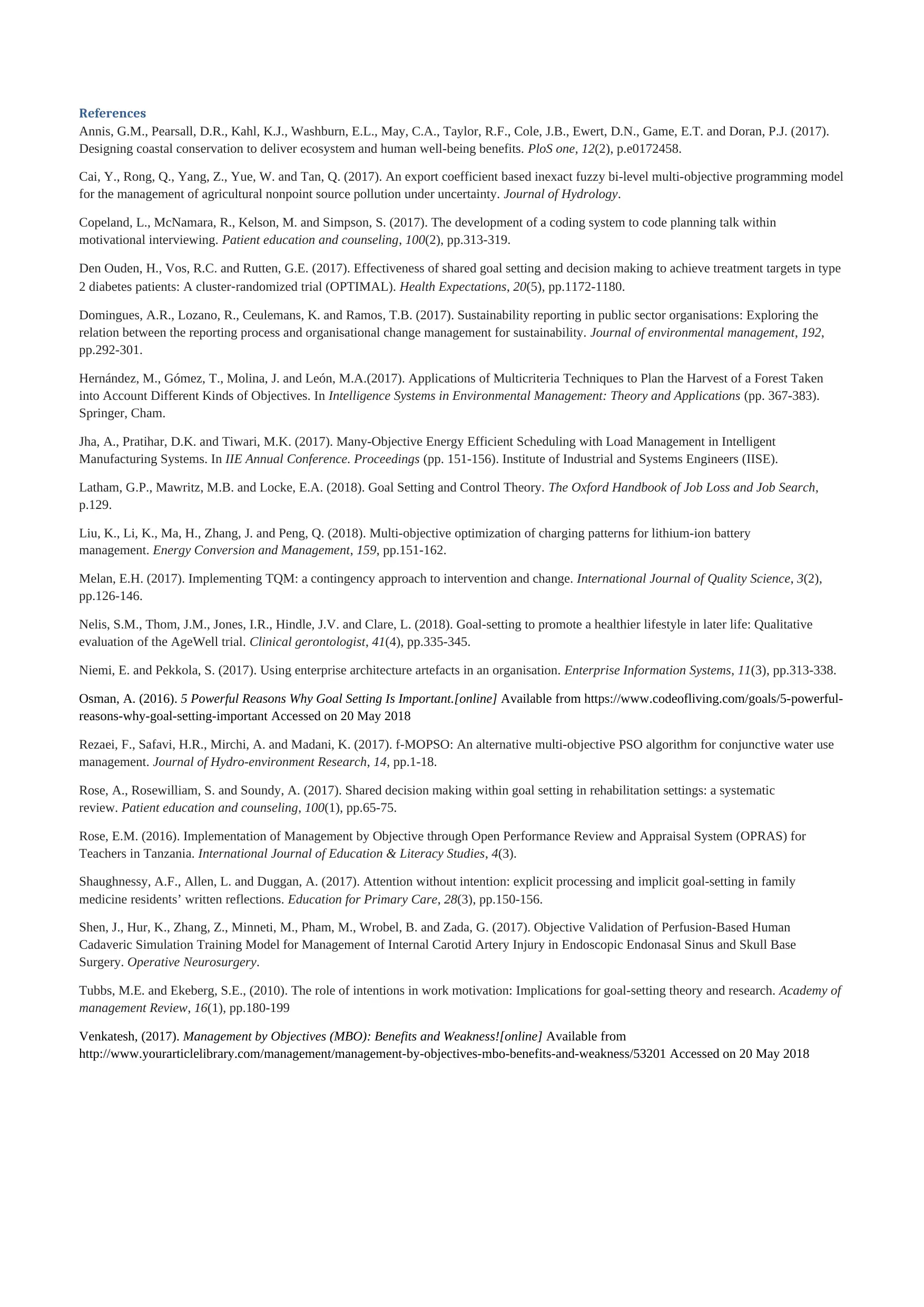
While planning some major tasks three different kinds of planning’s used and they are, strategic planning, tactical planning, and
operational planning.
Strategic plan- this kind of planning includes does the planning according to the whole company or organization for achieving the desired
goal or target. These plans are introduced by the best managers in an organization for all the employees to follow them. They discuss the whole
scenario in front of all the people for them to work efficiently to achieve the goals for a long term. To secure a better future for the company by
preparing for the long-term plans properly (Latham, et. al, 2018). The lower department follows these plans and strategies for their development.
Strategic planning benefits the company in several ways, for instance, helps in increasing the productivity in an organization, also boosts up the
profit in a company and also improving the services of an organization (Domingues, et. al, 2017).
(Source : https://www.tutorialspoint.com/management_principles/management_principles_types_plans.htm)
Tactical plan- for strategic planning to be successful, tactical planning is essential therefore it is like backbone of the strategic planning. To
fulfill the desired objectives strategically, tactical planning make sure the plans are designed in such a way that can help to achieve the objectives
planned under strategic planning. The plans designed by higher department is checked and analyzed by them and then all those plans are
transferred to other departments too so that they too can go through all the plans and give their feedback on them and then in the end by
considering all the views it can come to a particular conclusion and get completed. Several ways are considered during the whole process but in
the end a proper method and strategy helps to achieve the target objectives (Hernández, et. al, 2017). To achieve the major goals, firstly the
short-term goals are required to be completed. Strategic planning includes larger plans as compared to tactical planning which considers shorter
plans (Annis, et. al, 2017). Tactical planning completely focuses on the current situation of the market compared to strategic planning for
instance, tactical planning is no longer than one to three years or most of the times not even completely one year it is based on the position of the
market or the way market is changing whereas strategic planning can even take five years or longer. Tactical planning emphasis on lower
department and their employee and understanding them in a better way because under tactical plan they look upon each and every detail no
matter how little the detail is, instead of completely focusing on goals they go for the each and every detail of the whole procedure and also
instead of shifting their complete focus on the future goals they rather examine the current objectives desired by the organization (Cai, et. al,
2017).
Operational Plan- these plans are specifically designed by the employees present on the lower level or department also known as frontline.
These kinds of plans allows the lower level department to present all kind of procedures that are required to be taken by them in order to
accomplish the required goal and then plan the process accordingly that too on a daily basis. The operational plans are designed according to
particular task or a specific mission. Each and every staff member is being assigned to a proper schedule which they are bound to follow and
which is going to help them accomplishing the set target or goal. All the things that can happen or occur in any organization, can be listed or
explained under operational planning (Shaughnessy, Allen and Duggan, 2017). In order to deliver the quality standard and achieve the desired
objectives, operational planning comes to the rescue. It also enlists the detail of the progress made by the employees while achieving their daily
goals also provides them with a proper schedule during the whole process. Operational plans designs different plans for the employees present
on the lower level that will help with completing the plans and also provide the required support for the enactment of the plans. All these plans
are initially designed by the higher department and lower department work according to them. These plans emphasis on enforcing the plan made
predict the nature or any natural event so it becomes hard for the managers to take any decisions according to the environment. These factors
allow one to take proper initiative towards any environmental crises and help the organization to design proper strategies according to nature's
challenges. The environmental challenges can be major or minor so it becomes necessary for the managers to come up with different strategies
and solutions to handle these challenges but before concluding anything the managers should look upon all the details (Rose, 2016). All these
plans cannot be made at once so the managers should be ready in every kind of situation and make the necessary changes in a particular
situation.
Different types of plan
While planning some major tasks three different kinds of planning’s used and they are, strategic planning, tactical planning, and
operational planning.
Strategic plan- this kind of planning includes does the planning according to the whole company or organization for achieving the desired
goal or target. These plans are introduced by the best managers in an organization for all the employees to follow them. They discuss the whole
scenario in front of all the people for them to work efficiently to achieve the goals for a long term. To secure a better future for the company by
preparing for the long-term plans properly (Latham, et. al, 2018). The lower department follows these plans and strategies for their development.
Strategic planning benefits the company in several ways, for instance, helps in increasing the productivity in an organization, also boosts up the
profit in a company and also improving the services of an organization (Domingues, et. al, 2017).
(Source : https://www.tutorialspoint.com/management_principles/management_principles_types_plans.htm)
Tactical plan- for strategic planning to be successful, tactical planning is essential therefore it is like backbone of the strategic planning. To
fulfill the desired objectives strategically, tactical planning make sure the plans are designed in such a way that can help to achieve the objectives
planned under strategic planning. The plans designed by higher department is checked and analyzed by them and then all those plans are
transferred to other departments too so that they too can go through all the plans and give their feedback on them and then in the end by
considering all the views it can come to a particular conclusion and get completed. Several ways are considered during the whole process but in
the end a proper method and strategy helps to achieve the target objectives (Hernández, et. al, 2017). To achieve the major goals, firstly the
short-term goals are required to be completed. Strategic planning includes larger plans as compared to tactical planning which considers shorter
plans (Annis, et. al, 2017). Tactical planning completely focuses on the current situation of the market compared to strategic planning for
instance, tactical planning is no longer than one to three years or most of the times not even completely one year it is based on the position of the
market or the way market is changing whereas strategic planning can even take five years or longer. Tactical planning emphasis on lower
department and their employee and understanding them in a better way because under tactical plan they look upon each and every detail no
matter how little the detail is, instead of completely focusing on goals they go for the each and every detail of the whole procedure and also
instead of shifting their complete focus on the future goals they rather examine the current objectives desired by the organization (Cai, et. al,
2017).
Operational Plan- these plans are specifically designed by the employees present on the lower level or department also known as frontline.
These kinds of plans allows the lower level department to present all kind of procedures that are required to be taken by them in order to
accomplish the required goal and then plan the process accordingly that too on a daily basis. The operational plans are designed according to
particular task or a specific mission. Each and every staff member is being assigned to a proper schedule which they are bound to follow and
which is going to help them accomplishing the set target or goal. All the things that can happen or occur in any organization, can be listed or
explained under operational planning (Shaughnessy, Allen and Duggan, 2017). In order to deliver the quality standard and achieve the desired
objectives, operational planning comes to the rescue. It also enlists the detail of the progress made by the employees while achieving their daily
goals also provides them with a proper schedule during the whole process. Operational plans designs different plans for the employees present
on the lower level that will help with completing the plans and also provide the required support for the enactment of the plans. All these plans
are initially designed by the higher department and lower department work according to them. These plans emphasis on enforcing the plan made
⊘ This is a preview!⊘
Do you want full access?
Subscribe today to unlock all pages.
Trusted by 1+ million students worldwide

for a sole purpose and then working to achieve that particular purpose.
Paraphrase This Document
Need a fresh take? Get an instant paraphrase of this document with our AI Paraphraser

Conclusion
In the limelight of the above-executed analysis, it has been inferred that the success of any organization depends on planning and setting
a goal and these are also considered as the two prime factors that play an important role in business growth and expedition. And hence are also
proven beneficial to an organization. In order to achieve their desired objectives the company has to set some goals and plan accordingly and
then by keeping the goals in mind, producing some strategies and planning the whole procedure to accomplish the goals, such methodology
helps the business to grow and make more and more profit out of it because working in a proper manner and with the proper planning will help
the company to meet their required target efficiently and effectively and also provides a clear vision regarding the business processes and their
motives. This whole report provided the information about Miles & verger's way of setting the goals and planning the whole process and also
helped to understand their views towards the business management etcetera. This report also mentioned their business motives and how they
work efficiently for a better business and also how they managed the resources to meet the business requirements. They explained all the basic
and minute details to keep in mind while achieving the desired goal. Also how the management has been approached and analyzed in an
objective manner. Also to cope with the environmental factors and helping in planning the things that cannot be managed by the managers alone
were explained under contingency factors affecting the manager’s approach towards planning. In the process of achieving a goal, several
methods can be used or plans can be made but their planning and execution depends on the requirements and specificity of the particular goal so
in the end it can be said that the above report consists of all the major as well as minor details regarding setting and planning a goal.
In the limelight of the above-executed analysis, it has been inferred that the success of any organization depends on planning and setting
a goal and these are also considered as the two prime factors that play an important role in business growth and expedition. And hence are also
proven beneficial to an organization. In order to achieve their desired objectives the company has to set some goals and plan accordingly and
then by keeping the goals in mind, producing some strategies and planning the whole procedure to accomplish the goals, such methodology
helps the business to grow and make more and more profit out of it because working in a proper manner and with the proper planning will help
the company to meet their required target efficiently and effectively and also provides a clear vision regarding the business processes and their
motives. This whole report provided the information about Miles & verger's way of setting the goals and planning the whole process and also
helped to understand their views towards the business management etcetera. This report also mentioned their business motives and how they
work efficiently for a better business and also how they managed the resources to meet the business requirements. They explained all the basic
and minute details to keep in mind while achieving the desired goal. Also how the management has been approached and analyzed in an
objective manner. Also to cope with the environmental factors and helping in planning the things that cannot be managed by the managers alone
were explained under contingency factors affecting the manager’s approach towards planning. In the process of achieving a goal, several
methods can be used or plans can be made but their planning and execution depends on the requirements and specificity of the particular goal so
in the end it can be said that the above report consists of all the major as well as minor details regarding setting and planning a goal.
References
Annis, G.M., Pearsall, D.R., Kahl, K.J., Washburn, E.L., May, C.A., Taylor, R.F., Cole, J.B., Ewert, D.N., Game, E.T. and Doran, P.J. (2017).
Designing coastal conservation to deliver ecosystem and human well-being benefits. PloS one, 12(2), p.e0172458.
Cai, Y., Rong, Q., Yang, Z., Yue, W. and Tan, Q. (2017). An export coefficient based inexact fuzzy bi-level multi-objective programming model
for the management of agricultural nonpoint source pollution under uncertainty. Journal of Hydrology.
Copeland, L., McNamara, R., Kelson, M. and Simpson, S. (2017). The development of a coding system to code planning talk within
motivational interviewing. Patient education and counseling, 100(2), pp.313-319.
Den Ouden, H., Vos, R.C. and Rutten, G.E. (2017). Effectiveness of shared goal setting and decision making to achieve treatment targets in type
2 diabetes patients: A cluster‐randomized trial (OPTIMAL). Health Expectations, 20(5), pp.1172-1180.
Domingues, A.R., Lozano, R., Ceulemans, K. and Ramos, T.B. (2017). Sustainability reporting in public sector organisations: Exploring the
relation between the reporting process and organisational change management for sustainability. Journal of environmental management, 192,
pp.292-301.
Hernández, M., Gómez, T., Molina, J. and León, M.A.(2017). Applications of Multicriteria Techniques to Plan the Harvest of a Forest Taken
into Account Different Kinds of Objectives. In Intelligence Systems in Environmental Management: Theory and Applications (pp. 367-383).
Springer, Cham.
Jha, A., Pratihar, D.K. and Tiwari, M.K. (2017). Many-Objective Energy Efficient Scheduling with Load Management in Intelligent
Manufacturing Systems. In IIE Annual Conference. Proceedings (pp. 151-156). Institute of Industrial and Systems Engineers (IISE).
Latham, G.P., Mawritz, M.B. and Locke, E.A. (2018). Goal Setting and Control Theory. The Oxford Handbook of Job Loss and Job Search,
p.129.
Liu, K., Li, K., Ma, H., Zhang, J. and Peng, Q. (2018). Multi-objective optimization of charging patterns for lithium-ion battery
management. Energy Conversion and Management, 159, pp.151-162.
Melan, E.H. (2017). Implementing TQM: a contingency approach to intervention and change. International Journal of Quality Science, 3(2),
pp.126-146.
Nelis, S.M., Thom, J.M., Jones, I.R., Hindle, J.V. and Clare, L. (2018). Goal-setting to promote a healthier lifestyle in later life: Qualitative
evaluation of the AgeWell trial. Clinical gerontologist, 41(4), pp.335-345.
Niemi, E. and Pekkola, S. (2017). Using enterprise architecture artefacts in an organisation. Enterprise Information Systems, 11(3), pp.313-338.
Osman, A. (2016). 5 Powerful Reasons Why Goal Setting Is Important.[online] Available from https://www.codeofliving.com/goals/5-powerful-
reasons-why-goal-setting-important Accessed on 20 May 2018
Rezaei, F., Safavi, H.R., Mirchi, A. and Madani, K. (2017). f-MOPSO: An alternative multi-objective PSO algorithm for conjunctive water use
management. Journal of Hydro-environment Research, 14, pp.1-18.
Rose, A., Rosewilliam, S. and Soundy, A. (2017). Shared decision making within goal setting in rehabilitation settings: a systematic
review. Patient education and counseling, 100(1), pp.65-75.
Rose, E.M. (2016). Implementation of Management by Objective through Open Performance Review and Appraisal System (OPRAS) for
Teachers in Tanzania. International Journal of Education & Literacy Studies, 4(3).
Shaughnessy, A.F., Allen, L. and Duggan, A. (2017). Attention without intention: explicit processing and implicit goal-setting in family
medicine residents’ written reflections. Education for Primary Care, 28(3), pp.150-156.
Shen, J., Hur, K., Zhang, Z., Minneti, M., Pham, M., Wrobel, B. and Zada, G. (2017). Objective Validation of Perfusion-Based Human
Cadaveric Simulation Training Model for Management of Internal Carotid Artery Injury in Endoscopic Endonasal Sinus and Skull Base
Surgery. Operative Neurosurgery.
Tubbs, M.E. and Ekeberg, S.E., (2010). The role of intentions in work motivation: Implications for goal-setting theory and research. Academy of
management Review, 16(1), pp.180-199
Venkatesh, (2017). Management by Objectives (MBO): Benefits and Weakness![online] Available from
http://www.yourarticlelibrary.com/management/management-by-objectives-mbo-benefits-and-weakness/53201 Accessed on 20 May 2018
Annis, G.M., Pearsall, D.R., Kahl, K.J., Washburn, E.L., May, C.A., Taylor, R.F., Cole, J.B., Ewert, D.N., Game, E.T. and Doran, P.J. (2017).
Designing coastal conservation to deliver ecosystem and human well-being benefits. PloS one, 12(2), p.e0172458.
Cai, Y., Rong, Q., Yang, Z., Yue, W. and Tan, Q. (2017). An export coefficient based inexact fuzzy bi-level multi-objective programming model
for the management of agricultural nonpoint source pollution under uncertainty. Journal of Hydrology.
Copeland, L., McNamara, R., Kelson, M. and Simpson, S. (2017). The development of a coding system to code planning talk within
motivational interviewing. Patient education and counseling, 100(2), pp.313-319.
Den Ouden, H., Vos, R.C. and Rutten, G.E. (2017). Effectiveness of shared goal setting and decision making to achieve treatment targets in type
2 diabetes patients: A cluster‐randomized trial (OPTIMAL). Health Expectations, 20(5), pp.1172-1180.
Domingues, A.R., Lozano, R., Ceulemans, K. and Ramos, T.B. (2017). Sustainability reporting in public sector organisations: Exploring the
relation between the reporting process and organisational change management for sustainability. Journal of environmental management, 192,
pp.292-301.
Hernández, M., Gómez, T., Molina, J. and León, M.A.(2017). Applications of Multicriteria Techniques to Plan the Harvest of a Forest Taken
into Account Different Kinds of Objectives. In Intelligence Systems in Environmental Management: Theory and Applications (pp. 367-383).
Springer, Cham.
Jha, A., Pratihar, D.K. and Tiwari, M.K. (2017). Many-Objective Energy Efficient Scheduling with Load Management in Intelligent
Manufacturing Systems. In IIE Annual Conference. Proceedings (pp. 151-156). Institute of Industrial and Systems Engineers (IISE).
Latham, G.P., Mawritz, M.B. and Locke, E.A. (2018). Goal Setting and Control Theory. The Oxford Handbook of Job Loss and Job Search,
p.129.
Liu, K., Li, K., Ma, H., Zhang, J. and Peng, Q. (2018). Multi-objective optimization of charging patterns for lithium-ion battery
management. Energy Conversion and Management, 159, pp.151-162.
Melan, E.H. (2017). Implementing TQM: a contingency approach to intervention and change. International Journal of Quality Science, 3(2),
pp.126-146.
Nelis, S.M., Thom, J.M., Jones, I.R., Hindle, J.V. and Clare, L. (2018). Goal-setting to promote a healthier lifestyle in later life: Qualitative
evaluation of the AgeWell trial. Clinical gerontologist, 41(4), pp.335-345.
Niemi, E. and Pekkola, S. (2017). Using enterprise architecture artefacts in an organisation. Enterprise Information Systems, 11(3), pp.313-338.
Osman, A. (2016). 5 Powerful Reasons Why Goal Setting Is Important.[online] Available from https://www.codeofliving.com/goals/5-powerful-
reasons-why-goal-setting-important Accessed on 20 May 2018
Rezaei, F., Safavi, H.R., Mirchi, A. and Madani, K. (2017). f-MOPSO: An alternative multi-objective PSO algorithm for conjunctive water use
management. Journal of Hydro-environment Research, 14, pp.1-18.
Rose, A., Rosewilliam, S. and Soundy, A. (2017). Shared decision making within goal setting in rehabilitation settings: a systematic
review. Patient education and counseling, 100(1), pp.65-75.
Rose, E.M. (2016). Implementation of Management by Objective through Open Performance Review and Appraisal System (OPRAS) for
Teachers in Tanzania. International Journal of Education & Literacy Studies, 4(3).
Shaughnessy, A.F., Allen, L. and Duggan, A. (2017). Attention without intention: explicit processing and implicit goal-setting in family
medicine residents’ written reflections. Education for Primary Care, 28(3), pp.150-156.
Shen, J., Hur, K., Zhang, Z., Minneti, M., Pham, M., Wrobel, B. and Zada, G. (2017). Objective Validation of Perfusion-Based Human
Cadaveric Simulation Training Model for Management of Internal Carotid Artery Injury in Endoscopic Endonasal Sinus and Skull Base
Surgery. Operative Neurosurgery.
Tubbs, M.E. and Ekeberg, S.E., (2010). The role of intentions in work motivation: Implications for goal-setting theory and research. Academy of
management Review, 16(1), pp.180-199
Venkatesh, (2017). Management by Objectives (MBO): Benefits and Weakness![online] Available from
http://www.yourarticlelibrary.com/management/management-by-objectives-mbo-benefits-and-weakness/53201 Accessed on 20 May 2018
⊘ This is a preview!⊘
Do you want full access?
Subscribe today to unlock all pages.
Trusted by 1+ million students worldwide

1 out of 9


Related Documents


Your All-in-One AI-Powered Toolkit for Academic Success.
+13062052269
info@desklib.com
Available 24*7 on WhatsApp / Email
![[object Object]](/_next/static/media/star-bottom.7253800d.svg)
Unlock your academic potential
Copyright © 2020–2026 A2Z Services. All Rights Reserved. Developed and managed by ZUCOL.