Analyzing NBA Cares: A Sport Marketing Case Study, MMS712
VerifiedAdded on 2020/09/09
|24
|5821
|61
Case Study
AI Summary
This case study analyzes the NBA Cares program, a corporate social responsibility initiative launched by the National Basketball Association (NBA) in response to the "Malice at the Palace" incident, a highly publicized brawl. The study explores the relationship between sports and philanthropy, emphasizing how athletes' actions both on and off the court influence public perception. It examines the evolution of marketing in the sport industry, highlighting the importance of understanding public attitudes before devising marketing strategies. The case study delves into the "NBA Cares" program's promotional tools, including public relations, reputational management, and social media, and assesses their impact on public perception. The analysis concludes that the NBA's public relations and promotional campaign was successful in improving its image and expanding its fan base. The case study also includes a question-and-answer section to further engage readers and test their knowledge of sport marketing principles.
Page 0 of 24
CASE STUDY - NBA CARES
UNIT CODE: MMS712
UNIT NAME: SPORT MARKETING
UNIT CHAIR:
STUDENT & ID:
DUE DATE:
WORD COUNT:
I certify that the attached work is entirely my own, except where material quoted or paraphrased is
acknowledged in the text. I also declare that it has not been submitted for assessment in any other
unit or course.
CASE STUDY - NBA CARES
UNIT CODE: MMS712
UNIT NAME: SPORT MARKETING
UNIT CHAIR:
STUDENT & ID:
DUE DATE:
WORD COUNT:
I certify that the attached work is entirely my own, except where material quoted or paraphrased is
acknowledged in the text. I also declare that it has not been submitted for assessment in any other
unit or course.

Paraphrase This Document
Need a fresh take? Get an instant paraphrase of this document with our AI Paraphraser
MMS712 Ujwal Trivedi - 215415774
TABLE OF CONTENTS
SR. NO SUBJECT PG. NO
Part 1 Summary and Scope 2
Part 2 Case Study 4
1. Introduction: Incorporating Communal Welfare
Policies In Sport
4
2. ‘NBA and the Basketbrawl’ 4
3. Understanding Public Attitude for Devising a
Marketing Strategy
7
4. NBA’s Marketing Ploy - ‘NBA Cares’ 9
5. NBA Care and its Promotional Mix 12
6. Conclusion – A Successful Initiative 16
Part 3 Questions and Answers 17
Reference List 20
Page 1 of 24
TABLE OF CONTENTS
SR. NO SUBJECT PG. NO
Part 1 Summary and Scope 2
Part 2 Case Study 4
1. Introduction: Incorporating Communal Welfare
Policies In Sport
4
2. ‘NBA and the Basketbrawl’ 4
3. Understanding Public Attitude for Devising a
Marketing Strategy
7
4. NBA’s Marketing Ploy - ‘NBA Cares’ 9
5. NBA Care and its Promotional Mix 12
6. Conclusion – A Successful Initiative 16
Part 3 Questions and Answers 17
Reference List 20
Page 1 of 24
MMS712 Ujwal Trivedi - 215415774
PART 1 - SUMMARY AND SCOPE
Relationship between sport and philanthropy is interlaced. As professional athletes have
garnered considerate amount of attention for activities which they perform on and off the
field of play over the years, a corresponding stakeholder expectation of their charitable
involvement has followed which has been scrutinized and analysed with a microscopic lens.
Indeed, athletes form a unique resource pool which the sport capitalizes upon to create an
impact on social issues coupled with gaining positive associations for themselves
This case study endeavours to present and highlight the powerful role of marketing and
promotional strategies exercised in manipulating public perceptions towards the National
Basketball Association (“NBA”) in the aftermath of the infamous 2004 brawl between the
Indiana Pacers and Detroit Pistons (“Event”) wherein the fight extended into the stands with
the spectators getting involved (Giannoulakis & Drayer 2009, p. 454). Considering a ‘social
contract’ had been violated between the fans and players, the NBA had to address and
respond to an aggressive media backlash (Green 2014, p. iv). The NBA, in its capacity of an
organization governing the sport of basketball not only in the United States, but also in the
world, found itself and its players under intense scrutiny from the media and its fans, thus
disparaging the reputation it had built over the years preceding the said Event.
Accordingly, the NBA countered the said Event through its corporate social initiative in the
form of the ‘NBA Cares Program’ (“Program”) in an attempt to restore the credibility and
image of its players and the sport. This case study examines the evolution of marketing as a
function exercised by the NBA and its Program stating that it has assumed centres-stage in
the sport industry today. It further proceeds to highlight the importance of understanding
public attitudes before strategizing a marketing plan as it is crucial to understand the needs
and demands of the market before catering to it. Thereafter, the case study proceeds to
analyse the various promotional tools used by the Program such as public relations,
reputational management and the new media such as Twitter, Facebook and Instagram
wherein the impact of the same on public perceptions is ascertained. The impact of social
media for projecting a positive image of an organization cannot be overlooked by sporting
Page 2 of 24
PART 1 - SUMMARY AND SCOPE
Relationship between sport and philanthropy is interlaced. As professional athletes have
garnered considerate amount of attention for activities which they perform on and off the
field of play over the years, a corresponding stakeholder expectation of their charitable
involvement has followed which has been scrutinized and analysed with a microscopic lens.
Indeed, athletes form a unique resource pool which the sport capitalizes upon to create an
impact on social issues coupled with gaining positive associations for themselves
This case study endeavours to present and highlight the powerful role of marketing and
promotional strategies exercised in manipulating public perceptions towards the National
Basketball Association (“NBA”) in the aftermath of the infamous 2004 brawl between the
Indiana Pacers and Detroit Pistons (“Event”) wherein the fight extended into the stands with
the spectators getting involved (Giannoulakis & Drayer 2009, p. 454). Considering a ‘social
contract’ had been violated between the fans and players, the NBA had to address and
respond to an aggressive media backlash (Green 2014, p. iv). The NBA, in its capacity of an
organization governing the sport of basketball not only in the United States, but also in the
world, found itself and its players under intense scrutiny from the media and its fans, thus
disparaging the reputation it had built over the years preceding the said Event.
Accordingly, the NBA countered the said Event through its corporate social initiative in the
form of the ‘NBA Cares Program’ (“Program”) in an attempt to restore the credibility and
image of its players and the sport. This case study examines the evolution of marketing as a
function exercised by the NBA and its Program stating that it has assumed centres-stage in
the sport industry today. It further proceeds to highlight the importance of understanding
public attitudes before strategizing a marketing plan as it is crucial to understand the needs
and demands of the market before catering to it. Thereafter, the case study proceeds to
analyse the various promotional tools used by the Program such as public relations,
reputational management and the new media such as Twitter, Facebook and Instagram
wherein the impact of the same on public perceptions is ascertained. The impact of social
media for projecting a positive image of an organization cannot be overlooked by sporting
Page 2 of 24
⊘ This is a preview!⊘
Do you want full access?
Subscribe today to unlock all pages.

Trusted by 1+ million students worldwide
MMS712 Ujwal Trivedi - 215415774
bodies like the NBA today. Correspondingly, the Case Study concludes by stating that the
public relations and promotional campaign adopted by the NBA was a success considering it
has made significant financial strides as well as widened its fan base globally since the
aftermath of the said notorious Event.
Subsequently, the author attempts to engage the readers by letting them test their
knowledge bank on the subject of sport marketing in the form of a ‘Question & Answer’
segment to further expand their horizon on the issues presented by this case study.
Page 3 of 24
bodies like the NBA today. Correspondingly, the Case Study concludes by stating that the
public relations and promotional campaign adopted by the NBA was a success considering it
has made significant financial strides as well as widened its fan base globally since the
aftermath of the said notorious Event.
Subsequently, the author attempts to engage the readers by letting them test their
knowledge bank on the subject of sport marketing in the form of a ‘Question & Answer’
segment to further expand their horizon on the issues presented by this case study.
Page 3 of 24
Paraphrase This Document
Need a fresh take? Get an instant paraphrase of this document with our AI Paraphraser
MMS712 Ujwal Trivedi - 215415774
PART 2 – CASE STUDY
1. INTRODUCTION: INCORPORATING COMMUNAL
WELFARE POLICIES IN SPORT
Controversies involving team players in American professional team sports is commonplace.
Brawls, alcohol and drug abuse, steroids, involvement in criminal activity, sexual abuse and
the like have dictated headlines, thus resulting in negative press coverage. According to
Giannoulakis and Drayer (2009, p. 454), it is unsurprising that professional leagues like the
NBA find themselves in a public relations (“PR”) and marketing skirmish to establish that
their players are not just role models, but also leaders in their respective communities. As
noted by Babiak and Wolfe (2006, p. 215), teams and their respective leagues are realising
the importance of developing positive perceptions about the sport in the eyes of the public.
Hamilton opines (in Babiak et al. 2012, p. 159):
Players, in addition to their work on the field, must also do their part in integrating the team
with the community it represents … the goal is to have fans in the market associate them
and the team for which they play to positive community activities. (Babiak et al. 2012, p.
159)
Therefore, leagues are striving hard to foster policies promoting community development in
order to project their athletes as positive role models. The case of NBA Care stemming from
an initiative undertaken by NBA in the aftermath of the ill-famed ‘Basketbrawl’ is one such
example which we shall consider in detail in the following segments (Green 2014, p. 20).
2. NBA AND THE ‘BASKETBRAWL’
The NBA is a professional basketball league comprising 30 teams across the North American
continent featuring the best basketball players in the world (NBA 2016). It strives to be the
most successful league in the world guided by injecting its expansion plans with values of
social responsibility. It tries to effect positive change in society by channelizing the
popularity of its players towards a wide array of social causes and events (Filizöz & Fişne
2011, p. 1412). It is imperative that it continues to engage in such communal welfare
Page 4 of 24
PART 2 – CASE STUDY
1. INTRODUCTION: INCORPORATING COMMUNAL
WELFARE POLICIES IN SPORT
Controversies involving team players in American professional team sports is commonplace.
Brawls, alcohol and drug abuse, steroids, involvement in criminal activity, sexual abuse and
the like have dictated headlines, thus resulting in negative press coverage. According to
Giannoulakis and Drayer (2009, p. 454), it is unsurprising that professional leagues like the
NBA find themselves in a public relations (“PR”) and marketing skirmish to establish that
their players are not just role models, but also leaders in their respective communities. As
noted by Babiak and Wolfe (2006, p. 215), teams and their respective leagues are realising
the importance of developing positive perceptions about the sport in the eyes of the public.
Hamilton opines (in Babiak et al. 2012, p. 159):
Players, in addition to their work on the field, must also do their part in integrating the team
with the community it represents … the goal is to have fans in the market associate them
and the team for which they play to positive community activities. (Babiak et al. 2012, p.
159)
Therefore, leagues are striving hard to foster policies promoting community development in
order to project their athletes as positive role models. The case of NBA Care stemming from
an initiative undertaken by NBA in the aftermath of the ill-famed ‘Basketbrawl’ is one such
example which we shall consider in detail in the following segments (Green 2014, p. 20).
2. NBA AND THE ‘BASKETBRAWL’
The NBA is a professional basketball league comprising 30 teams across the North American
continent featuring the best basketball players in the world (NBA 2016). It strives to be the
most successful league in the world guided by injecting its expansion plans with values of
social responsibility. It tries to effect positive change in society by channelizing the
popularity of its players towards a wide array of social causes and events (Filizöz & Fişne
2011, p. 1412). It is imperative that it continues to engage in such communal welfare
Page 4 of 24
MMS712 Ujwal Trivedi - 215415774
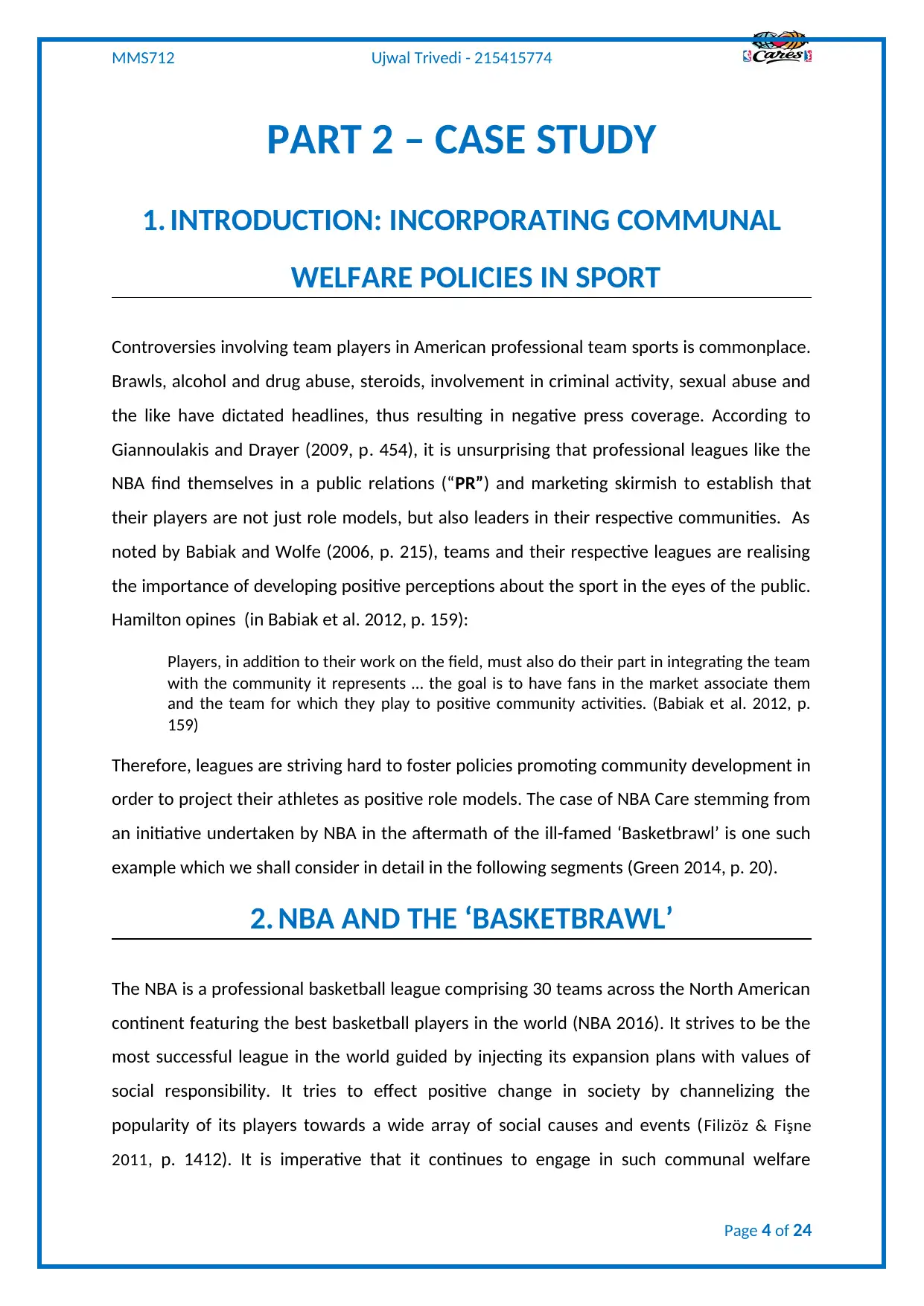
initiatives considering the NBA is constantly battling to erase and evade the negative
publicity it has magnetized over the past two decades (as seen in Figure 1) below, especially
in the aftermath of the “Basketbrawl” event of 2004.
Figure 1 – Timeline of Negative Events between 1997 – 2004 (Giannoulakis & Drayer 2009, p. 455)
Page 5 of 24
initiatives considering the NBA is constantly battling to erase and evade the negative
publicity it has magnetized over the past two decades (as seen in Figure 1) below, especially
in the aftermath of the “Basketbrawl” event of 2004.
Figure 1 – Timeline of Negative Events between 1997 – 2004 (Giannoulakis & Drayer 2009, p. 455)
Page 5 of 24
⊘ This is a preview!⊘
Do you want full access?
Subscribe today to unlock all pages.
Trusted by 1+ million students worldwide
MMS712 Ujwal Trivedi - 215415774
Malice in the Palace
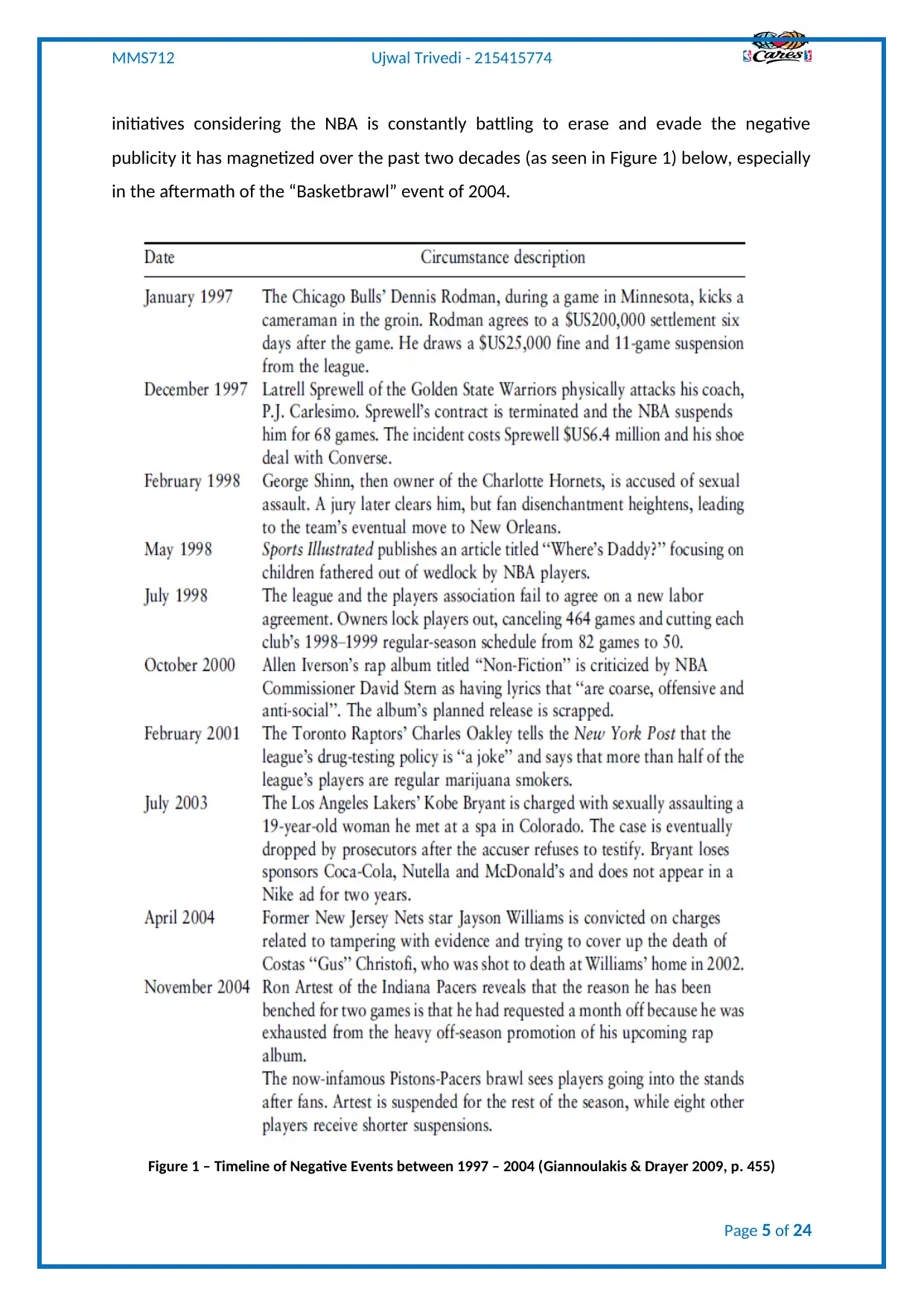
‘Malice in the Palace’ which is popularly known as the ‘Basketbrawl’ refers to a violent
incident which took place during a basketball game between the Indiana Pacers and Detroit
Pistons. Ron Artest of Indiana Pacers triggered the violent event by fouling Detroit Piston’s
Ben Wallace during a layout attempt in the last minute of the game with the Pacers leading
97-82. Wallace reacted with a two-hand shove which resulted in escalation of the situation.
This altercation resulted in other teammates getting aggressively involved, which in turn let
Artest navigate through the commotion towards the scorer’s table where he lay down as
the arguments worsened (Green 2014, p. 20).
Figure 2 – Fight ensuing between players of Indiana Pacers and Detroit Pistons
As Artest lay there, an aggravated spectator threw a beverage at him directed at his chest. It
triggered an unprecedented response from Artest who leaped into the stands and
confronted the person who threw the drink at him. Consequently, more players ended up in
the stands with fans spilling all over the court. Men and women feeling insecure in a hostile
climate with children crying around, the police officers had to intervene to control the
situation. The fans, players, referees and coaches were all made to disperse from the court
Page 6 of 24
Malice in the Palace
‘Malice in the Palace’ which is popularly known as the ‘Basketbrawl’ refers to a violent
incident which took place during a basketball game between the Indiana Pacers and Detroit
Pistons. Ron Artest of Indiana Pacers triggered the violent event by fouling Detroit Piston’s
Ben Wallace during a layout attempt in the last minute of the game with the Pacers leading
97-82. Wallace reacted with a two-hand shove which resulted in escalation of the situation.
This altercation resulted in other teammates getting aggressively involved, which in turn let
Artest navigate through the commotion towards the scorer’s table where he lay down as
the arguments worsened (Green 2014, p. 20).
Figure 2 – Fight ensuing between players of Indiana Pacers and Detroit Pistons
As Artest lay there, an aggravated spectator threw a beverage at him directed at his chest. It
triggered an unprecedented response from Artest who leaped into the stands and
confronted the person who threw the drink at him. Consequently, more players ended up in
the stands with fans spilling all over the court. Men and women feeling insecure in a hostile
climate with children crying around, the police officers had to intervene to control the
situation. The fans, players, referees and coaches were all made to disperse from the court
Page 6 of 24
Paraphrase This Document
Need a fresh take? Get an instant paraphrase of this document with our AI Paraphraser
MMS712 Ujwal Trivedi - 215415774
with the game being called off with 45 seconds on the clock in favour of the Pistons (Green
2014, p. 21).
3. UNDERSTANDING PUBLIC ATTITUDE FOR DEVISING
A MARKETING STRATEGY
Page 7 of 24
with the game being called off with 45 seconds on the clock in favour of the Pistons (Green
2014, p. 21).
3. UNDERSTANDING PUBLIC ATTITUDE FOR DEVISING
A MARKETING STRATEGY
Page 7 of 24
MMS712 Ujwal Trivedi - 215415774
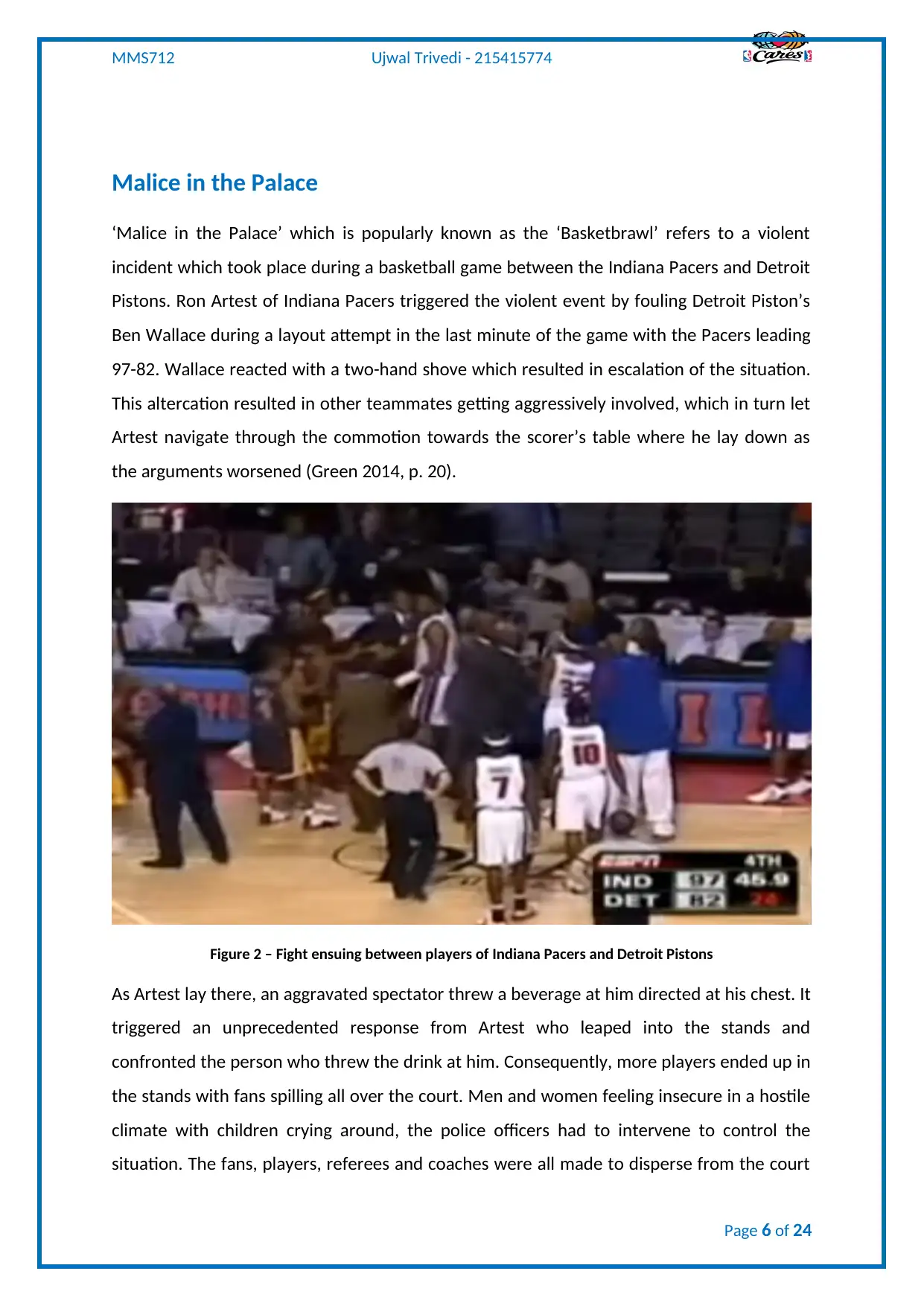
Figure 3 – 7 P’s of Marketing Mix (Shilbury et al. 2014, p. 8)
Knowing NBA’s ‘Publics’ before devising marketing strategy
In order to develop a marketing plan, it is imperative that the NBA strikes a right balance
between all the 7 variables of marketing namely price, place, physical evidence, people,
process and promotion which is the most relevant and important for the purpose of this
case study (See Figure 3 above). However, before devising a marketing plan, NBA needed to
understand the pulse of ‘Publics’ before it proceeded to executing its marketing plan
(Shilbury et al. 2014, p. 306). According to Gruning and Hunt (in Shilbury et al. 2014, p. 306),
‘publics’ is a word which has a wider connotation that the term ‘target audience’. In the case
of NBA, there are four types of publics relevant to the said organization namely:
Latent publics who have not yet recognized that they are affected by the said Event
but may be affected by it in the future;
Aware publics who are affected by the event but may choose not to act or respond
to the said Event;
Active publics who will initiate strong action on the problem that has arisen; and
Non – publics who are not affected by the said Event.
Market research on NBA’s fan base prior to the said Event indicated that most spectators
did not hold basketball players’ in the highest regard. In fact, they were often referred to as
“showboats”, “selfish”, “thugs”, “egotistical”, “gangsters”, “punks” and “trouble-makers”
amongst others (Giannoulakis & Drayer 2009, p. 460). Moreover, majority of the individuals
during the market research acknowledged that their negative opinions were primarily
influenced by media coverage i.e. the promotional component of the marketing mix. As
stated by one of the participants during the research:
We see the bad stuff more than the good anyway. If the brawl happened again, then it
would be showed first. (Giannoulakis & Drayer 2009, p. 462).
Therefore, it was apparent to the NBA that it had an image problem which it needed to
address. Thus unsurprisingly, NBA’s marketing strategy swivelled around the ‘promotion’
component of the marketing mix through its initiative ‘NBA Cares’.
Page 8 of 24
Figure 3 – 7 P’s of Marketing Mix (Shilbury et al. 2014, p. 8)
Knowing NBA’s ‘Publics’ before devising marketing strategy
In order to develop a marketing plan, it is imperative that the NBA strikes a right balance
between all the 7 variables of marketing namely price, place, physical evidence, people,
process and promotion which is the most relevant and important for the purpose of this
case study (See Figure 3 above). However, before devising a marketing plan, NBA needed to
understand the pulse of ‘Publics’ before it proceeded to executing its marketing plan
(Shilbury et al. 2014, p. 306). According to Gruning and Hunt (in Shilbury et al. 2014, p. 306),
‘publics’ is a word which has a wider connotation that the term ‘target audience’. In the case
of NBA, there are four types of publics relevant to the said organization namely:
Latent publics who have not yet recognized that they are affected by the said Event
but may be affected by it in the future;
Aware publics who are affected by the event but may choose not to act or respond
to the said Event;
Active publics who will initiate strong action on the problem that has arisen; and
Non – publics who are not affected by the said Event.
Market research on NBA’s fan base prior to the said Event indicated that most spectators
did not hold basketball players’ in the highest regard. In fact, they were often referred to as
“showboats”, “selfish”, “thugs”, “egotistical”, “gangsters”, “punks” and “trouble-makers”
amongst others (Giannoulakis & Drayer 2009, p. 460). Moreover, majority of the individuals
during the market research acknowledged that their negative opinions were primarily
influenced by media coverage i.e. the promotional component of the marketing mix. As
stated by one of the participants during the research:
We see the bad stuff more than the good anyway. If the brawl happened again, then it
would be showed first. (Giannoulakis & Drayer 2009, p. 462).
Therefore, it was apparent to the NBA that it had an image problem which it needed to
address. Thus unsurprisingly, NBA’s marketing strategy swivelled around the ‘promotion’
component of the marketing mix through its initiative ‘NBA Cares’.
Page 8 of 24
⊘ This is a preview!⊘
Do you want full access?
Subscribe today to unlock all pages.
Trusted by 1+ million students worldwide
MMS712 Ujwal Trivedi - 215415774
4. NBA’S MARKETING PLOY - ‘NBA CARES’
Evolution of the Marketing Function in Sport Industry
The professionalization of sport in the past 30 years has upraised the significance of the
marketing function (Shilbury et al. 2014, p. 12). As seen in figure 3, the significance of the
marketing function, especially in the sport industry has considerably evolved in the form of
the following phases:
The Pre-Sport Marketing phase of the 1970’s wherein the sporting bodies and teams
were primarily concerned with operational and administrative tasks with no
emphasis on marketing as a function (Figure 4(a));
The 1980’s marked by the transition to a more professional form of management
with minimal emphasis on marketing activities as a crucial management function
(4(b));
The past two decades wherein marketing as a function of sport management forms
the nucleus of an organizations’ strategies considering advertising, public relations
and other forms of new social media have the potential to significantly contribute
towards positive projection of a sporting brand (Figure 4(c) and 4(d)).
Page 9 of 24
4. NBA’S MARKETING PLOY - ‘NBA CARES’
Evolution of the Marketing Function in Sport Industry
The professionalization of sport in the past 30 years has upraised the significance of the
marketing function (Shilbury et al. 2014, p. 12). As seen in figure 3, the significance of the
marketing function, especially in the sport industry has considerably evolved in the form of
the following phases:
The Pre-Sport Marketing phase of the 1970’s wherein the sporting bodies and teams
were primarily concerned with operational and administrative tasks with no
emphasis on marketing as a function (Figure 4(a));
The 1980’s marked by the transition to a more professional form of management
with minimal emphasis on marketing activities as a crucial management function
(4(b));
The past two decades wherein marketing as a function of sport management forms
the nucleus of an organizations’ strategies considering advertising, public relations
and other forms of new social media have the potential to significantly contribute
towards positive projection of a sporting brand (Figure 4(c) and 4(d)).
Page 9 of 24
Paraphrase This Document
Need a fresh take? Get an instant paraphrase of this document with our AI Paraphraser
MMS712 Ujwal Trivedi - 215415774
Figure 4 – Importance of Sport Marketing (Shilbury et al. 2014, p. 13)
Birth of NBA Cares Program – A strategic marketing ploy
The NBA demonstrated its familiarity with the evolution of marketing as a strategic sport
management function by introducing the ‘NBA Cares’ Program. Considering the organization
had generated negative publicity over the past two decades with the said Event a final nail
in the coffin, it realised that the marketing function had to be exercised frequently and
strategically to mould the negative perceptions surrounding the NBA (Giannoulakis and
Drayer 2009, p. 454). The said Program endeavours to address social issues which plague
the society with an emphasis on programs that support youth and family development,
education and other health related causes (NBA Cares 2016).
The players make themselves available for offering volunteering services. As noted by
Lombardo (2005), the programs strive to align newly drafted basketball players with local
community organizations and events in order to demonstrate the social responsibilities
associated with their newly formed celebrity status (see Figure 5 below). This initiative
further monitors the players conduct off the court by providing media training, which
consequently helps them make public appearances in socially acceptable and endearing
manner. Scholars like Thomas (2005, p. 72) have provided evidence stating that 80% of
Americans are likely to have a positive image of companies that undertake charitable
activities. He asserts that two-thirds of consumers are prone to switching products because
of the influence exerted by cause-related marketing strategies.
Page 10 of 24
Figure 4 – Importance of Sport Marketing (Shilbury et al. 2014, p. 13)
Birth of NBA Cares Program – A strategic marketing ploy
The NBA demonstrated its familiarity with the evolution of marketing as a strategic sport
management function by introducing the ‘NBA Cares’ Program. Considering the organization
had generated negative publicity over the past two decades with the said Event a final nail
in the coffin, it realised that the marketing function had to be exercised frequently and
strategically to mould the negative perceptions surrounding the NBA (Giannoulakis and
Drayer 2009, p. 454). The said Program endeavours to address social issues which plague
the society with an emphasis on programs that support youth and family development,
education and other health related causes (NBA Cares 2016).
The players make themselves available for offering volunteering services. As noted by
Lombardo (2005), the programs strive to align newly drafted basketball players with local
community organizations and events in order to demonstrate the social responsibilities
associated with their newly formed celebrity status (see Figure 5 below). This initiative
further monitors the players conduct off the court by providing media training, which
consequently helps them make public appearances in socially acceptable and endearing
manner. Scholars like Thomas (2005, p. 72) have provided evidence stating that 80% of
Americans are likely to have a positive image of companies that undertake charitable
activities. He asserts that two-thirds of consumers are prone to switching products because
of the influence exerted by cause-related marketing strategies.
Page 10 of 24
MMS712 Ujwal Trivedi - 215415774
Therefore, it is not surprising that the goal of such initiatives like NBA Care serves the dual
purpose of not just merely uplifting societal welfare, but also engaging well calculated and
measured public relations efforts and marketing strategies to influence public perception
(Thomas 2005, p. 72). Correspondingly, the NBA Care has provided in excess of 3.7 million
hours of hands-on experience and has provided for more than 1040 places where children
and families can learn, live and play in communities across the world. Additionally, it
engages youth in excess of 12 million who annually inspire playing by endorsing values of
the game (NBA Cares 2016).
Page 11 of 24
Therefore, it is not surprising that the goal of such initiatives like NBA Care serves the dual
purpose of not just merely uplifting societal welfare, but also engaging well calculated and
measured public relations efforts and marketing strategies to influence public perception
(Thomas 2005, p. 72). Correspondingly, the NBA Care has provided in excess of 3.7 million
hours of hands-on experience and has provided for more than 1040 places where children
and families can learn, live and play in communities across the world. Additionally, it
engages youth in excess of 12 million who annually inspire playing by endorsing values of
the game (NBA Cares 2016).
Page 11 of 24
⊘ This is a preview!⊘
Do you want full access?
Subscribe today to unlock all pages.
Trusted by 1+ million students worldwide

1 out of 24


Your All-in-One AI-Powered Toolkit for Academic Success.
+13062052269
info@desklib.com
Available 24*7 on WhatsApp / Email
![[object Object]](/_next/static/media/star-bottom.7253800d.svg)
Unlock your academic potential
Copyright © 2020–2026 A2Z Services. All Rights Reserved. Developed and managed by ZUCOL.