Analysis of NAB Scandal: Cultural Perspectives and Recommendations

Verified

Added on  2023/03/30

|8
|455
|236
Report
AI Summary
This report examines the NAB scandal, focusing on the cultural perspectives that contributed to the financial losses. The analysis explores three key perspectives: integration, differentiation, and ambiguity, with a specific emphasis on the differentiation perspective as the most suitable approach for NAB. The report highlights the importance of organizational culture in preventing fraud and unethical behavior, emphasizing the need for HR to implement cultural and training programs, enforce strict regulations, and encourage open communication. References are provided to support the analysis, offering a comprehensive understanding of the issues and recommended solutions. The report concludes with recommendations for the HR team, focusing on promoting ethical practices and preventing future scandals.
Document Page
NAB Cultural
Perspective
tabler-icon-diamond-filled.svg

Paraphrase This Document

Need a fresh take? Get an instant paraphrase of this document with our AI Paraphraser
Document Page
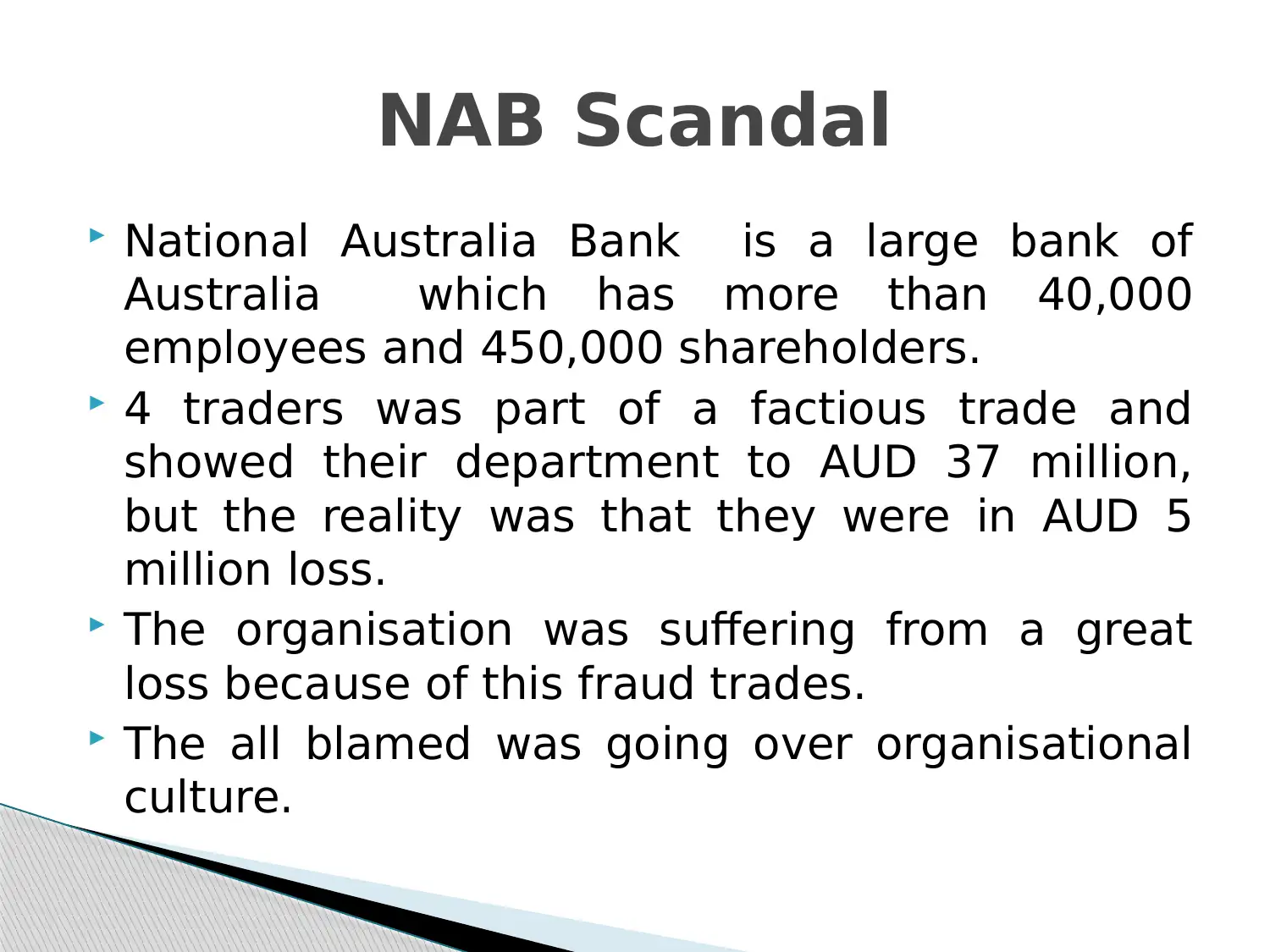
National Australia Bank is a large bank of
Australia which has more than 40,000
employees and 450,000 shareholders.
4 traders was part of a factious trade and
showed their department to AUD 37 million,
but the reality was that they were in AUD 5
million loss.
The organisation was suffering from a great
loss because of this fraud trades.
The all blamed was going over organisational
culture.
NAB Scandal
Document Page
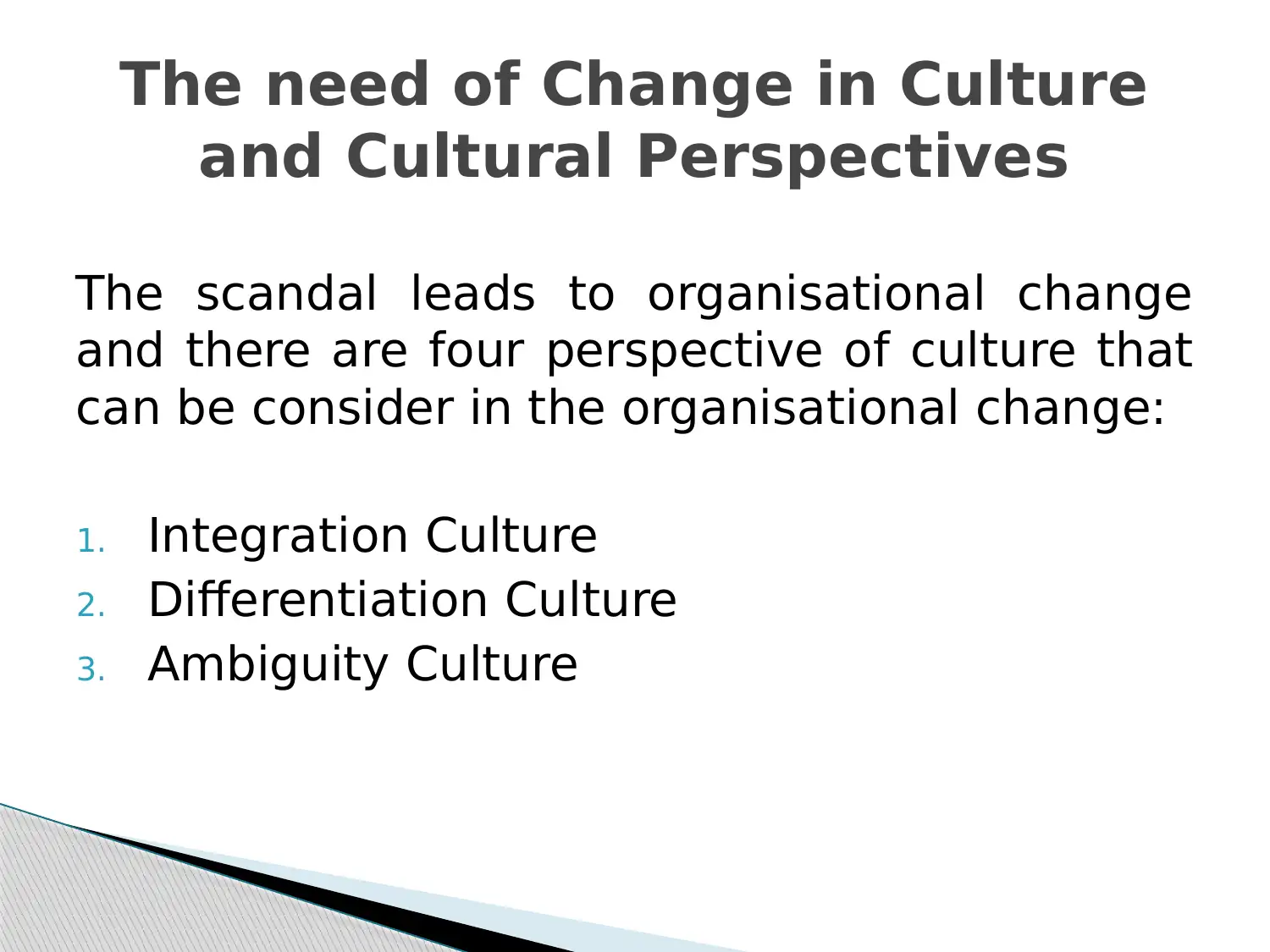
The scandal leads to organisational change
and there are four perspective of culture that
can be consider in the organisational change:
1. Integration Culture
2. Differentiation Culture
3. Ambiguity Culture
The need of Change in Culture
and Cultural Perspectives
Document Page
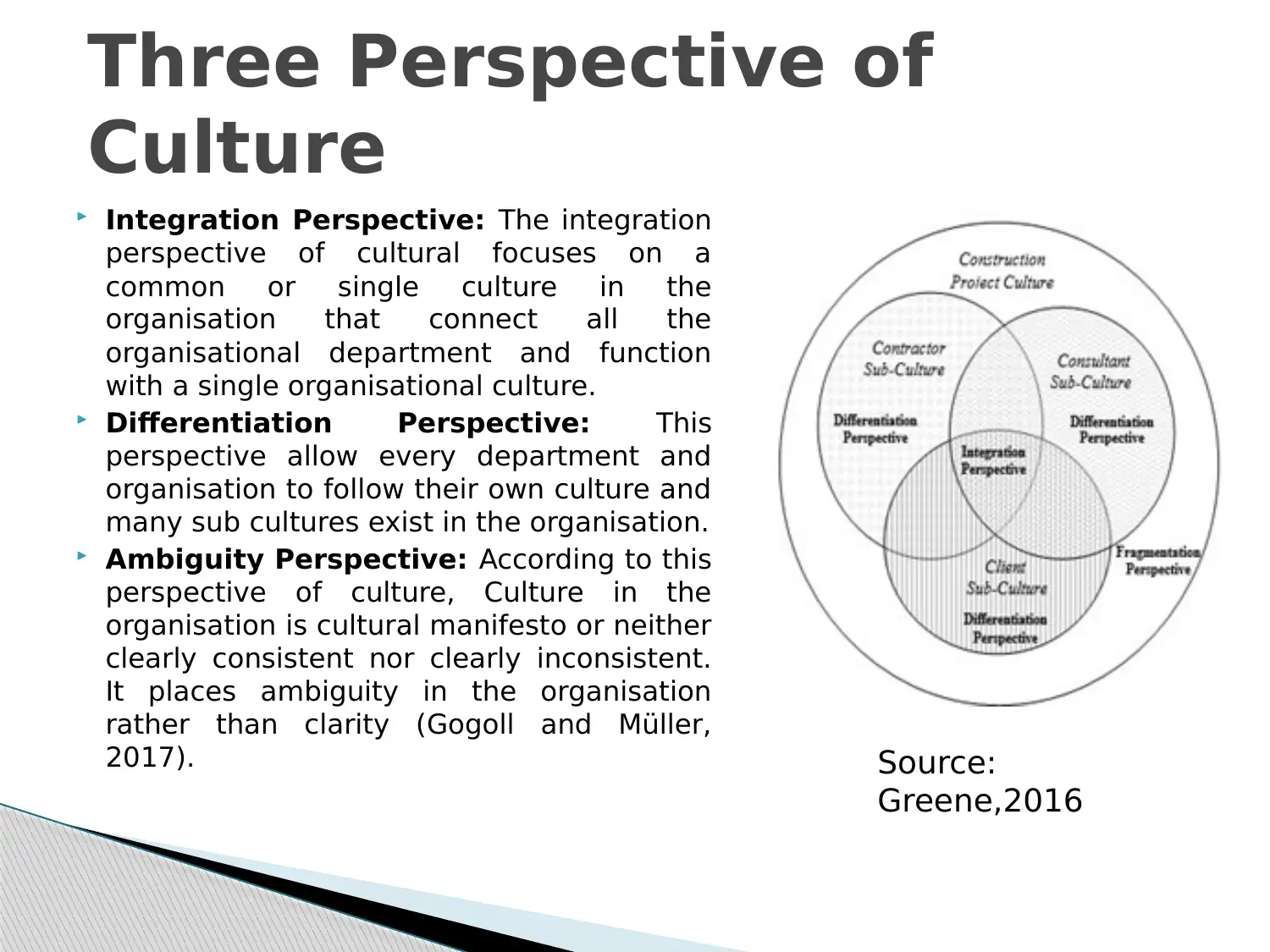
Integration Perspective: The integration
perspective of cultural focuses on a
common or single culture in the
organisation that connect all the
organisational department and function
with a single organisational culture.
Differentiation Perspective: This
perspective allow every department and
organisation to follow their own culture and
many sub cultures exist in the organisation.
Ambiguity Perspective: According to this
perspective of culture, Culture in the
organisation is cultural manifesto or neither
clearly consistent nor clearly inconsistent.
It places ambiguity in the organisation
rather than clarity (Gogoll and Müller,
2017).
Three Perspective of
Culture
Source:
Greene,2016
tabler-icon-diamond-filled.svg

Paraphrase This Document

Need a fresh take? Get an instant paraphrase of this document with our AI Paraphraser
Document Page
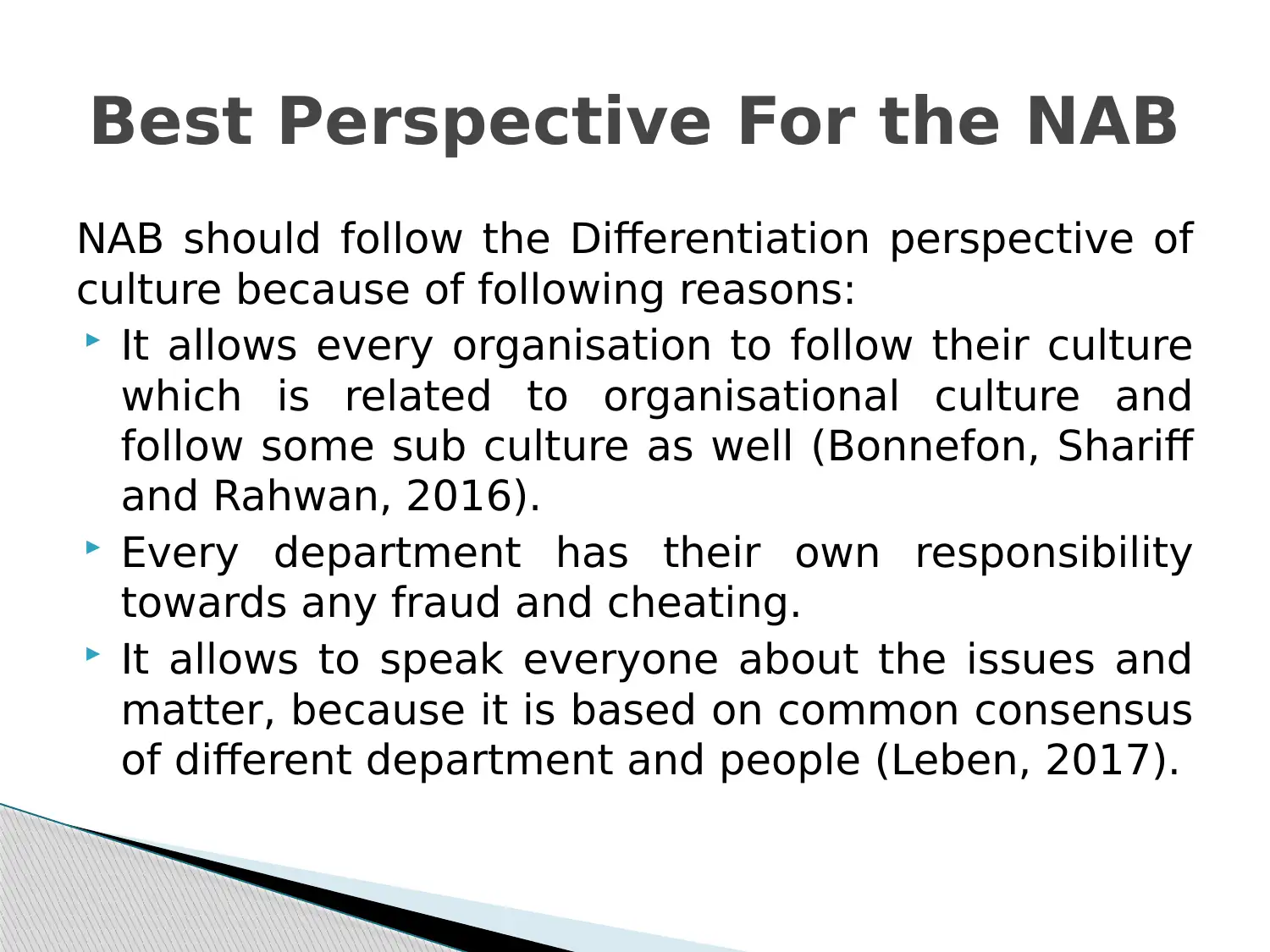
NAB should follow the Differentiation perspective of
culture because of following reasons:
It allows every organisation to follow their culture
which is related to organisational culture and
follow some sub culture as well (Bonnefon, Shariff
and Rahwan, 2016).
Every department has their own responsibility
towards any fraud and cheating.
It allows to speak everyone about the issues and
matter, because it is based on common consensus
of different department and people (Leben, 2017).
Best Perspective For the NAB
Document Page
HR department should work to improve the
organisational culture by conducting various
cultural and training programs
Forces people towards ethical practices.
A strict rule and regulation for those people
who involve in such type of frauds.
HR team should personally talk on every issue
with the employees of the organisation and
encourage them to raise their voice against
any unethical or uncultured practices
(Fleetwood, 2017).
Recommendations for HR team
Document Page
Bonnefon, J. F., Shariff, A., and Rahwan, I. (2016). The social
dilemma of autonomous vehicles. Science, 352(6293),
1573-1576.
Fleetwood, J. (2017). Public health, ethics, and autonomous
vehicles. American journal of public health, 107(4), 532-
537.
Gogoll, J., and Müller, J. F. (2017). Autonomous cars: in favor
of a mandatory ethics setting. Science and engineering
ethics, 23(3), 681-700.
Greene, J. D. (2016). Our driverless
dilemma. Science, 352(6293), 1514-1515.
Leben, D. (2017). A Rawlsian algorithm for autonomous
vehicles. Ethics and Information Technology, 19(2), 107-
115.
References
tabler-icon-diamond-filled.svg

Paraphrase This Document

Need a fresh take? Get an instant paraphrase of this document with our AI Paraphraser
Document Page
THANK YOU !
chevron_up_icon
1 out of 8
circle_padding
hide_on_mobile
zoom_out_icon
[object Object]