Literature Review: Impact of Performance Management on Success
VerifiedAdded on 2023/06/14
|16
|3881
|258
Literature Review
AI Summary
This literature review examines the impact of performance management on organisational success. It begins by outlining the project scope and objectives, focusing on identifying the stages of performance management, exploring the reasons for its implementation, highlighting its impact on organisational success, and evaluating strategies to accelerate this success. The review delves into the concept of performance management, its stages, and the roles of management, emphasising planning, monitoring, reviewing, and rewarding performance. It also discusses the impact of performance management on employee motivation and engagement, referencing various authors' perspectives on performance assessment and criteria. The review concludes by identifying a gap in the existing literature, pointing out areas that require further research to fully understand the relationship between performance management and organisational success. Desklib offers a platform to explore similar solved assignments and past papers.
Running head: BUSINESS RESEARCH
Business Research
Name of the Student
Name of the University
Author’s note
Business Research
Name of the Student
Name of the University
Author’s note

Paraphrase This Document
Need a fresh take? Get an instant paraphrase of this document with our AI Paraphraser
1BUSINESS RESEARCH
Executive Summary
In this project, the topic is chosen as ‘impact of performance management on organisational
success.' In this project, project scope and project objectives are given in order to set the aim of
the project. In this project, the strategies and stages of performance management are discussed
and organisational success is also explained. Most importantly, the secondary research articles
are chosen to compare and contrast the authors' views. In addition, in the literature review
section, the scholarly articles are selected in order to understand the theoretical underpinning of
the performance management and organisational success. Performance management process is
helpful for the employees' motivation and it also helps in employee engagement. In addition, the
performance management cycles start with planning, it goes towards the reviewing and
monitoring and lastly, the managers set the rewards and recognition for the employees. The
managers have performance conversation with the employees and employees summarise their
feedback in regards to the rating, bonus and additional information. Authors’ perspectives have
been stated in this section to show the performance assessment and concept of performance
criteria. Finally, a literature gap has been provided to show the less discussed area to meet the
project objectives.
Executive Summary
In this project, the topic is chosen as ‘impact of performance management on organisational
success.' In this project, project scope and project objectives are given in order to set the aim of
the project. In this project, the strategies and stages of performance management are discussed
and organisational success is also explained. Most importantly, the secondary research articles
are chosen to compare and contrast the authors' views. In addition, in the literature review
section, the scholarly articles are selected in order to understand the theoretical underpinning of
the performance management and organisational success. Performance management process is
helpful for the employees' motivation and it also helps in employee engagement. In addition, the
performance management cycles start with planning, it goes towards the reviewing and
monitoring and lastly, the managers set the rewards and recognition for the employees. The
managers have performance conversation with the employees and employees summarise their
feedback in regards to the rating, bonus and additional information. Authors’ perspectives have
been stated in this section to show the performance assessment and concept of performance
criteria. Finally, a literature gap has been provided to show the less discussed area to meet the
project objectives.
2BUSINESS RESEARCH
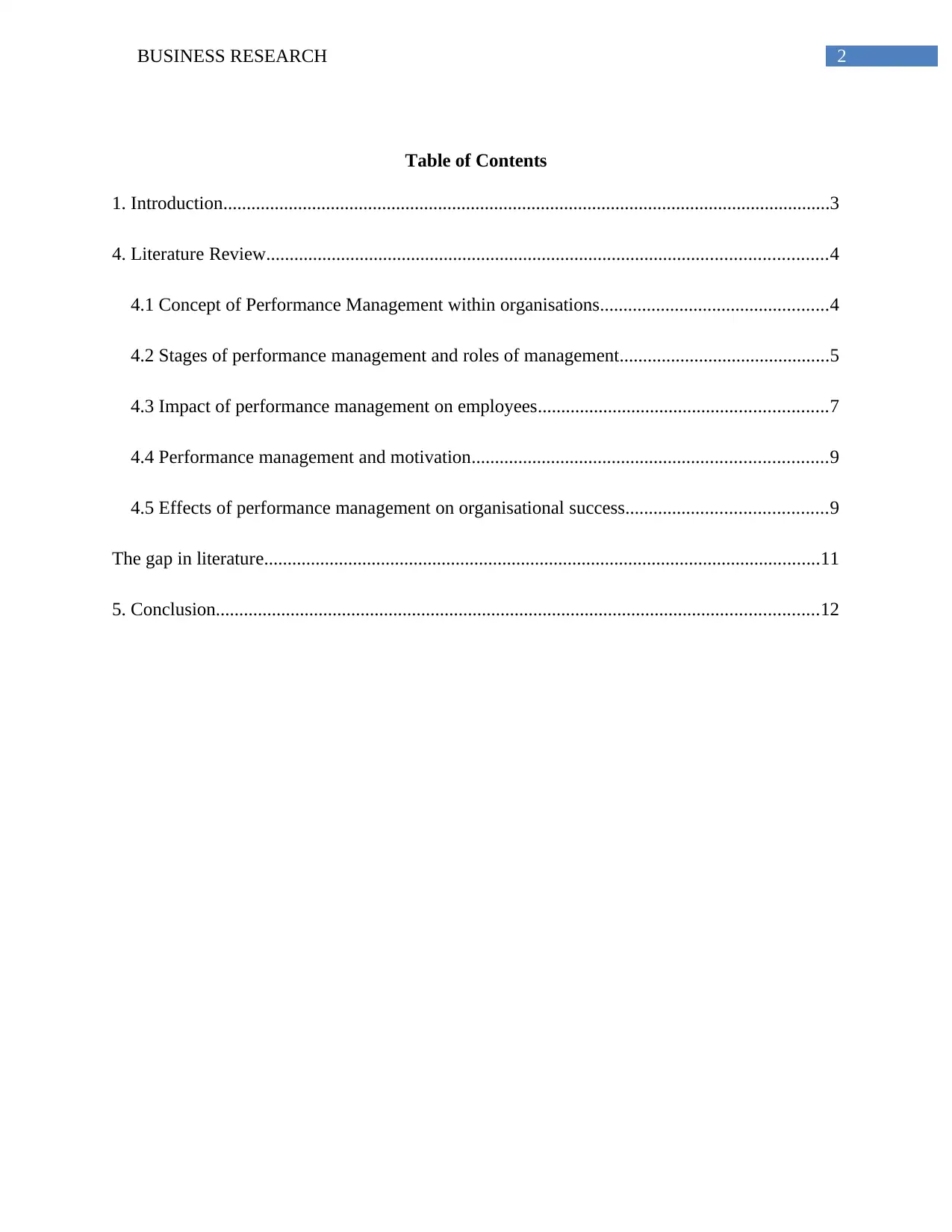
Table of Contents
1. Introduction..................................................................................................................................3
4. Literature Review........................................................................................................................4
4.1 Concept of Performance Management within organisations.................................................4
4.2 Stages of performance management and roles of management.............................................5
4.3 Impact of performance management on employees..............................................................7
4.4 Performance management and motivation............................................................................9
4.5 Effects of performance management on organisational success...........................................9
The gap in literature.......................................................................................................................11
5. Conclusion.................................................................................................................................12
Table of Contents
1. Introduction..................................................................................................................................3
4. Literature Review........................................................................................................................4
4.1 Concept of Performance Management within organisations.................................................4
4.2 Stages of performance management and roles of management.............................................5
4.3 Impact of performance management on employees..............................................................7
4.4 Performance management and motivation............................................................................9
4.5 Effects of performance management on organisational success...........................................9
The gap in literature.......................................................................................................................11
5. Conclusion.................................................................................................................................12
⊘ This is a preview!⊘
Do you want full access?
Subscribe today to unlock all pages.

Trusted by 1+ million students worldwide
3BUSINESS RESEARCH
1. Introduction
Every business has strategic management objectives and decisions based on which the
company formulates the policies. Human resource department in business organisations work
closely aligned with the strategic management decisions taken by the company. The performance
of the employees of an organisation depends on a number of factors, first and foremost is the rate
and the level of job satisfaction that the employees have. The process of performance
management begins with the recruitment of an employee and stops at the point when he or she
leaves the organisation (Van Dooren et al. 2015). In this literature review, project scope and
project objectives are identified. A comparative literature review is conducted to analyse
performance management from the perspectives of the different author. A strive is made to show
the relationship between performance management and organisational success. The gap in
existing literature is given to show that the literature review may not be able to cover all aspects
of the chosen topic. Lastly, the conclusion is provided by the literature review.
2. Project Objectives
The aim of the study is to show the impact of performance management of the
organisation on the organisational success. The research objectives of the study are:
To identify the stages of performance management within organisations
To explore the reasons behind taking performance management within organisations
To highlight the impact of performance management on organisational success
To evaluate the strategies of performance management that can accelerate the
organisational success
1. Introduction
Every business has strategic management objectives and decisions based on which the
company formulates the policies. Human resource department in business organisations work
closely aligned with the strategic management decisions taken by the company. The performance
of the employees of an organisation depends on a number of factors, first and foremost is the rate
and the level of job satisfaction that the employees have. The process of performance
management begins with the recruitment of an employee and stops at the point when he or she
leaves the organisation (Van Dooren et al. 2015). In this literature review, project scope and
project objectives are identified. A comparative literature review is conducted to analyse
performance management from the perspectives of the different author. A strive is made to show
the relationship between performance management and organisational success. The gap in
existing literature is given to show that the literature review may not be able to cover all aspects
of the chosen topic. Lastly, the conclusion is provided by the literature review.
2. Project Objectives
The aim of the study is to show the impact of performance management of the
organisation on the organisational success. The research objectives of the study are:
To identify the stages of performance management within organisations
To explore the reasons behind taking performance management within organisations
To highlight the impact of performance management on organisational success
To evaluate the strategies of performance management that can accelerate the
organisational success
Paraphrase This Document
Need a fresh take? Get an instant paraphrase of this document with our AI Paraphraser
4BUSINESS RESEARCH
3. Project Scope
The performance management is an important part of the strategic management decisions
of the company are managed by the Human Resource department. The project scope is depended
on various directions, firstly, this literature review section focuses on secondary data analysis
and emphasis is made to show the theoretical perspectives of the performance management and
organisational success. Secondly, this project also covers the application of the performance
management on the organisations and the existing literature gap has been produced. This project
does not set its limit to any geographical region, the research findings will be applicable in any
regions.
4. Literature Review
4.1 Concept of Performance Management within organisations
Ann and David (2013), stated that Performance Management is the process by which an
organisation keeps a record of the performance of the employees in order to achieve the
objectives of the organisation. On the other hand, De Waal (2013), state that Performance
Management also helps and supports the employees to improve their skills and in the long run
develop their career options in the company. As it is both integrated and strategic approach it
strives towards organizations objectives by enhancing the performance and improving the skills
of teams and individuals. Some of the functions of the approach, in brief, are joint goal setting,
constant progress monitoring and consistent communication and review, regular activity
feedback etc (Ann and David 2013). The commitment of the employees towards the organisation
etc. management the performance of the people ensure that they are constantly motivated and
3. Project Scope
The performance management is an important part of the strategic management decisions
of the company are managed by the Human Resource department. The project scope is depended
on various directions, firstly, this literature review section focuses on secondary data analysis
and emphasis is made to show the theoretical perspectives of the performance management and
organisational success. Secondly, this project also covers the application of the performance
management on the organisations and the existing literature gap has been produced. This project
does not set its limit to any geographical region, the research findings will be applicable in any
regions.
4. Literature Review
4.1 Concept of Performance Management within organisations
Ann and David (2013), stated that Performance Management is the process by which an
organisation keeps a record of the performance of the employees in order to achieve the
objectives of the organisation. On the other hand, De Waal (2013), state that Performance
Management also helps and supports the employees to improve their skills and in the long run
develop their career options in the company. As it is both integrated and strategic approach it
strives towards organizations objectives by enhancing the performance and improving the skills
of teams and individuals. Some of the functions of the approach, in brief, are joint goal setting,
constant progress monitoring and consistent communication and review, regular activity
feedback etc (Ann and David 2013). The commitment of the employees towards the organisation
etc. management the performance of the people ensure that they are constantly motivated and
5BUSINESS RESEARCH
also realize their potential and use their skills and abilities in the right place in order to optimize
the skills in order to achieve the objectives of the organisation.
Goal setting theory of performance management helps in developing the action plan
within an organisation to guide the managers and employees towards personal development. As
opined by Kerney (2018), a positive correlation can be found between improved business results
and goal setting as goal setting theory encompasses aspects of making organisations with
efficacy and efficiency. Goal setting theory has five elements; clarity refers the measurable and
clear goal that can be gained within specific time and challenge refers to achieve the goals set by
the organisations for the employees (Kontoghiorghes 2016). Commitment makes the
organisations and individuals to provide the deliberate efforts to meet the goals and feedback
provides ideas and information of the employees regarding the progress. In addition, task
complexity helps to achieve the goals lying down the process steps by steps.
4.2 Stages of performance management and roles of management
Organisational success is not just depended on the right strategy and resources; it is also
depended upon the managers’ critical role to deliver the performance. Managers within an
organisation need to deliver the performance and they can get the result best possible
performance management. As stated by Ahmed et al. (2016), effective performance management
can enable the employees to recognise the objectives of the organisation and it identifies team
outputs and individual to contribute towards the organisational objectives. Management within
an organisation tries to focus on aligning the individual employees in day-to-day actions that are
related to the strategic business objectives (Gerrish 2016). The managers try to document the
individual performance in order to support the compensation and the managers also try to
establish the focus for skill development. The management identifies the need of performance
also realize their potential and use their skills and abilities in the right place in order to optimize
the skills in order to achieve the objectives of the organisation.
Goal setting theory of performance management helps in developing the action plan
within an organisation to guide the managers and employees towards personal development. As
opined by Kerney (2018), a positive correlation can be found between improved business results
and goal setting as goal setting theory encompasses aspects of making organisations with
efficacy and efficiency. Goal setting theory has five elements; clarity refers the measurable and
clear goal that can be gained within specific time and challenge refers to achieve the goals set by
the organisations for the employees (Kontoghiorghes 2016). Commitment makes the
organisations and individuals to provide the deliberate efforts to meet the goals and feedback
provides ideas and information of the employees regarding the progress. In addition, task
complexity helps to achieve the goals lying down the process steps by steps.
4.2 Stages of performance management and roles of management
Organisational success is not just depended on the right strategy and resources; it is also
depended upon the managers’ critical role to deliver the performance. Managers within an
organisation need to deliver the performance and they can get the result best possible
performance management. As stated by Ahmed et al. (2016), effective performance management
can enable the employees to recognise the objectives of the organisation and it identifies team
outputs and individual to contribute towards the organisational objectives. Management within
an organisation tries to focus on aligning the individual employees in day-to-day actions that are
related to the strategic business objectives (Gerrish 2016). The managers try to document the
individual performance in order to support the compensation and the managers also try to
establish the focus for skill development. The management identifies the need of performance
⊘ This is a preview!⊘
Do you want full access?
Subscribe today to unlock all pages.
Trusted by 1+ million students worldwide
6BUSINESS RESEARCH
management and the management also creates the documentation for the legal purposes in order
to support the decisions, it also helps to reduce the disputes (Arnaboldi et al. 2015). The
management within an organisation wants the performance management should embrace the
performance improvement, development and managing behaviour. Performance management
should possess the skills and knowledge that they need to perform to the required standards.
Manager's performance management starts with planning as, without the skilled
managers, the process of performance management cannot be done properly. The beginning of
the performance management must include the organisation's determination to move forward.
The management should start with realistic objectives and the management develops the strategic
plan to carry out the ideas. The management must include the clear vision to proceed with the
path. As stated by DeNisi and Smith (2014), the management needs to continue with the efforts
and it is very significant to monitor the progress of the performance management. Managers
need to focus on the achieved results and team dynamics that can affect the work environment.
The next stage is about reviewing and evaluating the performance management. In this stage, the
management reviews the accomplishment of the employees and the achievement of the new
employees for the current position and the future jobs of the management (Mone and London
2018). The management shows the employee performance and reviews this with previous year's
performance. The last year or last quarter's performance of the employees are reviewed by the
employees and their future work standards and goals are set in the performance management
process. Performance management is the benchmark of the employees to understand employees'
employment, rewards and compensation.
management and the management also creates the documentation for the legal purposes in order
to support the decisions, it also helps to reduce the disputes (Arnaboldi et al. 2015). The
management within an organisation wants the performance management should embrace the
performance improvement, development and managing behaviour. Performance management
should possess the skills and knowledge that they need to perform to the required standards.
Manager's performance management starts with planning as, without the skilled
managers, the process of performance management cannot be done properly. The beginning of
the performance management must include the organisation's determination to move forward.
The management should start with realistic objectives and the management develops the strategic
plan to carry out the ideas. The management must include the clear vision to proceed with the
path. As stated by DeNisi and Smith (2014), the management needs to continue with the efforts
and it is very significant to monitor the progress of the performance management. Managers
need to focus on the achieved results and team dynamics that can affect the work environment.
The next stage is about reviewing and evaluating the performance management. In this stage, the
management reviews the accomplishment of the employees and the achievement of the new
employees for the current position and the future jobs of the management (Mone and London
2018). The management shows the employee performance and reviews this with previous year's
performance. The last year or last quarter's performance of the employees are reviewed by the
employees and their future work standards and goals are set in the performance management
process. Performance management is the benchmark of the employees to understand employees'
employment, rewards and compensation.
Paraphrase This Document
Need a fresh take? Get an instant paraphrase of this document with our AI Paraphraser
7BUSINESS RESEARCH
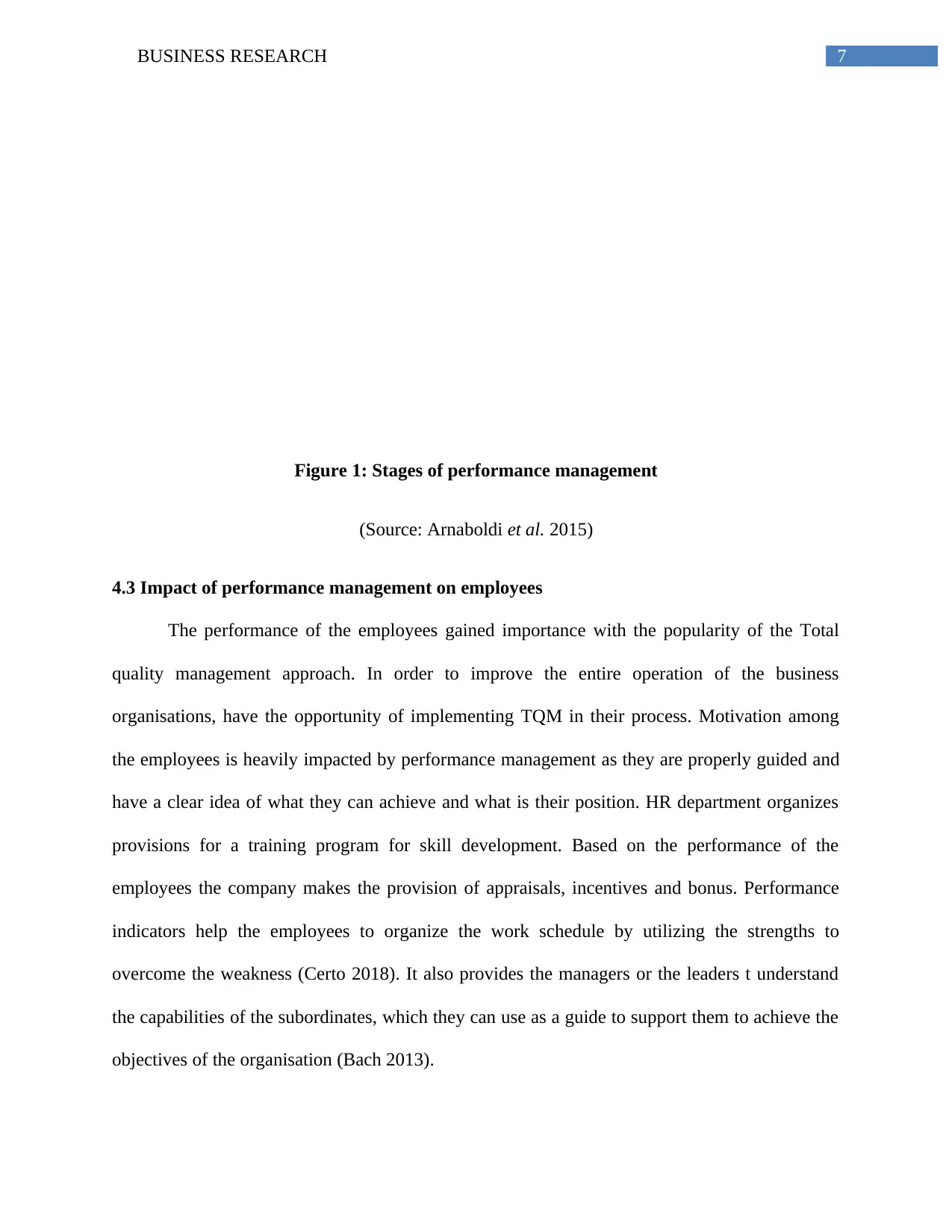
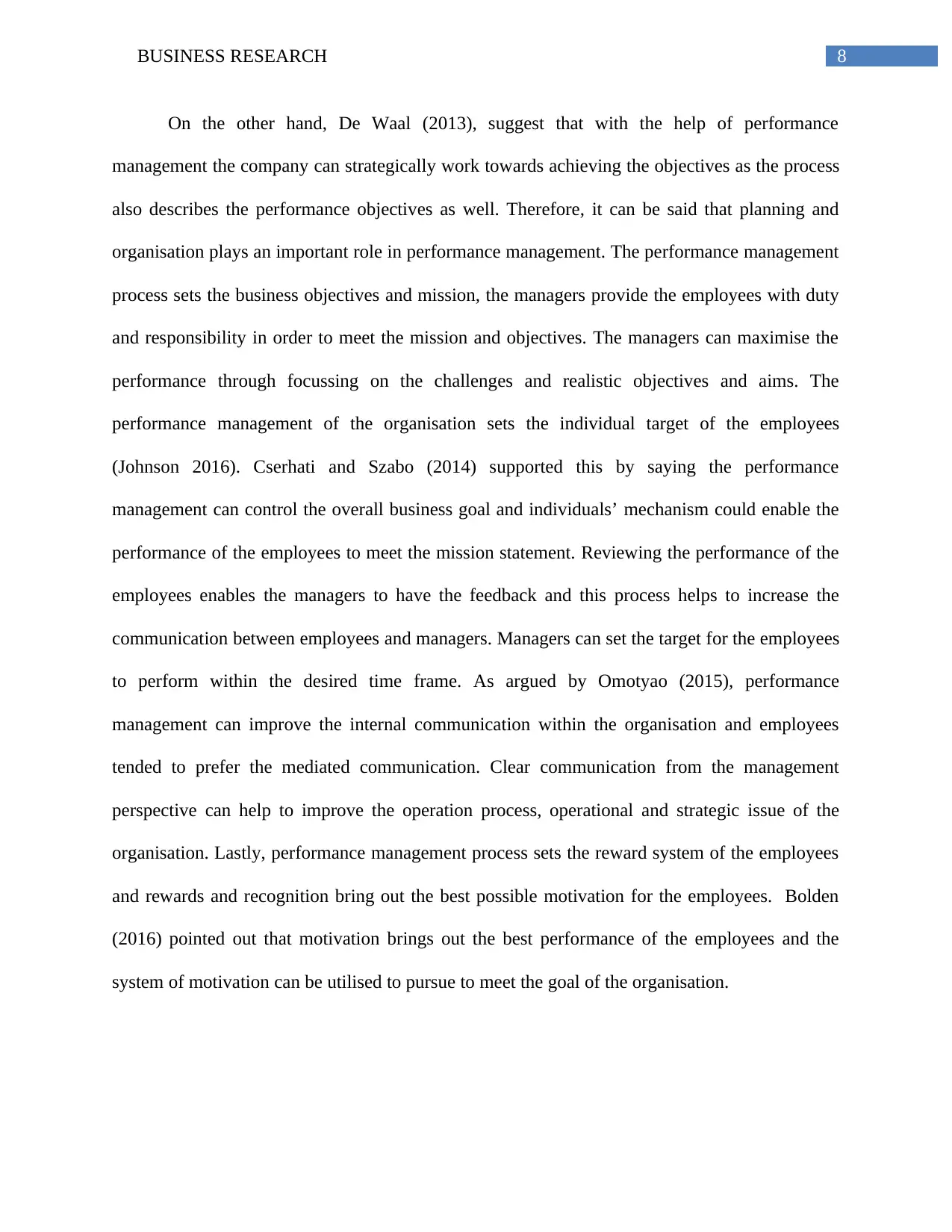
Figure 1: Stages of performance management
(Source: Arnaboldi et al. 2015)
4.3 Impact of performance management on employees
The performance of the employees gained importance with the popularity of the Total
quality management approach. In order to improve the entire operation of the business
organisations, have the opportunity of implementing TQM in their process. Motivation among
the employees is heavily impacted by performance management as they are properly guided and
have a clear idea of what they can achieve and what is their position. HR department organizes
provisions for a training program for skill development. Based on the performance of the
employees the company makes the provision of appraisals, incentives and bonus. Performance
indicators help the employees to organize the work schedule by utilizing the strengths to
overcome the weakness (Certo 2018). It also provides the managers or the leaders t understand
the capabilities of the subordinates, which they can use as a guide to support them to achieve the
objectives of the organisation (Bach 2013).
DevelopingandplanningperformanceManagingandmonitoringperformanceReviewingandrewardingtheperformance
Figure 1: Stages of performance management
(Source: Arnaboldi et al. 2015)
4.3 Impact of performance management on employees
The performance of the employees gained importance with the popularity of the Total
quality management approach. In order to improve the entire operation of the business
organisations, have the opportunity of implementing TQM in their process. Motivation among
the employees is heavily impacted by performance management as they are properly guided and
have a clear idea of what they can achieve and what is their position. HR department organizes
provisions for a training program for skill development. Based on the performance of the
employees the company makes the provision of appraisals, incentives and bonus. Performance
indicators help the employees to organize the work schedule by utilizing the strengths to
overcome the weakness (Certo 2018). It also provides the managers or the leaders t understand
the capabilities of the subordinates, which they can use as a guide to support them to achieve the
objectives of the organisation (Bach 2013).
DevelopingandplanningperformanceManagingandmonitoringperformanceReviewingandrewardingtheperformance
8BUSINESS RESEARCH
On the other hand, De Waal (2013), suggest that with the help of performance
management the company can strategically work towards achieving the objectives as the process
also describes the performance objectives as well. Therefore, it can be said that planning and
organisation plays an important role in performance management. The performance management
process sets the business objectives and mission, the managers provide the employees with duty
and responsibility in order to meet the mission and objectives. The managers can maximise the
performance through focussing on the challenges and realistic objectives and aims. The
performance management of the organisation sets the individual target of the employees
(Johnson 2016). Cserhati and Szabo (2014) supported this by saying the performance
management can control the overall business goal and individuals’ mechanism could enable the
performance of the employees to meet the mission statement. Reviewing the performance of the
employees enables the managers to have the feedback and this process helps to increase the
communication between employees and managers. Managers can set the target for the employees
to perform within the desired time frame. As argued by Omotyao (2015), performance
management can improve the internal communication within the organisation and employees
tended to prefer the mediated communication. Clear communication from the management
perspective can help to improve the operation process, operational and strategic issue of the
organisation. Lastly, performance management process sets the reward system of the employees
and rewards and recognition bring out the best possible motivation for the employees. Bolden
(2016) pointed out that motivation brings out the best performance of the employees and the
system of motivation can be utilised to pursue to meet the goal of the organisation.
On the other hand, De Waal (2013), suggest that with the help of performance
management the company can strategically work towards achieving the objectives as the process
also describes the performance objectives as well. Therefore, it can be said that planning and
organisation plays an important role in performance management. The performance management
process sets the business objectives and mission, the managers provide the employees with duty
and responsibility in order to meet the mission and objectives. The managers can maximise the
performance through focussing on the challenges and realistic objectives and aims. The
performance management of the organisation sets the individual target of the employees
(Johnson 2016). Cserhati and Szabo (2014) supported this by saying the performance
management can control the overall business goal and individuals’ mechanism could enable the
performance of the employees to meet the mission statement. Reviewing the performance of the
employees enables the managers to have the feedback and this process helps to increase the
communication between employees and managers. Managers can set the target for the employees
to perform within the desired time frame. As argued by Omotyao (2015), performance
management can improve the internal communication within the organisation and employees
tended to prefer the mediated communication. Clear communication from the management
perspective can help to improve the operation process, operational and strategic issue of the
organisation. Lastly, performance management process sets the reward system of the employees
and rewards and recognition bring out the best possible motivation for the employees. Bolden
(2016) pointed out that motivation brings out the best performance of the employees and the
system of motivation can be utilised to pursue to meet the goal of the organisation.
⊘ This is a preview!⊘
Do you want full access?
Subscribe today to unlock all pages.
Trusted by 1+ million students worldwide
9BUSINESS RESEARCH
4.4 Performance management and motivation
The job roles of the employees define what is expected from the employees within a
workplace and employees’ behaviour and competencies are depended on that role. The
management needs to make sure about the responsibilities, job skills and qualities that can define
the success of the employees including the competencies (Mir and Piington 2014). Organisations
get the immediate performance reviews and the continuous process of performance management
helps the employees to be motivated throughout. The advantages of the performance
management are the recognition of the employees’ contribution to the business and team that can
lead to the higher levels of discretionary efforts and engagement. In addition, as stated by
Budworth et al. (2015), performance management provides clear visibility and understanding
what is required for the employees and it provides quality time between employee and manager.
During the feedback of performance management process, the employees share their views
regarding the job-satisfaction, team-working, need for money and achievement. Performance
management brings motivation to the employees as the process of performance management
provides rewards and recognition. Providing motivation is the responsibility of the managers and
performance management process encourages the motivation as managers believe about
employee strength (Mellahi et al. 2016). It inquires the employees about their desires and it
teaches the employees to measure own success. The performance management process brings
motivation from both extrinsic and intrinsic aspects as this process provides regular employee
respect.
4.5 Effects of performance management on organisational success
Performance management process is helpful to create the collective understanding of the
accomplishment of the employees. Performance approach is helpful to supervise the people to
4.4 Performance management and motivation
The job roles of the employees define what is expected from the employees within a
workplace and employees’ behaviour and competencies are depended on that role. The
management needs to make sure about the responsibilities, job skills and qualities that can define
the success of the employees including the competencies (Mir and Piington 2014). Organisations
get the immediate performance reviews and the continuous process of performance management
helps the employees to be motivated throughout. The advantages of the performance
management are the recognition of the employees’ contribution to the business and team that can
lead to the higher levels of discretionary efforts and engagement. In addition, as stated by
Budworth et al. (2015), performance management provides clear visibility and understanding
what is required for the employees and it provides quality time between employee and manager.
During the feedback of performance management process, the employees share their views
regarding the job-satisfaction, team-working, need for money and achievement. Performance
management brings motivation to the employees as the process of performance management
provides rewards and recognition. Providing motivation is the responsibility of the managers and
performance management process encourages the motivation as managers believe about
employee strength (Mellahi et al. 2016). It inquires the employees about their desires and it
teaches the employees to measure own success. The performance management process brings
motivation from both extrinsic and intrinsic aspects as this process provides regular employee
respect.
4.5 Effects of performance management on organisational success
Performance management process is helpful to create the collective understanding of the
accomplishment of the employees. Performance approach is helpful to supervise the people to
Paraphrase This Document
Need a fresh take? Get an instant paraphrase of this document with our AI Paraphraser
10BUSINESS RESEARCH
reach success. The performance management process assists the supervisors and managers to
give the feedback to the employees and it sets the clear direction to the employees. The rewards
and compensation are given to the employees over the period of time when the needs of extrinsic
motivation is given to the employees. The managers understand the training needs of the
employees and performance management provides managers the opportunity to keep the tracking
of the performance and set the performance expectations of the employees. As stated by
Siegfried et al. (2018), performance management system is important for the management as it is
consistent for the business operation. The objectives of the organisation are needed to fulfil
through the performance management and the managers try to bridge the gap through defining
the performance objectives of the employees.
According to Mir and Pinnigton (2014), management always communicates the
objectives to the employees and employees work together to clarify the performance standards.
In addition, organisational success can be gained through employee engagement and motivation.
Both these factors can be achieved through the performance management as the performance
management is accountable to track the goals of the employees. The management runs and
judges the performance of the employees through clear communication and purpose. The
management communicates the tasks and employees start putting their efforts on this. On the
other side, as argued by Bolden (2016), the management discover ways to improve the process of
performance management where the employees perform their mark. Moreover, as stated by
Omotayo (2015), organisational success can be achieved through the sound managers and
inspirational leaders who can perform right process of performance management. Performance
management is the process of setting the right track for the employees that can ensure the
sustainable results and executing the strategies towards organisational success. Success of the
reach success. The performance management process assists the supervisors and managers to
give the feedback to the employees and it sets the clear direction to the employees. The rewards
and compensation are given to the employees over the period of time when the needs of extrinsic
motivation is given to the employees. The managers understand the training needs of the
employees and performance management provides managers the opportunity to keep the tracking
of the performance and set the performance expectations of the employees. As stated by
Siegfried et al. (2018), performance management system is important for the management as it is
consistent for the business operation. The objectives of the organisation are needed to fulfil
through the performance management and the managers try to bridge the gap through defining
the performance objectives of the employees.
According to Mir and Pinnigton (2014), management always communicates the
objectives to the employees and employees work together to clarify the performance standards.
In addition, organisational success can be gained through employee engagement and motivation.
Both these factors can be achieved through the performance management as the performance
management is accountable to track the goals of the employees. The management runs and
judges the performance of the employees through clear communication and purpose. The
management communicates the tasks and employees start putting their efforts on this. On the
other side, as argued by Bolden (2016), the management discover ways to improve the process of
performance management where the employees perform their mark. Moreover, as stated by
Omotayo (2015), organisational success can be achieved through the sound managers and
inspirational leaders who can perform right process of performance management. Performance
management is the process of setting the right track for the employees that can ensure the
sustainable results and executing the strategies towards organisational success. Success of the
11BUSINESS RESEARCH
organisation can be measured through achieving the goals and mission of the organisation.
Achieving the success has some major steps that the organisation needs to take. The first step of
achieving the success is to set the clear goals from the management ends and the management
needs to define the plans that can fit the organisational strategies. The management of the
organisation identifies the plan of performance management and the managers need to have clear
understanding towards the communication of the reviews. The management and leaders need to
communicate the review of work progress. The work progress process helps the managers to
keep the track of the employees whether the employees are doing well. In addition, as opined by
Budworth et al. (2015), external factors sometimes impact on the organisation; therefore, the role
of the management is not to let external factors shift the roles to impact on organisational
success.
Gap in literature
The existing literature based on the performance management and organisational success
mainly focuses on the motivation of the employees and the managers’ role in order to set the
criteria for the performance management. Organisational success process is described from the
wider perspective. The existing literature showed the relationship between performance
management with the success of the organisation. The managers must ensure that they must
follow any company's existing procedures as it would be easy to get procedural fairness. The
managers should be trained to ensure the consistency of dealing with performance and conduct
the issues across the business. The managers should not treat the employees with sane as some of
the employees get the rewards and recognition. The gap is established in the section of
establishing the relationship between performance management and success of the organisation.
The second research gap is the lack of theoretical perspective of the success of the organisation
organisation can be measured through achieving the goals and mission of the organisation.
Achieving the success has some major steps that the organisation needs to take. The first step of
achieving the success is to set the clear goals from the management ends and the management
needs to define the plans that can fit the organisational strategies. The management of the
organisation identifies the plan of performance management and the managers need to have clear
understanding towards the communication of the reviews. The management and leaders need to
communicate the review of work progress. The work progress process helps the managers to
keep the track of the employees whether the employees are doing well. In addition, as opined by
Budworth et al. (2015), external factors sometimes impact on the organisation; therefore, the role
of the management is not to let external factors shift the roles to impact on organisational
success.
Gap in literature
The existing literature based on the performance management and organisational success
mainly focuses on the motivation of the employees and the managers’ role in order to set the
criteria for the performance management. Organisational success process is described from the
wider perspective. The existing literature showed the relationship between performance
management with the success of the organisation. The managers must ensure that they must
follow any company's existing procedures as it would be easy to get procedural fairness. The
managers should be trained to ensure the consistency of dealing with performance and conduct
the issues across the business. The managers should not treat the employees with sane as some of
the employees get the rewards and recognition. The gap is established in the section of
establishing the relationship between performance management and success of the organisation.
The second research gap is the lack of theoretical perspective of the success of the organisation
⊘ This is a preview!⊘
Do you want full access?
Subscribe today to unlock all pages.
Trusted by 1+ million students worldwide

1 out of 16


Related Documents


Your All-in-One AI-Powered Toolkit for Academic Success.
+13062052269
info@desklib.com
Available 24*7 on WhatsApp / Email
![[object Object]](/_next/static/media/star-bottom.7253800d.svg)
Unlock your academic potential
Copyright © 2020–2026 A2Z Services. All Rights Reserved. Developed and managed by ZUCOL.