Morphine: Structural, Analytical Identification and API Comparison

Verified

Added on  2022/08/29

|8
|1516
|21
Report
AI Summary
This report provides a comprehensive analysis of morphine, an opioid medication used for pain relief. It begins with an introduction to morphine, its effects, and potential risks, including addiction and misuse. The report then delves into the structural identification of morphine, highlighting its key chemical features. The core of the report focuses on analytical methods for identifying morphine, with a detailed explanation of Thin Layer Chromatography (TLC) and its application in separating and identifying morphine. The report also discusses High-Performance Liquid Chromatography (HPLC) and compares the two methods, particularly in the context of Active Pharmaceutical Ingredient (API) identification. The report concludes by emphasizing the importance of API identification in ensuring drug efficacy and highlighting TLC as a preferred analytical method for morphine in various laboratory settings, including urine analysis. The report references several scientific articles to support the information presented.
Document Page
Running head: PHARMALOGICAL ANALYSIS
MORPHINE
Name of the Student
Name of the University
Author note
tabler-icon-diamond-filled.svg

Paraphrase This Document

Need a fresh take? Get an instant paraphrase of this document with our AI Paraphraser
Document Page
1PHARMALOGICAL ANALYSIS
Introduction
Morphine is an opioid medicine that can treat adequate to unembellished pain. Short-
acting constructions are used as required and is needed for pain. It straight actions on the central
nervous system (CNS) to decrease pain. Morphine must not be taken during asthma as it can
slow or stop the breathing mechanism of the body (Wiffen, Wee and Moore 2016). On other
hand misuse of the morphine medication can lead to overdose, death or serious addiction to
opioids. It must always be used with prescription. Opioid medication taken for the duration of
pregnancy causes life threatening pulling out indications in the new born. The paper discusses
about the ways morphine can be identified depending on the structure, various analytical
methods required for identification and comparing the analytical method for API (Active
pharmaceutical ingredient) identification.
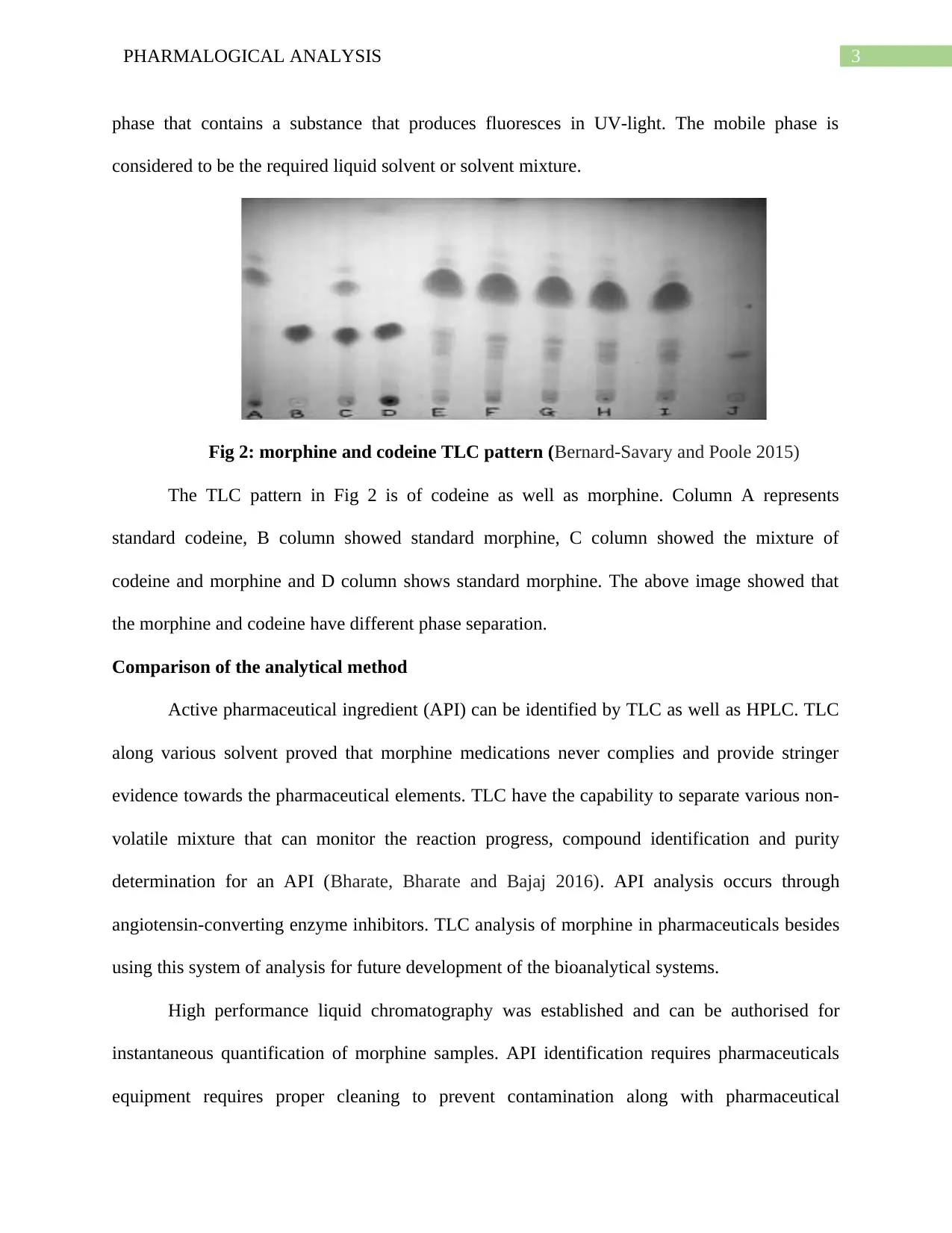
Fig 1: Structure of morphine (Talemi and Mashhadizadeh 2015)
Structural identification
Morphine has 3 oxygen atoms. One be in the right place to a phenolic hydroxyl that
maintains bases solubility of which carbon dioxide re-precipitates it; change of morphine into
methylemorphine or codeine by the process of methylation (Talemi and Mashhadizadeh 2015).
Document Page
2PHARMALOGICAL ANALYSIS
The second oxygen to a secondary alcohol group and the third oxygen atom becomes chemically
inert, to an epoxydic cycle that develops later.
Analytical method identification
To identify morphine adsorption and partition chromatography is very useful. They are
subdivided into column chromatography as well as thin layer chromatography (TLC) explained
as solid stationary and liquid mobile phase (Bernard-Savary and Poole 2015). It is also
categorized into paper, column and TLC for liquid mobile and liquid stationary phase. HPLC
(High performance liquid chromatography) belongs to group of column chromatography as it can
cover all the four classes of chromatography such as adsorption, partition, size-exclusion and ion
exchange (Boligon et al. 2015).
Morphine can be identified with thin layer chromatography. Thin Layer Chromatography
is a procedure used to segregate non-volatile combinations. The research is accompanied on
aluminum foil sheet, glass covered with thin layer adsorbent or plastic. The material used are
cellulose, silica gel or aluminum oxide. The factors that affects the retardation are the amount of
material marked, temperature, adsorbent and solvent system (Coskun 2016). TLC be determined
by on the parting standard. The parting depends on the relative affinity of compounds to in
cooperation the phases. The compounds present in the mobile phase exchange above the exterior
of the stationary phase. The movement occurs so that the compounds that have a greater affinity
towards stationary phase move gently and the other compounds travel fast. Hence, the
combination is separated. After finishing point of the separation the individual elements from the
mixture seem as dot at particular heights on the plates. Their nature and character are recognised
by appropriate recognition systems. Morphine in mobile phase moves through the stationary
phase and transports components of mixture along with it. The silica gel is used in the stationary
Document Page
3PHARMALOGICAL ANALYSIS
phase that contains a substance that produces fluoresces in UV-light. The mobile phase is
considered to be the required liquid solvent or solvent mixture.
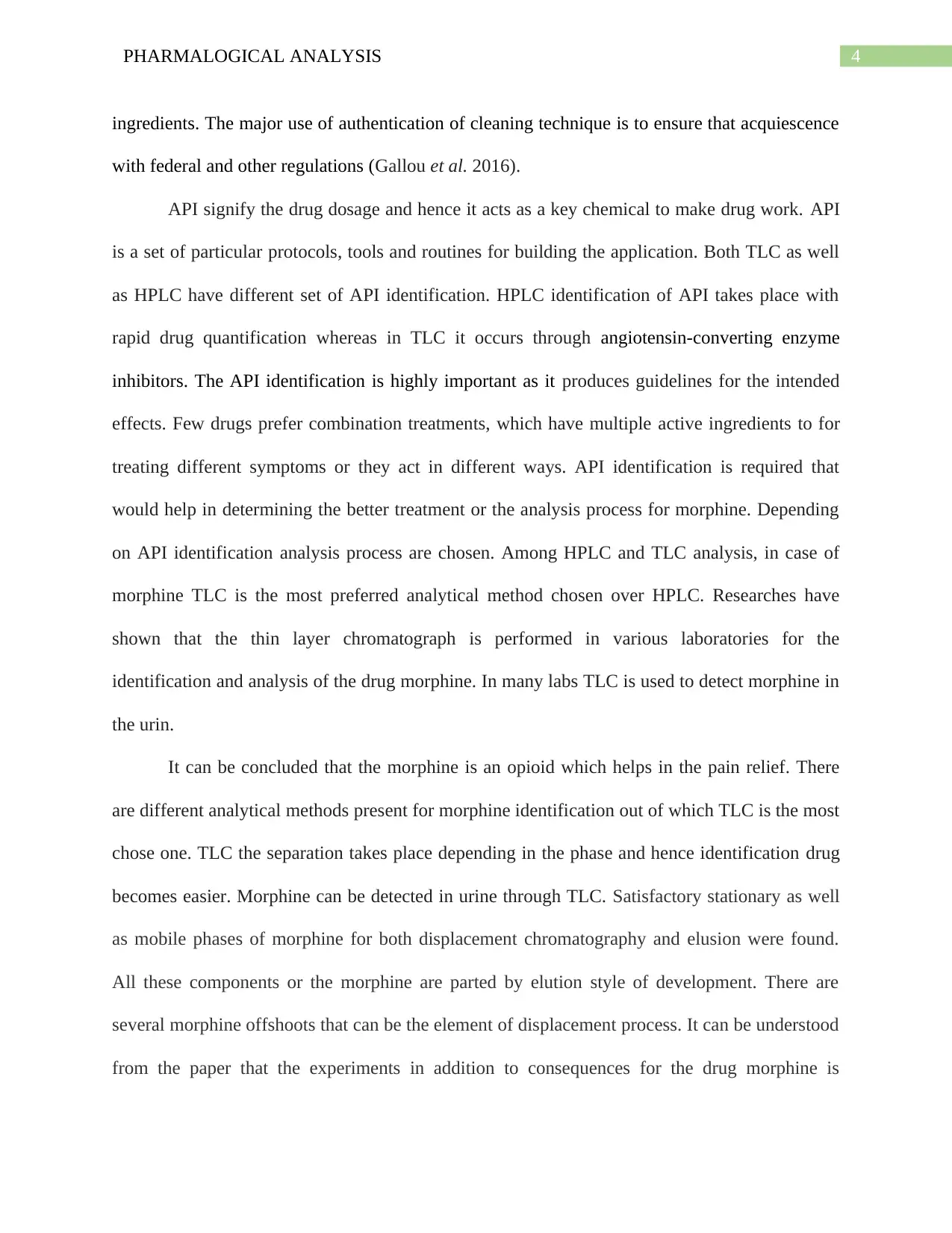
Fig 2: morphine and codeine TLC pattern (Bernard-Savary and Poole 2015)
The TLC pattern in Fig 2 is of codeine as well as morphine. Column A represents
standard codeine, B column showed standard morphine, C column showed the mixture of
codeine and morphine and D column shows standard morphine. The above image showed that
the morphine and codeine have different phase separation.
Comparison of the analytical method
Active pharmaceutical ingredient (API) can be identified by TLC as well as HPLC. TLC
along various solvent proved that morphine medications never complies and provide stringer
evidence towards the pharmaceutical elements. TLC have the capability to separate various non-
volatile mixture that can monitor the reaction progress, compound identification and purity
determination for an API (Bharate, Bharate and Bajaj 2016). API analysis occurs through
angiotensin-converting enzyme inhibitors. TLC analysis of morphine in pharmaceuticals besides
using this system of analysis for future development of the bioanalytical systems.
High performance liquid chromatography was established and can be authorised for
instantaneous quantification of morphine samples. API identification requires pharmaceuticals
equipment requires proper cleaning to prevent contamination along with pharmaceutical
tabler-icon-diamond-filled.svg

Paraphrase This Document

Need a fresh take? Get an instant paraphrase of this document with our AI Paraphraser
Document Page
4PHARMALOGICAL ANALYSIS
ingredients. The major use of authentication of cleaning technique is to ensure that acquiescence
with federal and other regulations (Gallou et al. 2016).
API signify the drug dosage and hence it acts as a key chemical to make drug work. API
is a set of particular protocols, tools and routines for building the application. Both TLC as well
as HPLC have different set of API identification. HPLC identification of API takes place with
rapid drug quantification whereas in TLC it occurs through angiotensin-converting enzyme
inhibitors. The API identification is highly important as it produces guidelines for the intended
effects. Few drugs prefer combination treatments, which have multiple active ingredients to for
treating different symptoms or they act in different ways. API identification is required that
would help in determining the better treatment or the analysis process for morphine. Depending
on API identification analysis process are chosen. Among HPLC and TLC analysis, in case of
morphine TLC is the most preferred analytical method chosen over HPLC. Researches have
shown that the thin layer chromatograph is performed in various laboratories for the
identification and analysis of the drug morphine. In many labs TLC is used to detect morphine in
the urin.
It can be concluded that the morphine is an opioid which helps in the pain relief. There
are different analytical methods present for morphine identification out of which TLC is the most
chose one. TLC the separation takes place depending in the phase and hence identification drug
becomes easier. Morphine can be detected in urine through TLC. Satisfactory stationary as well
as mobile phases of morphine for both displacement chromatography and elusion were found.
All these components or the morphine are parted by elution style of development. There are
several morphine offshoots that can be the element of displacement process. It can be understood
from the paper that the experiments in addition to consequences for the drug morphine is
Document Page
5PHARMALOGICAL ANALYSIS
determined either by straight-phase as well as reverse phase chromatography. In both this
chromatography with both displacement and elusion types of expansions are detailed.
Document Page
6PHARMALOGICAL ANALYSIS
References
Bernard-Savary, P. and Poole, C.F., 2015. Instrument platforms for thin-layer chromatography.
Journal of Chromatography A, 1421, pp.184-202.
Bernard-Savary, P. and Poole, C.F., 2015. Instrument platforms for thin-layer chromatography.
Journal of Chromatography A, 1421, pp.184-202.
Bharate, S.S., Bharate, S.B. and Bajaj, A.N., 2016. Interactions and incompatibilities of
pharmaceutical excipients with active pharmaceutical ingredients: a comprehensive review.
Journal of Excipients and Food Chemicals, 1(3), p.1131.
Boligon, A.A., Piana, M., Kubica, T.F., Mario, D.N., Dalmolin, T.V., Bonez, P.C., Weiblen, R.,
Lovato, L., Alves, S.H., Campos, M.M. and Athayde, M.L., 2015. HPLC analysis and
antimicrobial, antimycobacterial and antiviral activities of Tabernaemontana catharinensis A.
DC. Journal of Applied Biomedicine, 13(1), pp.7-18.
Coskun, O., 2016. Separation techniques: chromatography. Northern clinics of Istanbul, 3(2),
p.156.
Gallou, F., Isley, N.A., Ganic, A., Onken, U. and Parmentier, M., 2016. Surfactant technology
applied toward an active pharmaceutical ingredient: more than a simple green chemistry
advance. Green Chemistry, 18(1), pp.14-19.
Liu, X., Wang, C., Wu, Q. and Wang, Z., 2016. Magnetic porous carbon-based solid-phase
extraction of carbamates prior to HPLC analysis. Microchimica Acta, 183(1), pp.415-421.
Talemi, R.P. and Mashhadizadeh, M.H., 2015. A novel morphine electrochemical biosensor
based on intercalative and electrostatic interaction of morphine with double strand DNA
immobilized onto a modified Au electrode. Talanta, 131, pp.460-466.
tabler-icon-diamond-filled.svg

Paraphrase This Document

Need a fresh take? Get an instant paraphrase of this document with our AI Paraphraser
Document Page
7PHARMALOGICAL ANALYSIS
Wiffen, P.J., Wee, B. and Moore, R.A., 2016. Oral morphine for cancer pain. Cochrane
Database of Systematic Reviews, (4).
chevron_up_icon
1 out of 8
circle_padding
hide_on_mobile
zoom_out_icon
[object Object]