GSBS6003 - Singapore's Political Economy and Attracting FDI
VerifiedAdded on 2023/06/03
|12
|2040
|283
Case Study
AI Summary
This case study explores the political economy of Singapore and its attractiveness for foreign direct investment (FDI). It analyzes the political, economic, and legal factors that contribute to Singapore's appeal to foreign investors. The report highlights Singapore's political stability, pro-business environment, economic freedom, and transparent legal framework. It also examines the country's FDI statistics, major investment contributors, and initiatives to enhance FDI. The analysis concludes that Singapore's developed political economy, characterized by government stability, economic development, and a supportive legal process, significantly fosters FDI and boosts the economy.
Running Head: POLITICAL ECONOMY AND FDI OF SINGAPORE
POLITICAL ECONOMY AND FDI OF SINGAPORE
Name of the Student:
Name of University:
Author Note:
POLITICAL ECONOMY AND FDI OF SINGAPORE
Name of the Student:
Name of University:
Author Note:

Paraphrase This Document
Need a fresh take? Get an instant paraphrase of this document with our AI Paraphraser
1POLITICAL ECONOMY AND FDI OF SINGAPORE
Executive Summary
Singapore is highly popular for its business environment and business infrastructure in the
international arena. Recently the country ranked second by the World Bank and puts focus on
attracting more foreign direct investment. In this regard, the purpose of this report is to analyse
the political economy of Singapore and find out the political, economic and legal aspects that are
intricately attract the foreign investors. Moreover, the report also encompasses the existing
Foreign Direct Investment (FDI) statistics of Singapore and tries to find out more opportunities
for the multi-national companies to visit, invest and participate in the economic growth of the
country.
Executive Summary
Singapore is highly popular for its business environment and business infrastructure in the
international arena. Recently the country ranked second by the World Bank and puts focus on
attracting more foreign direct investment. In this regard, the purpose of this report is to analyse
the political economy of Singapore and find out the political, economic and legal aspects that are
intricately attract the foreign investors. Moreover, the report also encompasses the existing
Foreign Direct Investment (FDI) statistics of Singapore and tries to find out more opportunities
for the multi-national companies to visit, invest and participate in the economic growth of the
country.
2POLITICAL ECONOMY AND FDI OF SINGAPORE
Table of Contents
Introduction......................................................................................................................................4
Political impact on FDI....................................................................................................................4
Political Stability.........................................................................................................................4
Impact on FDI..............................................................................................................................4
Economic implication on FDI.........................................................................................................5
Economic condition.....................................................................................................................5
Impact on FDI..............................................................................................................................6
Legal process relate to FDI..............................................................................................................6
Legal framework in Singapore....................................................................................................6
Inclined towards FDI...................................................................................................................6
Conclusion.......................................................................................................................................7
References........................................................................................................................................8
Appendices......................................................................................................................................9
Appendix 1...................................................................................................................................9
Appendix 2...................................................................................................................................9
Appendix 3.................................................................................................................................10
Appendix 4.................................................................................................................................10
Appendix 5.................................................................................................................................11
Table of Contents
Introduction......................................................................................................................................4
Political impact on FDI....................................................................................................................4
Political Stability.........................................................................................................................4
Impact on FDI..............................................................................................................................4
Economic implication on FDI.........................................................................................................5
Economic condition.....................................................................................................................5
Impact on FDI..............................................................................................................................6
Legal process relate to FDI..............................................................................................................6
Legal framework in Singapore....................................................................................................6
Inclined towards FDI...................................................................................................................6
Conclusion.......................................................................................................................................7
References........................................................................................................................................8
Appendices......................................................................................................................................9
Appendix 1...................................................................................................................................9
Appendix 2...................................................................................................................................9
Appendix 3.................................................................................................................................10
Appendix 4.................................................................................................................................10
Appendix 5.................................................................................................................................11
⊘ This is a preview!⊘
Do you want full access?
Subscribe today to unlock all pages.

Trusted by 1+ million students worldwide

3POLITICAL ECONOMY AND FDI OF SINGAPORE
Paraphrase This Document
Need a fresh take? Get an instant paraphrase of this document with our AI Paraphraser
4POLITICAL ECONOMY AND FDI OF SINGAPORE
Introduction
Singapore is considered to be one of the best countries in terms of ease of doing business.
As far as the World Bank ranking is concerned, it can be argued that Singapore ranks second.
There are a number of advantages that the country possesses in terms of flexibility in business,
high quality infrastructure and high value added sectors such as ICT, finance and
pharmaceuticals. In this context, the purpose of this report is to analyse the political economy
and FDI framework that attract the foreign investors and companies extensively. Moreover, the
political economy of the country is also divided into political, economic and legal aspects that
help to foster a better understanding regarding the topic.
Political impact on FDI
Political Stability
According to Agnello et al. (2017) it can be argued that Singapore enjoys a stable
political environment since 2010. In this context, the political stability of a country can be
identified with the help of the strong political cohesion and absence of violence and terrorism. As
far as the development in Singapore is concerned, there is 99.52% progress inside the country
that facilitates a better political environment (Hornidge & Kurfürst, 2015). As a matter of fact,
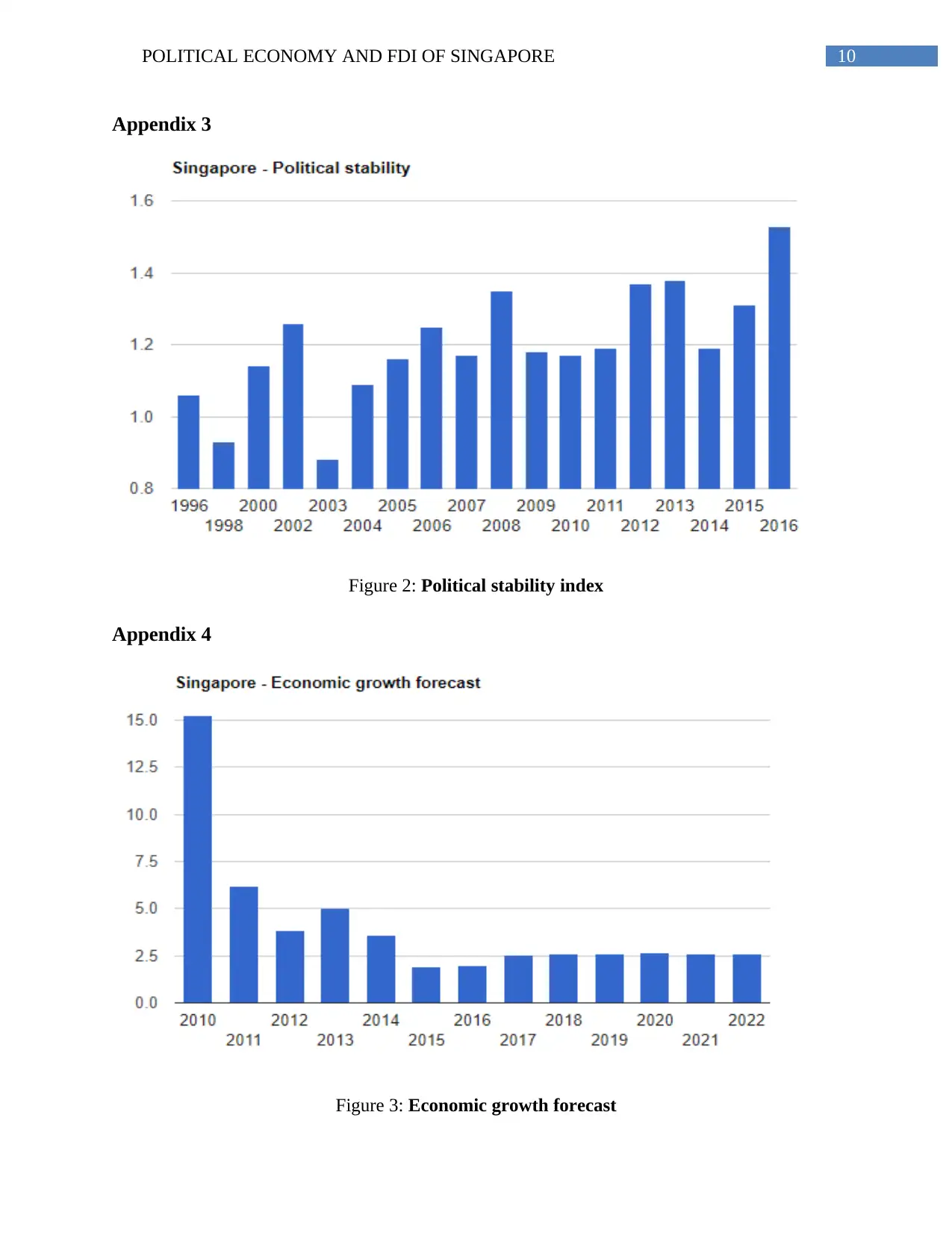
the average value for Singapore is also increased in a rapid pace from 1.2 points in 2003 to 1.53
in 2016. Figure 1 shows that there was a gradual increase in the stability graph of the country
that enabled Singapore to develop itself significantly. Furthermore, it can be asserted that the
political stability index proves that 2.5 point is considered to be so strong and -2.5 point is
identified as weak (channelnewsasia.com, 2016). In this course, the point of 1.53 may be
identified as not enough to ensure the political stability but in the context of Singapore, this point
is highly promising because the country is started to take off towards political stability and
development.
Impact on FDI
As a result of the political stability the FDI inflow is also escalating in a rapid way. As
per the United Nations Conference on Trade and Development (UNCTAD) report in 2018 it
Introduction
Singapore is considered to be one of the best countries in terms of ease of doing business.
As far as the World Bank ranking is concerned, it can be argued that Singapore ranks second.
There are a number of advantages that the country possesses in terms of flexibility in business,
high quality infrastructure and high value added sectors such as ICT, finance and
pharmaceuticals. In this context, the purpose of this report is to analyse the political economy
and FDI framework that attract the foreign investors and companies extensively. Moreover, the
political economy of the country is also divided into political, economic and legal aspects that
help to foster a better understanding regarding the topic.
Political impact on FDI
Political Stability
According to Agnello et al. (2017) it can be argued that Singapore enjoys a stable
political environment since 2010. In this context, the political stability of a country can be
identified with the help of the strong political cohesion and absence of violence and terrorism. As
far as the development in Singapore is concerned, there is 99.52% progress inside the country
that facilitates a better political environment (Hornidge & Kurfürst, 2015). As a matter of fact,
the average value for Singapore is also increased in a rapid pace from 1.2 points in 2003 to 1.53
in 2016. Figure 1 shows that there was a gradual increase in the stability graph of the country
that enabled Singapore to develop itself significantly. Furthermore, it can be asserted that the
political stability index proves that 2.5 point is considered to be so strong and -2.5 point is
identified as weak (channelnewsasia.com, 2016). In this course, the point of 1.53 may be
identified as not enough to ensure the political stability but in the context of Singapore, this point
is highly promising because the country is started to take off towards political stability and
development.
Impact on FDI
As a result of the political stability the FDI inflow is also escalating in a rapid way. As
per the United Nations Conference on Trade and Development (UNCTAD) report in 2018 it
5POLITICAL ECONOMY AND FDI OF SINGAPORE
can be argued that Singapore is the fifth largest recipient of FDI inflow in the world with an
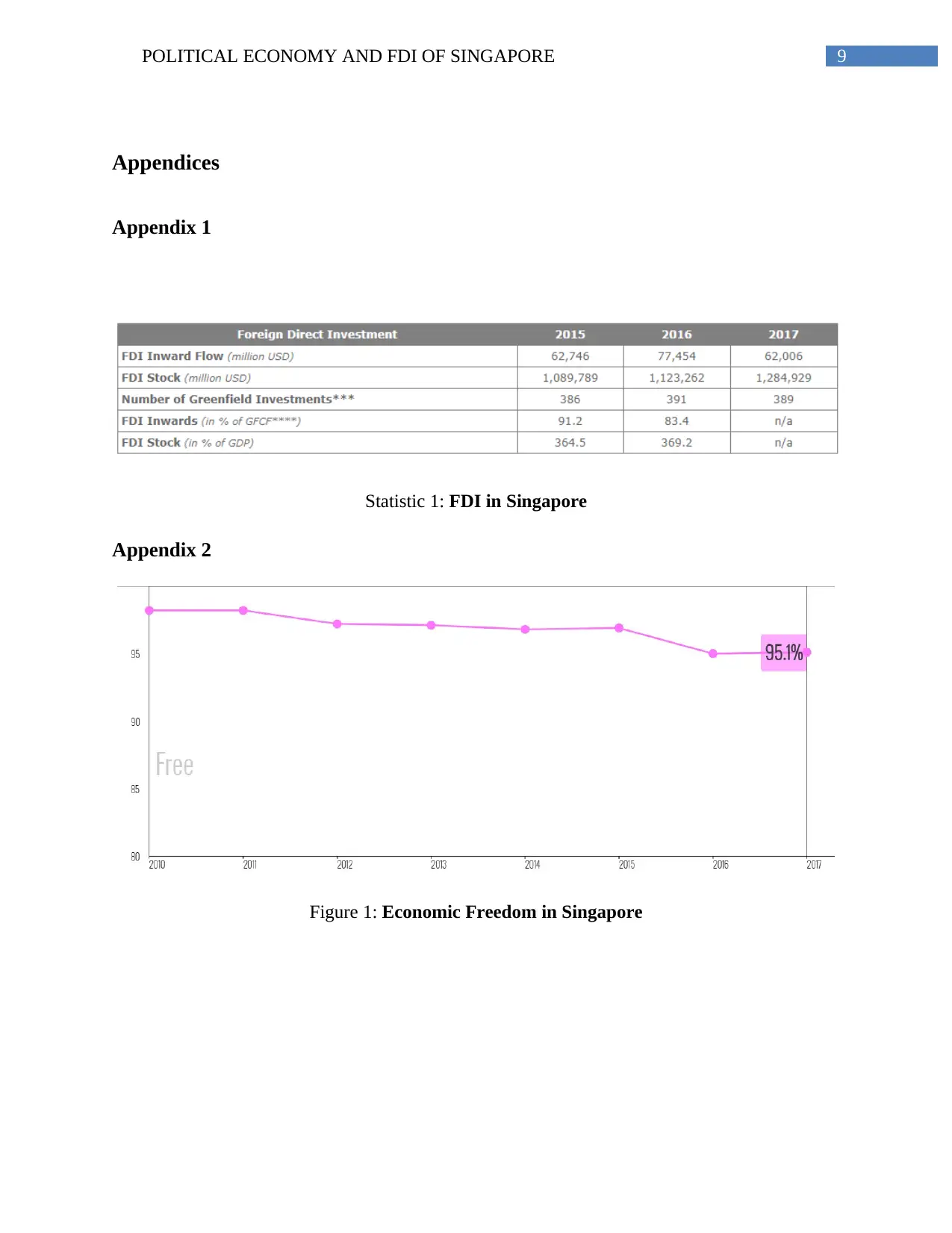
amount of 77,454 million USD in 2016 (En.portal.santandertrade.com, 2018). The main FDI
contributors in Singapore are United States, British Virgin Islands and the Netherlands.
Moreover, there are other countries like Japan, Cayman Islands and United Kingdom who are
invested exquisitely in Singapore.
In this regard, the Singapore government also inclines towards establishing pro-business
environment. Transparency and business security are also important factors in this context.
Business licensing, taxes and the business friendly atmosphere drive the foreign investors to visit
and invest robustly into the country. Henceforth, the Global Financial Index 2016 claimed that
Singapore was the Asia’s top financial centre and the World Economic Forum’s report on The
Global Competitiveness 2015-2016 awarded Singapore with the title of one of the most
competitive countries around the world (Hornidge & Kurfürst, 2015).
Economic implication on FDI
Economic condition
The economic freedom is considered to be one of the major characteristics that helps the
country to bring more FDI inflow. The economic freedom score of the country is 88.8 and
making Singapore the second freest business freedom country across the world. Moreover,
among the 43 countries in the Asia-Pacific region Singapore scores more than the regional and
world average. The remarkably open and free market in Singapore is referred as one of the
lucrative business hub for the foreign business giants and subsequently the economic
development is also in progress with the solid economic background. In this context, it is
important to understand that the GDP of Singapore is accounted $492.6 billion with a steady
growth of 2% (Tang & Abosedra, 2014). Furthermore, the unemployment percentage is very low
in Singapore with a rate of 1.8% that proves the economic stability inside the country. In fact, the
inflation rate is less than 1% with an FDI inflow of $61.6 billion (Chiu, 2018). As a matter of
fact, the industrial policy framework leads to the promotion of economic development that
attracts the foreign investors in a robust manner. With this, the economic liberation and the
international trade fosters a better environment for the country to partake significantly in the
international trade and commerce.
can be argued that Singapore is the fifth largest recipient of FDI inflow in the world with an
amount of 77,454 million USD in 2016 (En.portal.santandertrade.com, 2018). The main FDI
contributors in Singapore are United States, British Virgin Islands and the Netherlands.
Moreover, there are other countries like Japan, Cayman Islands and United Kingdom who are
invested exquisitely in Singapore.
In this regard, the Singapore government also inclines towards establishing pro-business
environment. Transparency and business security are also important factors in this context.
Business licensing, taxes and the business friendly atmosphere drive the foreign investors to visit
and invest robustly into the country. Henceforth, the Global Financial Index 2016 claimed that
Singapore was the Asia’s top financial centre and the World Economic Forum’s report on The
Global Competitiveness 2015-2016 awarded Singapore with the title of one of the most
competitive countries around the world (Hornidge & Kurfürst, 2015).
Economic implication on FDI
Economic condition
The economic freedom is considered to be one of the major characteristics that helps the
country to bring more FDI inflow. The economic freedom score of the country is 88.8 and
making Singapore the second freest business freedom country across the world. Moreover,
among the 43 countries in the Asia-Pacific region Singapore scores more than the regional and
world average. The remarkably open and free market in Singapore is referred as one of the
lucrative business hub for the foreign business giants and subsequently the economic
development is also in progress with the solid economic background. In this context, it is
important to understand that the GDP of Singapore is accounted $492.6 billion with a steady
growth of 2% (Tang & Abosedra, 2014). Furthermore, the unemployment percentage is very low
in Singapore with a rate of 1.8% that proves the economic stability inside the country. In fact, the
inflation rate is less than 1% with an FDI inflow of $61.6 billion (Chiu, 2018). As a matter of
fact, the industrial policy framework leads to the promotion of economic development that
attracts the foreign investors in a robust manner. With this, the economic liberation and the
international trade fosters a better environment for the country to partake significantly in the
international trade and commerce.
⊘ This is a preview!⊘
Do you want full access?
Subscribe today to unlock all pages.
Trusted by 1+ million students worldwide
6POLITICAL ECONOMY AND FDI OF SINGAPORE
Impact on FDI
In case of increasing the FDI, it is important for the country to develop its economic
infrastructure and market policy in a liberal manner. In this regard, trade is identified as an
extremely important factor for the Singapore economy. The combined value of exports and
imports equals 318% of Singaporean GDP. As per the report, it can be seen that the business
freedom is 90.9% (En.portal.santandertrade.com, 2018). As a matter of fact, the investment
freedom increases in an outstanding manner in the course of 8 year where in 2010 the investment
freedom percentage was 75% and in 2018 it increases nearly 10% and accounted 85%. This
progress in the investment freedom boosts the foreign investors to invest more in the country.
Legal process relate to FDI
Legal framework in Singapore
As far as the regulatory framework of Singaporean business, there is transparency and
effective legal framework can be seen. It is more based on the benefits of both the labours and
the labours. The Labour Laws safeguards the interests of the workers and employees. Moreover,
it also encapsulates the framework regarding free hiring and firing practices. In fact, the
government endorsement and financial assistance make it more effective and efficient for
Singapore to make a better business environment. Moreover, it can be stated that Singapore
ranks second in the East Asia and Pacific region (Yeung, 2017) on the basis of enforcing
contracts and the government always encourages new business organisations to come and invest
in the market that drives the country to rank 6th in the East Asia and pacific region (Lin & Ewing-
Chow, 2016). The legal stances that the Singaporean legislation have practiced in its business
market is quite effective and lucrative because it fulfil the interests of both the employees and the
organisations as well (mom.gov.sg, 2018).
Inclined towards FDI
The FDI enhancement procedure was initiated in 1961 with the Economic Expansion
Incentives Act. In 2010 the act was amended and provide advantages to the technical and
professional services. Moreover, the Competition Act was introduced in 2004 with the purpose
to promote innovation and competitiveness in the Singapore market (Weeks, Mandal & Sen,
2017). Besides this, the Bankruptcy Act of 2010 safeguards the interests of the business
Impact on FDI
In case of increasing the FDI, it is important for the country to develop its economic
infrastructure and market policy in a liberal manner. In this regard, trade is identified as an
extremely important factor for the Singapore economy. The combined value of exports and
imports equals 318% of Singaporean GDP. As per the report, it can be seen that the business
freedom is 90.9% (En.portal.santandertrade.com, 2018). As a matter of fact, the investment
freedom increases in an outstanding manner in the course of 8 year where in 2010 the investment
freedom percentage was 75% and in 2018 it increases nearly 10% and accounted 85%. This
progress in the investment freedom boosts the foreign investors to invest more in the country.
Legal process relate to FDI
Legal framework in Singapore
As far as the regulatory framework of Singaporean business, there is transparency and
effective legal framework can be seen. It is more based on the benefits of both the labours and
the labours. The Labour Laws safeguards the interests of the workers and employees. Moreover,
it also encapsulates the framework regarding free hiring and firing practices. In fact, the
government endorsement and financial assistance make it more effective and efficient for
Singapore to make a better business environment. Moreover, it can be stated that Singapore
ranks second in the East Asia and Pacific region (Yeung, 2017) on the basis of enforcing
contracts and the government always encourages new business organisations to come and invest
in the market that drives the country to rank 6th in the East Asia and pacific region (Lin & Ewing-
Chow, 2016). The legal stances that the Singaporean legislation have practiced in its business
market is quite effective and lucrative because it fulfil the interests of both the employees and the
organisations as well (mom.gov.sg, 2018).
Inclined towards FDI
The FDI enhancement procedure was initiated in 1961 with the Economic Expansion
Incentives Act. In 2010 the act was amended and provide advantages to the technical and
professional services. Moreover, the Competition Act was introduced in 2004 with the purpose
to promote innovation and competitiveness in the Singapore market (Weeks, Mandal & Sen,
2017). Besides this, the Bankruptcy Act of 2010 safeguards the interests of the business
Paraphrase This Document
Need a fresh take? Get an instant paraphrase of this document with our AI Paraphraser
7POLITICAL ECONOMY AND FDI OF SINGAPORE
companies and provide a pre-bankruptcy payment scheme. Furthermore, the Free Trade
Agreement (FTA) with the other countries also facilitates a better environment for doing
business in Singapore.
Conclusion
Therefore, from the above discussion, it can be argued that the political economy of
Singapore is developed with the purpose to encourage more foreign direct investment. In the
political sphere the stability in the government and the intention to make better business market
is very promising and enthusiastic. On the other hand, the economic approach ascribes that the
economic development with a free trade framework leads the country to get more foreign
investment. The legal process also supports the FDI framework intricately. Henceforth, it can be
concluded that the political economy of Singapore helps to foster more amount of FDI in the
business and boosts the economy emphatically.
companies and provide a pre-bankruptcy payment scheme. Furthermore, the Free Trade
Agreement (FTA) with the other countries also facilitates a better environment for doing
business in Singapore.
Conclusion
Therefore, from the above discussion, it can be argued that the political economy of
Singapore is developed with the purpose to encourage more foreign direct investment. In the
political sphere the stability in the government and the intention to make better business market
is very promising and enthusiastic. On the other hand, the economic approach ascribes that the
economic development with a free trade framework leads the country to get more foreign
investment. The legal process also supports the FDI framework intricately. Henceforth, it can be
concluded that the political economy of Singapore helps to foster more amount of FDI in the
business and boosts the economy emphatically.
8POLITICAL ECONOMY AND FDI OF SINGAPORE
References
Agnello, L., Castro, V., Jalles, J. T., & Sousa, R. M. (2017). Income inequality, fiscal stimuli and
political (in) stability. International Tax and Public Finance, 24(3), 484-511.
channelnewsasia.com. (2016). 5 key principles for Singapore's political system: PM Lee.
Retrieved from https://www.channelnewsasia.com/news/singapore/5-key-principles-for-
singapore-s-political-system-pm-lee-8209578
Chiu, S. W. K. (2018). City states in the global economy: Industrial restructuring in Hong Kong
and Singapore. Routledge.
En.portal.santandertrade.com. (2018). Foreign investment in Singapore - Santandertrade.com.
Retrieved from https://en.portal.santandertrade.com/establish-overseas/singapore/foreign-
investment
Hornidge, A. K., & Kurfürst, S. (2015). Envisioning the Future. Negotiating Public Space in
Hanoi and Singapore. Internationales Asienforum, 42(3-4), 345-369.
Lin, L., & Ewing-Chow, M. (2016). The Doing Business Index on Minority Investor Protection:
The Case of Singapore. Sing. J. Legal Stud., 46.
mom.gov.sg. (2018). Starting a business in Singapore. Retrieved from
https://www.mom.gov.sg/working-in-singapore/starting-a-business
Tang, C. F., & Abosedra, S. (2014). The impacts of tourism, energy consumption and political
instability on economic growth in the MENA countries. Energy Policy, 68, 458-464.
Weeks, K., Mandal, P., & Sen, K. (2017). Advancements in Technology and Potential Impacts
on Port Automations Decisions: The Case of Port of Singapore. In Entrepreneurship in
Technology for ASEAN (pp. 127-137). Springer, Singapore.
Yeung, H. W. C. (2017). The political economy of transnational corporations: a study of the
regionalization of Singaporean firms. In Singapore (pp. 57-84). Routledge.
References
Agnello, L., Castro, V., Jalles, J. T., & Sousa, R. M. (2017). Income inequality, fiscal stimuli and
political (in) stability. International Tax and Public Finance, 24(3), 484-511.
channelnewsasia.com. (2016). 5 key principles for Singapore's political system: PM Lee.
Retrieved from https://www.channelnewsasia.com/news/singapore/5-key-principles-for-
singapore-s-political-system-pm-lee-8209578
Chiu, S. W. K. (2018). City states in the global economy: Industrial restructuring in Hong Kong
and Singapore. Routledge.
En.portal.santandertrade.com. (2018). Foreign investment in Singapore - Santandertrade.com.
Retrieved from https://en.portal.santandertrade.com/establish-overseas/singapore/foreign-
investment
Hornidge, A. K., & Kurfürst, S. (2015). Envisioning the Future. Negotiating Public Space in
Hanoi and Singapore. Internationales Asienforum, 42(3-4), 345-369.
Lin, L., & Ewing-Chow, M. (2016). The Doing Business Index on Minority Investor Protection:
The Case of Singapore. Sing. J. Legal Stud., 46.
mom.gov.sg. (2018). Starting a business in Singapore. Retrieved from
https://www.mom.gov.sg/working-in-singapore/starting-a-business
Tang, C. F., & Abosedra, S. (2014). The impacts of tourism, energy consumption and political
instability on economic growth in the MENA countries. Energy Policy, 68, 458-464.
Weeks, K., Mandal, P., & Sen, K. (2017). Advancements in Technology and Potential Impacts
on Port Automations Decisions: The Case of Port of Singapore. In Entrepreneurship in
Technology for ASEAN (pp. 127-137). Springer, Singapore.
Yeung, H. W. C. (2017). The political economy of transnational corporations: a study of the
regionalization of Singaporean firms. In Singapore (pp. 57-84). Routledge.
⊘ This is a preview!⊘
Do you want full access?
Subscribe today to unlock all pages.
Trusted by 1+ million students worldwide
9POLITICAL ECONOMY AND FDI OF SINGAPORE
Appendices
Appendix 1
Statistic 1: FDI in Singapore
Appendix 2
Figure 1: Economic Freedom in Singapore
Appendices
Appendix 1
Statistic 1: FDI in Singapore
Appendix 2
Figure 1: Economic Freedom in Singapore
Paraphrase This Document
Need a fresh take? Get an instant paraphrase of this document with our AI Paraphraser
10POLITICAL ECONOMY AND FDI OF SINGAPORE
Appendix 3
Figure 2: Political stability index
Appendix 4
Figure 3: Economic growth forecast
Appendix 3
Figure 2: Political stability index
Appendix 4
Figure 3: Economic growth forecast
11POLITICAL ECONOMY AND FDI OF SINGAPORE
Appendix 5
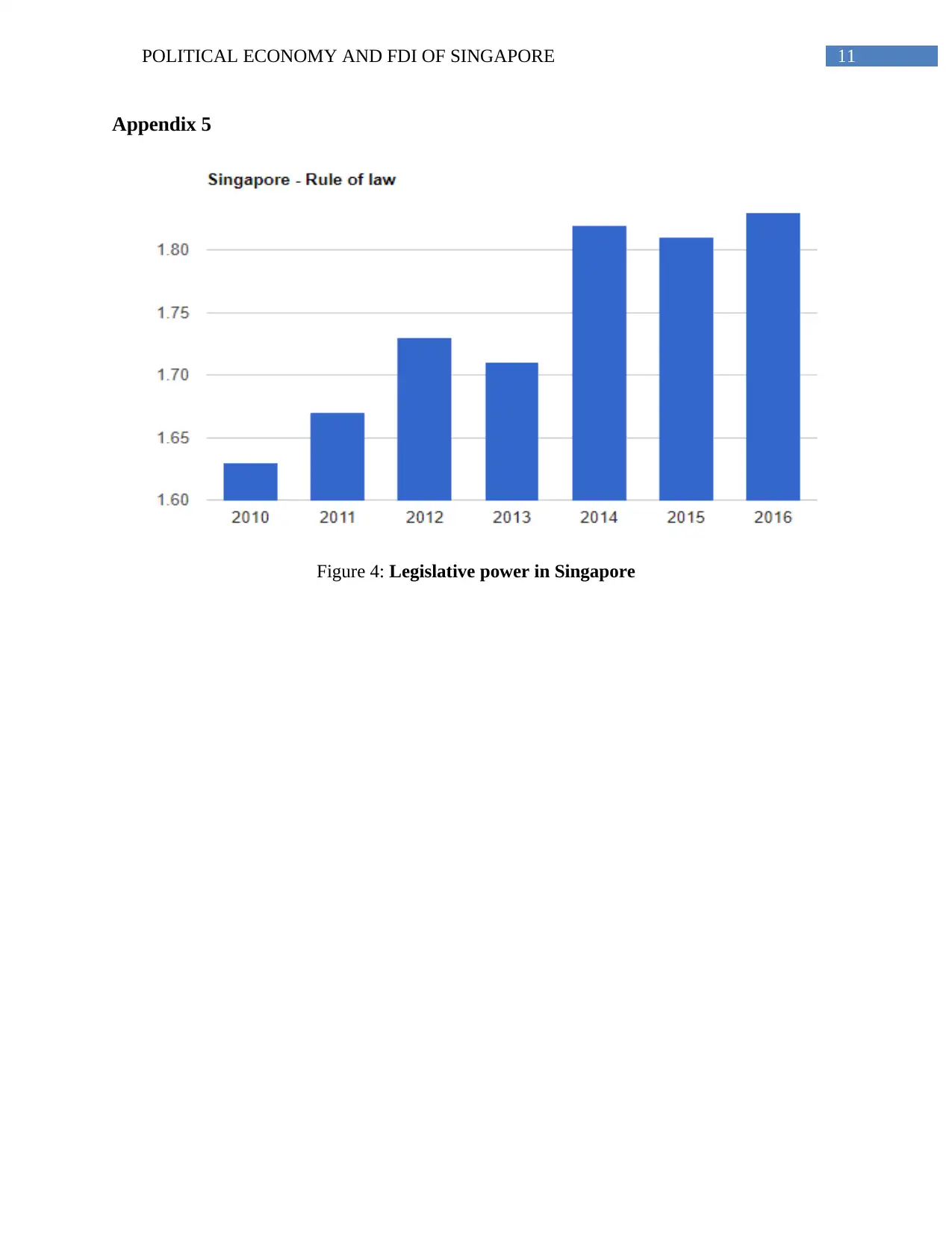
Figure 4: Legislative power in Singapore
Appendix 5
Figure 4: Legislative power in Singapore
⊘ This is a preview!⊘
Do you want full access?
Subscribe today to unlock all pages.
Trusted by 1+ million students worldwide

1 out of 12


Related Documents


Your All-in-One AI-Powered Toolkit for Academic Success.
+13062052269
info@desklib.com
Available 24*7 on WhatsApp / Email
![[object Object]](/_next/static/media/star-bottom.7253800d.svg)
Unlock your academic potential
Copyright © 2020–2026 A2Z Services. All Rights Reserved. Developed and managed by ZUCOL.