Factors Influencing Asthma Prevalence in WA, Australia: Report
VerifiedAdded on 2020/02/18
|27
|5482
|184
Report
AI Summary
This report provides a comprehensive analysis of asthma prevalence in Western Australia, exploring various factors influencing its incidence. It begins with an introduction highlighting the global and Australian context of asthma, including statistics on prevalence and mortality. The report delves into the mechanisms of airway damage caused by asthma and examines environmental factors such as air pollution, second-hand smoke (SHS), allergens, and occupational exposures. It presents strategic analyses of air pollution and allergen impacts, including statistical methods and results from studies conducted in Western Australia. The study also investigates the effects of SHS exposure on asthma patients and discusses policy implications for managing asthma in WA. The report concludes with a summary of key findings and references relevant literature.
Prevalence of Asthma in WA
September 9
2017
September 9
2017

Paraphrase This Document
Need a fresh take? Get an instant paraphrase of this document with our AI Paraphraser
Prevalence of Asthma in WA 2
Table of Contents
Prevalence of Asthma in WA, Australia, and World.....................................................................................2
Introduction.................................................................................................................................................2
Airway Damage in Asthma...........................................................................................................................4
Factors affecting prevalence of asthma in WA, Australia and worldwide...................................................6
ENVIRONMENTAL FACTORS........................................................................................................................7
Strategically analysis of air pollution...........................................................................................................9
Result.........................................................................................................................................................12
Strategic analysis of allergens impact over asthma...................................................................................12
Statistical methods....................................................................................................................................13
Result.........................................................................................................................................................15
Estimates comparability............................................................................................................................16
SHS exposure effects on adults patients with asthma...............................................................................18
Policy implications for managing asthma in WA........................................................................................21
Conclusion.................................................................................................................................................22
References.................................................................................................................................................25
Table of Contents
Prevalence of Asthma in WA, Australia, and World.....................................................................................2
Introduction.................................................................................................................................................2
Airway Damage in Asthma...........................................................................................................................4
Factors affecting prevalence of asthma in WA, Australia and worldwide...................................................6
ENVIRONMENTAL FACTORS........................................................................................................................7
Strategically analysis of air pollution...........................................................................................................9
Result.........................................................................................................................................................12
Strategic analysis of allergens impact over asthma...................................................................................12
Statistical methods....................................................................................................................................13
Result.........................................................................................................................................................15
Estimates comparability............................................................................................................................16
SHS exposure effects on adults patients with asthma...............................................................................18
Policy implications for managing asthma in WA........................................................................................21
Conclusion.................................................................................................................................................22
References.................................................................................................................................................25
Prevalence of Asthma in WA 3
Prevalence of Asthma in WA, Australia, and World
Introduction
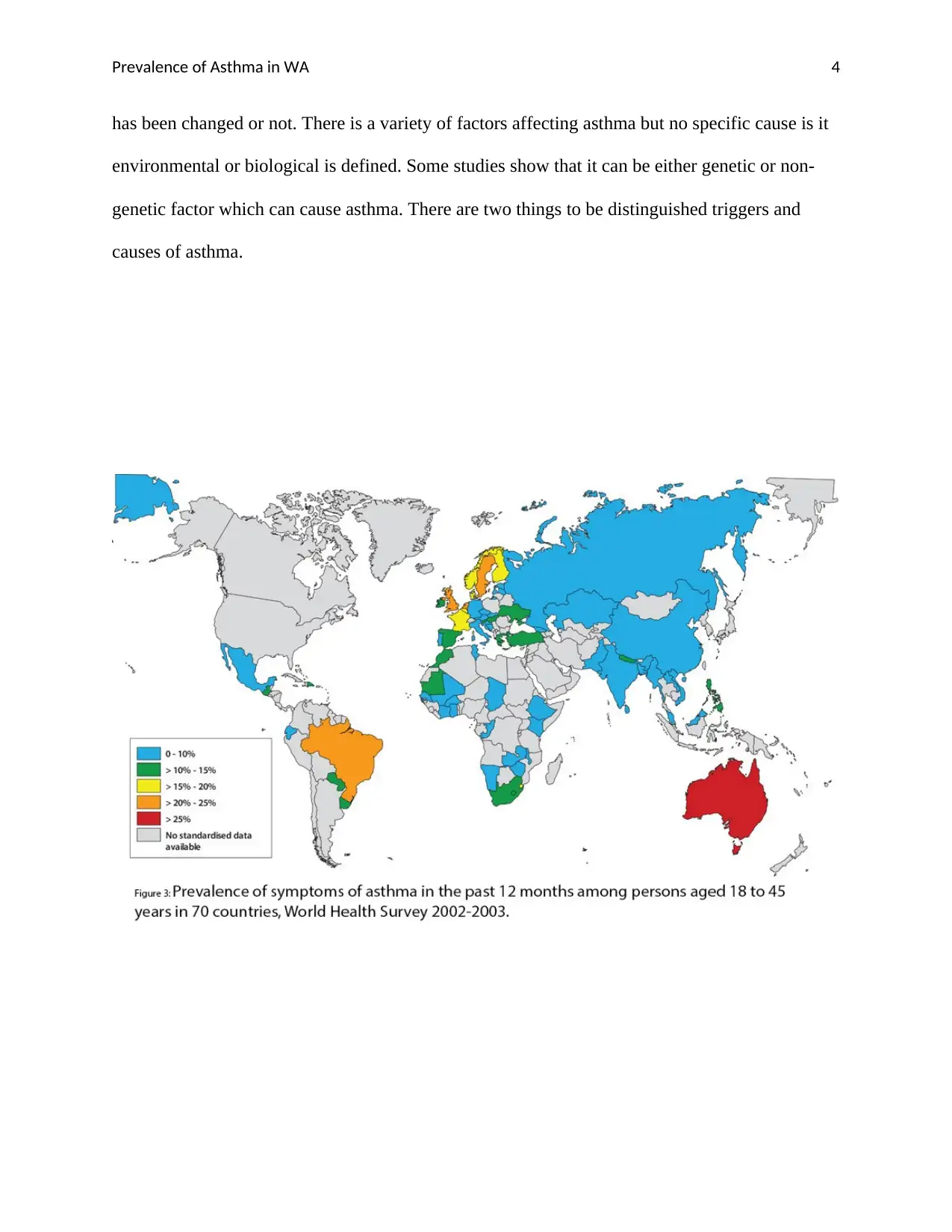
Patterns and types of asthma may be changing but admission in hospital rate is increasing in few
of the western countries. Most of the prevalence studies indicate that it is maximum in children
although their studies are based on some cumulative data collective from some western
countries. There is an estimate that worldwide 300 million people suffer from asthma, with
around 2, 50,000 deaths annually, all these deaths are premature and can be easily avoided.
As per few types of research, it is estimated that asthma patients will increase by 100 million by
2025. Few workplace conditions like gases, fumes and dust exposure are generally responsible
for 11% cases of asthma out of which 70% have allergies due to some or the other reason. It is an
essential that asthma becomes the global priority because it is the biggest burden of disease and
should be taken on top most priority by the governments (Shin and Lee 2017). We must also
focus on various factors which are stopping us from giving proper care to low income groups and
this can be done by strengthening our technologies efficiently. In Australia and Westerns
Australia, it is most common in children, few types of research show that there is no change in
the data of asthma among adults, but there are reports showing an increase in numbers of cases
of asthma among children. Government is equally working on to decrease this data by organizing
many awareness camps such as National Asthma Campaign. In 1981 a research was conducted
in Busseltone, Western Australia both the protocols objective and subjective were included in the
study, a total of 6000 people were asked to attend the survey out of which 3590 turned up (Shin
and Lee 2017). Later in 1990 again the same research was conducted to know whether the data
Prevalence of Asthma in WA, Australia, and World
Introduction
Patterns and types of asthma may be changing but admission in hospital rate is increasing in few
of the western countries. Most of the prevalence studies indicate that it is maximum in children
although their studies are based on some cumulative data collective from some western
countries. There is an estimate that worldwide 300 million people suffer from asthma, with
around 2, 50,000 deaths annually, all these deaths are premature and can be easily avoided.
As per few types of research, it is estimated that asthma patients will increase by 100 million by
2025. Few workplace conditions like gases, fumes and dust exposure are generally responsible
for 11% cases of asthma out of which 70% have allergies due to some or the other reason. It is an
essential that asthma becomes the global priority because it is the biggest burden of disease and
should be taken on top most priority by the governments (Shin and Lee 2017). We must also
focus on various factors which are stopping us from giving proper care to low income groups and
this can be done by strengthening our technologies efficiently. In Australia and Westerns
Australia, it is most common in children, few types of research show that there is no change in
the data of asthma among adults, but there are reports showing an increase in numbers of cases
of asthma among children. Government is equally working on to decrease this data by organizing
many awareness camps such as National Asthma Campaign. In 1981 a research was conducted
in Busseltone, Western Australia both the protocols objective and subjective were included in the
study, a total of 6000 people were asked to attend the survey out of which 3590 turned up (Shin
and Lee 2017). Later in 1990 again the same research was conducted to know whether the data
⊘ This is a preview!⊘
Do you want full access?
Subscribe today to unlock all pages.

Trusted by 1+ million students worldwide
Prevalence of Asthma in WA 4
has been changed or not. There is a variety of factors affecting asthma but no specific cause is it
environmental or biological is defined. Some studies show that it can be either genetic or non-
genetic factor which can cause asthma. There are two things to be distinguished triggers and
causes of asthma.
has been changed or not. There is a variety of factors affecting asthma but no specific cause is it
environmental or biological is defined. Some studies show that it can be either genetic or non-
genetic factor which can cause asthma. There are two things to be distinguished triggers and
causes of asthma.
Paraphrase This Document
Need a fresh take? Get an instant paraphrase of this document with our AI Paraphraser
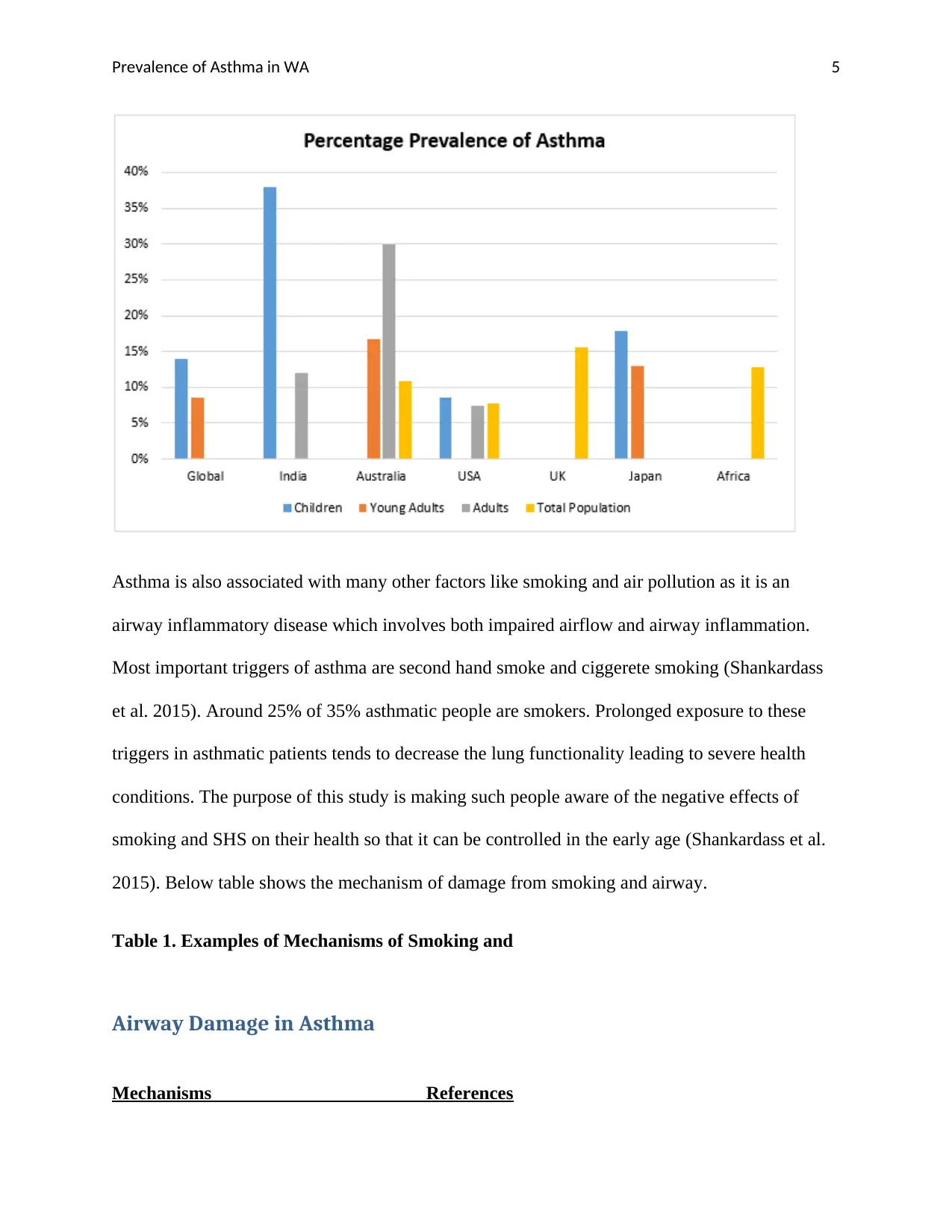
Prevalence of Asthma in WA 5
Asthma is also associated with many other factors like smoking and air pollution as it is an
airway inflammatory disease which involves both impaired airflow and airway inflammation.
Most important triggers of asthma are second hand smoke and ciggerete smoking (Shankardass
et al. 2015). Around 25% of 35% asthmatic people are smokers. Prolonged exposure to these
triggers in asthmatic patients tends to decrease the lung functionality leading to severe health
conditions. The purpose of this study is making such people aware of the negative effects of
smoking and SHS on their health so that it can be controlled in the early age (Shankardass et al.
2015). Below table shows the mechanism of damage from smoking and airway.
Table 1. Examples of Mechanisms of Smoking and
Airway Damage in Asthma
Mechanisms References
Asthma is also associated with many other factors like smoking and air pollution as it is an
airway inflammatory disease which involves both impaired airflow and airway inflammation.
Most important triggers of asthma are second hand smoke and ciggerete smoking (Shankardass
et al. 2015). Around 25% of 35% asthmatic people are smokers. Prolonged exposure to these
triggers in asthmatic patients tends to decrease the lung functionality leading to severe health
conditions. The purpose of this study is making such people aware of the negative effects of
smoking and SHS on their health so that it can be controlled in the early age (Shankardass et al.
2015). Below table shows the mechanism of damage from smoking and airway.
Table 1. Examples of Mechanisms of Smoking and
Airway Damage in Asthma
Mechanisms References
Prevalence of Asthma in WA 6
Toxin direct to the bronchial epithelium,
Causing oxidative damage 5
Release of proinflammatory mediators and
Increased epithelial permeability 6
Proinflammatory mediators and cytokines
InvolvedInterleukin-8 7–9, 10
Lipopolysaccharides 11
Leukotriene B4 7, 10
Prostaglandin E2 12
Angiopoietin-2 13
Eotaxin-1 14
Air pollution related to traffic is also the major contributor to asthma, although it causes minor
asthma and only around 13% people get affected by it. There is a common method used to
Toxin direct to the bronchial epithelium,
Causing oxidative damage 5
Release of proinflammatory mediators and
Increased epithelial permeability 6
Proinflammatory mediators and cytokines
InvolvedInterleukin-8 7–9, 10
Lipopolysaccharides 11
Leukotriene B4 7, 10
Prostaglandin E2 12
Angiopoietin-2 13
Eotaxin-1 14
Air pollution related to traffic is also the major contributor to asthma, although it causes minor
asthma and only around 13% people get affected by it. There is a common method used to
⊘ This is a preview!⊘
Do you want full access?
Subscribe today to unlock all pages.
Trusted by 1+ million students worldwide
Prevalence of Asthma in WA 7
identify the background pollution by taking an average of concentrations which are obtained
from a group of monitoring sites, however, the result is more accurate for people who are living
nearby the monitoring sites and it can also be biased if taken from problematic areas (St-Laurent
et al. 2008). In Australia only few research are there showing the relation between asthma and
ambient air pollution, although in 2005 a study was conducted in Sydney which showed some
association in both of them in spite of the low levels of air pollution, correlating to this research
area like Western Australia where levels of air pollution is much high the results will definitely
show the effects of asthma (St-Laurent et al. 2008).
Now in this paper, we will focus on the research work which will be the outcome of the data
collected from various sources. An exploratory analysis to investigate the relationship between
the prevalence of asthma and risk factors will be done.
Factors affecting prevalence of asthma in WA, Australia and worldwide
There are varieties of factors affecting asthma but no specific cause is it environmental or
biological is defined. Some studies show that it can be either genetic or non-genetic factor which
can cause asthma. There are two things to be distinguished triggers and causes of asthma.
Genetics- asthma usually runs in families and generally identical twins are more likely is prone
to the disease rather than non-identical twins. Although, the non-genetic factors resulted an
increase in disease asthma (Ma, Xiao and Knowles 2010). Maximum studies show that it is very
uncommon in Australia and Western Australia, only a few chunk of the population is affected by
genetic disorders and it is mainly seen in European countries where it is very weak to predict.
identify the background pollution by taking an average of concentrations which are obtained
from a group of monitoring sites, however, the result is more accurate for people who are living
nearby the monitoring sites and it can also be biased if taken from problematic areas (St-Laurent
et al. 2008). In Australia only few research are there showing the relation between asthma and
ambient air pollution, although in 2005 a study was conducted in Sydney which showed some
association in both of them in spite of the low levels of air pollution, correlating to this research
area like Western Australia where levels of air pollution is much high the results will definitely
show the effects of asthma (St-Laurent et al. 2008).
Now in this paper, we will focus on the research work which will be the outcome of the data
collected from various sources. An exploratory analysis to investigate the relationship between
the prevalence of asthma and risk factors will be done.
Factors affecting prevalence of asthma in WA, Australia and worldwide
There are varieties of factors affecting asthma but no specific cause is it environmental or
biological is defined. Some studies show that it can be either genetic or non-genetic factor which
can cause asthma. There are two things to be distinguished triggers and causes of asthma.
Genetics- asthma usually runs in families and generally identical twins are more likely is prone
to the disease rather than non-identical twins. Although, the non-genetic factors resulted an
increase in disease asthma (Ma, Xiao and Knowles 2010). Maximum studies show that it is very
uncommon in Australia and Western Australia, only a few chunk of the population is affected by
genetic disorders and it is mainly seen in European countries where it is very weak to predict.
Paraphrase This Document
Need a fresh take? Get an instant paraphrase of this document with our AI Paraphraser
Prevalence of Asthma in WA 8
Allergy- if a person is suffering from any type of allergy then regular exposure to air pollution,
dust and another negative element in the air can lead to asthma. In Australia around 11%
population is affected by asthma the reason may be the high level of air pollution (Ma, Xiao and
Knowles 2010). Generally, in low income and mid income countries, people are less prone to
such allergic disease as compared to high income countries.
Common triggers- there are few common triggers which affect the asthma patients most often,
tract infections by upper respiratory, including colds and also by exercising less, more exposure
to tobacco and smoking, having emotional stress at the acute level and consuming foods which
are more prone to allergies.
Few environmental factors are also there which can provoke asthma like inhaling allergens
which include dust particles, animal fur, and allergic particles in the workplace, cooking fumes,
cigarette smoke, vehicle fumes and few medicines.
ENVIRONMENTAL FACTORS
Second-hand smoke- In WA second and smoke is one of the causes of asthma in childhood or
adults. Exposure to tobacco smoke is dangerous and can cause frequent asthma attacks.pre natal
exposure is also important. It is considered that the prevalence of asthma can be reduced if this
SHS is reduced. Other exposures like cooking gas smoke and chimney smoke are less inherent
and generally effect in a less quantity (St-Laurent et al. 2008).
Allergy- if a person is suffering from any type of allergy then regular exposure to air pollution,
dust and another negative element in the air can lead to asthma. In Australia around 11%
population is affected by asthma the reason may be the high level of air pollution (Ma, Xiao and
Knowles 2010). Generally, in low income and mid income countries, people are less prone to
such allergic disease as compared to high income countries.
Common triggers- there are few common triggers which affect the asthma patients most often,
tract infections by upper respiratory, including colds and also by exercising less, more exposure
to tobacco and smoking, having emotional stress at the acute level and consuming foods which
are more prone to allergies.
Few environmental factors are also there which can provoke asthma like inhaling allergens
which include dust particles, animal fur, and allergic particles in the workplace, cooking fumes,
cigarette smoke, vehicle fumes and few medicines.
ENVIRONMENTAL FACTORS
Second-hand smoke- In WA second and smoke is one of the causes of asthma in childhood or
adults. Exposure to tobacco smoke is dangerous and can cause frequent asthma attacks.pre natal
exposure is also important. It is considered that the prevalence of asthma can be reduced if this
SHS is reduced. Other exposures like cooking gas smoke and chimney smoke are less inherent
and generally effect in a less quantity (St-Laurent et al. 2008).
Prevalence of Asthma in WA 9
The emergence of damp and mould in households- mould and dampness are most commonly
seen in the household of asthmatic patients, although it does not leave any further scope of
research, it is associated with both allergic and non-allergic factors.
Animals in farms and homes- this is a very less seen factor among aesthetic patients as exposure
to the fur of these animals are harmful for their allergies and almost every family is aware of this
thing due to various awareness camps (Uchmanowicz et al. 2016).
Several other studies mainly focusing in temperate countries have shown very less occurrence of
asthma among children living in farms. They also have very fewer allergies, but it does not
confirm the protection against asthma. There is no specific cause which has been identified for
effect of protective farm upbringing, but there may be diversity in microbial exposure.
Medicinal effect- asthma is most commonly seen in children who have been treated with
antibiotics in early childhood. Wheezing is the symptom which develops at the early step and it
can be treated with antibiotics before it forms asthma. Another reason is the exposure to
paracetamol in school age it is generally used when early symptoms of asthma are seen au
allergies which can result in asthma. It is also used by adults to cure asthma but there is a reverse
causality effect due to which it can cause asthma attacks instead of curing it (Uchmanowicz et al.
2016).
Occupational exposures- it is the type of asthma which is generally seen in people who have no
past record of chest choking or any type of allergy but sometimes persist due to exposure to the
causal agent is removed (James et al. 2009). Occupations having high risks such as
woodworking, working in chemical factories, baking, laboratory animal’s exposure and farming.
The emergence of damp and mould in households- mould and dampness are most commonly
seen in the household of asthmatic patients, although it does not leave any further scope of
research, it is associated with both allergic and non-allergic factors.
Animals in farms and homes- this is a very less seen factor among aesthetic patients as exposure
to the fur of these animals are harmful for their allergies and almost every family is aware of this
thing due to various awareness camps (Uchmanowicz et al. 2016).
Several other studies mainly focusing in temperate countries have shown very less occurrence of
asthma among children living in farms. They also have very fewer allergies, but it does not
confirm the protection against asthma. There is no specific cause which has been identified for
effect of protective farm upbringing, but there may be diversity in microbial exposure.
Medicinal effect- asthma is most commonly seen in children who have been treated with
antibiotics in early childhood. Wheezing is the symptom which develops at the early step and it
can be treated with antibiotics before it forms asthma. Another reason is the exposure to
paracetamol in school age it is generally used when early symptoms of asthma are seen au
allergies which can result in asthma. It is also used by adults to cure asthma but there is a reverse
causality effect due to which it can cause asthma attacks instead of curing it (Uchmanowicz et al.
2016).
Occupational exposures- it is the type of asthma which is generally seen in people who have no
past record of chest choking or any type of allergy but sometimes persist due to exposure to the
causal agent is removed (James et al. 2009). Occupations having high risks such as
woodworking, working in chemical factories, baking, laboratory animal’s exposure and farming.
⊘ This is a preview!⊘
Do you want full access?
Subscribe today to unlock all pages.
Trusted by 1+ million students worldwide
Prevalence of Asthma in WA 10
Among all of this exposure to chemical cleaning agents is the biggest cause of asthma (James et
al. 2009).
Strategically analysis of air pollution
Method used
Time stratified, case crossover record based method is used. A study based on the impact of air
pollution on asthma involves time series designs and generally, depends on seasonal influence.
These effects can be minimized by applying cross over studies method.
We have taken a sample from 613 collection districts of Perth and each district on an average
includes 225 dwelling (Knuiman 2003). This is a place which is protected from entering air
pollution from other areas as it is located on a coastal plain which is between the Indian Ocean
and high darling escapement. It is also 2000kms away from the nearest city. This place was
selected because it has a wide range of socio economic group (Knuiman 2003).
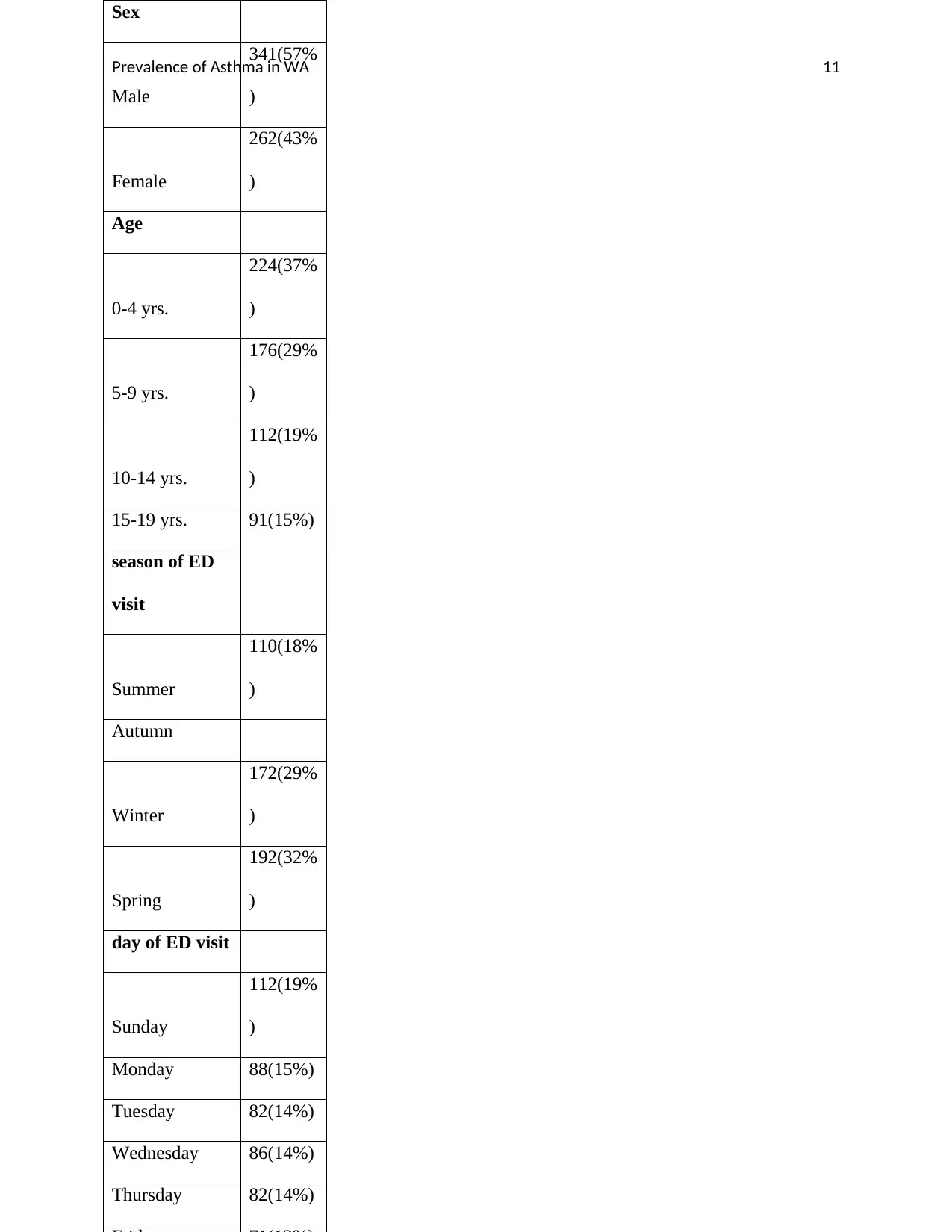
Characteristics and times of ED visits of children and young adults of south-west metropolitan
Perth, Western Australia, who were diagnosed with asthma on ED
Presentation, 1 January 2015 to 31 December 2016
Patients % n=603
Among all of this exposure to chemical cleaning agents is the biggest cause of asthma (James et
al. 2009).
Strategically analysis of air pollution
Method used
Time stratified, case crossover record based method is used. A study based on the impact of air
pollution on asthma involves time series designs and generally, depends on seasonal influence.
These effects can be minimized by applying cross over studies method.
We have taken a sample from 613 collection districts of Perth and each district on an average
includes 225 dwelling (Knuiman 2003). This is a place which is protected from entering air
pollution from other areas as it is located on a coastal plain which is between the Indian Ocean
and high darling escapement. It is also 2000kms away from the nearest city. This place was
selected because it has a wide range of socio economic group (Knuiman 2003).
Characteristics and times of ED visits of children and young adults of south-west metropolitan
Perth, Western Australia, who were diagnosed with asthma on ED
Presentation, 1 January 2015 to 31 December 2016
Patients % n=603
Paraphrase This Document
Need a fresh take? Get an instant paraphrase of this document with our AI Paraphraser
Prevalence of Asthma in WA 11
Sex
Male
341(57%
)
Female
262(43%
)
Age
0-4 yrs.
224(37%
)
5-9 yrs.
176(29%
)
10-14 yrs.
112(19%
)
15-19 yrs. 91(15%)
season of ED
visit
Summer
110(18%
)
Autumn
Winter
172(29%
)
Spring
192(32%
)
day of ED visit
Sunday
112(19%
)
Monday 88(15%)
Tuesday 82(14%)
Wednesday 86(14%)
Thursday 82(14%)
Sex
Male
341(57%
)
Female
262(43%
)
Age
0-4 yrs.
224(37%
)
5-9 yrs.
176(29%
)
10-14 yrs.
112(19%
)
15-19 yrs. 91(15%)
season of ED
visit
Summer
110(18%
)
Autumn
Winter
172(29%
)
Spring
192(32%
)
day of ED visit
Sunday
112(19%
)
Monday 88(15%)
Tuesday 82(14%)
Wednesday 86(14%)
Thursday 82(14%)
Prevalence of Asthma in WA 12
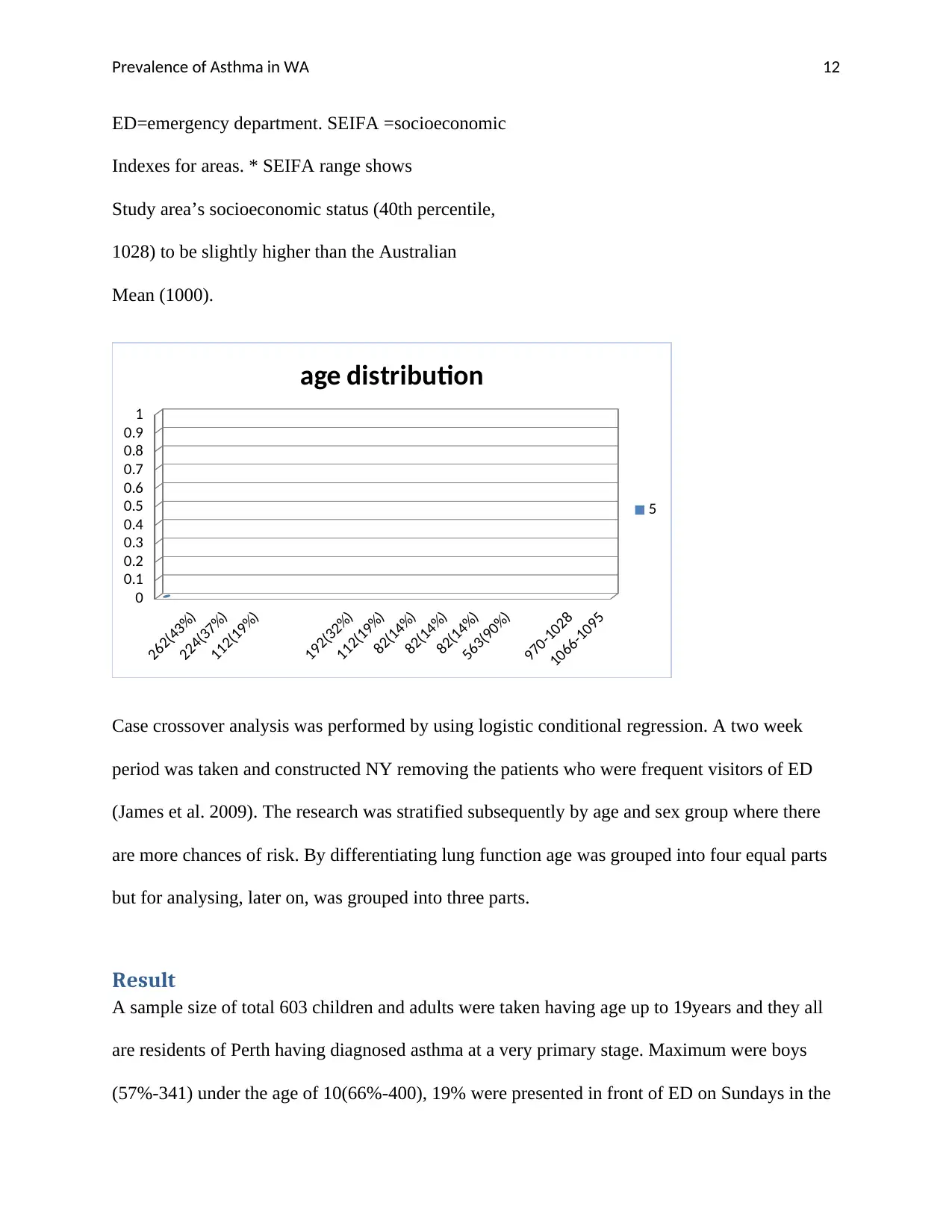
ED=emergency department. SEIFA =socioeconomic
Indexes for areas. * SEIFA range shows
Study area’s socioeconomic status (40th percentile,
1028) to be slightly higher than the Australian
Mean (1000).
262(43%)
224(37%)
112(19%)
192(32%)
112(19%)
82(14%)
82(14%)
82(14%)
563(90%)
970-1028
1066-1095
0
0.1
0.2
0.3
0.4
0.5
0.6
0.7
0.8
0.9
1
age distribution
5
Case crossover analysis was performed by using logistic conditional regression. A two week
period was taken and constructed NY removing the patients who were frequent visitors of ED
(James et al. 2009). The research was stratified subsequently by age and sex group where there
are more chances of risk. By differentiating lung function age was grouped into four equal parts
but for analysing, later on, was grouped into three parts.
Result
A sample size of total 603 children and adults were taken having age up to 19years and they all
are residents of Perth having diagnosed asthma at a very primary stage. Maximum were boys
(57%-341) under the age of 10(66%-400), 19% were presented in front of ED on Sundays in the
ED=emergency department. SEIFA =socioeconomic
Indexes for areas. * SEIFA range shows
Study area’s socioeconomic status (40th percentile,
1028) to be slightly higher than the Australian
Mean (1000).
262(43%)
224(37%)
112(19%)
192(32%)
112(19%)
82(14%)
82(14%)
82(14%)
563(90%)
970-1028
1066-1095
0
0.1
0.2
0.3
0.4
0.5
0.6
0.7
0.8
0.9
1
age distribution
5
Case crossover analysis was performed by using logistic conditional regression. A two week
period was taken and constructed NY removing the patients who were frequent visitors of ED
(James et al. 2009). The research was stratified subsequently by age and sex group where there
are more chances of risk. By differentiating lung function age was grouped into four equal parts
but for analysing, later on, was grouped into three parts.
Result
A sample size of total 603 children and adults were taken having age up to 19years and they all
are residents of Perth having diagnosed asthma at a very primary stage. Maximum were boys
(57%-341) under the age of 10(66%-400), 19% were presented in front of ED on Sundays in the
⊘ This is a preview!⊘
Do you want full access?
Subscribe today to unlock all pages.
Trusted by 1+ million students worldwide

1 out of 27


Related Documents


Your All-in-One AI-Powered Toolkit for Academic Success.
+13062052269
info@desklib.com
Available 24*7 on WhatsApp / Email
![[object Object]](/_next/static/media/star-bottom.7253800d.svg)
Unlock your academic potential
Copyright © 2020–2026 A2Z Services. All Rights Reserved. Developed and managed by ZUCOL.