Tesla's Profit and Loss: Detailed Financial Analysis Report 2016-2017
VerifiedAdded on 2024/05/29
|6
|1262
|389
Report
AI Summary
This report provides a profit and loss analysis of Tesla, Inc. for the years 2016 and 2017. It examines key profitability ratios, including gross margin, operating margin, EBT margin, and net margin, highlighting a depreciation in Tesla's revenues during this period. The analysis covers the cost of goods sold, selling general and administrative expenses, research and development expenses, and their impact on Tesla's financial performance. It further investigates asset turnover, return on assets, financial leverage, return on equity, return on invested capital, and interest coverage, revealing variations and trends in these metrics. The report also touches on depreciation, revenue percentages, free cash flow, and the cash conversion cycle, concluding that there was a decline in gross and operating margins, leading to reduced profitability for the company. Desklib provides this and other solved assignments to aid students in their studies.
Profit and Loss Analysis
1
1
Paraphrase This Document
Need a fresh take? Get an instant paraphrase of this document with our AI Paraphraser

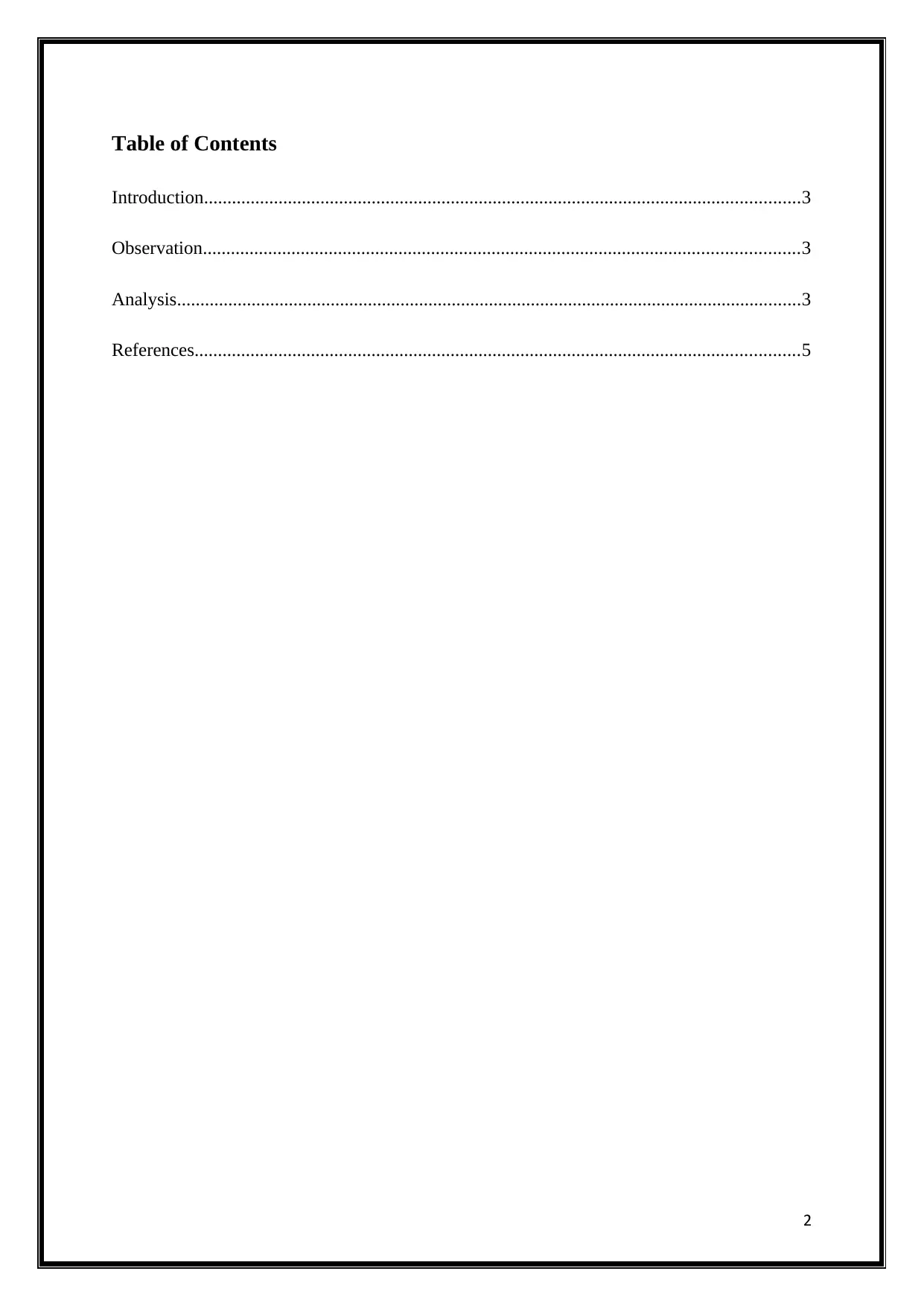
Table of Contents
Introduction................................................................................................................................3
Observation................................................................................................................................3
Analysis......................................................................................................................................3
References..................................................................................................................................5
2
Introduction................................................................................................................................3
Observation................................................................................................................................3
Analysis......................................................................................................................................3
References..................................................................................................................................5
2

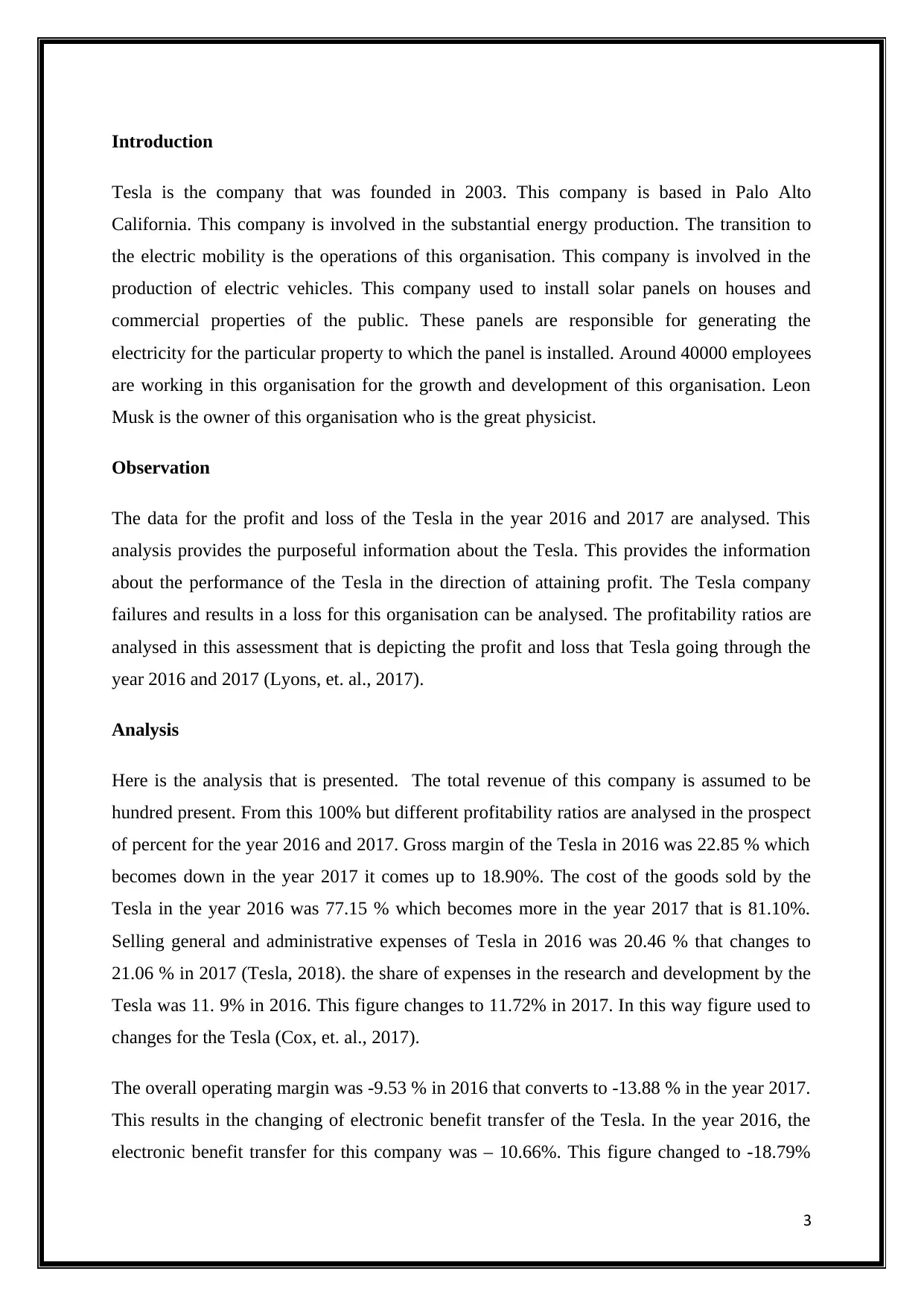
Introduction
Tesla is the company that was founded in 2003. This company is based in Palo Alto
California. This company is involved in the substantial energy production. The transition to
the electric mobility is the operations of this organisation. This company is involved in the
production of electric vehicles. This company used to install solar panels on houses and
commercial properties of the public. These panels are responsible for generating the
electricity for the particular property to which the panel is installed. Around 40000 employees
are working in this organisation for the growth and development of this organisation. Leon
Musk is the owner of this organisation who is the great physicist.
Observation
The data for the profit and loss of the Tesla in the year 2016 and 2017 are analysed. This
analysis provides the purposeful information about the Tesla. This provides the information
about the performance of the Tesla in the direction of attaining profit. The Tesla company
failures and results in a loss for this organisation can be analysed. The profitability ratios are
analysed in this assessment that is depicting the profit and loss that Tesla going through the
year 2016 and 2017 (Lyons, et. al., 2017).
Analysis
Here is the analysis that is presented. The total revenue of this company is assumed to be
hundred present. From this 100% but different profitability ratios are analysed in the prospect
of percent for the year 2016 and 2017. Gross margin of the Tesla in 2016 was 22.85 % which
becomes down in the year 2017 it comes up to 18.90%. The cost of the goods sold by the
Tesla in the year 2016 was 77.15 % which becomes more in the year 2017 that is 81.10%.
Selling general and administrative expenses of Tesla in 2016 was 20.46 % that changes to
21.06 % in 2017 (Tesla, 2018). the share of expenses in the research and development by the
Tesla was 11. 9% in 2016. This figure changes to 11.72% in 2017. In this way figure used to
changes for the Tesla (Cox, et. al., 2017).
The overall operating margin was -9.53 % in 2016 that converts to -13.88 % in the year 2017.
This results in the changing of electronic benefit transfer of the Tesla. In the year 2016, the
electronic benefit transfer for this company was – 10.66%. This figure changed to -18.79%
3
Tesla is the company that was founded in 2003. This company is based in Palo Alto
California. This company is involved in the substantial energy production. The transition to
the electric mobility is the operations of this organisation. This company is involved in the
production of electric vehicles. This company used to install solar panels on houses and
commercial properties of the public. These panels are responsible for generating the
electricity for the particular property to which the panel is installed. Around 40000 employees
are working in this organisation for the growth and development of this organisation. Leon
Musk is the owner of this organisation who is the great physicist.
Observation
The data for the profit and loss of the Tesla in the year 2016 and 2017 are analysed. This
analysis provides the purposeful information about the Tesla. This provides the information
about the performance of the Tesla in the direction of attaining profit. The Tesla company
failures and results in a loss for this organisation can be analysed. The profitability ratios are
analysed in this assessment that is depicting the profit and loss that Tesla going through the
year 2016 and 2017 (Lyons, et. al., 2017).
Analysis
Here is the analysis that is presented. The total revenue of this company is assumed to be
hundred present. From this 100% but different profitability ratios are analysed in the prospect
of percent for the year 2016 and 2017. Gross margin of the Tesla in 2016 was 22.85 % which
becomes down in the year 2017 it comes up to 18.90%. The cost of the goods sold by the
Tesla in the year 2016 was 77.15 % which becomes more in the year 2017 that is 81.10%.
Selling general and administrative expenses of Tesla in 2016 was 20.46 % that changes to
21.06 % in 2017 (Tesla, 2018). the share of expenses in the research and development by the
Tesla was 11. 9% in 2016. This figure changes to 11.72% in 2017. In this way figure used to
changes for the Tesla (Cox, et. al., 2017).
The overall operating margin was -9.53 % in 2016 that converts to -13.88 % in the year 2017.
This results in the changing of electronic benefit transfer of the Tesla. In the year 2016, the
electronic benefit transfer for this company was – 10.66%. This figure changed to -18.79%
3
⊘ This is a preview!⊘
Do you want full access?
Subscribe today to unlock all pages.

Trusted by 1+ million students worldwide

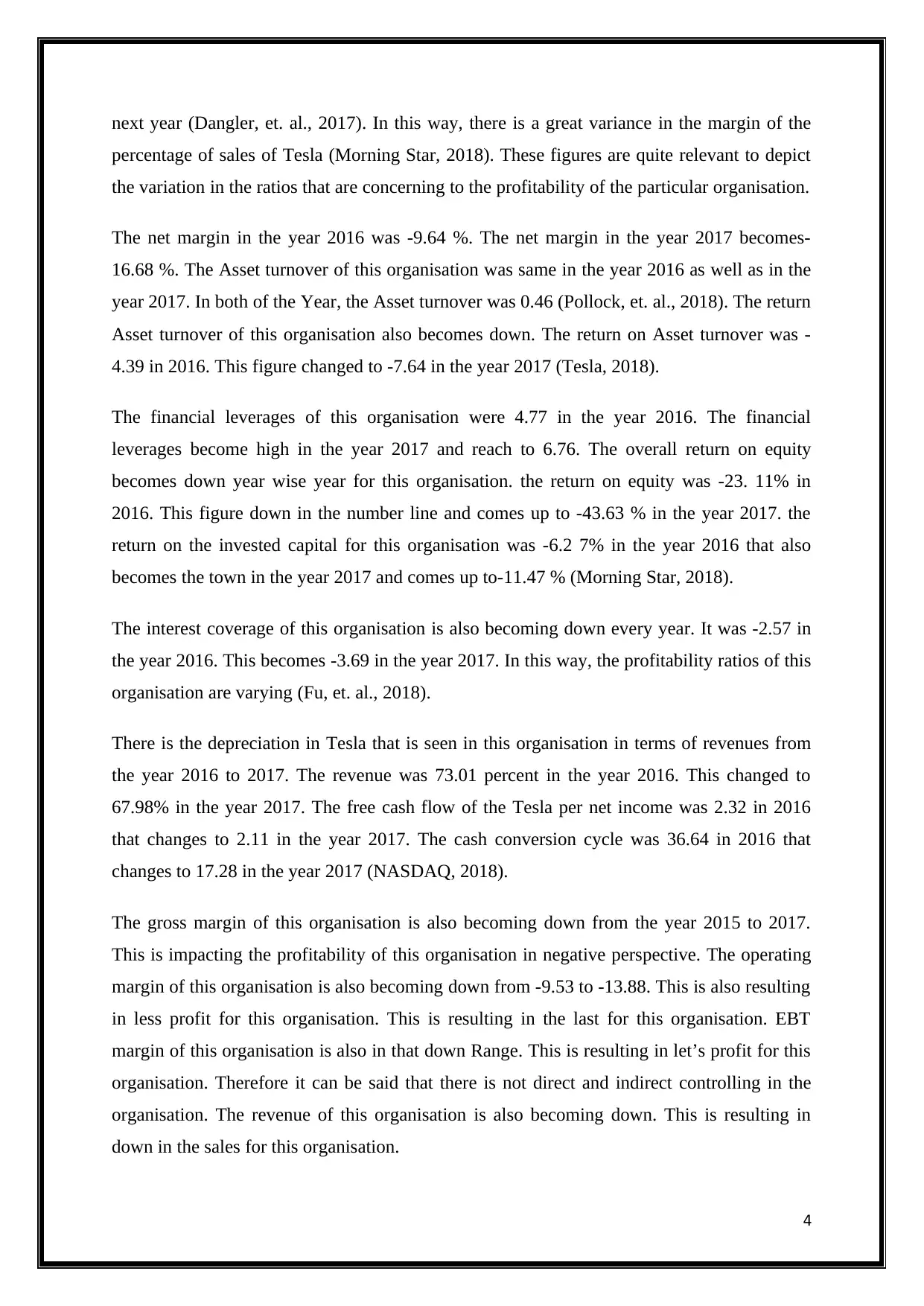
next year (Dangler, et. al., 2017). In this way, there is a great variance in the margin of the
percentage of sales of Tesla (Morning Star, 2018). These figures are quite relevant to depict
the variation in the ratios that are concerning to the profitability of the particular organisation.
The net margin in the year 2016 was -9.64 %. The net margin in the year 2017 becomes-
16.68 %. The Asset turnover of this organisation was same in the year 2016 as well as in the
year 2017. In both of the Year, the Asset turnover was 0.46 (Pollock, et. al., 2018). The return
Asset turnover of this organisation also becomes down. The return on Asset turnover was -
4.39 in 2016. This figure changed to -7.64 in the year 2017 (Tesla, 2018).
The financial leverages of this organisation were 4.77 in the year 2016. The financial
leverages become high in the year 2017 and reach to 6.76. The overall return on equity
becomes down year wise year for this organisation. the return on equity was -23. 11% in
2016. This figure down in the number line and comes up to -43.63 % in the year 2017. the
return on the invested capital for this organisation was -6.2 7% in the year 2016 that also
becomes the town in the year 2017 and comes up to-11.47 % (Morning Star, 2018).
The interest coverage of this organisation is also becoming down every year. It was -2.57 in
the year 2016. This becomes -3.69 in the year 2017. In this way, the profitability ratios of this
organisation are varying (Fu, et. al., 2018).
There is the depreciation in Tesla that is seen in this organisation in terms of revenues from
the year 2016 to 2017. The revenue was 73.01 percent in the year 2016. This changed to
67.98% in the year 2017. The free cash flow of the Tesla per net income was 2.32 in 2016
that changes to 2.11 in the year 2017. The cash conversion cycle was 36.64 in 2016 that
changes to 17.28 in the year 2017 (NASDAQ, 2018).
The gross margin of this organisation is also becoming down from the year 2015 to 2017.
This is impacting the profitability of this organisation in negative perspective. The operating
margin of this organisation is also becoming down from -9.53 to -13.88. This is also resulting
in less profit for this organisation. This is resulting in the last for this organisation. EBT
margin of this organisation is also in that down Range. This is resulting in let’s profit for this
organisation. Therefore it can be said that there is not direct and indirect controlling in the
organisation. The revenue of this organisation is also becoming down. This is resulting in
down in the sales for this organisation.
4
percentage of sales of Tesla (Morning Star, 2018). These figures are quite relevant to depict
the variation in the ratios that are concerning to the profitability of the particular organisation.
The net margin in the year 2016 was -9.64 %. The net margin in the year 2017 becomes-
16.68 %. The Asset turnover of this organisation was same in the year 2016 as well as in the
year 2017. In both of the Year, the Asset turnover was 0.46 (Pollock, et. al., 2018). The return
Asset turnover of this organisation also becomes down. The return on Asset turnover was -
4.39 in 2016. This figure changed to -7.64 in the year 2017 (Tesla, 2018).
The financial leverages of this organisation were 4.77 in the year 2016. The financial
leverages become high in the year 2017 and reach to 6.76. The overall return on equity
becomes down year wise year for this organisation. the return on equity was -23. 11% in
2016. This figure down in the number line and comes up to -43.63 % in the year 2017. the
return on the invested capital for this organisation was -6.2 7% in the year 2016 that also
becomes the town in the year 2017 and comes up to-11.47 % (Morning Star, 2018).
The interest coverage of this organisation is also becoming down every year. It was -2.57 in
the year 2016. This becomes -3.69 in the year 2017. In this way, the profitability ratios of this
organisation are varying (Fu, et. al., 2018).
There is the depreciation in Tesla that is seen in this organisation in terms of revenues from
the year 2016 to 2017. The revenue was 73.01 percent in the year 2016. This changed to
67.98% in the year 2017. The free cash flow of the Tesla per net income was 2.32 in 2016
that changes to 2.11 in the year 2017. The cash conversion cycle was 36.64 in 2016 that
changes to 17.28 in the year 2017 (NASDAQ, 2018).
The gross margin of this organisation is also becoming down from the year 2015 to 2017.
This is impacting the profitability of this organisation in negative perspective. The operating
margin of this organisation is also becoming down from -9.53 to -13.88. This is also resulting
in less profit for this organisation. This is resulting in the last for this organisation. EBT
margin of this organisation is also in that down Range. This is resulting in let’s profit for this
organisation. Therefore it can be said that there is not direct and indirect controlling in the
organisation. The revenue of this organisation is also becoming down. This is resulting in
down in the sales for this organisation.
4
Paraphrase This Document
Need a fresh take? Get an instant paraphrase of this document with our AI Paraphraser

5

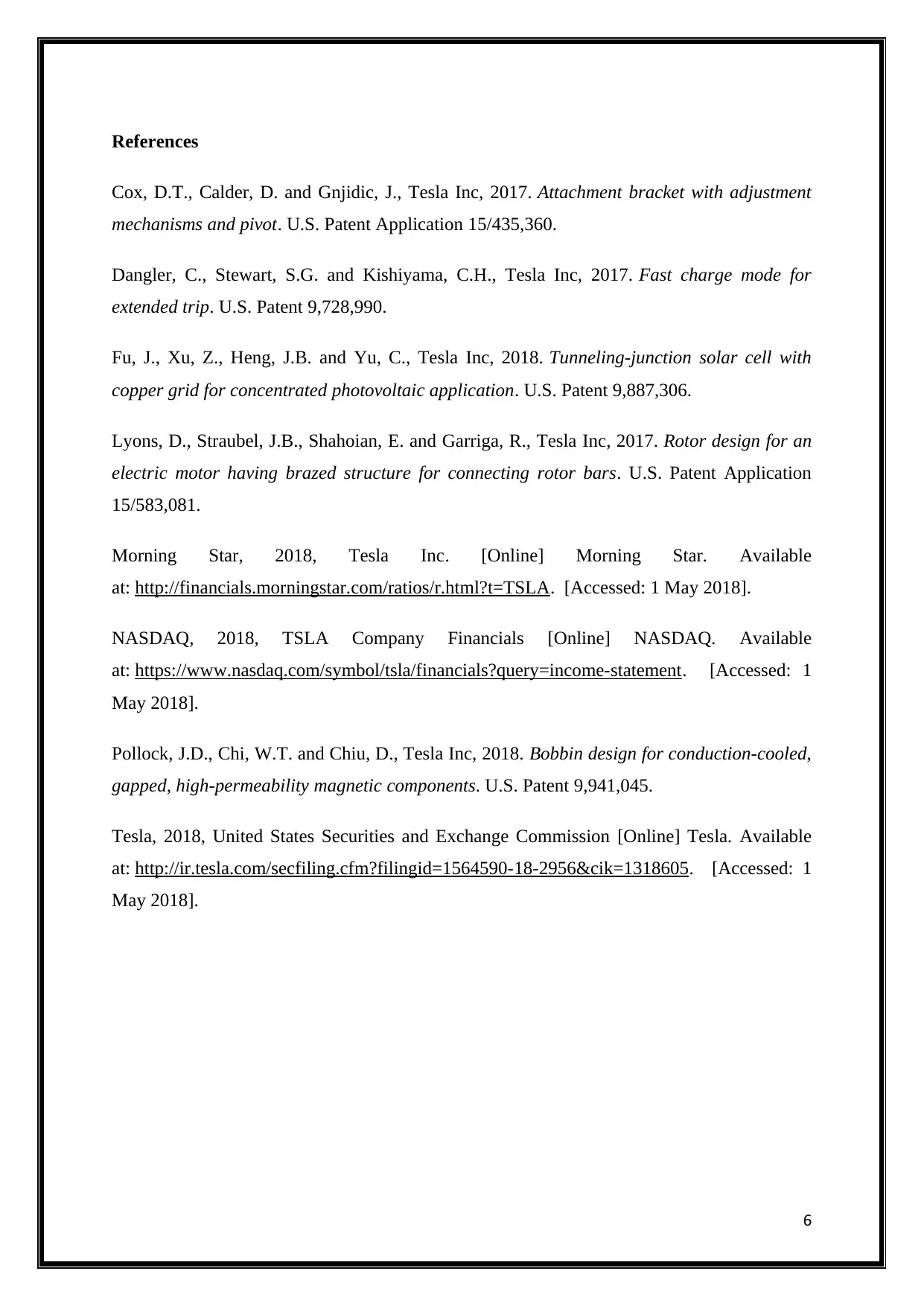
References
Cox, D.T., Calder, D. and Gnjidic, J., Tesla Inc, 2017. Attachment bracket with adjustment
mechanisms and pivot. U.S. Patent Application 15/435,360.
Dangler, C., Stewart, S.G. and Kishiyama, C.H., Tesla Inc, 2017. Fast charge mode for
extended trip. U.S. Patent 9,728,990.
Fu, J., Xu, Z., Heng, J.B. and Yu, C., Tesla Inc, 2018. Tunneling-junction solar cell with
copper grid for concentrated photovoltaic application. U.S. Patent 9,887,306.
Lyons, D., Straubel, J.B., Shahoian, E. and Garriga, R., Tesla Inc, 2017. Rotor design for an
electric motor having brazed structure for connecting rotor bars. U.S. Patent Application
15/583,081.
Morning Star, 2018, Tesla Inc. [Online] Morning Star. Available
at: http://financials.morningstar.com/ratios/r.html?t=TSLA. [Accessed: 1 May 2018].
NASDAQ, 2018, TSLA Company Financials [Online] NASDAQ. Available
at: https://www.nasdaq.com/symbol/tsla/financials?query=income-statement. [Accessed: 1
May 2018].
Pollock, J.D., Chi, W.T. and Chiu, D., Tesla Inc, 2018. Bobbin design for conduction-cooled,
gapped, high-permeability magnetic components. U.S. Patent 9,941,045.
Tesla, 2018, United States Securities and Exchange Commission [Online] Tesla. Available
at: http://ir.tesla.com/secfiling.cfm?filingid=1564590-18-2956&cik=1318605. [Accessed: 1
May 2018].
6
Cox, D.T., Calder, D. and Gnjidic, J., Tesla Inc, 2017. Attachment bracket with adjustment
mechanisms and pivot. U.S. Patent Application 15/435,360.
Dangler, C., Stewart, S.G. and Kishiyama, C.H., Tesla Inc, 2017. Fast charge mode for
extended trip. U.S. Patent 9,728,990.
Fu, J., Xu, Z., Heng, J.B. and Yu, C., Tesla Inc, 2018. Tunneling-junction solar cell with
copper grid for concentrated photovoltaic application. U.S. Patent 9,887,306.
Lyons, D., Straubel, J.B., Shahoian, E. and Garriga, R., Tesla Inc, 2017. Rotor design for an
electric motor having brazed structure for connecting rotor bars. U.S. Patent Application
15/583,081.
Morning Star, 2018, Tesla Inc. [Online] Morning Star. Available
at: http://financials.morningstar.com/ratios/r.html?t=TSLA. [Accessed: 1 May 2018].
NASDAQ, 2018, TSLA Company Financials [Online] NASDAQ. Available
at: https://www.nasdaq.com/symbol/tsla/financials?query=income-statement. [Accessed: 1
May 2018].
Pollock, J.D., Chi, W.T. and Chiu, D., Tesla Inc, 2018. Bobbin design for conduction-cooled,
gapped, high-permeability magnetic components. U.S. Patent 9,941,045.
Tesla, 2018, United States Securities and Exchange Commission [Online] Tesla. Available
at: http://ir.tesla.com/secfiling.cfm?filingid=1564590-18-2956&cik=1318605. [Accessed: 1
May 2018].
6
⊘ This is a preview!⊘
Do you want full access?
Subscribe today to unlock all pages.

Trusted by 1+ million students worldwide
1 out of 6
Related Documents
Your All-in-One AI-Powered Toolkit for Academic Success.
+13062052269
info@desklib.com
Available 24*7 on WhatsApp / Email
Unlock your academic potential
Copyright © 2020–2026 A2Z Services. All Rights Reserved. Developed and managed by ZUCOL.