Project Planning and Material Measurement: Task Analysis and Planning
VerifiedAdded on 2023/06/03
|19
|5080
|279
Project
AI Summary
This project planning and material measurement assignment analyzes construction tasks, specifically ceramic floor tiling and carpet fixing on level 2 of a proposed commercial and residential development. The student calculates measured material quantities, determines productivity constants from the Rawlinson Australian Construction Handbook, and calculates tradesman hours worked. The assignment then focuses on determining suitable gang sizes for each task, calculating the time needed for completion, and verifying the sequence and duration of activities. The student also identifies the need for changes to the project program, including the addition of waterproofing to basements and soundproofing installation, to mitigate risks and ensure structural integrity and acoustic performance. The analysis includes detailed measurements from floor plans, cost estimations, and a critical evaluation of the project's schedule and potential risks.

Project Planning and Material Measurement 1
PROJECT PLANNING AND MATERIAL MEASUREMENT
Name
Course
Professor
University
City/state
Date
PROJECT PLANNING AND MATERIAL MEASUREMENT
Name
Course
Professor
University
City/state
Date

Paraphrase This Document
Need a fresh take? Get an instant paraphrase of this document with our AI Paraphraser

Project Planning and Material Measurement 2
Project Planning and Material Measurement
Question 1
a) Measured material quantities
The trades selected for this task are ceramic floor tiling and carpeting of level 2 of the
building. For the ceramic floor tiling, the task selected is fixing the ceramic tiles on the floor
whereas the selected task for carpeting is fixing the carpet directly on the floor.
Task 1: Ceramic floor tiling
The ceramic tiles are fixed on the floor of the following rooms/elements on level 2 of the
building: bed 1, bed 3 and courtyard. The measurements of the floor area on which the ceramic
tiles are to be fixed have been obtained from the level 2 floor plan in the drawings provided for
the proposed commercial and residential development. The plan clearly shows the dimensions of
areas where the ceramic tiles are to be fixed. Taking the measurements involved measuring the
length and width of the floor areas ad multiplying the two to determine area of the floor to be
covered with the ceramic tiles. The measured material quantities for the fixing of ceramic tiles on
the specific unit/areas of level 2 floor is provided in Table 1 below
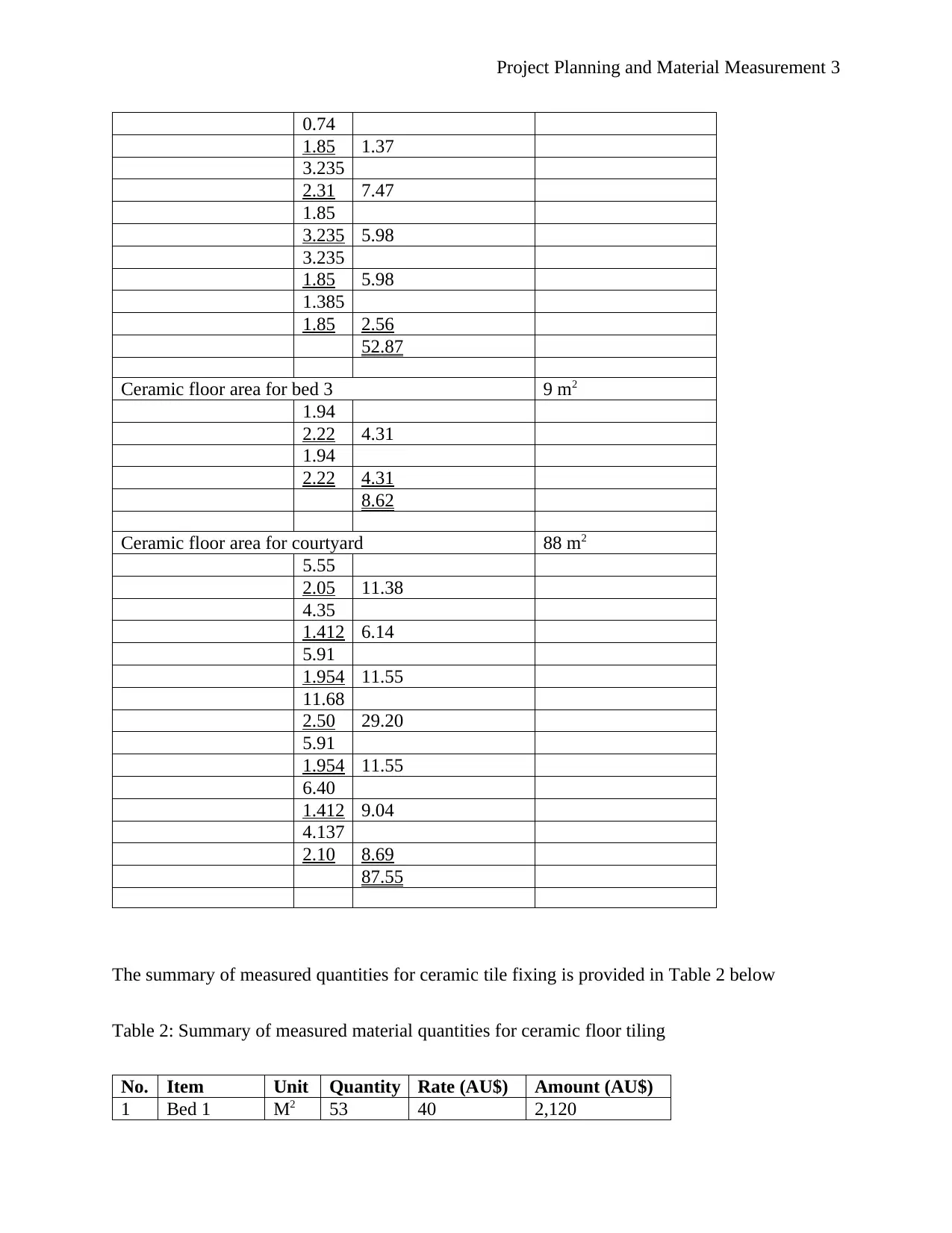
Table 1: Measured material quantities for ceramic floor tile fixing
Ceramic floor tiling
Ceramic floor area for bed 1 53 m2
2.215
1.845 4.09
3.33
1.85 6.16
2.96
3.33 9.86
4.07
2.31 9.40
Project Planning and Material Measurement
Question 1
a) Measured material quantities
The trades selected for this task are ceramic floor tiling and carpeting of level 2 of the
building. For the ceramic floor tiling, the task selected is fixing the ceramic tiles on the floor
whereas the selected task for carpeting is fixing the carpet directly on the floor.
Task 1: Ceramic floor tiling
The ceramic tiles are fixed on the floor of the following rooms/elements on level 2 of the
building: bed 1, bed 3 and courtyard. The measurements of the floor area on which the ceramic
tiles are to be fixed have been obtained from the level 2 floor plan in the drawings provided for
the proposed commercial and residential development. The plan clearly shows the dimensions of
areas where the ceramic tiles are to be fixed. Taking the measurements involved measuring the
length and width of the floor areas ad multiplying the two to determine area of the floor to be
covered with the ceramic tiles. The measured material quantities for the fixing of ceramic tiles on
the specific unit/areas of level 2 floor is provided in Table 1 below
Table 1: Measured material quantities for ceramic floor tile fixing
Ceramic floor tiling
Ceramic floor area for bed 1 53 m2
2.215
1.845 4.09
3.33
1.85 6.16
2.96
3.33 9.86
4.07
2.31 9.40
Project Planning and Material Measurement 3
0.74
1.85 1.37
3.235
2.31 7.47
1.85
3.235 5.98
3.235
1.85 5.98
1.385
1.85 2.56
52.87
Ceramic floor area for bed 3 9 m2
1.94
2.22 4.31
1.94
2.22 4.31
8.62
Ceramic floor area for courtyard 88 m2
5.55
2.05 11.38
4.35
1.412 6.14
5.91
1.954 11.55
11.68
2.50 29.20
5.91
1.954 11.55
6.40
1.412 9.04
4.137
2.10 8.69
87.55
The summary of measured quantities for ceramic tile fixing is provided in Table 2 below
Table 2: Summary of measured material quantities for ceramic floor tiling
No. Item Unit Quantity Rate (AU$) Amount (AU$)
1 Bed 1 M2 53 40 2,120
0.74
1.85 1.37
3.235
2.31 7.47
1.85
3.235 5.98
3.235
1.85 5.98
1.385
1.85 2.56
52.87
Ceramic floor area for bed 3 9 m2
1.94
2.22 4.31
1.94
2.22 4.31
8.62
Ceramic floor area for courtyard 88 m2
5.55
2.05 11.38
4.35
1.412 6.14
5.91
1.954 11.55
11.68
2.50 29.20
5.91
1.954 11.55
6.40
1.412 9.04
4.137
2.10 8.69
87.55
The summary of measured quantities for ceramic tile fixing is provided in Table 2 below
Table 2: Summary of measured material quantities for ceramic floor tiling
No. Item Unit Quantity Rate (AU$) Amount (AU$)
1 Bed 1 M2 53 40 2,120
⊘ This is a preview!⊘
Do you want full access?
Subscribe today to unlock all pages.

Trusted by 1+ million students worldwide

Project Planning and Material Measurement 4
2 Bed 3 M2 9 40 360
3 Courtyard M2 88 40 3,520
Total M2 150 40 6,000
Task 2: Carpet fixing
The carpet is fixed directly on the floor of the following areas/rooms on level 2 of the
building: bed 1, bed 2 and bed 3. The measurements of the floor area on which the carpet is to be
fixed have been obtained from the level 2 floor plan in the drawings provided for the proposed
commercial and residential development. The plan clearly shows the dimensions of areas where
the carpet is to be fixed. Taking the measurements involved measuring the length and width of
the floor areas where the carpet will be fixed and multiplying the two to determine area of the
floor to be covered with the carpets. The measured material quantities for the fixing of carpet on
the specific unit/areas of level 2 floor is provided in Table 3 below
Table 3: Measured material quantities for carpet fixing
Carpet fixing
Carpet floor area for bed 1 76 m2
3.975
3.42 13.59
1.385
1.385 1.92
3.515
3.42 12.02
0.83
1.015 0.84
3.145
3.145 9.89
3.145
3.145 9.89
3.42
3.515 12.02
0.645
1.11 0.72
2 Bed 3 M2 9 40 360
3 Courtyard M2 88 40 3,520
Total M2 150 40 6,000
Task 2: Carpet fixing
The carpet is fixed directly on the floor of the following areas/rooms on level 2 of the
building: bed 1, bed 2 and bed 3. The measurements of the floor area on which the carpet is to be
fixed have been obtained from the level 2 floor plan in the drawings provided for the proposed
commercial and residential development. The plan clearly shows the dimensions of areas where
the carpet is to be fixed. Taking the measurements involved measuring the length and width of
the floor areas where the carpet will be fixed and multiplying the two to determine area of the
floor to be covered with the carpets. The measured material quantities for the fixing of carpet on
the specific unit/areas of level 2 floor is provided in Table 3 below
Table 3: Measured material quantities for carpet fixing
Carpet fixing
Carpet floor area for bed 1 76 m2
3.975
3.42 13.59
1.385
1.385 1.92
3.515
3.42 12.02
0.83
1.015 0.84
3.145
3.145 9.89
3.145
3.145 9.89
3.42
3.515 12.02
0.645
1.11 0.72
Paraphrase This Document
Need a fresh take? Get an instant paraphrase of this document with our AI Paraphraser

Project Planning and Material Measurement 5
3.885
3.515 13.66
1.385
1.385 1.92
76.47
Carpet floor area for bed 2 20 m2
3.05
3.235 9.87
3.145
3.235 10.17
20.04
Carpet floor area for bed 3 20 m2
3.235
3.05 9.87
3.235
3.235 10.47
20.34
The summary of measured quantities for carpet fixing is provided in Table 4 below
Table 4: Summary of measured material quantities for carpet fixing
No. Description Unit Quantity Rate (AU$) Amount (AU$)
1 Bed 1 M2 76 50 3800
2 Bed 2 M2 20 50 1,000
3 Bed 3 M2 20 50 1000
Total M2 116 50 5,800
b) Productivity constants
The productivity or labour constants used in this assignment are obtained from Rawlinson
Australian Construction Handbook1. The productivity constants for the two tasks selected are
provided in Table 5 below
Table 5: Productivity constants
1 Rawlinsons Group, 2018. Rawlinsons Australian Construction Handbook. 34th ed. Belmont, WA: Rawlhouse
Publishing.
3.885
3.515 13.66
1.385
1.385 1.92
76.47
Carpet floor area for bed 2 20 m2
3.05
3.235 9.87
3.145
3.235 10.17
20.04
Carpet floor area for bed 3 20 m2
3.235
3.05 9.87
3.235
3.235 10.47
20.34
The summary of measured quantities for carpet fixing is provided in Table 4 below
Table 4: Summary of measured material quantities for carpet fixing
No. Description Unit Quantity Rate (AU$) Amount (AU$)
1 Bed 1 M2 76 50 3800
2 Bed 2 M2 20 50 1,000
3 Bed 3 M2 20 50 1000
Total M2 116 50 5,800
b) Productivity constants
The productivity or labour constants used in this assignment are obtained from Rawlinson
Australian Construction Handbook1. The productivity constants for the two tasks selected are
provided in Table 5 below
Table 5: Productivity constants
1 Rawlinsons Group, 2018. Rawlinsons Australian Construction Handbook. 34th ed. Belmont, WA: Rawlhouse
Publishing.

Project Planning and Material Measurement 6
Task/Activity Productivity constant
Ceramic floor tiling 1.00 tradesman hours per m2
Direct carpet laying 0.15 tradesman hours per m2
c) Tradesman hours worked
The tradesman hours worked are calculated from the measured material quantities and the
productivity constant for each task. These calculations are as follows:
Task 1: Ceramic floor tiling
The total measured materials quantities for ceramic floor tiling is 150 m2 while the productivity
constant for ceramic floor tiling is 1.00 tradesman hours per m2. Therefore the total tradesman
hours worked to fix 150 m2 of ceramic floor tiles is:
1 m2 = 1.00 tradesman hours
150 m2 = 150 m2 x 1.00 hours
1 m2 =150 hours
Task 2: Carpet fixing
The total measured materials quantities for carpet fixing is 116 m2 while the productivity
constant for direct carpet fixing is 0.15 tradesman hours per m2. Therefore the total tradesman
hours worked to fix 116 m2 of carpet is:
1 m2 = 0.15 tradesman hours
116 m2 = 116 m2 x 0.15 hours
1 m2 =17.4 hours ≈ 18 hours
Task/Activity Productivity constant
Ceramic floor tiling 1.00 tradesman hours per m2
Direct carpet laying 0.15 tradesman hours per m2
c) Tradesman hours worked
The tradesman hours worked are calculated from the measured material quantities and the
productivity constant for each task. These calculations are as follows:
Task 1: Ceramic floor tiling
The total measured materials quantities for ceramic floor tiling is 150 m2 while the productivity
constant for ceramic floor tiling is 1.00 tradesman hours per m2. Therefore the total tradesman
hours worked to fix 150 m2 of ceramic floor tiles is:
1 m2 = 1.00 tradesman hours
150 m2 = 150 m2 x 1.00 hours
1 m2 =150 hours
Task 2: Carpet fixing
The total measured materials quantities for carpet fixing is 116 m2 while the productivity
constant for direct carpet fixing is 0.15 tradesman hours per m2. Therefore the total tradesman
hours worked to fix 116 m2 of carpet is:
1 m2 = 0.15 tradesman hours
116 m2 = 116 m2 x 0.15 hours
1 m2 =17.4 hours ≈ 18 hours
⊘ This is a preview!⊘
Do you want full access?
Subscribe today to unlock all pages.
Trusted by 1+ million students worldwide

Project Planning and Material Measurement 7
d) Suitable gang size
The suitable gang size for each task is based on the number of tradesman hours worked. Besides
the tradesmen, each task will also require labourers. The suitable gang size for the two tasks is
determined as follows:
Task 1: Ceramic floor tiling
In this scenario, the productivity rate of a tiler is 1m2/hour. The total floor area to be tiled
on floor level 2 is 150 m2. Therefore the total number of tradesman hours needed to complete the
ceramic floor tiling task has been determined to be 150 hours. The actual working hours per day
is 8 hours. From the project schedule provided in assignment 1, the duration allocated for
ceramic tiler to level 2 is 8 days. Let the fixing of the tile on level 2 be done in 5 days with the
other days set aside for preparations and finishing of related works. Thus the approximate
number of persons needed to do the ceramic floor tiling task is calculated as follows:
Total number of hours = 5 days x 8 hours per day = 40 hours
150 hours
40 hours =3.75 tilers ≈ 4 tilers
Therefore 4 tilers and 2 labourers is a suitable gang size for the ceramic floor tiling task selected
in this assignment.
Task 2: Carpet fixing
The productivity rate of a carpet tradesman is 0.15 hours/m2. The total floor area to be
covered with carpet on floor level 2 is 116 m2. The the total number of tradesman hours needed
to complete the carpet fixing task had been determined to be 18 hours. The actual working hours
per day is 8 hours. From the project schedule provided in assignment 1, the duration allocated for
d) Suitable gang size
The suitable gang size for each task is based on the number of tradesman hours worked. Besides
the tradesmen, each task will also require labourers. The suitable gang size for the two tasks is
determined as follows:
Task 1: Ceramic floor tiling
In this scenario, the productivity rate of a tiler is 1m2/hour. The total floor area to be tiled
on floor level 2 is 150 m2. Therefore the total number of tradesman hours needed to complete the
ceramic floor tiling task has been determined to be 150 hours. The actual working hours per day
is 8 hours. From the project schedule provided in assignment 1, the duration allocated for
ceramic tiler to level 2 is 8 days. Let the fixing of the tile on level 2 be done in 5 days with the
other days set aside for preparations and finishing of related works. Thus the approximate
number of persons needed to do the ceramic floor tiling task is calculated as follows:
Total number of hours = 5 days x 8 hours per day = 40 hours
150 hours
40 hours =3.75 tilers ≈ 4 tilers
Therefore 4 tilers and 2 labourers is a suitable gang size for the ceramic floor tiling task selected
in this assignment.
Task 2: Carpet fixing
The productivity rate of a carpet tradesman is 0.15 hours/m2. The total floor area to be
covered with carpet on floor level 2 is 116 m2. The the total number of tradesman hours needed
to complete the carpet fixing task had been determined to be 18 hours. The actual working hours
per day is 8 hours. From the project schedule provided in assignment 1, the duration allocated for
Paraphrase This Document
Need a fresh take? Get an instant paraphrase of this document with our AI Paraphraser

Project Planning and Material Measurement 8
carpet to level 2 is 8 days. Let the fixing of the carpet be done in 2 days with the other six days
set aside for preparations and finishing of related works. Thus the approximate number of
persons needed to do the carpet fixing task is calculated as follows:
Total number of hours = 2 days x 8 hours per day = 16 hours
18 hours
16 hours =1.125 carpet tradesmen ≈ 1 carpet tradesman
Therefore 1 carpet tradesman/fixer and 2 labourers is a suitable gang size for the carpet fixing
task selected in this assignment.
e) Time needed
Task 1: Ceramic floor tiling
The suitable gang size for this task is 4 tilers and 2 labourers. The productivity rate of a tiler is
1m2/hour. This means that in one hour, the 4 tilers will have completed 4m2. The total floor area
to be tiled on level 2 is 150 m2. Hence the total time needed to complete the task is:
150 m2
4 m2 /hour =37.5 hours; Which is 4 days and 5.5 hours.
Task 2: Carpet fixing
The suitable gang size for this task is 1 carpet tradesman/fixer and 2 labourers. The productivity
rate of a carpet fixer is 0.15 hours/m2 or 6.667m2/hour. This means that in one hour, the 1 carpet
fixer will have completed 6.6667 m2. The total floor area to be fixed with carpet on level 2 is 116
m2. Hence the total time needed to complete the task is:
116 m2
6.667 m2 /hour =17.4 hours; Which is 2 days and 1.527 hours.
carpet to level 2 is 8 days. Let the fixing of the carpet be done in 2 days with the other six days
set aside for preparations and finishing of related works. Thus the approximate number of
persons needed to do the carpet fixing task is calculated as follows:
Total number of hours = 2 days x 8 hours per day = 16 hours
18 hours
16 hours =1.125 carpet tradesmen ≈ 1 carpet tradesman
Therefore 1 carpet tradesman/fixer and 2 labourers is a suitable gang size for the carpet fixing
task selected in this assignment.
e) Time needed
Task 1: Ceramic floor tiling
The suitable gang size for this task is 4 tilers and 2 labourers. The productivity rate of a tiler is
1m2/hour. This means that in one hour, the 4 tilers will have completed 4m2. The total floor area
to be tiled on level 2 is 150 m2. Hence the total time needed to complete the task is:
150 m2
4 m2 /hour =37.5 hours; Which is 4 days and 5.5 hours.
Task 2: Carpet fixing
The suitable gang size for this task is 1 carpet tradesman/fixer and 2 labourers. The productivity
rate of a carpet fixer is 0.15 hours/m2 or 6.667m2/hour. This means that in one hour, the 1 carpet
fixer will have completed 6.6667 m2. The total floor area to be fixed with carpet on level 2 is 116
m2. Hence the total time needed to complete the task is:
116 m2
6.667 m2 /hour =17.4 hours; Which is 2 days and 1.527 hours.

Project Planning and Material Measurement 9
f) Verification of sequence and duration
Task 1: Ceramic floor tiling
The predecessor tasks to this activity are ceramic tiler to level 1, carpenter fitout to level
2, and waterproofing to level 2, and 5 days allowed before the ceramic tiles can be fixed. These
preceding activities are essential in preparing level 2 floor for ceramic tiling and also ensuring
that level 1 floor has been done before proceeding to level 2 floor. The 5 days are allowed to
ensure that the waterproofing material on level 2 floor has dried properly. The duration allowed
for ceramic tiler to level 2 is 8 days, which is enough to fix tiles of area 150 m2. Therefore the
sequence and duration provided for the ceramic floor tiling on level 2 are sufficient to ensure
successful completion of the task hence no need to make any changes.
Task 2: Carpet fixing
The predecessor tasks to this activity are carpet to level 1 and painter to level 2. These
preceding activities are useful in preparation for the carpet fixing task. It is important to complete
fixing the carpet on level 1 floor before proceeding to level 2 floor. It is also important to finish
painting level 2 rooms before fixing the carpet so as to avoid staining the carpet with paint. The
duration allowed for carpet to level 2 is 8 days. This duration is enough to fix the carpet of area
116 m2. However, a change is necessary to the provided sequence. The paint usually requires at
least one day to dry out before continuing with other activities. It is therefore necessary to allow
one day after painter to level 2 before starting to fix the carpet on level 2. Therefore the sequence
of the predecessors of carpet fixing on level 2 should be as follows: carpet to level 1, painter to
level 2 + 1 day.
Question 2
f) Verification of sequence and duration
Task 1: Ceramic floor tiling
The predecessor tasks to this activity are ceramic tiler to level 1, carpenter fitout to level
2, and waterproofing to level 2, and 5 days allowed before the ceramic tiles can be fixed. These
preceding activities are essential in preparing level 2 floor for ceramic tiling and also ensuring
that level 1 floor has been done before proceeding to level 2 floor. The 5 days are allowed to
ensure that the waterproofing material on level 2 floor has dried properly. The duration allowed
for ceramic tiler to level 2 is 8 days, which is enough to fix tiles of area 150 m2. Therefore the
sequence and duration provided for the ceramic floor tiling on level 2 are sufficient to ensure
successful completion of the task hence no need to make any changes.
Task 2: Carpet fixing
The predecessor tasks to this activity are carpet to level 1 and painter to level 2. These
preceding activities are useful in preparation for the carpet fixing task. It is important to complete
fixing the carpet on level 1 floor before proceeding to level 2 floor. It is also important to finish
painting level 2 rooms before fixing the carpet so as to avoid staining the carpet with paint. The
duration allowed for carpet to level 2 is 8 days. This duration is enough to fix the carpet of area
116 m2. However, a change is necessary to the provided sequence. The paint usually requires at
least one day to dry out before continuing with other activities. It is therefore necessary to allow
one day after painter to level 2 before starting to fix the carpet on level 2. Therefore the sequence
of the predecessors of carpet fixing on level 2 should be as follows: carpet to level 1, painter to
level 2 + 1 day.
Question 2
⊘ This is a preview!⊘
Do you want full access?
Subscribe today to unlock all pages.
Trusted by 1+ million students worldwide

Project Planning and Material Measurement 10
Waterproofing is very essential in this kind of development because it makes the building
resistant to water penetration2. In the program provided, waterproofing for basement 2 and
basement 1 has not been included in the program. This is a major risk to the entire building
because basements contribute significantly to the strength and overall structural integrity of
storey buildings. Failure to provide waterproofing for the basements creates loopholes for water
to find its way up the building3, thus exposing it to failure risks such as structural damages4.
Therefore it is necessary to make changes to the program and include waterproofing to basement
1 and 2 so as to protect the basements from unnecessary water penetration that may affect the
structural soundness of the entire building. The program provided has also not included any
soundproofing installation on the building. Acoustic performance is very important in modern
buildings and therefore the program should be changed to include installation of acoustic
elements so as to limit sound transfer in the building.
The program is majorly linear, which outs it at a higher risk of delayed completion if any
of the preceding activities is not completed as planned. This kind of program requires proper
planning and analysis of potential risks so as to mitigate against delays that may be caused by
unprecedented factors. It is therefore necessary to make the program less linear by starting some
tasks before completion of preceding activities. For example, instead of completing painting the
2 Palmer, J., 2015. What to Expect with Basement Waterproofing. [Online]
Available at: https://www.angieslist.com/articles/what-expect-basement-waterproofing.htm
[Accessed 13 November 2018].
3 Armstrong, L., 2017. Major Benefits of Basement Waterproofing. [Online]
Available at: https://restorationmasterfinder.com/restoration/major-benefits-of-basement-
waterproofing/
[Accessed 13 November 2018].
4 Footbridge Media, (n.d.). Ways in which Waterproofing Benefits Foundations. [Online]
Available at: https://www.footbridgemedia.com/contractor-articles/property-management/66/ways-
waterproofing-benefits-foundations.html
[Accessed 13 November 2018].
Waterproofing is very essential in this kind of development because it makes the building
resistant to water penetration2. In the program provided, waterproofing for basement 2 and
basement 1 has not been included in the program. This is a major risk to the entire building
because basements contribute significantly to the strength and overall structural integrity of
storey buildings. Failure to provide waterproofing for the basements creates loopholes for water
to find its way up the building3, thus exposing it to failure risks such as structural damages4.
Therefore it is necessary to make changes to the program and include waterproofing to basement
1 and 2 so as to protect the basements from unnecessary water penetration that may affect the
structural soundness of the entire building. The program provided has also not included any
soundproofing installation on the building. Acoustic performance is very important in modern
buildings and therefore the program should be changed to include installation of acoustic
elements so as to limit sound transfer in the building.
The program is majorly linear, which outs it at a higher risk of delayed completion if any
of the preceding activities is not completed as planned. This kind of program requires proper
planning and analysis of potential risks so as to mitigate against delays that may be caused by
unprecedented factors. It is therefore necessary to make the program less linear by starting some
tasks before completion of preceding activities. For example, instead of completing painting the
2 Palmer, J., 2015. What to Expect with Basement Waterproofing. [Online]
Available at: https://www.angieslist.com/articles/what-expect-basement-waterproofing.htm
[Accessed 13 November 2018].
3 Armstrong, L., 2017. Major Benefits of Basement Waterproofing. [Online]
Available at: https://restorationmasterfinder.com/restoration/major-benefits-of-basement-
waterproofing/
[Accessed 13 November 2018].
4 Footbridge Media, (n.d.). Ways in which Waterproofing Benefits Foundations. [Online]
Available at: https://www.footbridgemedia.com/contractor-articles/property-management/66/ways-
waterproofing-benefits-foundations.html
[Accessed 13 November 2018].
Paraphrase This Document
Need a fresh take? Get an instant paraphrase of this document with our AI Paraphraser

Project Planning and Material Measurement 11
entire level before starting ceramic tiling, the tiles can start being installed in individual rooms
once painting in these rooms has been completed.
The program provided also shows that concrete on level 5 will be done even before the
start of concrete on basement 1, level 1, level 2, level 3 and level 4. It is not clear how this will
be done hence the best way of preventing looming challenges associated with this kind of
schedule is to change the program so that concrete on level 5 is done after concrete on basement
1, level 1, level 2, level 3 and level 4 respectively.
The program provided also does not show any milestones that the project team is
planning to achieve within specific timeframes. Milestones are very important in project
scheduling because they divide the project into phases, which make the project more
manageable, help identify critical path and important dates of the project, and identify potential
challenges to the project5. The milestones help project teams to track their progress6, and
determine the efficiency and effectiveness of their planning tools7. Thus it is important to make
changes to the program and include milestones.
Question 3
Generally, the program provided in optimistic. This is due to several elements of the
program. First is the linearity of the program. The schedule of the project is majorly linear
5 Greytrix, 2017. Benefit of Using Milestones in Project Plan. [Online]
Available at: https://www.greytrix.com/blogs/sagecrm/2017/04/26/benefit-of-using-milestones-in-
project-plan/
[Accessed 13 November 2018].
6 ITtoolkit.com, 2018. Using Milestones to Track Project Progress and Accomplishments. [Online]
Available at: https://www.ittoolkit.com/articles/project-milestones
[Accessed 13 November 2018].
7 Westland, J., 2018. What Are Milestones in Project Management?. [Online]
Available at: https://www.projectmanager.com/blog/milestones-project-management
[Accessed 13 November 2018].
entire level before starting ceramic tiling, the tiles can start being installed in individual rooms
once painting in these rooms has been completed.
The program provided also shows that concrete on level 5 will be done even before the
start of concrete on basement 1, level 1, level 2, level 3 and level 4. It is not clear how this will
be done hence the best way of preventing looming challenges associated with this kind of
schedule is to change the program so that concrete on level 5 is done after concrete on basement
1, level 1, level 2, level 3 and level 4 respectively.
The program provided also does not show any milestones that the project team is
planning to achieve within specific timeframes. Milestones are very important in project
scheduling because they divide the project into phases, which make the project more
manageable, help identify critical path and important dates of the project, and identify potential
challenges to the project5. The milestones help project teams to track their progress6, and
determine the efficiency and effectiveness of their planning tools7. Thus it is important to make
changes to the program and include milestones.
Question 3
Generally, the program provided in optimistic. This is due to several elements of the
program. First is the linearity of the program. The schedule of the project is majorly linear
5 Greytrix, 2017. Benefit of Using Milestones in Project Plan. [Online]
Available at: https://www.greytrix.com/blogs/sagecrm/2017/04/26/benefit-of-using-milestones-in-
project-plan/
[Accessed 13 November 2018].
6 ITtoolkit.com, 2018. Using Milestones to Track Project Progress and Accomplishments. [Online]
Available at: https://www.ittoolkit.com/articles/project-milestones
[Accessed 13 November 2018].
7 Westland, J., 2018. What Are Milestones in Project Management?. [Online]
Available at: https://www.projectmanager.com/blog/milestones-project-management
[Accessed 13 November 2018].

Project Planning and Material Measurement 12
meaning that an activity can only be started if its predecessors have been completed successfully.
The person who created this program is hopeful that all activities will be completed as scheduled,
which is not realistic for any construction project because of the numerous delay challenges that
are common in the construction industry. If any of the activities is delayed, the entire project will
be at risk of late completion and its associated cost implications. The program can be made more
realistic by ensuring that more activities are performed concurrently thus making the project less
time-dependent. In other words, the program is optimistic because it has ignored the realities in
the construction industry such as delays caused by unprecedented weather conditions or political
unrest.
The program provided is optimistic because it has not indicated any milestones. This is
probably because it is assumed that all persons who will be involved in the project have adequate
technical knowledge and are experienced in this kind of projects. This cannot be true because
implementation of construction projects involve stakeholders from different professions and with
varied levels of knowledge. Some of these stakeholders may not have any technical knowledge
about the project and therefore one of the things that can motivate them is milestones. Achieving
a milestone motivates many stakeholders involved in a construction project because the reality is
that construction projects are susceptible to a wide range of challenges. The program can be
made more realistic by including milestones to motivate stakeholders and also help them track
the progress of the project more easily.
Another reason why this program is optimistic is that there is no any other alternative
path that has been provided for any task. This basically means that the person who created the
program is hopeful that by following the program, the project will be completed successfully i.e.
all objectives shall be achieved including completing the project within stipulated time and
meaning that an activity can only be started if its predecessors have been completed successfully.
The person who created this program is hopeful that all activities will be completed as scheduled,
which is not realistic for any construction project because of the numerous delay challenges that
are common in the construction industry. If any of the activities is delayed, the entire project will
be at risk of late completion and its associated cost implications. The program can be made more
realistic by ensuring that more activities are performed concurrently thus making the project less
time-dependent. In other words, the program is optimistic because it has ignored the realities in
the construction industry such as delays caused by unprecedented weather conditions or political
unrest.
The program provided is optimistic because it has not indicated any milestones. This is
probably because it is assumed that all persons who will be involved in the project have adequate
technical knowledge and are experienced in this kind of projects. This cannot be true because
implementation of construction projects involve stakeholders from different professions and with
varied levels of knowledge. Some of these stakeholders may not have any technical knowledge
about the project and therefore one of the things that can motivate them is milestones. Achieving
a milestone motivates many stakeholders involved in a construction project because the reality is
that construction projects are susceptible to a wide range of challenges. The program can be
made more realistic by including milestones to motivate stakeholders and also help them track
the progress of the project more easily.
Another reason why this program is optimistic is that there is no any other alternative
path that has been provided for any task. This basically means that the person who created the
program is hopeful that by following the program, the project will be completed successfully i.e.
all objectives shall be achieved including completing the project within stipulated time and
⊘ This is a preview!⊘
Do you want full access?
Subscribe today to unlock all pages.
Trusted by 1+ million students worldwide

1 out of 19


Your All-in-One AI-Powered Toolkit for Academic Success.
+13062052269
info@desklib.com
Available 24*7 on WhatsApp / Email
![[object Object]](/_next/static/media/star-bottom.7253800d.svg)
Unlock your academic potential
Copyright © 2020–2025 A2Z Services. All Rights Reserved. Developed and managed by ZUCOL.