Importance of Accounting and Finance in SKANSKA PLC Report
VerifiedAdded on 2022/11/30
|12
|3887
|78
Report
AI Summary
This report, prepared for SKANSKA PLC's management, assesses the significance of accounting and finance functions, duties, and roles within the company. It begins by outlining the importance of accounting and finance, emphasizing their role in controlling money flow, communicating financial information, and aiding in stakeholder decision-making. The report then details the specific functions and roles of the accounting and finance department, including revenue management, investment appraisal, inventory control, budgeting, and fraud prevention. The second part of the report focuses on ratio analysis, including the calculation and interpretation of Return on Capital Employed (ROCE) and Net Profit Margin, analyzing their trends and implications for SKANSKA PLC's financial performance. The report highlights the declining ROCE trend and its potential impact on investor confidence and access to financing.

Project

Paraphrase This Document
Need a fresh take? Get an instant paraphrase of this document with our AI Paraphraser
Contents
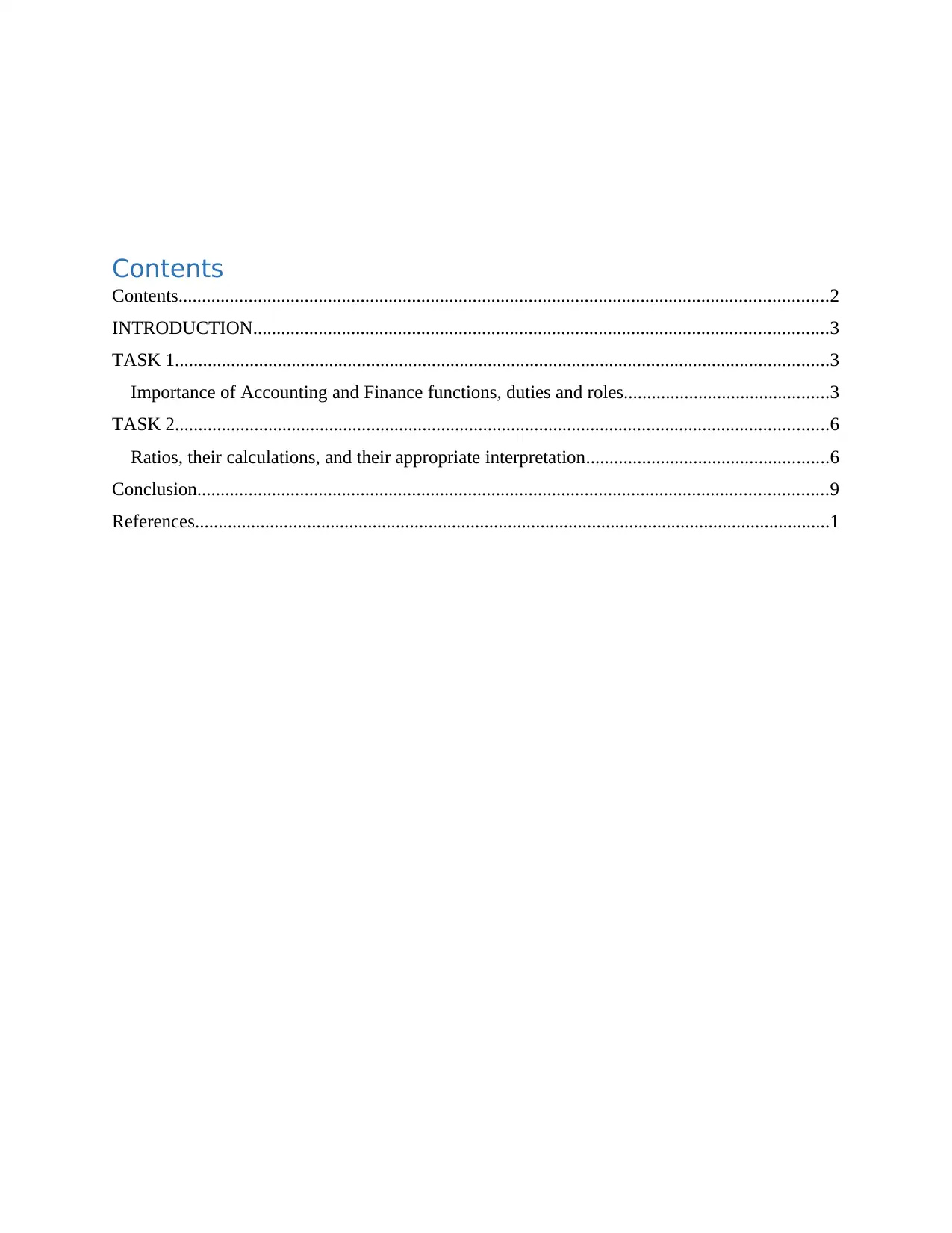
Contents...........................................................................................................................................2
INTRODUCTION...........................................................................................................................3
TASK 1............................................................................................................................................3
Importance of Accounting and Finance functions, duties and roles............................................3
TASK 2............................................................................................................................................6
Ratios, their calculations, and their appropriate interpretation....................................................6
Conclusion.......................................................................................................................................9
References........................................................................................................................................1
Contents...........................................................................................................................................2
INTRODUCTION...........................................................................................................................3
TASK 1............................................................................................................................................3
Importance of Accounting and Finance functions, duties and roles............................................3
TASK 2............................................................................................................................................6
Ratios, their calculations, and their appropriate interpretation....................................................6
Conclusion.......................................................................................................................................9
References........................................................................................................................................1

⊘ This is a preview!⊘
Do you want full access?
Subscribe today to unlock all pages.

Trusted by 1+ million students worldwide
INTRODUCTION
I was asked to produce a report for the management of SKANSKA PLC, as per the
company's request (Smith, 2015). As a member of the financial department, I will assess the
significance of accounting and finance functions, responsibilities, and roles in this article. This
study will assess the core positions of SKANSKA's accounting and finance departments.
Depending on the structure of the corporation, the report will first determine the general duties
and position of the accounting and finance department, and then apply the roles and functions to
the SKANSKA PLC as a whole. Accounting and finance are essential components of every
company's operations. Profits and money are ultimately what companies aim for, and if the
revenue is misused, the organisation as a whole is poorly managed. Money flow can be
controlled and calculated by efficiently controlling the accounts and finances of the company's
expenses and earnings, thus directing the business course. An effective finance manager or
director must understand and comprehend every aspect of every business domain in order to
develop an effective financial plan that meets the company's goals.
Accounting communicates a large amount of financial information to key stakeholders like
clients, managers, and investors. Stakeholders use this information to evaluate the company's
financial performance and status. Until investing, investors, in particular, examine the
company's financial statements. Accounting's role in a business is to use numerical data to help
stakeholders make decisions. More importantly, it is the audit manager's or finance director's
responsibility to ensure that the information shared by the accounting manager or finance
director is understood by the stakeholders. As a result, it's very crucial to present the data in a
way that experts would understand. It's not difficult to collect only the numbers. However,
analysing, assessing, and interpreting data can be difficult at times. A qualified accountant
establishes a transparent presentation of financial information that efficiently communicates
with stakeholders (Armstrong et al., 2010).
TASK 1
Importance of Accounting and Finance functions, duties and roles
Skanska worked on a variety of tasks, and the personnel management hierarchy had basic
roles that project managers had to carry out. The importance of construction projects in
contractor organisations like Skanska is critical to project success. The first job was to manage
the building projects and works, which required a simple delivery and labour division for the
rest of the team. Second, project managers at Skanska were in charge of more cost-effective
work, such as ensuring that proper time limits were set and met by different staff. When new
tasks emerged, the project managers were still in charge of staffing. This was accomplished in a
cost-effective manner, with financial commitments met successfully while losses were
I was asked to produce a report for the management of SKANSKA PLC, as per the
company's request (Smith, 2015). As a member of the financial department, I will assess the
significance of accounting and finance functions, responsibilities, and roles in this article. This
study will assess the core positions of SKANSKA's accounting and finance departments.
Depending on the structure of the corporation, the report will first determine the general duties
and position of the accounting and finance department, and then apply the roles and functions to
the SKANSKA PLC as a whole. Accounting and finance are essential components of every
company's operations. Profits and money are ultimately what companies aim for, and if the
revenue is misused, the organisation as a whole is poorly managed. Money flow can be
controlled and calculated by efficiently controlling the accounts and finances of the company's
expenses and earnings, thus directing the business course. An effective finance manager or
director must understand and comprehend every aspect of every business domain in order to
develop an effective financial plan that meets the company's goals.
Accounting communicates a large amount of financial information to key stakeholders like
clients, managers, and investors. Stakeholders use this information to evaluate the company's
financial performance and status. Until investing, investors, in particular, examine the
company's financial statements. Accounting's role in a business is to use numerical data to help
stakeholders make decisions. More importantly, it is the audit manager's or finance director's
responsibility to ensure that the information shared by the accounting manager or finance
director is understood by the stakeholders. As a result, it's very crucial to present the data in a
way that experts would understand. It's not difficult to collect only the numbers. However,
analysing, assessing, and interpreting data can be difficult at times. A qualified accountant
establishes a transparent presentation of financial information that efficiently communicates
with stakeholders (Armstrong et al., 2010).
TASK 1
Importance of Accounting and Finance functions, duties and roles
Skanska worked on a variety of tasks, and the personnel management hierarchy had basic
roles that project managers had to carry out. The importance of construction projects in
contractor organisations like Skanska is critical to project success. The first job was to manage
the building projects and works, which required a simple delivery and labour division for the
rest of the team. Second, project managers at Skanska were in charge of more cost-effective
work, such as ensuring that proper time limits were set and met by different staff. When new
tasks emerged, the project managers were still in charge of staffing. This was accomplished in a
cost-effective manner, with financial commitments met successfully while losses were
Paraphrase This Document
Need a fresh take? Get an instant paraphrase of this document with our AI Paraphraser
minimised. They would bring in staff members who were inspired and useful in projects to
fulfil this task. They were also in charge of settling on and carefully selecting the work place for
the company leaders.
The various and complicated problems involved in handling a company's finances would
necessitate the creation of a dedicated department to manage all financial and accounting
matters. The accounting and finance department is critical to the company's performance. The
company's efficiencies in handling finances and other associated responsibilities would
effectively be facilitated with a sound and more established Accounting and Finance
department in place. The right staff, the right tools, regulations, and a strong Accounting and
Finance management system would make up a realistic Accounting and Finance department.
An efficient system or programme with various critical features should be part of a sound
and good accounting and finance system. The system should be simple to use, evaluate, and
produce the various reports that the organisation requires. The department's framework should
be user-friendly, and the data interface should be able to satisfy all potential users, since not
everyone would have specialised technological skills. The framework that the company's
Accounting and Finance department would implement should be able to update and maintain all
of the data that is collected or fed into it automatically. The finance and accounting system
(software) implemented should be highly customizable, allowing the system to be tailored to
the company's specific needs and specifications. It will be necessary for the programme to be
highly scalable and safe.
Revenue Management- One of the most critical policies for someone who deals with
cash or cash equivalents is the finance department's revenue management policy. The revenue
management plan establishes the total degree of responsibility that the organisation can accept
at any given time. The associate finance department or junior accountant is typically in charge
of taxation duties and management, while the CFO chief financial officer is in charge of all
financial accounting. As a construction firm, SKANSKA PLC should have proper revenue
control in place to make sure that each new construction project's expected revenue status is
known. SKANSKA PLC will need to use proper sales analysis methods in order to be accurate
and less reliant on assumptions. (Kumbirai and Webb, 2010.
Investment Appraisal- The investment appraisal approach, which is a vital tool for the
business, was created by the accounting and finance department. An investor may use the
investment evaluation method to evaluate the best option among the available options by
estimating the investment's outcome. The well-known construction company SKANSKA PLC
has a sizable investment pool. In order to maintain investor interest and inspire younger
investors, SKANSKA PLC's accounting and finance department must develop appropriate
investment valuation strategies to attract both existing and new investors in the market.
fulfil this task. They were also in charge of settling on and carefully selecting the work place for
the company leaders.
The various and complicated problems involved in handling a company's finances would
necessitate the creation of a dedicated department to manage all financial and accounting
matters. The accounting and finance department is critical to the company's performance. The
company's efficiencies in handling finances and other associated responsibilities would
effectively be facilitated with a sound and more established Accounting and Finance
department in place. The right staff, the right tools, regulations, and a strong Accounting and
Finance management system would make up a realistic Accounting and Finance department.
An efficient system or programme with various critical features should be part of a sound
and good accounting and finance system. The system should be simple to use, evaluate, and
produce the various reports that the organisation requires. The department's framework should
be user-friendly, and the data interface should be able to satisfy all potential users, since not
everyone would have specialised technological skills. The framework that the company's
Accounting and Finance department would implement should be able to update and maintain all
of the data that is collected or fed into it automatically. The finance and accounting system
(software) implemented should be highly customizable, allowing the system to be tailored to
the company's specific needs and specifications. It will be necessary for the programme to be
highly scalable and safe.
Revenue Management- One of the most critical policies for someone who deals with
cash or cash equivalents is the finance department's revenue management policy. The revenue
management plan establishes the total degree of responsibility that the organisation can accept
at any given time. The associate finance department or junior accountant is typically in charge
of taxation duties and management, while the CFO chief financial officer is in charge of all
financial accounting. As a construction firm, SKANSKA PLC should have proper revenue
control in place to make sure that each new construction project's expected revenue status is
known. SKANSKA PLC will need to use proper sales analysis methods in order to be accurate
and less reliant on assumptions. (Kumbirai and Webb, 2010.
Investment Appraisal- The investment appraisal approach, which is a vital tool for the
business, was created by the accounting and finance department. An investor may use the
investment evaluation method to evaluate the best option among the available options by
estimating the investment's outcome. The well-known construction company SKANSKA PLC
has a sizable investment pool. In order to maintain investor interest and inspire younger
investors, SKANSKA PLC's accounting and finance department must develop appropriate
investment valuation strategies to attract both existing and new investors in the market.
Controlling and Managing the Inventory- The financial department also oversees and
manages the corporation's inventories and stocks. Aside from the finance department, no further
office is adequately trained to deal with capital raisings. A variety of statistical methods must be
used to record and control inventories. Special methods are used to track and manage the
inventories that define the finance department's core competency. The accounting and finance
department of SKANSKA PLC must be capable of efficiently handling and controlling
inventory procedures. If stocks are running low, inventory management will help SKANSKA
PLC determine when it is appropriate to restock. It will also help with determining the exact
'lead-time' of products when they have been required. (Sarngadharan, 2011).
Establishing the Accounting Policies and Procedure Manual- One of the main
functions of the accounting and finance department is the formulation of accounting policies,
which guide all financial and accounting transactions. Such policies also keep track of all
organisation payments, whether intrinsic or extrinsic. Although upper executives must accept
these measures, they are initially developed by the accounting and finance department.
Financial reporting practises are critical for SKANSKA PLC since they enable the industry
maintain record of all transactions. One of the most critical things to remember and control is
transaction monitoring, since losing track of even a single transaction would have a negative
impact on the company's overall financial situation.
Budgeting- One of the most critical aspects of any company is budgeting. This must be
done rapidly also because economic performance is largely dependent upon how the projects
are planned. Despite the fact that they have access to the same set of numbers in the
corporation, the accounting and finance department is still in charge of budgeting. Only such
finance team is capable of analysing statistics and assessing the current state of the business.
Budgets allow stakeholders to think of the future, so the organization must be profitable
enough to work in that manner. Budgeting is needed for all businesses, large and small, and
SKANSKA PLC, with a very well large corporation, necessitates a disproportionately large
amount of financial planning to address the economy's difficulties. In view of current business
conditions and the position of competitors, SKANSKA PLC must determine what targets
should be set. No reliable forecasting is possible without proper budgeting techniques (Dylag
and Kucharczyk, 2011).
Eliminating Frauds- Two of the most important roles of accountants in an organisation
are the prevention of fraud and the prioritisation of transparency in all transactions. On their
own, top management has a difficult time avoiding fraud. Top executives places a high value
on the corporate finance divisions when it relates to combating fraud. Since such accounting
department is in control of all income and expenses, it should be held to a high standard of
accountability, since huge responsibility means greater accountability. The bigger the
company, the more staff it has, and the greater the likelihood that it will be a victim of fraud.
manages the corporation's inventories and stocks. Aside from the finance department, no further
office is adequately trained to deal with capital raisings. A variety of statistical methods must be
used to record and control inventories. Special methods are used to track and manage the
inventories that define the finance department's core competency. The accounting and finance
department of SKANSKA PLC must be capable of efficiently handling and controlling
inventory procedures. If stocks are running low, inventory management will help SKANSKA
PLC determine when it is appropriate to restock. It will also help with determining the exact
'lead-time' of products when they have been required. (Sarngadharan, 2011).
Establishing the Accounting Policies and Procedure Manual- One of the main
functions of the accounting and finance department is the formulation of accounting policies,
which guide all financial and accounting transactions. Such policies also keep track of all
organisation payments, whether intrinsic or extrinsic. Although upper executives must accept
these measures, they are initially developed by the accounting and finance department.
Financial reporting practises are critical for SKANSKA PLC since they enable the industry
maintain record of all transactions. One of the most critical things to remember and control is
transaction monitoring, since losing track of even a single transaction would have a negative
impact on the company's overall financial situation.
Budgeting- One of the most critical aspects of any company is budgeting. This must be
done rapidly also because economic performance is largely dependent upon how the projects
are planned. Despite the fact that they have access to the same set of numbers in the
corporation, the accounting and finance department is still in charge of budgeting. Only such
finance team is capable of analysing statistics and assessing the current state of the business.
Budgets allow stakeholders to think of the future, so the organization must be profitable
enough to work in that manner. Budgeting is needed for all businesses, large and small, and
SKANSKA PLC, with a very well large corporation, necessitates a disproportionately large
amount of financial planning to address the economy's difficulties. In view of current business
conditions and the position of competitors, SKANSKA PLC must determine what targets
should be set. No reliable forecasting is possible without proper budgeting techniques (Dylag
and Kucharczyk, 2011).
Eliminating Frauds- Two of the most important roles of accountants in an organisation
are the prevention of fraud and the prioritisation of transparency in all transactions. On their
own, top management has a difficult time avoiding fraud. Top executives places a high value
on the corporate finance divisions when it relates to combating fraud. Since such accounting
department is in control of all income and expenses, it should be held to a high standard of
accountability, since huge responsibility means greater accountability. The bigger the
company, the more staff it has, and the greater the likelihood that it will be a victim of fraud.
⊘ This is a preview!⊘
Do you want full access?
Subscribe today to unlock all pages.
Trusted by 1+ million students worldwide
SKANSKA PLC is a large company, and coping with wrongdoing in a big organization is
more complicated. Accounting and finance divisions should keep a keen watch on
transparency in order to aid SKANSKA PLC in avoiding fraud in particular.
The department of a company of SKANSKA PLC must follow the given roles in order
to become an effective service company. The finance team is vital to the firm's corporate
performance. As a consequence, it carries a bigger responsibility to formulate the best
techniques and tactics to insure that the company target is reached as stated. If the accounting
and finance department's policies and procedures are correctly applied, SKANSKA PLC is
more motivated to keep or boost its position (Fridson and Alvarez, 2011).
The accounting and finance department of SKANSKA PLC will provide several
benefits to the company. The department will be able to convince investors by presenting the
best picture of financial health. Furthermore, the department should be able to provide an
acceptable combination of risk and profit value creation. Financial management often
encourages the company to make decisions in a structured and well-organized manner.
SKANSKA PLC will also gain a competitive advantage because it will be able to adapt
quickly to all financial-related issues. The department's overall activities will run smoothly,
with one of the most significant factors being the flow of funds to properly support the
agency's expenses (Змитрович, 2010).
TASK 2
Ratios, their calculations, and their appropriate interpretation
Calculations
Return on capital employed
Net profit margin
Current ratio
Average Receivable days’/ Debtors collection period Average
Payable days’/ Creditors collection period
Ratio Analysis-
Return of Capital Employed- ROCE is an important metric for assessing a
corporation's performance in relation towards its working capital. In contrast to other
calculations, along with ROE, that only recognizes the company's financial performance, ROCE
also includes obligations and other loans. With that kind of a high level of debt, it provides a
better picture of the financial performance of a company. ROCE trends are key measures of a
more complicated. Accounting and finance divisions should keep a keen watch on
transparency in order to aid SKANSKA PLC in avoiding fraud in particular.
The department of a company of SKANSKA PLC must follow the given roles in order
to become an effective service company. The finance team is vital to the firm's corporate
performance. As a consequence, it carries a bigger responsibility to formulate the best
techniques and tactics to insure that the company target is reached as stated. If the accounting
and finance department's policies and procedures are correctly applied, SKANSKA PLC is
more motivated to keep or boost its position (Fridson and Alvarez, 2011).
The accounting and finance department of SKANSKA PLC will provide several
benefits to the company. The department will be able to convince investors by presenting the
best picture of financial health. Furthermore, the department should be able to provide an
acceptable combination of risk and profit value creation. Financial management often
encourages the company to make decisions in a structured and well-organized manner.
SKANSKA PLC will also gain a competitive advantage because it will be able to adapt
quickly to all financial-related issues. The department's overall activities will run smoothly,
with one of the most significant factors being the flow of funds to properly support the
agency's expenses (Змитрович, 2010).
TASK 2
Ratios, their calculations, and their appropriate interpretation
Calculations
Return on capital employed
Net profit margin
Current ratio
Average Receivable days’/ Debtors collection period Average
Payable days’/ Creditors collection period
Ratio Analysis-
Return of Capital Employed- ROCE is an important metric for assessing a
corporation's performance in relation towards its working capital. In contrast to other
calculations, along with ROE, that only recognizes the company's financial performance, ROCE
also includes obligations and other loans. With that kind of a high level of debt, it provides a
better picture of the financial performance of a company. ROCE trends are key measures of a
Paraphrase This Document
Need a fresh take? Get an instant paraphrase of this document with our AI Paraphraser
company's overall financial performance. Corporations that have a stable or increasing ROCE
are much more likely to generate stakeholders (Drake and Fabozzi, 2012).
The above calculation of SKANSKA PLC's ROCE for 2018 and 2019 shows a declining
trend, with the ROCE in 2018 being 0.353 and in 2019 being 0.282. When measuring
performance using ROCE, the best pattern for stakeholders and owners would be for the
outcomes to be consistently better or consistent. Another of the possible causes or reasons for
the declining trend of ROCE may be excessive capital use in the sector. The corporation's
revenue grew year over year. Even after this, capital employed estimates have grown in
proportion, resulting in a decrease in SKANSKA PLC's cumulative ROCE.
The detrimental impact of SKANSKA PLC's declining ROCE trend might be
significant. The declining trend of ROCE reduces investor confidence since it generates a
negative impression of inefficient capital usage. A shortage of market confidence will also lead
to a lack of financing sources, restricting the company's ability to access new financial support
(Asare and Wright, 2012).
Net profit margin- The net profit margin is an equation that computes relationship
between net profit of total revenue. It is a ratio of a corporation's net profits to its revenues. The
net profit margin determines how much value is created out of each dollar of income earned by
the company, or how profit is converted. The net profit margin assists investors in deciding
whether or not such a company's profits can generate enough revenue. Whether or not the
company's operating expenses are minimised and regulated. The net profit margin of a business
is among the most important metrics of its fiscal viability (Merna et al., 2010).
The net profit margin in 2018 was 12.5 percent, according to the aforementioned
figures, while the ratio in 2019 was 11.25 percent. This indicates a steady decline, which is bad
for industry. The major cause of this steady decline may be a loss of oversight over operating
expenses. Regardless of the fact how sales and net income are also up dramatically. Even so,
the growth in operational expenses exceeds the increase in sales and total revenue. A large
increase in sales is meaningless if the organisation cannot manage its expenses.
The declining net profit margin would hurt the corporation's equity. Income are
transformed to accounts receivable, which increases the overall equity of the company. Even so,
if profits are interrupted, this will have a negative effect on capital, risking the corporation's
maximizing profit target even further. The profit maximisation target would not be reached.
Current ratio- The current ratio, also known as financial metrics, evaluates a trustee's
potential to deliver quick commitments and debts overdue within a year. It enables
entrepreneurs determine how well the business can optimize its capital wealth to cover off
existing debts as well as other relatively brief commitments. The current ratio measures a
are much more likely to generate stakeholders (Drake and Fabozzi, 2012).
The above calculation of SKANSKA PLC's ROCE for 2018 and 2019 shows a declining
trend, with the ROCE in 2018 being 0.353 and in 2019 being 0.282. When measuring
performance using ROCE, the best pattern for stakeholders and owners would be for the
outcomes to be consistently better or consistent. Another of the possible causes or reasons for
the declining trend of ROCE may be excessive capital use in the sector. The corporation's
revenue grew year over year. Even after this, capital employed estimates have grown in
proportion, resulting in a decrease in SKANSKA PLC's cumulative ROCE.
The detrimental impact of SKANSKA PLC's declining ROCE trend might be
significant. The declining trend of ROCE reduces investor confidence since it generates a
negative impression of inefficient capital usage. A shortage of market confidence will also lead
to a lack of financing sources, restricting the company's ability to access new financial support
(Asare and Wright, 2012).
Net profit margin- The net profit margin is an equation that computes relationship
between net profit of total revenue. It is a ratio of a corporation's net profits to its revenues. The
net profit margin determines how much value is created out of each dollar of income earned by
the company, or how profit is converted. The net profit margin assists investors in deciding
whether or not such a company's profits can generate enough revenue. Whether or not the
company's operating expenses are minimised and regulated. The net profit margin of a business
is among the most important metrics of its fiscal viability (Merna et al., 2010).
The net profit margin in 2018 was 12.5 percent, according to the aforementioned
figures, while the ratio in 2019 was 11.25 percent. This indicates a steady decline, which is bad
for industry. The major cause of this steady decline may be a loss of oversight over operating
expenses. Regardless of the fact how sales and net income are also up dramatically. Even so,
the growth in operational expenses exceeds the increase in sales and total revenue. A large
increase in sales is meaningless if the organisation cannot manage its expenses.
The declining net profit margin would hurt the corporation's equity. Income are
transformed to accounts receivable, which increases the overall equity of the company. Even so,
if profits are interrupted, this will have a negative effect on capital, risking the corporation's
maximizing profit target even further. The profit maximisation target would not be reached.
Current ratio- The current ratio, also known as financial metrics, evaluates a trustee's
potential to deliver quick commitments and debts overdue within a year. It enables
entrepreneurs determine how well the business can optimize its capital wealth to cover off
existing debts as well as other relatively brief commitments. The current ratio measures a
corporation's current assets divided by current liabilities, also known as short-term
commitments. The assets are those which are money or could be turned into cash within a year,
whereas the obligations would be those that must be paid within the next year or less. This ratio,
also known as 'working capital,' helps investors determine a corporation's ability to balance
short-term liabilities with current assets (Ciprian et al., 2012).
As per the latest ratio calculation, the ratio was 2.35:1 in 2018 and 0.932:1 in 2019,
indicating that the economic position is beginning to deteriorate. Current assets are quickly
rising, but debts are rising even faster, negatively affecting the company's overall performance.
Even if all current assets were paid in cash, the revenues would be insufficient to cover the
creditors.
Such developments in the financial ratios would cause the company to confront future
cash flow problems as the due sum grew. The company owes them money, yet it would be
unable to pay them. Meet and greet covenant can also jeopardise the firm's capacity to continue
as a going concern.
Average Receivable days’/ Debtors collection period- The recovery period, also
known as the trustee's timespan, is a measure used to calculate how long it would take a
business in addition to maximizing shareholder value to retrieve money due from customers.
Account receivables do not generate sales, but they do add to overall revenue. The average
collection period is used by the corporation to decide if it has enough cash to meet its financial
obligations or expenses.
As per the statistics mentioned, the gross collection period in 2018 were 68.44 days,
whereas the total trade receivables in 2019 were 73 days. The spike in the size of days is
unfavourable because it means that the corporation will now have to wait longer to collect the
amount owed by the debtor. The cumulative receivable days were lower in 2018, meaning that
the amount of receiving was done in less time. So according 2019 data, the amount of time has
increased, resulting in a delay in payment receipt. The primary cause of this increase would be
that the borrower is incapable or unwilling refusing to spend the amount (Cardos et al., 2010).
The consequence of this rising number of days raises the likelihood of default on the
debtor's part, resulting in a rise in bad debt cost on the income statement. Overall profitability
will suffer as a result of these outcomes, as it will be negatively impacted. With growing
delayed payments, the chance of no recovery rises, and such debtors are more likely to default.
Average Payable days’/ Creditors collection period- The cash exchange time, also
recognized as the claimant's recovery period, is used to calculate how long it would take a
business to repay its vendor debts. The estimated trade payables is a key metric for assessing a
commitments. The assets are those which are money or could be turned into cash within a year,
whereas the obligations would be those that must be paid within the next year or less. This ratio,
also known as 'working capital,' helps investors determine a corporation's ability to balance
short-term liabilities with current assets (Ciprian et al., 2012).
As per the latest ratio calculation, the ratio was 2.35:1 in 2018 and 0.932:1 in 2019,
indicating that the economic position is beginning to deteriorate. Current assets are quickly
rising, but debts are rising even faster, negatively affecting the company's overall performance.
Even if all current assets were paid in cash, the revenues would be insufficient to cover the
creditors.
Such developments in the financial ratios would cause the company to confront future
cash flow problems as the due sum grew. The company owes them money, yet it would be
unable to pay them. Meet and greet covenant can also jeopardise the firm's capacity to continue
as a going concern.
Average Receivable days’/ Debtors collection period- The recovery period, also
known as the trustee's timespan, is a measure used to calculate how long it would take a
business in addition to maximizing shareholder value to retrieve money due from customers.
Account receivables do not generate sales, but they do add to overall revenue. The average
collection period is used by the corporation to decide if it has enough cash to meet its financial
obligations or expenses.
As per the statistics mentioned, the gross collection period in 2018 were 68.44 days,
whereas the total trade receivables in 2019 were 73 days. The spike in the size of days is
unfavourable because it means that the corporation will now have to wait longer to collect the
amount owed by the debtor. The cumulative receivable days were lower in 2018, meaning that
the amount of receiving was done in less time. So according 2019 data, the amount of time has
increased, resulting in a delay in payment receipt. The primary cause of this increase would be
that the borrower is incapable or unwilling refusing to spend the amount (Cardos et al., 2010).
The consequence of this rising number of days raises the likelihood of default on the
debtor's part, resulting in a rise in bad debt cost on the income statement. Overall profitability
will suffer as a result of these outcomes, as it will be negatively impacted. With growing
delayed payments, the chance of no recovery rises, and such debtors are more likely to default.
Average Payable days’/ Creditors collection period- The cash exchange time, also
recognized as the claimant's recovery period, is used to calculate how long it would take a
business to repay its vendor debts. The estimated trade payables is a key metric for assessing a
⊘ This is a preview!⊘
Do you want full access?
Subscribe today to unlock all pages.
Trusted by 1+ million students worldwide
bank's profitability. Lower trade payables make the companies gain new clients by giving the
indication that the company is responsible for paying back debts quickly (Nenide et al., 2010).
In 2018, the buffering capacity period was 77 days, and in 2019, it was 160 days. Based
on the data available above, the average payable duration in 2018 was 77 days and 160 days in
2019. Both figures indicate that there is a substantial difference. The higher the amount, the
higher the payoffs. The primary explanation for the increase in trade payables would be that the
company lacks sufficient cash to pay its vendors. This shows that the company has been unable
to pay its vendors due to a lack of revenue.
The effect of the rise for several months will be unfavorable, even as organization will
face possible cash flow issues as a result of inadequate revenue, and the firm will struggle to
cover its expenses and debts simultaneously time. Another effect of the higher lifespan payable
period may be a reduction in vendor credibility. With in hands of distributors, the stock revenue
or credibility could suffer. The sellers would be unable to sell any new good or service to insure
that their capital does not get trapped. Suppliers are the core of every company, and violating
their terms would have a detrimental effect on the overall activity (McCarthy, 2010).
Conclusion
The preceding study is a thorough review of the importance of accounting and finance
divisions in companies, and also the primary roles and responsibilities of an accounting or
financial officer. Furthermore, some figures were examined, providing a complete image of the
SKANSKA PLC's performance. Many numerical ratio is determined and critically analysed in
order to assess what causes changes and fluctuations in market has resulted, as well as the effect
the factors has on SKANSKA PLC.
indication that the company is responsible for paying back debts quickly (Nenide et al., 2010).
In 2018, the buffering capacity period was 77 days, and in 2019, it was 160 days. Based
on the data available above, the average payable duration in 2018 was 77 days and 160 days in
2019. Both figures indicate that there is a substantial difference. The higher the amount, the
higher the payoffs. The primary explanation for the increase in trade payables would be that the
company lacks sufficient cash to pay its vendors. This shows that the company has been unable
to pay its vendors due to a lack of revenue.
The effect of the rise for several months will be unfavorable, even as organization will
face possible cash flow issues as a result of inadequate revenue, and the firm will struggle to
cover its expenses and debts simultaneously time. Another effect of the higher lifespan payable
period may be a reduction in vendor credibility. With in hands of distributors, the stock revenue
or credibility could suffer. The sellers would be unable to sell any new good or service to insure
that their capital does not get trapped. Suppliers are the core of every company, and violating
their terms would have a detrimental effect on the overall activity (McCarthy, 2010).
Conclusion
The preceding study is a thorough review of the importance of accounting and finance
divisions in companies, and also the primary roles and responsibilities of an accounting or
financial officer. Furthermore, some figures were examined, providing a complete image of the
SKANSKA PLC's performance. Many numerical ratio is determined and critically analysed in
order to assess what causes changes and fluctuations in market has resulted, as well as the effect
the factors has on SKANSKA PLC.
Paraphrase This Document
Need a fresh take? Get an instant paraphrase of this document with our AI Paraphraser
References
Books and journals
Armstrong, C.S., Guay, W.R. and Weber, J.P., 2010. The role of information and financial
reporting in corporate governance and debt contracting. Journal of accounting and
economics, 50(2-3), pp.179-234.
Asare, S.K. and Wright, A.M., 2012. Investors', auditors', and lenders' understanding of the
message conveyed by the standard audit report on the financial statements.
Accounting Horizons, 26(2), pp.193-217.
Cardos, I.R., Pete, I. and Cardos, V.D., 2010, December. The changing role of managerial
accounting and the managerial accounting profession in Romania. In Forum on
Economics and Business (Vol. 13, No. 97, p. 57). Hungarian Economists' Society of
Romania.
Ciprian, G.G., Valentin, R., Lucia, V.V.M. and Mădălina, G.I.A., 2012. Elaboration of
accounting financial report on structural capital. Procedia-Social and Behavioral
Sciences, 62, pp.706-710.
Drake, P.P. and Fabozzi, F.J., 2012. Financial ratio analysis. Encyclopedia of Financial Models.
Dylag, R. and Kucharczyk, M., 2011. Recognising revenue from the construction of real estate
in financial statements of developers in poland. Journal of Accounting and
Management System, (1), p.35.
Fridson, M.S. and Alvarez, F., 2011. Financial statement analysis: a practitioner's guide (Vol.
597). John Wiley & Sons.
Kumbirai, M. and Webb, R., 2010. A financial ratio analysis of commercial bank performance
in South Africa. African Review of Economics and Finance, 2(1), pp.30- 53.
McCarthy, J.F., 2010. Construction project management: A managerial approach. Pareto.
Merna, T., Chu, Y. and Al-Thani, F.F., 2010. Project finance in construction: A structured
guide to assessment. John Wiley & Sons.
Nenide, B., Pricer, R.W. and Camp, S.M., 2010. The use of financial ratios for research:
problems associated with and recommendations for using large databases.
Unpublished manuscript retrieved August, 3.
Sarngadharan, M., 2011. Financial analysis for management decisions. PHI Learning Pvt. Ltd..
Books and journals
Armstrong, C.S., Guay, W.R. and Weber, J.P., 2010. The role of information and financial
reporting in corporate governance and debt contracting. Journal of accounting and
economics, 50(2-3), pp.179-234.
Asare, S.K. and Wright, A.M., 2012. Investors', auditors', and lenders' understanding of the
message conveyed by the standard audit report on the financial statements.
Accounting Horizons, 26(2), pp.193-217.
Cardos, I.R., Pete, I. and Cardos, V.D., 2010, December. The changing role of managerial
accounting and the managerial accounting profession in Romania. In Forum on
Economics and Business (Vol. 13, No. 97, p. 57). Hungarian Economists' Society of
Romania.
Ciprian, G.G., Valentin, R., Lucia, V.V.M. and Mădălina, G.I.A., 2012. Elaboration of
accounting financial report on structural capital. Procedia-Social and Behavioral
Sciences, 62, pp.706-710.
Drake, P.P. and Fabozzi, F.J., 2012. Financial ratio analysis. Encyclopedia of Financial Models.
Dylag, R. and Kucharczyk, M., 2011. Recognising revenue from the construction of real estate
in financial statements of developers in poland. Journal of Accounting and
Management System, (1), p.35.
Fridson, M.S. and Alvarez, F., 2011. Financial statement analysis: a practitioner's guide (Vol.
597). John Wiley & Sons.
Kumbirai, M. and Webb, R., 2010. A financial ratio analysis of commercial bank performance
in South Africa. African Review of Economics and Finance, 2(1), pp.30- 53.
McCarthy, J.F., 2010. Construction project management: A managerial approach. Pareto.
Merna, T., Chu, Y. and Al-Thani, F.F., 2010. Project finance in construction: A structured
guide to assessment. John Wiley & Sons.
Nenide, B., Pricer, R.W. and Camp, S.M., 2010. The use of financial ratios for research:
problems associated with and recommendations for using large databases.
Unpublished manuscript retrieved August, 3.
Sarngadharan, M., 2011. Financial analysis for management decisions. PHI Learning Pvt. Ltd..

Smith, S.S., 2015. Accounting, integrated financial reporting, and the future of finance. Journal
of Accounting and Finance, 15(2), p.11.
Змитрович, А.И., 2010. Financial decision making support system. XX International Congress-
AEDEM'2010.«Global Financial & Business Networks and Information Management
Systems», Minsk, 2010.
of Accounting and Finance, 15(2), p.11.
Змитрович, А.И., 2010. Financial decision making support system. XX International Congress-
AEDEM'2010.«Global Financial & Business Networks and Information Management
Systems», Minsk, 2010.
⊘ This is a preview!⊘
Do you want full access?
Subscribe today to unlock all pages.
Trusted by 1+ million students worldwide

1 out of 12


Related Documents


Your All-in-One AI-Powered Toolkit for Academic Success.
+13062052269
info@desklib.com
Available 24*7 on WhatsApp / Email
![[object Object]](/_next/static/media/star-bottom.7253800d.svg)
Unlock your academic potential
Copyright © 2020–2026 A2Z Services. All Rights Reserved. Developed and managed by ZUCOL.