Reflective Journal: Managing Classroom Conflict in Inclusive Education
VerifiedAdded on 2023/06/10
|6
|1307
|298
Journal and Reflective Writing
AI Summary
This reflective journal entry details a kindergarten teacher's experience in managing a classroom conflict. The incident involves two students: one cheating during an activity and the other resorting to physical violence. The teacher's initial response focused on de-escalation, understanding both sides of the argument, and reporting the incident to the principal. The reflection analyzes the situation in light of school policies and principles, acknowledging the complexities of human behavior and the challenges of preventing cheating and violence. It critiques the existing practices, highlighting inconsistencies and omissions, and suggests improvements such as increased invigilation and parental involvement. The reflection concludes by emphasizing the need for a balanced approach that addresses both the immediate conflict and the underlying issues to ensure a fair and educational outcome for all students involved.
Reflection in special and
inclusive education
inclusive education
Paraphrase This Document
Need a fresh take? Get an instant paraphrase of this document with our AI Paraphraser

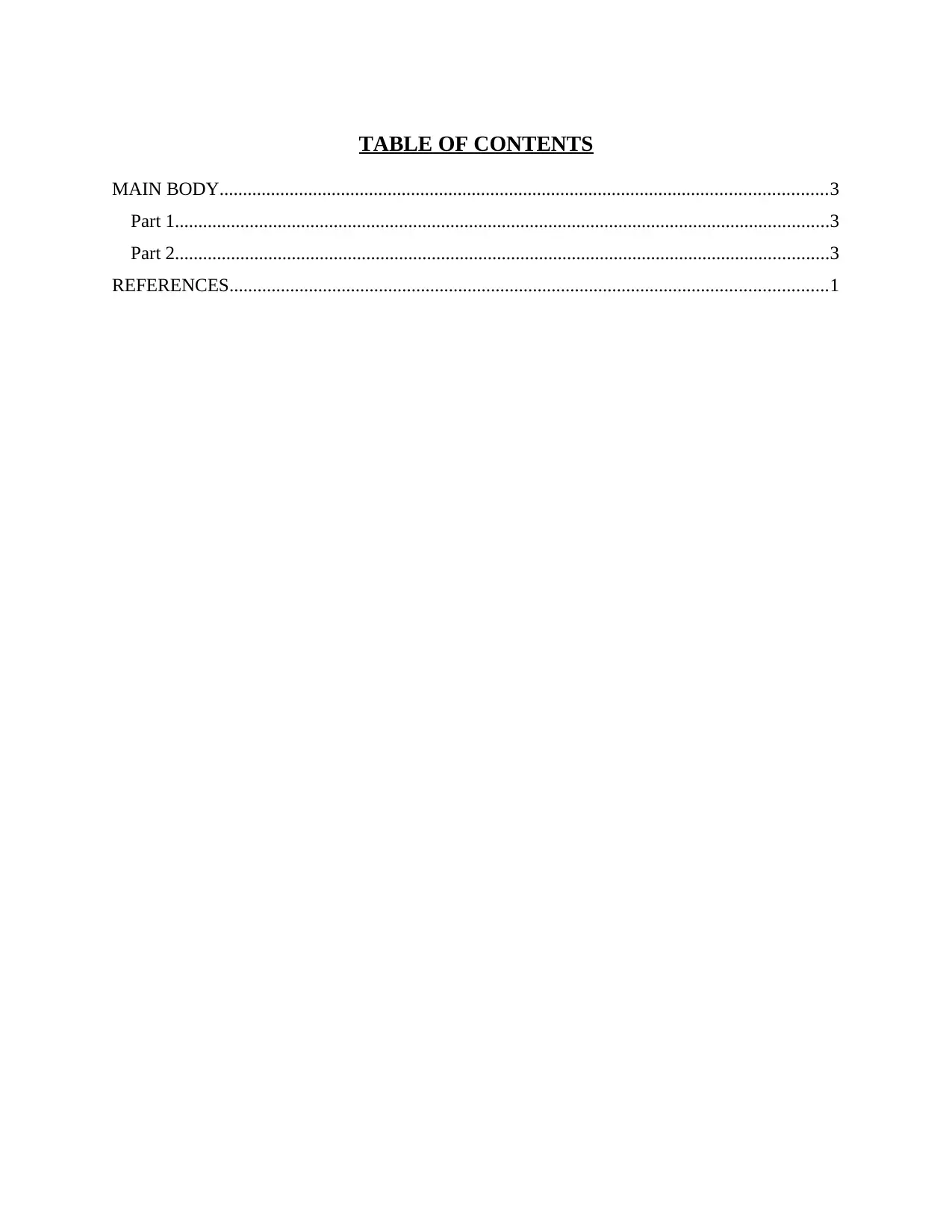
TABLE OF CONTENTS
MAIN BODY..................................................................................................................................3
Part 1............................................................................................................................................3
Part 2............................................................................................................................................3
REFERENCES................................................................................................................................1
MAIN BODY..................................................................................................................................3
Part 1............................................................................................................................................3
Part 2............................................................................................................................................3
REFERENCES................................................................................................................................1

MAIN BODY
Part 1
I, being a kindergarten teacher of an educational institute while invigilating an important
activty noticed two students quarrelling during the activity and saw a student S2, slapping other
student S1. First of all, I went to them to stop them from fighting and to calmly explain what
really happened (Turk, 2018). On the basis of listening to both of them, S2 said that S1 was
cheating from the chits he brought within the activity being conducted and he tried to stop him
from cheating. When S1 did not listened to S2, he threatened him to complain to the teacher
invigilator during the activity that he is cheating from the chits (Students’ Reasoning About
Whether to Report When Others Cheat: Conflict, Confusion, and Consequences, 2022). This led
to an argument between both S1 and S2 and in the heat of such an argument S2, although
morally right on what he was doing, slapped S1 out of excessive anger which he was unable to
control.
Now, being a kindergarten teacher witnessing violence between 2 students, first and
foremost action must be to stop both of them, then calm them down and listen to both of their
sides of the conflict. Then I checked for the chits from which S1 was cheating and found them
with him (Vahidovna, 2022). Next, I informed our principal regarding the situation that just
happened and then finally, both the students i.e., S1 and S2 were called in the principal’s office
and further actions were taken by the principal according to his judgement and policies of the
University to be adhered to.
Reason why I reacted in such a manner is because it is natural to first stop the fight
between the students and make sure such violence does not take place again by calming both of
them down and then listening to both the sides of the argument to give fair opportunity to both of
them and then referring the case to my senior for further decision.
Part 2
Referring to the policies and principles formulated and laid down by the kindergarten
setting the steps taken by me in response to the conflict between the students as mentioned above
in my view reflected the accepted and dominant view i.e., adhered to the principles as the nature
of the problem was determined, the problem was analysed and appropriate solution was
implemented (Malizia and Jameson, 2018). Also, the decision taken by me was based on
effective and factual evidence and not on unreliable opinions i.e., I found the chits from which
Part 1
I, being a kindergarten teacher of an educational institute while invigilating an important
activty noticed two students quarrelling during the activity and saw a student S2, slapping other
student S1. First of all, I went to them to stop them from fighting and to calmly explain what
really happened (Turk, 2018). On the basis of listening to both of them, S2 said that S1 was
cheating from the chits he brought within the activity being conducted and he tried to stop him
from cheating. When S1 did not listened to S2, he threatened him to complain to the teacher
invigilator during the activity that he is cheating from the chits (Students’ Reasoning About
Whether to Report When Others Cheat: Conflict, Confusion, and Consequences, 2022). This led
to an argument between both S1 and S2 and in the heat of such an argument S2, although
morally right on what he was doing, slapped S1 out of excessive anger which he was unable to
control.
Now, being a kindergarten teacher witnessing violence between 2 students, first and
foremost action must be to stop both of them, then calm them down and listen to both of their
sides of the conflict. Then I checked for the chits from which S1 was cheating and found them
with him (Vahidovna, 2022). Next, I informed our principal regarding the situation that just
happened and then finally, both the students i.e., S1 and S2 were called in the principal’s office
and further actions were taken by the principal according to his judgement and policies of the
University to be adhered to.
Reason why I reacted in such a manner is because it is natural to first stop the fight
between the students and make sure such violence does not take place again by calming both of
them down and then listening to both the sides of the argument to give fair opportunity to both of
them and then referring the case to my senior for further decision.
Part 2
Referring to the policies and principles formulated and laid down by the kindergarten
setting the steps taken by me in response to the conflict between the students as mentioned above
in my view reflected the accepted and dominant view i.e., adhered to the principles as the nature
of the problem was determined, the problem was analysed and appropriate solution was
implemented (Malizia and Jameson, 2018). Also, the decision taken by me was based on
effective and factual evidence and not on unreliable opinions i.e., I found the chits from which
⊘ This is a preview!⊘
Do you want full access?
Subscribe today to unlock all pages.

Trusted by 1+ million students worldwide

student S1 was cheating and I also saw S2 hitting S1 during activity and both arguing. Also, I
tried to assess the situation from the point of view of both the students as although S1 was wrong
in cheating in the activity but use violent methods by S2 is also not correct and cannot be
supported or even neglected.
Although policies and principles of any institution says that there shall be no following of
immoral and illicit activities like cheating in the activity and resorting to violence in case of any
argument but as the humans are involved. It is in the human nature to argue and violence in the
extreme cases is an inherent part of the such argument and also, cheating in any educational
institute of the world cannot be fully removed. But this can only be controlled and reduced by
implementing various control measures like increasing the number of invigilators in the activity
for each class room or set up closed circuit television cameras in the classroom and monitoring
such footage from the cameras by a designated individual during such activity (Awdry and
Newton, 2019). Therefore, such inconsistencies, omissions or contradictions brings the
difference between the best standard practices and reality practices that are actually followed in
the institution. Also, inconsistency or omission on my part was also a part of this whole scenario
as I was not able to know that S1 was cheating and if I’ve known earlier, there wouldn’t have
been any argument and resultant violence among the students.
In the whole situation described above in Part 1, no one was benefitted as student S1 was
cheating and it was proved that he was cheating as I found the chits with him. Therefore, he is
accused of cheating in the activity and it is a serious offence for which he will be punished by the
principle as per his judgement and rules & regulations of the university. Then student S2 was
caught by me hitting S1 which is again a serious offence as violence among the students or even
teachers is not an acceptable thing in any educational institute. therefore, he will be accused of
violence on the campus of the institute on other student and will be punished by the principle as
per his judgement and rules & regulations of the university (Edwards and et.al., 2019). And me
being invigilator of the activity class room in which such incident happened, I am also at a
disadvantage here, I should’ve exercised appropriate responsibilities to first of all, prevent the
cheating from happening and then should’ve prevented such argument and violent incident.
As it can be observed that until now parents of both the students were not involved so an
alternative process can be that the principal may call the parents of both the students S1 and S2.
Involvement of parents in students’ conflict can inflict a sense of guilt among the students which
tried to assess the situation from the point of view of both the students as although S1 was wrong
in cheating in the activity but use violent methods by S2 is also not correct and cannot be
supported or even neglected.
Although policies and principles of any institution says that there shall be no following of
immoral and illicit activities like cheating in the activity and resorting to violence in case of any
argument but as the humans are involved. It is in the human nature to argue and violence in the
extreme cases is an inherent part of the such argument and also, cheating in any educational
institute of the world cannot be fully removed. But this can only be controlled and reduced by
implementing various control measures like increasing the number of invigilators in the activity
for each class room or set up closed circuit television cameras in the classroom and monitoring
such footage from the cameras by a designated individual during such activity (Awdry and
Newton, 2019). Therefore, such inconsistencies, omissions or contradictions brings the
difference between the best standard practices and reality practices that are actually followed in
the institution. Also, inconsistency or omission on my part was also a part of this whole scenario
as I was not able to know that S1 was cheating and if I’ve known earlier, there wouldn’t have
been any argument and resultant violence among the students.
In the whole situation described above in Part 1, no one was benefitted as student S1 was
cheating and it was proved that he was cheating as I found the chits with him. Therefore, he is
accused of cheating in the activity and it is a serious offence for which he will be punished by the
principle as per his judgement and rules & regulations of the university. Then student S2 was
caught by me hitting S1 which is again a serious offence as violence among the students or even
teachers is not an acceptable thing in any educational institute. therefore, he will be accused of
violence on the campus of the institute on other student and will be punished by the principle as
per his judgement and rules & regulations of the university (Edwards and et.al., 2019). And me
being invigilator of the activity class room in which such incident happened, I am also at a
disadvantage here, I should’ve exercised appropriate responsibilities to first of all, prevent the
cheating from happening and then should’ve prevented such argument and violent incident.
As it can be observed that until now parents of both the students were not involved so an
alternative process can be that the principal may call the parents of both the students S1 and S2.
Involvement of parents in students’ conflict can inflict a sense of guilt among the students which
Paraphrase This Document
Need a fresh take? Get an instant paraphrase of this document with our AI Paraphraser

will prevent them to committing such chaos in future. Also, parents should know what their
children are up to in their institute while studying and especially if its negative and detrimental
for their future. Therefore, involvement of parents in such conflict resolution process will be a
more rational and reasonable method to solve such students’ conflict.
children are up to in their institute while studying and especially if its negative and detrimental
for their future. Therefore, involvement of parents in such conflict resolution process will be a
more rational and reasonable method to solve such students’ conflict.

REFERENCES
Books and Journals
Awdry, R. and Newton, P. M., 2019. Staff views on commercial contract cheating in higher
education: a survey study in Australia and the UK. Higher Education, 78(4). pp.593-610.
Edwards, K. M. and et.al., 2019. Evaluation of a bystander-focused interpersonal violence
prevention program with high school students. Prevention Science, 20(4). pp.488-498.
Malizia, D. A. and Jameson, J. K., 2018. Hidden in plain view: The impact of mediation on the
mediator and implications for conflict resolution education. Conflict resolution
quarterly, 35(3). pp.301-318.
Turk, F., 2018. Evaluation of the effects of conflict resolution, peace education and peer
mediation: A meta-analysis study. International Education Studies, 11(1). pp.25-43.
Vahidovna, V. D., 2022, February. CAUSES OF TEACHER-STUDENT CONFLICTS AND
MECHANISMS FOR THEIR RESOLUTION. In E Conference Zone (Vol. 1. pp. 36-38).
Online
Students’ Reasoning About Whether to Report When Others Cheat: Conflict, Confusion, and
Consequences. 2022. [Online]. Available through: <
https://link.springer.com/article/10.1007/s10805-021-09414-4>
1
Books and Journals
Awdry, R. and Newton, P. M., 2019. Staff views on commercial contract cheating in higher
education: a survey study in Australia and the UK. Higher Education, 78(4). pp.593-610.
Edwards, K. M. and et.al., 2019. Evaluation of a bystander-focused interpersonal violence
prevention program with high school students. Prevention Science, 20(4). pp.488-498.
Malizia, D. A. and Jameson, J. K., 2018. Hidden in plain view: The impact of mediation on the
mediator and implications for conflict resolution education. Conflict resolution
quarterly, 35(3). pp.301-318.
Turk, F., 2018. Evaluation of the effects of conflict resolution, peace education and peer
mediation: A meta-analysis study. International Education Studies, 11(1). pp.25-43.
Vahidovna, V. D., 2022, February. CAUSES OF TEACHER-STUDENT CONFLICTS AND
MECHANISMS FOR THEIR RESOLUTION. In E Conference Zone (Vol. 1. pp. 36-38).
Online
Students’ Reasoning About Whether to Report When Others Cheat: Conflict, Confusion, and
Consequences. 2022. [Online]. Available through: <
https://link.springer.com/article/10.1007/s10805-021-09414-4>
1
⊘ This is a preview!⊘
Do you want full access?
Subscribe today to unlock all pages.

Trusted by 1+ million students worldwide
1 out of 6
Your All-in-One AI-Powered Toolkit for Academic Success.
+13062052269
info@desklib.com
Available 24*7 on WhatsApp / Email
Unlock your academic potential
Copyright © 2020–2026 A2Z Services. All Rights Reserved. Developed and managed by ZUCOL.