Differentiating Leader and Manager Roles at Starbucks (HNBS 304)

Verified

Added on  2023/03/24

|8
|542
|24
Report
AI Summary
This report examines the distinct roles and characteristics of leaders and managers, particularly within the context of Starbucks. It differentiates between the personal characteristics, relationships, direction, and risk-taking abilities of leaders, contrasting them with the planning, organizing, and coordination functions of managers. The report highlights the leader's role in aligning team members, motivating employees, providing direction, and implementing change, while also illustrating the manager's responsibilities in planning, organizing, and monitoring operations. The analysis draws upon relevant academic references to support the distinctions and applications of leadership and management principles within a real-world business scenario, specifically the Starbucks coffee shop environment, providing insights into effective team leadership and organizational success. The assignment was prepared to fulfill the requirements of a Business Management HND program.
Document Page
Roles and
characteristics of
leaders and
managers
tabler-icon-diamond-filled.svg

Paraphrase This Document

Need a fresh take? Get an instant paraphrase of this document with our AI Paraphraser
Document Page
Introduction
Both leaders and managers are important part of a business
which plays major role in ensuring success of an
organisation. However, it may be recognised that their
functions and characteristics highly varies from each other.
Below are some common characteristics and roles of
leaders and mangers:
Characteristics:
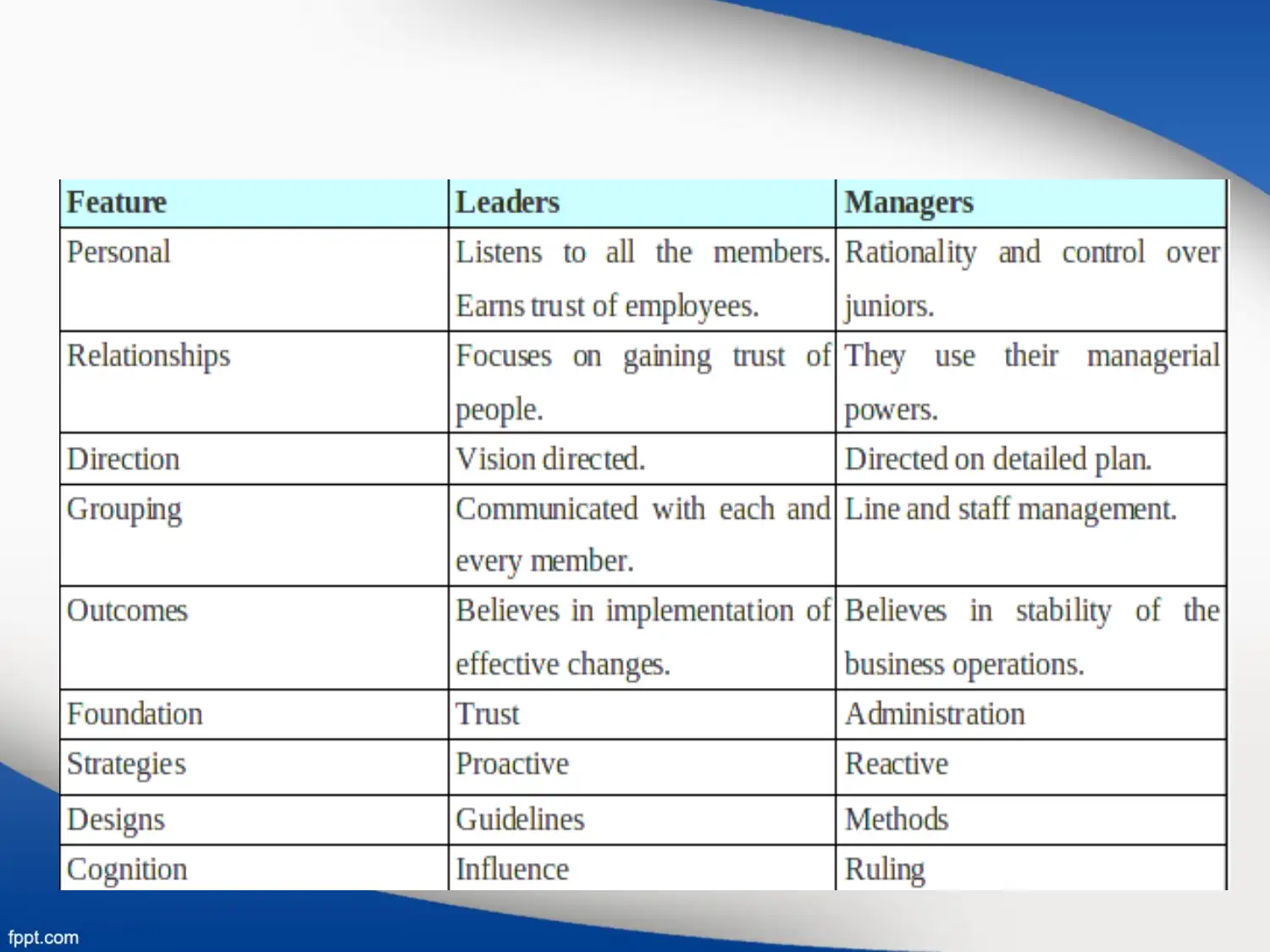
Personal characteristics- Leaders are more open-minded as
compare top the mangers. They listen to the ideas of every
employee and gives importance to them. This behaviours
helps in achieving the trust of workers.
Document Page
Relationships- Leaders aims on maintaining effective
relationships with the employees by inspiring and
developing them to gain their trust.
Direction- Leaders are vision focused. This is achieved
by creating long-term focus. In contrary to this,
managers performs detailed plan for each business
activity.
Grouping- Managers believes in grouping with the the
line and staff management.
Outcomes- Leaders possess risk taking ability. They
aims on implementing effective changes that can boost
the business performance. However, managers believes
in stability ion the operations.
Document Page
tabler-icon-diamond-filled.svg

Paraphrase This Document

Need a fresh take? Get an instant paraphrase of this document with our AI Paraphraser
Document Page
Roles of leaders:
Aligning team members: They assure the allocation of right task to
the right candidate. Further, leaders sets a time-limit for each and
every operations to increase work-efficiency.
Motivating employees: This is the most important role that is being
played by the leaders of the Starbucks.
Provides direction: There exists one more role of leaders and that is
providing right direction to the workers by guiding them so that
they can work in an effective manner.
Implements change: Effective leadership skills also involves the
implementation of changes in the business that can boost up the
performance of the organisations.
Document Page
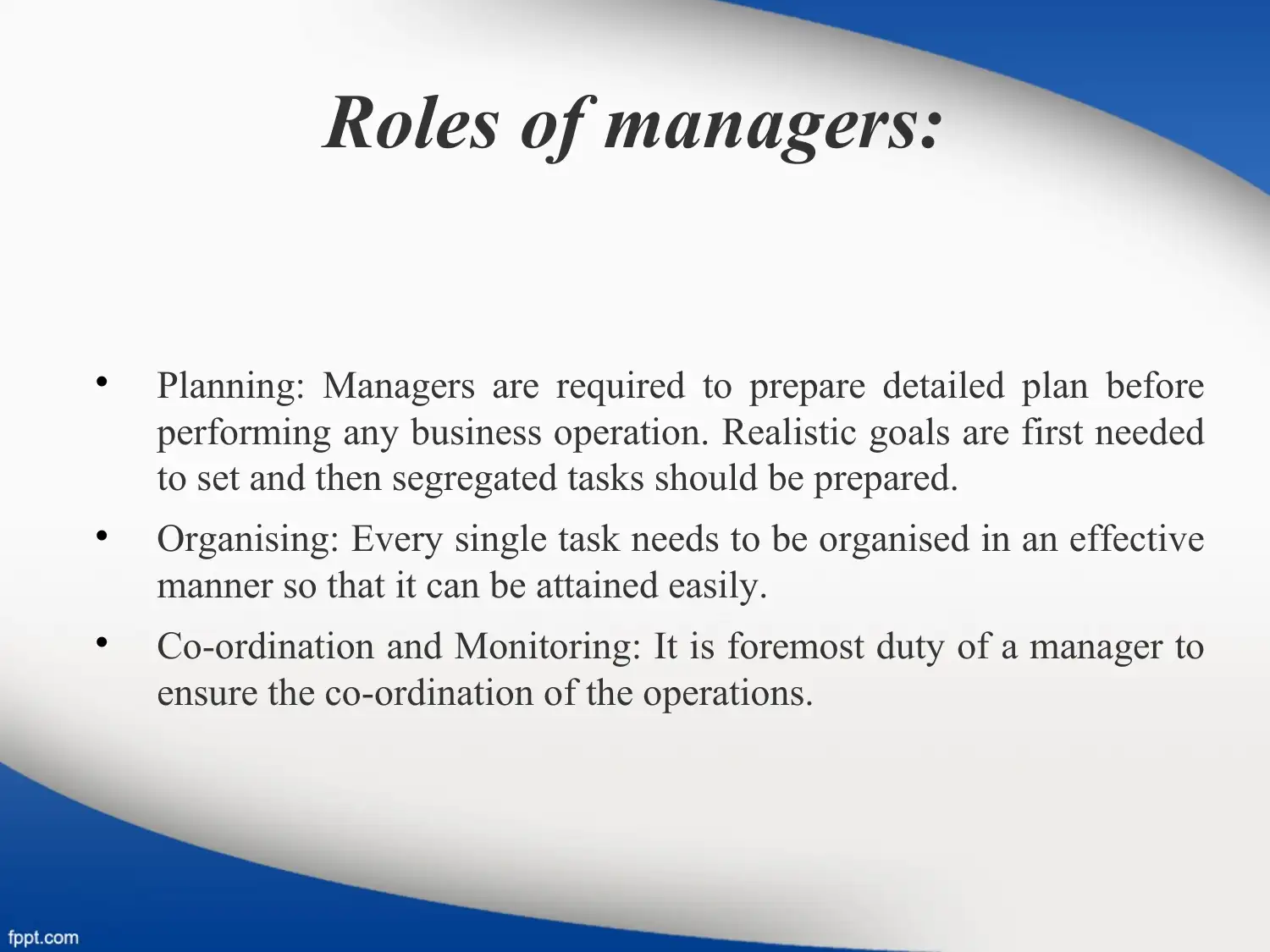
Roles of managers:
Planning: Managers are required to prepare detailed plan before
performing any business operation. Realistic goals are first needed
to set and then segregated tasks should be prepared.
Organising: Every single task needs to be organised in an effective
manner so that it can be attained easily.
Co-ordination and Monitoring: It is foremost duty of a manager to
ensure the co-ordination of the operations.
Document Page
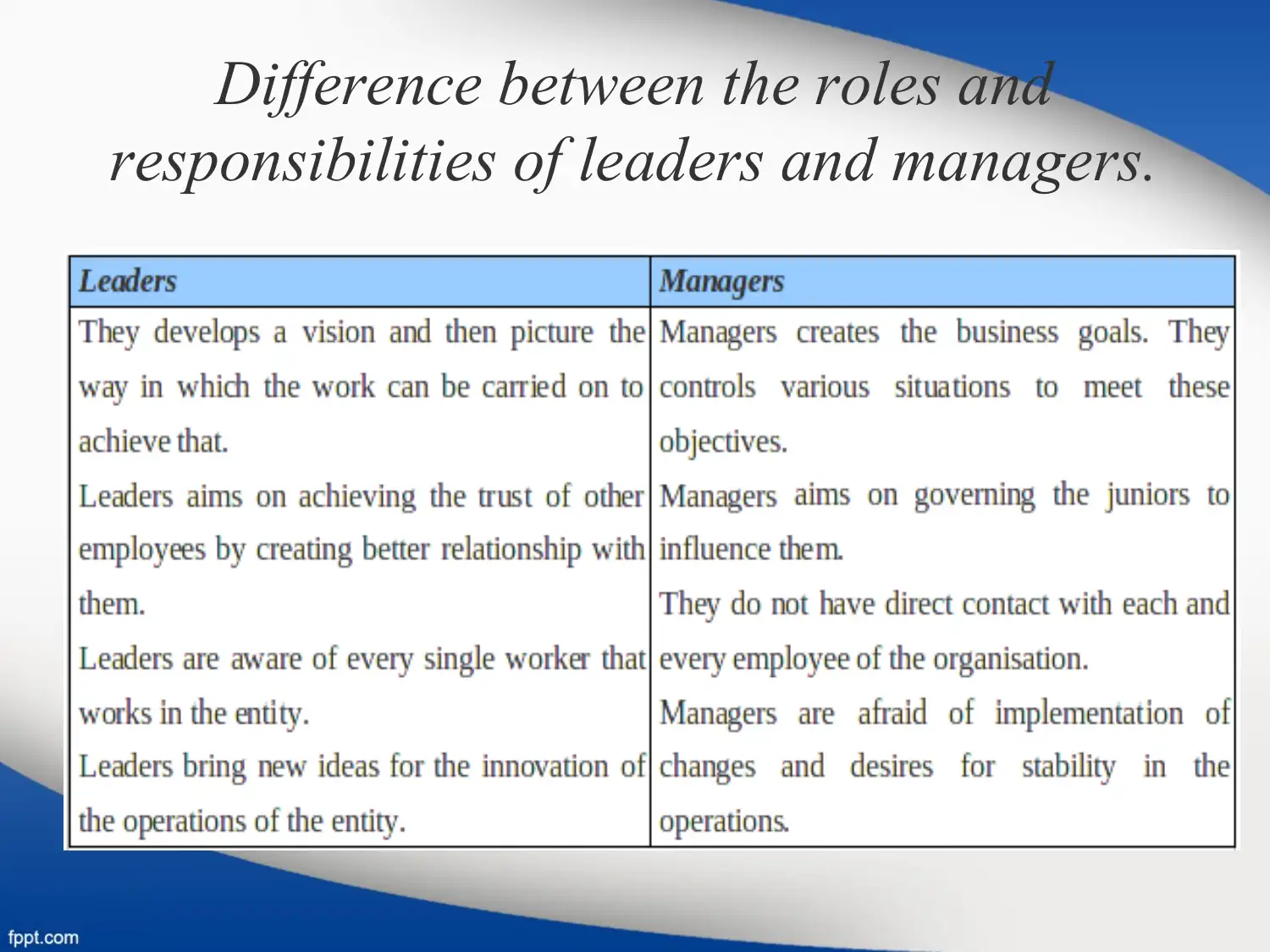
Difference between the roles and
responsibilities of leaders and managers.
tabler-icon-diamond-filled.svg

Paraphrase This Document

Need a fresh take? Get an instant paraphrase of this document with our AI Paraphraser
Document Page
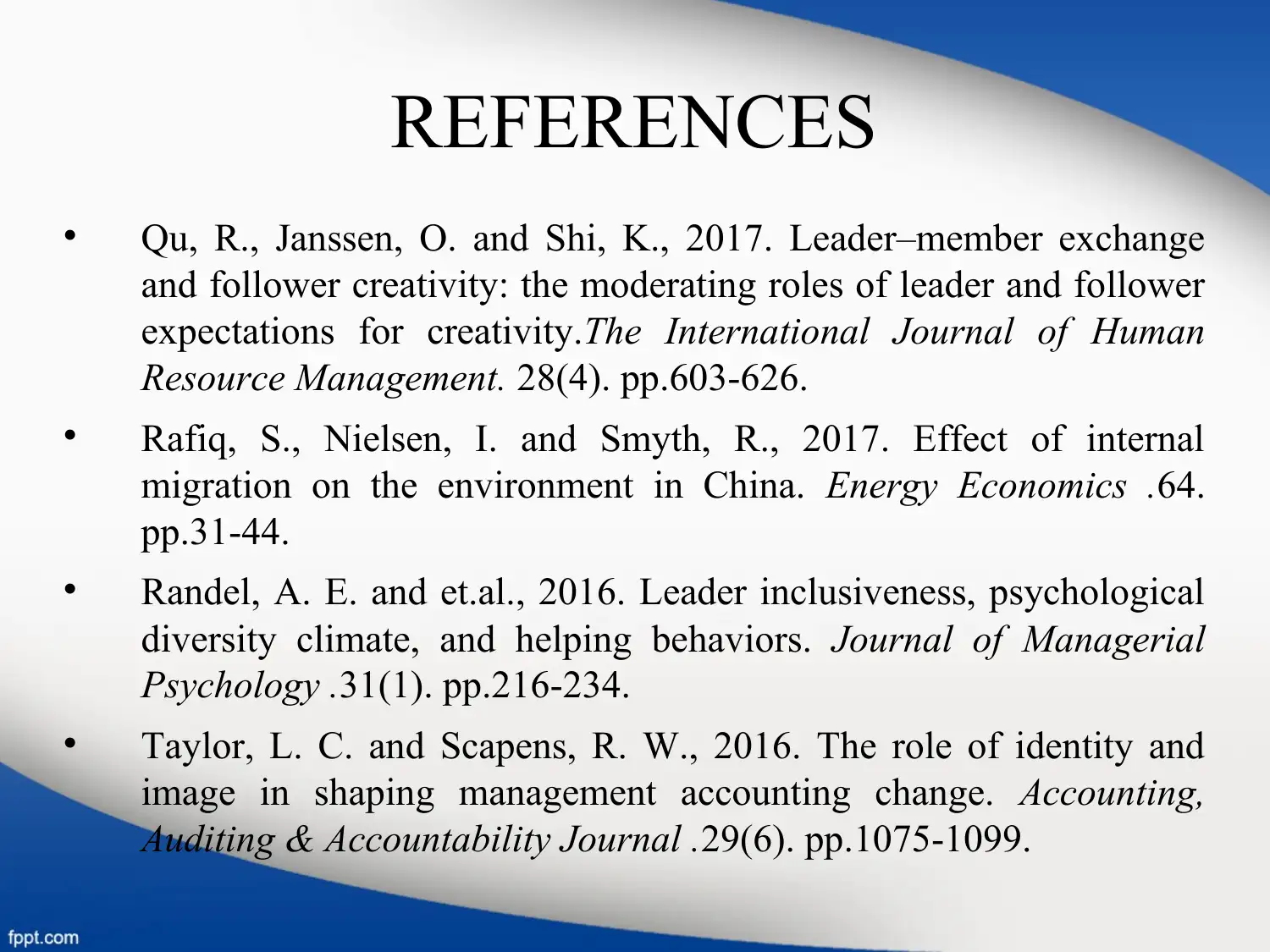
REFERENCES
Qu, R., Janssen, O. and Shi, K., 2017. Leader–member exchange
and follower creativity: the moderating roles of leader and follower
expectations for creativity.The International Journal of Human
Resource Management. 28(4). pp.603-626.
Rafiq, S., Nielsen, I. and Smyth, R., 2017. Effect of internal
migration on the environment in China. Energy Economics .64.
pp.31-44.
Randel, A. E. and et.al., 2016. Leader inclusiveness, psychological
diversity climate, and helping behaviors. Journal of Managerial
Psychology .31(1). pp.216-234.
Taylor, L. C. and Scapens, R. W., 2016. The role of identity and
image in shaping management accounting change. Accounting,
Auditing & Accountability Journal .29(6). pp.1075-1099.
chevron_up_icon
1 out of 8
circle_padding
hide_on_mobile
zoom_out_icon
[object Object]