London Metropolitan University MN7181: Global HRM and Culture
VerifiedAdded on 2021/11/17
|20
|4655
|85
Essay
AI Summary
This essay, prepared for London Metropolitan University's MN7181 module, delves into the critical significance of culture within the context of global Human Resource Management (HRM). The essay begins by defining globalization and its impact on businesses, emphasizing the need for global HR practices. It then explores the concept of culture, its manifestations, and its influence on individual and organizational behavior. A key focus is the interplay between culture and global HRM, highlighting the importance of understanding cultural differences in various HR functions such as recruitment, selection, performance appraisal, compensation, and training. The essay also discusses Hofstede's cultural dimensions as a framework for understanding cultural variations. The essay underscores the need for organizations to adapt their HRM practices to respect and leverage cultural diversity for international business success.
MN7181
People and Organisations: Principles and practice in Global
Contexts
Explore the Significance of Culture in
the Context of Global HRM
Name: C
Module: MN7181
University ID:
No. of the Assignment: 02
Institution: London Metropolitan University
People and Organisations: Principles and practice in Global
Contexts
Explore the Significance of Culture in
the Context of Global HRM
Name: C
Module: MN7181
University ID:
No. of the Assignment: 02
Institution: London Metropolitan University

Paraphrase This Document
Need a fresh take? Get an instant paraphrase of this document with our AI Paraphraser
Table of Contents
1. Introduction.........................................................................................................................................2
2. Going Global.......................................................................................................................................3
3. Culture.................................................................................................................................................4
4. Global HRM........................................................................................................................................6
5. Culture and Global HRM.....................................................................................................................7
5.1 Hofstede’s Cultural Dimensions..................................................................................................8
6. Culture and Global HRM Functions..................................................................................................11
6.1 Recruitment and Selection...............................................................................................................11
6.2 Performance Appraisal....................................................................................................................12
6.3 Compensation and Rewards.............................................................................................................14
6.4 Training and Development..............................................................................................................14
7. Conclusion.........................................................................................................................................15
8. References.........................................................................................................................................16
1. Introduction.........................................................................................................................................2
2. Going Global.......................................................................................................................................3
3. Culture.................................................................................................................................................4
4. Global HRM........................................................................................................................................6
5. Culture and Global HRM.....................................................................................................................7
5.1 Hofstede’s Cultural Dimensions..................................................................................................8
6. Culture and Global HRM Functions..................................................................................................11
6.1 Recruitment and Selection...............................................................................................................11
6.2 Performance Appraisal....................................................................................................................12
6.3 Compensation and Rewards.............................................................................................................14
6.4 Training and Development..............................................................................................................14
7. Conclusion.........................................................................................................................................15
8. References.........................................................................................................................................16
1. Introduction
Globalization has impacted almost every aspect of human life. There are both costs and benefits
associated with globalization and as a result has brought worlds’ economy to a new direction.
Globalization is unstoppable and inevitable and is regarded as the solution for consistent global
economic growth.
In a world where globalization has emerged, culture acts as a crucial aspect in deciding global
business functions. “Culture appears to have become key in our interconnected world, which is
made up of so many ethnically diverse societies, but also riddled by conflicts associated with
religion, ethnicity, ethical beliefs, and, essentially, the elements which make up culture”
(Zimmermann, 2017). The composition of culture is constantly changing and evolving and needs
to be respected when doing global business.
HR practices when going global is different to that of doing local business. Global HR practices
needs to be in place so that HR issues are addressed based on global concepts respecting and
preserving the differences of culture. The essay has explored the significance of culture in the
context of global HRM by a thorough examination using necessary concepts, ideologies and also
theories.
Globalization has impacted almost every aspect of human life. There are both costs and benefits
associated with globalization and as a result has brought worlds’ economy to a new direction.
Globalization is unstoppable and inevitable and is regarded as the solution for consistent global
economic growth.
In a world where globalization has emerged, culture acts as a crucial aspect in deciding global
business functions. “Culture appears to have become key in our interconnected world, which is
made up of so many ethnically diverse societies, but also riddled by conflicts associated with
religion, ethnicity, ethical beliefs, and, essentially, the elements which make up culture”
(Zimmermann, 2017). The composition of culture is constantly changing and evolving and needs
to be respected when doing global business.
HR practices when going global is different to that of doing local business. Global HR practices
needs to be in place so that HR issues are addressed based on global concepts respecting and
preserving the differences of culture. The essay has explored the significance of culture in the
context of global HRM by a thorough examination using necessary concepts, ideologies and also
theories.
⊘ This is a preview!⊘
Do you want full access?
Subscribe today to unlock all pages.

Trusted by 1+ million students worldwide
2. Going Global
Globalization is defined as “the growing interdependence of the world’s economies, cultures, and
populations, brought about by cross-border trade in goods and services, technology, and flows of
investment, people, and information” (Kolb, 2018). Hence globalization is highly influential for
every business today. Successful global expansion is never easy and needs to be pursued
carefully centered on organizations’ corporate strategy.
Every business decision is bound to face obstacles. However global organizations are surrounded
by their own unique hurdles. The biggest and most influential challenge for international
business is culture that holds true and unique to every nation and even within different states of
the same nation.
Successfully facing cultural differences needs to be part of the global strategy. Hence strategic
goals need to be well aligned ensuring the business respects and give regard to unique culture
and its’ values. An international business that preserves cultural aspects of each country is sure to
capture the hearts of its’ citizens and achieve winning edge over competitors in the industry.
Such organizations are sure to sustain in the global market amidst of high competition, economic
pitfalls, or even international compliance and regulatory concerns
Managing and leading international organizations require specialized business practices that suit
the global environment. Global HRM principles need to be essentially in place so that an
organization achieves its competitive edge through managing people wisely. Good HRM
principles and ideologies that are tailored to respect deviations in culture acts as the back bone of
a successful and sustainable international business.
Globalization is defined as “the growing interdependence of the world’s economies, cultures, and
populations, brought about by cross-border trade in goods and services, technology, and flows of
investment, people, and information” (Kolb, 2018). Hence globalization is highly influential for
every business today. Successful global expansion is never easy and needs to be pursued
carefully centered on organizations’ corporate strategy.
Every business decision is bound to face obstacles. However global organizations are surrounded
by their own unique hurdles. The biggest and most influential challenge for international
business is culture that holds true and unique to every nation and even within different states of
the same nation.
Successfully facing cultural differences needs to be part of the global strategy. Hence strategic
goals need to be well aligned ensuring the business respects and give regard to unique culture
and its’ values. An international business that preserves cultural aspects of each country is sure to
capture the hearts of its’ citizens and achieve winning edge over competitors in the industry.
Such organizations are sure to sustain in the global market amidst of high competition, economic
pitfalls, or even international compliance and regulatory concerns
Managing and leading international organizations require specialized business practices that suit
the global environment. Global HRM principles need to be essentially in place so that an
organization achieves its competitive edge through managing people wisely. Good HRM
principles and ideologies that are tailored to respect deviations in culture acts as the back bone of
a successful and sustainable international business.
Paraphrase This Document
Need a fresh take? Get an instant paraphrase of this document with our AI Paraphraser
3. Culture
Culture includes a series of intangible diversities and manifestations of social life. It can be
defined as “shared patterns of behaviors and interactions, cognitive constructs and understanding
that are learned by socialization” (Zimmermann, 2017). Every culture changes over time at
different speeds. Culture is learned through generations and is a part of everyday life. It involves
shared learning and cannot be copied or isolated.
Culture which is an essential part of living is bounded by symbols that give significance to them.
It manifests in the form of different customs, language, religion, clothing, ethics, traditions and
art. People from different parts of the world and different regions of the same country may
possess different cultures. These cultural differences ultimately lead to diversity in peoples’
morale, values, perceptions and cognitions.
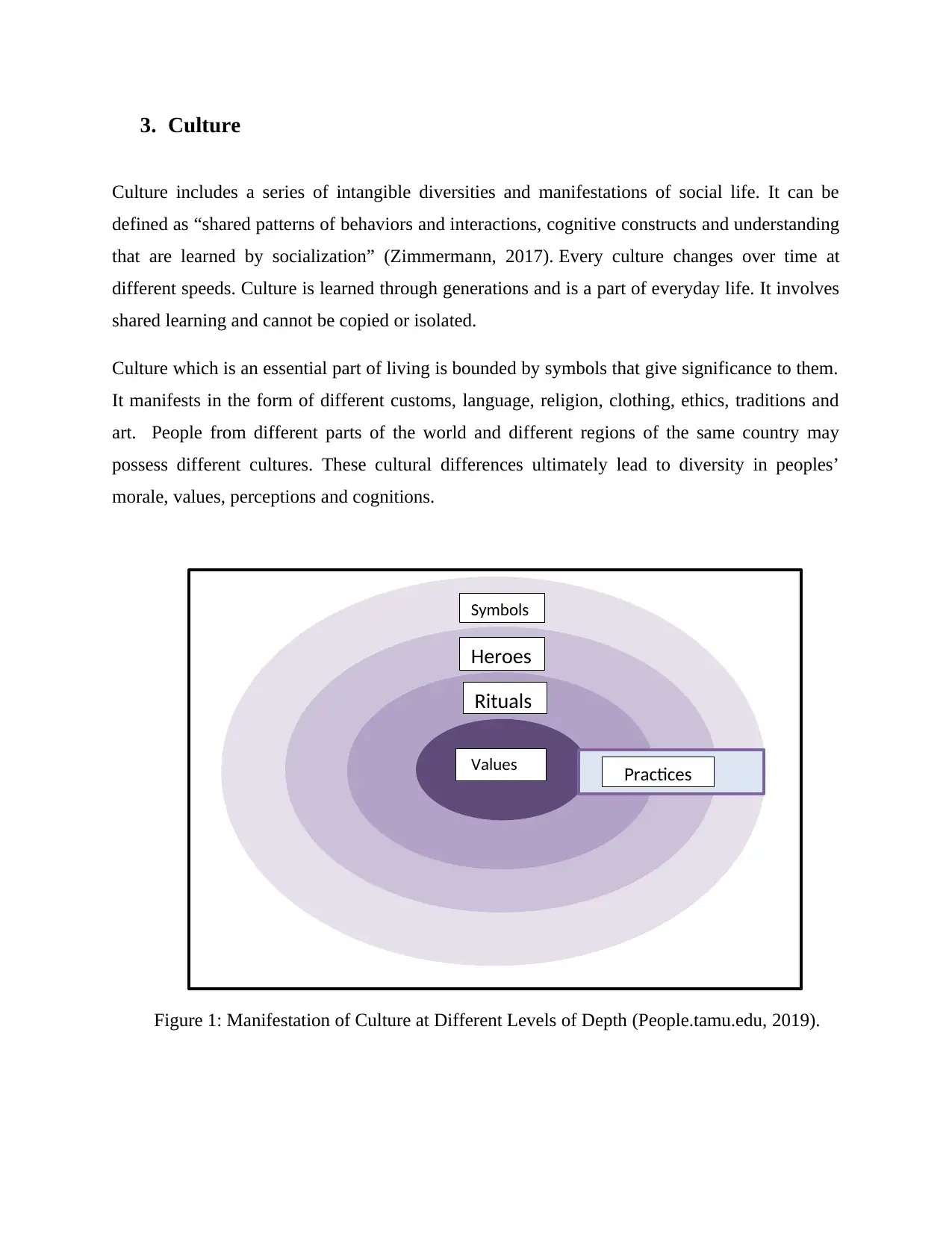
Figure 1: Manifestation of Culture at Different Levels of Depth (People.tamu.edu, 2019).
Symbols
Heroes
Rituals
Values Practices
Culture includes a series of intangible diversities and manifestations of social life. It can be
defined as “shared patterns of behaviors and interactions, cognitive constructs and understanding
that are learned by socialization” (Zimmermann, 2017). Every culture changes over time at
different speeds. Culture is learned through generations and is a part of everyday life. It involves
shared learning and cannot be copied or isolated.
Culture which is an essential part of living is bounded by symbols that give significance to them.
It manifests in the form of different customs, language, religion, clothing, ethics, traditions and
art. People from different parts of the world and different regions of the same country may
possess different cultures. These cultural differences ultimately lead to diversity in peoples’
morale, values, perceptions and cognitions.
Figure 1: Manifestation of Culture at Different Levels of Depth (People.tamu.edu, 2019).
Symbols
Heroes
Rituals
Values Practices
“Cultural differences manifest themselves in different ways and differing levels of depth”
(People.tamu.edu, 2019). Symbols lay superficial and values lay the deepest expression that is
bound to culture and heroes and rituals lay in between the two.
People’s way of life constitutes their culture. Mixing of people from various cultures affect each
culture leading to formation of a new culture. This leads to the formation of a multicultural
society within a global organization. Culture gives identity to individuals and the manner in
which we carry ourselves in the society is largely backed and influenced by the culture we live
in.
“To take pride in the culture you belong to and to respect its teachings, you must first know it”
(Oak, 2018). When going global, organizational managers first need to know the culture of the
country to which they are opening doors. As moving on to international business, management
should not only do market research but also need to get insights in to culture in order to examine
if the international project is viable for the new culture.
For an example, “The Coca Cola Company leverages a worldwide team that is rich in diverse
people, talent and ideas” (The Coca-Cola Company, 2018). As a global giant the company has
recognized and embraced multicultural aspects of each and every nationality, both marketplace
wise and workplace wise. Understanding these variations has led to a long term sustainable
business.
(People.tamu.edu, 2019). Symbols lay superficial and values lay the deepest expression that is
bound to culture and heroes and rituals lay in between the two.
People’s way of life constitutes their culture. Mixing of people from various cultures affect each
culture leading to formation of a new culture. This leads to the formation of a multicultural
society within a global organization. Culture gives identity to individuals and the manner in
which we carry ourselves in the society is largely backed and influenced by the culture we live
in.
“To take pride in the culture you belong to and to respect its teachings, you must first know it”
(Oak, 2018). When going global, organizational managers first need to know the culture of the
country to which they are opening doors. As moving on to international business, management
should not only do market research but also need to get insights in to culture in order to examine
if the international project is viable for the new culture.
For an example, “The Coca Cola Company leverages a worldwide team that is rich in diverse
people, talent and ideas” (The Coca-Cola Company, 2018). As a global giant the company has
recognized and embraced multicultural aspects of each and every nationality, both marketplace
wise and workplace wise. Understanding these variations has led to a long term sustainable
business.
⊘ This is a preview!⊘
Do you want full access?
Subscribe today to unlock all pages.
Trusted by 1+ million students worldwide
4. Global HRM
Doing global business requires mastery in adaptation to that particular country. Adaptation to
ones’ country ensures barriers to cross cultural concerns, workforce values, and differences in
management styles are minimized. Among all these concerns culture plays a crucial role in
deciding where an organization is performing effectively at a global scale.
With the advent of globalization HRM too has taken a its’ journey towards a different direction.
This paved the way to a new discovery known to be ‘Global HRM’. “The preliminary function
of global Human Resource Management is that the organization carries a local appeal in the host
country despite maintaining an international feel” (Juneja, 2019). This allows differentiation of
HRM practices across the globe. Local HRM practices no longer serves right as functions are
aligned in accordance with globalized economy.
Global HRM revolves with high sensitivity as its functions are highly focused on diversified
employees. It however needs to be aligned with the overall corporate strategy. “Global human
resources managers are responsible for recruitment of new employees, training, professional
development, benefits and legal compliance just like any other HR team, but they do so on a
global scale” (Bradley, 2019).
Global HRM standardize functions to make them fair and equal to everyone in the workforce
regardless of their nationality. A successful international organization does not try to fit in
international employees within the domestic standards; rather they try to design a more holistic
HRM approach so that employees feel more comfortable on their own. Overall global HRM acts
as glue that binds differences of individuals perfectly. Global HRM is therefore very much
challenging compared to domestic HRM.
Doing global business requires mastery in adaptation to that particular country. Adaptation to
ones’ country ensures barriers to cross cultural concerns, workforce values, and differences in
management styles are minimized. Among all these concerns culture plays a crucial role in
deciding where an organization is performing effectively at a global scale.
With the advent of globalization HRM too has taken a its’ journey towards a different direction.
This paved the way to a new discovery known to be ‘Global HRM’. “The preliminary function
of global Human Resource Management is that the organization carries a local appeal in the host
country despite maintaining an international feel” (Juneja, 2019). This allows differentiation of
HRM practices across the globe. Local HRM practices no longer serves right as functions are
aligned in accordance with globalized economy.
Global HRM revolves with high sensitivity as its functions are highly focused on diversified
employees. It however needs to be aligned with the overall corporate strategy. “Global human
resources managers are responsible for recruitment of new employees, training, professional
development, benefits and legal compliance just like any other HR team, but they do so on a
global scale” (Bradley, 2019).
Global HRM standardize functions to make them fair and equal to everyone in the workforce
regardless of their nationality. A successful international organization does not try to fit in
international employees within the domestic standards; rather they try to design a more holistic
HRM approach so that employees feel more comfortable on their own. Overall global HRM acts
as glue that binds differences of individuals perfectly. Global HRM is therefore very much
challenging compared to domestic HRM.
Paraphrase This Document
Need a fresh take? Get an instant paraphrase of this document with our AI Paraphraser
5. Culture and Global HRM
Culture influences how organizations manage their people. Global HRM too is based on
differences of cultural contexts across nations. One HRM practice adopted in one state of a
country may not be effective in another state of the same country. To that extent global HRM is a
highly sensitive and influential area of concern for every international organization. In this new
global era, proper understanding and use of cultural contexts in relation to global HRM is a
source of competitive advantage for every firm.
“Organizing is culturally dependent; it consists of manipulating symbols that have meaning
for the people who are managed or organized; such meanings are associated with symbols
which are heavily affected by what was learnt in the course of socialization” (Ugoani, 2016).
Differences in culture always cause differences in perceptions, comprehensions, and preferences.
These differences ultimately lead to differences in organizational behavior. This is why
international businesses need to adopt different methods to influence motivation, rewarding,
decision making, performance appraising, employee engagement. Adopting different methods
require special management styles in relation to culture of a country.
Understanding culture is vital before embarking on an international journey. The global HR team
needs to build a relationship with the overseas team before starting the business. By this way the
new culture can be ideally understood by the HR team before starting operations. Culture by
means of beliefs, values, language or even body language can be perfectly understood through
building a strong relationship with the overseas team.
Global HR team needs to do their own research to identify a country’s values and cultural
heritage. Understanding cultural heritage allows understanding of vital information on managing
people. As the HR team understands the value and importance of cultural heritage of a country,
they inevitably become confortable and respectable towards the overseas culture.
Culture influences how organizations manage their people. Global HRM too is based on
differences of cultural contexts across nations. One HRM practice adopted in one state of a
country may not be effective in another state of the same country. To that extent global HRM is a
highly sensitive and influential area of concern for every international organization. In this new
global era, proper understanding and use of cultural contexts in relation to global HRM is a
source of competitive advantage for every firm.
“Organizing is culturally dependent; it consists of manipulating symbols that have meaning
for the people who are managed or organized; such meanings are associated with symbols
which are heavily affected by what was learnt in the course of socialization” (Ugoani, 2016).
Differences in culture always cause differences in perceptions, comprehensions, and preferences.
These differences ultimately lead to differences in organizational behavior. This is why
international businesses need to adopt different methods to influence motivation, rewarding,
decision making, performance appraising, employee engagement. Adopting different methods
require special management styles in relation to culture of a country.
Understanding culture is vital before embarking on an international journey. The global HR team
needs to build a relationship with the overseas team before starting the business. By this way the
new culture can be ideally understood by the HR team before starting operations. Culture by
means of beliefs, values, language or even body language can be perfectly understood through
building a strong relationship with the overseas team.
Global HR team needs to do their own research to identify a country’s values and cultural
heritage. Understanding cultural heritage allows understanding of vital information on managing
people. As the HR team understands the value and importance of cultural heritage of a country,
they inevitably become confortable and respectable towards the overseas culture.
Body language is not universal. Non-verbal communication including gestures, facial
expressions, personal space, mannerisms, physical contact and eye contact convey important and
influential messages. Comprehending them appropriately is powerful in accepting peoples’
culture. “There are substantial cultural differences in how people use body language to communicate:
sometimes it is very obvious, many times very subtle” (Virtualspeech.com, 2019). This makes it
very much challenging for global HRM teams to understand what people convey through body
language. Understanding differences in culture essentially helps in improving work relationships,
management styles and drives organizations towards success, especially in multi-cultural work
environments.
“The importance of clothes transcends cultures, time and geographies” (Speranza, 2019). An
individual’s dress signifies who that person is and his identity in the culture. Dressing is not only
a component of daily lives but also an indicator of the place in the society. Therefore dressing
with respect and authority is essential. Linking these insights along with unique culture is crucial
for global HR practitioners to have authority or understanding of the dress code of employees at
work. Eventually workplace dress code contributes towards the outlook of the organization and
global HR leaders are responsible in assuring these sensitivities in accordance with a nations’
culture.
5.1 Hofstede’s Cultural Dimensions
Culture is a crucial aspect impacting HRM on an international scale. Differences in culture have
to be understood with clarity so that global HRM practices are well aligned with the cultural
aspects. Hofstede’s Cultural Dimensions provides a great understanding of cultural facets in
relations to six dimensions.
1. Individualism and Collectivism
This dimension explains the “degree to which individuals are integrated into groups”
(Open Textbooks for Hong Kong, 2016). In individualistic cultures individual’s goals are
given priority whereas in collective cultures, the decision making is based on cohesive
groups. This dimension emphasizes ‘I’ in relation to ‘We’ and in general explains the
cultural differences affecting independence and interdependence.
expressions, personal space, mannerisms, physical contact and eye contact convey important and
influential messages. Comprehending them appropriately is powerful in accepting peoples’
culture. “There are substantial cultural differences in how people use body language to communicate:
sometimes it is very obvious, many times very subtle” (Virtualspeech.com, 2019). This makes it
very much challenging for global HRM teams to understand what people convey through body
language. Understanding differences in culture essentially helps in improving work relationships,
management styles and drives organizations towards success, especially in multi-cultural work
environments.
“The importance of clothes transcends cultures, time and geographies” (Speranza, 2019). An
individual’s dress signifies who that person is and his identity in the culture. Dressing is not only
a component of daily lives but also an indicator of the place in the society. Therefore dressing
with respect and authority is essential. Linking these insights along with unique culture is crucial
for global HR practitioners to have authority or understanding of the dress code of employees at
work. Eventually workplace dress code contributes towards the outlook of the organization and
global HR leaders are responsible in assuring these sensitivities in accordance with a nations’
culture.
5.1 Hofstede’s Cultural Dimensions
Culture is a crucial aspect impacting HRM on an international scale. Differences in culture have
to be understood with clarity so that global HRM practices are well aligned with the cultural
aspects. Hofstede’s Cultural Dimensions provides a great understanding of cultural facets in
relations to six dimensions.
1. Individualism and Collectivism
This dimension explains the “degree to which individuals are integrated into groups”
(Open Textbooks for Hong Kong, 2016). In individualistic cultures individual’s goals are
given priority whereas in collective cultures, the decision making is based on cohesive
groups. This dimension emphasizes ‘I’ in relation to ‘We’ and in general explains the
cultural differences affecting independence and interdependence.
⊘ This is a preview!⊘
Do you want full access?
Subscribe today to unlock all pages.
Trusted by 1+ million students worldwide
2. Power Distance
This dimension “considers the extent to which inequality and power are tolerated”
(Corporate Finance Institute, 2019). Power distance explains how less powerful
individuals accept that power is not disseminated equitably. From an HRM viewpoint this
dimension is vital in understanding functions of cross cultural teams. For an example, “A
Danish manager may have no problem taking advice from employees because of the low
power distance of his culture, but a Saudi Arabian manager may have issues with an
informal relationship with employees, because of the high power distance” (Open
Textbooks for Hong Kong, 2016).
3. Masculinity and Femininity
Gives an indicator of how masculine value and feminine values exist in a culture.
Masculinity is more associated with success, performance driven, and competitiveness
whereas femininity is associated with closeness, relationships and caring. This dimension
gives a clear understanding of the role and impact of culture on female expatriates in
relation to different cultures. This also provides a clear understanding of how female
expatriates would perform in cultures based on how they perceive women.
4. Uncertainty Avoidance
This dimension explains how a culture bears uncertainties. Cultures that avoid
uncertainty to a greater extent have stricter rules and regulations in place as precautionary
measures. On the contrary low uncertainty avoiding cultures are more easygoing and
tolerant about procedures. Uncertainty avoidance is very much critical in implementing
new ideas and innovations. Further “when a high uncertainty avoidance negotiator
engages in talks with a low uncertainty avoidance negotiator, there is the potential for
friction over issue involving risk tolerance, procedural controls, and adherence to norms”
(O'Connell, 2013). These dimensions need to be understood by global HR professionals
to manage people effectively synchronize them towards goal achievement.
This dimension “considers the extent to which inequality and power are tolerated”
(Corporate Finance Institute, 2019). Power distance explains how less powerful
individuals accept that power is not disseminated equitably. From an HRM viewpoint this
dimension is vital in understanding functions of cross cultural teams. For an example, “A
Danish manager may have no problem taking advice from employees because of the low
power distance of his culture, but a Saudi Arabian manager may have issues with an
informal relationship with employees, because of the high power distance” (Open
Textbooks for Hong Kong, 2016).
3. Masculinity and Femininity
Gives an indicator of how masculine value and feminine values exist in a culture.
Masculinity is more associated with success, performance driven, and competitiveness
whereas femininity is associated with closeness, relationships and caring. This dimension
gives a clear understanding of the role and impact of culture on female expatriates in
relation to different cultures. This also provides a clear understanding of how female
expatriates would perform in cultures based on how they perceive women.
4. Uncertainty Avoidance
This dimension explains how a culture bears uncertainties. Cultures that avoid
uncertainty to a greater extent have stricter rules and regulations in place as precautionary
measures. On the contrary low uncertainty avoiding cultures are more easygoing and
tolerant about procedures. Uncertainty avoidance is very much critical in implementing
new ideas and innovations. Further “when a high uncertainty avoidance negotiator
engages in talks with a low uncertainty avoidance negotiator, there is the potential for
friction over issue involving risk tolerance, procedural controls, and adherence to norms”
(O'Connell, 2013). These dimensions need to be understood by global HR professionals
to manage people effectively synchronize them towards goal achievement.
Paraphrase This Document
Need a fresh take? Get an instant paraphrase of this document with our AI Paraphraser
5. Long Term Orientation and Short Term Orientation
The dimension explains the values people possess by emphasizing time scales. Long term
oriented cultures emphasize on future whereas short term oriented cultures emphasize on
past and present. This is more linked with succession planning of organizations, for an
example “in China the person getting promoted might be the person who has been with
the company the longest, whereas in short-term orientation countries like the United
States, promotion is usually based on merit” (Open Textbooks for Hong Kong, 2016). As
global HR professionals these facets are significant when it comes to adopting promotion
schemes where respecting these diversities are more important in entertaining employees
pertaining to a culture.
6. Indulgence
Indulgence is accompanied with freedom, relationships and doing what you love whereas
retrained cultures are associated with duty and perceiving life as hard. Hence this
dimension is based on impulses and HR professionals are in a position to gauge
employees of a certain culture based on these parameters.
Figure 2: Hofstede’s Dimensions (Corporate Finance Institute, 2019).
The dimension explains the values people possess by emphasizing time scales. Long term
oriented cultures emphasize on future whereas short term oriented cultures emphasize on
past and present. This is more linked with succession planning of organizations, for an
example “in China the person getting promoted might be the person who has been with
the company the longest, whereas in short-term orientation countries like the United
States, promotion is usually based on merit” (Open Textbooks for Hong Kong, 2016). As
global HR professionals these facets are significant when it comes to adopting promotion
schemes where respecting these diversities are more important in entertaining employees
pertaining to a culture.
6. Indulgence
Indulgence is accompanied with freedom, relationships and doing what you love whereas
retrained cultures are associated with duty and perceiving life as hard. Hence this
dimension is based on impulses and HR professionals are in a position to gauge
employees of a certain culture based on these parameters.
Figure 2: Hofstede’s Dimensions (Corporate Finance Institute, 2019).
The dimensions clearly show the significance of culture in developing a global HRM strategy.
These facets are essential in designing a successful strategy along with HRM functions such as
recruitment, selection, performance appraisal, compensation, training and development. Hence
culture is the key to global HRM. Understanding and appreciating this dimension helps HRM to
be a winning strategy in any part of the world.
6. Culture and Global HRM Functions
Human resources play an important yet challenging role in organizational culture. Culture is one
external dimension that impacts HR practices on a global scale. Embracing ones’ culture has to
do with aligning every organizational practice to be well affiliated with common values, beliefs
or practices of a nation. Exercising and adapting HR functions in relation to deviations in culture
is a must if organizations seek sustainability in the international arena.
6.1 Recruitment and Selection
Global HRM needs to ensure that right individuals are hired to right and deserving positions on
an international scale. Failure to do so would result in financial losses, time wastage and
tarnishing of company brand name. HR professional need to be especially mindful about global
recruitment strategies as local strategies will no longer fit the international arena as cultural
aspects comes in to action. “One size doesn’t fit all when developing an international recruiting
strategy, your approach will depend on your company’s size, structure, industry, culture and
needs” (Brin, 2018).
A complete and systematic job analysis needs to be done for international recruitments and
selections because the needs and competencies on a candidate in one country might be totally
different to that of another country even for the same posts. What motivates individuals and how
they perceive work life may be different from one culture to another. HR professionals need to
be extra mindful as “these aspects can be very different from one culture to another and when
hiring, a culturally aware recruiter will know which questions to ask in order to find the best
person for the company and the position” (Nicola, 2016).
These facets are essential in designing a successful strategy along with HRM functions such as
recruitment, selection, performance appraisal, compensation, training and development. Hence
culture is the key to global HRM. Understanding and appreciating this dimension helps HRM to
be a winning strategy in any part of the world.
6. Culture and Global HRM Functions
Human resources play an important yet challenging role in organizational culture. Culture is one
external dimension that impacts HR practices on a global scale. Embracing ones’ culture has to
do with aligning every organizational practice to be well affiliated with common values, beliefs
or practices of a nation. Exercising and adapting HR functions in relation to deviations in culture
is a must if organizations seek sustainability in the international arena.
6.1 Recruitment and Selection
Global HRM needs to ensure that right individuals are hired to right and deserving positions on
an international scale. Failure to do so would result in financial losses, time wastage and
tarnishing of company brand name. HR professional need to be especially mindful about global
recruitment strategies as local strategies will no longer fit the international arena as cultural
aspects comes in to action. “One size doesn’t fit all when developing an international recruiting
strategy, your approach will depend on your company’s size, structure, industry, culture and
needs” (Brin, 2018).
A complete and systematic job analysis needs to be done for international recruitments and
selections because the needs and competencies on a candidate in one country might be totally
different to that of another country even for the same posts. What motivates individuals and how
they perceive work life may be different from one culture to another. HR professionals need to
be extra mindful as “these aspects can be very different from one culture to another and when
hiring, a culturally aware recruiter will know which questions to ask in order to find the best
person for the company and the position” (Nicola, 2016).
⊘ This is a preview!⊘
Do you want full access?
Subscribe today to unlock all pages.
Trusted by 1+ million students worldwide

1 out of 20


Related Documents


Your All-in-One AI-Powered Toolkit for Academic Success.
+13062052269
info@desklib.com
Available 24*7 on WhatsApp / Email
![[object Object]](/_next/static/media/star-bottom.7253800d.svg)
Unlock your academic potential
Copyright © 2020–2025 A2Z Services. All Rights Reserved. Developed and managed by ZUCOL.