Impact of Social Influences on Consumer Behaviour at Woolworths
VerifiedAdded on 2023/06/14
|11
|2908
|414
Report
AI Summary
This report examines the consumer behavior of an Asian multicultural family in the context of Woolworth's Group in Australia, focusing on the impact of cultural factors and social class. It highlights the importance of understanding cultural values such as power distance, individualism, and masculinity, and their influence on consumer choices. The report also discusses the strategic implications of cross-cultural and global influences on marketing strategies, emphasizing the need for marketers to tailor their messages to diverse cultural backgrounds. Furthermore, it explores the effect of social class on consumer behavior, including preferences for different products, media usage, and shopping habits. The report concludes with recommendations for Woolworth's Group, such as focusing on intercontinental products, highlighting practical benefits for Australian-born consumers, and training dealers to effectively engage with Asian consumers, ultimately aiming to enhance marketing strategies and increase sales.
CONSUMER BEHAVIOUR 1
Table of Contents
Executive Summary...................................................................................................................2
Introduction................................................................................................................................2
Impact of culture factors on consumer behaviour......................................................................2
Key dimensions of cultural values on consumer behaviour...................................................3
A. Power distance.............................................................................................................3
B. Individualism...............................................................................................................3
C. Masculinity..................................................................................................................3
Strategic implication of cross cultural and global influence..................................................4
Impact of social class on consumer behaviour...........................................................................6
Effect of social class in Consumer Behaviour........................................................................7
Components of social class....................................................................................................8
In what aspects social class can influence consumer behaviour??.........................................8
Recommendations......................................................................................................................9
Conclusion..................................................................................................................................9
References................................................................................................................................10
Table of Contents
Executive Summary...................................................................................................................2
Introduction................................................................................................................................2
Impact of culture factors on consumer behaviour......................................................................2
Key dimensions of cultural values on consumer behaviour...................................................3
A. Power distance.............................................................................................................3
B. Individualism...............................................................................................................3
C. Masculinity..................................................................................................................3
Strategic implication of cross cultural and global influence..................................................4
Impact of social class on consumer behaviour...........................................................................6
Effect of social class in Consumer Behaviour........................................................................7
Components of social class....................................................................................................8
In what aspects social class can influence consumer behaviour??.........................................8
Recommendations......................................................................................................................9
Conclusion..................................................................................................................................9
References................................................................................................................................10

Paraphrase This Document
Need a fresh take? Get an instant paraphrase of this document with our AI Paraphraser
CONSUMER BEHAVIOUR 2
Executive Summary
This report highlights the consumer behaviour of an Asian multicultural family in context of
Woolworth’s group in Australia. Although, the multiculturalism involves the broad
framework of various culture and its relevant features within. In order to increase the sale of
the company, the measures are studied in detail so that it attains maximum profit from
targeted customers. The impact of social class in addition with cultural factors is also
emphasised. At last, recommendations are pointed to influence the potential consumers.
Introduction
Woolworth’s group is the prominent Australian company which have extensive retail
awareness in major parts of Australia and New Zealand. However, it has been ranked as the
second topmost by revenue in Australia. In addition to the above it is also remarked as
biggest takeaway liquor retailer, largest hotel and betting poker machine operative in the
region. The group was founded on 22 September 1924 and it has been completion of 93 years
till the date (Woolworths Group, 2018).
The main operations subcategorised under Woolworth’s group are supermarkets (Australia
and New Zealand), liquor retailing business (as Dan Murphy’s and BWS in Australia),
various pubs as well as hotels under the head of Australian Leisure and Hospitality group
abbreviated as ALH Group and cut-rate department stores in the Big W name in Australia.
This report focuses upon Woolworth’s branch which is located at Princess Highway,
Dandenong South in Australia.
The consumer for Woolworth in Dandenong is selected as an Asian multi-cultural family and
the relative consumer behaviour is studied and analysed in detail. Multicultural families from
intercontinental areas make Australia an immigration nation. The individuals background are
free from every race, religion, culture, faith or nation belonging. Instead the shared values of
democracy, equality, freedom and rule of law as well as respect are relied upon. The
existence of racism and discrimination is nil (Kymlicka, 2012). Asian multicultural family is
basically the family which the roots in Asian countries but now residing in Australia within
the layer of its multicultural diversity.
Impact of culture factors on consumer behaviour
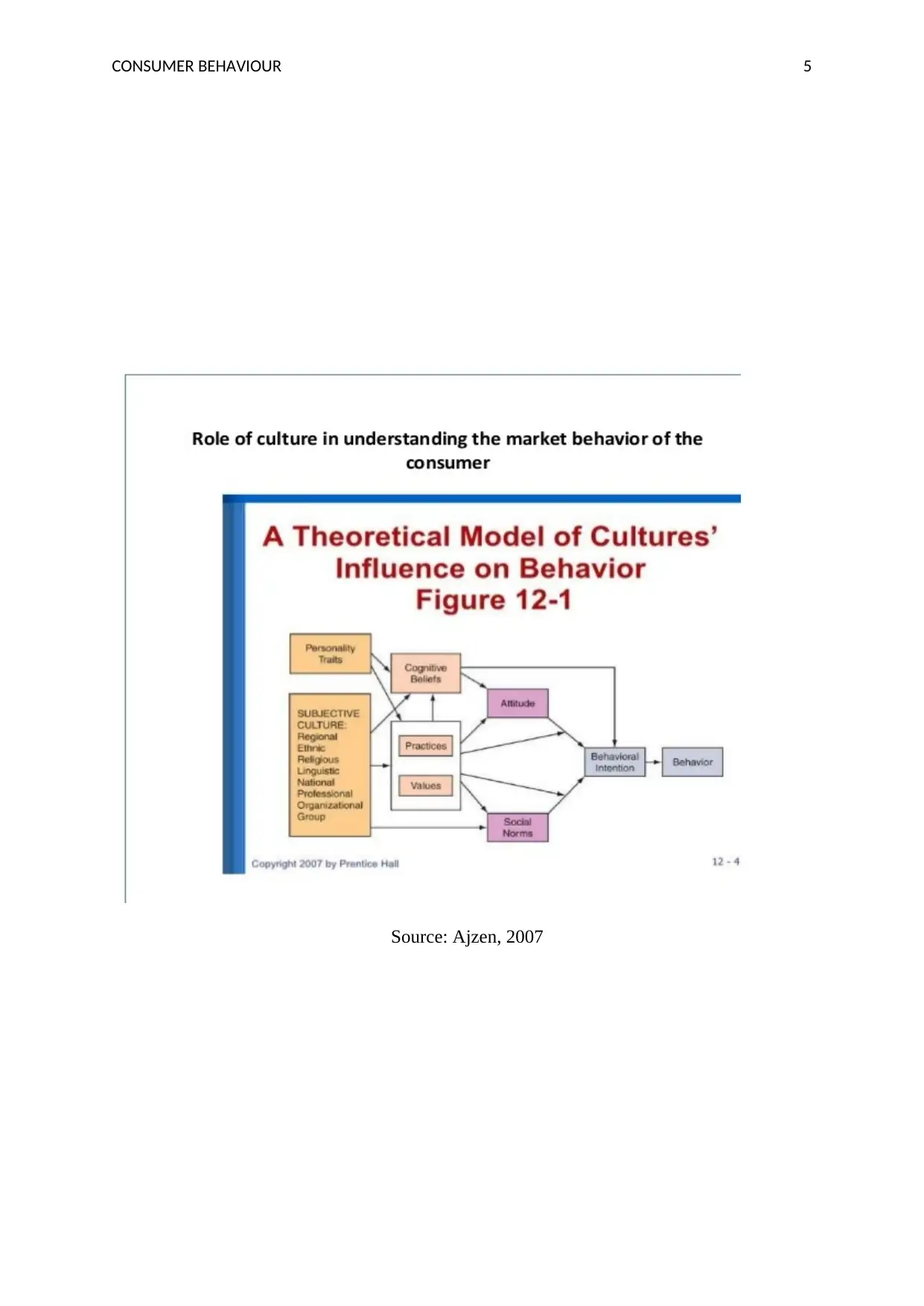
There has been a significant impact of culture prevailing within a particular group which
marks the relative consumer behaviour. It consists of unstated moulds, values and norms,
Executive Summary
This report highlights the consumer behaviour of an Asian multicultural family in context of
Woolworth’s group in Australia. Although, the multiculturalism involves the broad
framework of various culture and its relevant features within. In order to increase the sale of
the company, the measures are studied in detail so that it attains maximum profit from
targeted customers. The impact of social class in addition with cultural factors is also
emphasised. At last, recommendations are pointed to influence the potential consumers.
Introduction
Woolworth’s group is the prominent Australian company which have extensive retail
awareness in major parts of Australia and New Zealand. However, it has been ranked as the
second topmost by revenue in Australia. In addition to the above it is also remarked as
biggest takeaway liquor retailer, largest hotel and betting poker machine operative in the
region. The group was founded on 22 September 1924 and it has been completion of 93 years
till the date (Woolworths Group, 2018).
The main operations subcategorised under Woolworth’s group are supermarkets (Australia
and New Zealand), liquor retailing business (as Dan Murphy’s and BWS in Australia),
various pubs as well as hotels under the head of Australian Leisure and Hospitality group
abbreviated as ALH Group and cut-rate department stores in the Big W name in Australia.
This report focuses upon Woolworth’s branch which is located at Princess Highway,
Dandenong South in Australia.
The consumer for Woolworth in Dandenong is selected as an Asian multi-cultural family and
the relative consumer behaviour is studied and analysed in detail. Multicultural families from
intercontinental areas make Australia an immigration nation. The individuals background are
free from every race, religion, culture, faith or nation belonging. Instead the shared values of
democracy, equality, freedom and rule of law as well as respect are relied upon. The
existence of racism and discrimination is nil (Kymlicka, 2012). Asian multicultural family is
basically the family which the roots in Asian countries but now residing in Australia within
the layer of its multicultural diversity.
Impact of culture factors on consumer behaviour
There has been a significant impact of culture prevailing within a particular group which
marks the relative consumer behaviour. It consists of unstated moulds, values and norms,
CONSUMER BEHAVIOUR 3
tackles, standards for remarking, assessing, trusting and collaborating. The aforesaid case is
the same existing in an Asian multicultural family residing in Australia. In addition, there is
also an impact arising from reference group which consist of external peer or familial group
each among providing distinct and conflicting information (Marsiglia, 2010). To influence
the multicultural targeted marketed, marketers use the tactics of market subdivision and
micromarketing (Durmaz, 2014). The goal defined is to communicate precisely the marketing
messages which would enhance the consumer’s need and knowledge regarding existence and
use of varied products and services.
Key dimensions of cultural values on consumer behaviour
The elements within value are independence, individuality, achievement and self-fulfilment.
Some are discussed below:
A. Power distance
It is basically the relationship to strive more of power on the less powerful individual. The
resultant outcome is the increment of social distance in between less and more powerful
personalities (Nayeem, 2012). Apparently, it highlights the degree of authoritarianism in the
culture. As the family selected is multi-cultural, the existence of power distance is low which
in turn in result in positive consumer behaviour as buying habits are diverse and independent.
B. Individualism
The degree of relationship in between the individual and collectivistic groups which prevails
in the society. In countries of high IDV, the identity is directed on the individualism whereas
in the area of low-slung IDV country it is completely based upon social system. The
decisions of individuals are grounded on the penchants of the group (Billing, Bhagat,
Babakus, Srivastava, Shin & Brew, 2014). American has multiculturalism which is the
backbone of individualism as a result the people are free to stick to their respective choices
and interest, which also results in more of sales.
C. Masculinity
It is abbreviated by the initials of MAS. The male dominancy is allied with the features of
aggression, dominance, autonomy and exhibition. On the contrary the feminine nature has the
characteristics of helpfulness, association, modesty and nurturance. The difference lies in the
orientation of higher MAS society which is wealth oriented and the opponent is people
preoccupied. Also, in the areas of higher MAS, there is differentiated sex roles while in the
lower MAS; it is more of fluid in nature (Mücahit, 2011).
tackles, standards for remarking, assessing, trusting and collaborating. The aforesaid case is
the same existing in an Asian multicultural family residing in Australia. In addition, there is
also an impact arising from reference group which consist of external peer or familial group
each among providing distinct and conflicting information (Marsiglia, 2010). To influence
the multicultural targeted marketed, marketers use the tactics of market subdivision and
micromarketing (Durmaz, 2014). The goal defined is to communicate precisely the marketing
messages which would enhance the consumer’s need and knowledge regarding existence and
use of varied products and services.
Key dimensions of cultural values on consumer behaviour
The elements within value are independence, individuality, achievement and self-fulfilment.
Some are discussed below:
A. Power distance
It is basically the relationship to strive more of power on the less powerful individual. The
resultant outcome is the increment of social distance in between less and more powerful
personalities (Nayeem, 2012). Apparently, it highlights the degree of authoritarianism in the
culture. As the family selected is multi-cultural, the existence of power distance is low which
in turn in result in positive consumer behaviour as buying habits are diverse and independent.
B. Individualism
The degree of relationship in between the individual and collectivistic groups which prevails
in the society. In countries of high IDV, the identity is directed on the individualism whereas
in the area of low-slung IDV country it is completely based upon social system. The
decisions of individuals are grounded on the penchants of the group (Billing, Bhagat,
Babakus, Srivastava, Shin & Brew, 2014). American has multiculturalism which is the
backbone of individualism as a result the people are free to stick to their respective choices
and interest, which also results in more of sales.
C. Masculinity
It is abbreviated by the initials of MAS. The male dominancy is allied with the features of
aggression, dominance, autonomy and exhibition. On the contrary the feminine nature has the
characteristics of helpfulness, association, modesty and nurturance. The difference lies in the
orientation of higher MAS society which is wealth oriented and the opponent is people
preoccupied. Also, in the areas of higher MAS, there is differentiated sex roles while in the
lower MAS; it is more of fluid in nature (Mücahit, 2011).
⊘ This is a preview!⊘
Do you want full access?
Subscribe today to unlock all pages.

Trusted by 1+ million students worldwide
CONSUMER BEHAVIOUR 4
With the family of multicultural nature in Australia, it is expected to have less of
masculinity. Instead there is proper and balance proportionate in the gender of family and
their relative authorities as well as responsibilities.
Strategic implication of cross cultural and global influence
The higher is the relative strength of cultural identification, the greater is the degree of
propensity to buy products and services associated with the culture or multicultural
environment. The individuals are more likely to adopt the cultural beliefs and values which
are specific to the origin of host country (Bian & Forsythe, 2012). Likewise Australia has the
content of multiculturalism; as a result the emigrants from rest of the world get adopted with
the surrounding culture and environment.
In order to influence the consumers of multicultural prevalence, the marketer must
address the message with the diverse characteristics which will correspond to the degree of
acculturation. Howsoever, in the context of Asian multi-union family the marketing message
must be moderated towards the dimension of both host and origin country which justifies the
distinctive cultures.
With the family of multicultural nature in Australia, it is expected to have less of
masculinity. Instead there is proper and balance proportionate in the gender of family and
their relative authorities as well as responsibilities.
Strategic implication of cross cultural and global influence
The higher is the relative strength of cultural identification, the greater is the degree of
propensity to buy products and services associated with the culture or multicultural
environment. The individuals are more likely to adopt the cultural beliefs and values which
are specific to the origin of host country (Bian & Forsythe, 2012). Likewise Australia has the
content of multiculturalism; as a result the emigrants from rest of the world get adopted with
the surrounding culture and environment.
In order to influence the consumers of multicultural prevalence, the marketer must
address the message with the diverse characteristics which will correspond to the degree of
acculturation. Howsoever, in the context of Asian multi-union family the marketing message
must be moderated towards the dimension of both host and origin country which justifies the
distinctive cultures.
Paraphrase This Document
Need a fresh take? Get an instant paraphrase of this document with our AI Paraphraser
CONSUMER BEHAVIOUR 5
Source: Ajzen, 2007
Source: Ajzen, 2007
CONSUMER BEHAVIOUR 6
Impact of social class on consumer behaviour
Every society includes some definite kind of social class within which is prominent to the
marketers because the ultimate buying behaviour of given class is similar in nature. However
the social class doesn’t have only income factor as a component, instead various other factors
also have long term repercussions such as wealth, occupation and education etc. (Dubois,
Rucker & Galinsky, 2015).
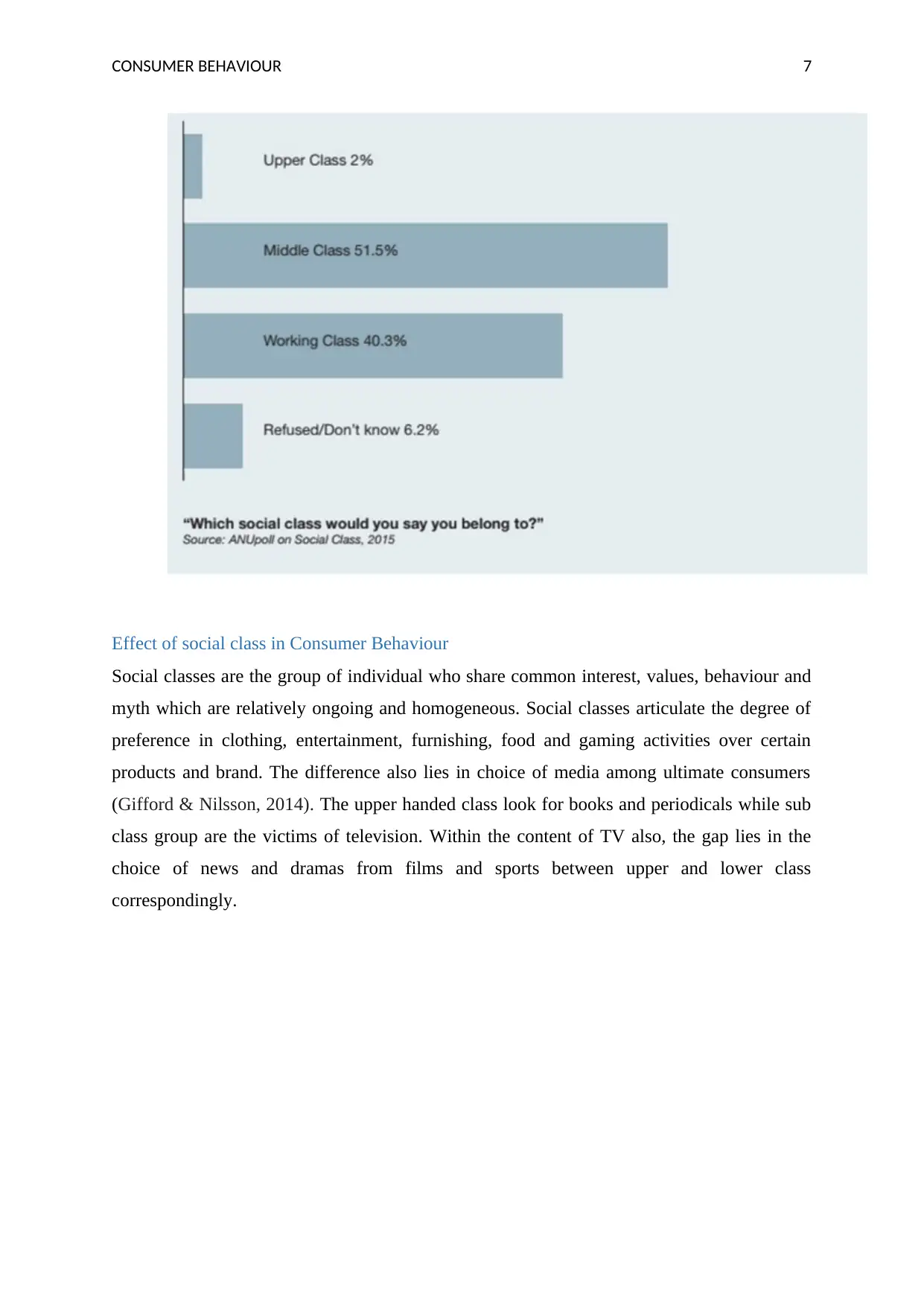
Basically the researches have revealed the presence of six classes within the social
structure map view of various small as well as large cities. These are mentioned below
1. Upper – upper class
2. Lower – upper class
3. Upper- middle class
4. Lower- middle class
5. Working class
6. Lower class
The class rankings are the outcome of occupation, education, income earned, location
of residence as well as family background. The study of social class proves to be
prominent in determining the selection or preferences of quality, kind and style of
various durables needed (Hugstad, Taylor & Bruce, 2013). Likewise in the limelight
of Woolworth’s group the choices of different liquor, sea food and various
consumables depend on the social class of various Asian multi-cultural families living
in the nearby region. The consumer behaviour is also expected to be affected by the
choice of media usage, source credibility, language pattern dominant and proportion
of shopping behaviour.
Impact of social class on consumer behaviour
Every society includes some definite kind of social class within which is prominent to the
marketers because the ultimate buying behaviour of given class is similar in nature. However
the social class doesn’t have only income factor as a component, instead various other factors
also have long term repercussions such as wealth, occupation and education etc. (Dubois,
Rucker & Galinsky, 2015).
Basically the researches have revealed the presence of six classes within the social
structure map view of various small as well as large cities. These are mentioned below
1. Upper – upper class
2. Lower – upper class
3. Upper- middle class
4. Lower- middle class
5. Working class
6. Lower class
The class rankings are the outcome of occupation, education, income earned, location
of residence as well as family background. The study of social class proves to be
prominent in determining the selection or preferences of quality, kind and style of
various durables needed (Hugstad, Taylor & Bruce, 2013). Likewise in the limelight
of Woolworth’s group the choices of different liquor, sea food and various
consumables depend on the social class of various Asian multi-cultural families living
in the nearby region. The consumer behaviour is also expected to be affected by the
choice of media usage, source credibility, language pattern dominant and proportion
of shopping behaviour.
⊘ This is a preview!⊘
Do you want full access?
Subscribe today to unlock all pages.
Trusted by 1+ million students worldwide
CONSUMER BEHAVIOUR 7
Effect of social class in Consumer Behaviour
Social classes are the group of individual who share common interest, values, behaviour and
myth which are relatively ongoing and homogeneous. Social classes articulate the degree of
preference in clothing, entertainment, furnishing, food and gaming activities over certain
products and brand. The difference also lies in choice of media among ultimate consumers
(Gifford & Nilsson, 2014). The upper handed class look for books and periodicals while sub
class group are the victims of television. Within the content of TV also, the gap lies in the
choice of news and dramas from films and sports between upper and lower class
correspondingly.
Effect of social class in Consumer Behaviour
Social classes are the group of individual who share common interest, values, behaviour and
myth which are relatively ongoing and homogeneous. Social classes articulate the degree of
preference in clothing, entertainment, furnishing, food and gaming activities over certain
products and brand. The difference also lies in choice of media among ultimate consumers
(Gifford & Nilsson, 2014). The upper handed class look for books and periodicals while sub
class group are the victims of television. Within the content of TV also, the gap lies in the
choice of news and dramas from films and sports between upper and lower class
correspondingly.
Paraphrase This Document
Need a fresh take? Get an instant paraphrase of this document with our AI Paraphraser
CONSUMER BEHAVIOUR 8
Components of social class
The quantum of nine variables have materialised as of most important in the tributary of
sociological and other investigation alarmed with social class.
1. Economic variables: The income, occupation in addition to the wealth is of prominent
nature. The income earned by the individual decides the expenditure pattern of the
respective family. The momentary sound position is a vital component of day to day
living.
2. Interaction variables: The variables of personal prestige linked is key constituent of
social class as the people within the distinguished group are conscious regarding the
image and prestige they hold in the surrounding environment (Bargh, 2013). The
degree of association and socialization also has long term repercussion which
validates the connections in the society.
3. Political variables: Generally, the upper class enjoys the highest priority in case of
grade of power. The ranking of class decides the amount of power enjoyed within the
particular group. Mobility is also the foremost aspect in understanding the party-
political aspect of stratified system (Teney & Hanquinet, 2012).
In what aspects social class can influence consumer behaviour??
On the general phenomenon, every society stratifies its extended members into the level of
social classes on the basis of their contemporary values. The members within the same social
class segment the outlining of common values associated in the aspects of speaking, thinking
and behaving (Foxall, 2014). As a result, people prefer to interact and operate their dealings
within the respective groups. Also in Asian countries origin the class distinctions are quite
clear and status differences are also prodigious. The empirical study from the research states
that young children start to learn behaviours and gaining habits of daily lifestyle from the
social class of recognised family. Likewise, the upper class background has moreover the
stronger preferences in the choice of brands and is more confident. On the contrary note,
lower status favour the purchase from local market where there is presence of easy credit
policy and friendly services.
Components of social class
The quantum of nine variables have materialised as of most important in the tributary of
sociological and other investigation alarmed with social class.
1. Economic variables: The income, occupation in addition to the wealth is of prominent
nature. The income earned by the individual decides the expenditure pattern of the
respective family. The momentary sound position is a vital component of day to day
living.
2. Interaction variables: The variables of personal prestige linked is key constituent of
social class as the people within the distinguished group are conscious regarding the
image and prestige they hold in the surrounding environment (Bargh, 2013). The
degree of association and socialization also has long term repercussion which
validates the connections in the society.
3. Political variables: Generally, the upper class enjoys the highest priority in case of
grade of power. The ranking of class decides the amount of power enjoyed within the
particular group. Mobility is also the foremost aspect in understanding the party-
political aspect of stratified system (Teney & Hanquinet, 2012).
In what aspects social class can influence consumer behaviour??
On the general phenomenon, every society stratifies its extended members into the level of
social classes on the basis of their contemporary values. The members within the same social
class segment the outlining of common values associated in the aspects of speaking, thinking
and behaving (Foxall, 2014). As a result, people prefer to interact and operate their dealings
within the respective groups. Also in Asian countries origin the class distinctions are quite
clear and status differences are also prodigious. The empirical study from the research states
that young children start to learn behaviours and gaining habits of daily lifestyle from the
social class of recognised family. Likewise, the upper class background has moreover the
stronger preferences in the choice of brands and is more confident. On the contrary note,
lower status favour the purchase from local market where there is presence of easy credit
policy and friendly services.
CONSUMER BEHAVIOUR 9
Recommendations
Consumers favour the places which satisfy the former in almost every aspect. The services
yield by Woolworth’s group in terms of free Wi-Fi, Pick up and availability of special need
trolleys makes it the foremost choice among competitors. In order to remain to rule the
market, the efforts should be maximised in serving the intercontinental stuff especially those
of Asian countries. On the contrary note the message for the Australian born needs to be
more focused in terms of concert and practical benefits. Among the 7 P’s of marketing, the
most relevant in this context is “product” in Woolworth’s group as it need to focus more on
features, advantage and benefits associated with the product. Also, research and development
should be continued on timely basis.
The studies have exposed that Asian born consumers rely majorly on friends and
family as the topmost secure source of information (Calvert & Brammer, 2012).The
innovative areas should be highlighted in every possible manner. Asian consumers are highly
brand conscious and perceive only qualitative product as well as services. The policies should
be formulated which signifies the relative prestige and status associated. The mode of non-
verbal and literal message is expected to deliver outstanding results. The dealers could be
trained on account of dealing with Asian consumers maintain the same cultural background
and personal relations so that it can influence their buying habits (Rezvani, Dehkordi,
Rahman, Fouladivanda, Habibi & Eghtebasi, 2012).
Conclusion
As it has been highly recognised, that world is now becoming more of a global village.
People incline to have common needs which promote the advertising campaign on a common
platform, addressing the consumers on whole. Companies should pay due attention to
understand the existence of culture within a particular group in a set area.
Since, consumers who are Asian born usually favour the choice of group goals over
individual interest or goals, the approach of targeting the aforesaid at group level will be
more effective rather than pointing the efforts at individual level. The strategy to be used for
influencing the consumer behaviour could be inclined towards the branches of family and
cultural/social values which accentuates the group consensus appeals, family security and
ties.
Recommendations
Consumers favour the places which satisfy the former in almost every aspect. The services
yield by Woolworth’s group in terms of free Wi-Fi, Pick up and availability of special need
trolleys makes it the foremost choice among competitors. In order to remain to rule the
market, the efforts should be maximised in serving the intercontinental stuff especially those
of Asian countries. On the contrary note the message for the Australian born needs to be
more focused in terms of concert and practical benefits. Among the 7 P’s of marketing, the
most relevant in this context is “product” in Woolworth’s group as it need to focus more on
features, advantage and benefits associated with the product. Also, research and development
should be continued on timely basis.
The studies have exposed that Asian born consumers rely majorly on friends and
family as the topmost secure source of information (Calvert & Brammer, 2012).The
innovative areas should be highlighted in every possible manner. Asian consumers are highly
brand conscious and perceive only qualitative product as well as services. The policies should
be formulated which signifies the relative prestige and status associated. The mode of non-
verbal and literal message is expected to deliver outstanding results. The dealers could be
trained on account of dealing with Asian consumers maintain the same cultural background
and personal relations so that it can influence their buying habits (Rezvani, Dehkordi,
Rahman, Fouladivanda, Habibi & Eghtebasi, 2012).
Conclusion
As it has been highly recognised, that world is now becoming more of a global village.
People incline to have common needs which promote the advertising campaign on a common
platform, addressing the consumers on whole. Companies should pay due attention to
understand the existence of culture within a particular group in a set area.
Since, consumers who are Asian born usually favour the choice of group goals over
individual interest or goals, the approach of targeting the aforesaid at group level will be
more effective rather than pointing the efforts at individual level. The strategy to be used for
influencing the consumer behaviour could be inclined towards the branches of family and
cultural/social values which accentuates the group consensus appeals, family security and
ties.
⊘ This is a preview!⊘
Do you want full access?
Subscribe today to unlock all pages.
Trusted by 1+ million students worldwide
CONSUMER BEHAVIOUR 10
References
Bargh, J. A. (2013). Social psychology and the unconscious: The automaticity of higher
mental processes. Psychology Press.
Bian, Q., & Forsythe, S. (2012). Purchase intention for luxury brands: A cross cultural
comparison. Journal of Business Research, 65(10), 1443-1451.
Billing, T. K., Bhagat, R., Babakus, E., Srivastava, B. N., Shin, M., & Brew, F. (2014).
Work–family conflict in four national contexts: a closer look at the role of
individualism–collectivism. International Journal of Cross Cultural
Management, 14(2), 139-159.
Calvert, G. A., & Brammer, M. J. (2012). Predicting consumer behavior: using novel mind-
reading approaches. IEEE pulse, 3(3), 38-41.
Dubois, D., Rucker, D. D., & Galinsky, A. D. (2015). Social class, power, and selfishness:
When and why upper and lower class individuals behave unethically. Journal of
personality and social psychology, 108(3), 436.
Durmaz, Y. (2014). Global Journal of Management and Business Research: E Marketing.
International Research Journal, 14 (1), 1-9.
Foxall, G. (2014). Consumer Behaviour (RLE Consumer Behaviour): A Practical Guide.
Routledge.
Gifford, R., & Nilsson, A. (2014). Personal and social factors that influence pro‐
environmental concern and behaviour: A review. International Journal of
Psychology, 49(3), 141-157.
Hugstad, P., Taylor, J. W., & Bruce, G. D. (2013). The effects of social class and perceived
risk on consumer information search. Journal of Consumer Marketing.
Kymlicka, W. (2012). Multiculturalism. Social Justice and the Welfare State, in: Gary
Craig/David Gordon/Tania Burchardt, 53-75.
Marsiglia, A. (2010). Cultural effects on consumer behaviour. Retrieved from
http://www.lead-inspire.com/Papers-Articles/Leadership-Management/Cultural
%20Effects%20on%20Consumer%20Behavior%20Paper%20122610.pdf
References
Bargh, J. A. (2013). Social psychology and the unconscious: The automaticity of higher
mental processes. Psychology Press.
Bian, Q., & Forsythe, S. (2012). Purchase intention for luxury brands: A cross cultural
comparison. Journal of Business Research, 65(10), 1443-1451.
Billing, T. K., Bhagat, R., Babakus, E., Srivastava, B. N., Shin, M., & Brew, F. (2014).
Work–family conflict in four national contexts: a closer look at the role of
individualism–collectivism. International Journal of Cross Cultural
Management, 14(2), 139-159.
Calvert, G. A., & Brammer, M. J. (2012). Predicting consumer behavior: using novel mind-
reading approaches. IEEE pulse, 3(3), 38-41.
Dubois, D., Rucker, D. D., & Galinsky, A. D. (2015). Social class, power, and selfishness:
When and why upper and lower class individuals behave unethically. Journal of
personality and social psychology, 108(3), 436.
Durmaz, Y. (2014). Global Journal of Management and Business Research: E Marketing.
International Research Journal, 14 (1), 1-9.
Foxall, G. (2014). Consumer Behaviour (RLE Consumer Behaviour): A Practical Guide.
Routledge.
Gifford, R., & Nilsson, A. (2014). Personal and social factors that influence pro‐
environmental concern and behaviour: A review. International Journal of
Psychology, 49(3), 141-157.
Hugstad, P., Taylor, J. W., & Bruce, G. D. (2013). The effects of social class and perceived
risk on consumer information search. Journal of Consumer Marketing.
Kymlicka, W. (2012). Multiculturalism. Social Justice and the Welfare State, in: Gary
Craig/David Gordon/Tania Burchardt, 53-75.
Marsiglia, A. (2010). Cultural effects on consumer behaviour. Retrieved from
http://www.lead-inspire.com/Papers-Articles/Leadership-Management/Cultural
%20Effects%20on%20Consumer%20Behavior%20Paper%20122610.pdf
Paraphrase This Document
Need a fresh take? Get an instant paraphrase of this document with our AI Paraphraser
CONSUMER BEHAVIOUR 11
Mücahit, C. (2011). The Impact of Cultural Factors on the Consumer Buying Behaviours
Examined through an Empirical Study. International Journal of Business and Social
Science, 2(5), 109-114.
Nayeem, T. (2012). Cultural Influences on Consumer Behaviour. International Journal of
Business and Management, 7(21), 78-91.
Rezvani, S., Dehkordi, G. J., Rahman, M. S., Fouladivanda, F., Habibi, M., & Eghtebasi, S.
(2012). A conceptual study on the country of origin effect on consumer purchase
intention. Asian Social Science, 8(12), 205.
Teney, C., & Hanquinet, L. (2012). High political participation, high social capital? A
relational analysis of youth social capital and political participation. Social Science
Research, 41(5), 1213-1226.
Woolworths Group (2018). about us. Retrieved from
https://www.woolworthsgroup.com.au/page/about-us/The_Woolworths_Story/
How_We_Were_Founded
Mücahit, C. (2011). The Impact of Cultural Factors on the Consumer Buying Behaviours
Examined through an Empirical Study. International Journal of Business and Social
Science, 2(5), 109-114.
Nayeem, T. (2012). Cultural Influences on Consumer Behaviour. International Journal of
Business and Management, 7(21), 78-91.
Rezvani, S., Dehkordi, G. J., Rahman, M. S., Fouladivanda, F., Habibi, M., & Eghtebasi, S.
(2012). A conceptual study on the country of origin effect on consumer purchase
intention. Asian Social Science, 8(12), 205.
Teney, C., & Hanquinet, L. (2012). High political participation, high social capital? A
relational analysis of youth social capital and political participation. Social Science
Research, 41(5), 1213-1226.
Woolworths Group (2018). about us. Retrieved from
https://www.woolworthsgroup.com.au/page/about-us/The_Woolworths_Story/
How_We_Were_Founded

1 out of 11


Related Documents


Your All-in-One AI-Powered Toolkit for Academic Success.
+13062052269
info@desklib.com
Available 24*7 on WhatsApp / Email
![[object Object]](/_next/static/media/star-bottom.7253800d.svg)
Unlock your academic potential
Copyright © 2020–2026 A2Z Services. All Rights Reserved. Developed and managed by ZUCOL.