Analysis of Adjustable Spanner Design, Materials, and Manufacturing
VerifiedAdded on 2022/08/26
|18
|2358
|34
Report
AI Summary
This report provides a detailed analysis of spanner design, focusing primarily on adjustable spanners, with AutoCAD used to produce the design. The paper starts with an executive summary and a table of contents, then introduces the importance of spanners and their applications in industrial settings. A literature review follows, tracing the history of spanners and their evolution. The report then explores various spanner types, including adjustable, Allen key, box-ended, open-ended, and combination spanners, discussing their specific uses. It delves into the tool materials used in spanner manufacturing, emphasizing the need for hardness and wear resistance. The manufacturing methods, including cutting, milling, drilling, and grinding, are described in detail. The conceptual design phase is presented, outlining the initial sketches and design considerations. Detailed design specifications, material selection (chromium Vanadium steels), and manufacturing methods are provided, along with diagrams and AutoCAD designs. The report concludes with a summary of the findings, emphasizing the importance of design specifications and material selection for a robust and corrosion-resistant spanner.
Running head: SPANNER DESIGN
SPANNER DESIGN
Name of Student
Institution Affiliation
SPANNER DESIGN
Name of Student
Institution Affiliation
Paraphrase This Document
Need a fresh take? Get an instant paraphrase of this document with our AI Paraphraser

SPANNER DESIGN 2
Executive summary
In this paper we will analyze the design of spanner preferably adjustable spanner, the
design of this spanner is drawn using an AutoCAD computer software. In the analysis, we also
check some other types of spanner which are very significant in industrial use. The paper will
analyse the available manufacturing methods for spanner as well as scrutinizes both conceptual
and final design of spanner. In this report, we also look at some material tools which are
employed in the design and manufacturing of spanners.
Executive summary
In this paper we will analyze the design of spanner preferably adjustable spanner, the
design of this spanner is drawn using an AutoCAD computer software. In the analysis, we also
check some other types of spanner which are very significant in industrial use. The paper will
analyse the available manufacturing methods for spanner as well as scrutinizes both conceptual
and final design of spanner. In this report, we also look at some material tools which are
employed in the design and manufacturing of spanners.

SPANNER DESIGN 3
Table of content
Executive summary.....................................................................................................................................2
Table of content...........................................................................................................................................3
Table of figures...........................................................................................................................................3
Introduction.................................................................................................................................................4
Literature Review........................................................................................................................................6
Common spanner types...........................................................................................................................7
Adjustable spanner..............................................................................................................................7
Allen Key spanner...............................................................................................................................7
Box-Ended...........................................................................................................................................8
Open-ended spanner............................................................................................................................8
Combination Spanner..........................................................................................................................9
Tool materials..........................................................................................................................................9
Manufacturing methods...........................................................................................................................9
Conceptual Design....................................................................................................................................12
Concept 1...............................................................................................................................................12
Concept 2...............................................................................................................................................13
Final concept.........................................................................................................................................13
Detailed Design.........................................................................................................................................14
Specifications........................................................................................................................................15
Material Selection..................................................................................................................................16
Manufacturing method..........................................................................................................................17
References.................................................................................................................................................19
Table of figures
Table of content
Executive summary.....................................................................................................................................2
Table of content...........................................................................................................................................3
Table of figures...........................................................................................................................................3
Introduction.................................................................................................................................................4
Literature Review........................................................................................................................................6
Common spanner types...........................................................................................................................7
Adjustable spanner..............................................................................................................................7
Allen Key spanner...............................................................................................................................7
Box-Ended...........................................................................................................................................8
Open-ended spanner............................................................................................................................8
Combination Spanner..........................................................................................................................9
Tool materials..........................................................................................................................................9
Manufacturing methods...........................................................................................................................9
Conceptual Design....................................................................................................................................12
Concept 1...............................................................................................................................................12
Concept 2...............................................................................................................................................13
Final concept.........................................................................................................................................13
Detailed Design.........................................................................................................................................14
Specifications........................................................................................................................................15
Material Selection..................................................................................................................................16
Manufacturing method..........................................................................................................................17
References.................................................................................................................................................19
Table of figures
⊘ This is a preview!⊘
Do you want full access?
Subscribe today to unlock all pages.

Trusted by 1+ million students worldwide

SPANNER DESIGN 4
Figure 1: Showing adjustable spanner.........................................................................................................5
Figure 2: Showing early spanner.................................................................................................................6
Figure 3: Showing an adjustable spanner....................................................................................................7
Figure 4: Showing an Allen key spanner.....................................................................................................7
Figure 5: Showing a box ended spanner......................................................................................................8
Figure 6: Showing open-ended spanner.......................................................................................................8
Figure 7: Showing a combination spanner...................................................................................................8
Figure 8: Showing milling process............................................................................................................10
Figure 9: Showing drilling process............................................................................................................10
Figure 10: Showing drilling process..........................................................................................................11
Figure 11: Showing the first conceptual design of spanner.......................................................................12
Figure 12: Showing a final conceptual design...........................................................................................13
Figure 13: Showing the dimension of adjustable spanner..........................................................................15
Figure 14: Showing a final design of adjustable spanner...........................................................................16
Figure 1: Showing adjustable spanner.........................................................................................................5
Figure 2: Showing early spanner.................................................................................................................6
Figure 3: Showing an adjustable spanner....................................................................................................7
Figure 4: Showing an Allen key spanner.....................................................................................................7
Figure 5: Showing a box ended spanner......................................................................................................8
Figure 6: Showing open-ended spanner.......................................................................................................8
Figure 7: Showing a combination spanner...................................................................................................8
Figure 8: Showing milling process............................................................................................................10
Figure 9: Showing drilling process............................................................................................................10
Figure 10: Showing drilling process..........................................................................................................11
Figure 11: Showing the first conceptual design of spanner.......................................................................12
Figure 12: Showing a final conceptual design...........................................................................................13
Figure 13: Showing the dimension of adjustable spanner..........................................................................15
Figure 14: Showing a final design of adjustable spanner...........................................................................16
Paraphrase This Document
Need a fresh take? Get an instant paraphrase of this document with our AI Paraphraser

SPANNER DESIGN 5
Introduction
Spanner is a very significant tool which is used in almost all industrial activities in
tightening and loosening bolts and nuts. Spanners are given in different sizes (numbers), for
example, spanner number 8, 9, 10…….. Spanners are different types but still do the same job,
the difference in the types of spanners is due to their application in tightening and loosening of
bolts and nuts. Some of the common types of spanner include ring, fixed, adjustable spanner,
open and combined type. The use of the design of spanner has made it easier for mounting of
several industrial machines for example motors, generators and other machines. Sometimes
spanner can be used grip when loosening or tightening a bolt/ nut using another spanner, this
hence requires a spanner to be made of strong metals. Stronger spanners are made from titanium
and chromium Vanadium alloys. Basically, they are made of drop forged and coated in chrome
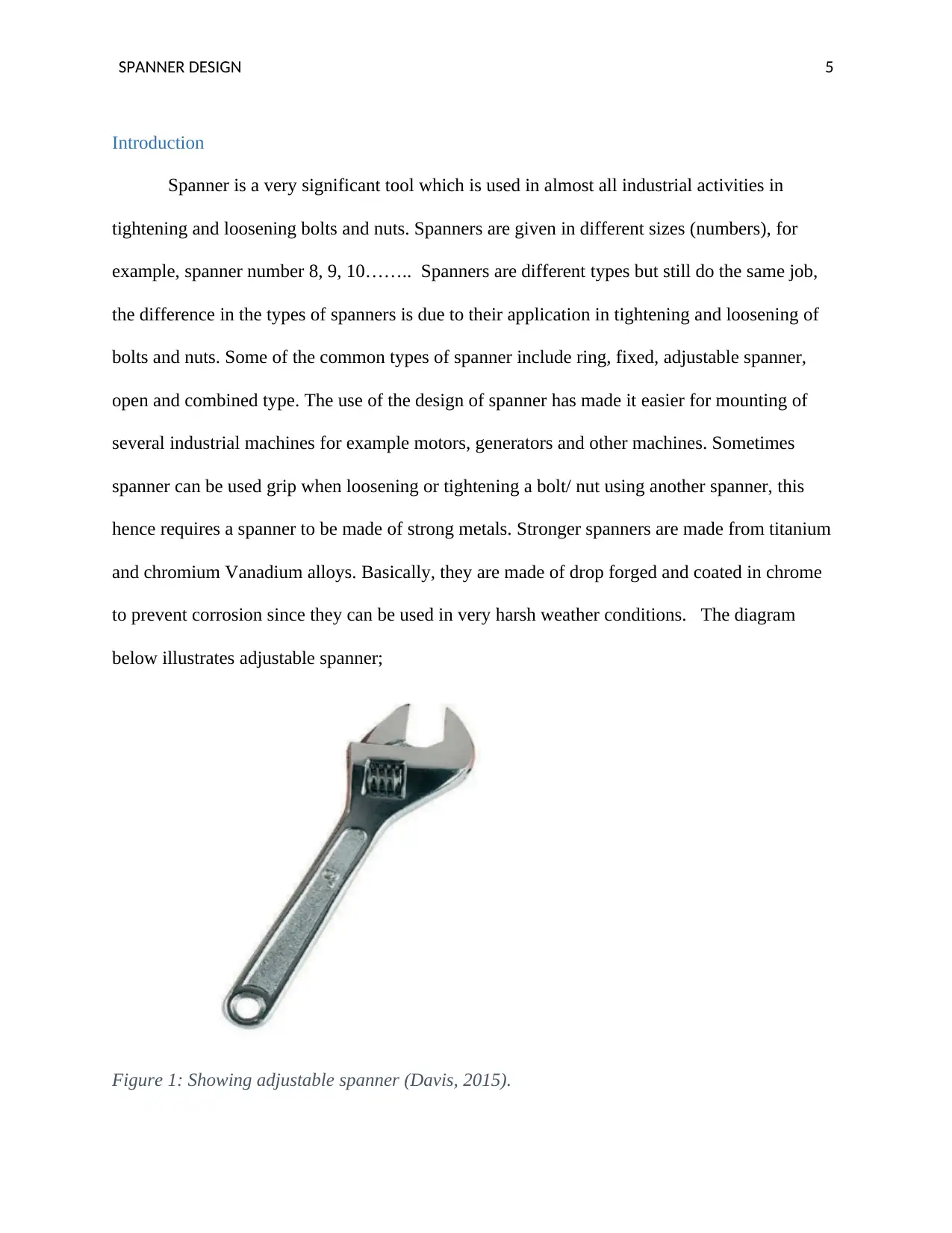
to prevent corrosion since they can be used in very harsh weather conditions. The diagram
below illustrates adjustable spanner;
Figure 1: Showing adjustable spanner (Davis, 2015).
Introduction
Spanner is a very significant tool which is used in almost all industrial activities in
tightening and loosening bolts and nuts. Spanners are given in different sizes (numbers), for
example, spanner number 8, 9, 10…….. Spanners are different types but still do the same job,
the difference in the types of spanners is due to their application in tightening and loosening of
bolts and nuts. Some of the common types of spanner include ring, fixed, adjustable spanner,
open and combined type. The use of the design of spanner has made it easier for mounting of
several industrial machines for example motors, generators and other machines. Sometimes
spanner can be used grip when loosening or tightening a bolt/ nut using another spanner, this
hence requires a spanner to be made of strong metals. Stronger spanners are made from titanium
and chromium Vanadium alloys. Basically, they are made of drop forged and coated in chrome
to prevent corrosion since they can be used in very harsh weather conditions. The diagram
below illustrates adjustable spanner;
Figure 1: Showing adjustable spanner (Davis, 2015).

SPANNER DESIGN 6
Literature Review
Spanner first appeared in 15th C and it was in the form of a box spanner, during this time there
was no spanner´s standard size and every spanner and fastener were made from a blacksmith. It
was believed that the first spanner would have been employed for winding up crossbow strings
and tightening to provide a much taut than what a human hand could produce (Geesin, 2015).
Until the late 18th Century, spanners were categorized into usage and size. With the industrial
revolution, the initial wrought iron spanner which was developed by the blacksmith was
completely replaced by cast iron version which was developed on a larger scale. By the year
1825 standard spanner and sizes were produced so that it could be easier to interchange spanner,
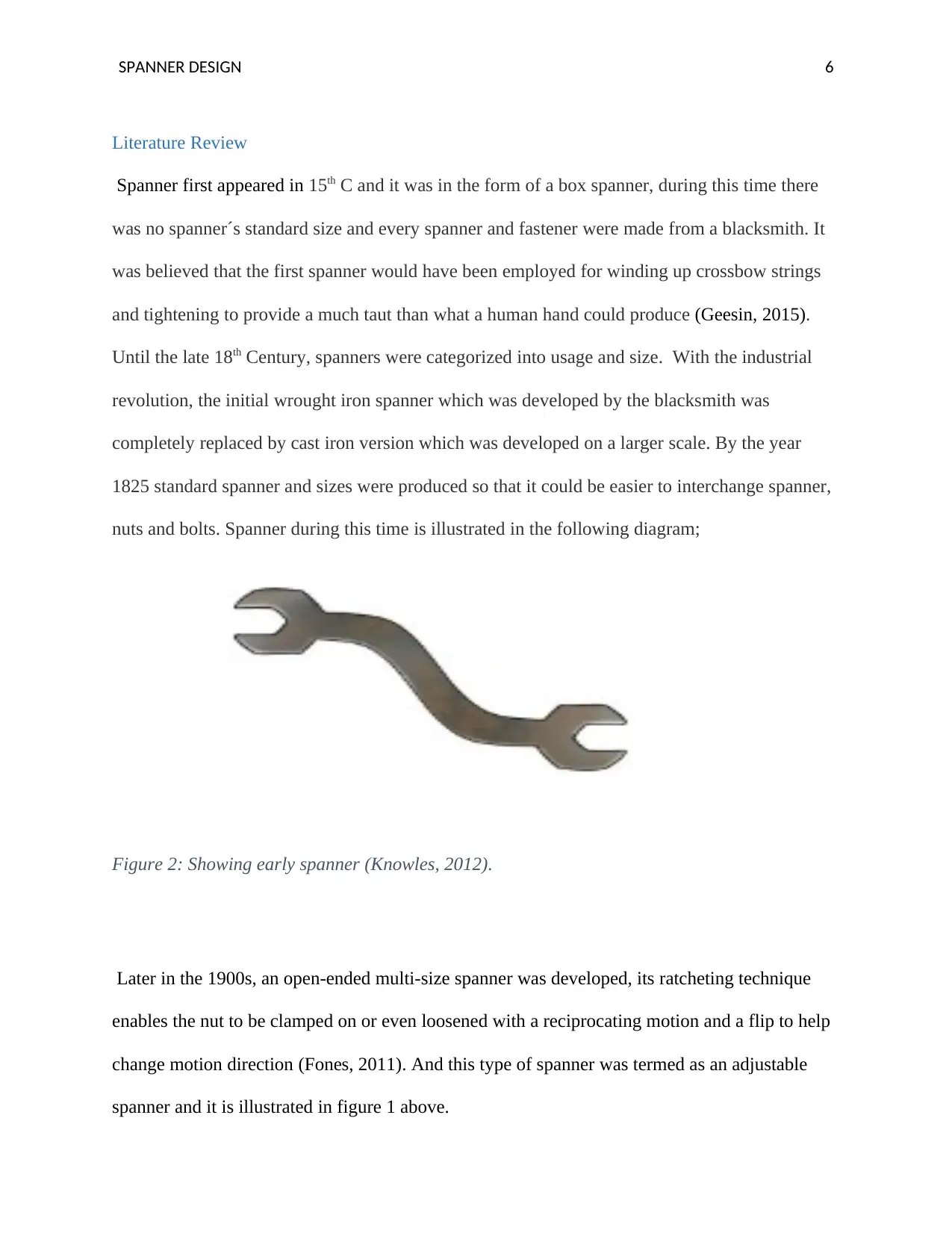
nuts and bolts. Spanner during this time is illustrated in the following diagram;
Figure 2: Showing early spanner (Knowles, 2012).
Later in the 1900s, an open-ended multi-size spanner was developed, its ratcheting technique
enables the nut to be clamped on or even loosened with a reciprocating motion and a flip to help
change motion direction (Fones, 2011). And this type of spanner was termed as an adjustable
spanner and it is illustrated in figure 1 above.
Literature Review
Spanner first appeared in 15th C and it was in the form of a box spanner, during this time there
was no spanner´s standard size and every spanner and fastener were made from a blacksmith. It
was believed that the first spanner would have been employed for winding up crossbow strings
and tightening to provide a much taut than what a human hand could produce (Geesin, 2015).
Until the late 18th Century, spanners were categorized into usage and size. With the industrial
revolution, the initial wrought iron spanner which was developed by the blacksmith was
completely replaced by cast iron version which was developed on a larger scale. By the year
1825 standard spanner and sizes were produced so that it could be easier to interchange spanner,
nuts and bolts. Spanner during this time is illustrated in the following diagram;
Figure 2: Showing early spanner (Knowles, 2012).
Later in the 1900s, an open-ended multi-size spanner was developed, its ratcheting technique
enables the nut to be clamped on or even loosened with a reciprocating motion and a flip to help
change motion direction (Fones, 2011). And this type of spanner was termed as an adjustable
spanner and it is illustrated in figure 1 above.
⊘ This is a preview!⊘
Do you want full access?
Subscribe today to unlock all pages.

Trusted by 1+ million students worldwide

SPANNER DESIGN 7
Common spanner types
There are several types of spanner and the classification of this spanner are due to how they are
being used to undertake their function and where they are used in performing their duties. Some
of these common types are discussed below;
Adjustable spanner
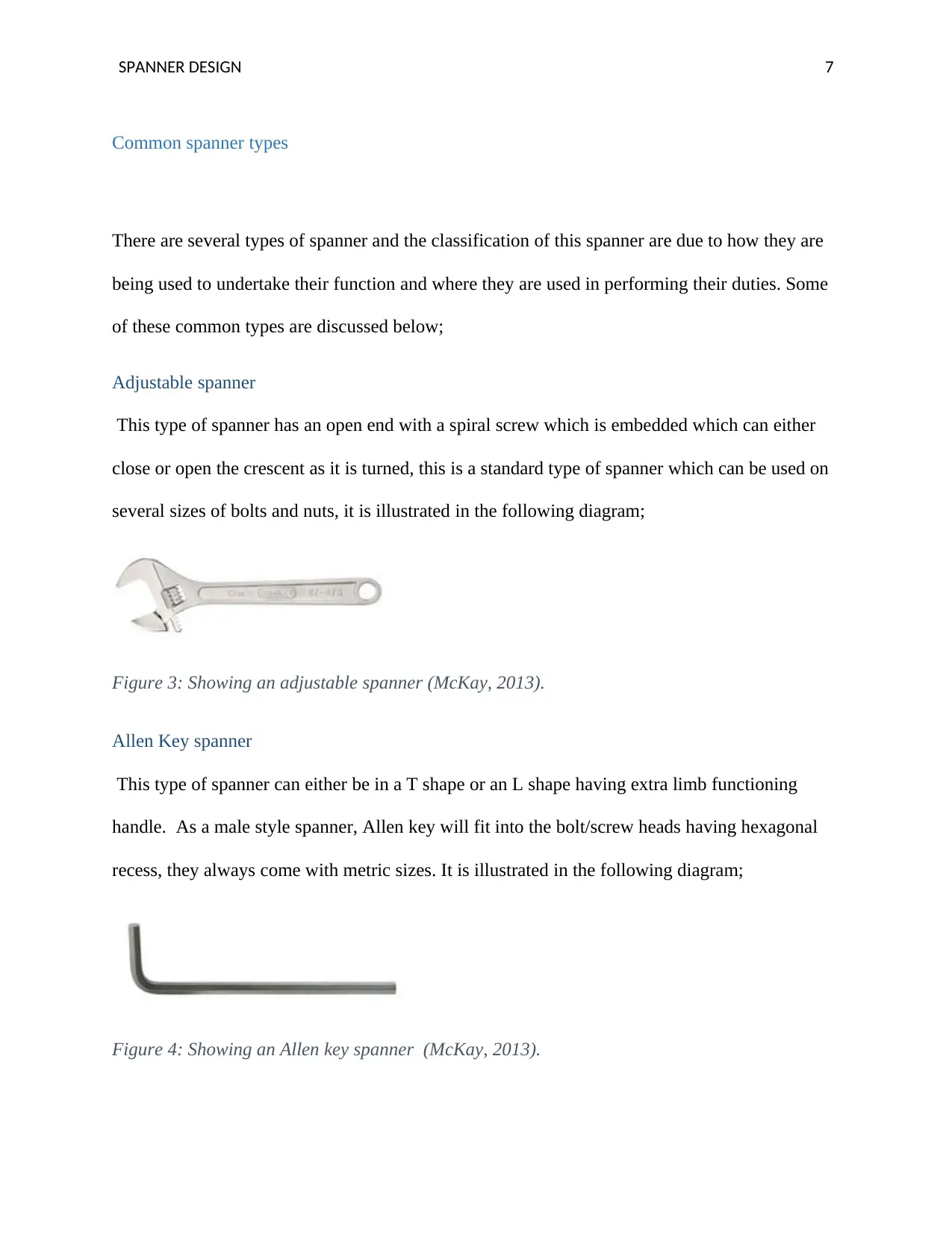
This type of spanner has an open end with a spiral screw which is embedded which can either
close or open the crescent as it is turned, this is a standard type of spanner which can be used on
several sizes of bolts and nuts, it is illustrated in the following diagram;
Figure 3: Showing an adjustable spanner (McKay, 2013).
Allen Key spanner
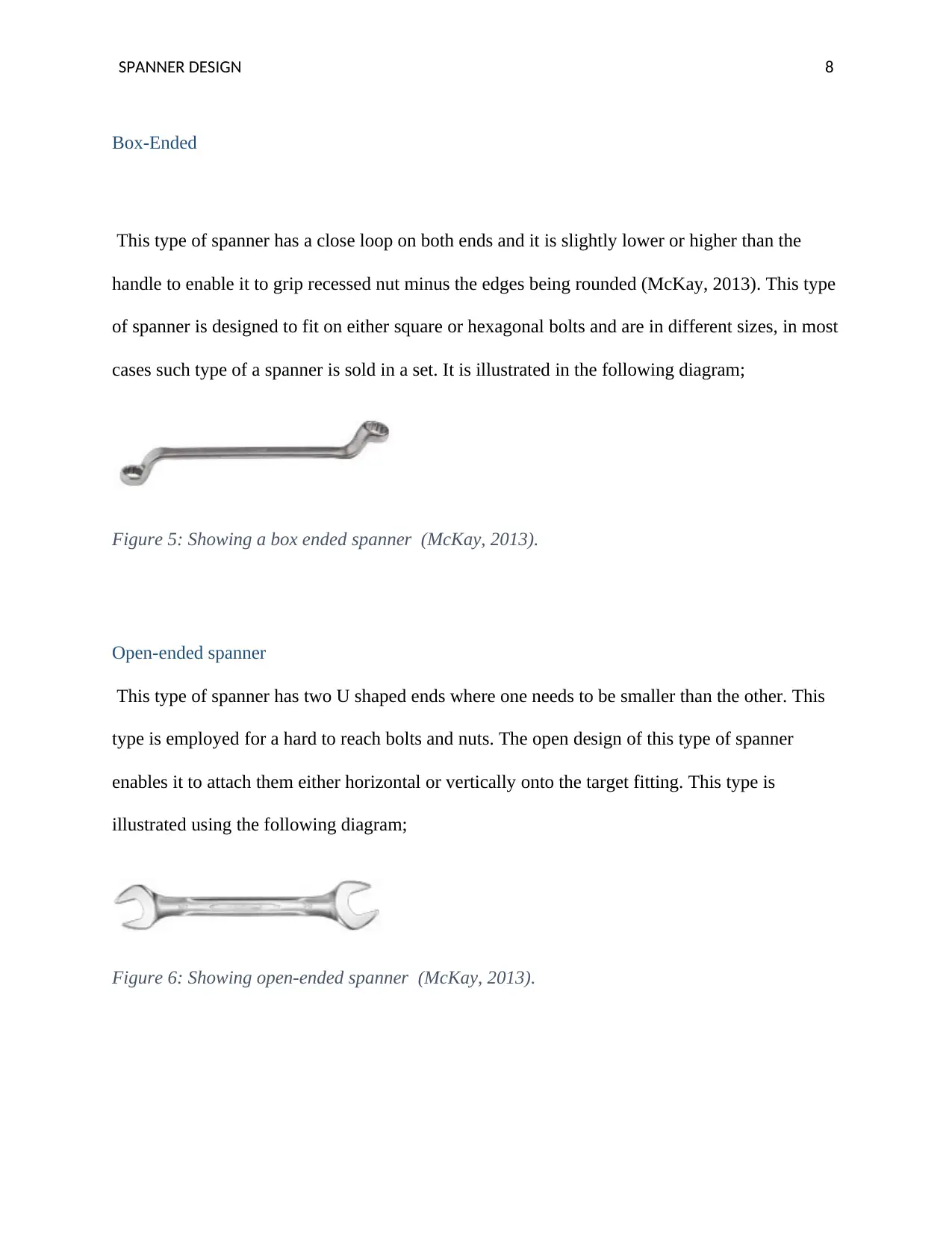
This type of spanner can either be in a T shape or an L shape having extra limb functioning
handle. As a male style spanner, Allen key will fit into the bolt/screw heads having hexagonal
recess, they always come with metric sizes. It is illustrated in the following diagram;
Figure 4: Showing an Allen key spanner (McKay, 2013).
Common spanner types
There are several types of spanner and the classification of this spanner are due to how they are
being used to undertake their function and where they are used in performing their duties. Some
of these common types are discussed below;
Adjustable spanner
This type of spanner has an open end with a spiral screw which is embedded which can either
close or open the crescent as it is turned, this is a standard type of spanner which can be used on
several sizes of bolts and nuts, it is illustrated in the following diagram;
Figure 3: Showing an adjustable spanner (McKay, 2013).
Allen Key spanner
This type of spanner can either be in a T shape or an L shape having extra limb functioning
handle. As a male style spanner, Allen key will fit into the bolt/screw heads having hexagonal
recess, they always come with metric sizes. It is illustrated in the following diagram;
Figure 4: Showing an Allen key spanner (McKay, 2013).
Paraphrase This Document
Need a fresh take? Get an instant paraphrase of this document with our AI Paraphraser

SPANNER DESIGN 8
Box-Ended
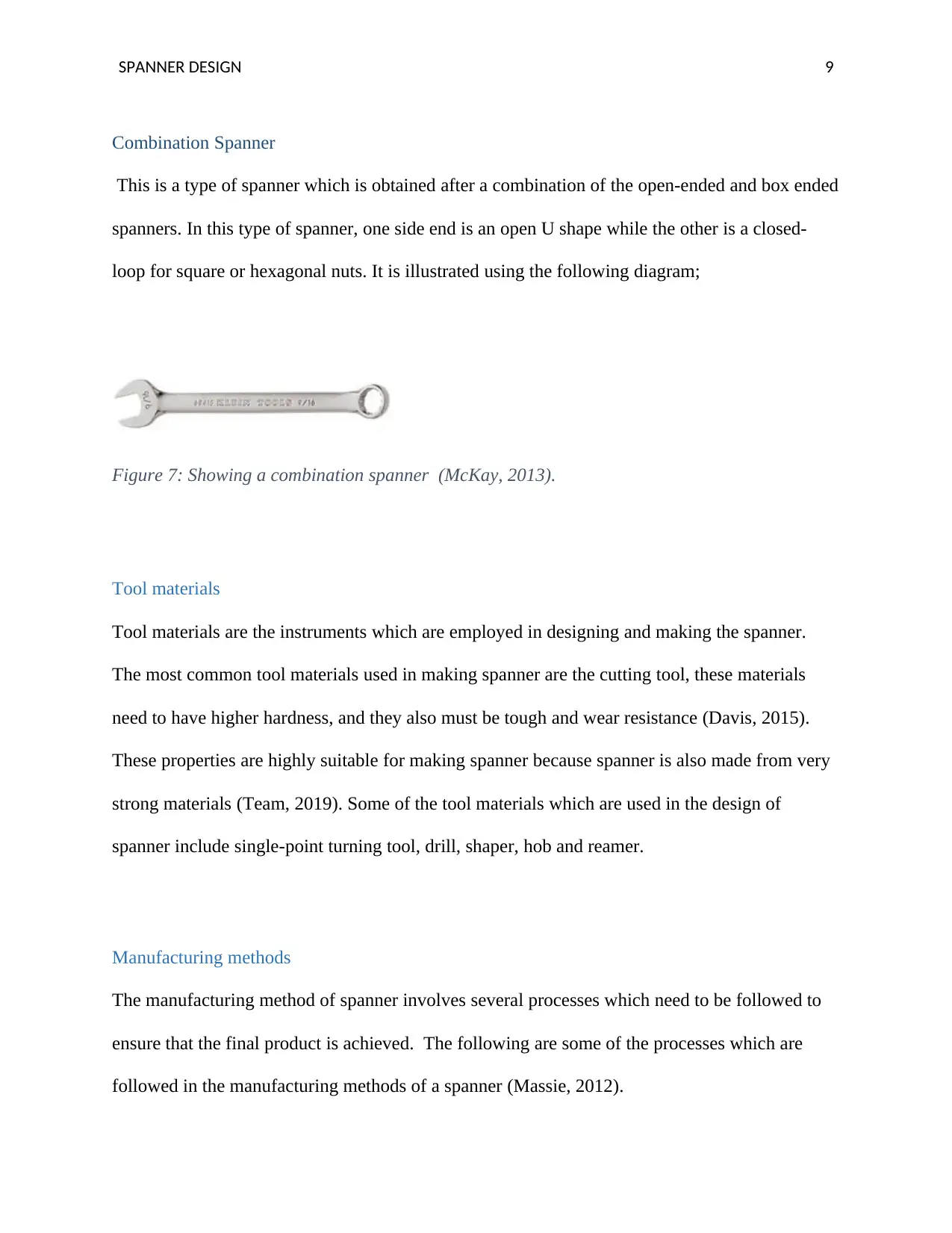
This type of spanner has a close loop on both ends and it is slightly lower or higher than the
handle to enable it to grip recessed nut minus the edges being rounded (McKay, 2013). This type
of spanner is designed to fit on either square or hexagonal bolts and are in different sizes, in most
cases such type of a spanner is sold in a set. It is illustrated in the following diagram;
Figure 5: Showing a box ended spanner (McKay, 2013).
Open-ended spanner
This type of spanner has two U shaped ends where one needs to be smaller than the other. This
type is employed for a hard to reach bolts and nuts. The open design of this type of spanner
enables it to attach them either horizontal or vertically onto the target fitting. This type is
illustrated using the following diagram;
Figure 6: Showing open-ended spanner (McKay, 2013).
Box-Ended
This type of spanner has a close loop on both ends and it is slightly lower or higher than the
handle to enable it to grip recessed nut minus the edges being rounded (McKay, 2013). This type
of spanner is designed to fit on either square or hexagonal bolts and are in different sizes, in most
cases such type of a spanner is sold in a set. It is illustrated in the following diagram;
Figure 5: Showing a box ended spanner (McKay, 2013).
Open-ended spanner
This type of spanner has two U shaped ends where one needs to be smaller than the other. This
type is employed for a hard to reach bolts and nuts. The open design of this type of spanner
enables it to attach them either horizontal or vertically onto the target fitting. This type is
illustrated using the following diagram;
Figure 6: Showing open-ended spanner (McKay, 2013).

SPANNER DESIGN 9
Combination Spanner
This is a type of spanner which is obtained after a combination of the open-ended and box ended
spanners. In this type of spanner, one side end is an open U shape while the other is a closed-
loop for square or hexagonal nuts. It is illustrated using the following diagram;
Figure 7: Showing a combination spanner (McKay, 2013).
Tool materials
Tool materials are the instruments which are employed in designing and making the spanner.
The most common tool materials used in making spanner are the cutting tool, these materials
need to have higher hardness, and they also must be tough and wear resistance (Davis, 2015).
These properties are highly suitable for making spanner because spanner is also made from very
strong materials (Team, 2019). Some of the tool materials which are used in the design of
spanner include single-point turning tool, drill, shaper, hob and reamer.
Manufacturing methods
The manufacturing method of spanner involves several processes which need to be followed to
ensure that the final product is achieved. The following are some of the processes which are
followed in the manufacturing methods of a spanner (Massie, 2012).
Combination Spanner
This is a type of spanner which is obtained after a combination of the open-ended and box ended
spanners. In this type of spanner, one side end is an open U shape while the other is a closed-
loop for square or hexagonal nuts. It is illustrated using the following diagram;
Figure 7: Showing a combination spanner (McKay, 2013).
Tool materials
Tool materials are the instruments which are employed in designing and making the spanner.
The most common tool materials used in making spanner are the cutting tool, these materials
need to have higher hardness, and they also must be tough and wear resistance (Davis, 2015).
These properties are highly suitable for making spanner because spanner is also made from very
strong materials (Team, 2019). Some of the tool materials which are used in the design of
spanner include single-point turning tool, drill, shaper, hob and reamer.
Manufacturing methods
The manufacturing method of spanner involves several processes which need to be followed to
ensure that the final product is achieved. The following are some of the processes which are
followed in the manufacturing methods of a spanner (Massie, 2012).
⊘ This is a preview!⊘
Do you want full access?
Subscribe today to unlock all pages.

Trusted by 1+ million students worldwide

SPANNER DESIGN 10
Cutting: In this stage, the required size of the spanner will be measured then cut before other
processes.
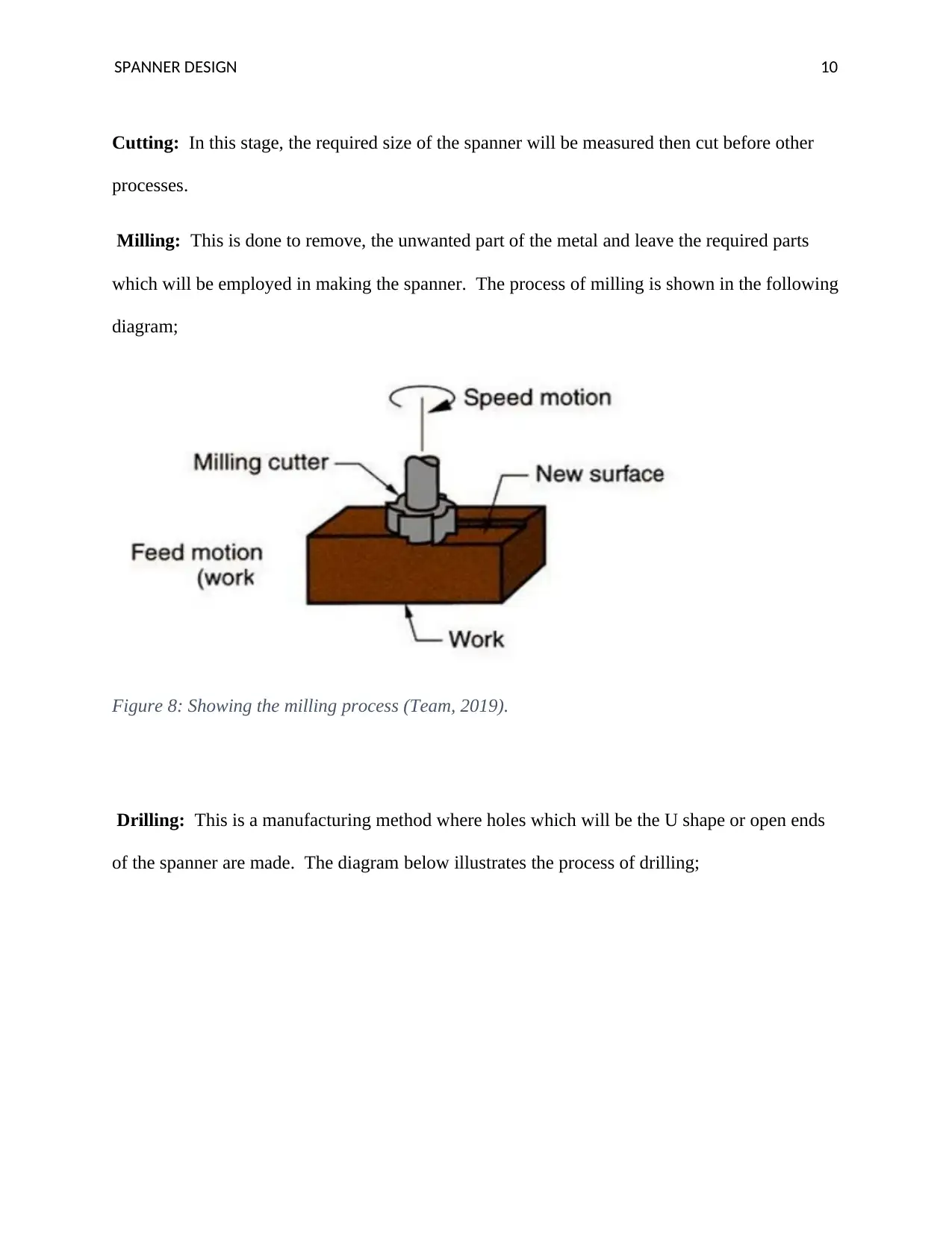
Milling: This is done to remove, the unwanted part of the metal and leave the required parts
which will be employed in making the spanner. The process of milling is shown in the following
diagram;
Figure 8: Showing the milling process (Team, 2019).
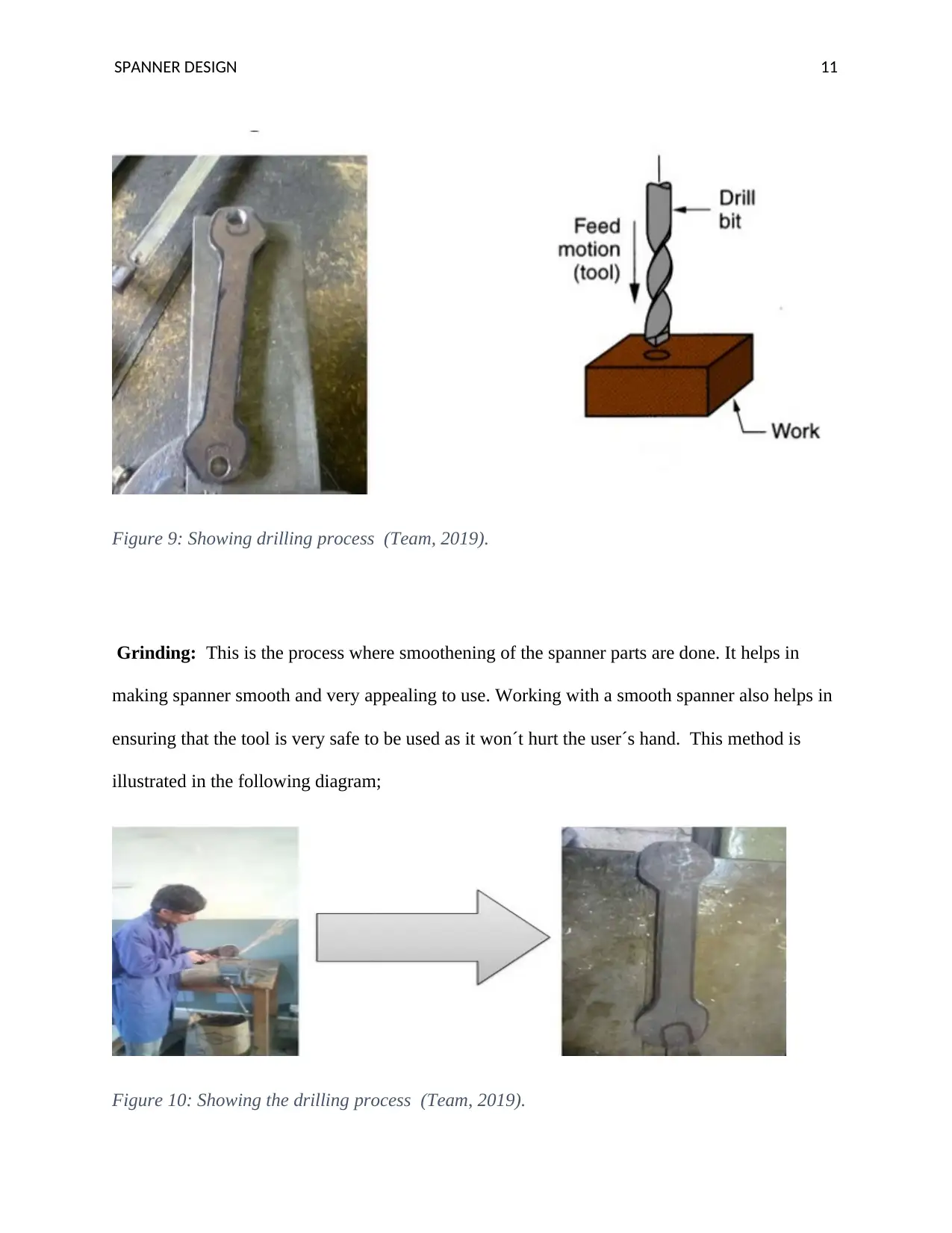
Drilling: This is a manufacturing method where holes which will be the U shape or open ends
of the spanner are made. The diagram below illustrates the process of drilling;
Cutting: In this stage, the required size of the spanner will be measured then cut before other
processes.
Milling: This is done to remove, the unwanted part of the metal and leave the required parts
which will be employed in making the spanner. The process of milling is shown in the following
diagram;
Figure 8: Showing the milling process (Team, 2019).
Drilling: This is a manufacturing method where holes which will be the U shape or open ends
of the spanner are made. The diagram below illustrates the process of drilling;
Paraphrase This Document
Need a fresh take? Get an instant paraphrase of this document with our AI Paraphraser

SPANNER DESIGN 11
Figure 9: Showing drilling process (Team, 2019).
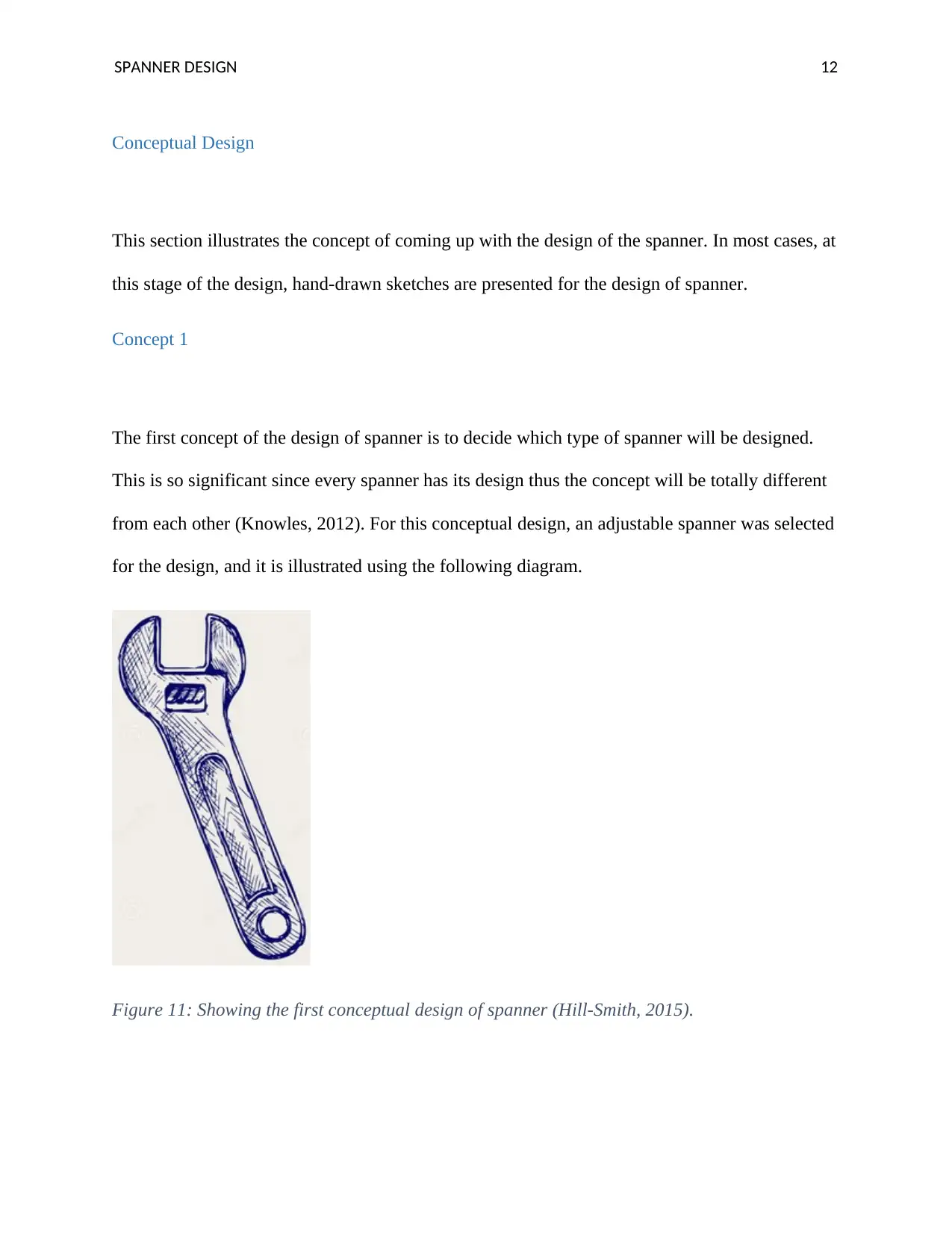
Grinding: This is the process where smoothening of the spanner parts are done. It helps in
making spanner smooth and very appealing to use. Working with a smooth spanner also helps in
ensuring that the tool is very safe to be used as it won´t hurt the user´s hand. This method is
illustrated in the following diagram;
Figure 10: Showing the drilling process (Team, 2019).
Figure 9: Showing drilling process (Team, 2019).
Grinding: This is the process where smoothening of the spanner parts are done. It helps in
making spanner smooth and very appealing to use. Working with a smooth spanner also helps in
ensuring that the tool is very safe to be used as it won´t hurt the user´s hand. This method is
illustrated in the following diagram;
Figure 10: Showing the drilling process (Team, 2019).

SPANNER DESIGN 12
Conceptual Design
This section illustrates the concept of coming up with the design of the spanner. In most cases, at
this stage of the design, hand-drawn sketches are presented for the design of spanner.
Concept 1
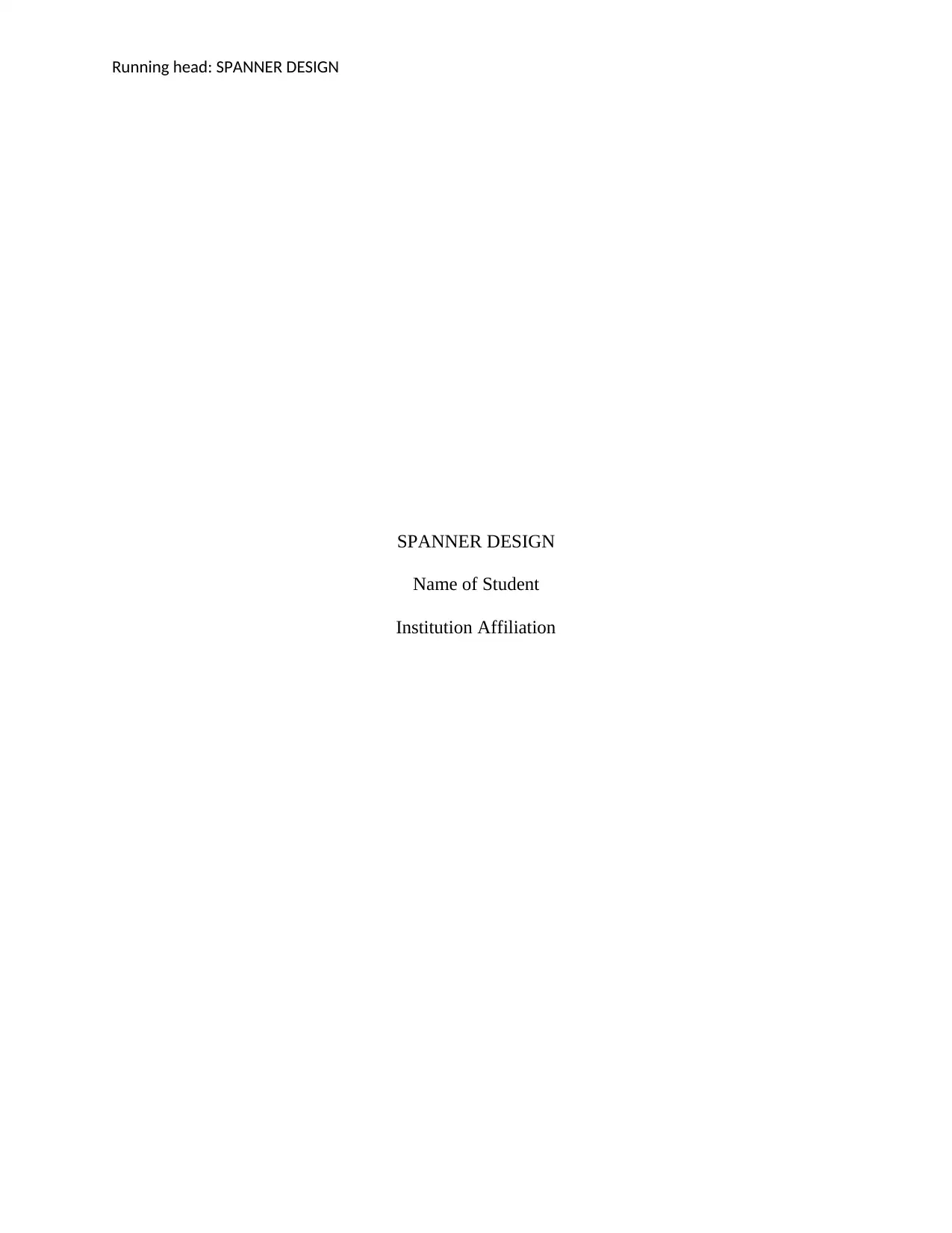
The first concept of the design of spanner is to decide which type of spanner will be designed.
This is so significant since every spanner has its design thus the concept will be totally different
from each other (Knowles, 2012). For this conceptual design, an adjustable spanner was selected
for the design, and it is illustrated using the following diagram.
Figure 11: Showing the first conceptual design of spanner (Hill-Smith, 2015).
Conceptual Design
This section illustrates the concept of coming up with the design of the spanner. In most cases, at
this stage of the design, hand-drawn sketches are presented for the design of spanner.
Concept 1
The first concept of the design of spanner is to decide which type of spanner will be designed.
This is so significant since every spanner has its design thus the concept will be totally different
from each other (Knowles, 2012). For this conceptual design, an adjustable spanner was selected
for the design, and it is illustrated using the following diagram.
Figure 11: Showing the first conceptual design of spanner (Hill-Smith, 2015).
⊘ This is a preview!⊘
Do you want full access?
Subscribe today to unlock all pages.

Trusted by 1+ million students worldwide
1 out of 18
Related Documents
Your All-in-One AI-Powered Toolkit for Academic Success.
+13062052269
info@desklib.com
Available 24*7 on WhatsApp / Email
Unlock your academic potential
Copyright © 2020–2025 A2Z Services. All Rights Reserved. Developed and managed by ZUCOL.