STAT 2225: Statistical Inference Quiz 5 & 6 Solutions and Analysis
VerifiedAdded on 2022/09/03
|2
|269
|19
Homework Assignment
AI Summary
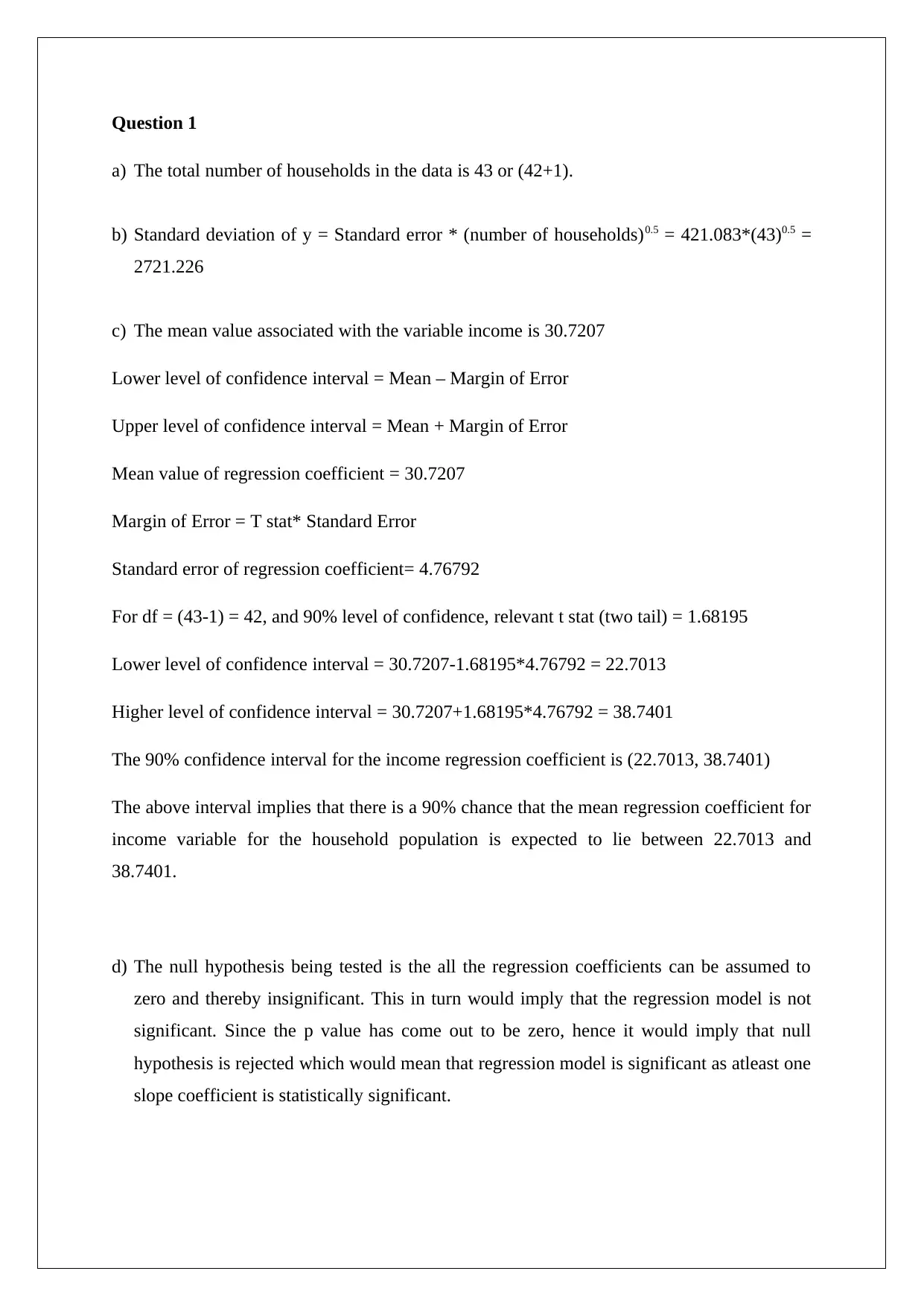
This document contains the solutions to two quizzes (Quiz 5 and Quiz 6) from a STAT 2225 course, focusing on statistical inference. Quiz 5 covers regression analysis, including calculating the regression line, constructing an ANOVA table, and hypothesis testing related to the relationship between post-secondary education and annual income. Quiz 6 delves into multiple regression analysis, examining the relationship between credit card charges, income, and the number of persons in a household. The solution includes calculations for standard deviation, confidence intervals for regression coefficients, and interpretations of the results. It addresses questions on the number of households in the data, the calculation of the standard deviation of the dependent variable, and the construction and interpretation of a 90% confidence interval for the income regression coefficient. The analysis also covers the null hypothesis and its rejection based on the p-value.


1 out of 2


Related Documents


Your All-in-One AI-Powered Toolkit for Academic Success.
+13062052269
info@desklib.com
Available 24*7 on WhatsApp / Email
![[object Object]](/_next/static/media/star-bottom.7253800d.svg)
Copyright © 2020–2026 A2Z Services. All Rights Reserved. Developed and managed by ZUCOL.