Research Project: Motivation's Role in Talent Management at Tesco
VerifiedAdded on 2023/06/18
|27
|5751
|231
Report
AI Summary
This report investigates the role of motivation in talent management at Tesco. It begins by outlining the research question and objectives, focusing on understanding talent management, analyzing the role of motivation, and examining Tesco's initiatives to motivate employees for long-term retention. The report details the research methodology, including the use of epistemology research philosophies (positivism), deductive research approaches, and survey-based research strategies. Data collection involves both primary (questionnaires from Tesco employees) and secondary sources (books, journals, websites). The findings from the questionnaire are interpreted, highlighting the positive impact of motivation and various talent management initiatives. The report concludes with recommendations for Tesco, reflections on the research process, and suggestions for alternative research methodologies.

Research project
1
1

Paraphrase This Document
Need a fresh take? Get an instant paraphrase of this document with our AI Paraphraser
Executive summary
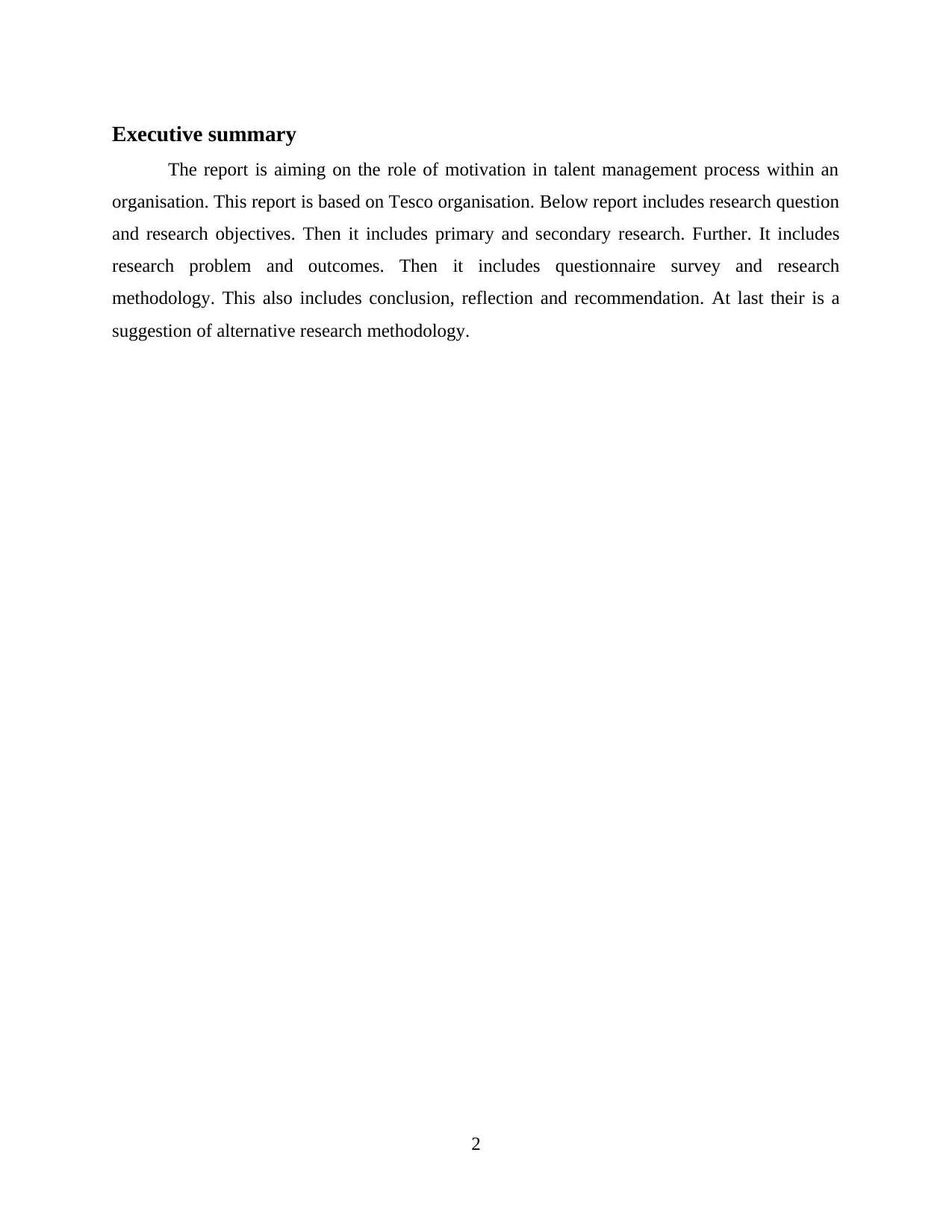
The report is aiming on the role of motivation in talent management process within an
organisation. This report is based on Tesco organisation. Below report includes research question
and research objectives. Then it includes primary and secondary research. Further. It includes
research problem and outcomes. Then it includes questionnaire survey and research
methodology. This also includes conclusion, reflection and recommendation. At last their is a
suggestion of alternative research methodology.
2
The report is aiming on the role of motivation in talent management process within an
organisation. This report is based on Tesco organisation. Below report includes research question
and research objectives. Then it includes primary and secondary research. Further. It includes
research problem and outcomes. Then it includes questionnaire survey and research
methodology. This also includes conclusion, reflection and recommendation. At last their is a
suggestion of alternative research methodology.
2
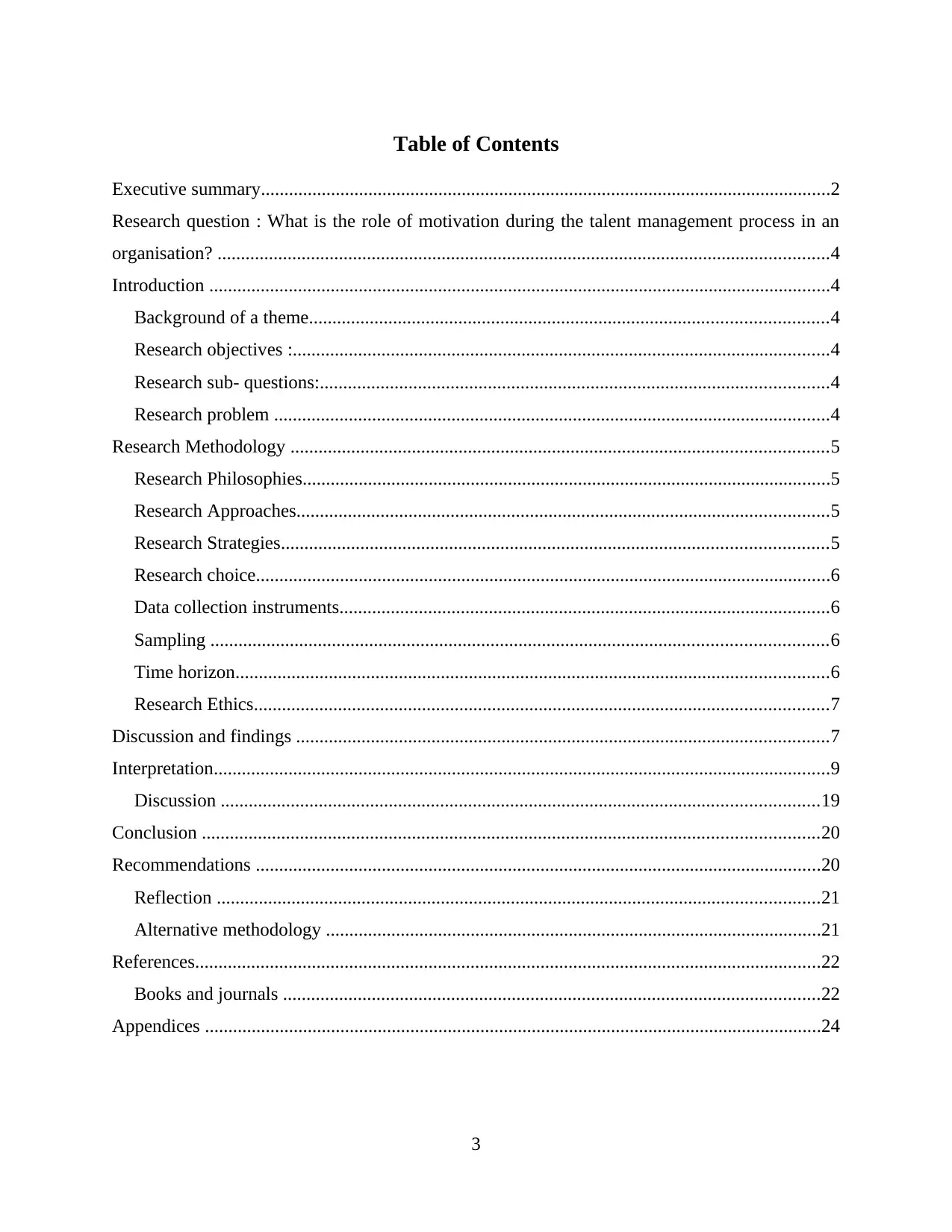
Table of Contents
Executive summary..........................................................................................................................2
Research question : What is the role of motivation during the talent management process in an
organisation? ...................................................................................................................................4
Introduction .....................................................................................................................................4
Background of a theme...............................................................................................................4
Research objectives :...................................................................................................................4
Research sub- questions:.............................................................................................................4
Research problem .......................................................................................................................4
Research Methodology ...................................................................................................................5
Research Philosophies.................................................................................................................5
Research Approaches..................................................................................................................5
Research Strategies.....................................................................................................................5
Research choice...........................................................................................................................6
Data collection instruments.........................................................................................................6
Sampling ....................................................................................................................................6
Time horizon...............................................................................................................................6
Research Ethics...........................................................................................................................7
Discussion and findings ..................................................................................................................7
Interpretation....................................................................................................................................9
Discussion ................................................................................................................................19
Conclusion ....................................................................................................................................20
Recommendations .........................................................................................................................20
Reflection .................................................................................................................................21
Alternative methodology ..........................................................................................................21
References......................................................................................................................................22
Books and journals ...................................................................................................................22
Appendices ....................................................................................................................................24
3
Executive summary..........................................................................................................................2
Research question : What is the role of motivation during the talent management process in an
organisation? ...................................................................................................................................4
Introduction .....................................................................................................................................4
Background of a theme...............................................................................................................4
Research objectives :...................................................................................................................4
Research sub- questions:.............................................................................................................4
Research problem .......................................................................................................................4
Research Methodology ...................................................................................................................5
Research Philosophies.................................................................................................................5
Research Approaches..................................................................................................................5
Research Strategies.....................................................................................................................5
Research choice...........................................................................................................................6
Data collection instruments.........................................................................................................6
Sampling ....................................................................................................................................6
Time horizon...............................................................................................................................6
Research Ethics...........................................................................................................................7
Discussion and findings ..................................................................................................................7
Interpretation....................................................................................................................................9
Discussion ................................................................................................................................19
Conclusion ....................................................................................................................................20
Recommendations .........................................................................................................................20
Reflection .................................................................................................................................21
Alternative methodology ..........................................................................................................21
References......................................................................................................................................22
Books and journals ...................................................................................................................22
Appendices ....................................................................................................................................24
3
⊘ This is a preview!⊘
Do you want full access?
Subscribe today to unlock all pages.

Trusted by 1+ million students worldwide
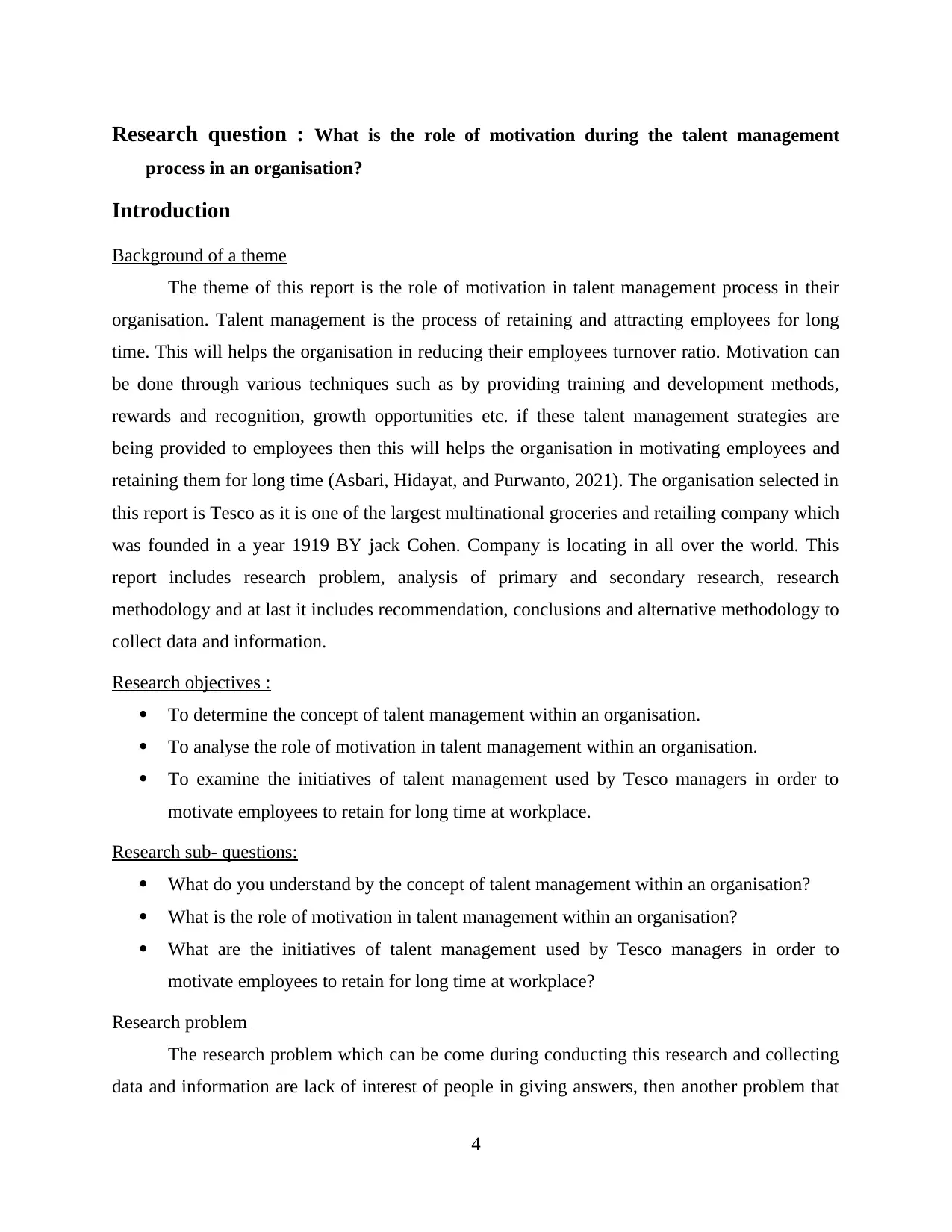
Research question : What is the role of motivation during the talent management
process in an organisation?
Introduction
Background of a theme
The theme of this report is the role of motivation in talent management process in their
organisation. Talent management is the process of retaining and attracting employees for long
time. This will helps the organisation in reducing their employees turnover ratio. Motivation can
be done through various techniques such as by providing training and development methods,
rewards and recognition, growth opportunities etc. if these talent management strategies are
being provided to employees then this will helps the organisation in motivating employees and
retaining them for long time (Asbari, Hidayat, and Purwanto, 2021). The organisation selected in
this report is Tesco as it is one of the largest multinational groceries and retailing company which
was founded in a year 1919 BY jack Cohen. Company is locating in all over the world. This
report includes research problem, analysis of primary and secondary research, research
methodology and at last it includes recommendation, conclusions and alternative methodology to
collect data and information.
Research objectives :
To determine the concept of talent management within an organisation.
To analyse the role of motivation in talent management within an organisation.
To examine the initiatives of talent management used by Tesco managers in order to
motivate employees to retain for long time at workplace.
Research sub- questions:
What do you understand by the concept of talent management within an organisation?
What is the role of motivation in talent management within an organisation?
What are the initiatives of talent management used by Tesco managers in order to
motivate employees to retain for long time at workplace?
Research problem
The research problem which can be come during conducting this research and collecting
data and information are lack of interest of people in giving answers, then another problem that
4
process in an organisation?
Introduction
Background of a theme
The theme of this report is the role of motivation in talent management process in their
organisation. Talent management is the process of retaining and attracting employees for long
time. This will helps the organisation in reducing their employees turnover ratio. Motivation can
be done through various techniques such as by providing training and development methods,
rewards and recognition, growth opportunities etc. if these talent management strategies are
being provided to employees then this will helps the organisation in motivating employees and
retaining them for long time (Asbari, Hidayat, and Purwanto, 2021). The organisation selected in
this report is Tesco as it is one of the largest multinational groceries and retailing company which
was founded in a year 1919 BY jack Cohen. Company is locating in all over the world. This
report includes research problem, analysis of primary and secondary research, research
methodology and at last it includes recommendation, conclusions and alternative methodology to
collect data and information.
Research objectives :
To determine the concept of talent management within an organisation.
To analyse the role of motivation in talent management within an organisation.
To examine the initiatives of talent management used by Tesco managers in order to
motivate employees to retain for long time at workplace.
Research sub- questions:
What do you understand by the concept of talent management within an organisation?
What is the role of motivation in talent management within an organisation?
What are the initiatives of talent management used by Tesco managers in order to
motivate employees to retain for long time at workplace?
Research problem
The research problem which can be come during conducting this research and collecting
data and information are lack of interest of people in giving answers, then another problem that
4
Paraphrase This Document
Need a fresh take? Get an instant paraphrase of this document with our AI Paraphraser
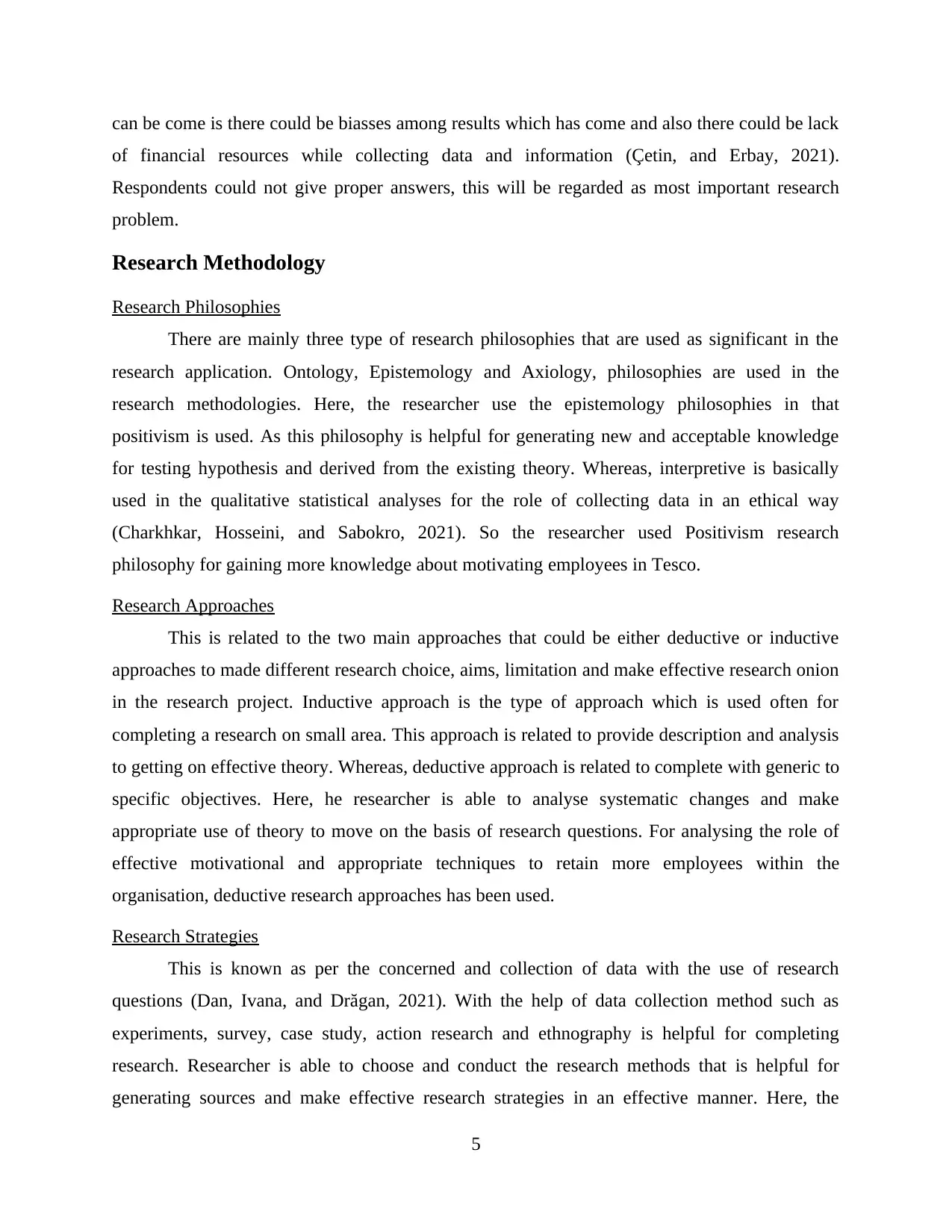
can be come is there could be biasses among results which has come and also there could be lack
of financial resources while collecting data and information (Çetin, and Erbay, 2021).
Respondents could not give proper answers, this will be regarded as most important research
problem.
Research Methodology
Research Philosophies
There are mainly three type of research philosophies that are used as significant in the
research application. Ontology, Epistemology and Axiology, philosophies are used in the
research methodologies. Here, the researcher use the epistemology philosophies in that
positivism is used. As this philosophy is helpful for generating new and acceptable knowledge
for testing hypothesis and derived from the existing theory. Whereas, interpretive is basically
used in the qualitative statistical analyses for the role of collecting data in an ethical way
(Charkhkar, Hosseini, and Sabokro, 2021). So the researcher used Positivism research
philosophy for gaining more knowledge about motivating employees in Tesco.
Research Approaches
This is related to the two main approaches that could be either deductive or inductive
approaches to made different research choice, aims, limitation and make effective research onion
in the research project. Inductive approach is the type of approach which is used often for
completing a research on small area. This approach is related to provide description and analysis
to getting on effective theory. Whereas, deductive approach is related to complete with generic to
specific objectives. Here, he researcher is able to analyse systematic changes and make
appropriate use of theory to move on the basis of research questions. For analysing the role of
effective motivational and appropriate techniques to retain more employees within the
organisation, deductive research approaches has been used.
Research Strategies
This is known as per the concerned and collection of data with the use of research
questions (Dan, Ivana, and Drăgan, 2021). With the help of data collection method such as
experiments, survey, case study, action research and ethnography is helpful for completing
research. Researcher is able to choose and conduct the research methods that is helpful for
generating sources and make effective research strategies in an effective manner. Here, the
5
of financial resources while collecting data and information (Çetin, and Erbay, 2021).
Respondents could not give proper answers, this will be regarded as most important research
problem.
Research Methodology
Research Philosophies
There are mainly three type of research philosophies that are used as significant in the
research application. Ontology, Epistemology and Axiology, philosophies are used in the
research methodologies. Here, the researcher use the epistemology philosophies in that
positivism is used. As this philosophy is helpful for generating new and acceptable knowledge
for testing hypothesis and derived from the existing theory. Whereas, interpretive is basically
used in the qualitative statistical analyses for the role of collecting data in an ethical way
(Charkhkar, Hosseini, and Sabokro, 2021). So the researcher used Positivism research
philosophy for gaining more knowledge about motivating employees in Tesco.
Research Approaches
This is related to the two main approaches that could be either deductive or inductive
approaches to made different research choice, aims, limitation and make effective research onion
in the research project. Inductive approach is the type of approach which is used often for
completing a research on small area. This approach is related to provide description and analysis
to getting on effective theory. Whereas, deductive approach is related to complete with generic to
specific objectives. Here, he researcher is able to analyse systematic changes and make
appropriate use of theory to move on the basis of research questions. For analysing the role of
effective motivational and appropriate techniques to retain more employees within the
organisation, deductive research approaches has been used.
Research Strategies
This is known as per the concerned and collection of data with the use of research
questions (Dan, Ivana, and Drăgan, 2021). With the help of data collection method such as
experiments, survey, case study, action research and ethnography is helpful for completing
research. Researcher is able to choose and conduct the research methods that is helpful for
generating sources and make effective research strategies in an effective manner. Here, the
5
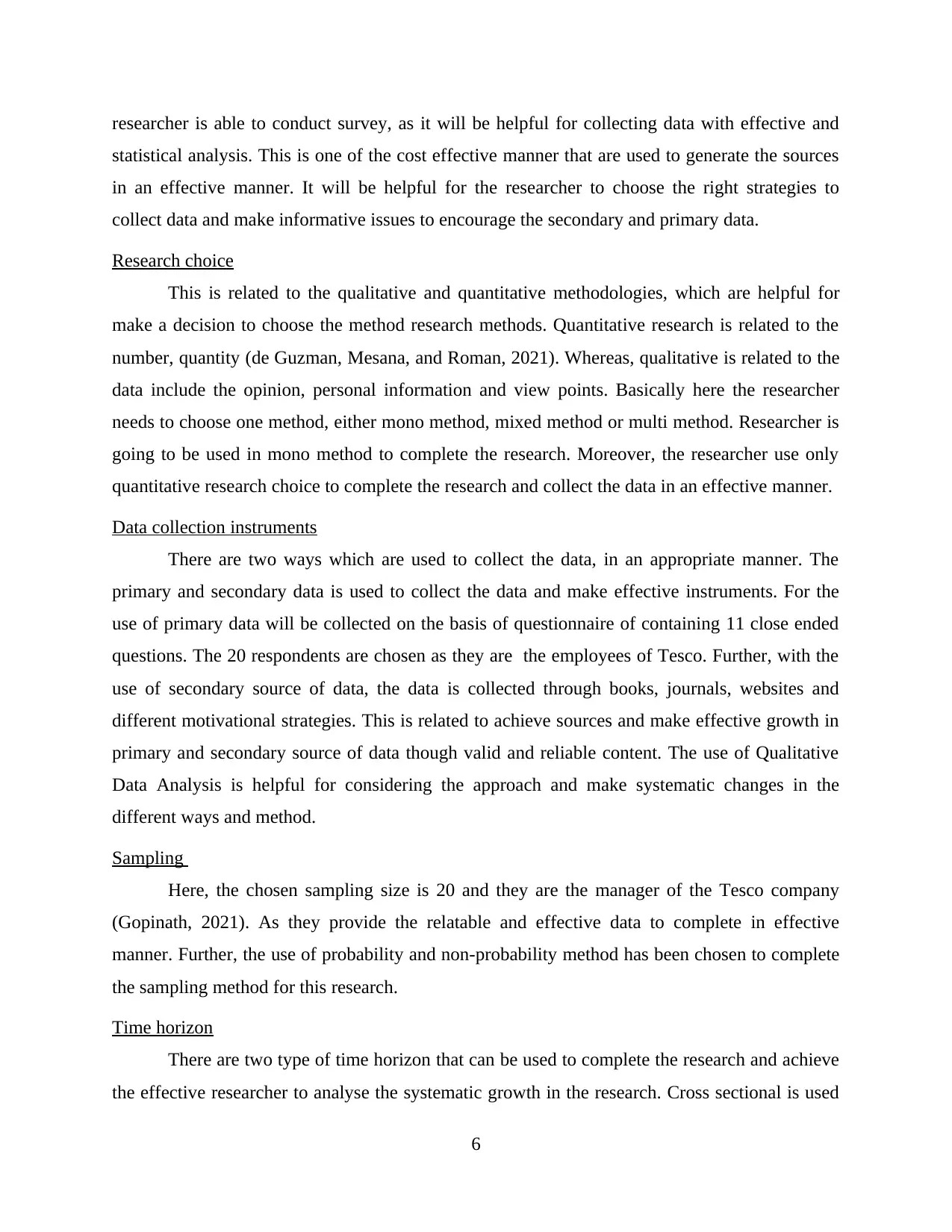
researcher is able to conduct survey, as it will be helpful for collecting data with effective and
statistical analysis. This is one of the cost effective manner that are used to generate the sources
in an effective manner. It will be helpful for the researcher to choose the right strategies to
collect data and make informative issues to encourage the secondary and primary data.
Research choice
This is related to the qualitative and quantitative methodologies, which are helpful for
make a decision to choose the method research methods. Quantitative research is related to the
number, quantity (de Guzman, Mesana, and Roman, 2021). Whereas, qualitative is related to the
data include the opinion, personal information and view points. Basically here the researcher
needs to choose one method, either mono method, mixed method or multi method. Researcher is
going to be used in mono method to complete the research. Moreover, the researcher use only
quantitative research choice to complete the research and collect the data in an effective manner.
Data collection instruments
There are two ways which are used to collect the data, in an appropriate manner. The
primary and secondary data is used to collect the data and make effective instruments. For the
use of primary data will be collected on the basis of questionnaire of containing 11 close ended
questions. The 20 respondents are chosen as they are the employees of Tesco. Further, with the
use of secondary source of data, the data is collected through books, journals, websites and
different motivational strategies. This is related to achieve sources and make effective growth in
primary and secondary source of data though valid and reliable content. The use of Qualitative
Data Analysis is helpful for considering the approach and make systematic changes in the
different ways and method.
Sampling
Here, the chosen sampling size is 20 and they are the manager of the Tesco company
(Gopinath, 2021). As they provide the relatable and effective data to complete in effective
manner. Further, the use of probability and non-probability method has been chosen to complete
the sampling method for this research.
Time horizon
There are two type of time horizon that can be used to complete the research and achieve
the effective researcher to analyse the systematic growth in the research. Cross sectional is used
6
statistical analysis. This is one of the cost effective manner that are used to generate the sources
in an effective manner. It will be helpful for the researcher to choose the right strategies to
collect data and make informative issues to encourage the secondary and primary data.
Research choice
This is related to the qualitative and quantitative methodologies, which are helpful for
make a decision to choose the method research methods. Quantitative research is related to the
number, quantity (de Guzman, Mesana, and Roman, 2021). Whereas, qualitative is related to the
data include the opinion, personal information and view points. Basically here the researcher
needs to choose one method, either mono method, mixed method or multi method. Researcher is
going to be used in mono method to complete the research. Moreover, the researcher use only
quantitative research choice to complete the research and collect the data in an effective manner.
Data collection instruments
There are two ways which are used to collect the data, in an appropriate manner. The
primary and secondary data is used to collect the data and make effective instruments. For the
use of primary data will be collected on the basis of questionnaire of containing 11 close ended
questions. The 20 respondents are chosen as they are the employees of Tesco. Further, with the
use of secondary source of data, the data is collected through books, journals, websites and
different motivational strategies. This is related to achieve sources and make effective growth in
primary and secondary source of data though valid and reliable content. The use of Qualitative
Data Analysis is helpful for considering the approach and make systematic changes in the
different ways and method.
Sampling
Here, the chosen sampling size is 20 and they are the manager of the Tesco company
(Gopinath, 2021). As they provide the relatable and effective data to complete in effective
manner. Further, the use of probability and non-probability method has been chosen to complete
the sampling method for this research.
Time horizon
There are two type of time horizon that can be used to complete the research and achieve
the effective researcher to analyse the systematic growth in the research. Cross sectional is used
6
⊘ This is a preview!⊘
Do you want full access?
Subscribe today to unlock all pages.
Trusted by 1+ million students worldwide
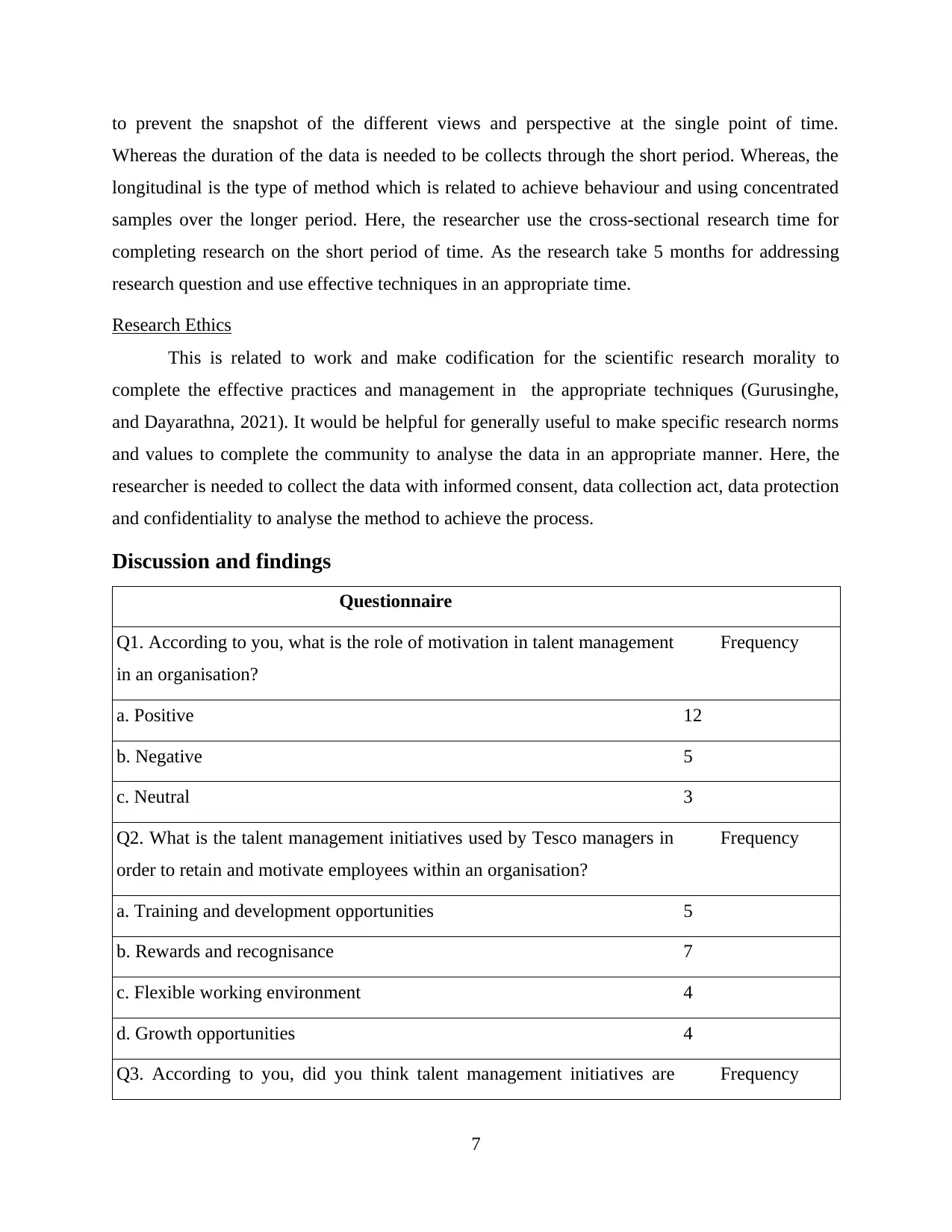
to prevent the snapshot of the different views and perspective at the single point of time.
Whereas the duration of the data is needed to be collects through the short period. Whereas, the
longitudinal is the type of method which is related to achieve behaviour and using concentrated
samples over the longer period. Here, the researcher use the cross-sectional research time for
completing research on the short period of time. As the research take 5 months for addressing
research question and use effective techniques in an appropriate time.
Research Ethics
This is related to work and make codification for the scientific research morality to
complete the effective practices and management in the appropriate techniques (Gurusinghe,
and Dayarathna, 2021). It would be helpful for generally useful to make specific research norms
and values to complete the community to analyse the data in an appropriate manner. Here, the
researcher is needed to collect the data with informed consent, data collection act, data protection
and confidentiality to analyse the method to achieve the process.
Discussion and findings
Questionnaire
Q1. According to you, what is the role of motivation in talent management
in an organisation?
Frequency
a. Positive 12
b. Negative 5
c. Neutral 3
Q2. What is the talent management initiatives used by Tesco managers in
order to retain and motivate employees within an organisation?
Frequency
a. Training and development opportunities 5
b. Rewards and recognisance 7
c. Flexible working environment 4
d. Growth opportunities 4
Q3. According to you, did you think talent management initiatives are Frequency
7
Whereas the duration of the data is needed to be collects through the short period. Whereas, the
longitudinal is the type of method which is related to achieve behaviour and using concentrated
samples over the longer period. Here, the researcher use the cross-sectional research time for
completing research on the short period of time. As the research take 5 months for addressing
research question and use effective techniques in an appropriate time.
Research Ethics
This is related to work and make codification for the scientific research morality to
complete the effective practices and management in the appropriate techniques (Gurusinghe,
and Dayarathna, 2021). It would be helpful for generally useful to make specific research norms
and values to complete the community to analyse the data in an appropriate manner. Here, the
researcher is needed to collect the data with informed consent, data collection act, data protection
and confidentiality to analyse the method to achieve the process.
Discussion and findings
Questionnaire
Q1. According to you, what is the role of motivation in talent management
in an organisation?
Frequency
a. Positive 12
b. Negative 5
c. Neutral 3
Q2. What is the talent management initiatives used by Tesco managers in
order to retain and motivate employees within an organisation?
Frequency
a. Training and development opportunities 5
b. Rewards and recognisance 7
c. Flexible working environment 4
d. Growth opportunities 4
Q3. According to you, did you think talent management initiatives are Frequency
7
Paraphrase This Document
Need a fresh take? Get an instant paraphrase of this document with our AI Paraphraser
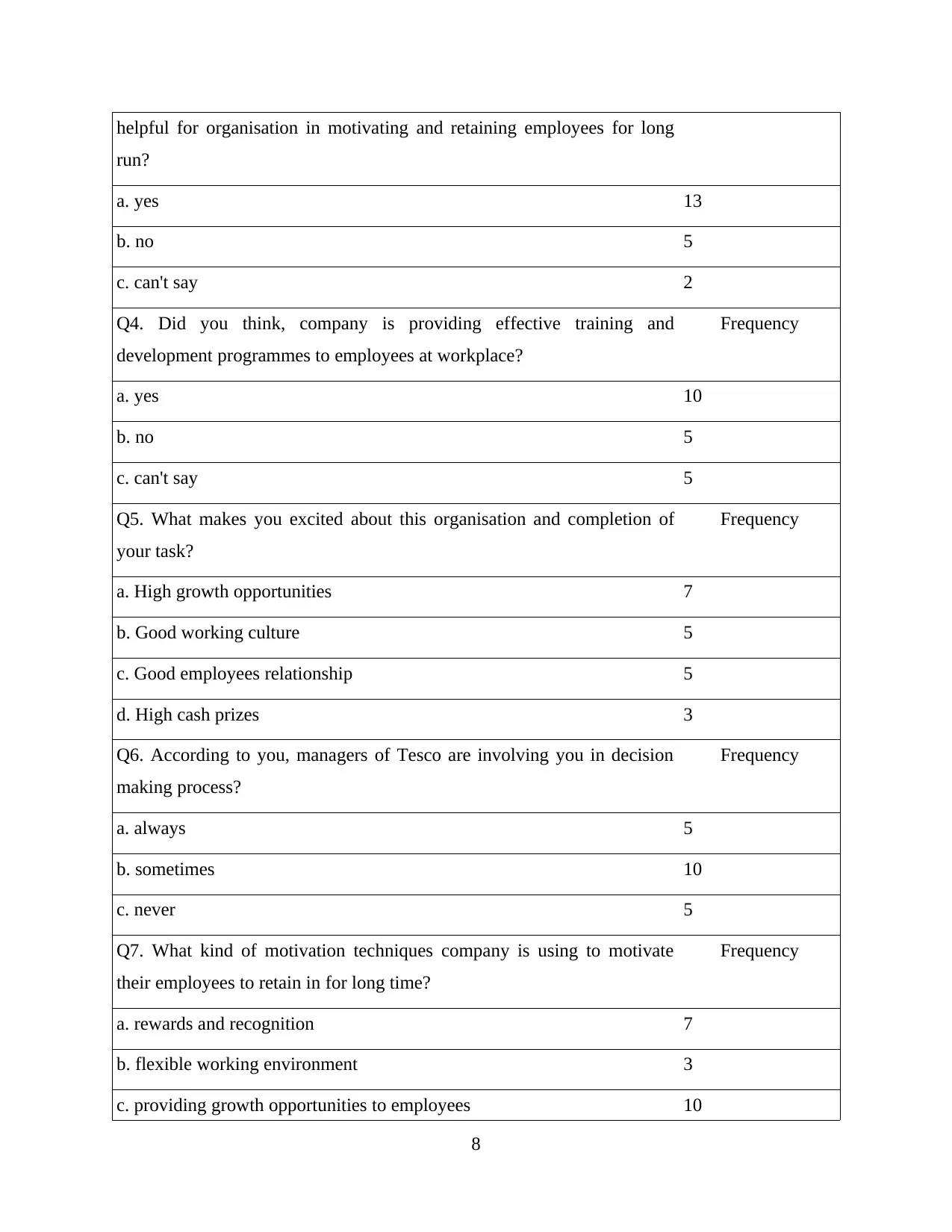
helpful for organisation in motivating and retaining employees for long
run?
a. yes 13
b. no 5
c. can't say 2
Q4. Did you think, company is providing effective training and
development programmes to employees at workplace?
Frequency
a. yes 10
b. no 5
c. can't say 5
Q5. What makes you excited about this organisation and completion of
your task?
Frequency
a. High growth opportunities 7
b. Good working culture 5
c. Good employees relationship 5
d. High cash prizes 3
Q6. According to you, managers of Tesco are involving you in decision
making process?
Frequency
a. always 5
b. sometimes 10
c. never 5
Q7. What kind of motivation techniques company is using to motivate
their employees to retain in for long time?
Frequency
a. rewards and recognition 7
b. flexible working environment 3
c. providing growth opportunities to employees 10
8
run?
a. yes 13
b. no 5
c. can't say 2
Q4. Did you think, company is providing effective training and
development programmes to employees at workplace?
Frequency
a. yes 10
b. no 5
c. can't say 5
Q5. What makes you excited about this organisation and completion of
your task?
Frequency
a. High growth opportunities 7
b. Good working culture 5
c. Good employees relationship 5
d. High cash prizes 3
Q6. According to you, managers of Tesco are involving you in decision
making process?
Frequency
a. always 5
b. sometimes 10
c. never 5
Q7. What kind of motivation techniques company is using to motivate
their employees to retain in for long time?
Frequency
a. rewards and recognition 7
b. flexible working environment 3
c. providing growth opportunities to employees 10
8
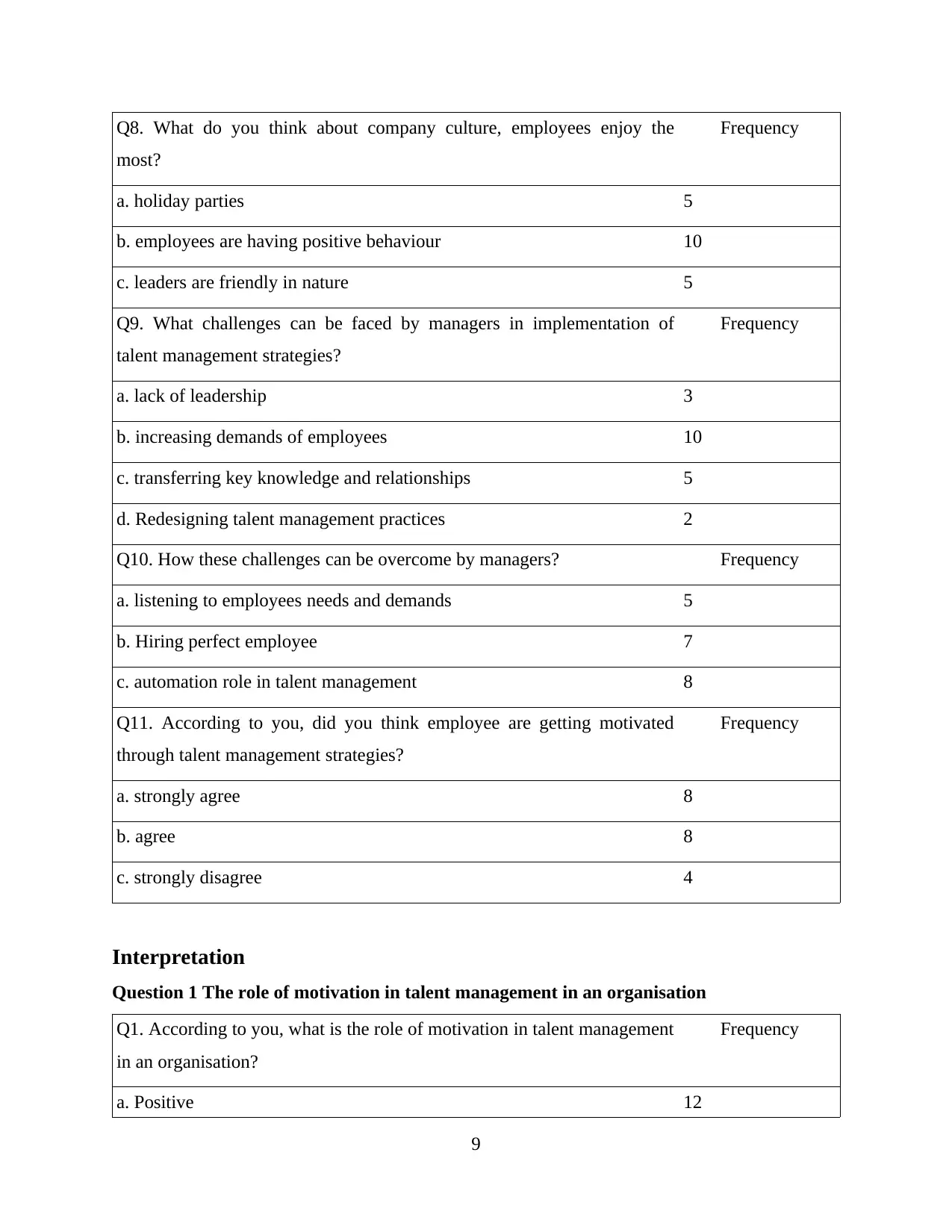
Q8. What do you think about company culture, employees enjoy the
most?
Frequency
a. holiday parties 5
b. employees are having positive behaviour 10
c. leaders are friendly in nature 5
Q9. What challenges can be faced by managers in implementation of
talent management strategies?
Frequency
a. lack of leadership 3
b. increasing demands of employees 10
c. transferring key knowledge and relationships 5
d. Redesigning talent management practices 2
Q10. How these challenges can be overcome by managers? Frequency
a. listening to employees needs and demands 5
b. Hiring perfect employee 7
c. automation role in talent management 8
Q11. According to you, did you think employee are getting motivated
through talent management strategies?
Frequency
a. strongly agree 8
b. agree 8
c. strongly disagree 4
Interpretation
Question 1 The role of motivation in talent management in an organisation
Q1. According to you, what is the role of motivation in talent management
in an organisation?
Frequency
a. Positive 12
9
most?
Frequency
a. holiday parties 5
b. employees are having positive behaviour 10
c. leaders are friendly in nature 5
Q9. What challenges can be faced by managers in implementation of
talent management strategies?
Frequency
a. lack of leadership 3
b. increasing demands of employees 10
c. transferring key knowledge and relationships 5
d. Redesigning talent management practices 2
Q10. How these challenges can be overcome by managers? Frequency
a. listening to employees needs and demands 5
b. Hiring perfect employee 7
c. automation role in talent management 8
Q11. According to you, did you think employee are getting motivated
through talent management strategies?
Frequency
a. strongly agree 8
b. agree 8
c. strongly disagree 4
Interpretation
Question 1 The role of motivation in talent management in an organisation
Q1. According to you, what is the role of motivation in talent management
in an organisation?
Frequency
a. Positive 12
9
⊘ This is a preview!⊘
Do you want full access?
Subscribe today to unlock all pages.
Trusted by 1+ million students worldwide
b. Negative 5
c. Neutral 3
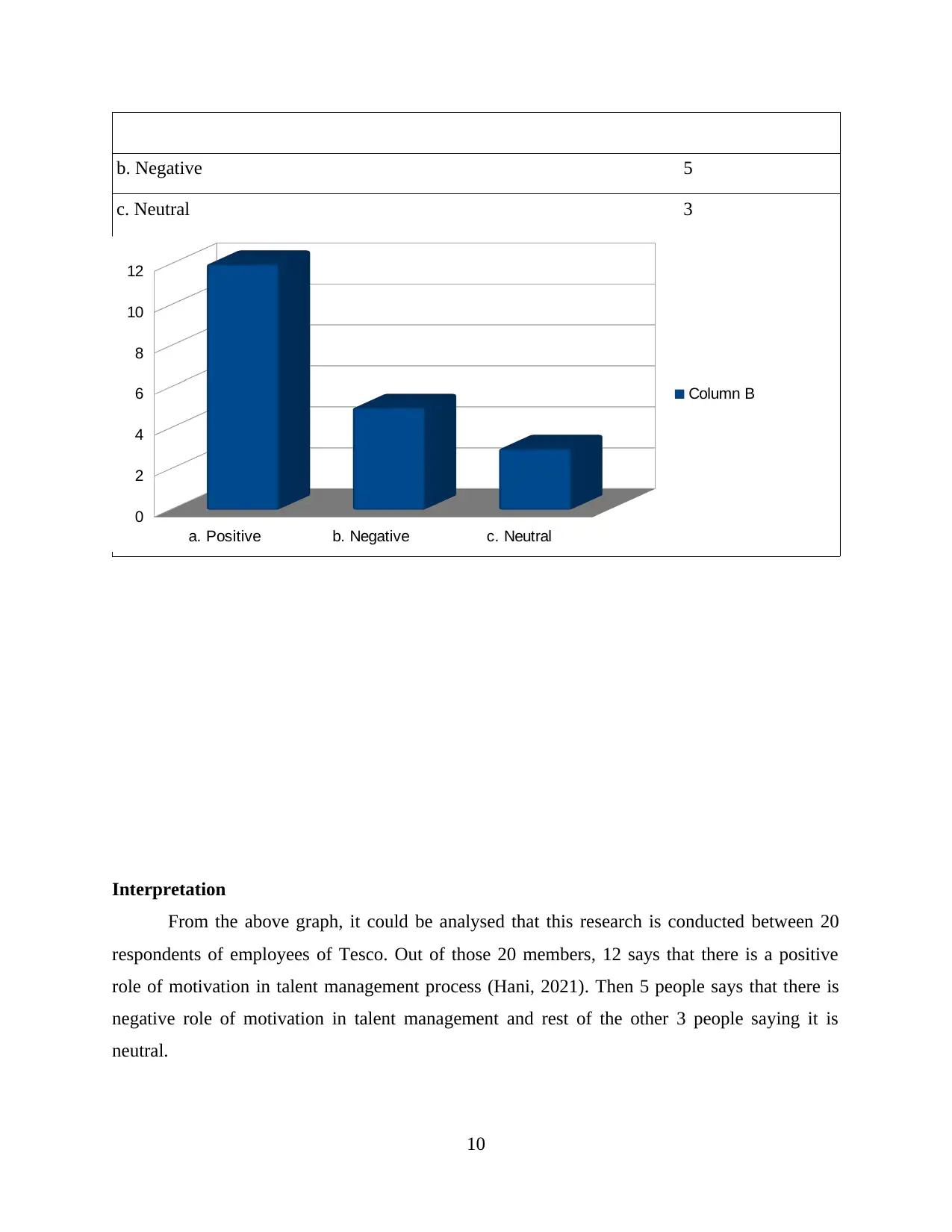
Interpretation
From the above graph, it could be analysed that this research is conducted between 20
respondents of employees of Tesco. Out of those 20 members, 12 says that there is a positive
role of motivation in talent management process (Hani, 2021). Then 5 people says that there is
negative role of motivation in talent management and rest of the other 3 people saying it is
neutral.
10
a. Positive b. Negative c. Neutral
0
2
4
6
8
10
12
Column B
c. Neutral 3
Interpretation
From the above graph, it could be analysed that this research is conducted between 20
respondents of employees of Tesco. Out of those 20 members, 12 says that there is a positive
role of motivation in talent management process (Hani, 2021). Then 5 people says that there is
negative role of motivation in talent management and rest of the other 3 people saying it is
neutral.
10
a. Positive b. Negative c. Neutral
0
2
4
6
8
10
12
Column B
Paraphrase This Document
Need a fresh take? Get an instant paraphrase of this document with our AI Paraphraser
Question 2 The talent management initiatives used by Tesco managers in order to retain
and motivate employees within an organisation
Q2. What is the talent management initiatives used by Tesco managers in
order to retain and motivate employees within an organisation?
Frequency
a. Training and development opportunities 5
b. Rewards and recognisance 7
c. Flexible working environment 4
d. Growth opportunities 4
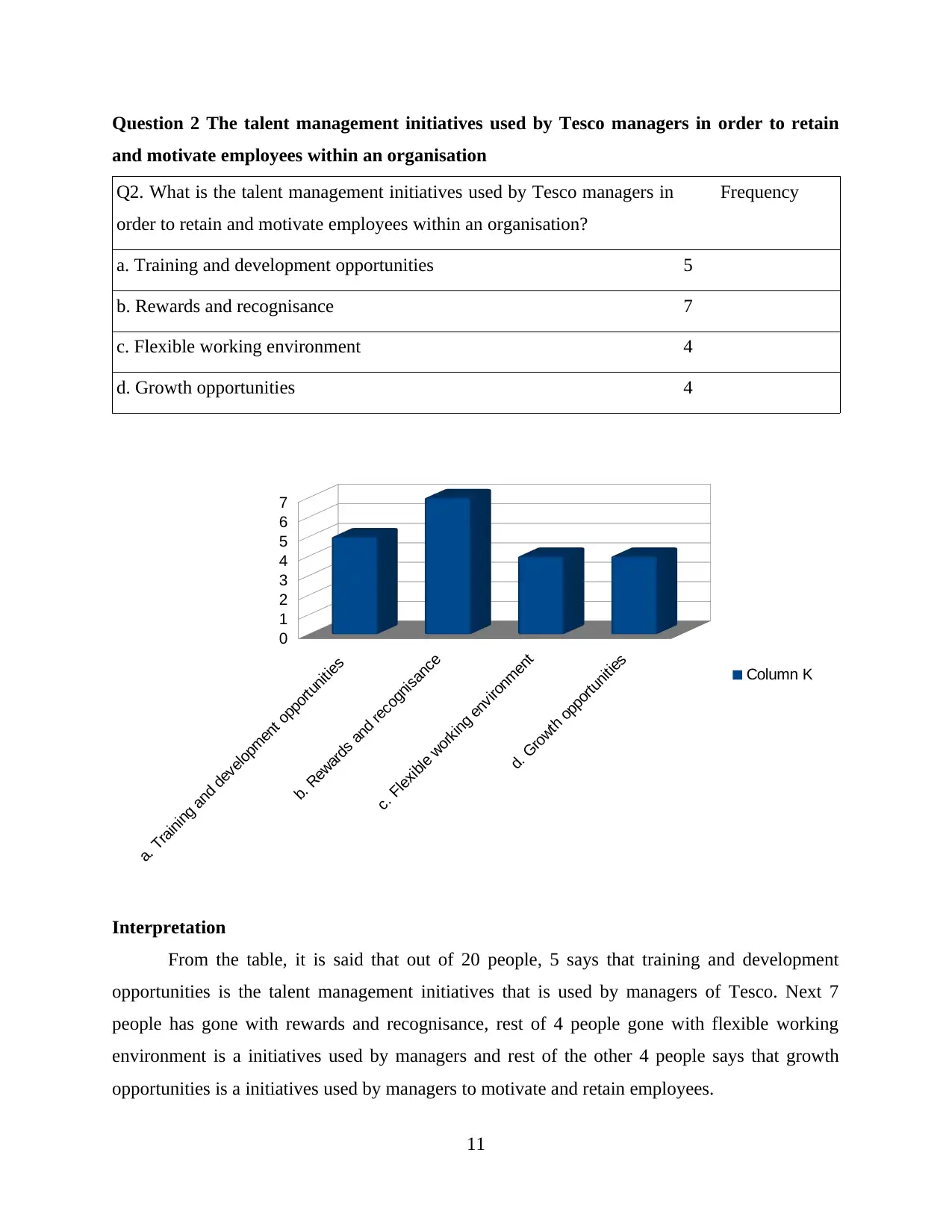
Interpretation
From the table, it is said that out of 20 people, 5 says that training and development
opportunities is the talent management initiatives that is used by managers of Tesco. Next 7
people has gone with rewards and recognisance, rest of 4 people gone with flexible working
environment is a initiatives used by managers and rest of the other 4 people says that growth
opportunities is a initiatives used by managers to motivate and retain employees.
11
a. Training and development opportunities
b. Rewards and recognisance
c. Flexible working environment
d. Growth opportunities
0
1
2
3
4
5
6
7
Column K
and motivate employees within an organisation
Q2. What is the talent management initiatives used by Tesco managers in
order to retain and motivate employees within an organisation?
Frequency
a. Training and development opportunities 5
b. Rewards and recognisance 7
c. Flexible working environment 4
d. Growth opportunities 4
Interpretation
From the table, it is said that out of 20 people, 5 says that training and development
opportunities is the talent management initiatives that is used by managers of Tesco. Next 7
people has gone with rewards and recognisance, rest of 4 people gone with flexible working
environment is a initiatives used by managers and rest of the other 4 people says that growth
opportunities is a initiatives used by managers to motivate and retain employees.
11
a. Training and development opportunities
b. Rewards and recognisance
c. Flexible working environment
d. Growth opportunities
0
1
2
3
4
5
6
7
Column K
Question 3 Talent management initiatives are helpful for organisation in motivating and
retaining employees for long run
Q3. According to you, did you think talent management initiatives are
helpful for organisation in motivating and retaining employees for long
run?
Frequency
a. yes 13
b. no 5
c. can't say 2
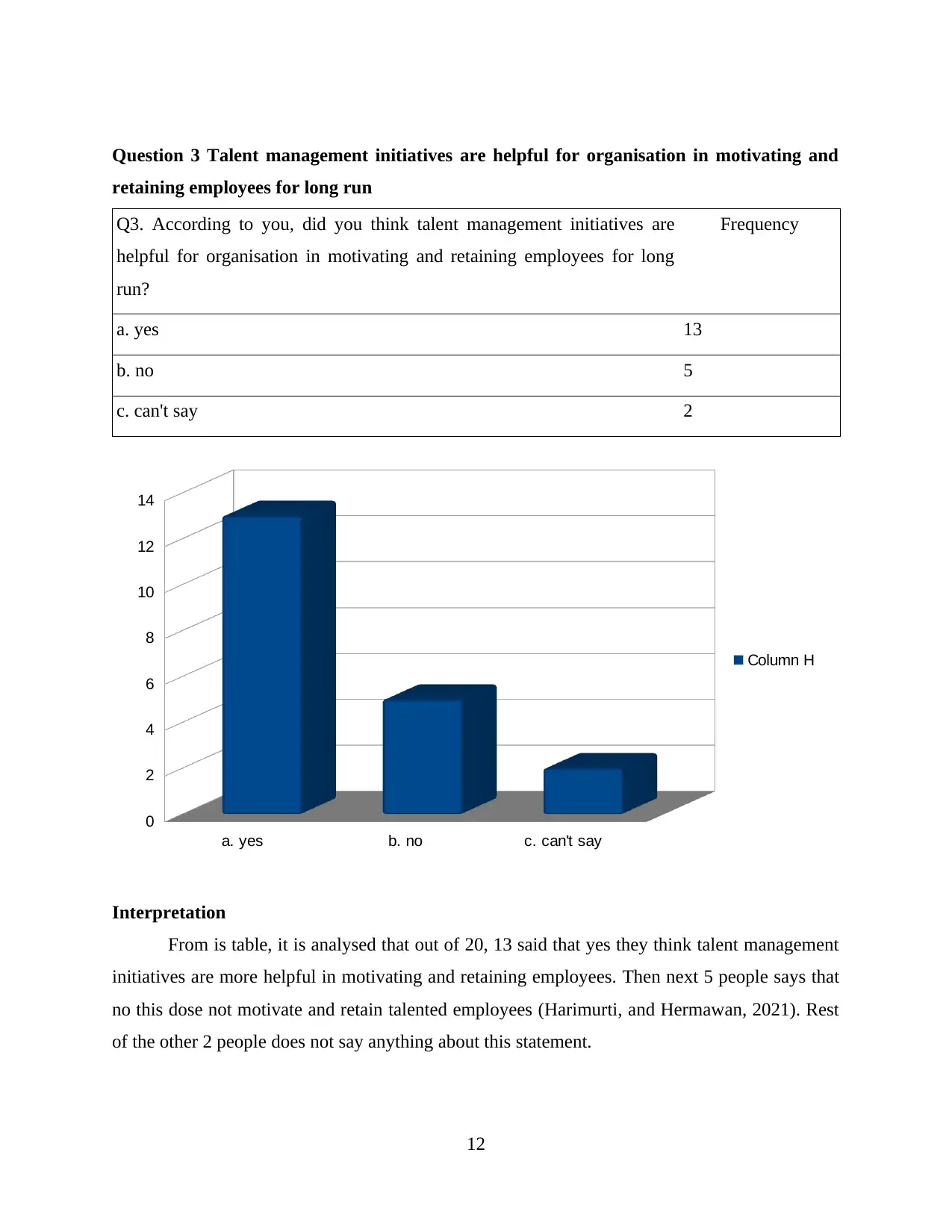
Interpretation
From is table, it is analysed that out of 20, 13 said that yes they think talent management
initiatives are more helpful in motivating and retaining employees. Then next 5 people says that
no this dose not motivate and retain talented employees (Harimurti, and Hermawan, 2021). Rest
of the other 2 people does not say anything about this statement.
12
a. yes b. no c. can't say
0
2
4
6
8
10
12
14
Column H
retaining employees for long run
Q3. According to you, did you think talent management initiatives are
helpful for organisation in motivating and retaining employees for long
run?
Frequency
a. yes 13
b. no 5
c. can't say 2
Interpretation
From is table, it is analysed that out of 20, 13 said that yes they think talent management
initiatives are more helpful in motivating and retaining employees. Then next 5 people says that
no this dose not motivate and retain talented employees (Harimurti, and Hermawan, 2021). Rest
of the other 2 people does not say anything about this statement.
12
a. yes b. no c. can't say
0
2
4
6
8
10
12
14
Column H
⊘ This is a preview!⊘
Do you want full access?
Subscribe today to unlock all pages.
Trusted by 1+ million students worldwide

1 out of 27


Related Documents


Your All-in-One AI-Powered Toolkit for Academic Success.
+13062052269
info@desklib.com
Available 24*7 on WhatsApp / Email
![[object Object]](/_next/static/media/star-bottom.7253800d.svg)
Unlock your academic potential
Copyright © 2020–2026 A2Z Services. All Rights Reserved. Developed and managed by ZUCOL.