An In-Depth Analysis of the Great Depression: Causes and Effects
VerifiedAdded on 2022/09/11
|7
|1457
|12
Essay
AI Summary
This essay provides a comprehensive analysis of the Great Depression, examining its economic origins, impacts, and global consequences. It begins by defining the Great Depression as a severe worldwide economic downturn that started in 1929, originating in the United States and spanning from 1929 to 1939. The essay explores the economic factors, including the stock market crash of 1929 and the decline in GDP, with a detailed look at the US economy's performance. It highlights the impact on global trade, unemployment rates, and the role of the gold standard and protectionist policies. The essay also covers the recovery period from 1933, discussing government responses and the slow return to pre-depression economic levels, and it references key academic sources to support its claims.
Running head: THE GREAT DEPRESSION
The Great Depression
Name of the Student
Name of the University
Author note
The Great Depression
Name of the Student
Name of the University
Author note
Paraphrase This Document
Need a fresh take? Get an instant paraphrase of this document with our AI Paraphraser

1THE GREAT DEPRESSION
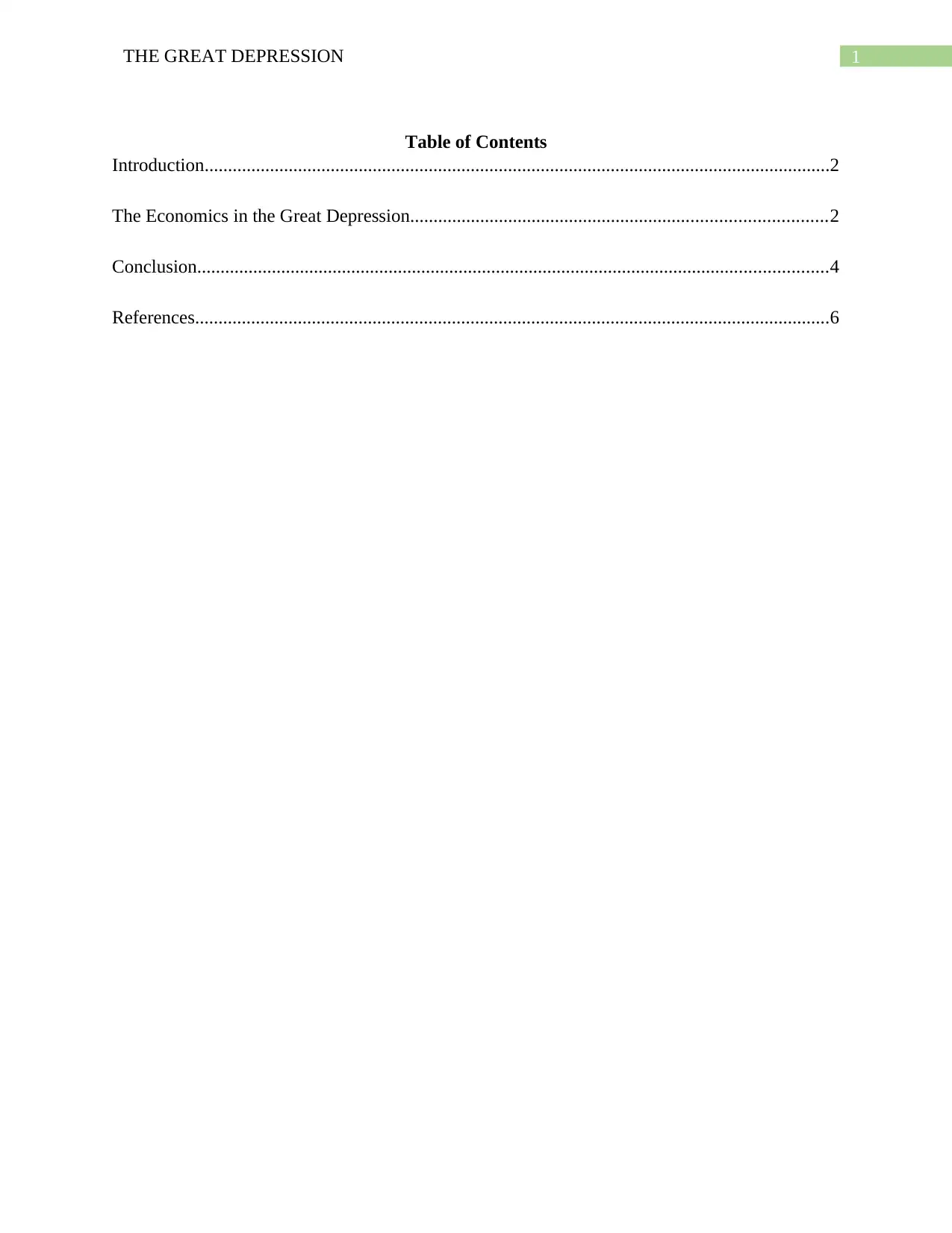
Table of Contents
Introduction......................................................................................................................................2
The Economics in the Great Depression.........................................................................................2
Conclusion.......................................................................................................................................4
References........................................................................................................................................6
Table of Contents
Introduction......................................................................................................................................2
The Economics in the Great Depression.........................................................................................2
Conclusion.......................................................................................................................................4
References........................................................................................................................................6

2THE GREAT DEPRESSION
Introduction
A severe worldwide economic depression took place in the beginning of the 1929 is
known as the great depression. Moreover, it was first started in the United States (US). It was the
worst economic downturn in the history of the industrialized world (Benmelech, Carola and
Dimitris). The whole span of the great depression was from 1929 to 1939. It initiated with the
stock market crash of 1929. There were various countries which also witnessed the great
economic depression. However, the time period of the depression varied across the countries of
the world. In addition, it is recognized as the most widespread, deepest and lonest depression of
the world, which took place on the 20th century. The worst economic condition of the world
during the period of the great depression resulted in severe economic downturn.
The Economics in the Great Depression
One of the largest economies of the world US went through the economic shock due to
introduction of the great depression (Usa.gov). The country is blessed with its enormous natural
resources, agricultural productivity and industrial growth. The country registered robust
economic growth due to its performance in industrial sectors as well as other sectors of the
economy. The economic growth of the country is measured by its Gross Domestic Product
(GDP). The GDP growth of the country sharply declined during the great depression. The first
stock price fall began on 4th September 1929. Later, the stock market in the US crashed on 29th
October 1929, which is known as Black Tuesday in the history of the world.
In 1929, the GDP growth lessened to 103.6 billion US dollars. While, the country
registered the GDP growth of 92.2 billion US dollars in 1939 (Mitchener and Gary). The average
decline in the GDP growth rate of the country from 1929 to 1939 was 15%. Whereas, during the
Introduction
A severe worldwide economic depression took place in the beginning of the 1929 is
known as the great depression. Moreover, it was first started in the United States (US). It was the
worst economic downturn in the history of the industrialized world (Benmelech, Carola and
Dimitris). The whole span of the great depression was from 1929 to 1939. It initiated with the
stock market crash of 1929. There were various countries which also witnessed the great
economic depression. However, the time period of the depression varied across the countries of
the world. In addition, it is recognized as the most widespread, deepest and lonest depression of
the world, which took place on the 20th century. The worst economic condition of the world
during the period of the great depression resulted in severe economic downturn.
The Economics in the Great Depression
One of the largest economies of the world US went through the economic shock due to
introduction of the great depression (Usa.gov). The country is blessed with its enormous natural
resources, agricultural productivity and industrial growth. The country registered robust
economic growth due to its performance in industrial sectors as well as other sectors of the
economy. The economic growth of the country is measured by its Gross Domestic Product
(GDP). The GDP growth of the country sharply declined during the great depression. The first
stock price fall began on 4th September 1929. Later, the stock market in the US crashed on 29th
October 1929, which is known as Black Tuesday in the history of the world.
In 1929, the GDP growth lessened to 103.6 billion US dollars. While, the country
registered the GDP growth of 92.2 billion US dollars in 1939 (Mitchener and Gary). The average
decline in the GDP growth rate of the country from 1929 to 1939 was 15%. Whereas, during the
⊘ This is a preview!⊘
Do you want full access?
Subscribe today to unlock all pages.

Trusted by 1+ million students worldwide

3THE GREAT DEPRESSION
great recession worldwide GDP decreased by 1%. Therefore, from this comparison of GDP, the
severity of the economic depression can be understand. The US is considered as the economic
superpower of the world. Thus, any downturn in the economy of US impacted the whole world
dramatically. Though, some countries recovered by the mid of 1930, the adverse effects of the
great depression lasted until the introduction of World War II in several countries. It hampered
the growth of the both high-income and low-income countries. It scaled down international trade
by greater than 50% (Brocker and Christopher). As a result, prices, tax revenues, profits and
personal income dropped drastically worldwide. It created worst economic scenario by scaling
up the unemployment rate of the US and all other countries of the world.
The unemployment rate in the US increased to 25% during the period of the great
depression. Several other countries also witnessed higher unemployment rate of 33% during this
period (Dinçer, Serhat and Seçil). The widespread panic in the Wall Street wiped out several
investors out of the market. The growth of the heavy industries plummeted sharply, which hit
various countries of the world. In several countries, construction was halted. As the crop prices
plunged by more than 60%, rural areas and farming communities suffered huge losses. Areas
dependent on the primary sector industries includes logging and mining affected due to
decreasing demand and unavailability of job sources.
In 1929, stock market crash brought many challenges for the US and world economy. As
many investors faced severe losses in the stock market crash of the US, it discouraged consumer
investment and spending habit (Bordo and Arunima). Moreover, there was also a severe drought
in the US in middle of 1930, which disrupted the growth of the agricultural sector. Though,
interest rate of the country dropped during this period. In 1931, the country registered a
deflationary spiral. In addition, the significant decline in the US economy along with internal
great recession worldwide GDP decreased by 1%. Therefore, from this comparison of GDP, the
severity of the economic depression can be understand. The US is considered as the economic
superpower of the world. Thus, any downturn in the economy of US impacted the whole world
dramatically. Though, some countries recovered by the mid of 1930, the adverse effects of the
great depression lasted until the introduction of World War II in several countries. It hampered
the growth of the both high-income and low-income countries. It scaled down international trade
by greater than 50% (Brocker and Christopher). As a result, prices, tax revenues, profits and
personal income dropped drastically worldwide. It created worst economic scenario by scaling
up the unemployment rate of the US and all other countries of the world.
The unemployment rate in the US increased to 25% during the period of the great
depression. Several other countries also witnessed higher unemployment rate of 33% during this
period (Dinçer, Serhat and Seçil). The widespread panic in the Wall Street wiped out several
investors out of the market. The growth of the heavy industries plummeted sharply, which hit
various countries of the world. In several countries, construction was halted. As the crop prices
plunged by more than 60%, rural areas and farming communities suffered huge losses. Areas
dependent on the primary sector industries includes logging and mining affected due to
decreasing demand and unavailability of job sources.
In 1929, stock market crash brought many challenges for the US and world economy. As
many investors faced severe losses in the stock market crash of the US, it discouraged consumer
investment and spending habit (Bordo and Arunima). Moreover, there was also a severe drought
in the US in middle of 1930, which disrupted the growth of the agricultural sector. Though,
interest rate of the country dropped during this period. In 1931, the country registered a
deflationary spiral. In addition, the significant decline in the US economy along with internal
Paraphrase This Document
Need a fresh take? Get an instant paraphrase of this document with our AI Paraphraser

4THE GREAT DEPRESSION
weakness of the countries resulted in worse economic condition in rest of the countries of the
world. To protect the domestic economies, some countries imposed protectionist policies such as
tariffs. Other countries also imposed retaliatory tariffs in order to protect their internal
economies. As a result, global trade scaled down dramatically. The global trade dropped by one
third than its level before four years in 1933.
The primary transmission mechanism of the great depression was the gold standard. To
make outflow of gold in countries with lower rate of interest, the deflationary policy was
imposed on the countries, those which not even faced monetary contraction and bank failures
during this period. Therefore, under this mechanism, countries had to decline their domestic
price level and decrease money supply. In addition, the protectionist policies also worsen the
economic depression along with gold standard (Richardson and Walter). The tariff imposed by
the US was the Smoot-Hawley Tariff Act, which was responsible for the downturn in global
trade. Other than this, the sharp decline in the international trade also worsen the great
depression. Moreover, the great depression was extended by the financial crisis in major world
economies. In May 1931, the financial crisis escalated with the collapse of Credit Anstalt in
Vienna. Thus, it created heavy pressure on Germany. Moreover, during this period, the country
already went through political turmoil. Hence, it hampered the confidence of the investors and
they took out short-term money out of the country.
Conclusion
The recovery from the great depression mainly initiated from 1933. The US began to
recover from the beginning of the 1933 (Albers and Martin). However, it took more than a
decade for the US to return to its Gross National Product of 1929. The country faced high
unemployment rate of 15% till 1940. The government of US rolled back its previous
weakness of the countries resulted in worse economic condition in rest of the countries of the
world. To protect the domestic economies, some countries imposed protectionist policies such as
tariffs. Other countries also imposed retaliatory tariffs in order to protect their internal
economies. As a result, global trade scaled down dramatically. The global trade dropped by one
third than its level before four years in 1933.
The primary transmission mechanism of the great depression was the gold standard. To
make outflow of gold in countries with lower rate of interest, the deflationary policy was
imposed on the countries, those which not even faced monetary contraction and bank failures
during this period. Therefore, under this mechanism, countries had to decline their domestic
price level and decrease money supply. In addition, the protectionist policies also worsen the
economic depression along with gold standard (Richardson and Walter). The tariff imposed by
the US was the Smoot-Hawley Tariff Act, which was responsible for the downturn in global
trade. Other than this, the sharp decline in the international trade also worsen the great
depression. Moreover, the great depression was extended by the financial crisis in major world
economies. In May 1931, the financial crisis escalated with the collapse of Credit Anstalt in
Vienna. Thus, it created heavy pressure on Germany. Moreover, during this period, the country
already went through political turmoil. Hence, it hampered the confidence of the investors and
they took out short-term money out of the country.
Conclusion
The recovery from the great depression mainly initiated from 1933. The US began to
recover from the beginning of the 1933 (Albers and Martin). However, it took more than a
decade for the US to return to its Gross National Product of 1929. The country faced high
unemployment rate of 15% till 1940. The government of US rolled back its previous

5THE GREAT DEPRESSION
protectionist policies and raised nominal interest rates. The economic policies taken by the
country during this period was not aggressive and not tried to take out the country completely out
of the recession at a go. Therefore, these policies helped the country to further expand and US
continued dominating the world economies. Other countries also recovered slowly with the help
of domestic policies and improvements in the world economy.
protectionist policies and raised nominal interest rates. The economic policies taken by the
country during this period was not aggressive and not tried to take out the country completely out
of the recession at a go. Therefore, these policies helped the country to further expand and US
continued dominating the world economies. Other countries also recovered slowly with the help
of domestic policies and improvements in the world economy.
⊘ This is a preview!⊘
Do you want full access?
Subscribe today to unlock all pages.

Trusted by 1+ million students worldwide

6THE GREAT DEPRESSION
References
Albers, Thilo, and Martin Uebele. "The global impact of the great depression." (2015).
Benmelech, Efraim, Carola Frydman, and Dimitris Papanikolaou. "Financial frictions and
employment during the great depression." Journal of Financial Economics (2019).
Bordo, Michael, and Arunima Sinha. A lesson from the Great Depression that the Fed might
have learned: a comparison of the 1932 open market purchases with quantitative easing.
No. w22581. National Bureau of Economic Research, 2016.
Brocker, Michael, and Christopher Hanes. "The 1920s american real estate boom and the
downturn of the great depression: Evidence from city cross-sections." Housing and
mortgage markets in historical perspective. University of Chicago Press, 2014. 161-201.
Dinçer, Hasan, Serhat Yüksel, and Seçil Şenel. "Analyzing the global risks for the financial crisis
after the great depression using comparative hybrid hesitant fuzzy decision-making
models: policy recommendations for sustainable economic growth." Sustainability 10.9
(2018): 3126.
Mitchener, Kris James, and Gary Richardson. "Network contagion and interbank amplification
during the Great Depression." Journal of Political Economy 127.2 (2019): 465-507.
Richardson, Harry Ward, and Walter Laqueur. The great depression. Weidenfeld and Nicolson,
2014.
Usa.gov "Official Guide To Government Information And Services | Usagov.". N. p., 2019.
Web. 11 Dec. 2019.
References
Albers, Thilo, and Martin Uebele. "The global impact of the great depression." (2015).
Benmelech, Efraim, Carola Frydman, and Dimitris Papanikolaou. "Financial frictions and
employment during the great depression." Journal of Financial Economics (2019).
Bordo, Michael, and Arunima Sinha. A lesson from the Great Depression that the Fed might
have learned: a comparison of the 1932 open market purchases with quantitative easing.
No. w22581. National Bureau of Economic Research, 2016.
Brocker, Michael, and Christopher Hanes. "The 1920s american real estate boom and the
downturn of the great depression: Evidence from city cross-sections." Housing and
mortgage markets in historical perspective. University of Chicago Press, 2014. 161-201.
Dinçer, Hasan, Serhat Yüksel, and Seçil Şenel. "Analyzing the global risks for the financial crisis
after the great depression using comparative hybrid hesitant fuzzy decision-making
models: policy recommendations for sustainable economic growth." Sustainability 10.9
(2018): 3126.
Mitchener, Kris James, and Gary Richardson. "Network contagion and interbank amplification
during the Great Depression." Journal of Political Economy 127.2 (2019): 465-507.
Richardson, Harry Ward, and Walter Laqueur. The great depression. Weidenfeld and Nicolson,
2014.
Usa.gov "Official Guide To Government Information And Services | Usagov.". N. p., 2019.
Web. 11 Dec. 2019.
1 out of 7
Related Documents
Your All-in-One AI-Powered Toolkit for Academic Success.
+13062052269
info@desklib.com
Available 24*7 on WhatsApp / Email
Unlock your academic potential
Copyright © 2020–2026 A2Z Services. All Rights Reserved. Developed and managed by ZUCOL.