Role of Hsp70 Chaperones in Mitochondrial β-barrel Protein Biogenesis

Verified

Added on  2022/10/04

|6
|330
|18
Report
AI Summary
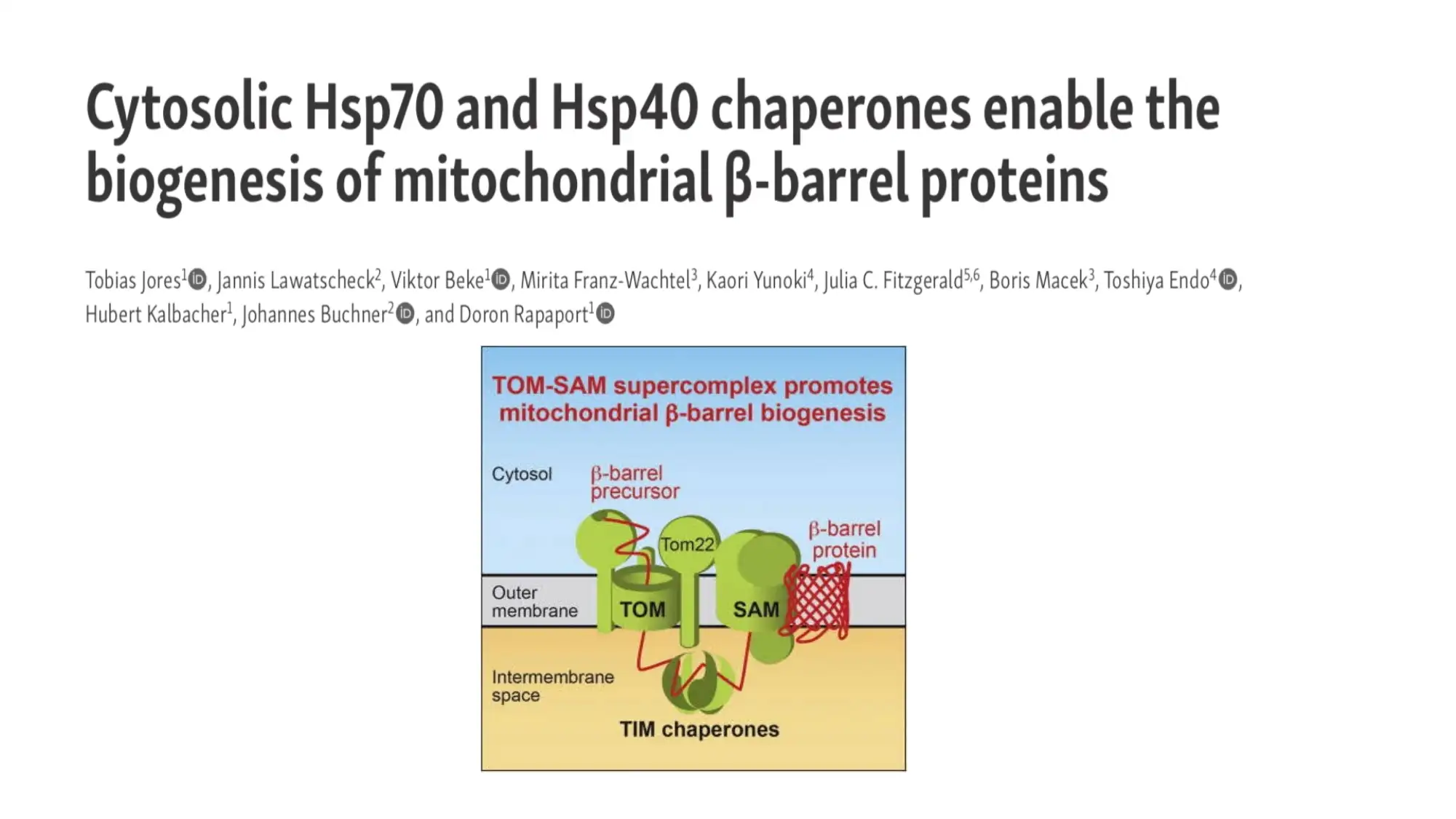
This report examines the role of cytosolic Hsp70 chaperones and their Hsp40 cochaperones in the biogenesis of mitochondrial β-barrel proteins. The study, based on the work of Jores et al. (2018), investigates how these chaperones interact with newly synthesized β-barrel proteins, which are encoded in the nucleus, translated by cytosolic ribosomes, and then imported into the mitochondria. The report details the experimental methods used, including the use of yeast strains, in vitro translation and import of radiolabeled proteins, pull-down assays, and UV-induced cross-linking. The findings demonstrate the importance of Hsp70 chaperones in facilitating the import of β-barrel proteins into mitochondria, as inhibiting their activity or depleting the related cochaperones resulted in reduced import. The interactions between β-barrel proteins and Hsp70 chaperones were also found to be conserved in mammalian cells, highlighting a novel mechanism in the biogenesis of these proteins. The study provides a comprehensive overview of the role of cytosolic chaperones in the import and proper folding of mitochondrial proteins.
Document Page
tabler-icon-diamond-filled.svg

Paraphrase This Document

Need a fresh take? Get an instant paraphrase of this document with our AI Paraphraser
Document Page
Introduction
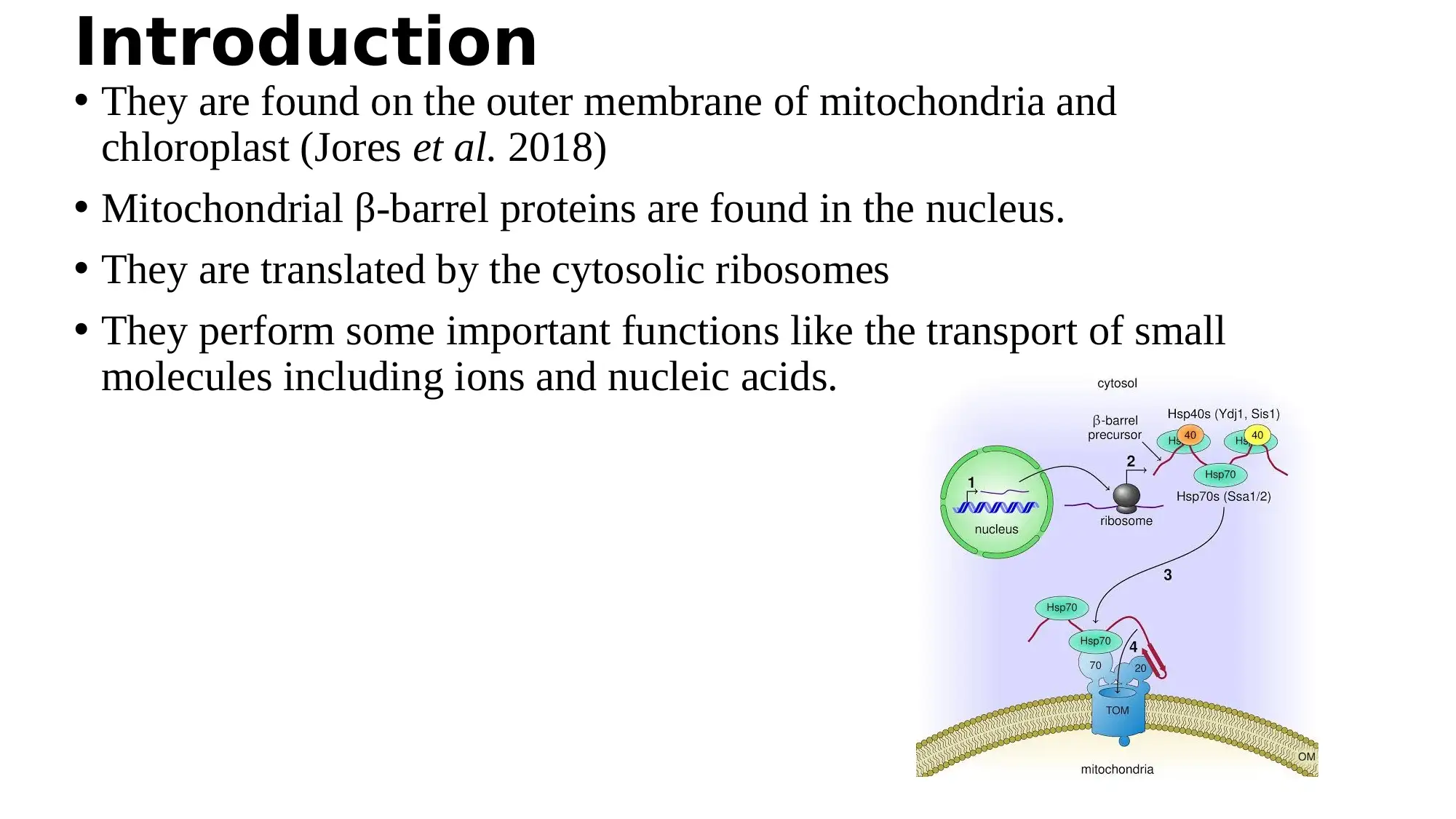
They are found on the outer membrane of mitochondria and
chloroplast (Jores et al. 2018)
Mitochondrial β-barrel proteins are found in the nucleus.
They are translated by the cytosolic ribosomes
They perform some important functions like the transport of small
molecules including ions and nucleic acids.
Document Page
Introduction
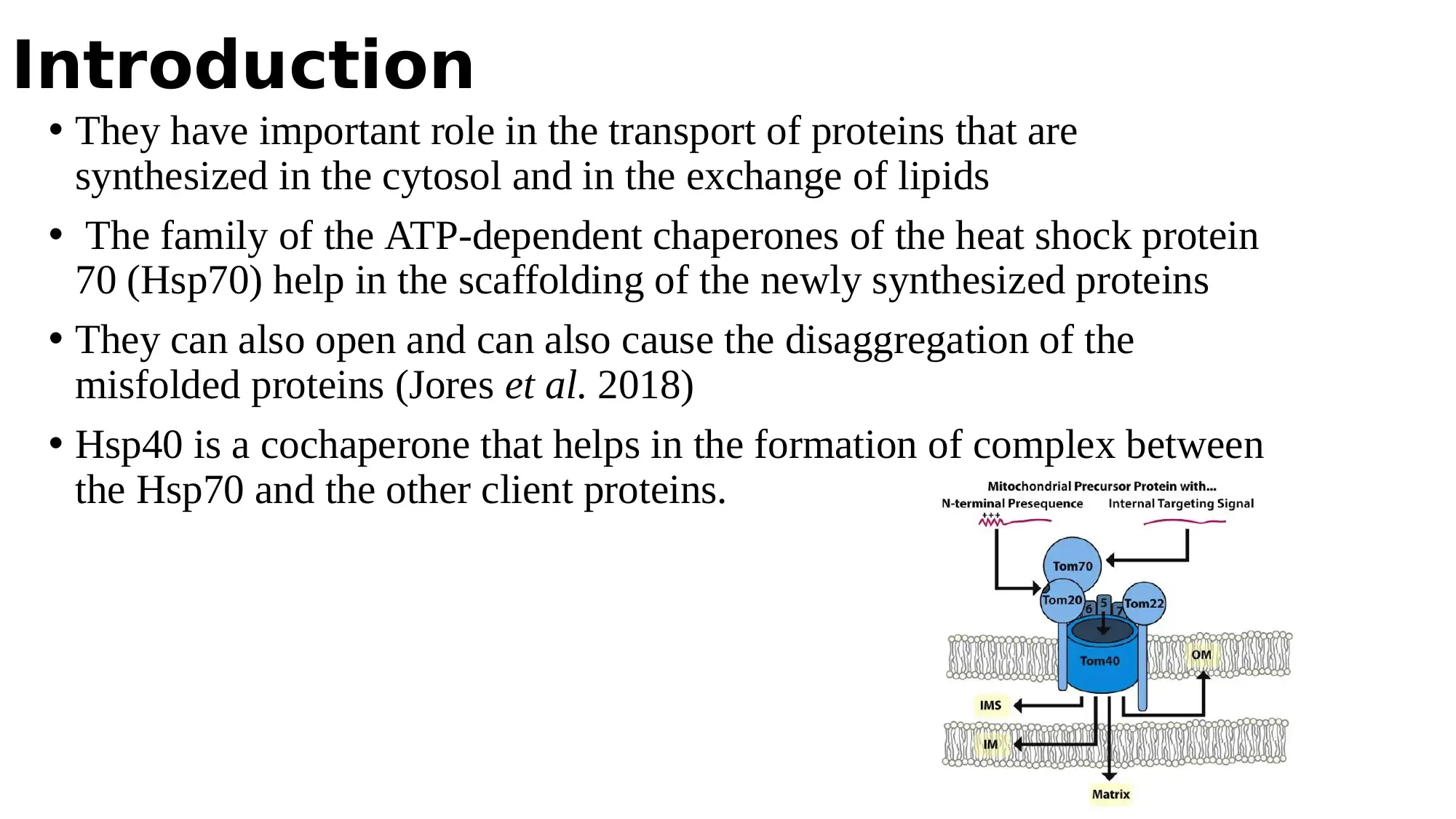
They have important role in the transport of proteins that are
synthesized in the cytosol and in the exchange of lipids
The family of the ATP-dependent chaperones of the heat shock protein
70 (Hsp70) help in the scaffolding of the newly synthesized proteins
They can also open and can also cause the disaggregation of the
misfolded proteins (Jores et al. 2018)
Hsp40 is a cochaperone that helps in the formation of complex between
the Hsp70 and the other client proteins.
Document Page
Method
The use of the Hsp chaperones has been proved by the use of the
yeast strains . The tom70/71Δ strain was prepared by successive
knockouts. Then to check the products In vitro translation and import
of radiolabeled proteins was carried out.
After this the product was centrifuged to remove ribosomes.
Then the import of the porin protein was analyzed and the human
Tom40 was analyzed by proteinase K (PK) treatment (Jores et al. 2018).
tabler-icon-diamond-filled.svg

Paraphrase This Document

Need a fresh take? Get an instant paraphrase of this document with our AI Paraphraser
Document Page
Methods
Then after this the Pull-down of in vitro translated proteins was
performed
The proteins that were translated in the yeast extract were pulled
down.
After that the protein was analyzed by SDS-PAGE followed by
Western blotting or mass spectrometry (Jores et al. 2018).
Document Page
Method
The next method is the UV-induced cross-linking.
The yeast cells were transformed with plasmid and then irradiated
with UV lamp and the remaining sample was kept in dark
After the treatment the samples were subjected to analysis either by
mass spectrometry or SDS-PAGE and Western Blotting (Jores et al.
2018).
chevron_up_icon
1 out of 6
circle_padding
hide_on_mobile
zoom_out_icon
[object Object]