The Impact of Epigenetics on Human Disease: A Comprehensive Report

Verified

Added on  2022/09/28

|5
|494
|22
Report
AI Summary
This report examines the role of epigenetics in human disease, focusing on how factors like smoking and environmental pollution affect gene expression and cellular function. It highlights the mechanisms of DNA methylation and histone modification, and their impact on disease development. The report references studies that link smoking to increased risk of cancer and other illnesses, and emphasizes the role of epigenetic changes in altering cellular responses and predisposing individuals to various health problems. The conclusion stresses the importance of factors such as diet and environmental influences on gene activity, which ultimately affect the development of diseases like diabetes and autoimmune disorders. This report provides a comprehensive overview of the subject.

Document Page
1
Running Head: THE ROLE OF EIGENETICS IN HUMAN DISEASE
Epigenetics in human disease
Student name:
Submission Date:
tabler-icon-diamond-filled.svg

Paraphrase This Document

Need a fresh take? Get an instant paraphrase of this document with our AI Paraphraser
Document Page
2
THE ROLE OF EPIGENETICS IN HUMAN DISEASE
Contents
Introduction.................................................................................................................................................3
Epigenetic in the etiology of human disease................................................................................................3
Conclusion...................................................................................................................................................3
References...................................................................................................................................................4
Document Page
3
THE ROLE OF EPIGENETICS IN HUMAN DISEASE
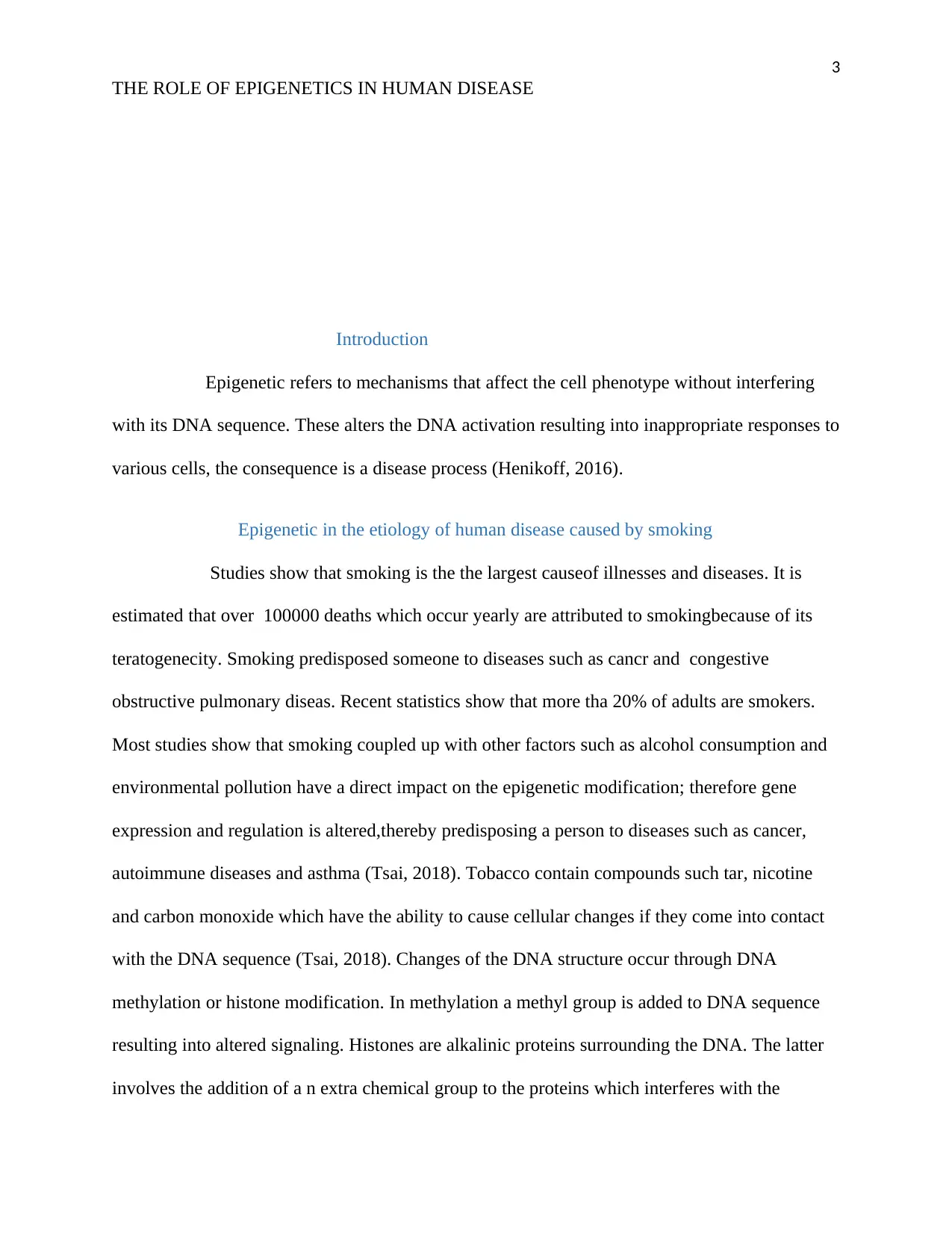
Introduction
Epigenetic refers to mechanisms that affect the cell phenotype without interfering
with its DNA sequence. These alters the DNA activation resulting into inappropriate responses to
various cells, the consequence is a disease process (Henikoff, 2016).
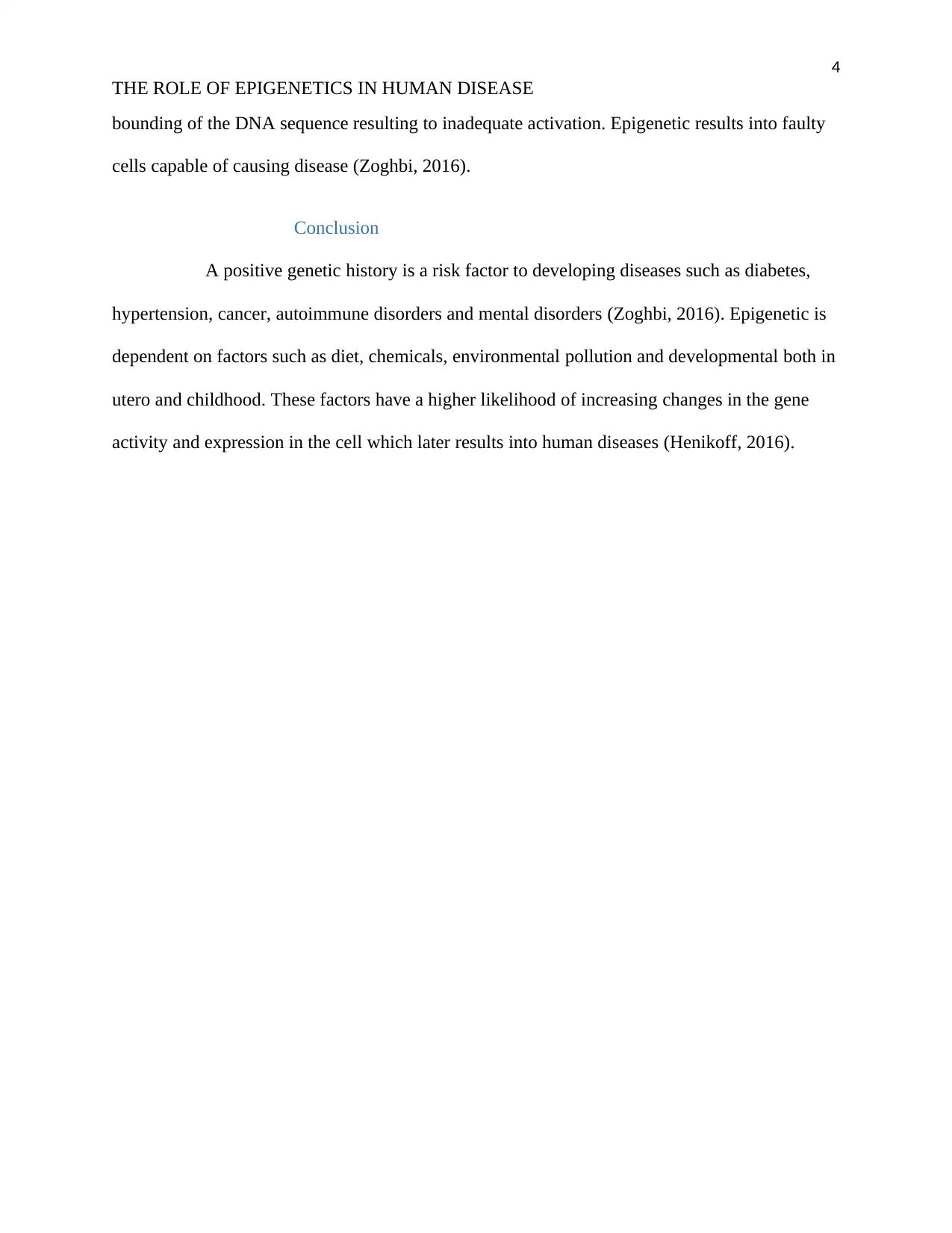
Epigenetic in the etiology of human disease caused by smoking
Studies show that smoking is the the largest causeof illnesses and diseases. It is
estimated that over 100000 deaths which occur yearly are attributed to smokingbecause of its
teratogenecity. Smoking predisposed someone to diseases such as cancr and congestive
obstructive pulmonary diseas. Recent statistics show that more tha 20% of adults are smokers.
Most studies show that smoking coupled up with other factors such as alcohol consumption and
environmental pollution have a direct impact on the epigenetic modification; therefore gene
expression and regulation is altered,thereby predisposing a person to diseases such as cancer,
autoimmune diseases and asthma (Tsai, 2018). Tobacco contain compounds such tar, nicotine
and carbon monoxide which have the ability to cause cellular changes if they come into contact
with the DNA sequence (Tsai, 2018). Changes of the DNA structure occur through DNA
methylation or histone modification. In methylation a methyl group is added to DNA sequence
resulting into altered signaling. Histones are alkalinic proteins surrounding the DNA. The latter
involves the addition of a n extra chemical group to the proteins which interferes with the
Document Page
4
THE ROLE OF EPIGENETICS IN HUMAN DISEASE
bounding of the DNA sequence resulting to inadequate activation. Epigenetic results into faulty
cells capable of causing disease (Zoghbi, 2016).
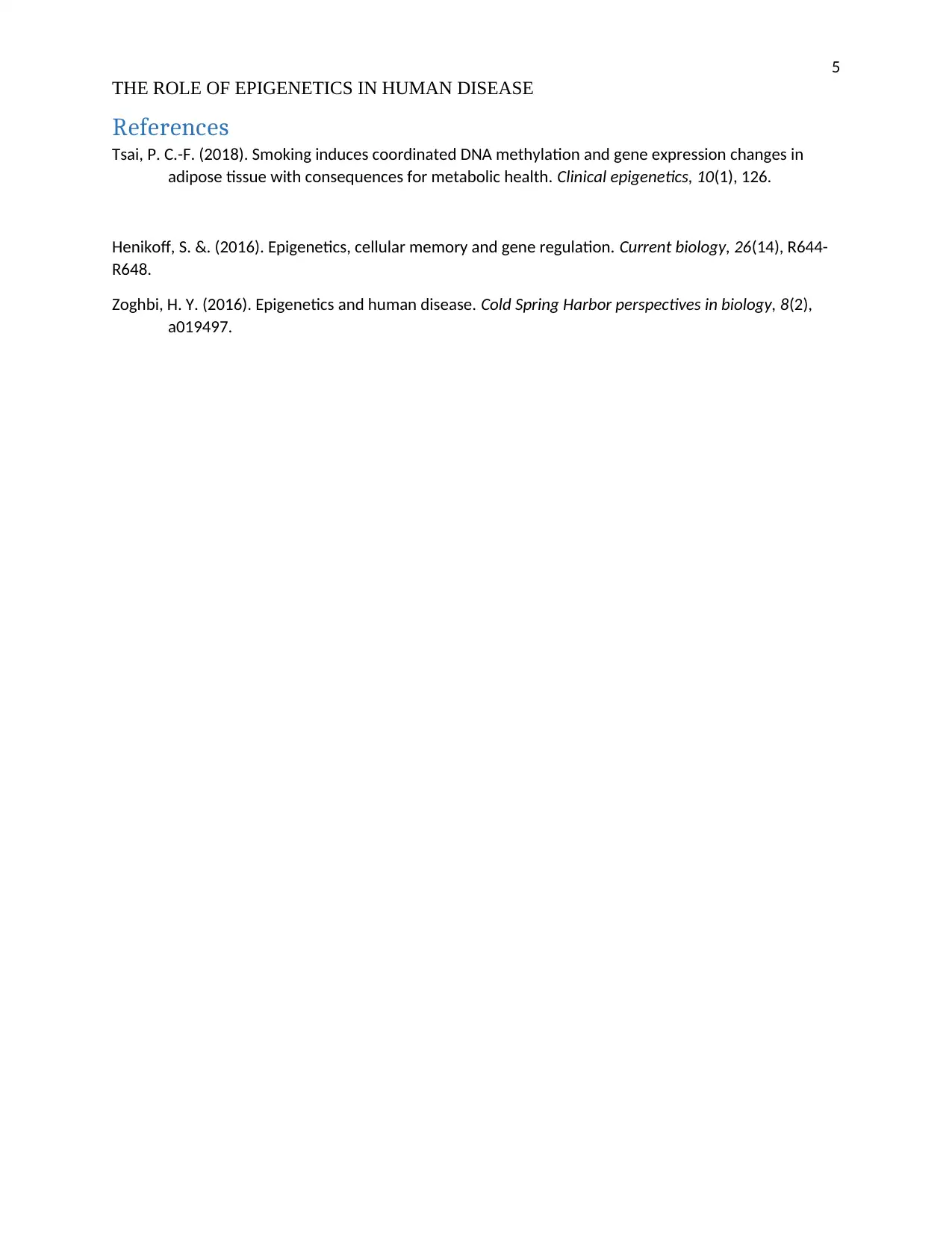
Conclusion
A positive genetic history is a risk factor to developing diseases such as diabetes,
hypertension, cancer, autoimmune disorders and mental disorders (Zoghbi, 2016). Epigenetic is
dependent on factors such as diet, chemicals, environmental pollution and developmental both in
utero and childhood. These factors have a higher likelihood of increasing changes in the gene
activity and expression in the cell which later results into human diseases (Henikoff, 2016).
tabler-icon-diamond-filled.svg

Paraphrase This Document

Need a fresh take? Get an instant paraphrase of this document with our AI Paraphraser
Document Page
5
THE ROLE OF EPIGENETICS IN HUMAN DISEASE
References
Tsai, P. C.-F. (2018). Smoking induces coordinated DNA methylation and gene expression changes in
adipose tissue with consequences for metabolic health. Clinical epigenetics, 10(1), 126.
Henikoff, S. &. (2016). Epigenetics, cellular memory and gene regulation. Current biology, 26(14), R644-
R648.
Zoghbi, H. Y. (2016). Epigenetics and human disease. Cold Spring Harbor perspectives in biology, 8(2),
a019497.
chevron_up_icon
1 out of 5
circle_padding
hide_on_mobile
zoom_out_icon
[object Object]