MKT01425 - Analyzing the Impact of Tourism in Pacific Asia
VerifiedAdded on 2024/06/03
|9
|1967
|352
Essay
AI Summary
This essay examines the impact of tourism in Pacific Asia, focusing on both the positive and negative economic and environmental effects. It discusses the experiences of countries like India and Malaysia, highlighting tourism's role in income generation, employment, and infrastructure development, as well as its potential for environmental degradation and socio-cultural tensions. The essay also references theories by Christaller, Plog, and Cohen to explain tourist behavior and destination development. It concludes that while tourism can bring significant economic benefits, it's crucial to manage its environmental and social impacts for sustainable development in the Pacific-Asia region.
MKT01425 Tourism in Pacific Asia
Assessment 2
1
Assessment 2
1

Paraphrase This Document
Need a fresh take? Get an instant paraphrase of this document with our AI Paraphraser
Contents
Introduction.................................................................................................................................................3
Main body...................................................................................................................................................4
Conclusion...................................................................................................................................................8
References...................................................................................................................................................9
2
Introduction.................................................................................................................................................3
Main body...................................................................................................................................................4
Conclusion...................................................................................................................................................8
References...................................................................................................................................................9
2
Introduction
This is the essay about the tourism in Pacific Asia, the current impacts issues and the positive
and negative impacts of the issues. It has discussed both the negative and positive impact of the
issues of economic and environmental. In this essay, it has discussed two countries of Pacific
Asia along with their impact of tourism. It has examined economic benefits, environmental
benefits, and also the socio-cultural benefits. The explanation has also been made of different
outcomes of different countries case studies of Pacific Asia, the effect of tourism in these
countries.
3
This is the essay about the tourism in Pacific Asia, the current impacts issues and the positive
and negative impacts of the issues. It has discussed both the negative and positive impact of the
issues of economic and environmental. In this essay, it has discussed two countries of Pacific
Asia along with their impact of tourism. It has examined economic benefits, environmental
benefits, and also the socio-cultural benefits. The explanation has also been made of different
outcomes of different countries case studies of Pacific Asia, the effect of tourism in these
countries.
3
⊘ This is a preview!⊘
Do you want full access?
Subscribe today to unlock all pages.

Trusted by 1+ million students worldwide
Main body
Tourism is travel for the pleasure and business, tourism is international or domestic. Tourism is
the main part of economy for most of the countries in today’s time. Many countries is depended
on the money earned by the tourism sector. Tourism has both positive and negative impact on the
economy, environment of the country. Economic impact of tourism is having the tremendous
economic importance in all over the world (Marin, 2015). Tourism is the huge sector of both the
services and goods. Jobs in tourism are represented as one of the eleven jobs globally and this
industry comprises 9 percent of global GDP which is calculated by the World Tourism
Organisation. WTTC (World Travel and Tourism Council) has found out that the tourism
generates approx. 4.4 percent of total investment globally. The economic sectors include
accommodations, retail, food, entertainment, transportation (Mowforth, and Munt, 2015). The
tourism sector has both types of effects which are direct and indirect on jobs, production, taxes,
and wages. Environmental impact of tourism is the effect on the environment of the
destination and variety of life on Earth and the natural patterns. First impact in environment is
Loss of Biological Diversity, it reduces the productivity of ecosystem, which is the shrinking of
nature’s basket of services and goods. The environmental issue as it threatens the food supply of
local area, opportunities for the tourism and recreation and the sources of medicines, wood, fuel,
energy. It interfere the essentials ecological functions such as soil formation, balance of species
and the greenhouse absorption of gas (Hong, 2015). Tourism is linked with the biodiversity and
its attractions which are created from the rich and varied environment. The tourism can loss the
biodiversity at the time when resources and land are strained through the most use and also when
the impacts on marine, vegetation, wildlife and coastal environments which exceed the capacity
of carrying.
The second impact is climate change which generally agrees that the temperature of Earth's
surface has risen steadily in recent times because the greenhouse gas has increased in the
atmosphere which traps the heat from the sun directly. The carbon dioxide is the most significant
gas which is generated when the fossil fuel such as oil, coal and the natural gases are getting
burnt and even when there are changes in the use of land such as deforestation. Climate change is
directly linked to the global tourism, as tourism includes the movement of people to the
4
Tourism is travel for the pleasure and business, tourism is international or domestic. Tourism is
the main part of economy for most of the countries in today’s time. Many countries is depended
on the money earned by the tourism sector. Tourism has both positive and negative impact on the
economy, environment of the country. Economic impact of tourism is having the tremendous
economic importance in all over the world (Marin, 2015). Tourism is the huge sector of both the
services and goods. Jobs in tourism are represented as one of the eleven jobs globally and this
industry comprises 9 percent of global GDP which is calculated by the World Tourism
Organisation. WTTC (World Travel and Tourism Council) has found out that the tourism
generates approx. 4.4 percent of total investment globally. The economic sectors include
accommodations, retail, food, entertainment, transportation (Mowforth, and Munt, 2015). The
tourism sector has both types of effects which are direct and indirect on jobs, production, taxes,
and wages. Environmental impact of tourism is the effect on the environment of the
destination and variety of life on Earth and the natural patterns. First impact in environment is
Loss of Biological Diversity, it reduces the productivity of ecosystem, which is the shrinking of
nature’s basket of services and goods. The environmental issue as it threatens the food supply of
local area, opportunities for the tourism and recreation and the sources of medicines, wood, fuel,
energy. It interfere the essentials ecological functions such as soil formation, balance of species
and the greenhouse absorption of gas (Hong, 2015). Tourism is linked with the biodiversity and
its attractions which are created from the rich and varied environment. The tourism can loss the
biodiversity at the time when resources and land are strained through the most use and also when
the impacts on marine, vegetation, wildlife and coastal environments which exceed the capacity
of carrying.
The second impact is climate change which generally agrees that the temperature of Earth's
surface has risen steadily in recent times because the greenhouse gas has increased in the
atmosphere which traps the heat from the sun directly. The carbon dioxide is the most significant
gas which is generated when the fossil fuel such as oil, coal and the natural gases are getting
burnt and even when there are changes in the use of land such as deforestation. Climate change is
directly linked to the global tourism, as tourism includes the movement of people to the
4
Paraphrase This Document
Need a fresh take? Get an instant paraphrase of this document with our AI Paraphraser
destination and accounts about 50 percent of the movement of traffic which expands the traffic
of air contributes in which 2.5 percent of contribution is of CO2. Passenger’s jets are the fastest
growing source of the greenhouse emission of gas.
The industry of tourism and travel is the largest industry in all over the world. It surpasses the oil
exports, automobiles and the food products. There are both positive and negative impacts of both
economic and environmental. Positive economic effects the World Travel and Tourism Council
indicate that the tourism industry produces one job out of ten in the world. The growing pace of
the employment in the economy of global for the six-years, the research report has also indicated
that in the new jobs the sector accounts for the one out of five jobs. The negative economic
effect the unforeseeable and unexpected events such as political upheaval, terrorism, natural
disaster, the impactful condition of weather can be wreak on the region, the negative effect of
inbound tourism for the considerable period of time. As the destination is more dependent on the
tourism, the more impact will fell and it will take a long time for recovery.
The positive effect of environmental as the education is the reason for the sustainability of the
tourism. As many customers become aware of the benefit of “taking the pictures and leaving the
footprints, more important is to better respect the nature and also to minimize the impact on any
of the habitat of the visiting of customers (De Nisco, et. al., 2015). The negative effect of
environmental it is the phenomenon of creating the burden in such destination such as Spain
and urban Barcelona. The national park service is looking for the ways for protecting the natural
treasures in the light year which increase in the number of visitors.
Example is the impact of tourism in the economy of India is that the tourism has emerged the
instrument of income generation and employment, the sustainability and the poverty alleviation
of development of humans. The impact on the balance of the payment of the each country, this
industry of tourism in India generates approx. The US $100 billion and can be increase up to
US$275.5 billion till the year 2020 with the 9.4 percent annual growth rate. Tourism leads in the
development of infrastructure in many uses which benefits the host communities which includes
the means of facilities of health care, transports, sports center. The development of the
infrastructure is the induced that the development of the activities of productive. The negative
impact is as it increases the hostility, tensions and the suspicion between the local communities
and the tourist when there is no understanding and respect for each other’s culture. One of the
5
of air contributes in which 2.5 percent of contribution is of CO2. Passenger’s jets are the fastest
growing source of the greenhouse emission of gas.
The industry of tourism and travel is the largest industry in all over the world. It surpasses the oil
exports, automobiles and the food products. There are both positive and negative impacts of both
economic and environmental. Positive economic effects the World Travel and Tourism Council
indicate that the tourism industry produces one job out of ten in the world. The growing pace of
the employment in the economy of global for the six-years, the research report has also indicated
that in the new jobs the sector accounts for the one out of five jobs. The negative economic
effect the unforeseeable and unexpected events such as political upheaval, terrorism, natural
disaster, the impactful condition of weather can be wreak on the region, the negative effect of
inbound tourism for the considerable period of time. As the destination is more dependent on the
tourism, the more impact will fell and it will take a long time for recovery.
The positive effect of environmental as the education is the reason for the sustainability of the
tourism. As many customers become aware of the benefit of “taking the pictures and leaving the
footprints, more important is to better respect the nature and also to minimize the impact on any
of the habitat of the visiting of customers (De Nisco, et. al., 2015). The negative effect of
environmental it is the phenomenon of creating the burden in such destination such as Spain
and urban Barcelona. The national park service is looking for the ways for protecting the natural
treasures in the light year which increase in the number of visitors.
Example is the impact of tourism in the economy of India is that the tourism has emerged the
instrument of income generation and employment, the sustainability and the poverty alleviation
of development of humans. The impact on the balance of the payment of the each country, this
industry of tourism in India generates approx. The US $100 billion and can be increase up to
US$275.5 billion till the year 2020 with the 9.4 percent annual growth rate. Tourism leads in the
development of infrastructure in many uses which benefits the host communities which includes
the means of facilities of health care, transports, sports center. The development of the
infrastructure is the induced that the development of the activities of productive. The negative
impact is as it increases the hostility, tensions and the suspicion between the local communities
and the tourist when there is no understanding and respect for each other’s culture. One of the
5
bad effects of tourism is increased on the environment the pressure on carrying the capacity of
the ecosystem in each locality of tourist.
The other example of tourism on the Malaysia as the tourism is the most important for each
country from the point of economic view. The countries which has passage of sea, is the country
with the high level of tourism and the visitors spend big amount of money in the holidays. This is
most positive way for the country to add the large amount of money in its budget. Tourist feels
comfortable in the places chosen in Malaysia. Another effect of tourism in Malaysia is of
promoting and also to introduce the tourism of culture. Tourism of culture has been increased as
the potential form of tourism in tourists internationally and also the domestic tourist of Malaysia
(Mosbah, and Al Khuja, 2014). The cultural tourism in Malaysia attracts the high population
which increases the number of incoming tourist annually. The place has the marvelous cultural
of tourism resources which is available to be explored such as historical building, multicultural,
colorful lifestyle and others. Money spent by tourist in the restaurants and hotels help in creating
the jobs directly in the hotel but also creates the job indirectly in the economy. The hotel has to
buy the food from the local farmers which can spend some of the money on clothes and fertilizer.
Tourism in Malaysia increases the crime in the country, crimes such as selling the drugs, gangs,
prostitution and also ultimately taking drugs. The desire of becoming the wealthy quickly then it
causes the proliferation of the culture of drug. The culture of drug cause in increasement in home
invasions, rapes, burglaries and even murder, the tourist who come from other countries carries
their attitude for changing the countries to the crime country.
6
the ecosystem in each locality of tourist.
The other example of tourism on the Malaysia as the tourism is the most important for each
country from the point of economic view. The countries which has passage of sea, is the country
with the high level of tourism and the visitors spend big amount of money in the holidays. This is
most positive way for the country to add the large amount of money in its budget. Tourist feels
comfortable in the places chosen in Malaysia. Another effect of tourism in Malaysia is of
promoting and also to introduce the tourism of culture. Tourism of culture has been increased as
the potential form of tourism in tourists internationally and also the domestic tourist of Malaysia
(Mosbah, and Al Khuja, 2014). The cultural tourism in Malaysia attracts the high population
which increases the number of incoming tourist annually. The place has the marvelous cultural
of tourism resources which is available to be explored such as historical building, multicultural,
colorful lifestyle and others. Money spent by tourist in the restaurants and hotels help in creating
the jobs directly in the hotel but also creates the job indirectly in the economy. The hotel has to
buy the food from the local farmers which can spend some of the money on clothes and fertilizer.
Tourism in Malaysia increases the crime in the country, crimes such as selling the drugs, gangs,
prostitution and also ultimately taking drugs. The desire of becoming the wealthy quickly then it
causes the proliferation of the culture of drug. The culture of drug cause in increasement in home
invasions, rapes, burglaries and even murder, the tourist who come from other countries carries
their attitude for changing the countries to the crime country.
6
⊘ This is a preview!⊘
Do you want full access?
Subscribe today to unlock all pages.
Trusted by 1+ million students worldwide
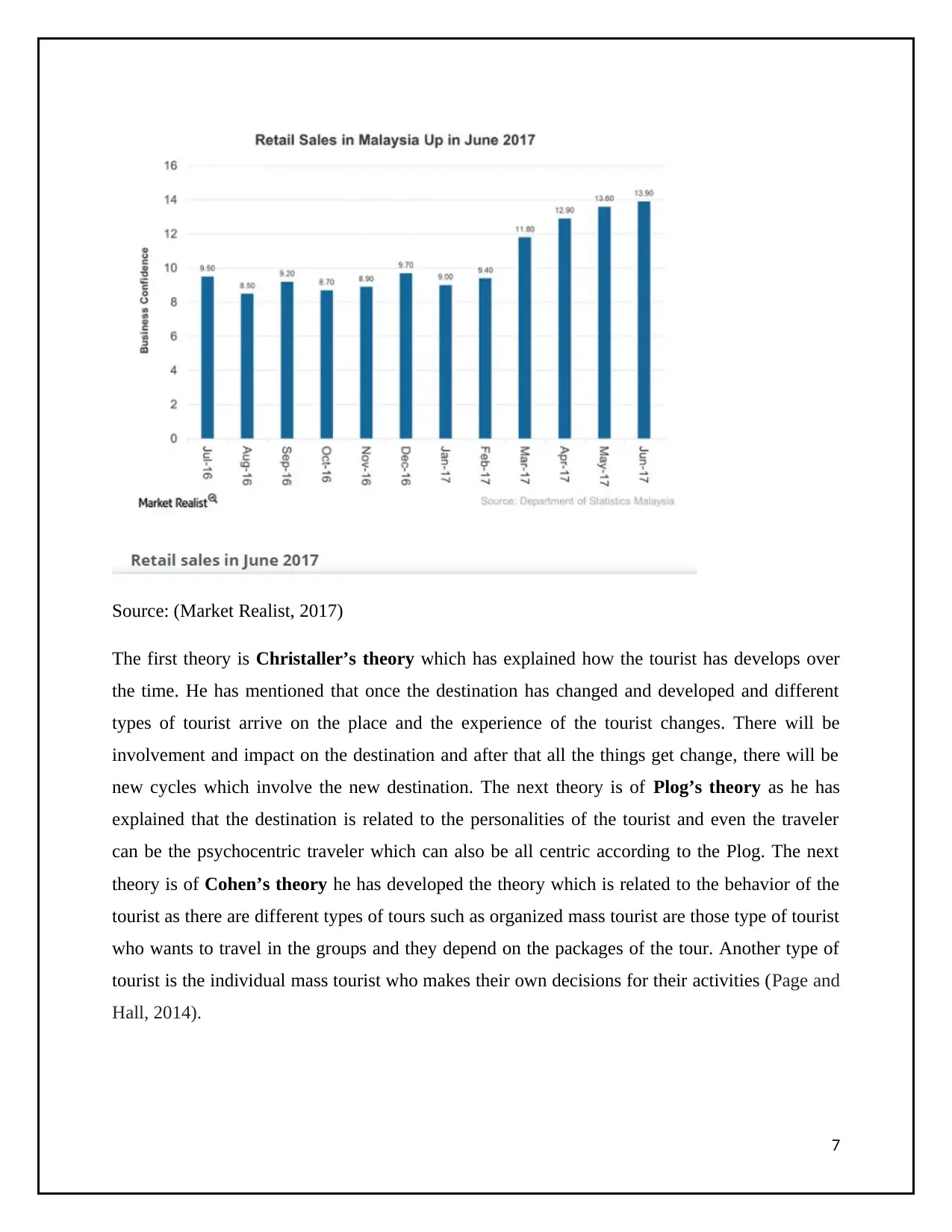
Source: (Market Realist, 2017)
The first theory is Christaller’s theory which has explained how the tourist has develops over
the time. He has mentioned that once the destination has changed and developed and different
types of tourist arrive on the place and the experience of the tourist changes. There will be
involvement and impact on the destination and after that all the things get change, there will be
new cycles which involve the new destination. The next theory is of Plog’s theory as he has
explained that the destination is related to the personalities of the tourist and even the traveler
can be the psychocentric traveler which can also be all centric according to the Plog. The next
theory is of Cohen’s theory he has developed the theory which is related to the behavior of the
tourist as there are different types of tours such as organized mass tourist are those type of tourist
who wants to travel in the groups and they depend on the packages of the tour. Another type of
tourist is the individual mass tourist who makes their own decisions for their activities (Page and
Hall, 2014).
7
The first theory is Christaller’s theory which has explained how the tourist has develops over
the time. He has mentioned that once the destination has changed and developed and different
types of tourist arrive on the place and the experience of the tourist changes. There will be
involvement and impact on the destination and after that all the things get change, there will be
new cycles which involve the new destination. The next theory is of Plog’s theory as he has
explained that the destination is related to the personalities of the tourist and even the traveler
can be the psychocentric traveler which can also be all centric according to the Plog. The next
theory is of Cohen’s theory he has developed the theory which is related to the behavior of the
tourist as there are different types of tours such as organized mass tourist are those type of tourist
who wants to travel in the groups and they depend on the packages of the tour. Another type of
tourist is the individual mass tourist who makes their own decisions for their activities (Page and
Hall, 2014).
7
Paraphrase This Document
Need a fresh take? Get an instant paraphrase of this document with our AI Paraphraser
Conclusion
It has to be concluded in this report about the impact of tourism in the region of Pacific-Asia. It
has explained the impact of tourism on the environment and economy. It has examined both the
negative and positive impact of the issues of economic and environmental. In this essay it has
elaborated two countries of Pacific Asia, the impact of tourism on the countries have been
explained. It has discussed the different theories by a different author about the tourism.
8
It has to be concluded in this report about the impact of tourism in the region of Pacific-Asia. It
has explained the impact of tourism on the environment and economy. It has examined both the
negative and positive impact of the issues of economic and environmental. In this essay it has
elaborated two countries of Pacific Asia, the impact of tourism on the countries have been
explained. It has discussed the different theories by a different author about the tourism.
8
References
De Nisco, A., Mainolfi, G., Marino, V. and Napolitano, M.R., 2015. Tourism satisfaction
effect on the general country image, destination image, and post-visit intentions. Journal
of Vacation Marketing, 21(4), pp.305-317.
Hong, E., 2015. See the Third World while it lasts: The social and environmental impact
of tourism with special reference to Malaysia.
Marin, D., 2015. Study on the economic impact of tourism and of agrotourism on local
communities. Research Journal of Agricultural Sciences, 47(4), pp.160-163.
Market Realist, 2017. Malaysia’s large trade surplus in June 2017 [Online] Available at:
https://marketrealist.com/2017/08/whats-behind-malaysias-large-trade-surplus-in-june-
2017 [Accessed on 27 May 2018]
Mosbah, A. and Al Khuja, M.S.A., 2014. A review of tourism development in
Malaysia. Euro J Bus and Manage, 6(5), pp.1-9.
Mowforth, M. and Munt, I., 2015. Tourism and sustainability: Development,
globalisation and new tourism in the third world. Routledge.
Page, S.J. and Hall, C.M., 2014. The geography of tourism and recreation: Environment,
place and space. Routledge.
9
De Nisco, A., Mainolfi, G., Marino, V. and Napolitano, M.R., 2015. Tourism satisfaction
effect on the general country image, destination image, and post-visit intentions. Journal
of Vacation Marketing, 21(4), pp.305-317.
Hong, E., 2015. See the Third World while it lasts: The social and environmental impact
of tourism with special reference to Malaysia.
Marin, D., 2015. Study on the economic impact of tourism and of agrotourism on local
communities. Research Journal of Agricultural Sciences, 47(4), pp.160-163.
Market Realist, 2017. Malaysia’s large trade surplus in June 2017 [Online] Available at:
https://marketrealist.com/2017/08/whats-behind-malaysias-large-trade-surplus-in-june-
2017 [Accessed on 27 May 2018]
Mosbah, A. and Al Khuja, M.S.A., 2014. A review of tourism development in
Malaysia. Euro J Bus and Manage, 6(5), pp.1-9.
Mowforth, M. and Munt, I., 2015. Tourism and sustainability: Development,
globalisation and new tourism in the third world. Routledge.
Page, S.J. and Hall, C.M., 2014. The geography of tourism and recreation: Environment,
place and space. Routledge.
9
⊘ This is a preview!⊘
Do you want full access?
Subscribe today to unlock all pages.
Trusted by 1+ million students worldwide

1 out of 9


Related Documents


Your All-in-One AI-Powered Toolkit for Academic Success.
+13062052269
info@desklib.com
Available 24*7 on WhatsApp / Email
![[object Object]](/_next/static/media/star-bottom.7253800d.svg)
Unlock your academic potential
Copyright © 2020–2026 A2Z Services. All Rights Reserved. Developed and managed by ZUCOL.