Report: Analyzing Communication Issues at Turkish Delight Restaurant
VerifiedAdded on 2021/06/14
|15
|2224
|35
Report
AI Summary
This report examines the communication challenges within the Turkish Delight restaurant in Canberra, Australia, established in 1981. It identifies issues such as ineffective two-way communication, language barriers among diverse employees, and a lack of understanding of non-verbal communication elements like paralinguistics and kinesics. The report applies relevant communication theories, including formal and informal communication models and the transmission model of Shannon and Weaver, to analyze these issues. The research methodology involved primary data collection through surveys and observation, alongside secondary data from literature reviews. The findings highlight the negative impact of poor communication on customer satisfaction and propose recommendations such as implementing proper communication channels, encouraging feedback, and learning from other restaurants' strategies. The report concludes that addressing these internal communication issues is crucial for the restaurant's continued success.
Running head: TURKISH DELIGHT
Turkish delight
Name of the student:
Name of the university:
Author note
Turkish delight
Name of the student:
Name of the university:
Author note

Paraphrase This Document
Need a fresh take? Get an instant paraphrase of this document with our AI Paraphraser
1TURKISH DELIGHT
Table of Contents
List of figures and tables..................................................................................................................2
Introduction......................................................................................................................................4
Aims and objectives.........................................................................................................................4
Scope................................................................................................................................................5
Body.................................................................................................................................................6
Method of research..........................................................................................................................7
Results..............................................................................................................................................8
Discussion and analysis...................................................................................................................8
Conclusion.......................................................................................................................................9
Recommendations............................................................................................................................9
References......................................................................................................................................10
Bibliography..................................................................................................................................11
Appendices....................................................................................................................................12
Table of Contents
List of figures and tables..................................................................................................................2
Introduction......................................................................................................................................4
Aims and objectives.........................................................................................................................4
Scope................................................................................................................................................5
Body.................................................................................................................................................6
Method of research..........................................................................................................................7
Results..............................................................................................................................................8
Discussion and analysis...................................................................................................................8
Conclusion.......................................................................................................................................9
Recommendations............................................................................................................................9
References......................................................................................................................................10
Bibliography..................................................................................................................................11
Appendices....................................................................................................................................12
2TURKISH DELIGHT
List of figures and tables
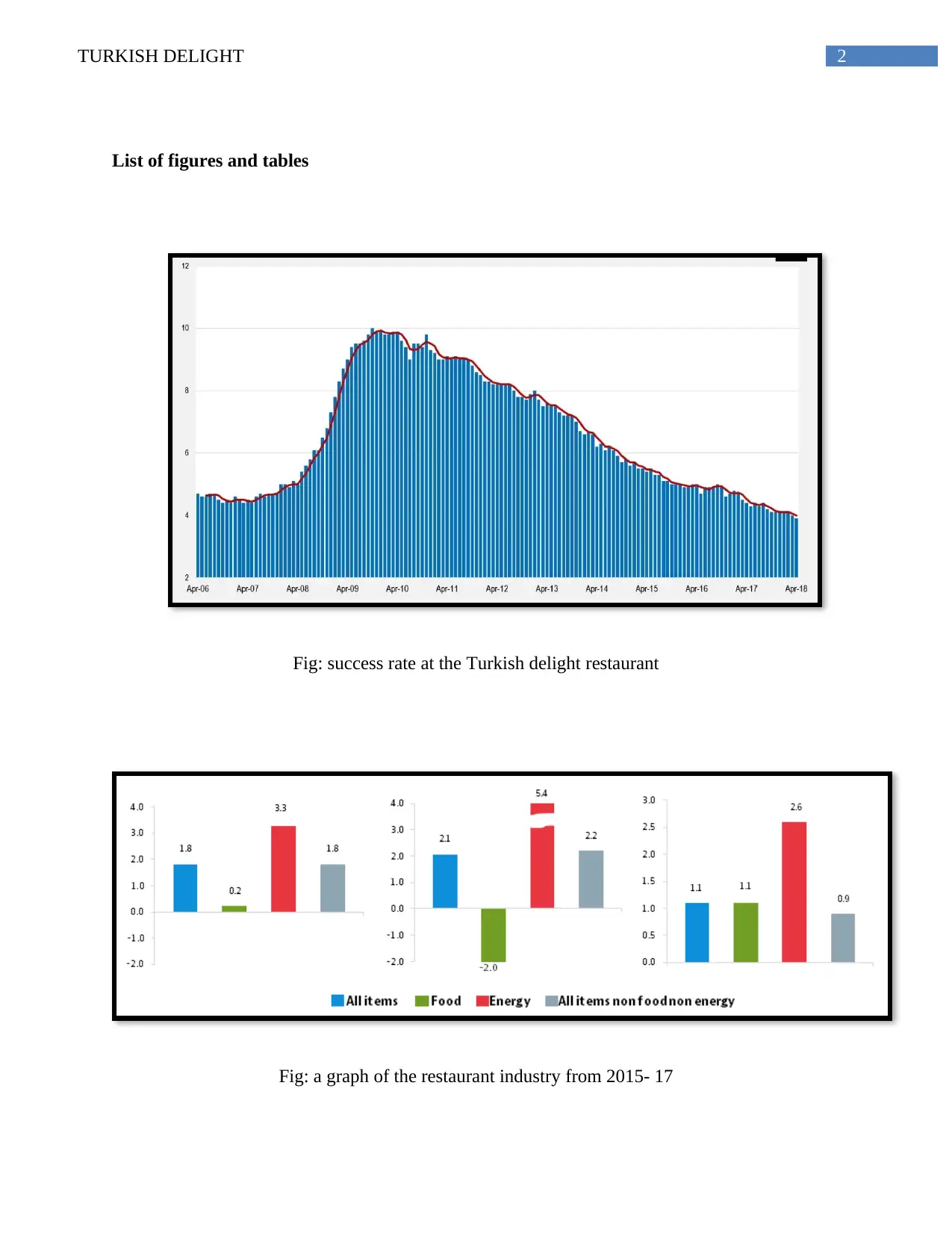
Fig: success rate at the Turkish delight restaurant
Fig: a graph of the restaurant industry from 2015- 17
List of figures and tables
Fig: success rate at the Turkish delight restaurant
Fig: a graph of the restaurant industry from 2015- 17
⊘ This is a preview!⊘
Do you want full access?
Subscribe today to unlock all pages.

Trusted by 1+ million students worldwide
3TURKISH DELIGHT
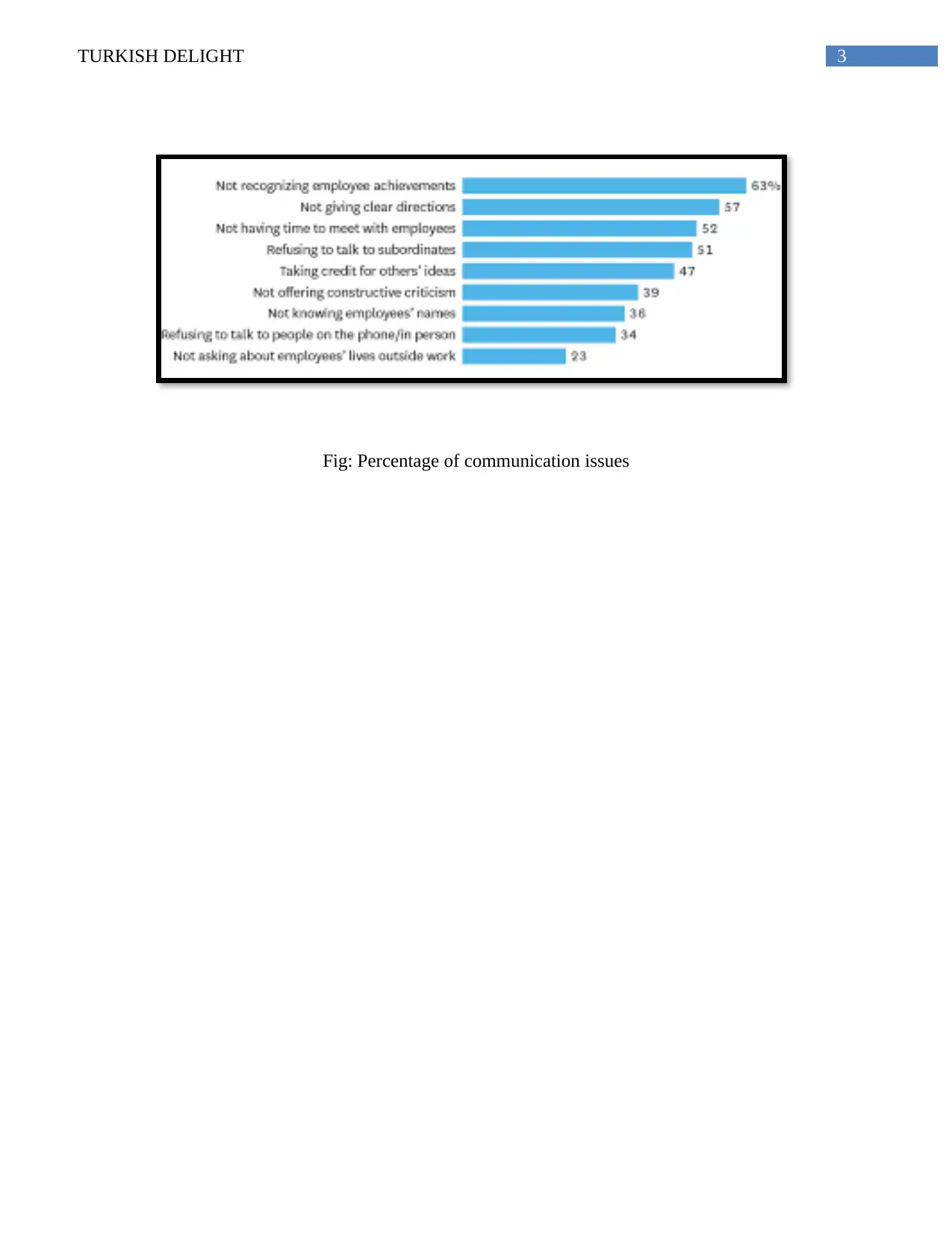
Fig: Percentage of communication issues
Fig: Percentage of communication issues
Paraphrase This Document
Need a fresh take? Get an instant paraphrase of this document with our AI Paraphraser
4TURKISH DELIGHT
Introduction
Turkish delight was established in the year 1981 and it is considered as the first Turkish
restaurant in Canberra, Australia. The restaurant excels in serving the most authentic cuisine,
which attracts the customers and food lovers from all over the world. Not only the food, the
interior decoration also has Turkish touch in the form of designed rugs, handicrafts, copper
impression, paintings and musical instruments. The entire ambience of the restaurant is
responsible for presenting the customers with a rich feel of Turkish tradition and culture. This is
the perfect place for giving a cozy, homely and welcoming experience to the gourmets. The
reviews of the customers have been a proof of the fact that the place has not fallen below
expectation of the customers. Every individual who has paid a visit there got a majestic
experience. Moreover, the restaurant serves certain Turkish dishes, which are not available
anywhere else in Canberra. Apart from food, there is provision for entertaining the visitors with a
special weekend performance of belly dancing on Saturday night with prior booking
(turkishdelight.com.au, 2018).
Aims and objectives
The aim of this report is to find out about the ongoing communication networking within
the organization. This report will be helpful in gathering information about the communication
opportunities or issues that might prevail among the employees and the managers. Furthermore,
the report will describe the effectiveness of two- way communication in an organization and the
ways by which communication barrier can be overcome with the help of relevant theories. In this
particular report, the hypothetical case will be based on the Turkish delight restaurant of
Canberra, Australia. Importance of intercultural communication and mediated communication
Introduction
Turkish delight was established in the year 1981 and it is considered as the first Turkish
restaurant in Canberra, Australia. The restaurant excels in serving the most authentic cuisine,
which attracts the customers and food lovers from all over the world. Not only the food, the
interior decoration also has Turkish touch in the form of designed rugs, handicrafts, copper
impression, paintings and musical instruments. The entire ambience of the restaurant is
responsible for presenting the customers with a rich feel of Turkish tradition and culture. This is
the perfect place for giving a cozy, homely and welcoming experience to the gourmets. The
reviews of the customers have been a proof of the fact that the place has not fallen below
expectation of the customers. Every individual who has paid a visit there got a majestic
experience. Moreover, the restaurant serves certain Turkish dishes, which are not available
anywhere else in Canberra. Apart from food, there is provision for entertaining the visitors with a
special weekend performance of belly dancing on Saturday night with prior booking
(turkishdelight.com.au, 2018).
Aims and objectives
The aim of this report is to find out about the ongoing communication networking within
the organization. This report will be helpful in gathering information about the communication
opportunities or issues that might prevail among the employees and the managers. Furthermore,
the report will describe the effectiveness of two- way communication in an organization and the
ways by which communication barrier can be overcome with the help of relevant theories. In this
particular report, the hypothetical case will be based on the Turkish delight restaurant of
Canberra, Australia. Importance of intercultural communication and mediated communication
5TURKISH DELIGHT
will be focused briefly during the description of the report. Therefore, the objectives that will be
fulfilled at the end of this report are given below-
Objective 1: to find out about the communication issues prevalent in Turkish delight
restaurant
Objective 2: to sort out the relevant communication theories as per the case of the
Turkish restaurant
Objective 3: to seek for probable solution to communication issues prevailing in the
restaurant
Scope
The scope of the report was finding out about the communication barrier in the Turkish
delight restaurant of Canberra. The report has used relevant data and information from previous
literature and the hotel employees and customers to make a valid detailing. The scope of this
report was based on finding out the effectiveness of two- way communication. Intercultural
communication plays an integral part in the process of efficient communication within an
organization. However, there was an opportunity to come up with better approaches, which could
benefit the restaurant to overcome the communication barrier in the organization. A comparison
could be drawn from the data collected at other organization in the same sector. It could have
helped in sorting out the strategies, which were used by other organization, and implement the
same in Turkish delight to be at par with the industry standards. The success of an organization is
always based on the way by which it is keeping ahead of the rival companies in the market.
will be focused briefly during the description of the report. Therefore, the objectives that will be
fulfilled at the end of this report are given below-
Objective 1: to find out about the communication issues prevalent in Turkish delight
restaurant
Objective 2: to sort out the relevant communication theories as per the case of the
Turkish restaurant
Objective 3: to seek for probable solution to communication issues prevailing in the
restaurant
Scope
The scope of the report was finding out about the communication barrier in the Turkish
delight restaurant of Canberra. The report has used relevant data and information from previous
literature and the hotel employees and customers to make a valid detailing. The scope of this
report was based on finding out the effectiveness of two- way communication. Intercultural
communication plays an integral part in the process of efficient communication within an
organization. However, there was an opportunity to come up with better approaches, which could
benefit the restaurant to overcome the communication barrier in the organization. A comparison
could be drawn from the data collected at other organization in the same sector. It could have
helped in sorting out the strategies, which were used by other organization, and implement the
same in Turkish delight to be at par with the industry standards. The success of an organization is
always based on the way by which it is keeping ahead of the rival companies in the market.
⊘ This is a preview!⊘
Do you want full access?
Subscribe today to unlock all pages.
Trusted by 1+ million students worldwide
6TURKISH DELIGHT
Body
The report was based on the hypothetical case of communication issues that prevailed
among the employees and management of the Turkish delight restaurant. There was no effective
two- way communication in the restaurant and it was hampering customer satisfaction. This is
because the requirements of the customers were not being clearly conveyed in different steps of
hierarchy in the restaurant (Mohan & McGregor, 1942).
With respect to the hypothetical case of communication issues in the Turkish delight
restaurant, formal communication theory can be used. According to this theory, there must be a
proper channel of communication to make easy flow of messages within the organization. For
instance, the employees can mail the higher authority to inform about their grievance and
complaints. On the other hand, the management can send memos to circulate specific
information among the employees of the entire organization.
Moreover, informal communication theory can also be used in the organization to
incorporate a spontaneous, instant, interactive and free flow of communication within the
organization. For instance, the employees can be bound together on a social media platform and
information can be shared by using different applications.
Language barrier was a common problem in the organization as the employees were
recruited from a diverse background and none was acquainted with the cultural traits of the other
(Almutairi, 2015). This has led to a communication gap among the employees of the
organization and barrier in the verbal cultural communication. It was required from the
employees to select their words carefully while speaking with their colleagues as well as the
customers.
Body
The report was based on the hypothetical case of communication issues that prevailed
among the employees and management of the Turkish delight restaurant. There was no effective
two- way communication in the restaurant and it was hampering customer satisfaction. This is
because the requirements of the customers were not being clearly conveyed in different steps of
hierarchy in the restaurant (Mohan & McGregor, 1942).
With respect to the hypothetical case of communication issues in the Turkish delight
restaurant, formal communication theory can be used. According to this theory, there must be a
proper channel of communication to make easy flow of messages within the organization. For
instance, the employees can mail the higher authority to inform about their grievance and
complaints. On the other hand, the management can send memos to circulate specific
information among the employees of the entire organization.
Moreover, informal communication theory can also be used in the organization to
incorporate a spontaneous, instant, interactive and free flow of communication within the
organization. For instance, the employees can be bound together on a social media platform and
information can be shared by using different applications.
Language barrier was a common problem in the organization as the employees were
recruited from a diverse background and none was acquainted with the cultural traits of the other
(Almutairi, 2015). This has led to a communication gap among the employees of the
organization and barrier in the verbal cultural communication. It was required from the
employees to select their words carefully while speaking with their colleagues as well as the
customers.
Paraphrase This Document
Need a fresh take? Get an instant paraphrase of this document with our AI Paraphraser
7TURKISH DELIGHT
Paralinguistic or paralanguage is a component of non- verbal communication and it
includes other parts such as kinesics, proxemics, chronemics and others. It was mentioned by
Dessouky et al. (2017), that paralinguistic is not related to verbal message and includes only
direct or indirect non- verbal messages. The employees of Turkish delight restaurant in Canberra
were not aware of paralinguistic and therefore they faced communication barrier. Non- verbal
communication is comparatively better in avoiding conflicts as verbal communication is directly
involved with the use of words. Therefore, choice of words played a major role while interacting.
Kinesics is another part of non- verbal communication, which might be an option for the
employees of the Turkish delight restaurant because it involves facial expression, gesture and
body posture while communicating with others (Archee, Gurney & Mohan, 2013).
With respect to the hypothetical communication issue prevailing in the Turkish delight
restaurant of Canberra, the transmission model of communication can be found applicable to deal
with the clients. This model of Shannon and Weaver served the purpose of effective
communication between the sender and receiver by sending message through a channel and
giving proper feedback. However, there is noise present in this model, which needs to be
considered while encoding and decoding the message. Feedback from the clients will help
Turkish delight to understand the demands of the customers and the lack in their basic
functioning. Language and cultural barrier might behave as noise in this model of
communication and needs to be handled carefully (Pigou et al., 2014).
Method of research
For collecting information about this topic, both primary and secondary data was
collected. Observation method was used and the employees of the organization were surveyed by
Paralinguistic or paralanguage is a component of non- verbal communication and it
includes other parts such as kinesics, proxemics, chronemics and others. It was mentioned by
Dessouky et al. (2017), that paralinguistic is not related to verbal message and includes only
direct or indirect non- verbal messages. The employees of Turkish delight restaurant in Canberra
were not aware of paralinguistic and therefore they faced communication barrier. Non- verbal
communication is comparatively better in avoiding conflicts as verbal communication is directly
involved with the use of words. Therefore, choice of words played a major role while interacting.
Kinesics is another part of non- verbal communication, which might be an option for the
employees of the Turkish delight restaurant because it involves facial expression, gesture and
body posture while communicating with others (Archee, Gurney & Mohan, 2013).
With respect to the hypothetical communication issue prevailing in the Turkish delight
restaurant of Canberra, the transmission model of communication can be found applicable to deal
with the clients. This model of Shannon and Weaver served the purpose of effective
communication between the sender and receiver by sending message through a channel and
giving proper feedback. However, there is noise present in this model, which needs to be
considered while encoding and decoding the message. Feedback from the clients will help
Turkish delight to understand the demands of the customers and the lack in their basic
functioning. Language and cultural barrier might behave as noise in this model of
communication and needs to be handled carefully (Pigou et al., 2014).
Method of research
For collecting information about this topic, both primary and secondary data was
collected. Observation method was used and the employees of the organization were surveyed by
8TURKISH DELIGHT
using questionnaires, which served as the primary sources of data. Formal and informal
communication theory was appropriate in the case of Turkish delight restaurant. As there was a
gap in communication among the employees and management therefore, proper communication
channel was required to highlight on the importance of paralinguistic and the transmission model
of communication. The secondary sources of information were collected from the background
research of the company and the strategies used by other companies in resolving communication
barrier. Other documents and journal articles were reviewed in order to look for the effective
measures of communication barrier in restaurant.
Results
The results have focused on the lack of awareness among the employees of the
organization regarding the use of effective communication channels to interact with the
management and customers. Language and cultural barrier was not taken care of in the initial
stages, which has taken a bad shape in the current days. Conflicts have emerged because of
ineffective communication and therefore, customer satisfaction was at stake (Lee, Sardeshmukh
& Hallak, 2016).
Discussion and analysis
It can be discussed and analyzed that the use of theories as mentioned in the report will
be able to mitigate the issues to a certain extent. The employees as well as the management have
neglected the importance of intercultural communication and non- verbal communication. It was
found out the first Turkish restaurant of Canberra might have grandeur in their ambience and
cuisine, however, the gap in internal communication network led to unavoidable circumstances.
These circumstances were related to the misunderstanding among the management and
using questionnaires, which served as the primary sources of data. Formal and informal
communication theory was appropriate in the case of Turkish delight restaurant. As there was a
gap in communication among the employees and management therefore, proper communication
channel was required to highlight on the importance of paralinguistic and the transmission model
of communication. The secondary sources of information were collected from the background
research of the company and the strategies used by other companies in resolving communication
barrier. Other documents and journal articles were reviewed in order to look for the effective
measures of communication barrier in restaurant.
Results
The results have focused on the lack of awareness among the employees of the
organization regarding the use of effective communication channels to interact with the
management and customers. Language and cultural barrier was not taken care of in the initial
stages, which has taken a bad shape in the current days. Conflicts have emerged because of
ineffective communication and therefore, customer satisfaction was at stake (Lee, Sardeshmukh
& Hallak, 2016).
Discussion and analysis
It can be discussed and analyzed that the use of theories as mentioned in the report will
be able to mitigate the issues to a certain extent. The employees as well as the management have
neglected the importance of intercultural communication and non- verbal communication. It was
found out the first Turkish restaurant of Canberra might have grandeur in their ambience and
cuisine, however, the gap in internal communication network led to unavoidable circumstances.
These circumstances were related to the misunderstanding among the management and
⊘ This is a preview!⊘
Do you want full access?
Subscribe today to unlock all pages.
Trusted by 1+ million students worldwide
9TURKISH DELIGHT
employees and mistrust on the part of the customers (Stoknes, 2014). A reputed restaurant as
Turkish delight cannot afford to lose their face in the market due to the petty communication
issues and therefore, appropriate recommendations were outlined.
Conclusion
It can be concluded from the report that the restaurant will continue to be one of the most
visited places in Canberra if they can get over their internal communication issues. The issue of
effective models such as the transmission model of communication by Shannon and Weaver,
formal, informal communication theory, and the use of kinesics and paralinguistic, if
implemented successfully will be able to reduce the communication issues to certain extent.
Recommendations
It can be recommended for the company to use proper channels of communication. The
management should incorporate two- way communication in order to get proper feedback. The
employees should be encouraged to voice their opinion and complaints without making a chaos.
The customers need to be convinced for providing feedback for the betterment of the
organization. Moreover, it can be suggested that the company should look for strategies used by
other restaurants to enable free- flow of communication.
employees and mistrust on the part of the customers (Stoknes, 2014). A reputed restaurant as
Turkish delight cannot afford to lose their face in the market due to the petty communication
issues and therefore, appropriate recommendations were outlined.
Conclusion
It can be concluded from the report that the restaurant will continue to be one of the most
visited places in Canberra if they can get over their internal communication issues. The issue of
effective models such as the transmission model of communication by Shannon and Weaver,
formal, informal communication theory, and the use of kinesics and paralinguistic, if
implemented successfully will be able to reduce the communication issues to certain extent.
Recommendations
It can be recommended for the company to use proper channels of communication. The
management should incorporate two- way communication in order to get proper feedback. The
employees should be encouraged to voice their opinion and complaints without making a chaos.
The customers need to be convinced for providing feedback for the betterment of the
organization. Moreover, it can be suggested that the company should look for strategies used by
other restaurants to enable free- flow of communication.
Paraphrase This Document
Need a fresh take? Get an instant paraphrase of this document with our AI Paraphraser
10TURKISH DELIGHT
References
Almutairi, K. M. (2015). Culture and language differences as a barrier to provision of quality
care by the health workforce in Saudi Arabia. Saudi Medical Journal, 36(4), 425.
Archee, R., Gurney, M., & Mohan, T. (2013). Communicating as Professionals.
Dawson, M., Madera, J. M., Neal, J. A., & Chen, J. (2014). The influence of hotel
communication practices on managers’ communication satisfaction with limited English–
Speaking employees. Journal of Hospitality & Tourism Research, 38(4), 546-561.
Dessouky, G., Koushanfar, F., Sadeghi, A. R., Schneider, T., Zeitouni, S., & Zohner, M. (2017).
Pushing the communication barrier in secure computation using lookup tables. In 24th
Annual Network and Distributed System Security Symposium(pp. 275-292).
Lee, C., Sardeshmukh, S. R., & Hallak, R. (2016). A qualitative study of innovation in the
restaurant industry. Anatolia, 27(3), 367-376.
Mohan, Terry & McGregor, Helen, 1942-, (author.) & Saunders, Shirley, (author.) & Archee,
Raymond, (author.) (2008). Communicating as professionals (Edition 2).
Thomson/Cengage Learning, South Melbourne.
Pigou, L., Dieleman, S., Kindermans, P. J., & Schrauwen, B. (2014, September). Sign language
recognition using convolutional neural networks. In Workshop at the European
Conference on Computer Vision (pp. 572-578). Springer, Cham.
Stoknes, P. E. (2014). Rethinking climate communications and the “psychological climate
paradox”. Energy Research & Social Science, 1, 161-170.
References
Almutairi, K. M. (2015). Culture and language differences as a barrier to provision of quality
care by the health workforce in Saudi Arabia. Saudi Medical Journal, 36(4), 425.
Archee, R., Gurney, M., & Mohan, T. (2013). Communicating as Professionals.
Dawson, M., Madera, J. M., Neal, J. A., & Chen, J. (2014). The influence of hotel
communication practices on managers’ communication satisfaction with limited English–
Speaking employees. Journal of Hospitality & Tourism Research, 38(4), 546-561.
Dessouky, G., Koushanfar, F., Sadeghi, A. R., Schneider, T., Zeitouni, S., & Zohner, M. (2017).
Pushing the communication barrier in secure computation using lookup tables. In 24th
Annual Network and Distributed System Security Symposium(pp. 275-292).
Lee, C., Sardeshmukh, S. R., & Hallak, R. (2016). A qualitative study of innovation in the
restaurant industry. Anatolia, 27(3), 367-376.
Mohan, Terry & McGregor, Helen, 1942-, (author.) & Saunders, Shirley, (author.) & Archee,
Raymond, (author.) (2008). Communicating as professionals (Edition 2).
Thomson/Cengage Learning, South Melbourne.
Pigou, L., Dieleman, S., Kindermans, P. J., & Schrauwen, B. (2014, September). Sign language
recognition using convolutional neural networks. In Workshop at the European
Conference on Computer Vision (pp. 572-578). Springer, Cham.
Stoknes, P. E. (2014). Rethinking climate communications and the “psychological climate
paradox”. Energy Research & Social Science, 1, 161-170.
11TURKISH DELIGHT
Turkish Delight | Canberra's First Turkish Restaurant. (2018). Retrieved from
http://www.turkishdelight.com.au/
Bibliography
DiPietro, R. (2017). Restaurant and foodservice research: A critical reflection behind and an
optimistic look ahead. International Journal of Contemporary Hospitality
Management, 29(4), 1203-1234.
Hanson, E. K., & Fager, S. K. (2017). Communication supports for people with motor speech
disorders. Topics in Language Disorders, 37(4), 375-388.
Madera, J. M. (2011). Removing communication barriers at work: What workforce diversity
means for the hospitality industry. Worldwide Hospitality and Tourism Themes, 3(4),
377-380.
Turkish Delight | Canberra's First Turkish Restaurant. (2018). Retrieved from
http://www.turkishdelight.com.au/
Bibliography
DiPietro, R. (2017). Restaurant and foodservice research: A critical reflection behind and an
optimistic look ahead. International Journal of Contemporary Hospitality
Management, 29(4), 1203-1234.
Hanson, E. K., & Fager, S. K. (2017). Communication supports for people with motor speech
disorders. Topics in Language Disorders, 37(4), 375-388.
Madera, J. M. (2011). Removing communication barriers at work: What workforce diversity
means for the hospitality industry. Worldwide Hospitality and Tourism Themes, 3(4),
377-380.
⊘ This is a preview!⊘
Do you want full access?
Subscribe today to unlock all pages.
Trusted by 1+ million students worldwide

1 out of 15


Related Documents


Your All-in-One AI-Powered Toolkit for Academic Success.
+13062052269
info@desklib.com
Available 24*7 on WhatsApp / Email
![[object Object]](/_next/static/media/star-bottom.7253800d.svg)
Unlock your academic potential
Copyright © 2020–2026 A2Z Services. All Rights Reserved. Developed and managed by ZUCOL.